Connecticut Special or Limited Power of Attorney for Real Estate Purchase Transaction by Purchaser
What this document covers
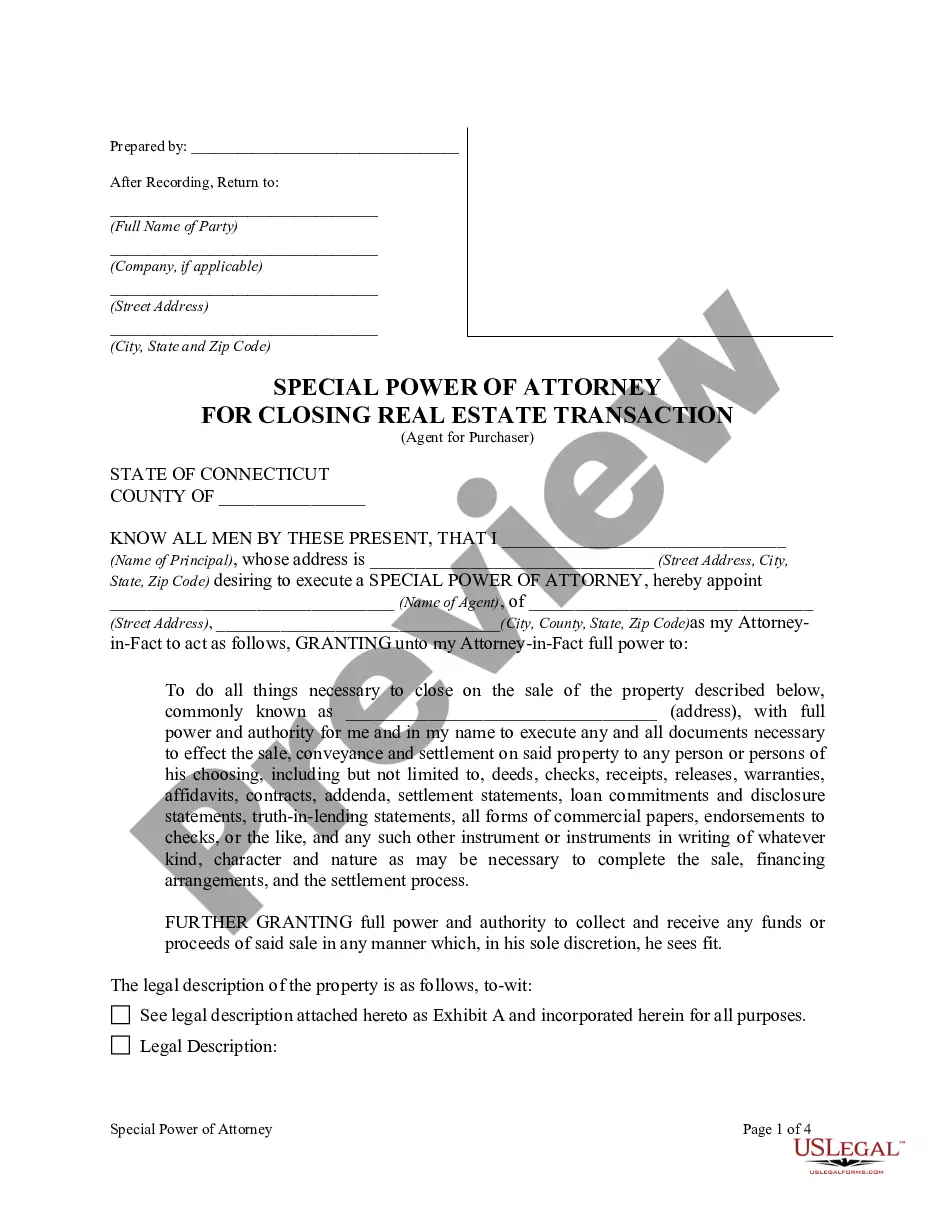
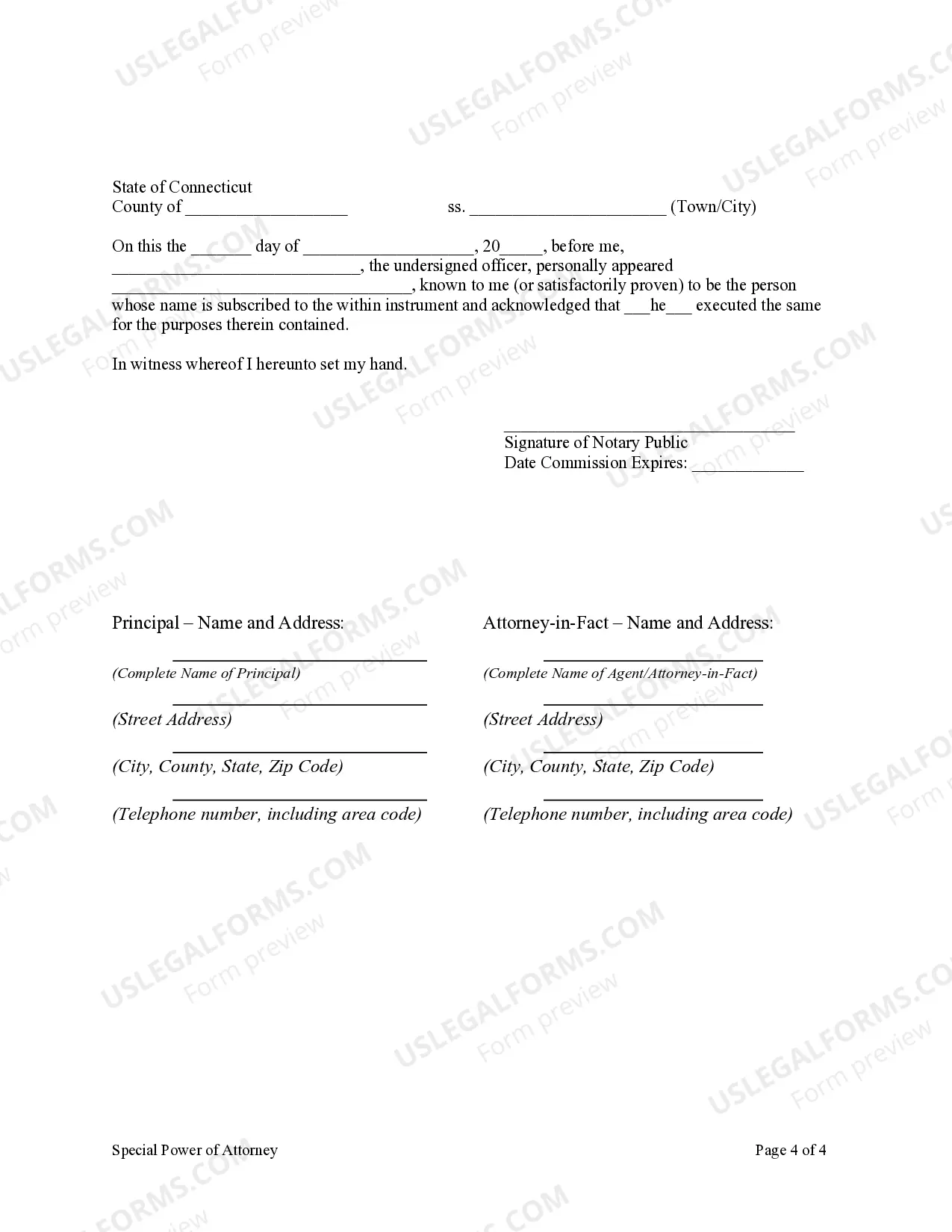
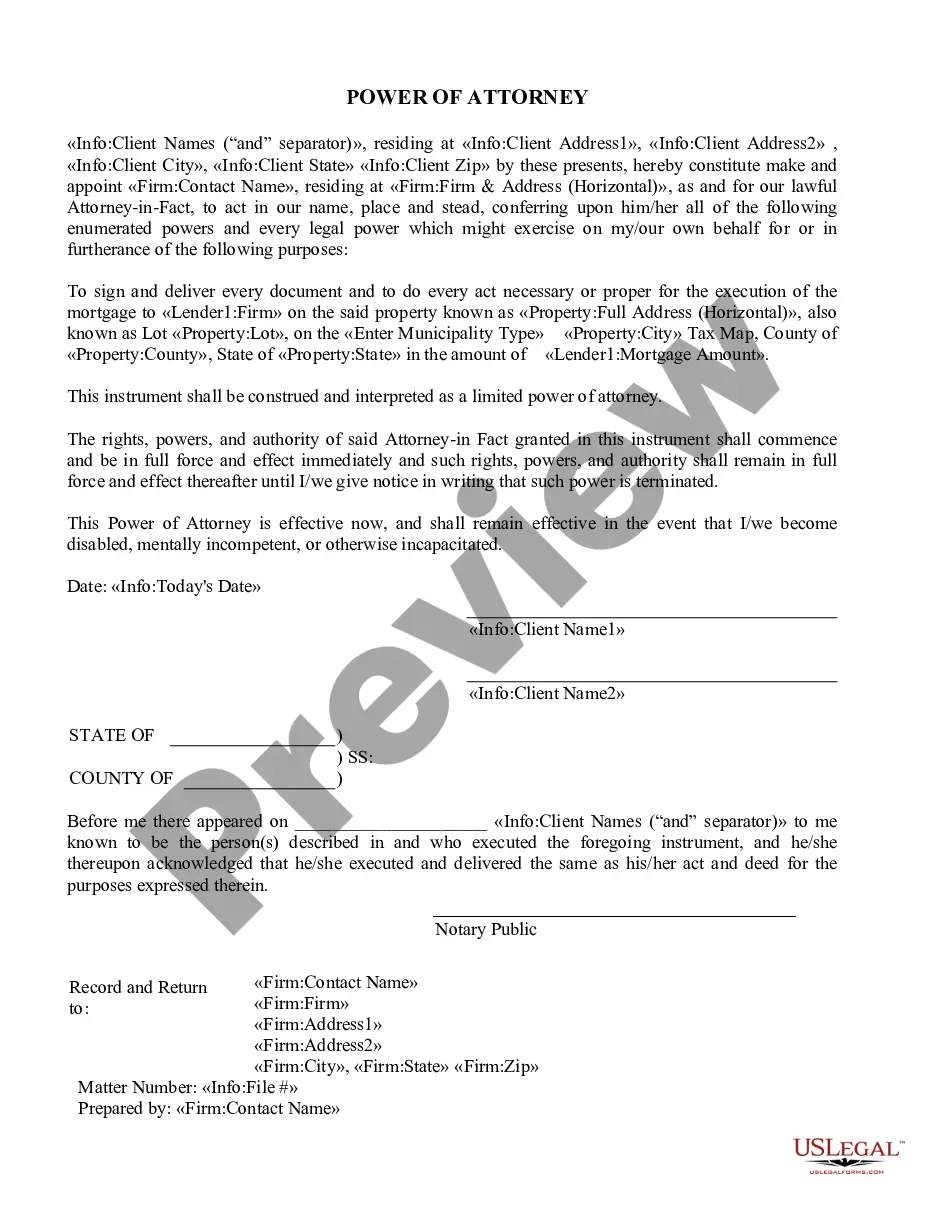
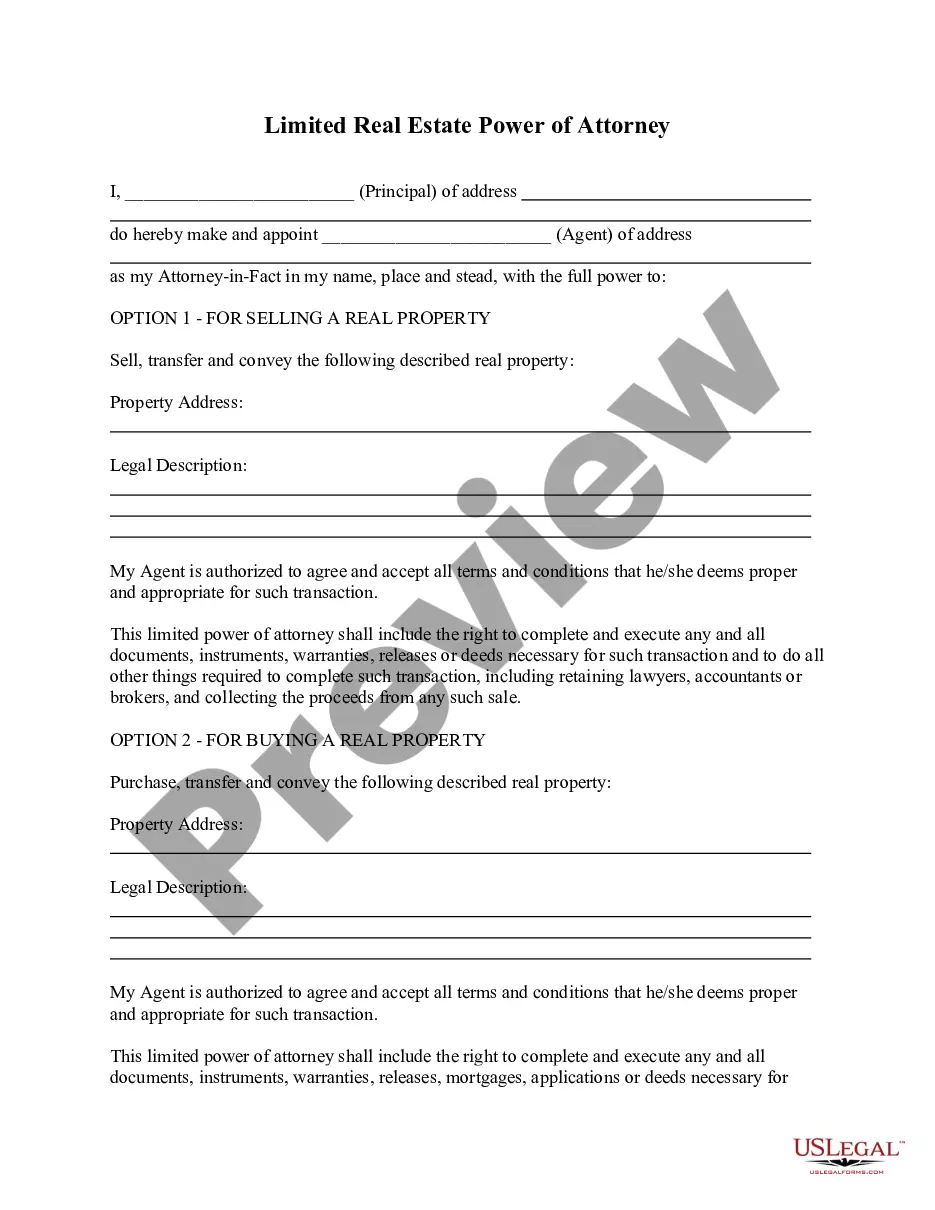
This Special Power of Attorney for Real Estate Purchase Transaction allows a purchaser to designate an attorney-in-fact to handle the purchase of a specific parcel of real estate. This form is unique as it grants comprehensive authority to handle all necessary tasks related to the transaction, including signing loan documents. It differs from other powers of attorney by focusing specifically on real estate transactions, ensuring all necessary legal actions can be taken on behalf of the purchaser.
Key components of this form
- Details of the principal (the purchaser) and the attorney-in-fact (agent) being appointed.
- Specific property information, including its legal description.
- Authority granted to the agent to execute documents and manage financial transactions related to the sale.
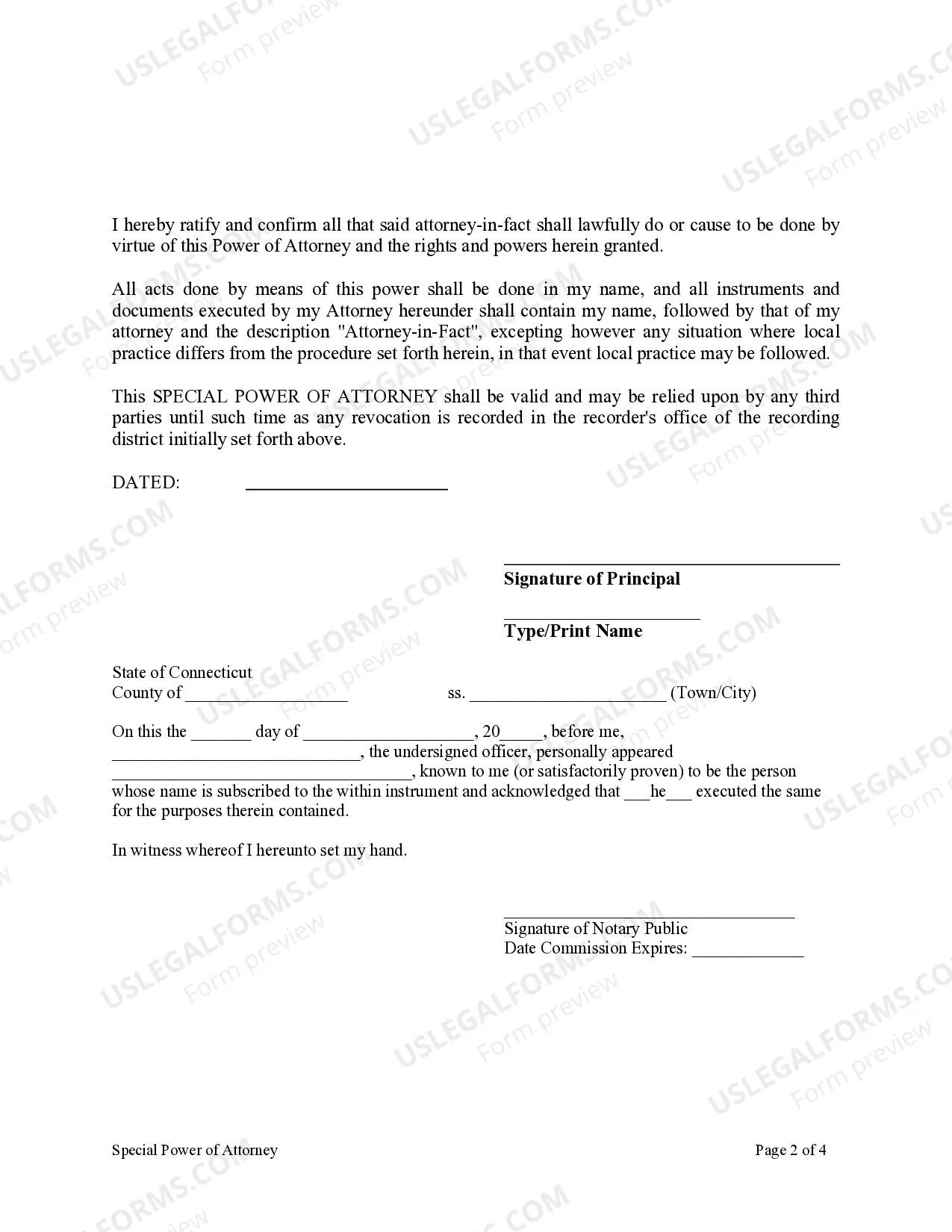
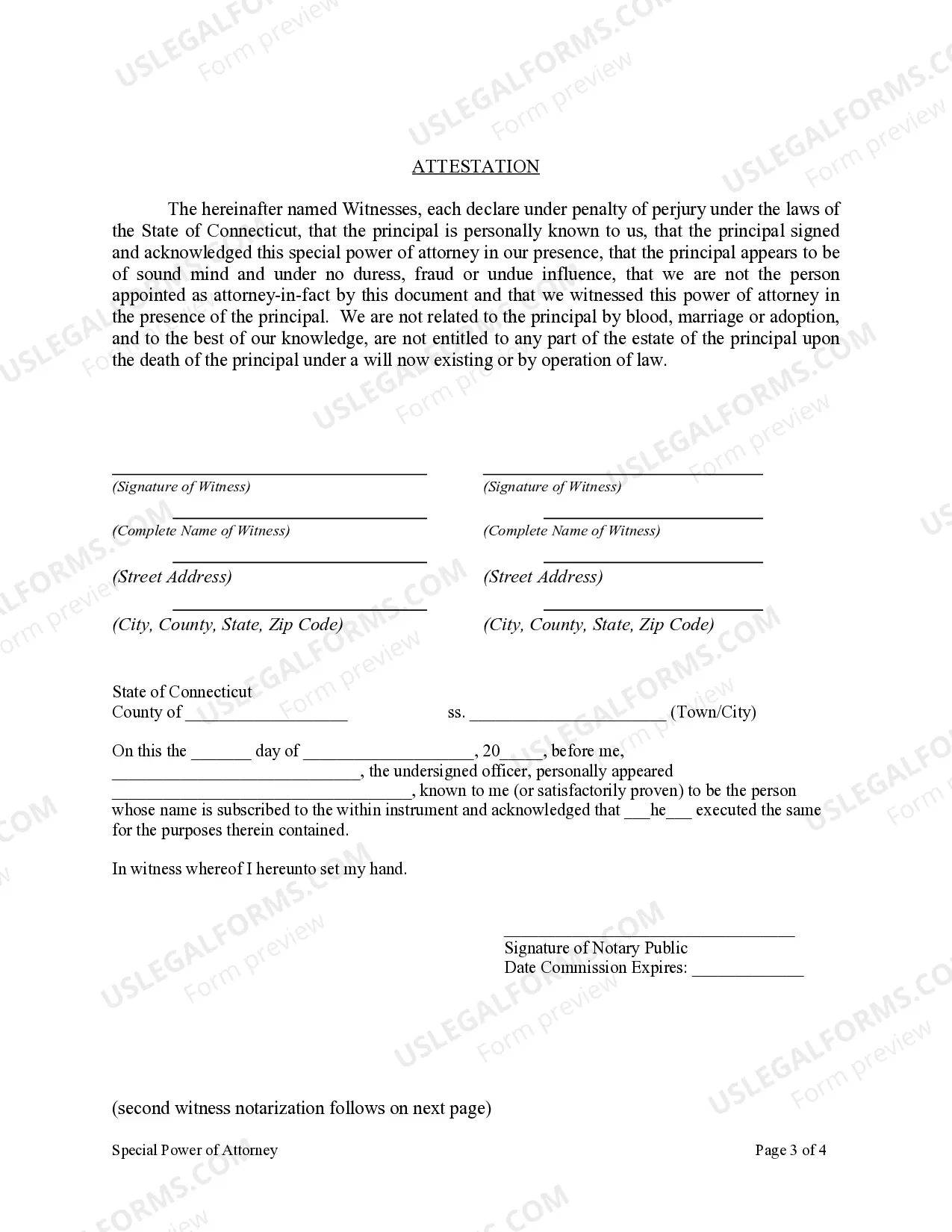
- Space for signatures and notarization to validate the form.

Common use cases
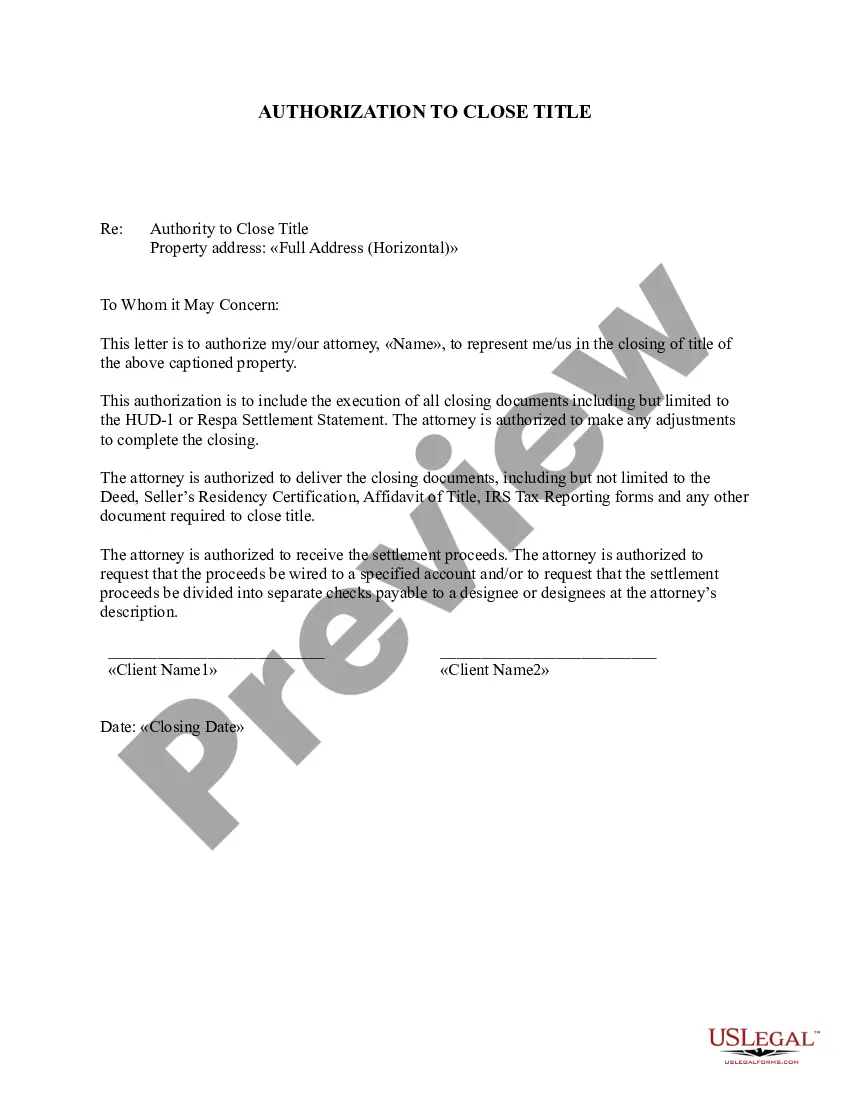
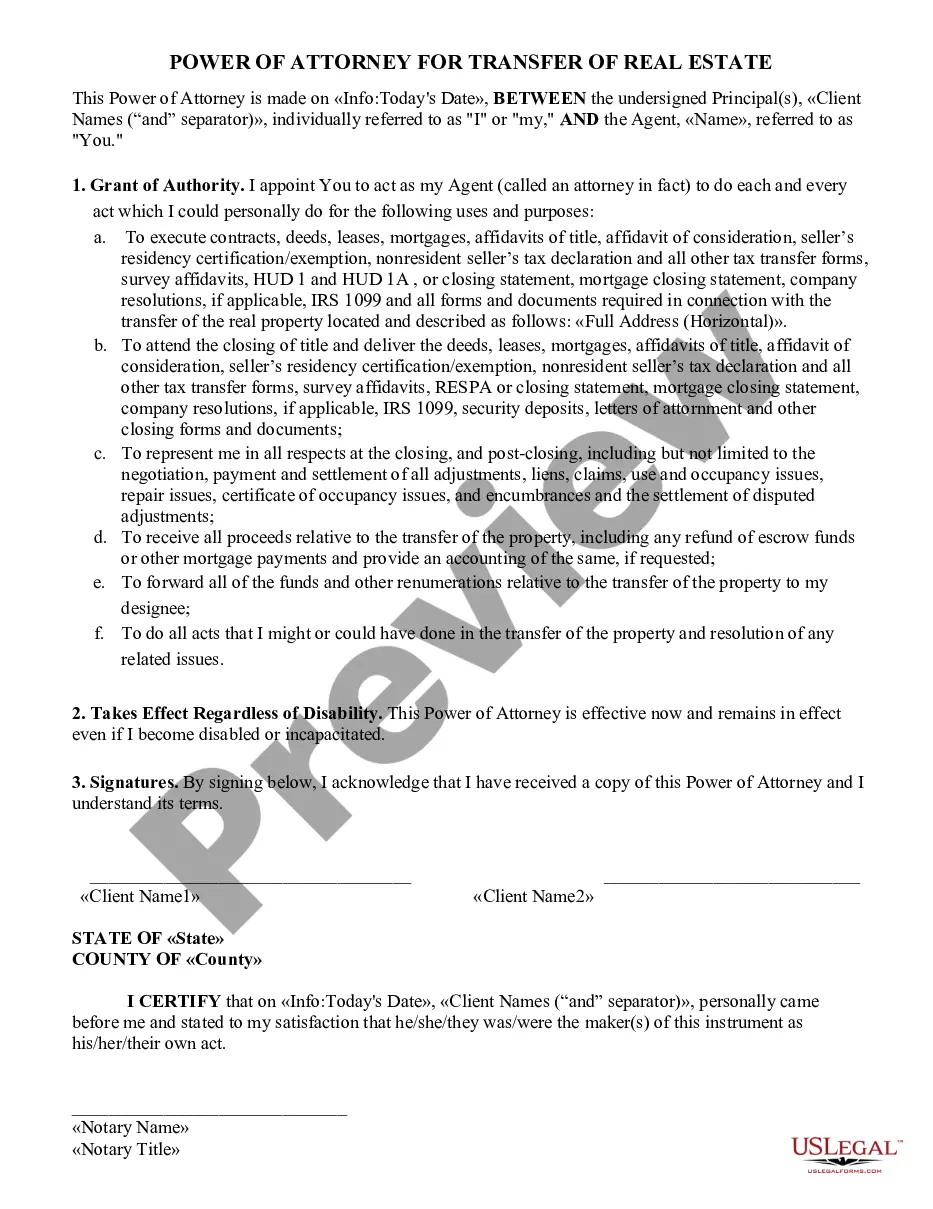
This form should be used when a purchaser cannot be present to finalize the purchase of a real estate property but wants to ensure their interests are protected. Common scenarios include situations where the purchaser is out of state, has scheduling conflicts, or is incapacitated and needs someone trustworthy to manage the transaction.
Who needs this form
- Individuals purchasing real estate but unable to attend the closing appointment.
- Those who want to authorize someone else to act on their behalf in a real estate transaction.
- Purchasers requiring legal assurance that their transaction is completed professionally and legally.
Completing this form step by step
- Identify and enter your full name and address as the principal.
- Designate the attorney-in-fact by entering their name and contact information.
- Provide the specific address of the property being purchased, along with its legal description.
- Review the granted powers to ensure your agent can perform all necessary actions on your behalf.
- Sign the form in the presence of a notary public to validate it.
Is notarization required?
Notarization is required for this form to take effect. Our online notarization service, powered by Notarize, lets you verify and sign documents remotely through an encrypted video session, available 24/7.
Get your form ready online
Our built-in tools help you complete, sign, share, and store your documents in one place.
Make edits, fill in missing information, and update formatting in US Legal Forms—just like you would in MS Word.
Download a copy, print it, send it by email, or mail it via USPS—whatever works best for your next step.
Sign and collect signatures with our SignNow integration. Send to multiple recipients, set reminders, and more. Go Premium to unlock E-Sign.
If this form requires notarization, complete it online through a secure video call—no need to meet a notary in person or wait for an appointment.
We protect your documents and personal data by following strict security and privacy standards.

Make edits, fill in missing information, and update formatting in US Legal Forms—just like you would in MS Word.

Download a copy, print it, send it by email, or mail it via USPS—whatever works best for your next step.

Sign and collect signatures with our SignNow integration. Send to multiple recipients, set reminders, and more. Go Premium to unlock E-Sign.

If this form requires notarization, complete it online through a secure video call—no need to meet a notary in person or wait for an appointment.

We protect your documents and personal data by following strict security and privacy standards.
Typical mistakes to avoid
- Failing to include the full legal description of the property.
- Not having the form notarized, which is essential for its validity.
- Leaving out crucial details such as the date of signing or agent contact information.
Advantages of online completion
- Convenient download and access from any location.
- Edit and fill out the form easily before printing.
- Drafted by licensed attorneys to ensure legal compliance.
Key takeaways
- This Special Power of Attorney allows a purchaser to delegate authority for real estate transactions.
- It is essential to ensure the form is notarized and correctly filled out to avoid legal issues.
- This form is particularly useful for those unable to attend a closing in person.
Looking for another form?
Form popularity
FAQ
Being a power of attorney carries certain responsibilities and potential downsides, including the obligation to act in the best interest of the principal at all times. If mismanaged, there could be legal repercussions or potential conflicts of interest. It's important to understand that while you have the authority to make decisions, the principal trusts you to manage their affairs, making the role both significant and demanding.
In Connecticut, the rules for establishing a power of attorney require the principal to be of sound mind and capable of understanding the transaction. The power of attorney must be in writing, signed, and notarized to be considered valid. Additionally, the document should clearly specify the powers granted to the attorney-in-fact for transactions involving real estate, ensuring compliance with state laws.
Name, signature, and address of the principal. Name, signature, and address of the agent. Properties and activities under the authority of the agent. Date of effect and termination of authority. Compensation to services of the agent.
Hence, rights in immovable property are vested only when a sale deed or deed of conveyance is registered between the parties.Sale of property has various implications such as capital gains tax on the seller and payment of stamp duty on the document of transfer.
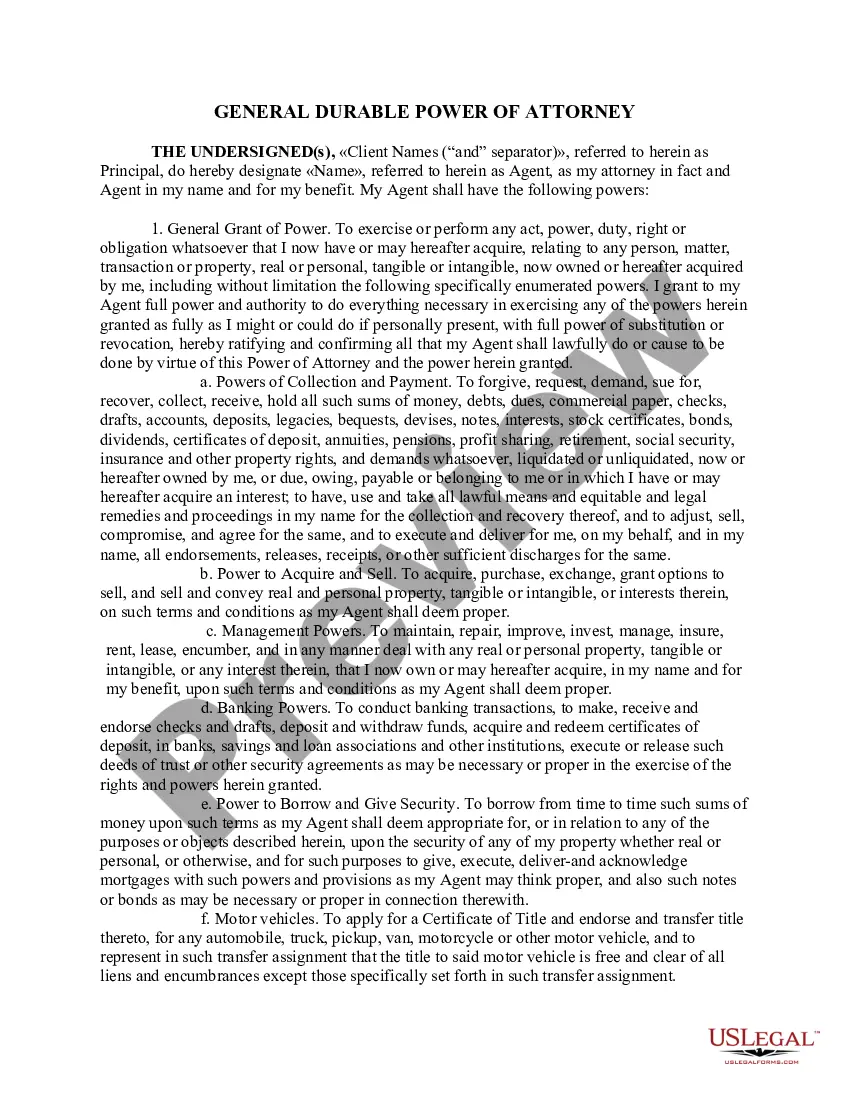
Limited. A limited power of attorney gives someone else the power to act in your stead for a very limited purpose. General. A general power of attorney is comprehensive and gives your attorney-in-fact all the powers and rights that you have yourself. Durable. Springing.
Your name, address, and signature as the principal. The name, address, and signature of your Agent. The activities and properties under the Agent's authority. The start and termination dates of the Agent's powers. Any compensation you will give to the Agent.
A limited PoA, amongst other things, grants the PoA holder access and permission to execute trades/orders on your trading account, on your behalf. However, it does not allow the PoA holder to perform withdrawals requests or transfer of funds. All withdrawals must be requested by the authorized signatory of the account.
First, the legal answer is however long you set it up to last. If you set a date for a power of attorney to lapse, then it will last until that date. If you create a general power of attorney and set no date for which it will expire, it will last until you die or become incapacitated.
A limited power of attorney grants the representative that you choose (the agent or attorney-in-fact) the power to act on your behalf under limited circumstances.Under a general power of attorney, the agent or attorney-in-fact can do anything that you can do.
A power of attorney in the wrong hands can result in a financial predator stealing money, transferring assets or taking other adverse action against the principal. A power of attorney can bypass safeguards that financial institutions implement to protect their customers.