Connecticut Guaranty or Guarantee of Payment of Rent
What is this form?
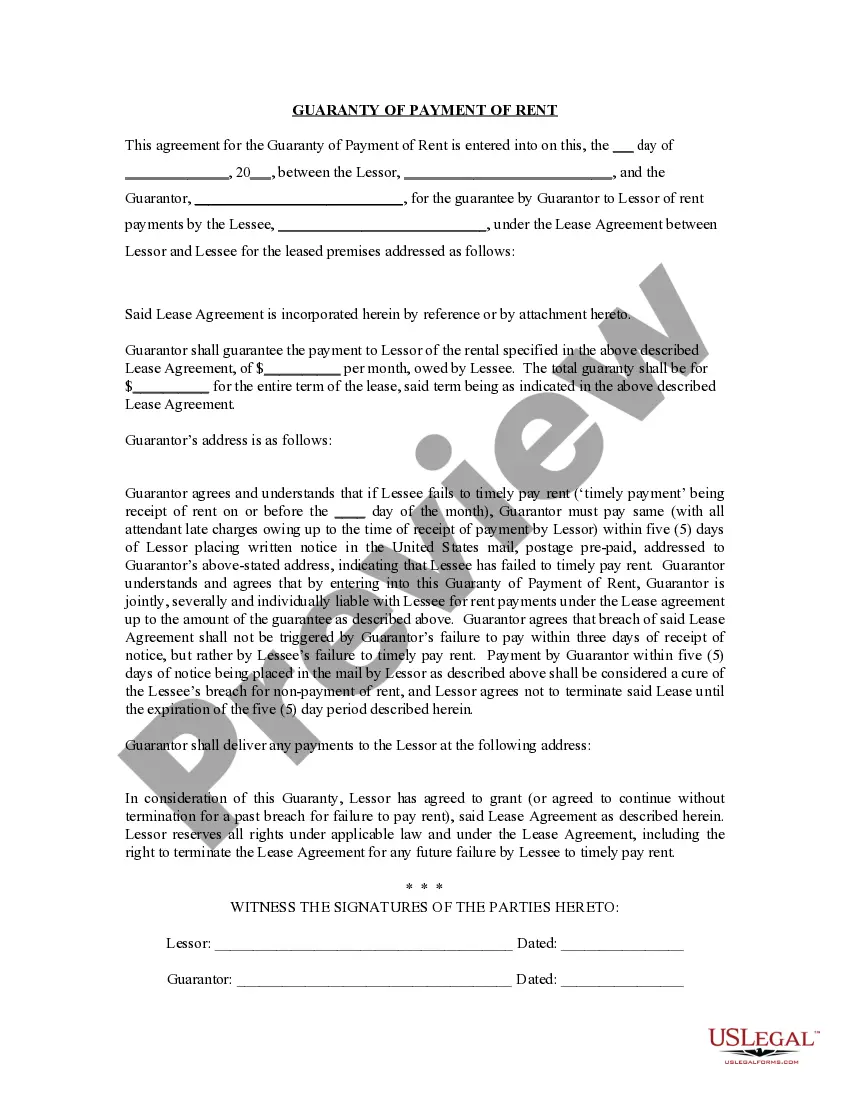
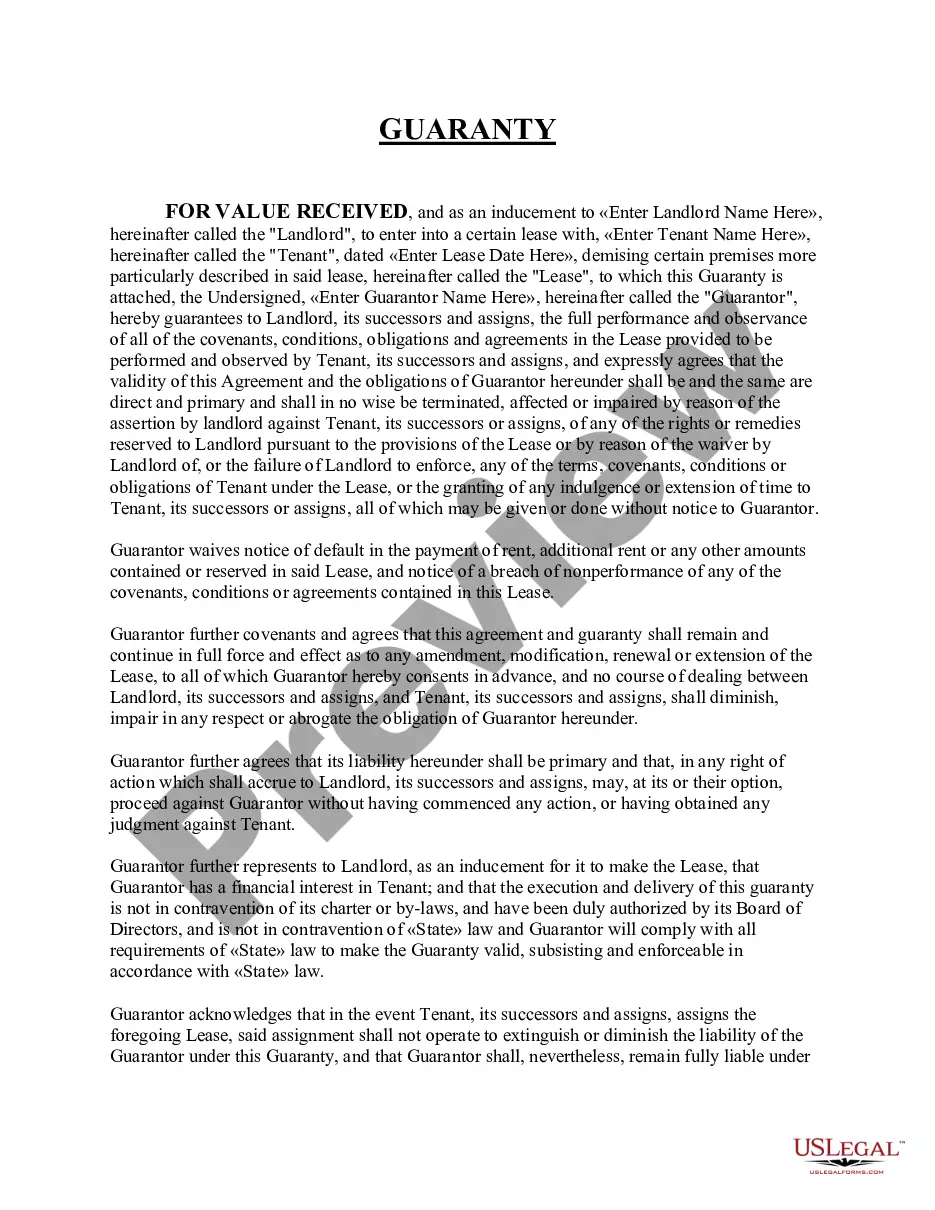
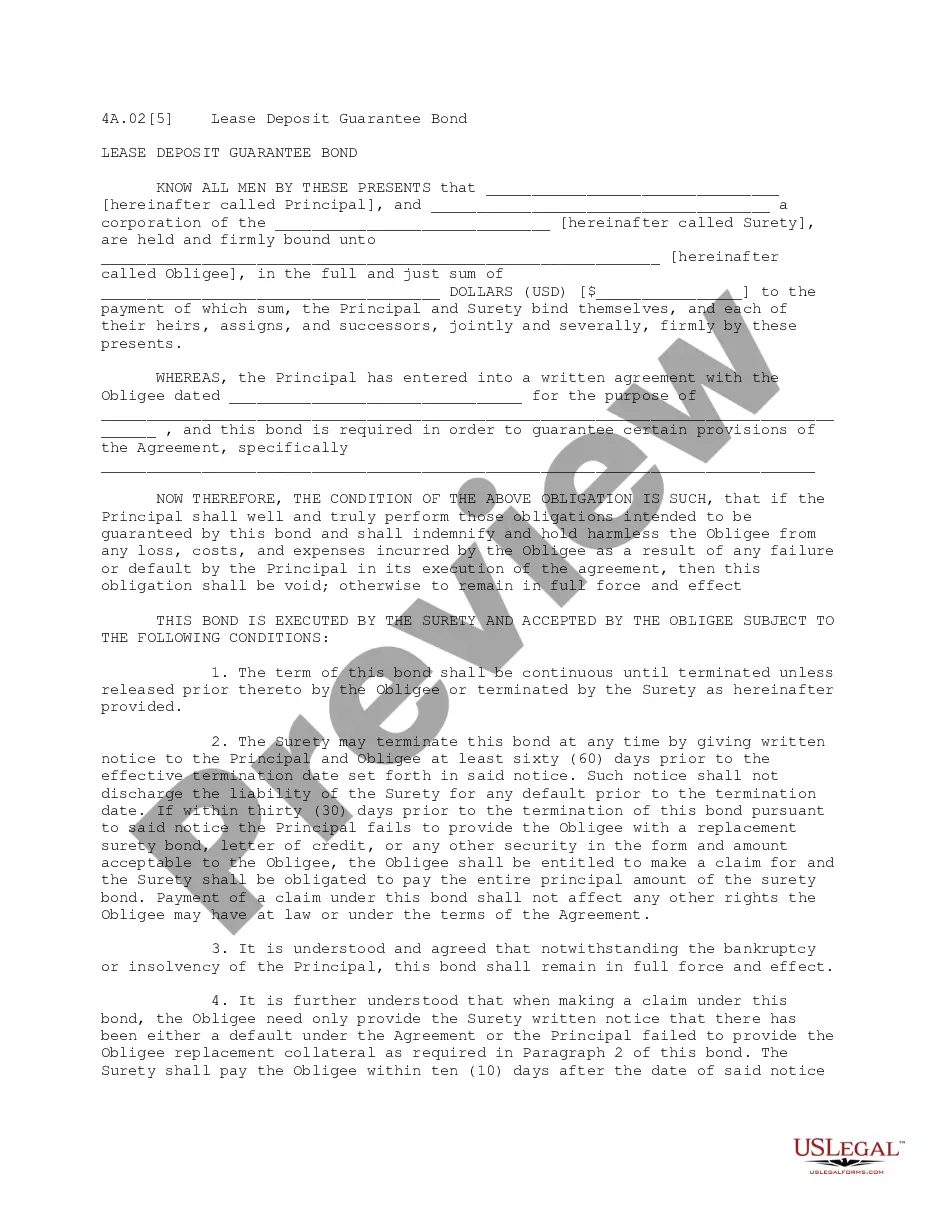
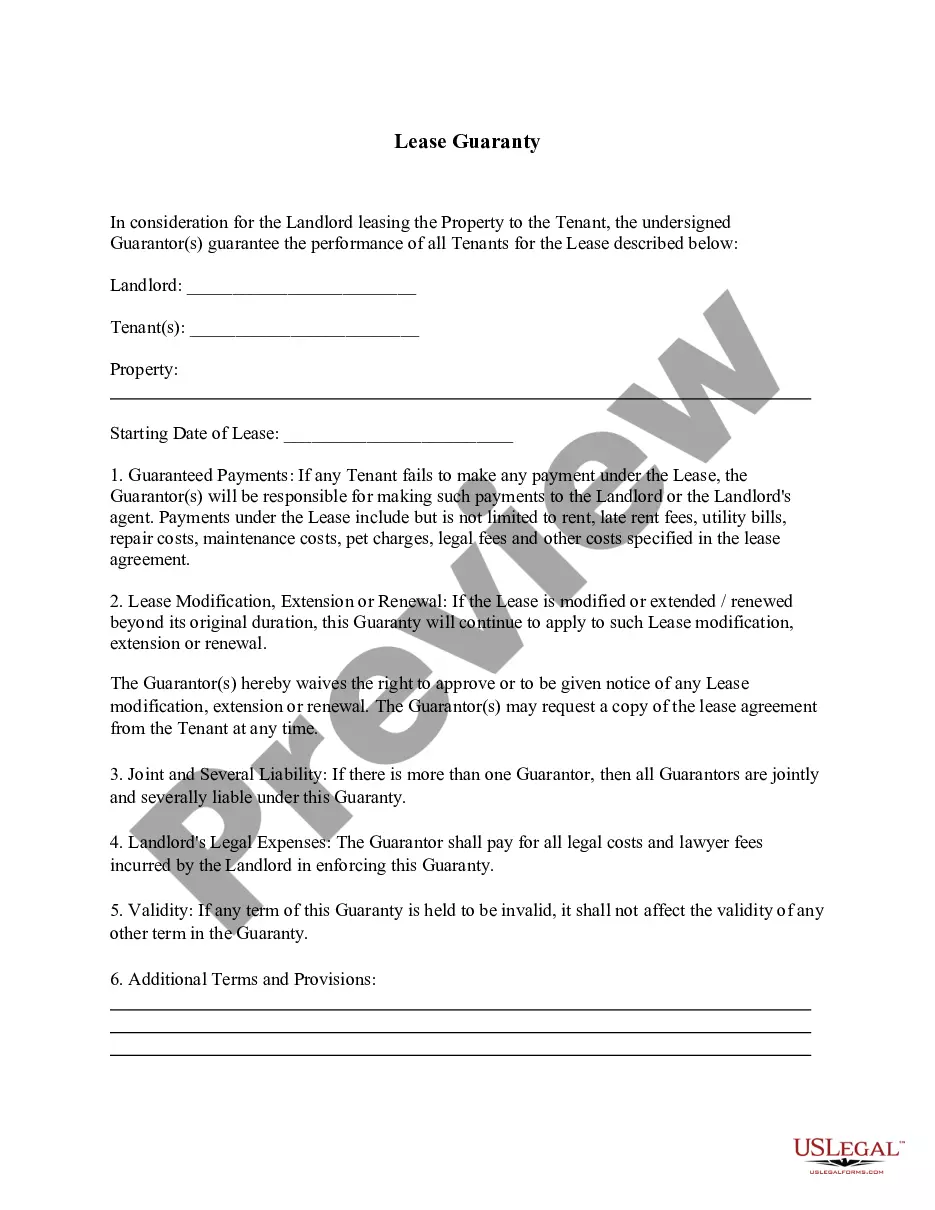
The Guaranty or Guarantee of Payment of Rent is a legal document that establishes an agreement between a tenant's guarantor and the landlord. The guarantor commits to covering the rent if the tenant fails to pay. This form ensures the landlord has a reliable party to seek compensation from in case of non-payment, distinguishing it from other rental agreements by explicitly involving a third party who takes responsibility for the tenant's obligations.
Form components explained
- Identifying information for both the tenant and the guarantor.
- Details about the rental property subject to the agreement.
- Conditions triggering the guarantor's payment obligations.
- Signature lines for both the landlord and the guarantor to validate the agreement.
- Date of agreement to provide a clear timeline.
When to use this document
This form is essential when a tenant requires assistance ensuring their rent is guaranteed, particularly if they have a limited credit history or income. It can be used in various scenarios, including renting a new apartment or house, where the landlord requests additional security to mitigate the risk of potential non-payment.
Who can use this document
The following parties may find this form useful:
- Guarantors who are willing to back a tenant's rental agreement.
- Landlords seeking additional assurance for payment from tenants.
- Tenants who might struggle to secure a lease without a guarantor.
Completing this form step by step
- Identify the parties involved, including the tenant, guarantor, and landlord.
- Provide an accurate description of the rental property.
- Clearly state the conditions under which the guarantor will be responsible for the rent payments.
- Have both parties sign and date the form to make it legally binding.
- Retain copies for all parties involved after completion.
Does this document require notarization?
This form usually doesn’t need to be notarized. However, local laws or specific transactions may require it. Our online notarization service, powered by Notarize, lets you complete it remotely through a secure video session, available 24/7.
Get your form ready online
Our built-in tools help you complete, sign, share, and store your documents in one place.
Make edits, fill in missing information, and update formatting in US Legal Forms—just like you would in MS Word.
Download a copy, print it, send it by email, or mail it via USPS—whatever works best for your next step.
Sign and collect signatures with our SignNow integration. Send to multiple recipients, set reminders, and more. Go Premium to unlock E-Sign.
If this form requires notarization, complete it online through a secure video call—no need to meet a notary in person or wait for an appointment.
We protect your documents and personal data by following strict security and privacy standards.

Make edits, fill in missing information, and update formatting in US Legal Forms—just like you would in MS Word.

Download a copy, print it, send it by email, or mail it via USPS—whatever works best for your next step.

Sign and collect signatures with our SignNow integration. Send to multiple recipients, set reminders, and more. Go Premium to unlock E-Sign.

If this form requires notarization, complete it online through a secure video call—no need to meet a notary in person or wait for an appointment.

We protect your documents and personal data by following strict security and privacy standards.
Mistakes to watch out for
- Not including accurate information about the rental property.
- Failing to clearly outline the conditions for payment by the guarantor.
- Omitting signatures or dates, which can render the form invalid.
Benefits of completing this form online
- Convenient access to customizable templates tailored for your needs.
- Secure and immediate download for quick use.
- Forms drafted by licensed attorneys to ensure legal compliance.
Summary of main points
- Ensure all parties are correctly identified and their obligations are clearly detailed.
- Understand when and why a guaranty is beneficial for both landlords and tenants.
- Keep track of the signatures and completion dates for legal validity.
Looking for another form?
Form popularity
FAQ
Typically, a guarantor should have a strong credit score, often above 650, to satisfy landlords during the rental process. However, requirements can vary depending on the property and landlord's preferences. In Connecticut, a higher credit score can make a substantial difference in securing rental approvals for tenants seeking a guarantor's support. For those uncertain about their qualifications, using platforms like uslegalforms can help clarify and prepare necessary documentation.
In a lease context, a guarantee and a guaranty typically refer to similar concepts, but they might slightly differ in legal implications. A guarantee often indicates a broader commitment to uphold the lease terms, while a guaranty focuses more specifically on assuring payment obligations. Knowing the nuances between these terms is crucial when entering into a rental agreement in Connecticut. Using clear language in contracts can prevent misunderstandings and protect both parties involved.
The real estate trend in Connecticut has shown steady appreciation in home values over recent years, driven by factors like low interest rates and increased demand for suburban living. Buyers are particularly interested in areas with good schools, amenities, and a strong sense of community, aligning with the features that offer peace of mind, including aspects related to the Connecticut Guaranty or Guarantee of Payment of Rent. Staying informed about these trends empowers you to make well-informed decisions in the competitive housing market.
The new home guaranty fund in Connecticut is designed to provide financial protection to homebuyers who have purchased a new residential property. This fund aims to cover certain losses that could arise from construction defects or builder misconduct, reinforcing the security of the Connecticut Guaranty or Guarantee of Payment of Rent. As such, homebuyers can pursue their dream homes with greater confidence, knowing that support is in place should issues arise.
In Connecticut, compensation from the real estate guaranty fund is available to individuals who have incurred losses due to the actions of a real estate broker or salesperson who has breached their duties. This fund helps protect consumers and ensures that they can recover losses related to transactions that fall under the Connecticut Guaranty or Guarantee of Payment of Rent. By having this safety net, consumers can feel more secure when engaging in real estate transactions.
The Home Improvement Guaranty Fund in Connecticut is designed to protect consumers against financial loss when hiring contractors for home improvement projects. This fund compensates homeowners if a licensed contractor fails to fulfill obligations such as completing the work or paying suppliers. By understanding this fund, consumers can confidently engage in home improvements, knowing they have safeguards in place, similar to the assurance provided by the Connecticut guaranty or guarantee of payment of rent.
A guarantor typically needs to demonstrate sufficient income and creditworthiness to ensure the landlord of their ability to cover the rent payments. Most landlords require a guarantor's income to be three times the monthly rent. This ensures that your rental payments remain secure, further reinforcing the Connecticut guaranty or guarantee of payment of rent. If you have questions about qualifying as a guarantor, consider exploring resources on the USLegalForms platform.
The Connecticut Real Estate Guaranty Fund was established to protect consumers during real estate transactions. It provides financial compensation to individuals who suffer losses due to a licensed real estate agent's misconduct. This fund is crucial for promoting trust in the real estate market, ensuring that all parties can transact with confidence. By understanding the importance of such protections, you can feel secure in your dealings, especially regarding the guarantee of payment of rent.
A standard letter of guarantee is a formal document that outlines the guarantor's commitment to cover the obligations required by a lease. This letter typically includes details such as the tenant's name, property location, and amounts owed. It often references the Connecticut Guaranty or Guarantee of Payment of Rent to specify the financial responsibilities of the guarantor.
To fill out a guarantor letter, start by introducing yourself and stating your relationship to the tenant. Provide your contact information and explicitly state that you will assume responsibility for rent payments, referencing the Connecticut Guaranty or Guarantee of Payment of Rent. Ensure clarity and detail to avoid ambiguity on your obligations.