Colorado Warranty Deed from Individuals - Tenancy in Common to Joint Tenancy
What this document covers
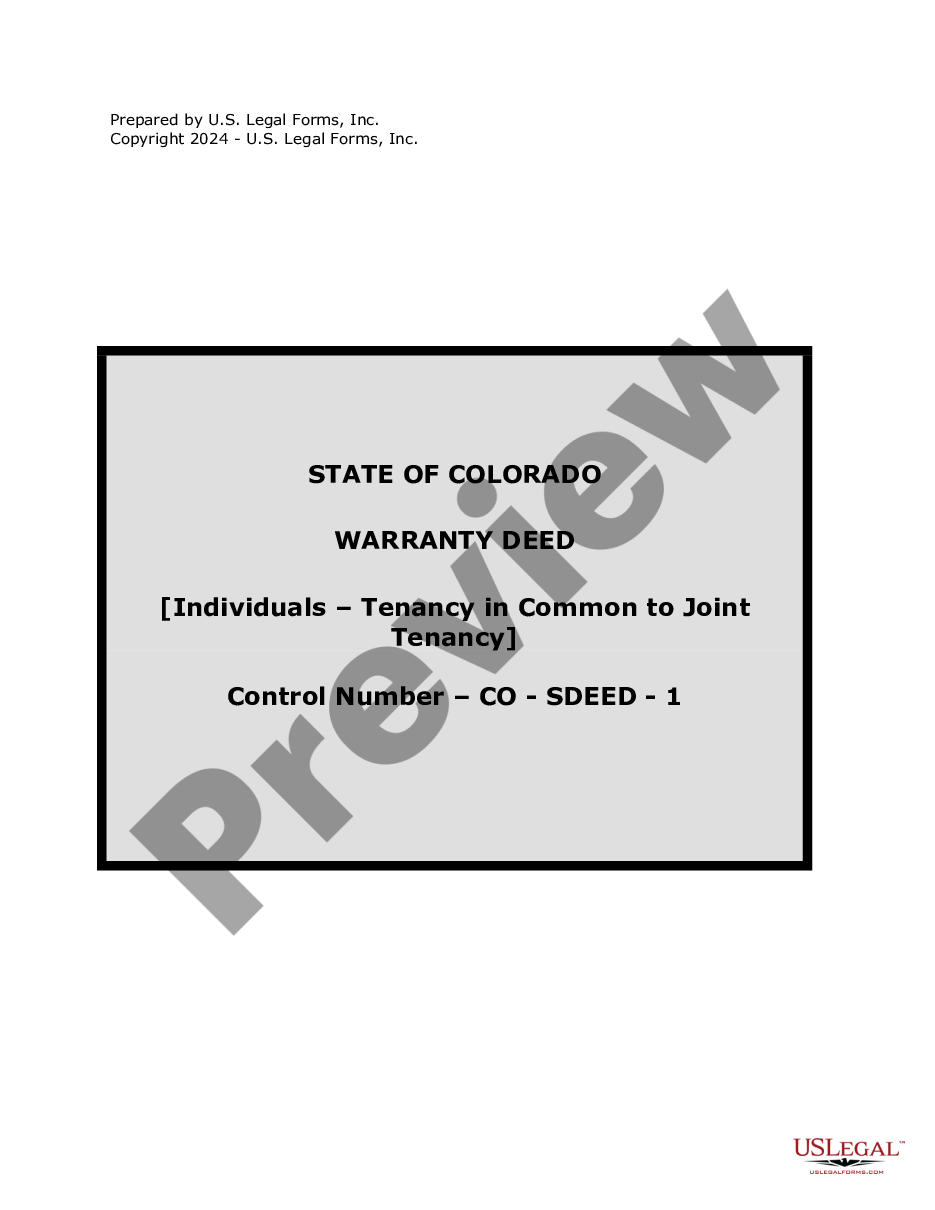
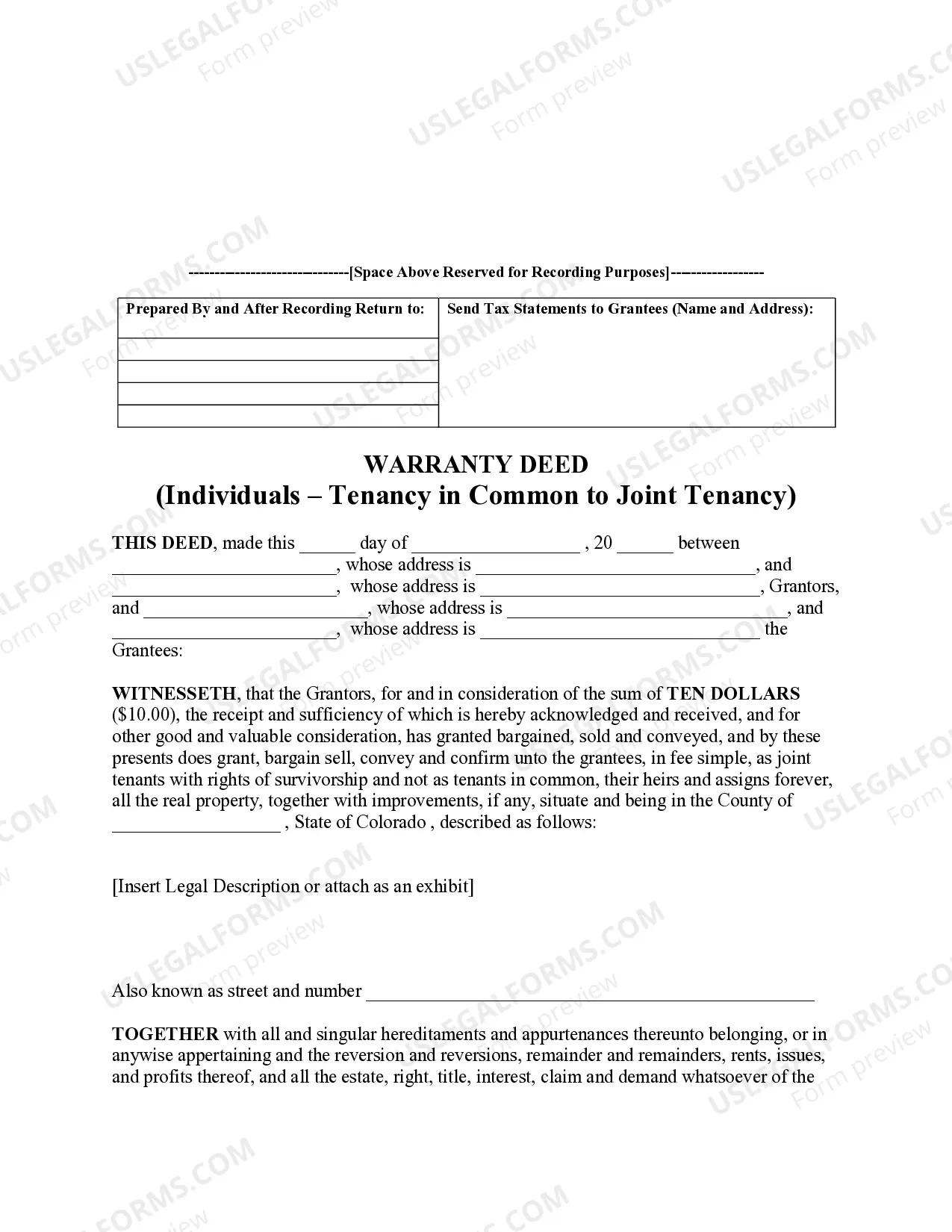
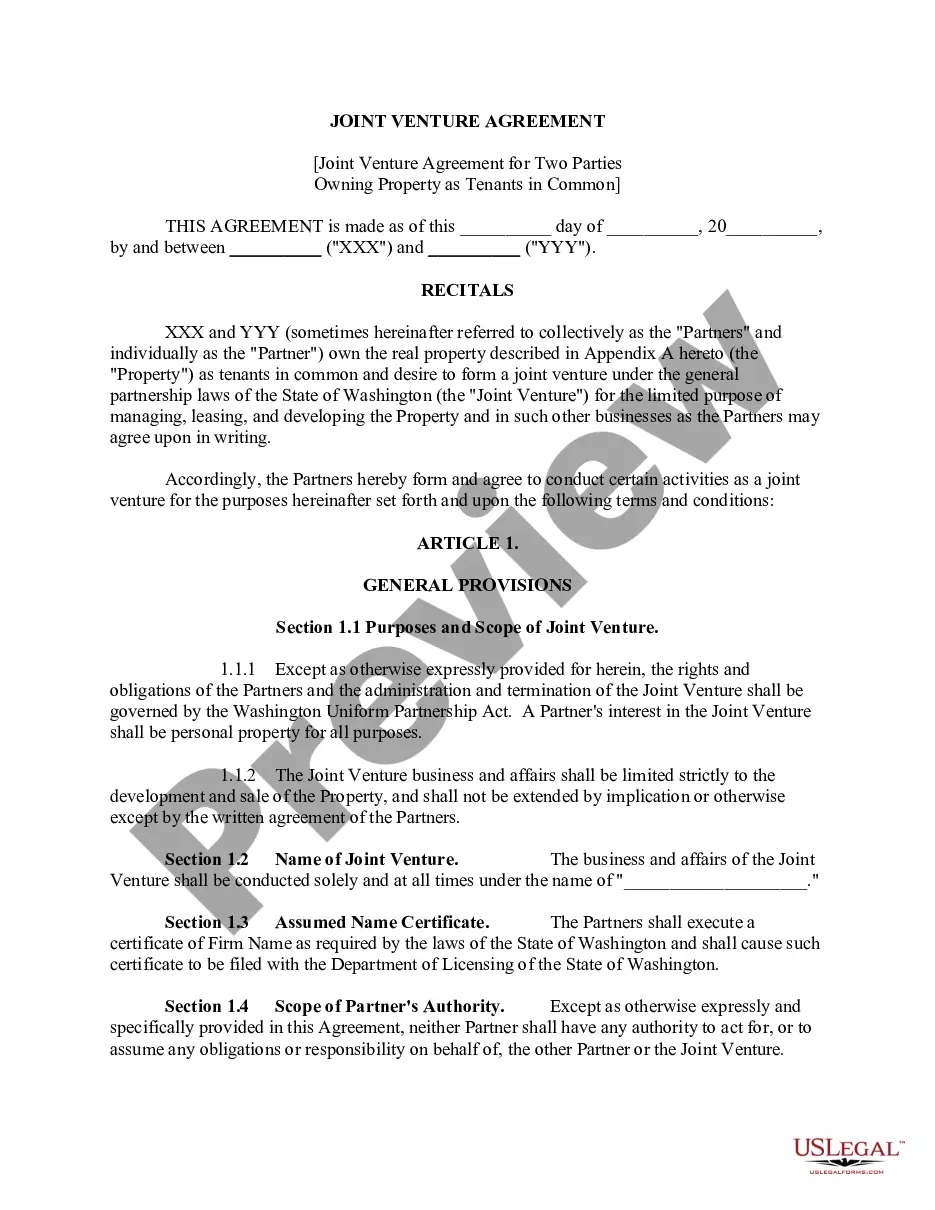
The Warranty Deed from Individuals - Tenancy in Common to Joint Tenancy is a legal document used to transfer property ownership from two individuals (the grantors) to two individuals (the grantees) with the stipulation that they hold the property as joint tenants. This form is distinct from a common tenancy in common, as it provides the grantees with rights of survivorship, meaning that if one grantee passes away, their share automatically transfers to the surviving grantee without going through probate. This form is ideal for individuals looking to clarify shared ownership and ensure ease of property transfer upon death.
Main sections of this form
- Grantors and Grantees: Identification of the individuals transferring property and the individuals receiving it.
- Consideration: The sum agreed upon for the property transfer, which is commonly set at ten dollars.
- Property Description: An accurate legal description of the property being conveyed.
- Rights of Survivorship: A clause that establishes the property will pass directly to the surviving joint tenant in case of death.
- Covenants: Assurances from the grantors about the state of the property and their rights to convey it.
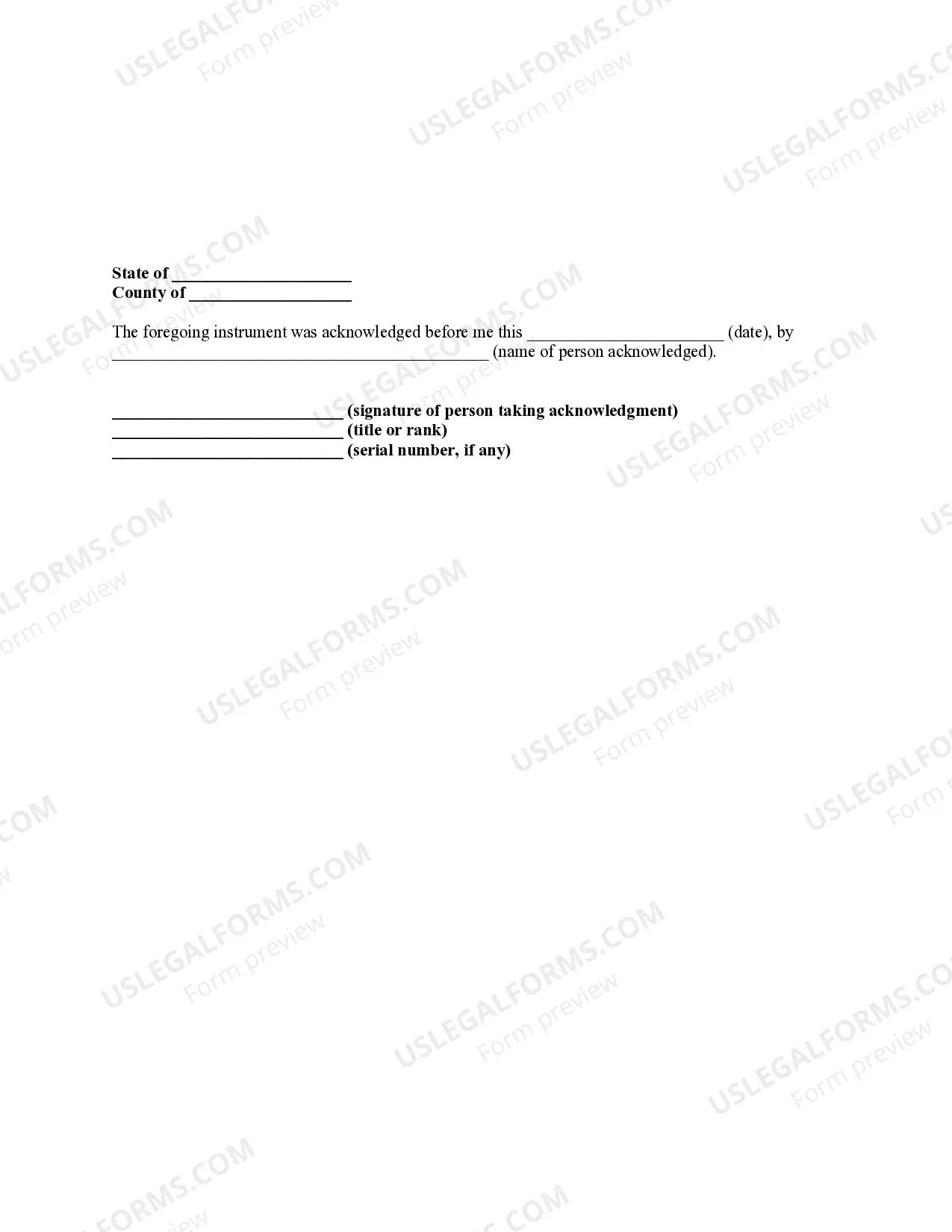
- Notary Acknowledgment: A section for notarization to validate the document.




When to use this document
This form is appropriate when two individuals wish to transfer property from a tenancy in common into a joint tenancy arrangement. Common scenarios include couples, family members, or business partners who want to ensure that the surviving party automatically inherits the property upon the death of the other. Additionally, those wanting to avoid probate and ensure a smoother transition of ownership should consider using this warranty deed.
Who should use this form
This form is intended for:
- Individuals currently holding title to real estate as tenants in common.
- Partners or spouses wanting to convert their ownership to joint tenancy.
- Anyone looking for a straightforward transfer of property with rights of survivorship.
Steps to complete this form
To complete the Warranty Deed from Individuals - Tenancy in Common to Joint Tenancy, follow these steps:
- Identify the grantors (individuals transferring the property) and grantees (individuals receiving the property).
- Specify the consideration amount, typically ten dollars.
- Enter a detailed legal description of the property being conveyed.
- Include any special clauses, such as rights of survivorship.
- Finalize by having the grantors sign in the presence of a notary public.
Does this form need to be notarized?
Yes, this form must be notarized to be legally valid. The signatures of the grantors must be acknowledged by a notary public. US Legal Forms offers integrated online notarization services, allowing you to complete this step securely via a video call without the need to travel.
Get your form ready online
Our built-in tools help you complete, sign, share, and store your documents in one place.
Make edits, fill in missing information, and update formatting in US Legal Forms—just like you would in MS Word.
Download a copy, print it, send it by email, or mail it via USPS—whatever works best for your next step.
Sign and collect signatures with our SignNow integration. Send to multiple recipients, set reminders, and more. Go Premium to unlock E-Sign.
If this form requires notarization, complete it online through a secure video call—no need to meet a notary in person or wait for an appointment.
We protect your documents and personal data by following strict security and privacy standards.

Make edits, fill in missing information, and update formatting in US Legal Forms—just like you would in MS Word.

Download a copy, print it, send it by email, or mail it via USPS—whatever works best for your next step.

Sign and collect signatures with our SignNow integration. Send to multiple recipients, set reminders, and more. Go Premium to unlock E-Sign.

If this form requires notarization, complete it online through a secure video call—no need to meet a notary in person or wait for an appointment.

We protect your documents and personal data by following strict security and privacy standards.
Common mistakes to avoid
- Failing to provide a complete legal description of the property.
- Not specifying the rights of survivorship, which is crucial for joint tenancy.
- Neglecting to have the document notarized, which is essential for validity.
- Incorrectly listing the grantors and grantees' names or details.
Benefits of completing this form online
- Convenience of completing the form online at your own pace.
- Editability allows users to adjust the details before finalizing.
- Reliable templates drafted by licensed attorneys provide peace of mind.
- Accessible on various devices, ensuring flexibility in filling out the form.
Quick recap
- The Warranty Deed facilitates the transfer of property from tenancy in common to joint tenancy.
- Using this form ensures automatic inheritance for the surviving joint tenant.
- Carefully complete the form and ensure notarization to maintain legal validity.
Looking for another form?





Form popularity
FAQ
The best way to transfer property title between family members is through a well-prepared Colorado Warranty Deed from Individuals - Tenancy in Common to Joint Tenancy. This method clearly outlines the terms of the transfer and allows co-ownership to be formalized. For straightforward guidance, consider using online resources like US Legal Forms, which help you navigate the preparation and filing process with ease.
Yes, you can transfer a deed without an attorney in Colorado, especially when using straightforward instruments like a Colorado Warranty Deed from Individuals - Tenancy in Common to Joint Tenancy. While it is possible to handle this on your own, ensure that you understand the requirements and properly complete the deed. Utilizing user-friendly platforms like US Legal Forms can guide you through the process and ensure you meet all legal standards.
Transferring a property title to a family member in Colorado can be done effectively using a Colorado Warranty Deed from Individuals - Tenancy in Common to Joint Tenancy. It involves creating the deed, obtaining the necessary signatures, and notarizing the document. Next, file the deed with the county clerk and recorder to update the ownership in public records. This approach helps ensure a smooth and legal transfer of the property.
To transfer a property title to a family member in Colorado, you can utilize a Colorado Warranty Deed from Individuals - Tenancy in Common to Joint Tenancy. First, ensure you have the correct deed format and proper legal descriptions of the property. After filling out the deed, you must have it signed and notarized, then record it at your county's clerk and recorder office. This process will officially document the transfer in the public record.
To write a deed with right of survivorship in Colorado, you should use a Colorado Warranty Deed from Individuals - Tenancy in Common to Joint Tenancy. First, gather the necessary information about all parties involved, including their names and addresses. Next, clearly state that the property is being transferred to the grantees as joint tenants, ensuring the right of survivorship is specified. Using uslegalforms can simplify this process, providing you with a reliable template and guidance to complete your deed accurately.
To transfer ownership from joint tenancy to tenancy in common in Colorado, all owners must agree to the change and execute a new warranty deed. This deed must clearly state that the ownership style has changed. It is advisable to use a legal service, like UsLegalForms, to ensure all documentation meets the necessary legal standards. Transitioning your Colorado Warranty Deed from Individuals - Tenancy in Common to Joint Tenancy requires careful attention to detail to avoid future disputes.
When a warranty deed indicates joint tenants, it signifies that all parties share equal ownership of the property. This arrangement typically includes the right of survivorship, meaning if one joint tenant passes away, their ownership interest automatically transfers to the remaining joint tenants. This is a key feature for those considering a Colorado Warranty Deed from Individuals - Tenancy in Common to Joint Tenancy, as it impacts inheritance and property management.
In Colorado, both joint tenancy and tenancy in common are recognized forms of property ownership. The choice between the two depends on the preferences of the owners, specifically regarding ownership rights and survivorship. Many individuals opt for joint tenancy for the benefit of passing property directly to co-owners upon death. When you explore a Colorado Warranty Deed from Individuals - Tenancy in Common to Joint Tenancy, it's crucial to know which form best fits your situation.
Ownership as tenancy in common involves multiple individuals holding a property together, but each person owns a specific share that can be unequal. In contrast, joint tenancy means all owners share equal ownership, including rights of survivorship. This feature ensures that if one joint tenant passes away, their share automatically transfers to the remaining joint tenants. Understanding these distinctions is essential, especially when dealing with a Colorado Warranty Deed from Individuals - Tenancy in Common to Joint Tenancy.