Nevada Application for Protection Order Against Domestic Violence
Understanding this form
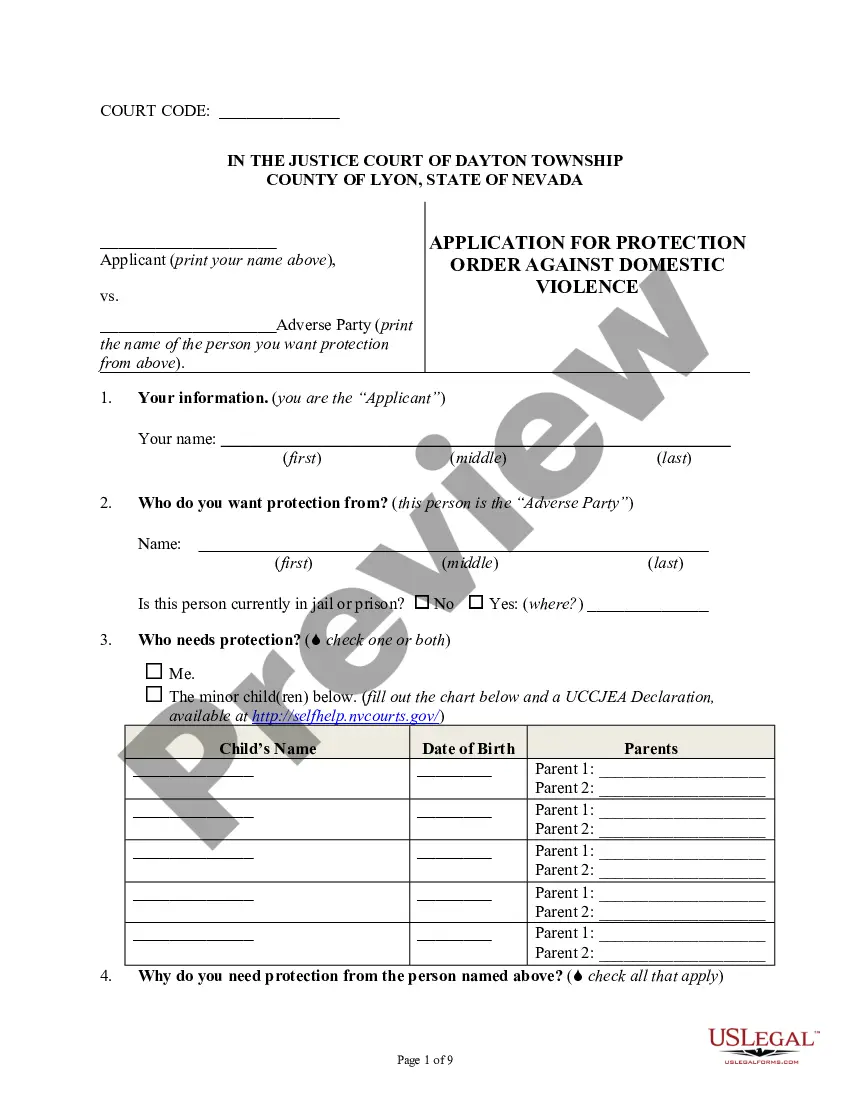
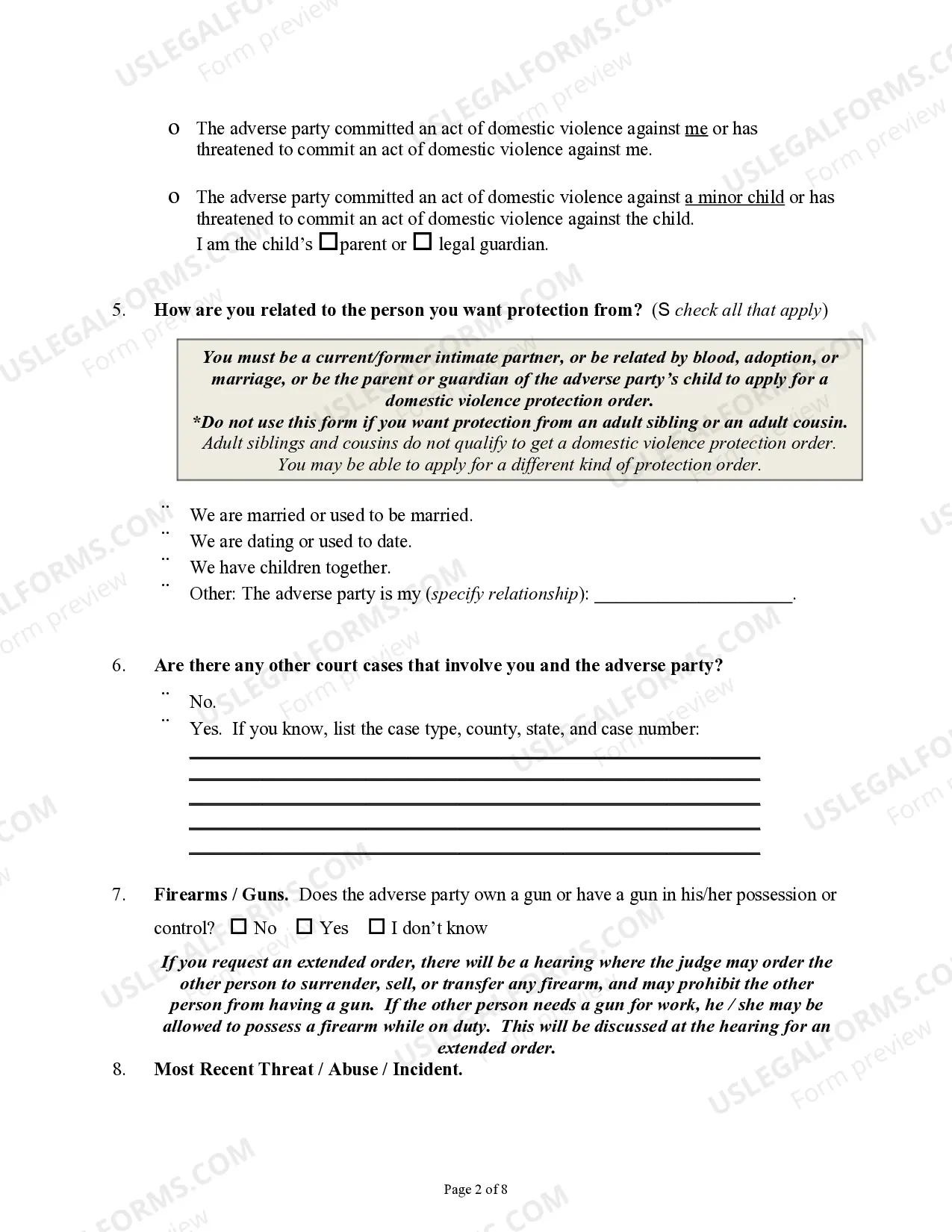
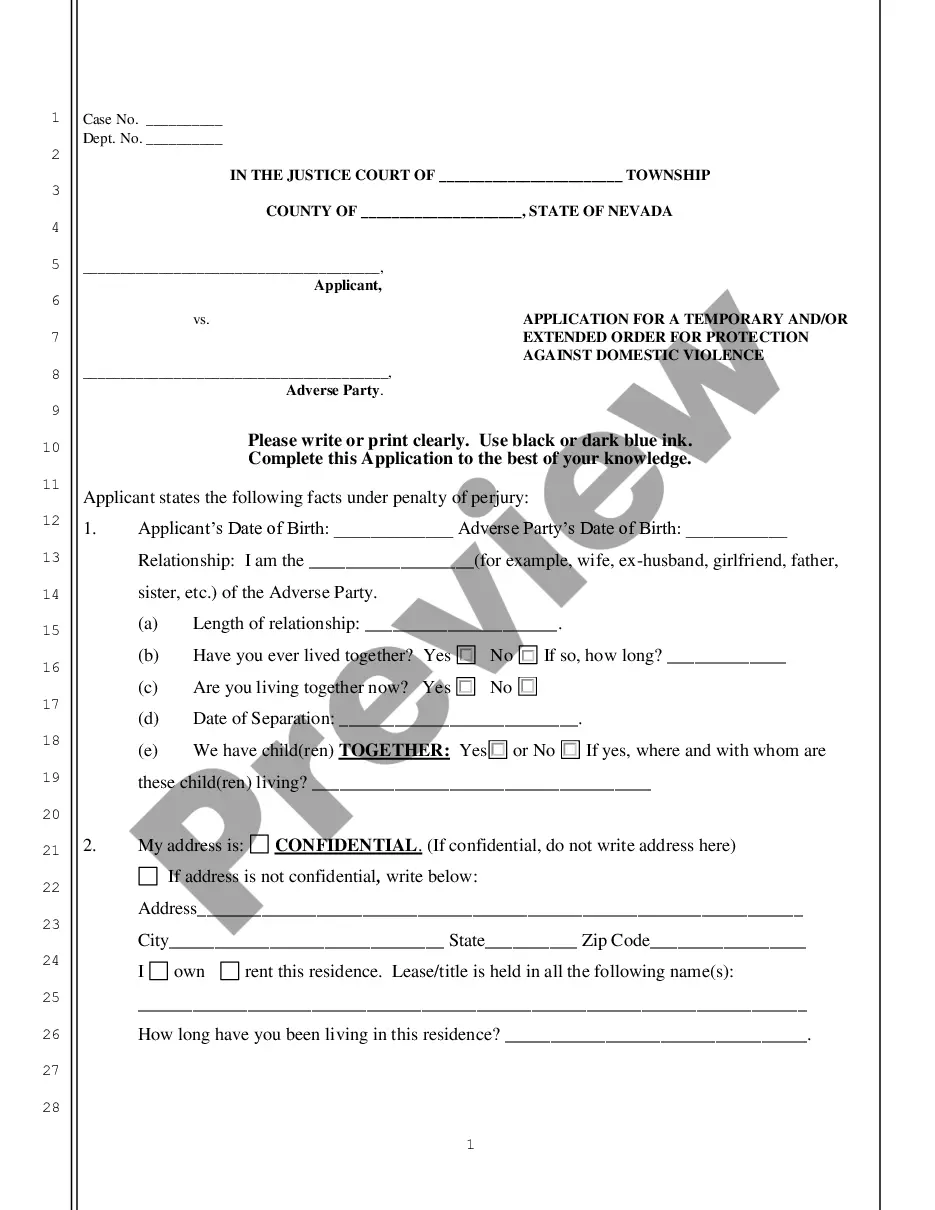
The Application for Protection Order Against Domestic Violence is a legal document designed to seek court intervention for the safety and well-being of individuals facing threats or acts of violence. This form, specifically tailored for situations involving domestic violence, allows individuals to request protective measures from the court to prevent further harm. Unlike other protection orders, this application focuses on domestic situations where the applicant has a close relationship, such as being a current or former intimate partner or sharing a child with the adverse party.
Key parts of this document
- Court code and jurisdiction information to identify the legal venue.
- Applicantâs details, including name and relationship to the adverse party.
- Information regarding the adverse party, including any current incarceration status.
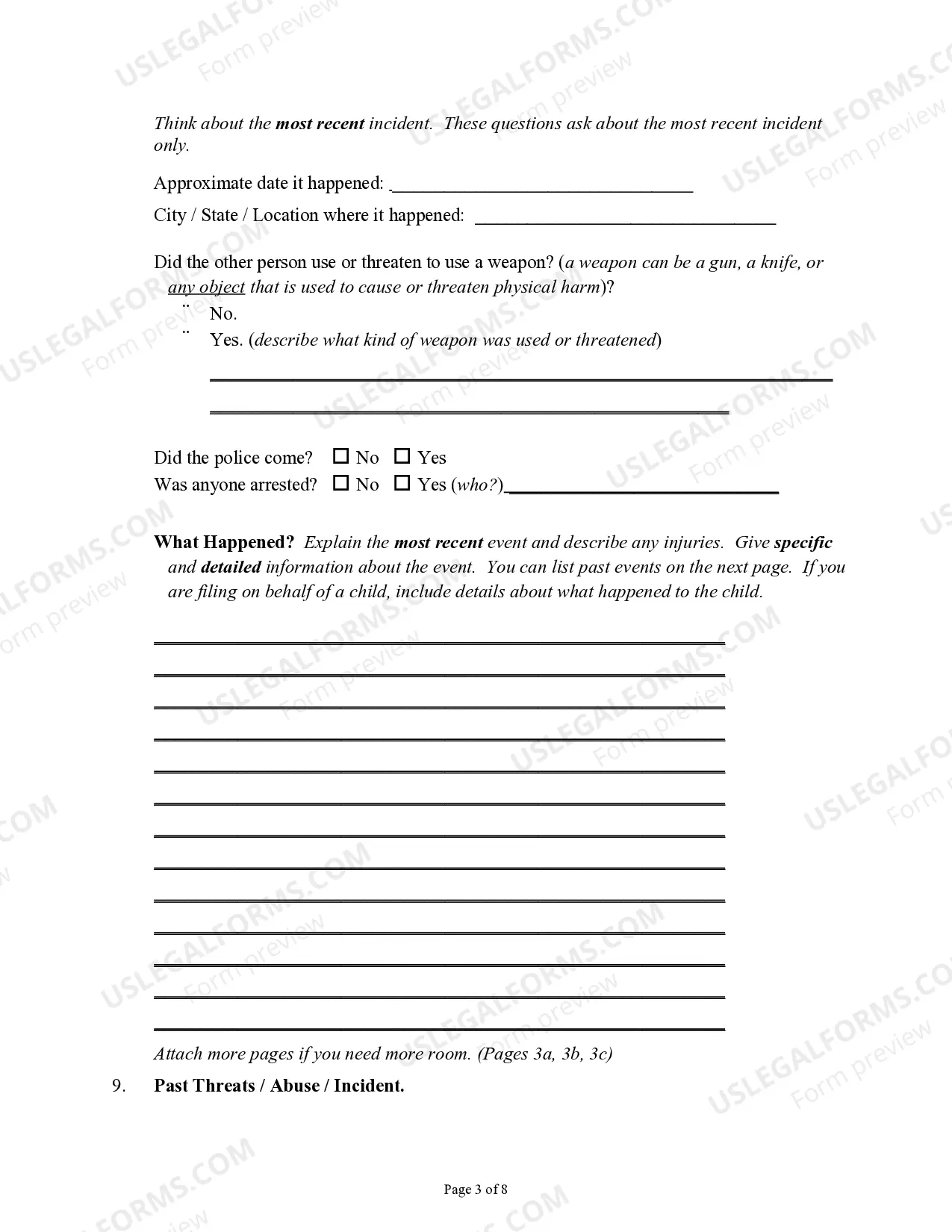
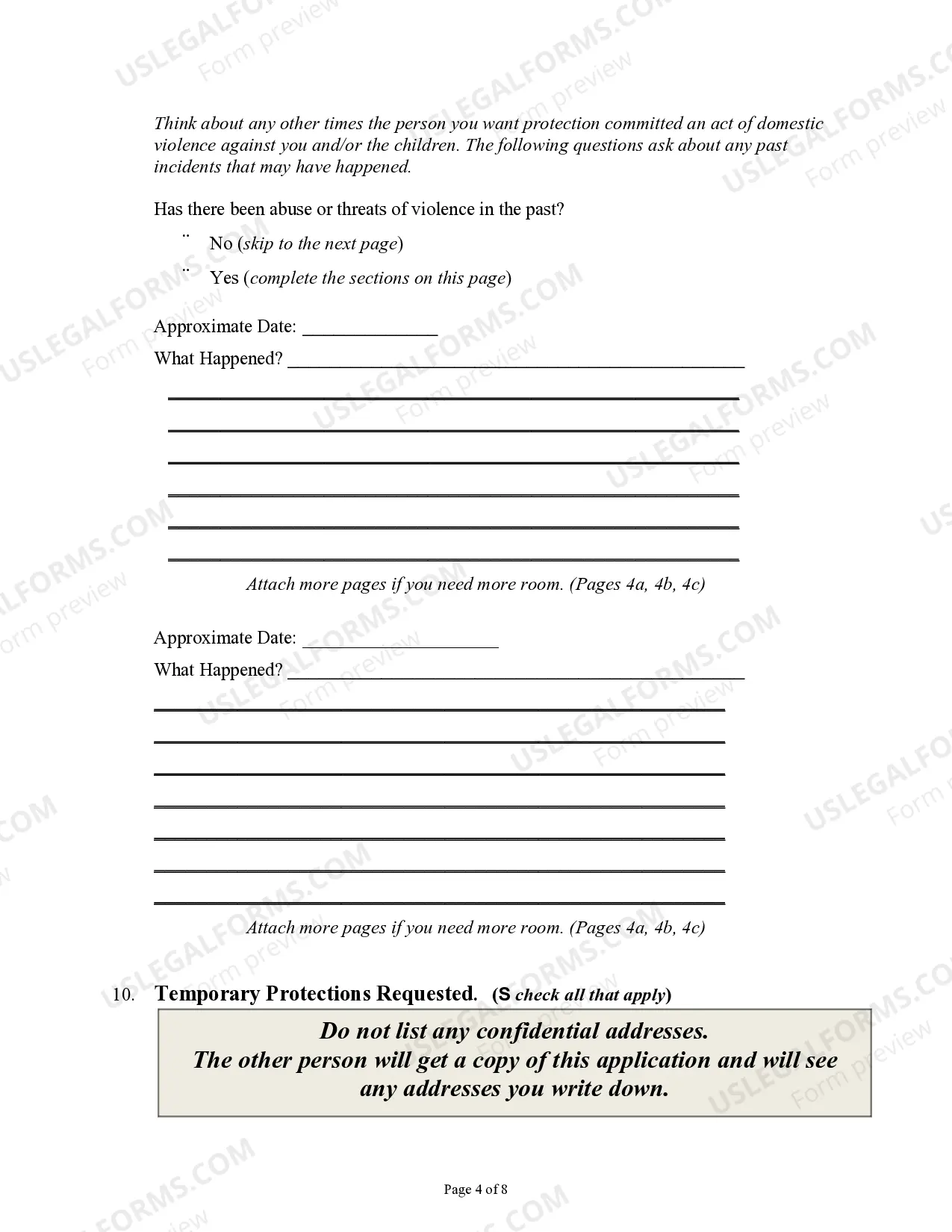
- Details of any past incidents of domestic violence or threats.
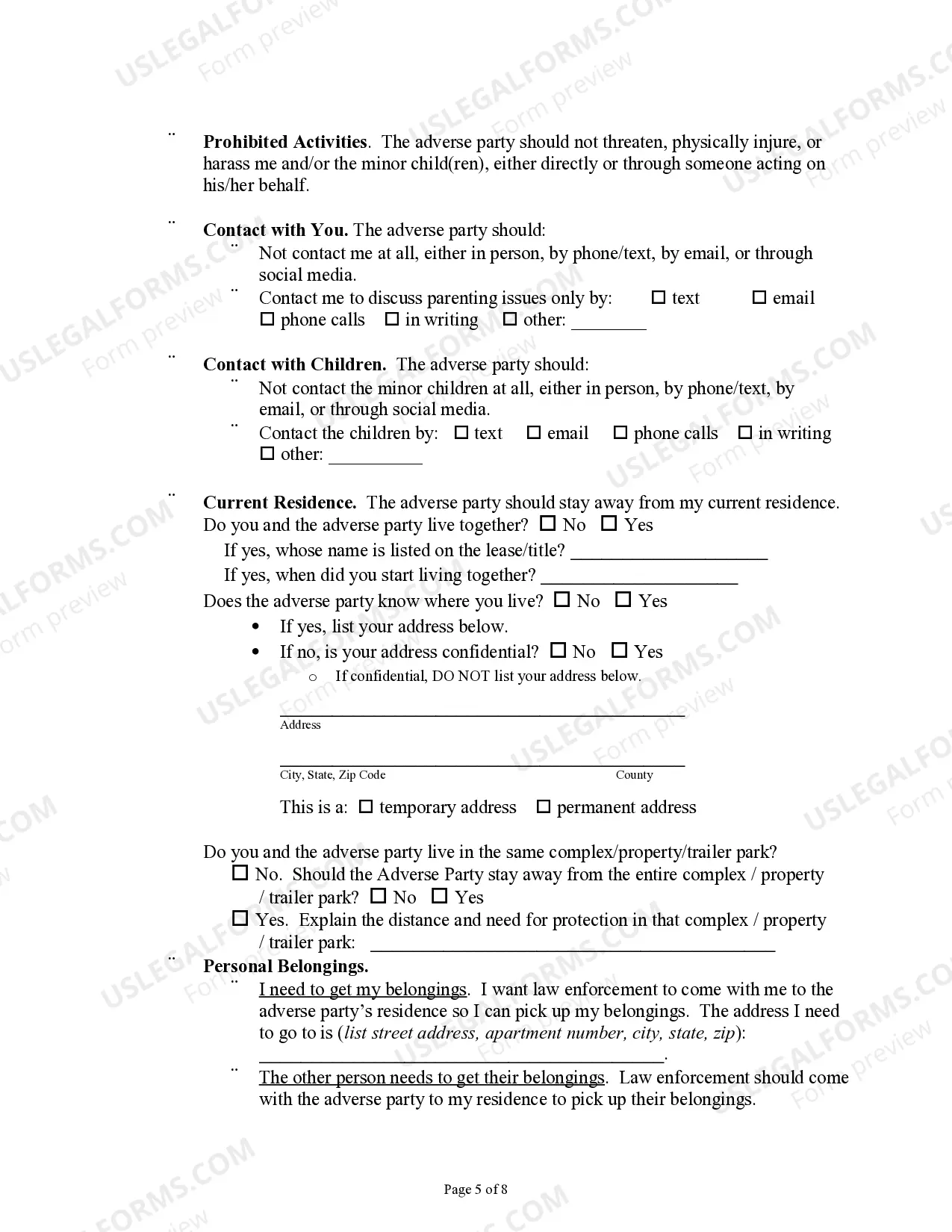
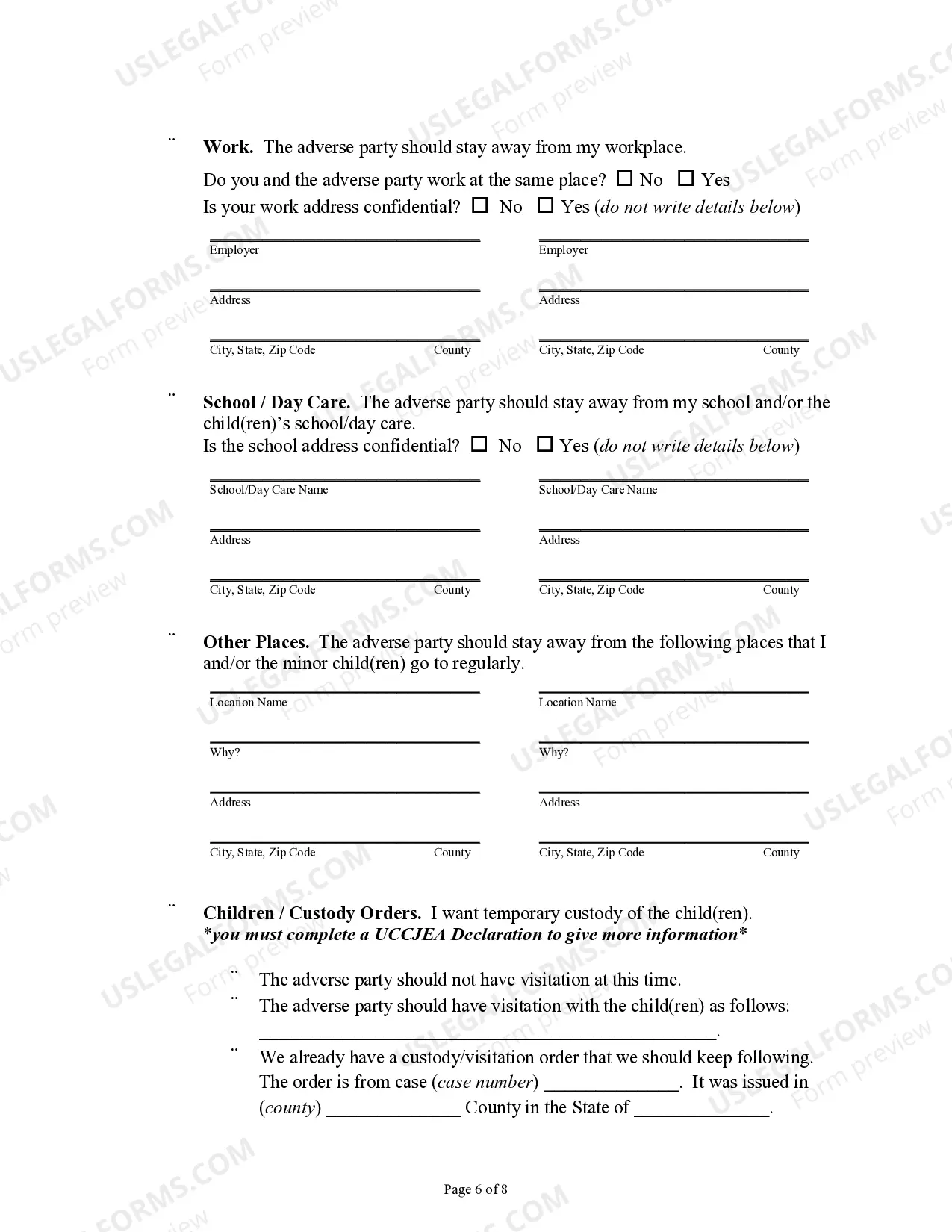
- Requests for temporary protection measures, including staying away from homes, workplaces, and schools.
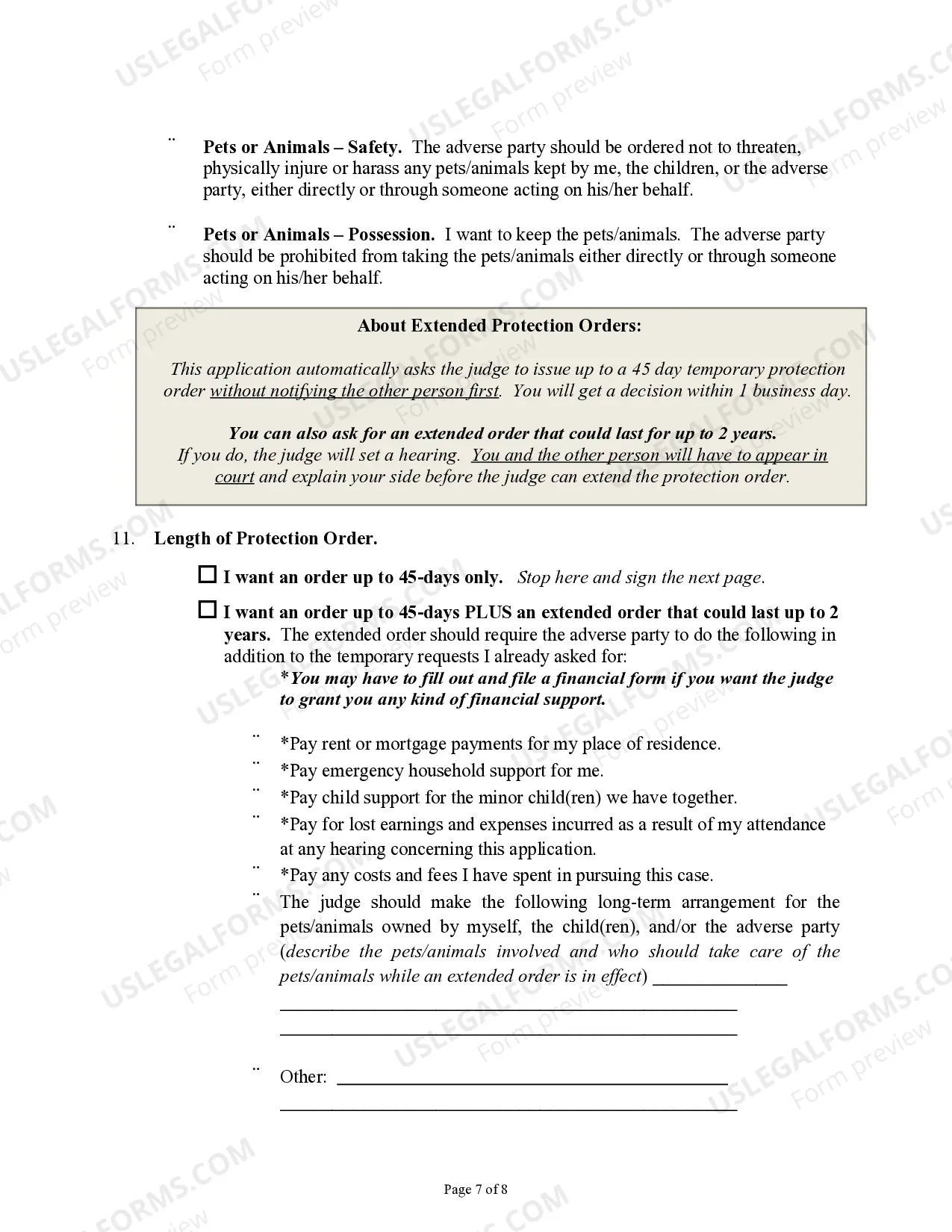
- Sections for documenting firearms possession and additional protections for children and pets.

When this form is needed
This form is used when an individual seeks immediate protection from someone they have a close relationship with and who has committed acts of domestic violence or has made threats of such actions. Situations may include experiencing physical harm, intimidation, harassment, or threats of bodily injury that create a fear for oneâs own safety or the safety of children involved.
Who can use this document
- Individuals who are current or former intimate partners of the adverse party.
- Parents or legal guardians of children who have been threatened or harmed by the adverse party.
- Those who have been subjected to physical or emotional abuse within domestic settings.
- Individuals needing to establish legal boundaries for their safety or the safety of their children.
How to prepare this document
- Identify yourself as the applicant by filling out your name at the top of the form.
- Provide the name of the adverse party from whom you seek protection.
- Select the relevant boxes indicating who requires protection, either yourself or minor children.
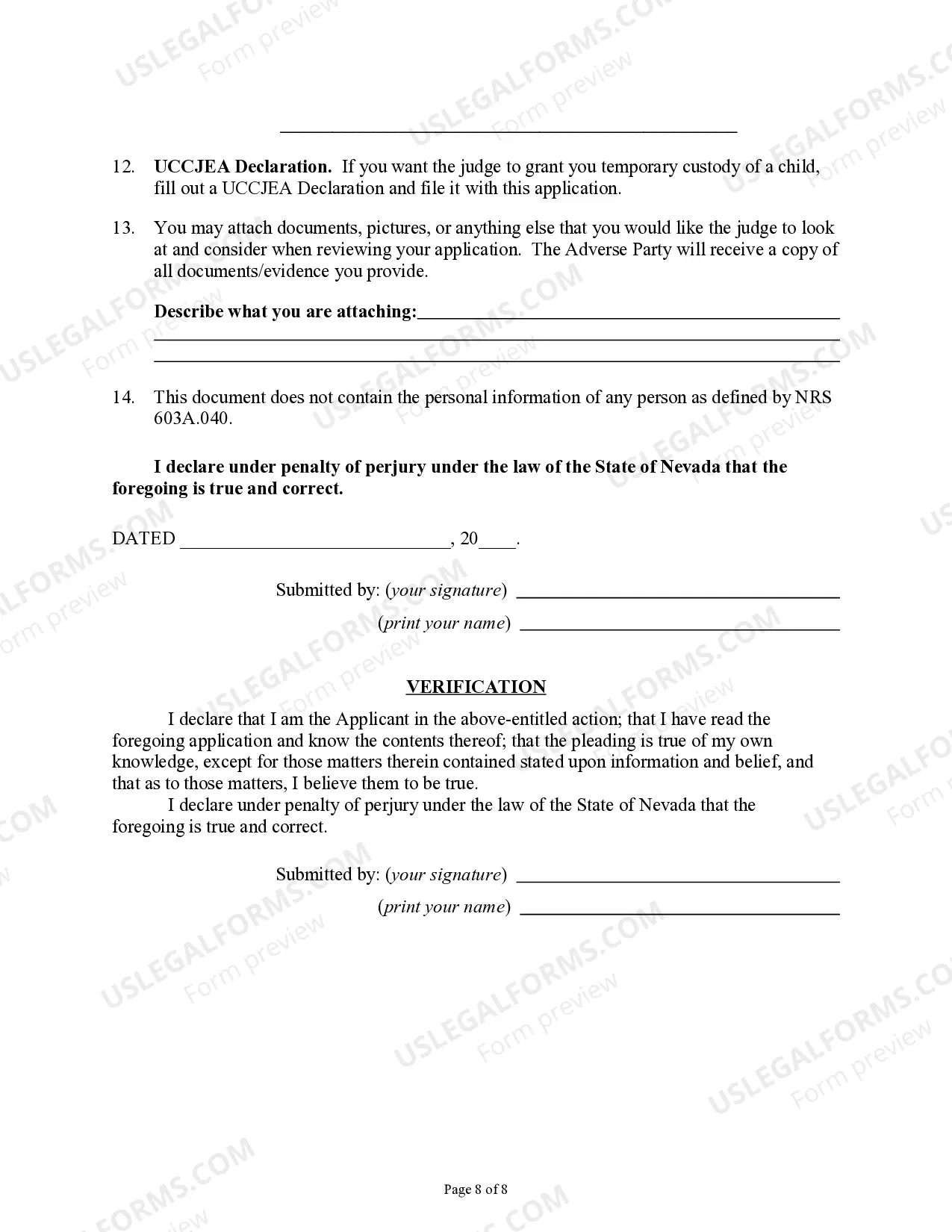
- Detail the specific incidents of violence or threat, including dates, locations, and descriptions.
- Check the boxes related to your requests for temporary protections, ensuring to include any specific needs for child custody or safety regarding pets.
Is notarization required?
This form usually doesn’t need to be notarized. However, local laws or specific transactions may require it. Our online notarization service, powered by Notarize, lets you complete it remotely through a secure video session, available 24/7.
Get your form ready online
Our built-in tools help you complete, sign, share, and store your documents in one place.
Make edits, fill in missing information, and update formatting in US Legal Forms—just like you would in MS Word.
Download a copy, print it, send it by email, or mail it via USPS—whatever works best for your next step.
Sign and collect signatures with our SignNow integration. Send to multiple recipients, set reminders, and more. Go Premium to unlock E-Sign.
If this form requires notarization, complete it online through a secure video call—no need to meet a notary in person or wait for an appointment.
We protect your documents and personal data by following strict security and privacy standards.

Make edits, fill in missing information, and update formatting in US Legal Forms—just like you would in MS Word.

Download a copy, print it, send it by email, or mail it via USPS—whatever works best for your next step.

Sign and collect signatures with our SignNow integration. Send to multiple recipients, set reminders, and more. Go Premium to unlock E-Sign.

If this form requires notarization, complete it online through a secure video call—no need to meet a notary in person or wait for an appointment.

We protect your documents and personal data by following strict security and privacy standards.
Typical mistakes to avoid
- Failing to provide all necessary details about previous incidents of violence.
- Not indicating the relationship correctly between yourself and the adverse party.
- Omitting to check all relevant protection requests needed for your specific situation.
- Neglecting to provide complete and accurate contact information if the address is confidential.
Benefits of using this form online
- Convenience of completing the application from home without the pressure of a legal office environment.
- Editability allows you to review and modify your responses easily before submission.
- Access to up-to-date legal forms drafted by licensed attorneys ensures compliance with current laws.
- Immediate downloads available for printing and filing can expedite the protection process.
Main things to remember
- This application serves to protect individuals from domestic violence and threats.
- Completing this form accurately is crucial for ensuring your protection is legally recognized.
- The form is specific to Nevada laws but generally applicable in domestic situations across many states.
- Seeking legal guidance is recommended to navigate the complexities of domestic violence cases effectively.
Looking for another form?
Form popularity
FAQ
Generally, when we talk about a no-contact order, we mean an order issued after a person is charged with a crime and ordered to stay away from the victim (and the victim's family, friends, home, and/or place of work).
A temporary protection order (TPO) in Nevada is a 45-day long retraining order that courts issue on an emergency basis without holding a hearing.
Restraining orders are part of the public record in most cases. This means that if a background check inspects a state's court records, and a restraining order has been issued against you in the past, the check will likely reveal the order. Note that courts can issue several different types of restraining orders.
You must put up a valid defense in order for the court not to grant the order. It is possible for a person to defend a restraining order without attorney assistance, but it is always recommended and encouraged to seek legal advice only an attorney can provide when defending yourself against this invasive legal action.
At the hearing, you must prove that the abuser has committed an act(s) of domestic violence (as defined by the law). You must also convince a judge that you need the protection and the specific things you asked for in the petition.
Applications for stalking and harassment temporary protective orders (TPOs) can now be submitted online.
The party filing a motion for a protective order must include a certificate stating that the parties met and conferred, or, if the moving party is unable to get opposing parties to meet and confer regarding the dispute, indicating the moving party's efforts in attempting to arrange such a meeting.