Colorado Discovery Interrogatories from Plaintiff to Defendant with Production Requests
What is this form?
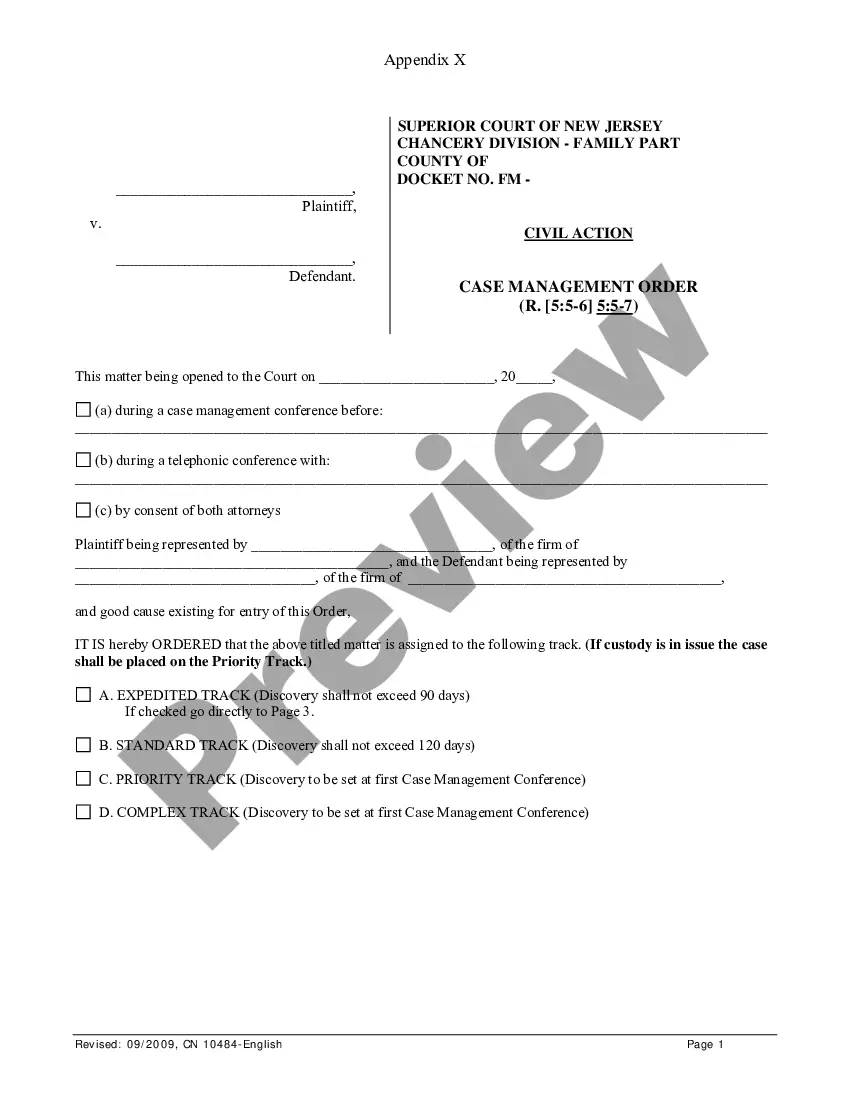
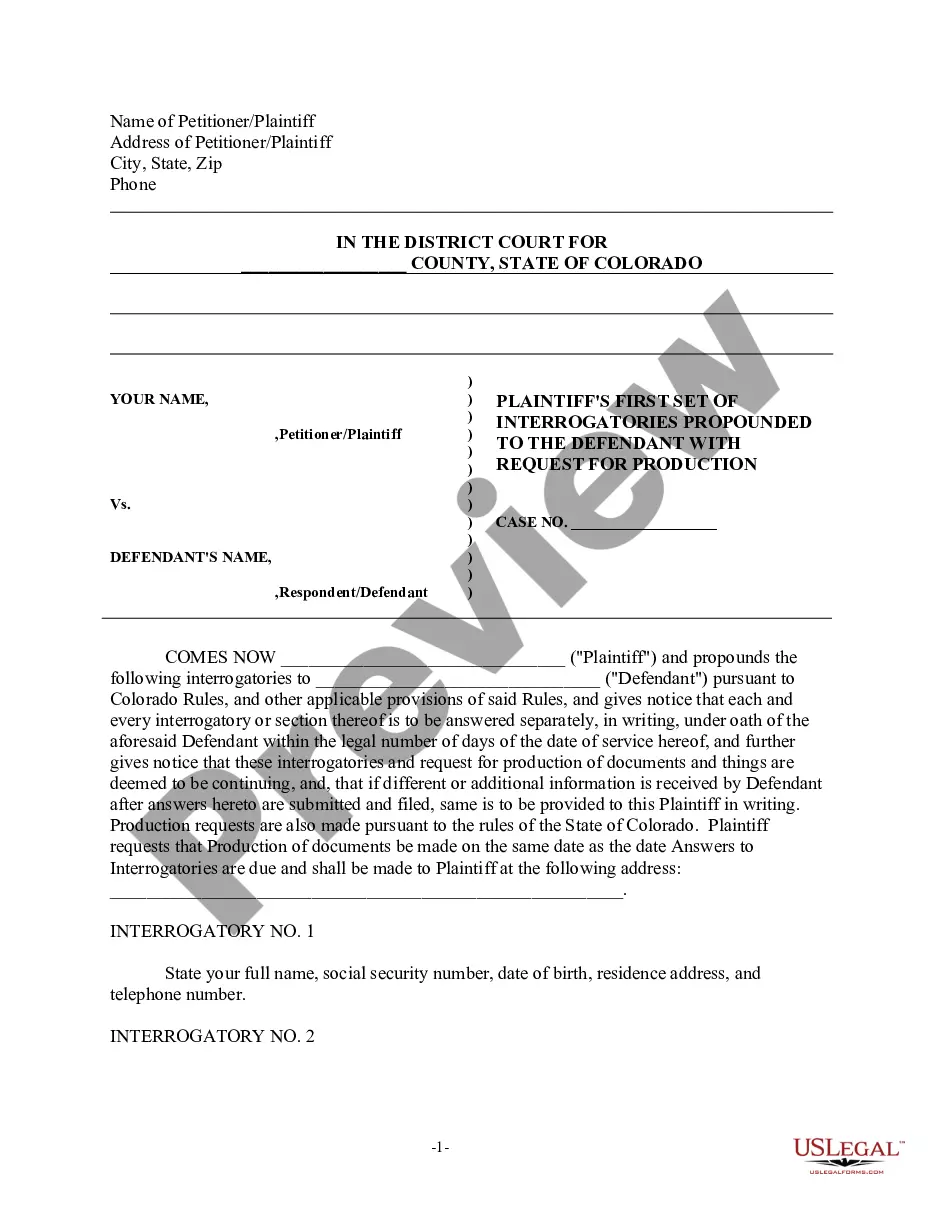
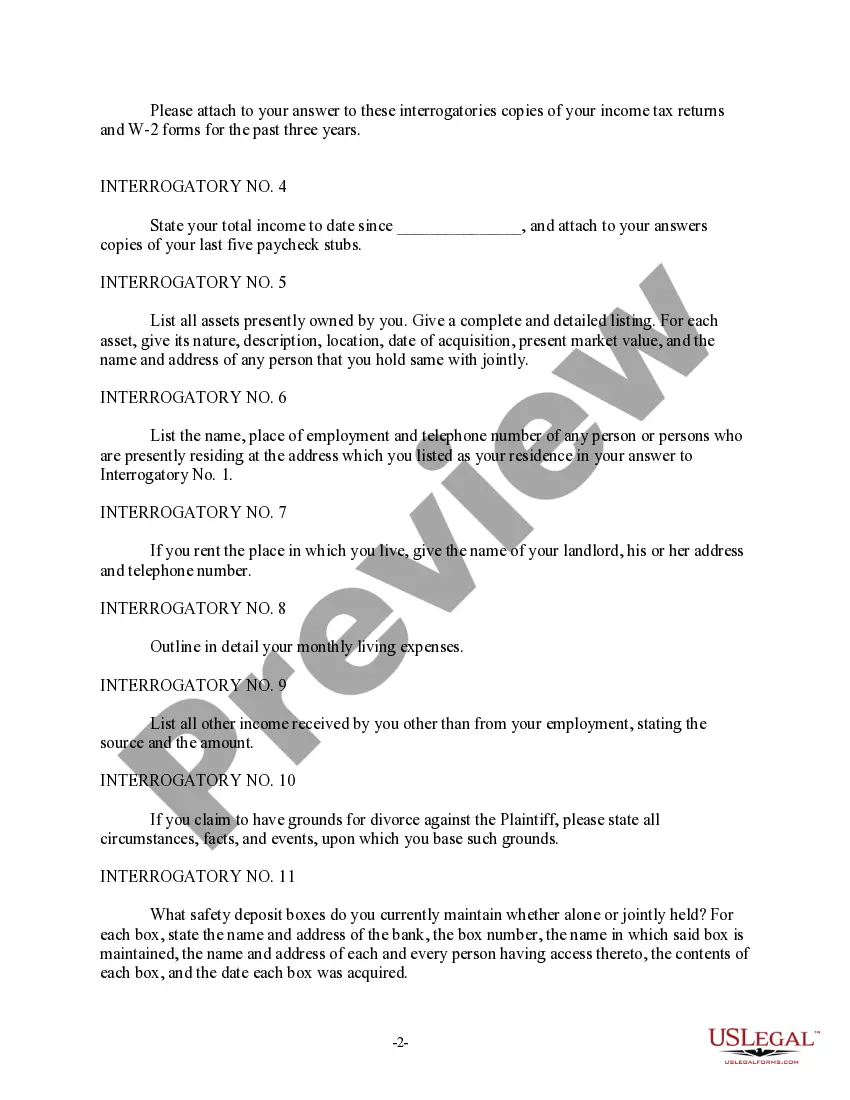
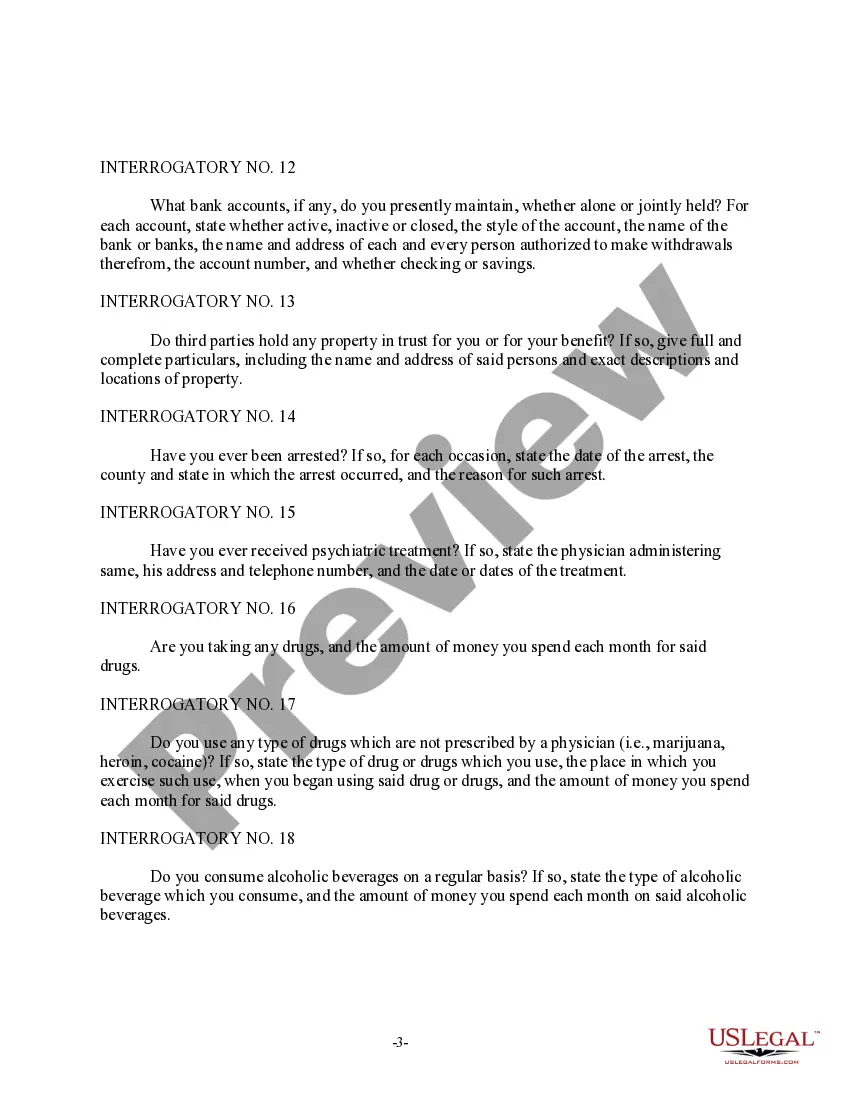
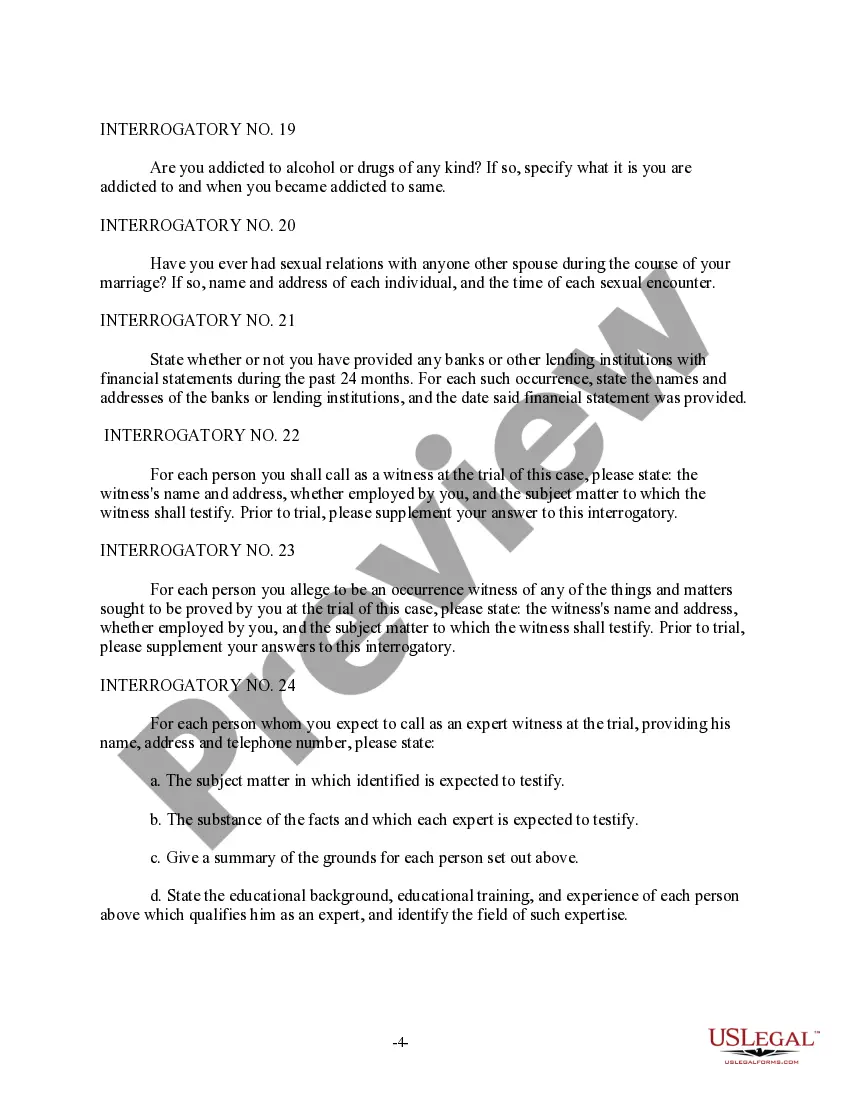
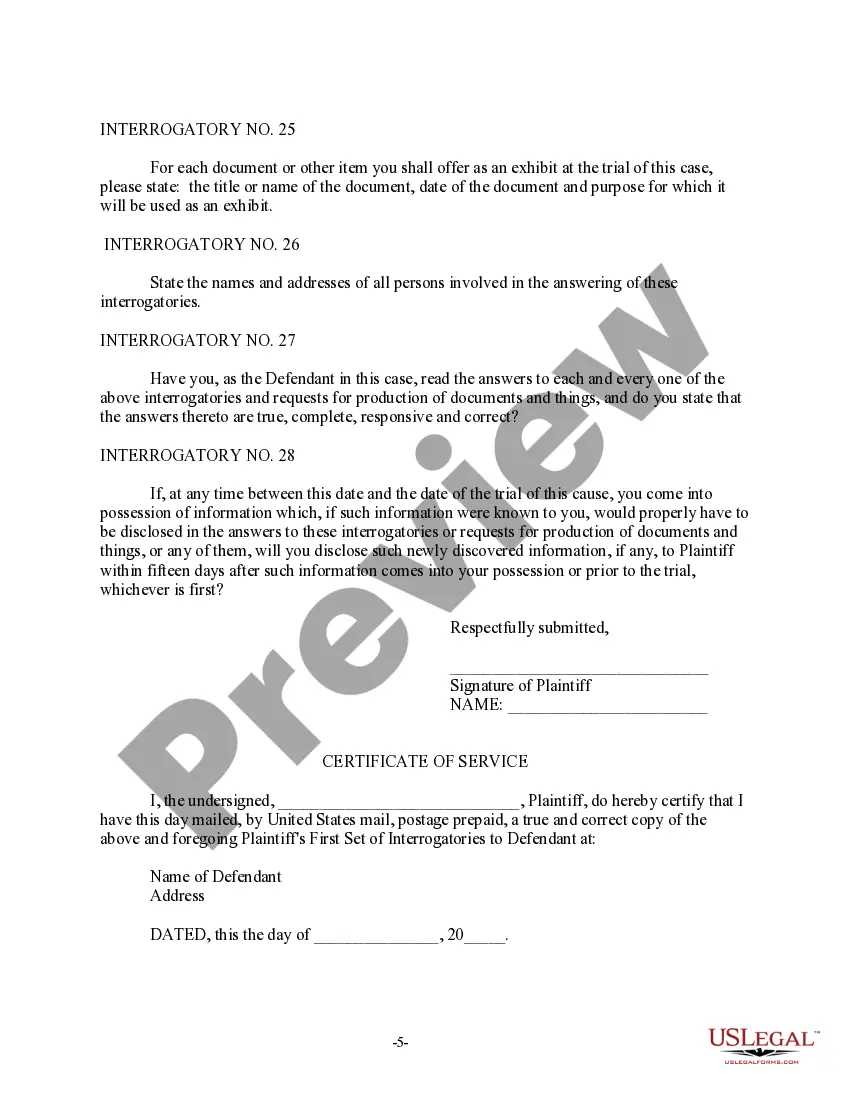
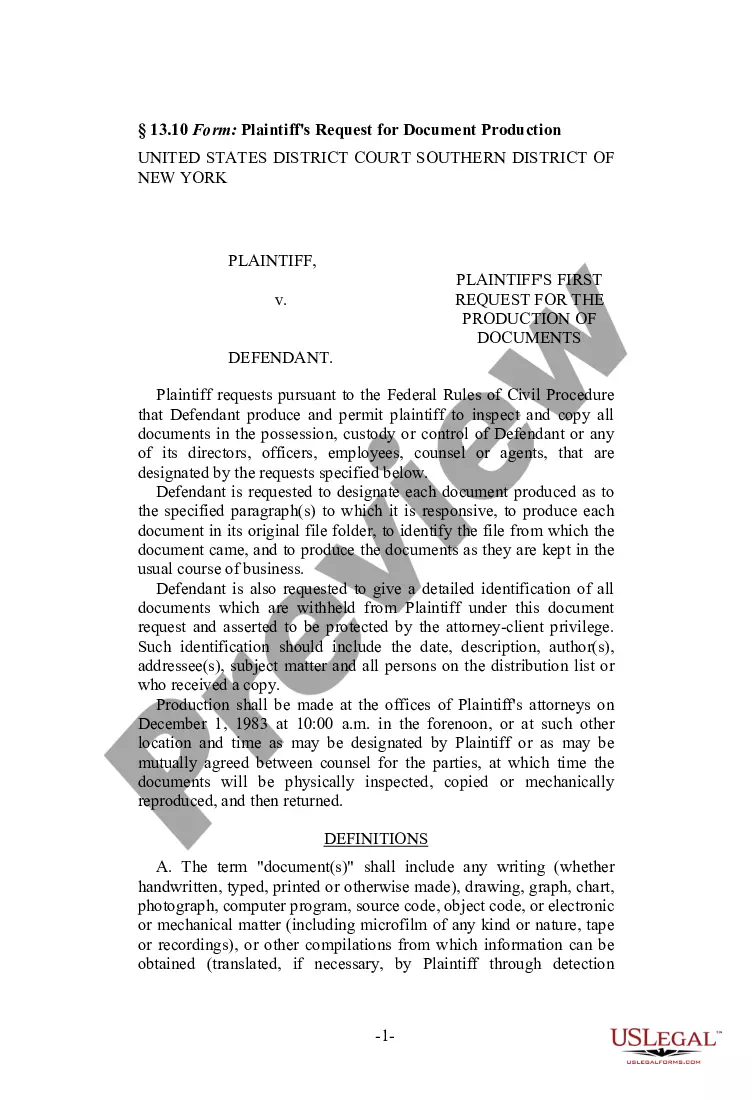
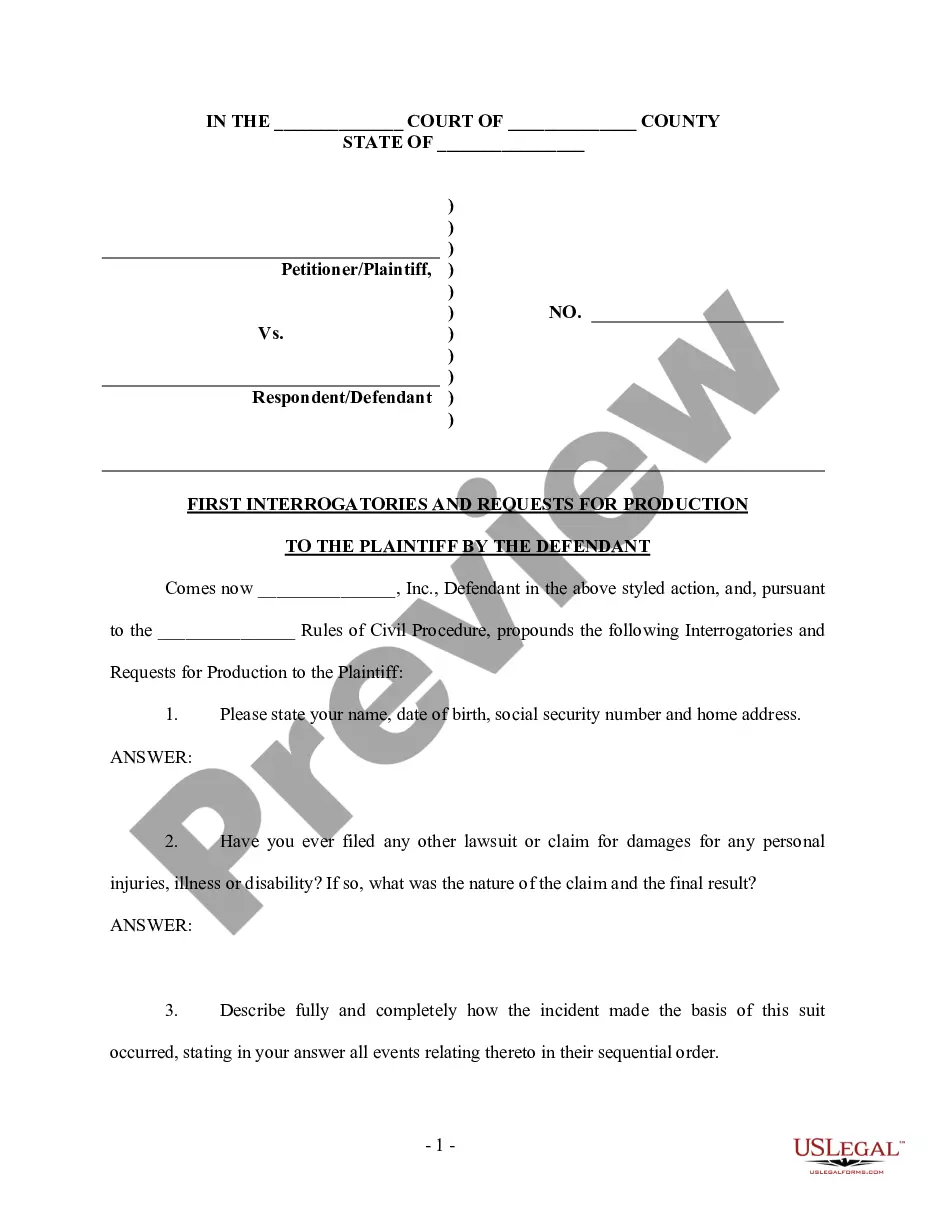
This Discovery Interrogatories from Plaintiff to Defendant with Production Requests is a legal document that allows the plaintiff in a divorce case to formally request information and documents from the defendant. This form includes a series of questions that the defendant must answer under oath, as well as requests for the production of relevant documents. It is essential for gathering vital information that may affect the outcome of the divorce proceedings.
Main sections of this form
- The parties involved: Names and contact information for the plaintiff and defendant.
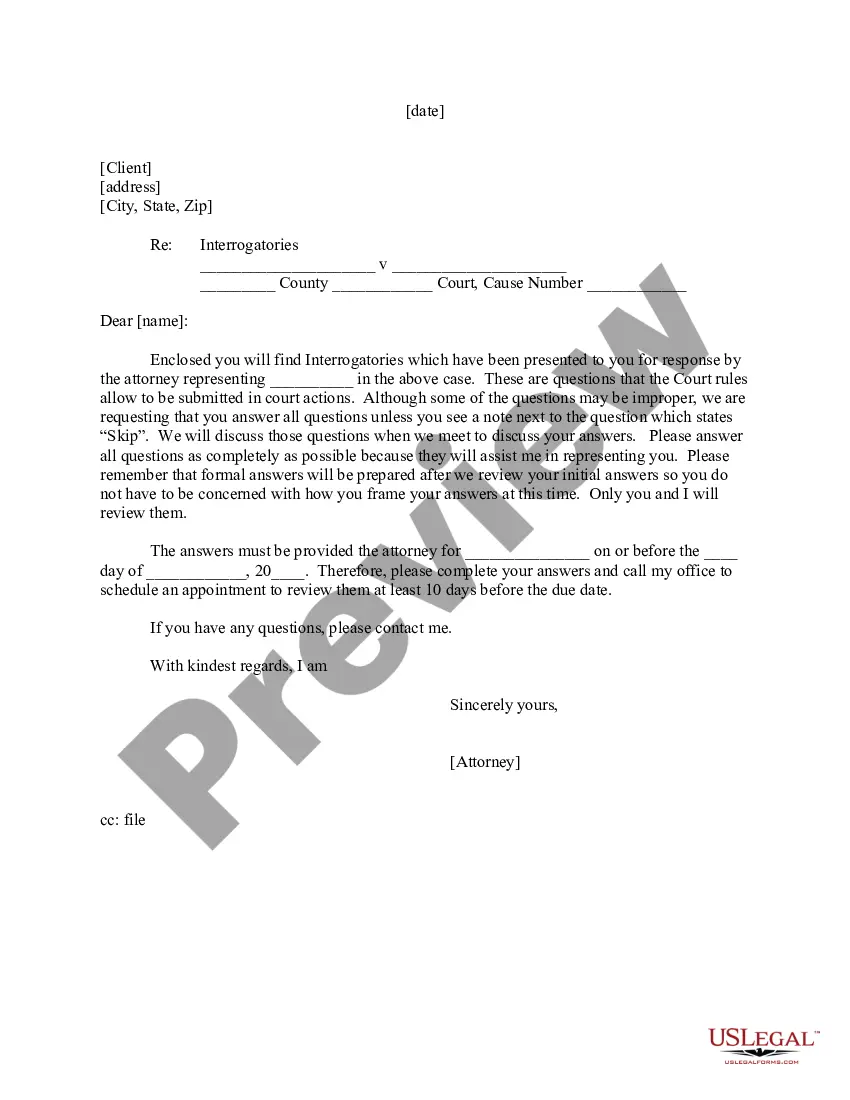
- A series of interrogatories: Questions the defendant must answer, including financial disclosures and personal history.
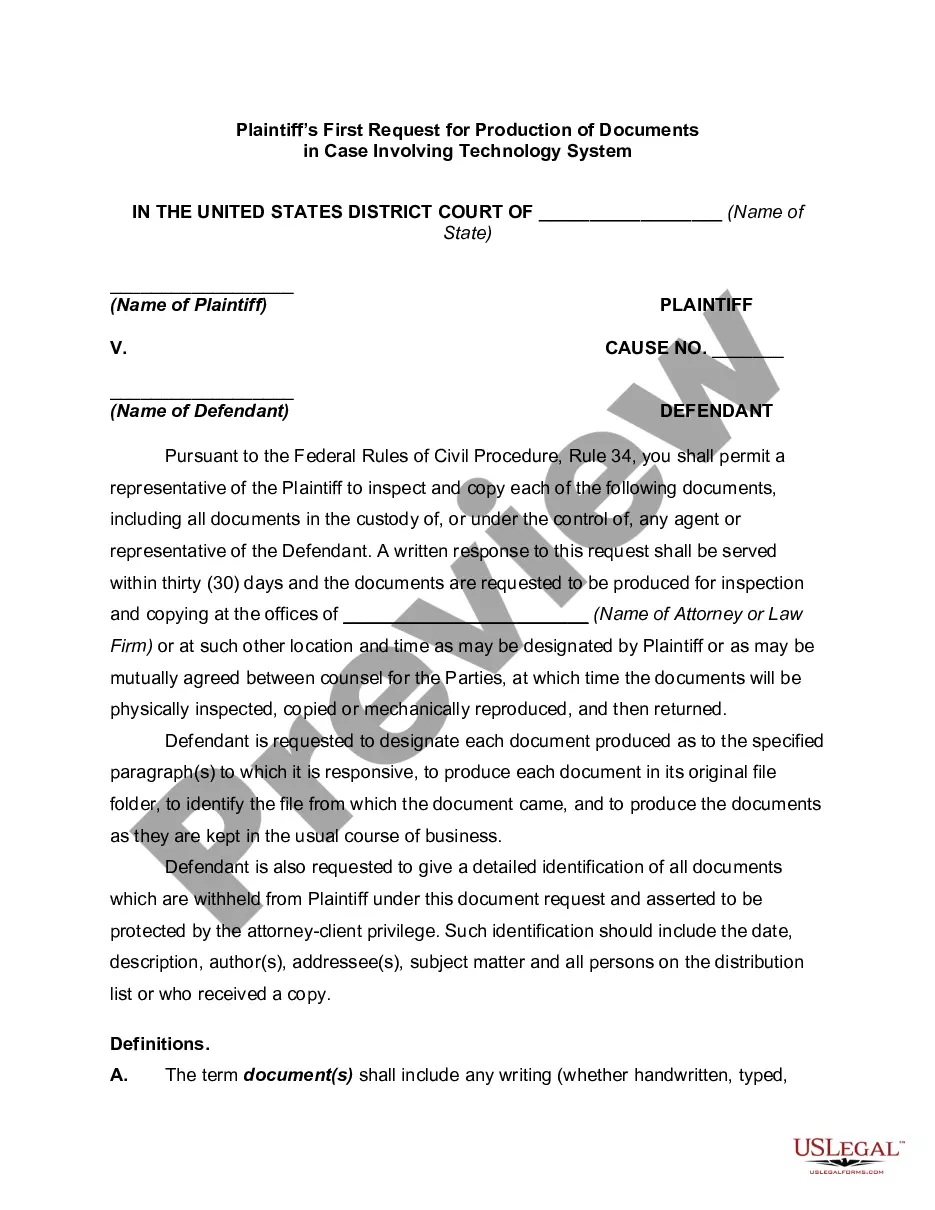
- Requests for production: Specific documents that the plaintiff asks the defendant to provide.
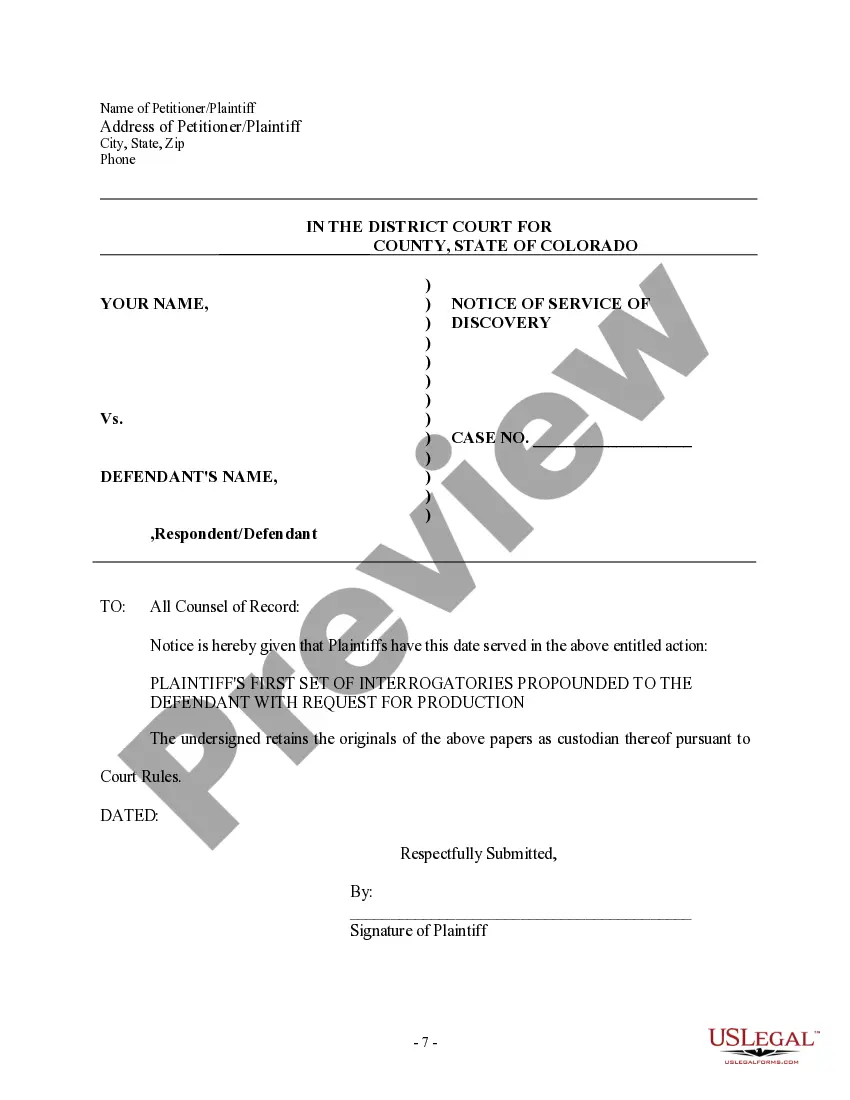
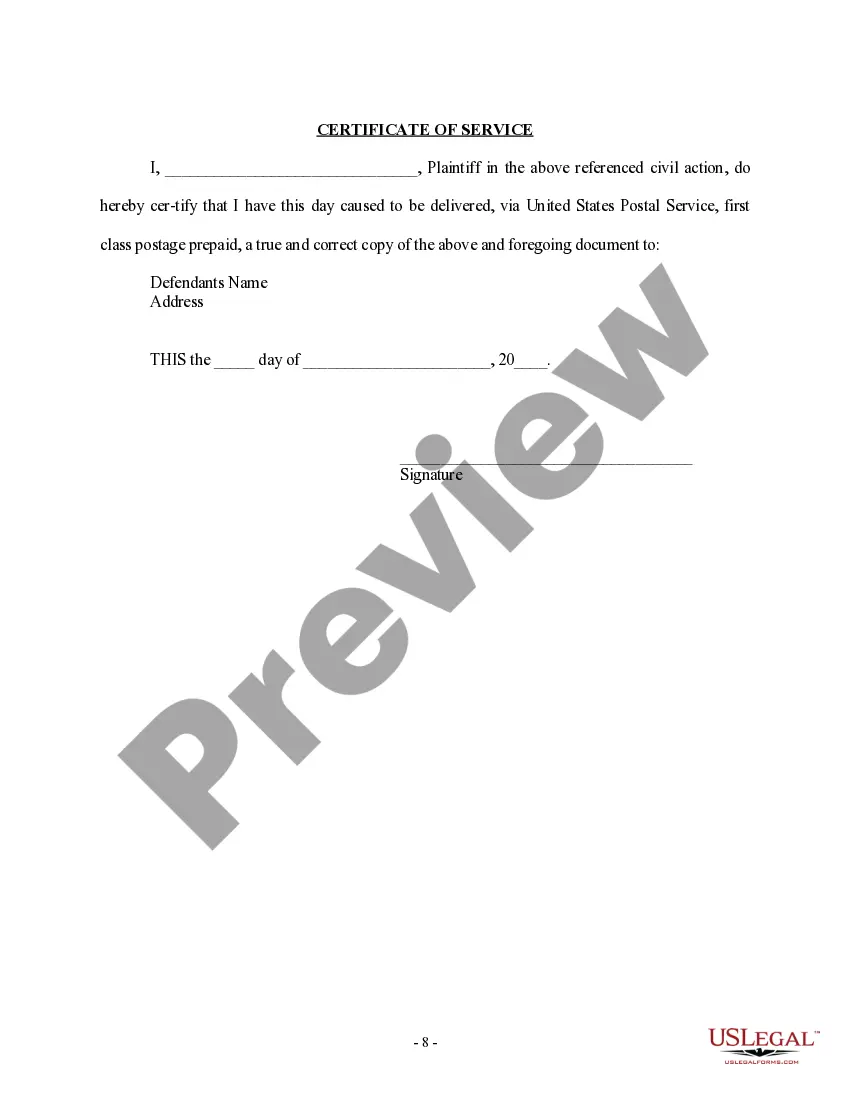
- Notice of Service: Documentation confirming that the interrogatories have been formally served to the defendant.


When this form is needed
This form should be used during the discovery phase of divorce proceedings when the plaintiff needs to obtain detailed information from the defendant. It is suitable for cases where financial disclosures, personal circumstances, and other relevant information are critical to resolving disputes in divorce matters. Use this form to ensure that you have all the necessary details to support your case effectively.
Who this form is for
- Individuals initiating a divorce as the plaintiff.
- Legal representatives of the plaintiff looking to gather evidence from the defendant.
- Any party needing to request specific information and documents from the opposing party in a divorce case.
Steps to complete this form
- Identify the parties involved: Fill in the full names and contact information of both the plaintiff and defendant.
- Answer the interrogatories: Provide complete and truthful answers to each question outlined in the form.
- Attach requested documents: Include any documents that are requested in the production requests, such as tax returns or proof of income.
- Sign the form: Ensure the plaintiff signs and dates the form to validate the submission.
- Serve the form: Deliver the completed form to the defendant, following local service requirements.
Notarization requirements for this form
This form usually doesn’t need to be notarized. However, local laws or specific transactions may require it. Our online notarization service, powered by Notarize, lets you complete it remotely through a secure video session, available 24/7.
Get your form ready online
Our built-in tools help you complete, sign, share, and store your documents in one place.
Make edits, fill in missing information, and update formatting in US Legal Forms—just like you would in MS Word.
Download a copy, print it, send it by email, or mail it via USPS—whatever works best for your next step.
Sign and collect signatures with our SignNow integration. Send to multiple recipients, set reminders, and more. Go Premium to unlock E-Sign.
If this form requires notarization, complete it online through a secure video call—no need to meet a notary in person or wait for an appointment.
We protect your documents and personal data by following strict security and privacy standards.

Make edits, fill in missing information, and update formatting in US Legal Forms—just like you would in MS Word.

Download a copy, print it, send it by email, or mail it via USPS—whatever works best for your next step.

Sign and collect signatures with our SignNow integration. Send to multiple recipients, set reminders, and more. Go Premium to unlock E-Sign.

If this form requires notarization, complete it online through a secure video call—no need to meet a notary in person or wait for an appointment.

We protect your documents and personal data by following strict security and privacy standards.
Common mistakes to avoid
- Not answering all interrogatories fully: Responses must be complete and addressed specifically to each question.
- Failing to provide requested documents: Ensure all requested documentation is attached to the response.
- Not serving the document correctly: Be aware of the proper methods for serving legal documents in your jurisdiction.
- Omitting signatures or dates: Ensure that every required section is signed and dated appropriately.
Benefits of completing this form online
- Convenience: Download the form and fill it out at your own pace without needing to visit a lawyer's office.
- Editability: Make necessary changes to tailor the document to your specific situation easily.
- Reliability: Forms are drafted by licensed attorneys, ensuring compliance with legal standards.
Looking for another form?

Form popularity
FAQ
An interrogatory or Request for Production may be objectionable on several grounds, including relevance, overbreadth, or privilege. In Colorado Discovery Interrogatories from Plaintiff to Defendant with Production Requests, you can object if the request does not pertain to the case or seeks information that is confidential. Identifying valid objections is a critical skill in managing the discovery process effectively.
Answering interrogatories and requests for production requires careful attention to detail and a commitment to accuracy. For Colorado Discovery Interrogatories from Plaintiff to Defendant with Production Requests, provide clear and concise answers, ensuring to gather all necessary documents for production. Utilizing legal platforms like uslegalforms can streamline this process, guiding you through the requirements and ensuring compliance with legal standards.
An interrogatory requires a party to answer questions in writing, while a Request for Admission (RFA) asks a party to admit or deny specific facts. In the context of Colorado Discovery Interrogatories from Plaintiff to Defendant with Production Requests, understanding these tools is vital for effective legal communication. Each serves a unique function in clarifying facts and streamlining the discovery process.
An interrogatory requests written responses to specific questions, while a request for production seeks documents or evidence. In Colorado Discovery Interrogatories from Plaintiff to Defendant with Production Requests, these tools work together to facilitate thorough discovery. While interrogatories clarify facts and positions, requests for production provide the tangible evidence necessary to support those responses.
A Request for Production is a formal legal request that requires one party to provide documents, records, or tangible items to another party in a legal proceeding. In the context of Colorado Discovery Interrogatories from Plaintiff to Defendant with Production Requests, these requests are crucial for gathering evidence that may support a case. By formally requesting specific documents, parties can uncover essential information that assists in building their case.
The difference between Colorado Discovery Interrogatories from Plaintiff to Defendant with Production Requests primarily lies in their purpose. Interrogatories are written questions that one party sends to another, requiring answers under oath. In contrast, requests for production focus on obtaining documents and evidence relevant to the case. Understanding this distinction is essential for effective legal strategy.
The two types of interrogatories are standard interrogatories and contention interrogatories. Standard interrogatories seek basic facts related to the case, while contention interrogatories ask the opposing party to explain their legal positions. By effectively using Colorado Discovery Interrogatories from Plaintiff to Defendant with Production Requests, you can streamline your information-gathering process and build a stronger case.
A request for production is not an interrogatory, but rather a separate method of discovery. This request asks the opposing party to provide documents or evidence related to the case. When utilizing Colorado Discovery Interrogatories from Plaintiff to Defendant with Production Requests, it's essential to understand the differences so you can effectively gather all necessary information for your case.
No, requests for admission are not the same as interrogatories. Instead, they are a distinct type of discovery tool that asks the other party to admit or deny specific facts. While Colorado Discovery Interrogatories from Plaintiff to Defendant with Production Requests focus on gathering information through questions, requests for admission aim to simplify the trial process by establishing agreed-upon facts.
Interrogatories are specific questions one party sends to another to gather information, while discovery encompasses the broader process of obtaining evidence before a trial. In the context of Colorado Discovery Interrogatories from Plaintiff to Defendant with Production Requests, interrogatories are a tool used during the discovery phase. Understanding this distinction helps you better navigate your legal strategy.