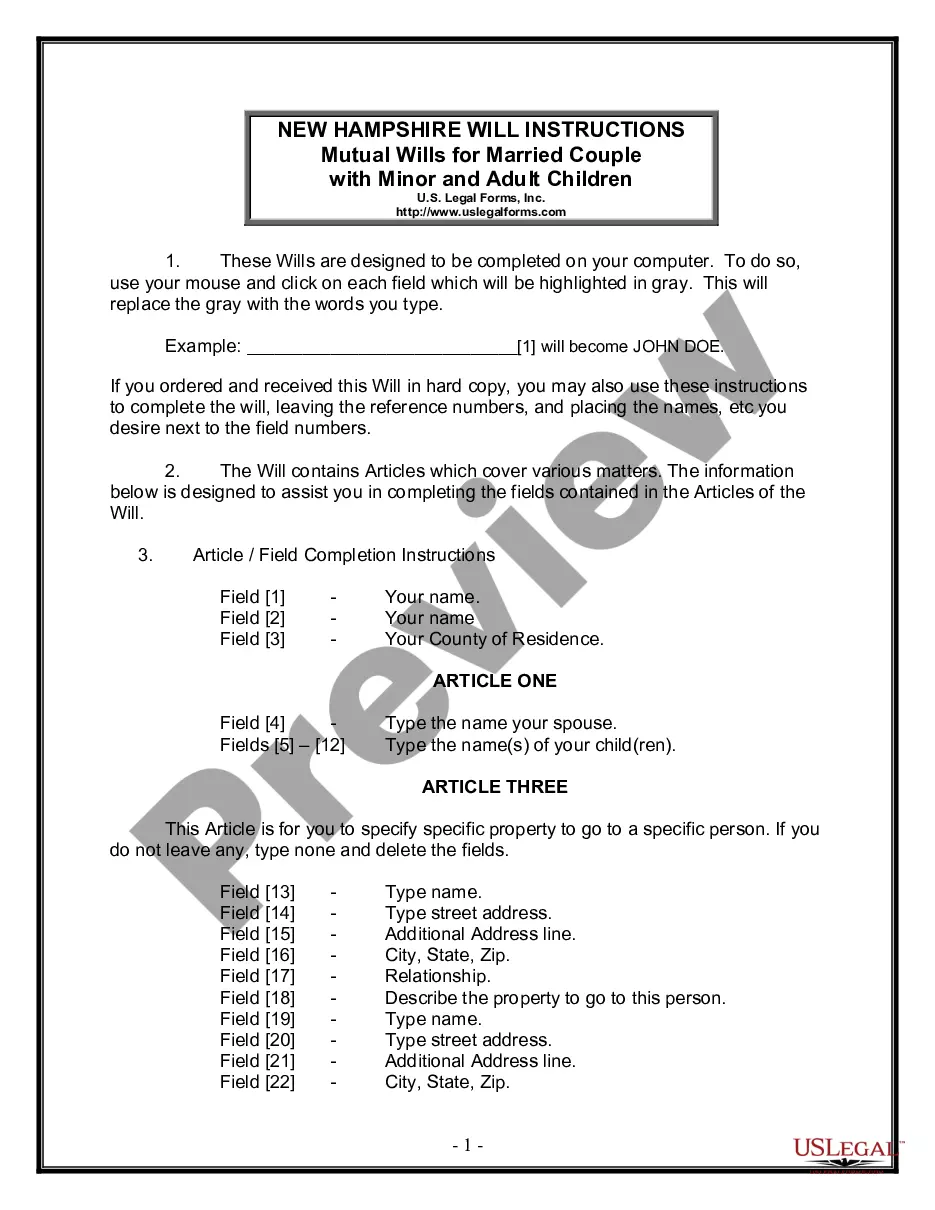
California Document Locator and Personal Information Package including burial information form
What this document covers
The Document Locator and Personal Information Package, including burial information form, is a comprehensive tool designed to help individuals organize critical personal information and express their final wishes. This form allows you to list the location of important documents, specific desires about burial arrangements, and provides a space for messages to loved ones. Unlike other estate planning forms, this package focuses on keeping essential information easily accessible for your family and trusted individuals during challenging times.
Key components of this form
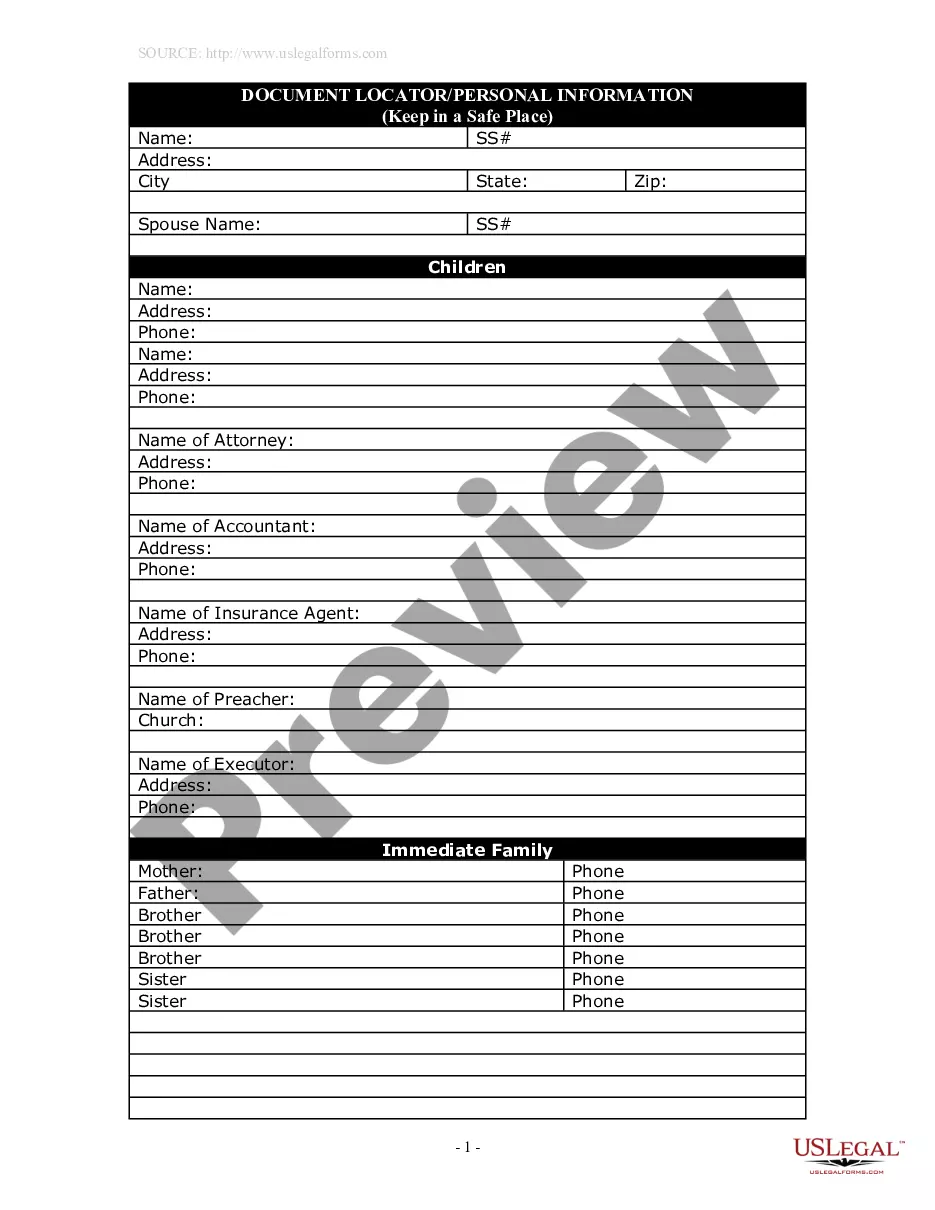
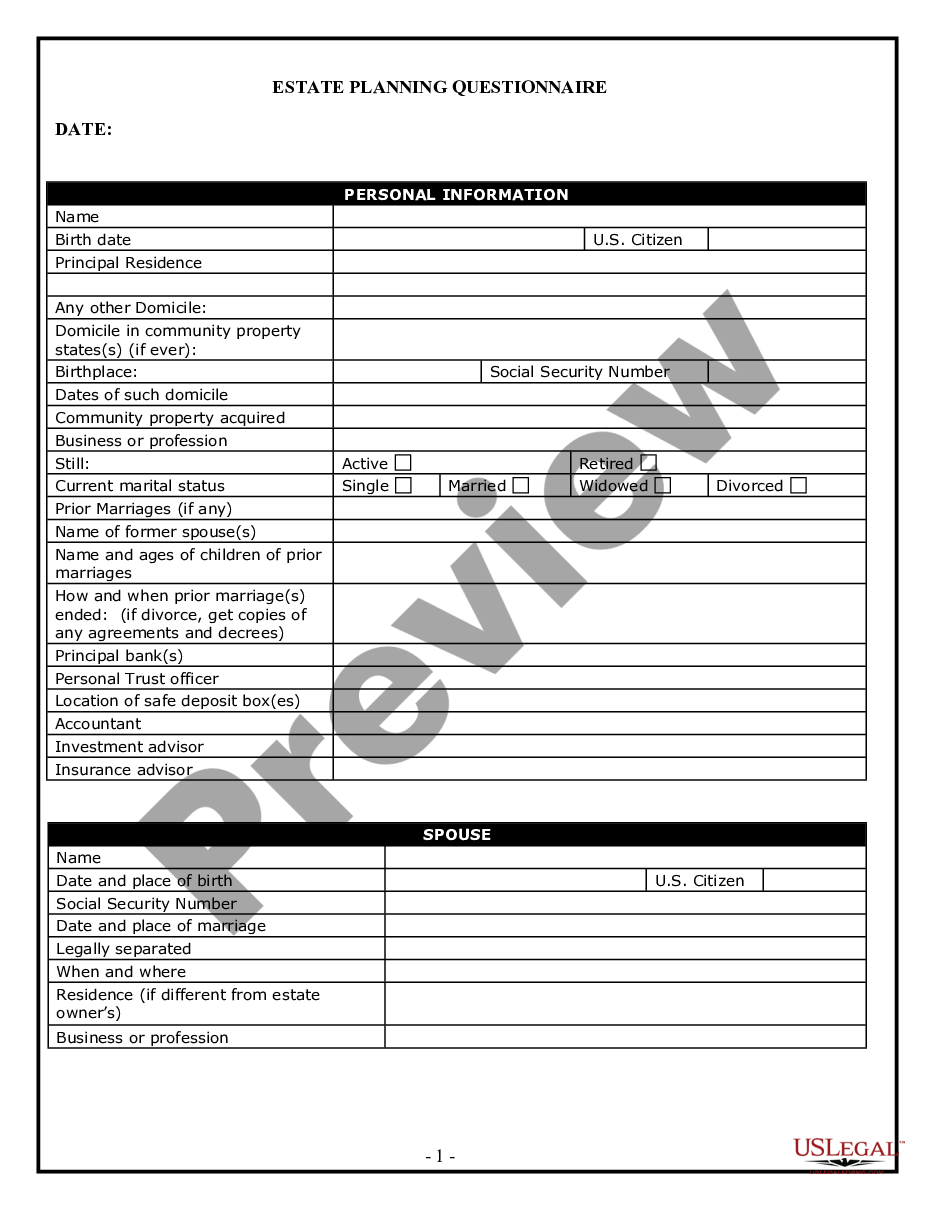
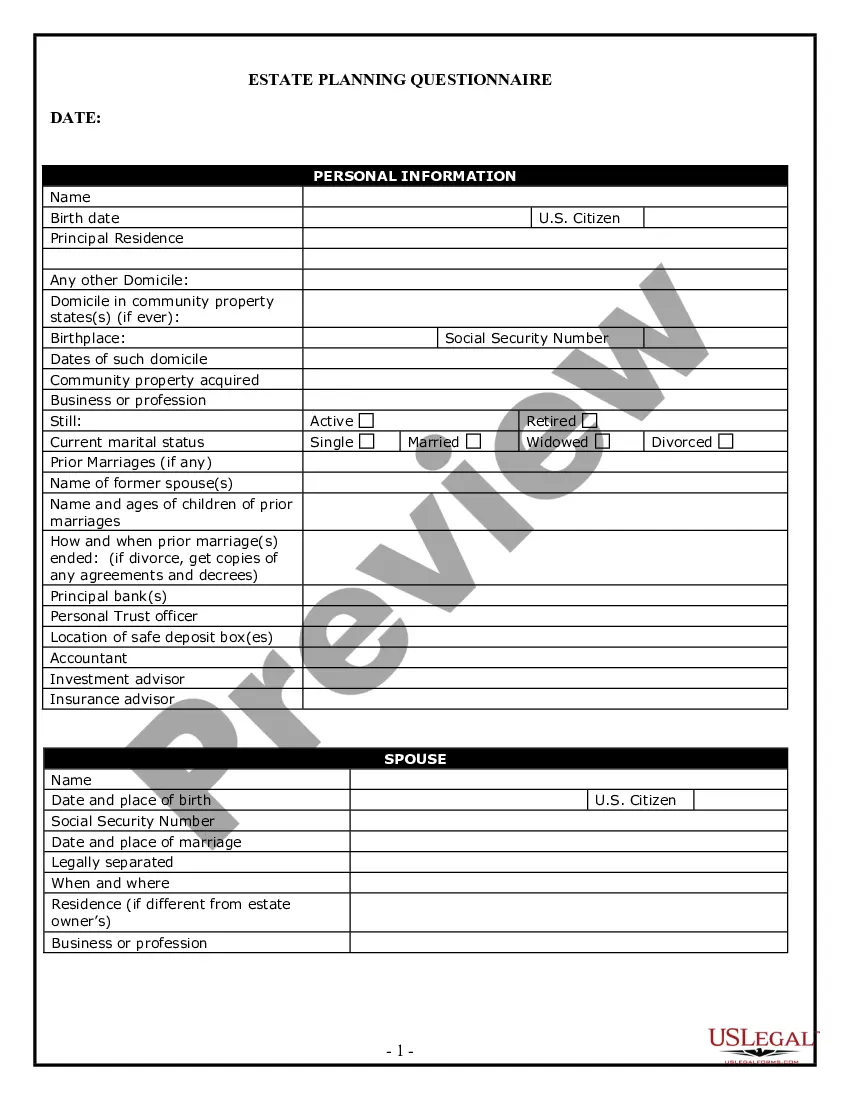
- Personal Information Section: Provides space for your details and contacts of relatives, attorneys, and executors.
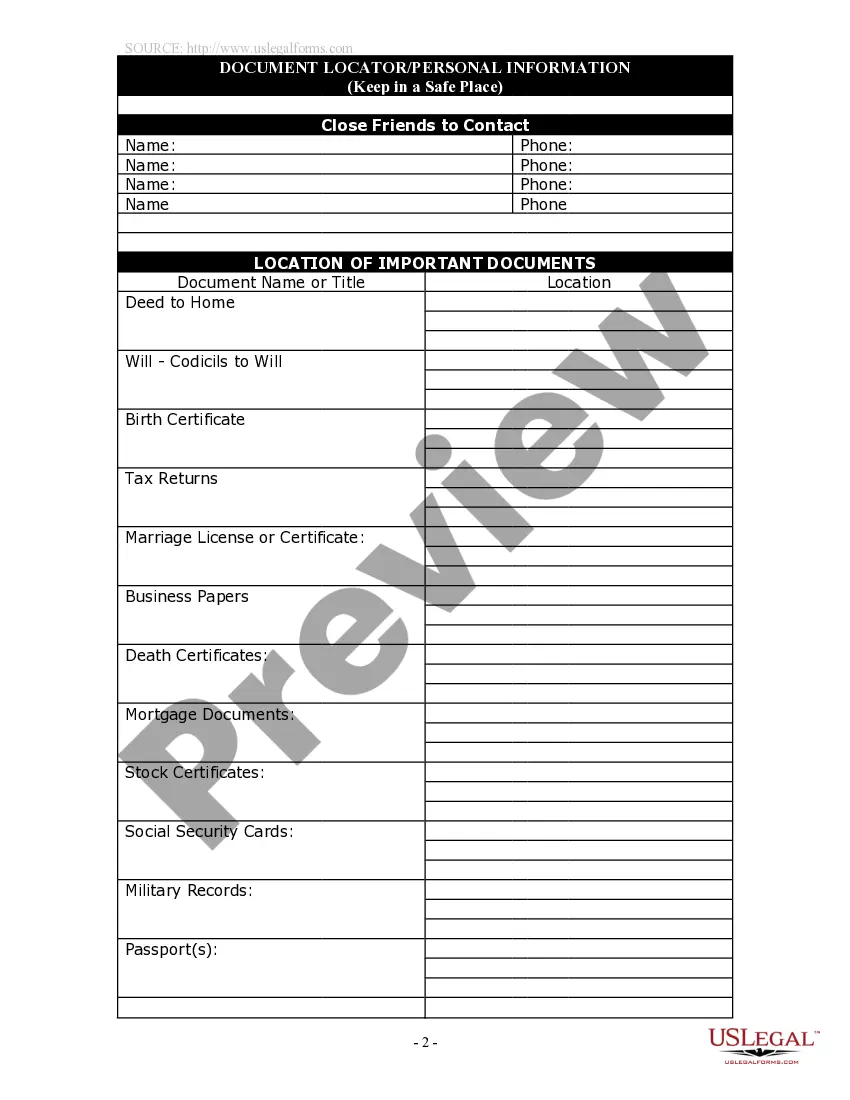
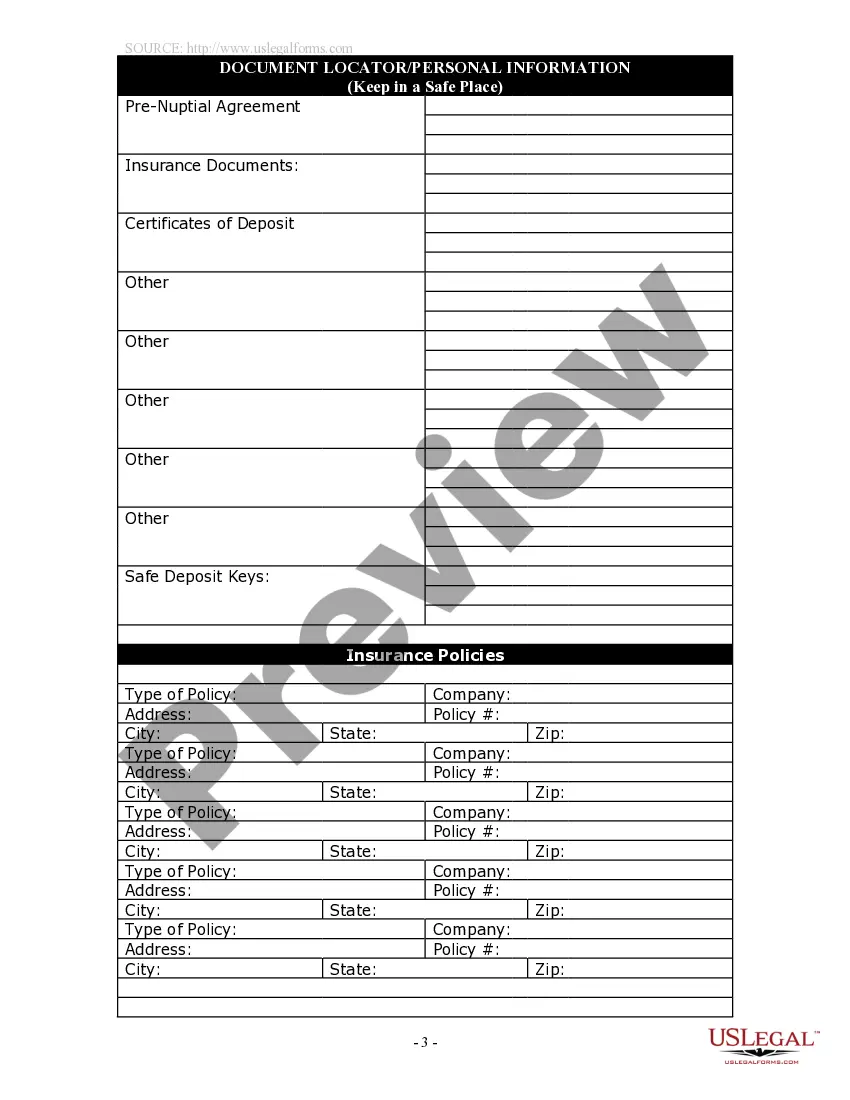
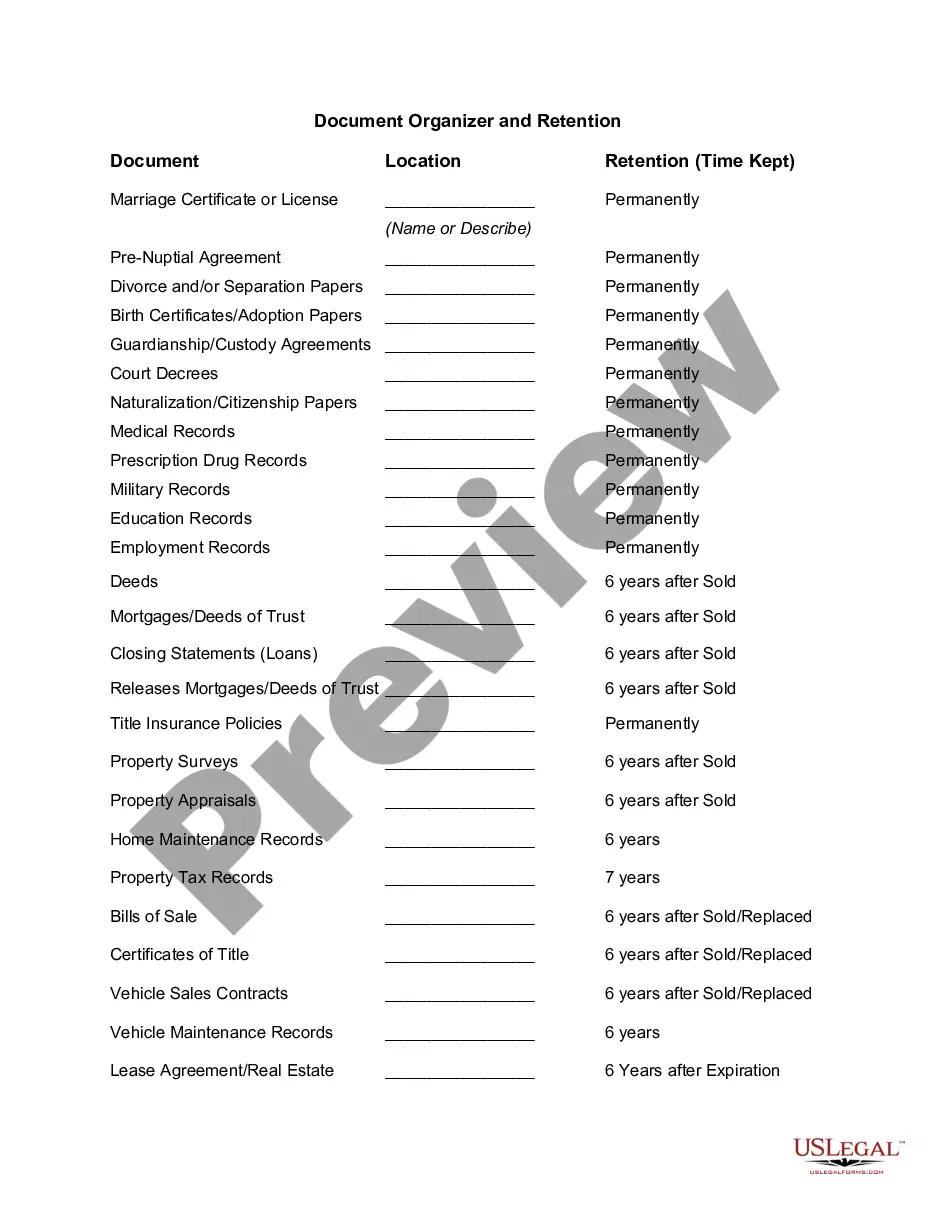
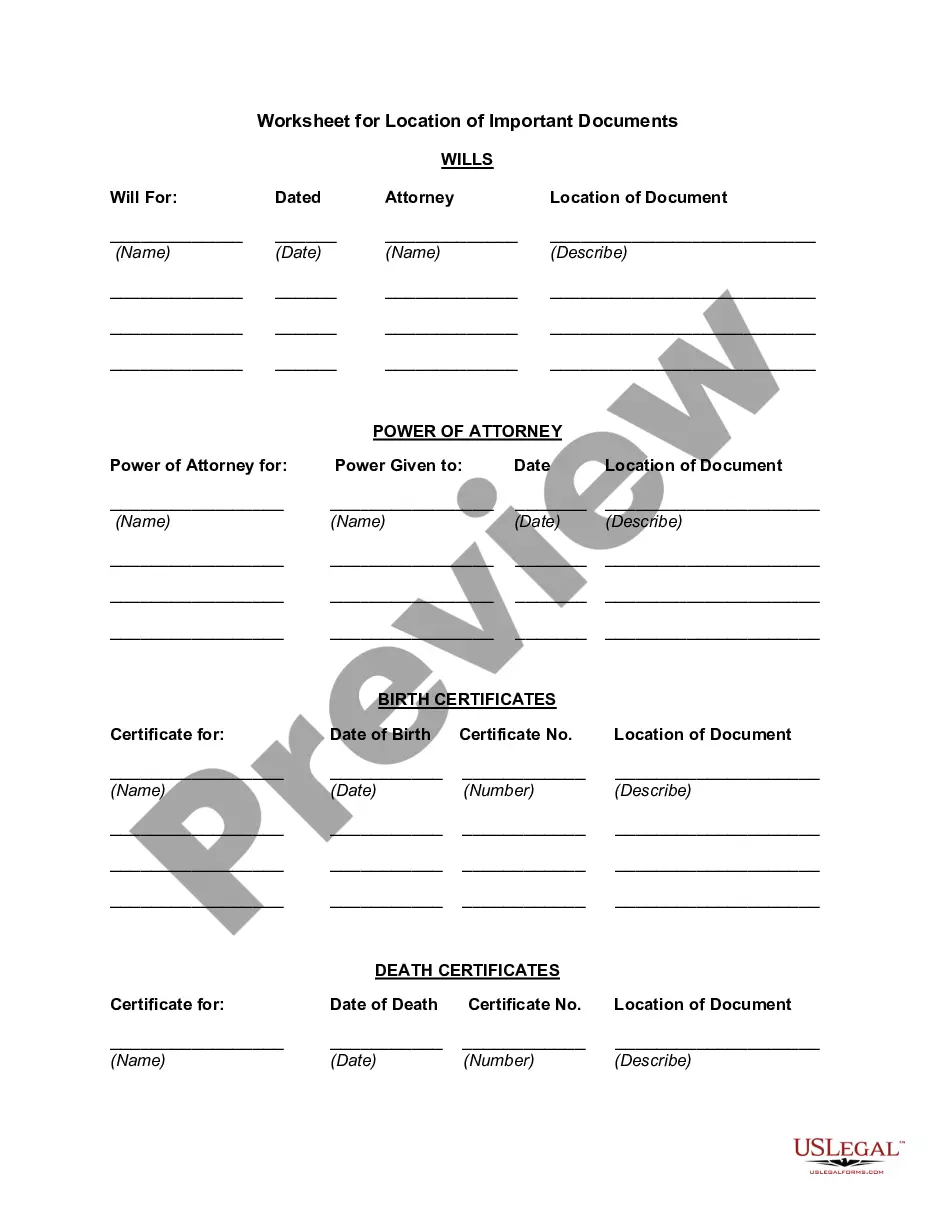
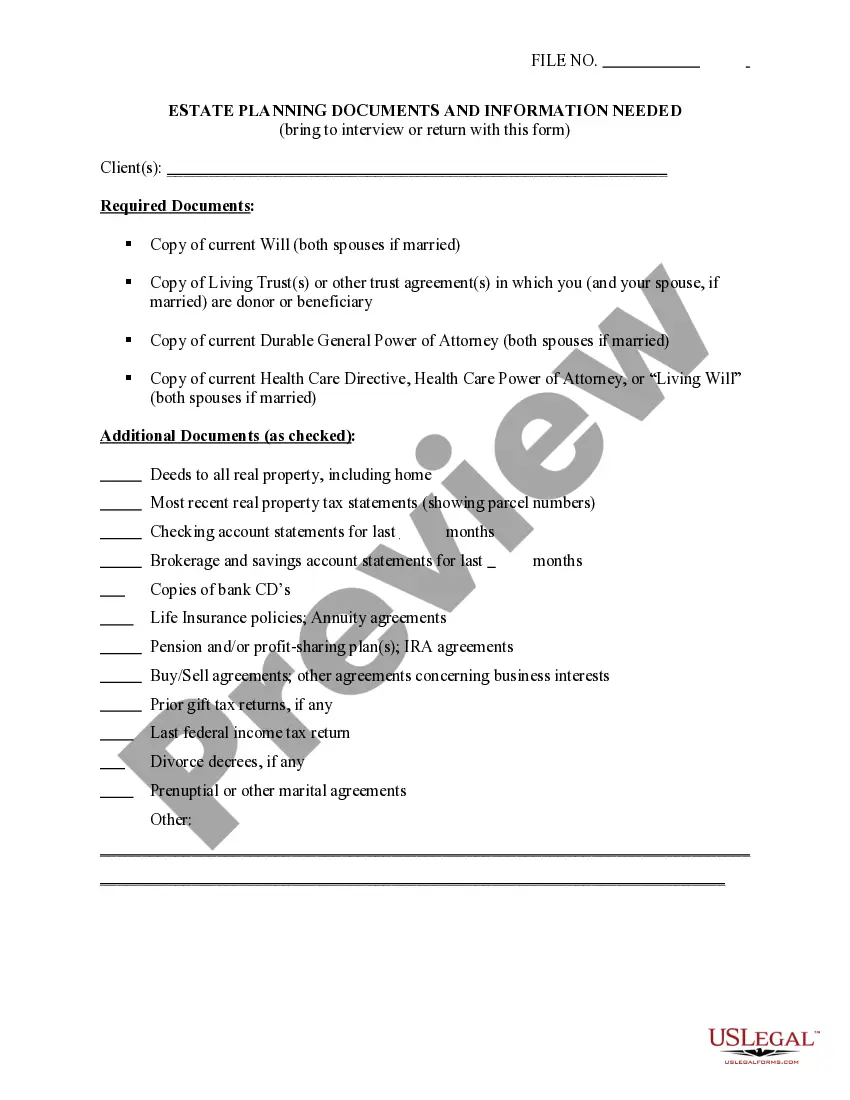
- Important Documents Locator: A list for recording the location of significant documents such as wills, birth certificates, and insurance policies.
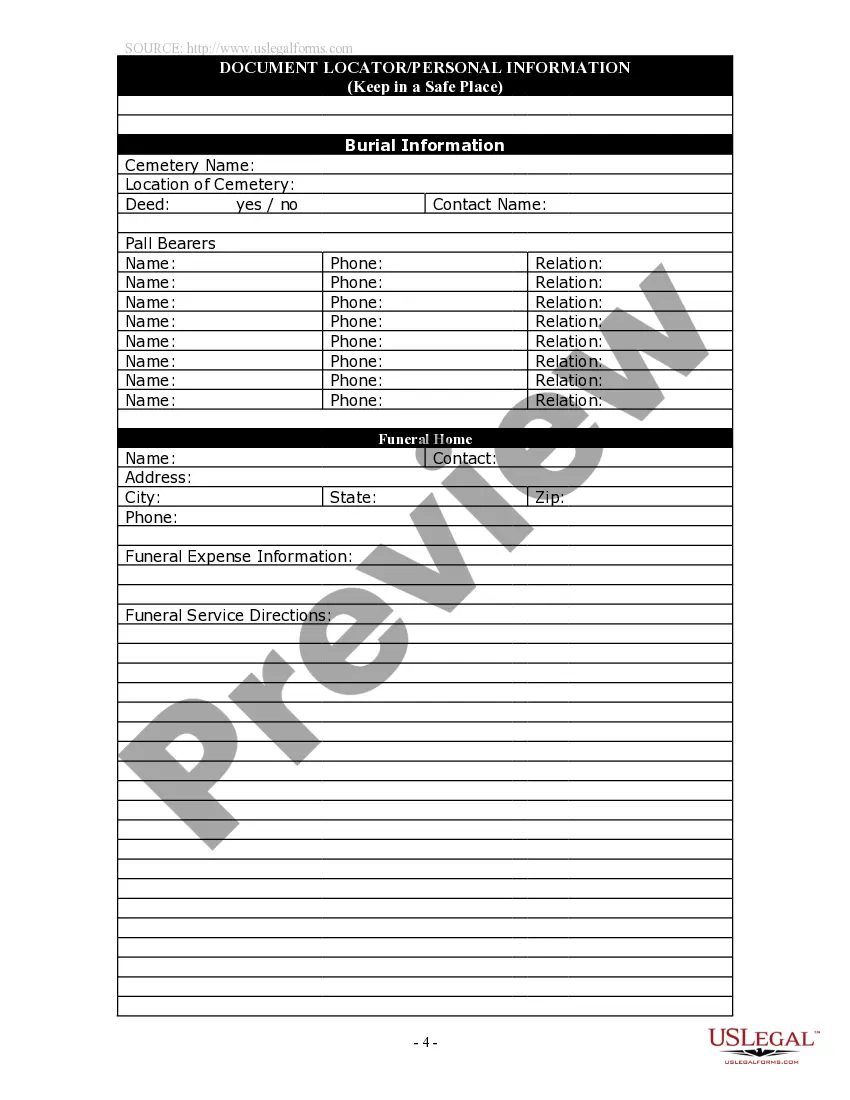
- Burial Information: Allows you to specify cemetery details and contact information for pallbearers and funeral homes.
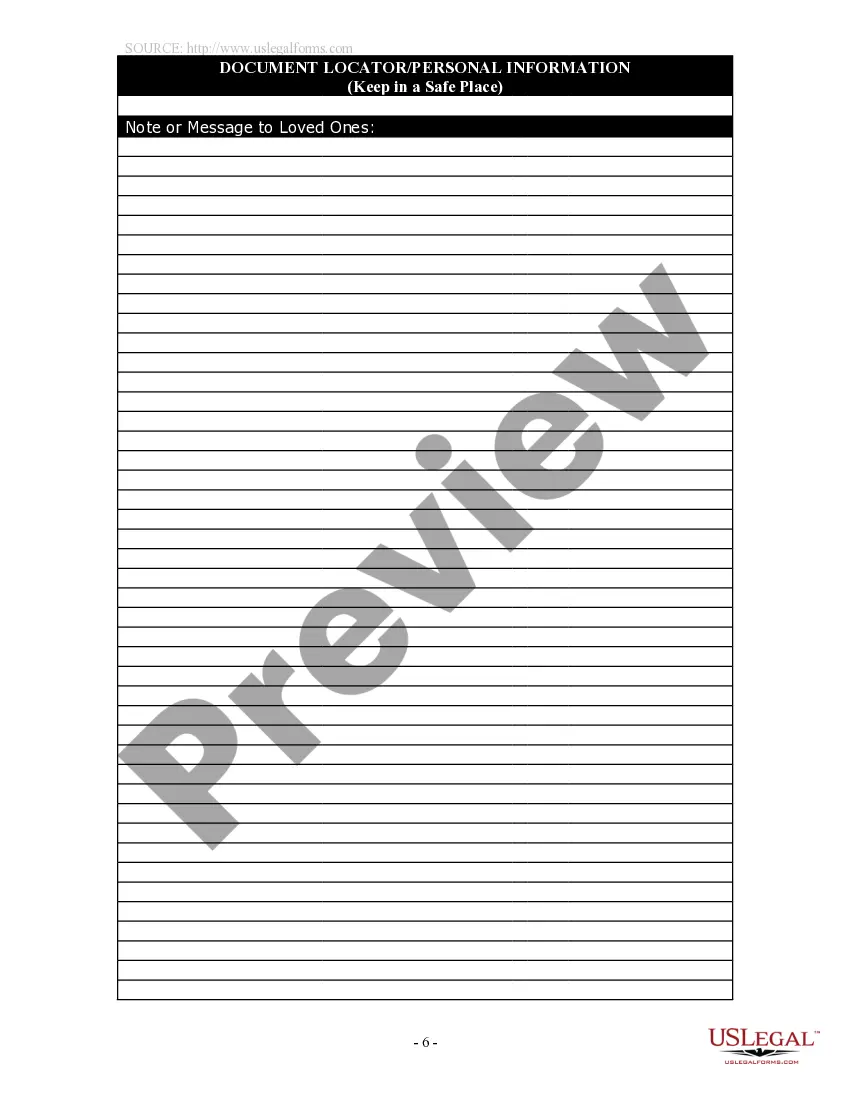
- Message to Loved Ones: A personal note section to convey your final thoughts or wishes.
- Funeral Expense Information: An area to outline financial arrangements related to your funeral services.
When to use this document
This form is useful in various situations such as planning your estate, preparing for potential health issues, or simply ensuring that your loved ones understand your final wishes. It is particularly helpful if you want to make your burial preferences clear and provide your family with easy access to important documents. This organization can significantly alleviate stress for your relatives during a difficult time.
Intended users of this form
- Individuals planning their estate or preparing for aging.
- Persons wanting to ensure their burial preferences are expressed and accessible.
- Those looking to organize important documents for family members.
- Anyone seeking to communicate last wishes to loved ones.
How to complete this form
- Begin by filling in your personal information and the details of your relatives and trusted advisors.
- List the important documents you want to include, specifying their locations for easy access.
- Provide burial information, including the cemetery's name and relevant contact details.
- Add any messages you would like to share with your loved ones in the designated section.
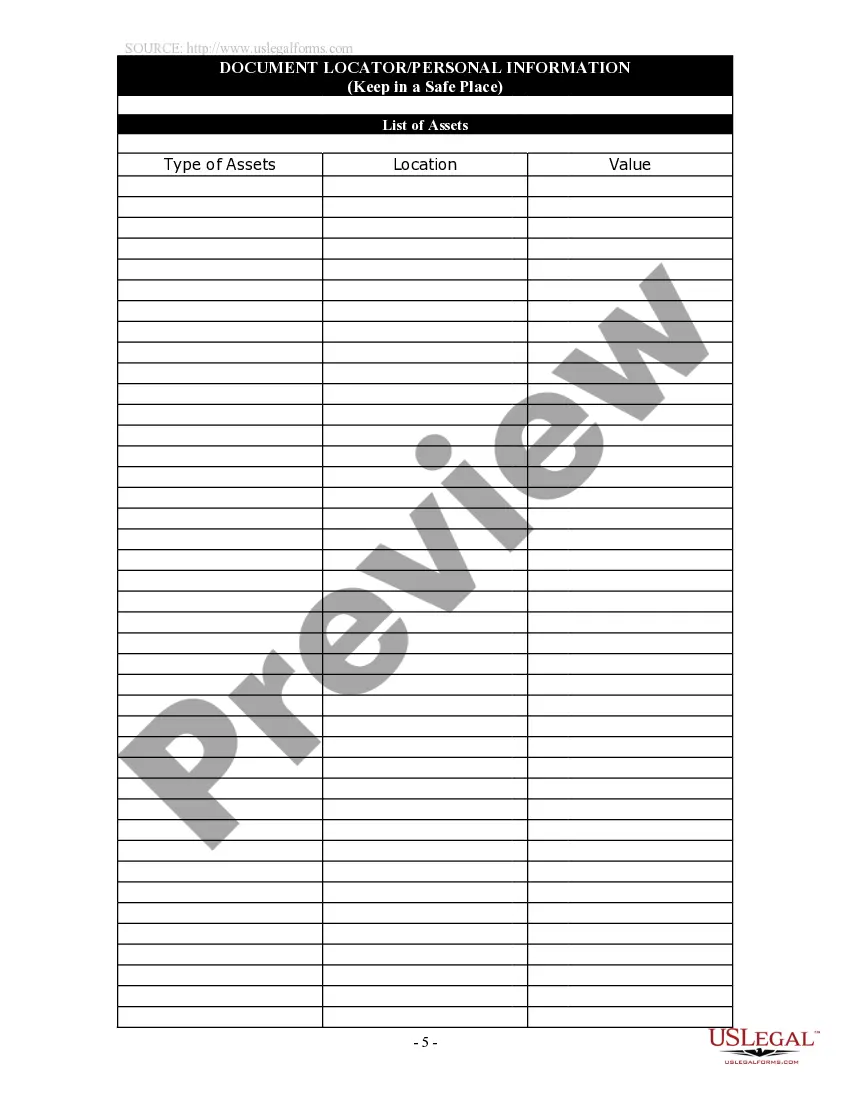
- Finally, note any funeral expense information and list your assets, ensuring your instructions are clear.
Notarization requirements for this form
In most cases, this form does not require notarization. However, some jurisdictions or signing circumstances might. US Legal Forms offers online notarization powered by Notarize, accessible 24/7 for a quick, remote process.
Get your form ready online
Our built-in tools help you complete, sign, share, and store your documents in one place.
Make edits, fill in missing information, and update formatting in US Legal Forms—just like you would in MS Word.
Download a copy, print it, send it by email, or mail it via USPS—whatever works best for your next step.
Sign and collect signatures with our SignNow integration. Send to multiple recipients, set reminders, and more. Go Premium to unlock E-Sign.
If this form requires notarization, complete it online through a secure video call—no need to meet a notary in person or wait for an appointment.
We protect your documents and personal data by following strict security and privacy standards.

Make edits, fill in missing information, and update formatting in US Legal Forms—just like you would in MS Word.

Download a copy, print it, send it by email, or mail it via USPS—whatever works best for your next step.

Sign and collect signatures with our SignNow integration. Send to multiple recipients, set reminders, and more. Go Premium to unlock E-Sign.

If this form requires notarization, complete it online through a secure video call—no need to meet a notary in person or wait for an appointment.

We protect your documents and personal data by following strict security and privacy standards.
Typical mistakes to avoid
- Failing to keep the completed form in a known and secure location.
- Not updating the form after significant life changes, such as marriage or the birth of a child.
- Overlooking to communicate the existence of this document to family members.
Benefits of using this form online
- Convenient access to the form 24/7, allowing for completion at your own pace.
- Easy to edit and update as personal circumstances change.
- Reliability, as forms are drafted by licensed attorneys and reflect current legal standards.
Legal use & context
- The form serves as a guide for individuals to relay important personal information and wishes effectively.
- It can help avoid disputes by clearly documenting intentions regarding burial and other final wishes.
- While this document is not a legally binding contract, clear and organized information can assist family members during difficult times.
Key takeaways
- The Document Locator and Personal Information Package is vital for organizing your affairs and expressing final wishes.
- It contains sections for personal information, important documents, and burial preferences.
- Completing this form can relieve your family during challenging moments by providing clarity and direction.
Looking for another form?

Form popularity
FAQ
The CCPA Do Not Sell My Personal Information rule gives those based in California the right to tell businesses not to sell their personal data.The business must respect the consumer's decision for at least 12 months. After this time the business can ask the consumer to allow the sale of personal information.
Examples of personal information a person's name, address, phone number or email address. a photograph of a person. a video recording of a person, whether CCTV or otherwise, for example, a recording of events in a classroom, at a train station, or at a family barbecue. a person's salary, bank account or financial
The CCPA requires business privacy policies to include information on consumers' privacy rights and how to exercise them: the Right to Know, the Right to Delete, the Right to Opt-Out of Sale and the Right to Non-Discrimination.
In the CCPA, personal information is defined as:Direct identifiers such as real name, alias, postal address, social security numbers, driver's license, passport information and signature. Indirect identifiers such as cookies, beacons, pixel tags, telephone numbers, IP addresses, account names2026
CCPA personal information definition A list of what is defined under the CCPA as personal information includes: Direct identifiers such as real name, alias, postal address, social security numbers, driver's license, passport information and signature.
Consumers (CCPA) vs data subjects (GDPR) The GDPR protects data subjects, defined as an identified or identifiable natural person, whereas the CCPA gives certain rights to consumers, defined as a natural person who is a California resident.
Under the current employment-related information exemption to the CCPA, personal information collected within the course of an employment relationship (as a job applicant, employee, owner, officer, director, medical staff member, or contractor) is exempt from the reach of the CCPA to the extent that the personal
The CCPA categories are: identifiers (such as contact information, government IDs, cookies, etc.), information protected against security breaches (such as your name and financial account, driver's license, social security number, user name and password, health/medical information), protected classification information
Personal Identity Information (PII), also known as P4 data, is a specific category of particularly sensitive data defined as: Unencrypted electronic information that includes an individual's first name or initial, and last name, in combination with any one or more of the following: Social Security number (SSN).