California Warranty Deed for Fiduciary
Understanding this form
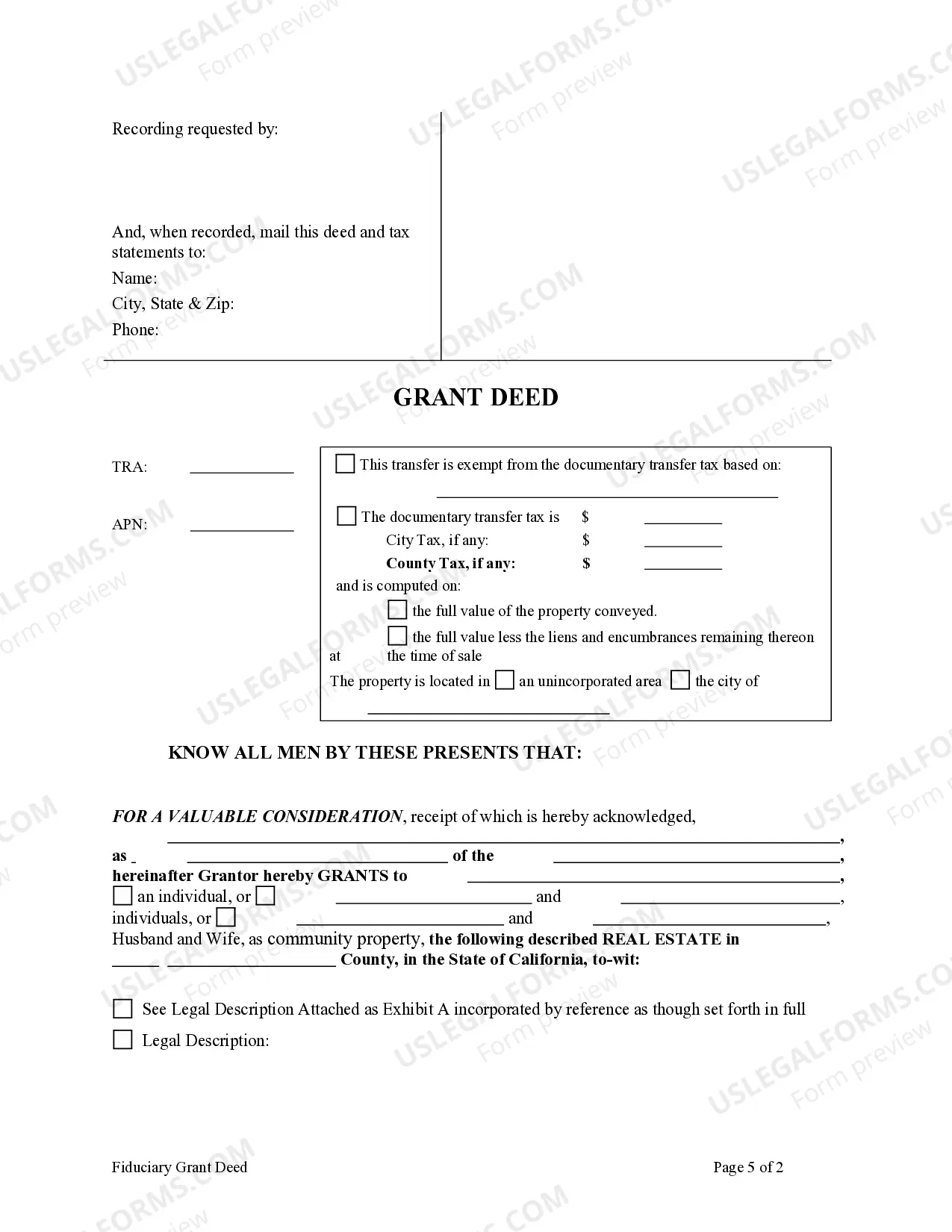
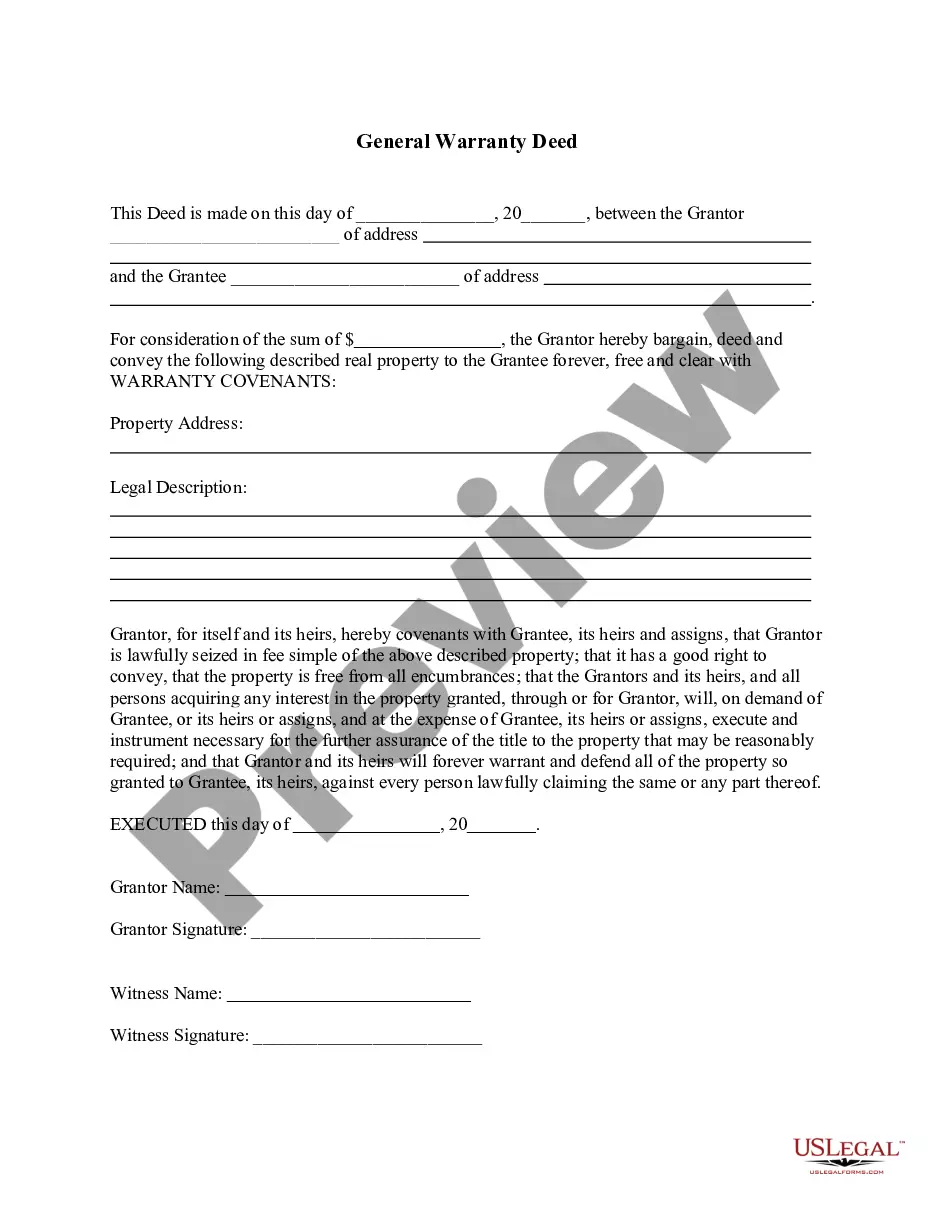
The Warranty Deed for Fiduciary is a legal document used to transfer ownership of real property from a grantor who acts in a fiduciary capacity, such as an executor, trustee, or guardian. This form differs from standard warranty deeds, as it specifically addresses situations where the grantor is not the owner of the property but acts on behalf of another individual or entity. It provides legal assurance that the property is being transferred without any lien or encumbrances, except as noted in the deed.
Key parts of this document
- Grantor and grantee information
- Description of the property being transferred
- Legal basis for the transfer, including fiduciary status
- Address for serving notices related to the property
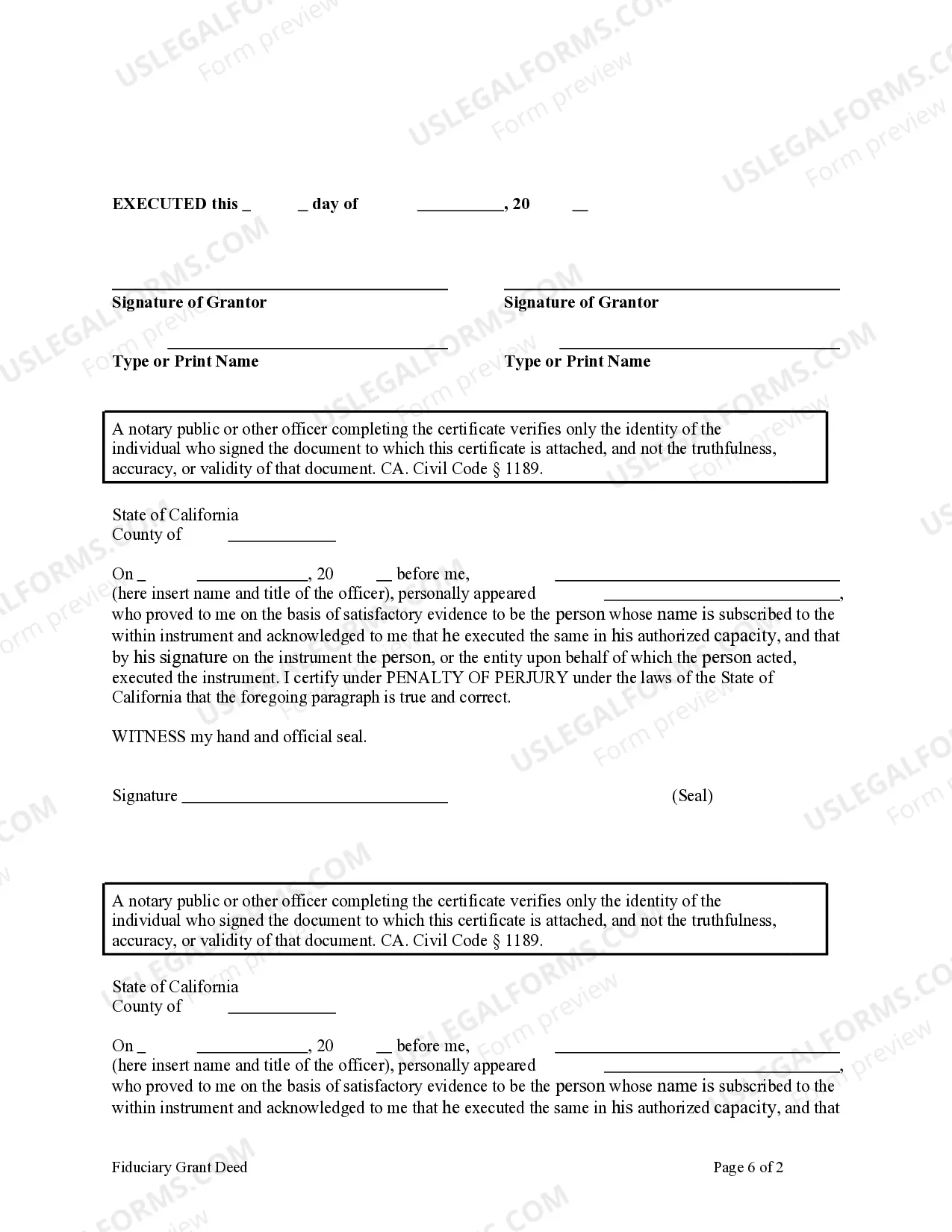
- Certification of the signature and an official seal, if required




Common use cases
This form is typically used when a fiduciary, such as an executor of an estate or a trustee of a trust, needs to transfer property on behalf of another party. Situations may include the distribution of property as part of an estate settlement, transferring assets into a trust, or managing property for someone who is unable to do so themselves.
Who should use this form
- Executors of a will responsible for distributing property
- Trustees managing a trust's assets
- Guardians or conservators handling property for minors or incapacitated individuals
- Individuals involved in a divorce settlement transferring property
Completing this form step by step
- Identify the parties involved: the grantor (fiduciary) and the grantee (new owner).
- Clearly describe the property being transferred, including its address and legal description.
- Specify the basis for the transfer, ensuring you indicate the fiduciary role.
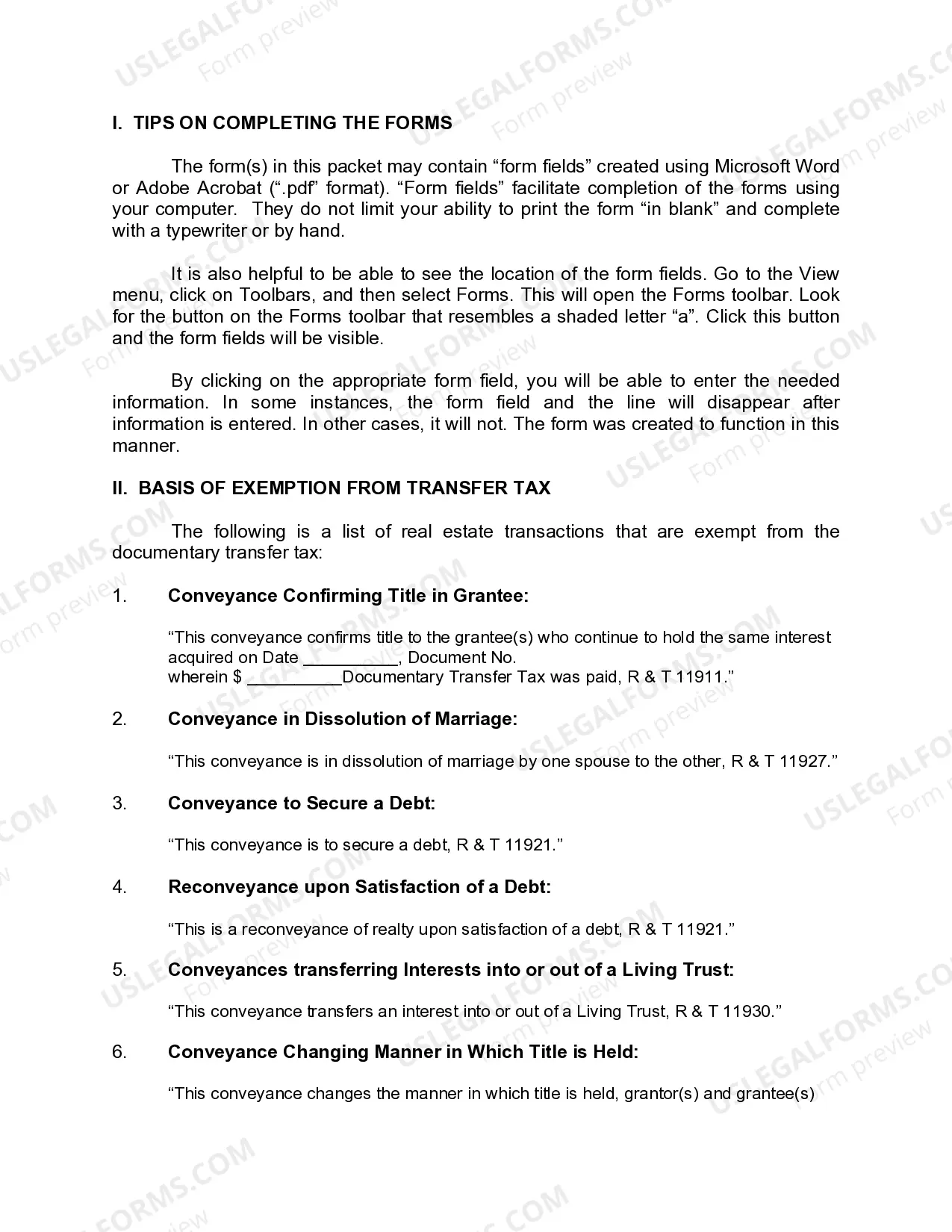
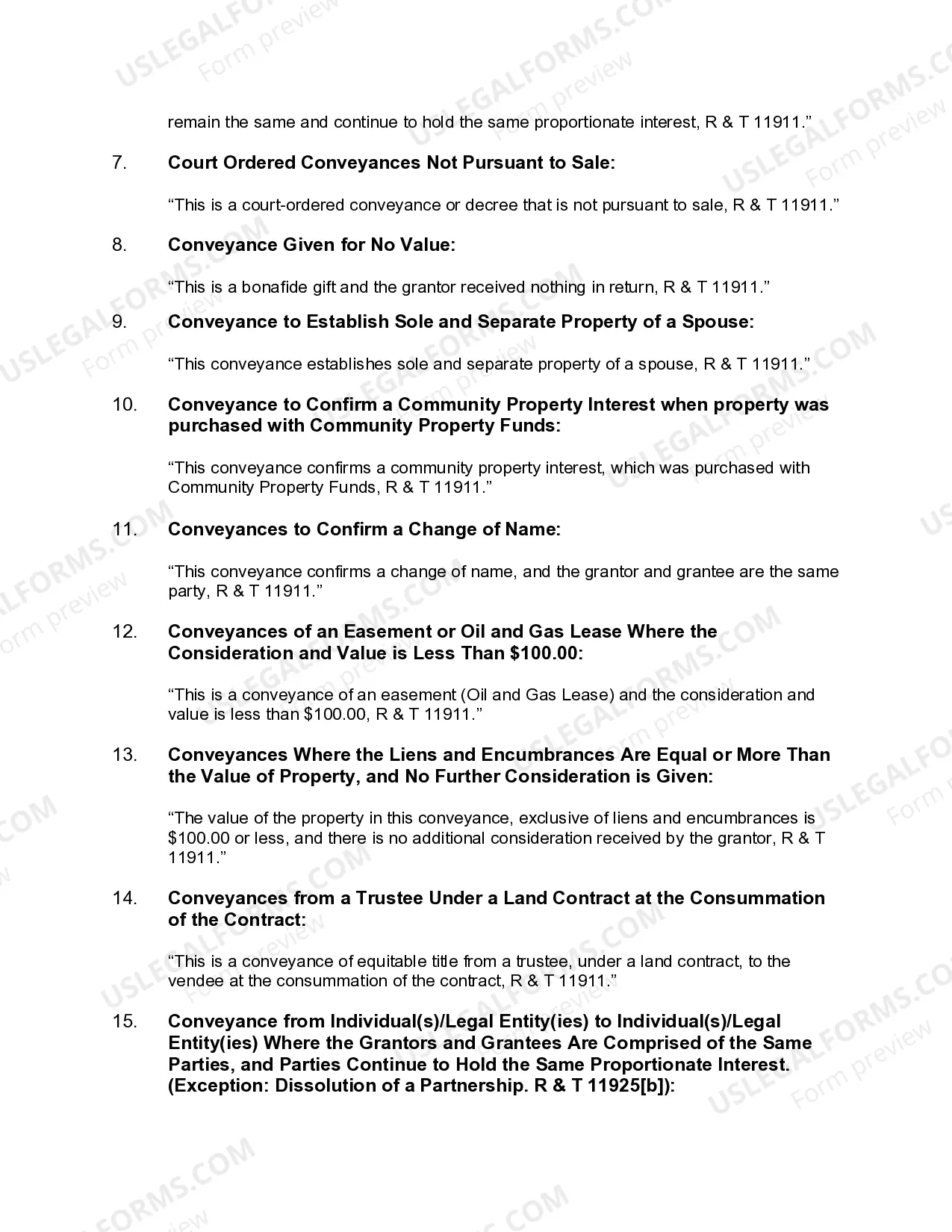
- Enter the necessary dates and any applicable exemptions from transfer taxes.
- Sign and date the document, ensuring it is notarized if required.
Notarization guidance
To make this form legally binding, it must be notarized. Our online notarization service, powered by Notarize, lets you verify and sign documents remotely through an encrypted video session.
Get your form ready online
Our built-in tools help you complete, sign, share, and store your documents in one place.
Make edits, fill in missing information, and update formatting in US Legal Forms—just like you would in MS Word.
Download a copy, print it, send it by email, or mail it via USPS—whatever works best for your next step.
Sign and collect signatures with our SignNow integration. Send to multiple recipients, set reminders, and more. Go Premium to unlock E-Sign.
If this form requires notarization, complete it online through a secure video call—no need to meet a notary in person or wait for an appointment.
We protect your documents and personal data by following strict security and privacy standards.

Make edits, fill in missing information, and update formatting in US Legal Forms—just like you would in MS Word.

Download a copy, print it, send it by email, or mail it via USPS—whatever works best for your next step.

Sign and collect signatures with our SignNow integration. Send to multiple recipients, set reminders, and more. Go Premium to unlock E-Sign.

If this form requires notarization, complete it online through a secure video call—no need to meet a notary in person or wait for an appointment.

We protect your documents and personal data by following strict security and privacy standards.
Typical mistakes to avoid
- Failing to include all parties' legal names and their fiduciary roles.
- Not accurately describing the property or including the legal description.
- Omitting required signatures or not having the form notarized when necessary.
- Neglecting to state any tax exemptions, which can lead to unnecessary costs.
Why use this form online
- Convenience of accessing and completing the form from home.
- Editability allows users to customize the document for their specific needs.
- Peace of mind knowing that forms are drafted by licensed attorneys.
- Quick download to save time versus traditional legal assistance.
Main things to remember
- A Warranty Deed for Fiduciary is essential for transferring property on behalf of another party.
- Common users include executors, trustees, and guardians.
- Ensure the form is completed accurately and notarized to maintain its legality.
- Using this form online saves time and provides access to expert-drafted templates.
Looking for another form?
Form popularity
FAQ
The primary disadvantage of a warranty deed is the potential liability it imposes on the grantor. If any claims arise regarding the title or ownership after the transfer, the grantor must defend against those claims, which may involve additional legal costs. However, using a California Warranty Deed for Fiduciary can offer peace of mind, as it allows fiduciaries to fulfill their obligations while minimizing personal liability.
A fiduciary warranty deed is a specific type of warranty deed used by a fiduciary, such as an executor or trustee, to transfer property. This deed ensures that the fiduciary acts within their legal authority and protects the interests of the beneficiaries. When you opt for a California Warranty Deed for Fiduciary, you establish a strong legal foundation for the property transfer, ensuring compliance and security in the transaction.
The strongest form of deed is generally considered to be the warranty deed, as it provides the grantee with full legal protection against any claims to the property. Unlike other types of deeds, a warranty deed ensures that the seller guarantees clear title to the property and commits to defending against any future claims. When using a California Warranty Deed for Fiduciary, you receive additional benefits, as it carries forward these protections while allowing fiduciaries to act in compliance with legal standards.
A fiduciary deed serves to transfer property on behalf of another person, such as a trustee or an executor of an estate. This type of deed is crucial in estate planning and settling an estate, as it ensures that the property is properly handled according to the legal obligations of the fiduciary. Utilizing a California Warranty Deed for Fiduciary can provide the necessary legal backing to protect all parties involved in the transaction.
The key difference between a quitclaim deed and an Interspousal transfer deed in California lies in ownership transfer and the rights conveyed. A quitclaim deed transfers any interest the grantor has in the property, without assuming any warranty on the ownership. On the other hand, an Interspousal transfer deed is specifically designed for spouses to transfer property between each other, often with certain legal protections in place. If you are navigating property transfers, consider using a California Warranty Deed for Fiduciary for secure and efficient processing.
While a deed does not have to be recorded to be valid in California, recording it provides legal protection and public notice. By recording a California Warranty Deed for Fiduciary, you help prevent future disputes regarding property ownership. It is advisable to record your deed to ensure your rights are protected as the property owner.
In California, trust documents do not need to be recorded to be valid. However, recording a California Warranty Deed for Fiduciary associated with the trust can provide public notice of the trust's terms. This can protect the beneficiaries and ensure that the property is transferred according to your intentions. Consider recording relevant documents to maintain clarity and legality.
To record a deed of trust in California, first, complete the document with all necessary details. After that, you must find the local county recorder's office where the property is located. Submit the document along with the required fees, and ensure it includes the proper legal description of the property. Utilizing a well-drafted California Warranty Deed for Fiduciary can simplify this process.
To get the warranty deed for your property, you can visit your county’s recorder’s office or request a copy online, depending on your state’s regulations. If your property is in California and you require a California Warranty Deed for Fiduciary, consider using uslegalforms. Their platform can assist you in locating the correct forms and ensuring the deed is filled out properly.
To obtain a copy of your house deed in Missouri, you should contact the county recorder’s office where your property is situated. They can provide you with the necessary paperwork or facilitate an online request. If you need help navigating this process or looking for a specific deed type, uslegalforms has resources that can guide you effectively.