California Contract for Deed Package
Understanding this form package
The California Contract for Deed Package provides essential legal documents for owner financing of real estate in California. This package includes state-specific forms that cater to the unique aspects of property transactions in the state, ensuring compliance with local regulations. Unlike generic agreements, these documents are tailored to meet Californiaâs legal standards and protect the interests of both buyers and sellers in real estate transactions.
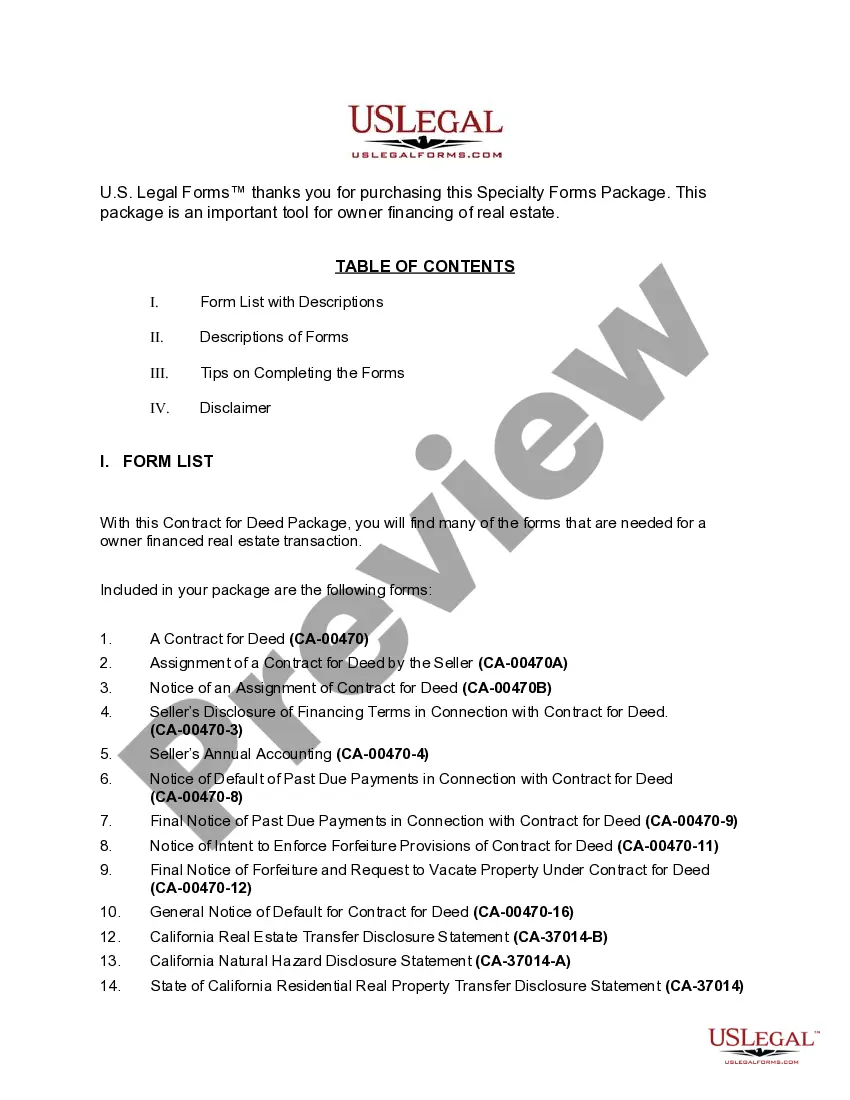
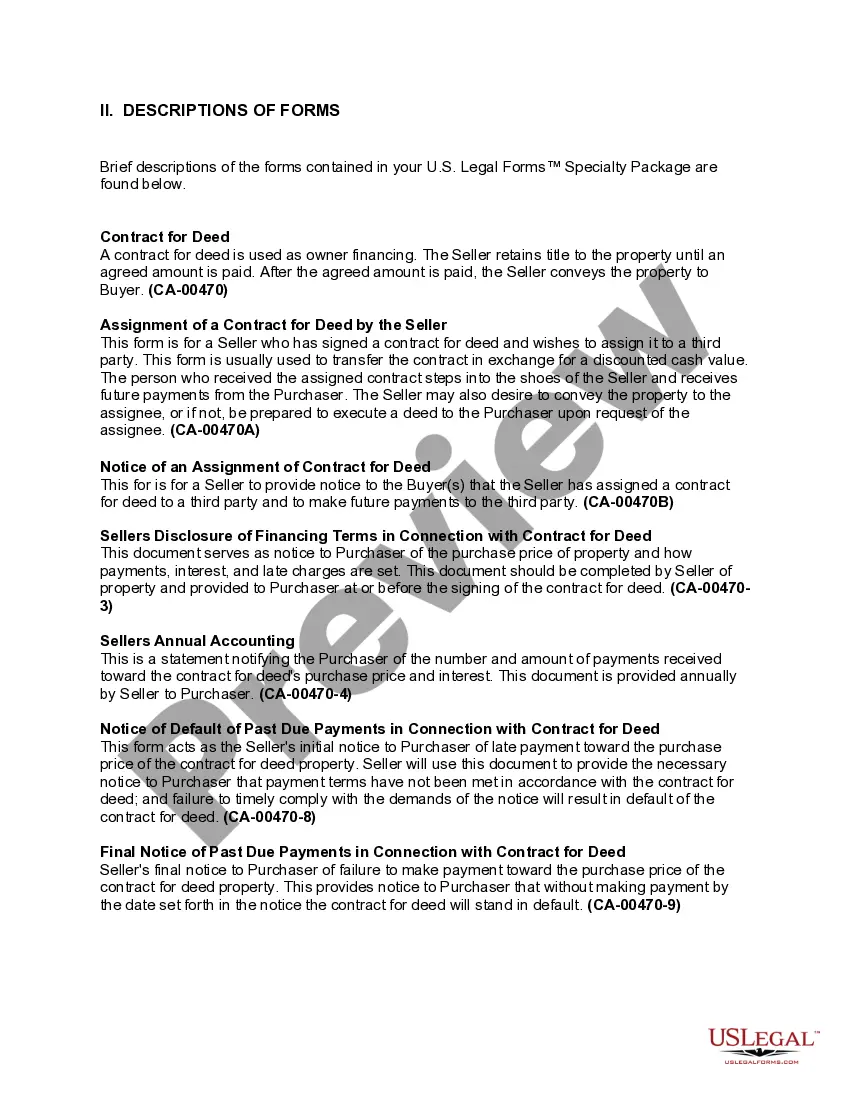
What’s included in this form package
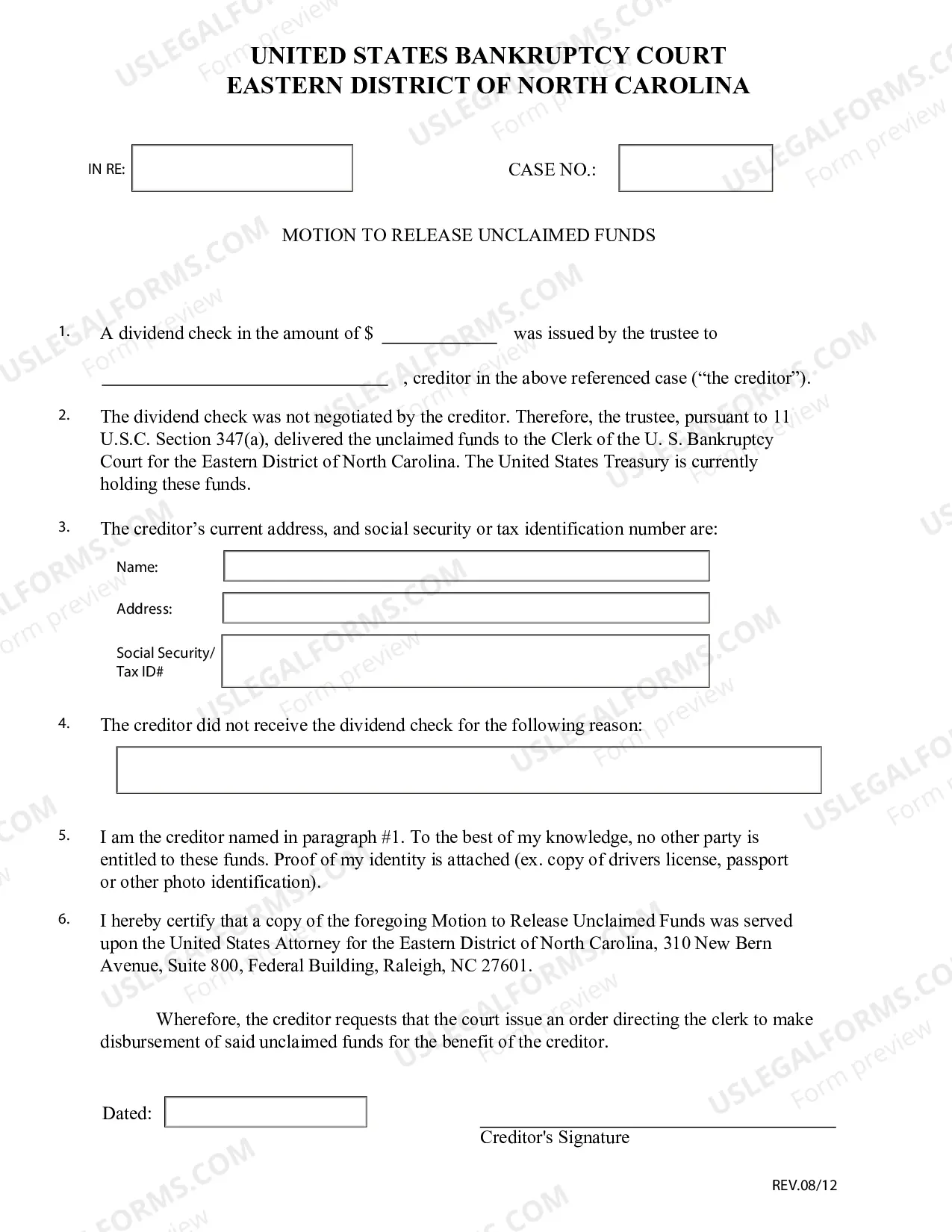
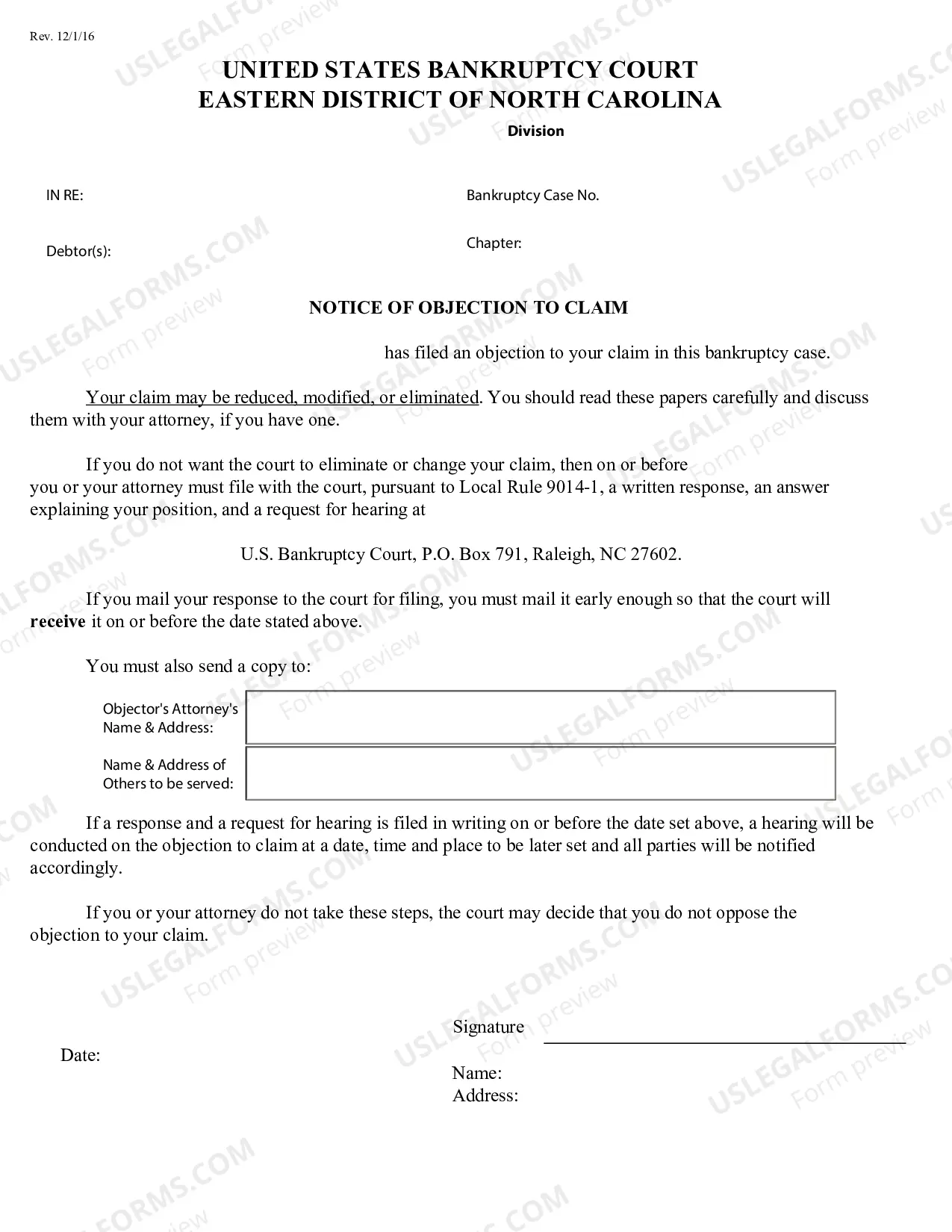
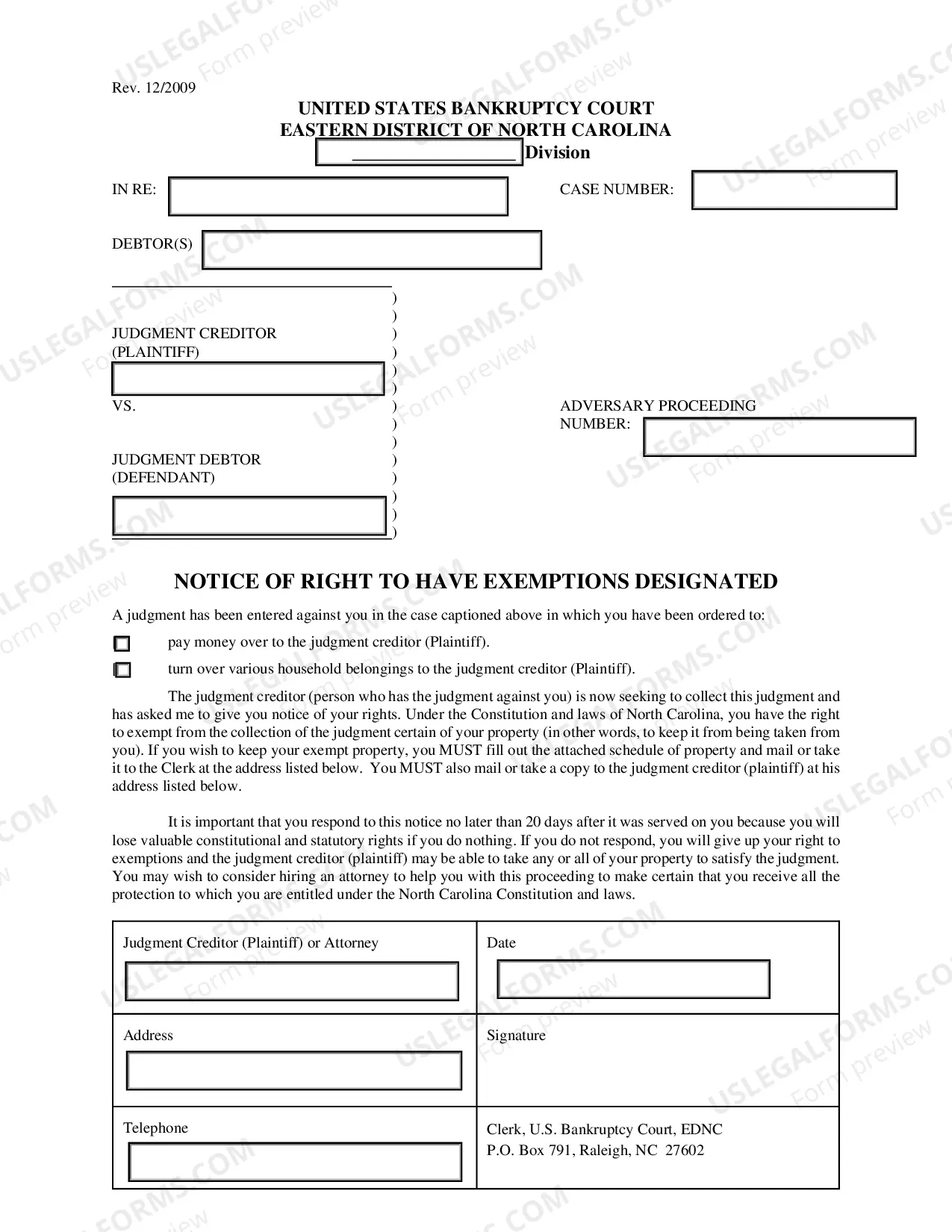
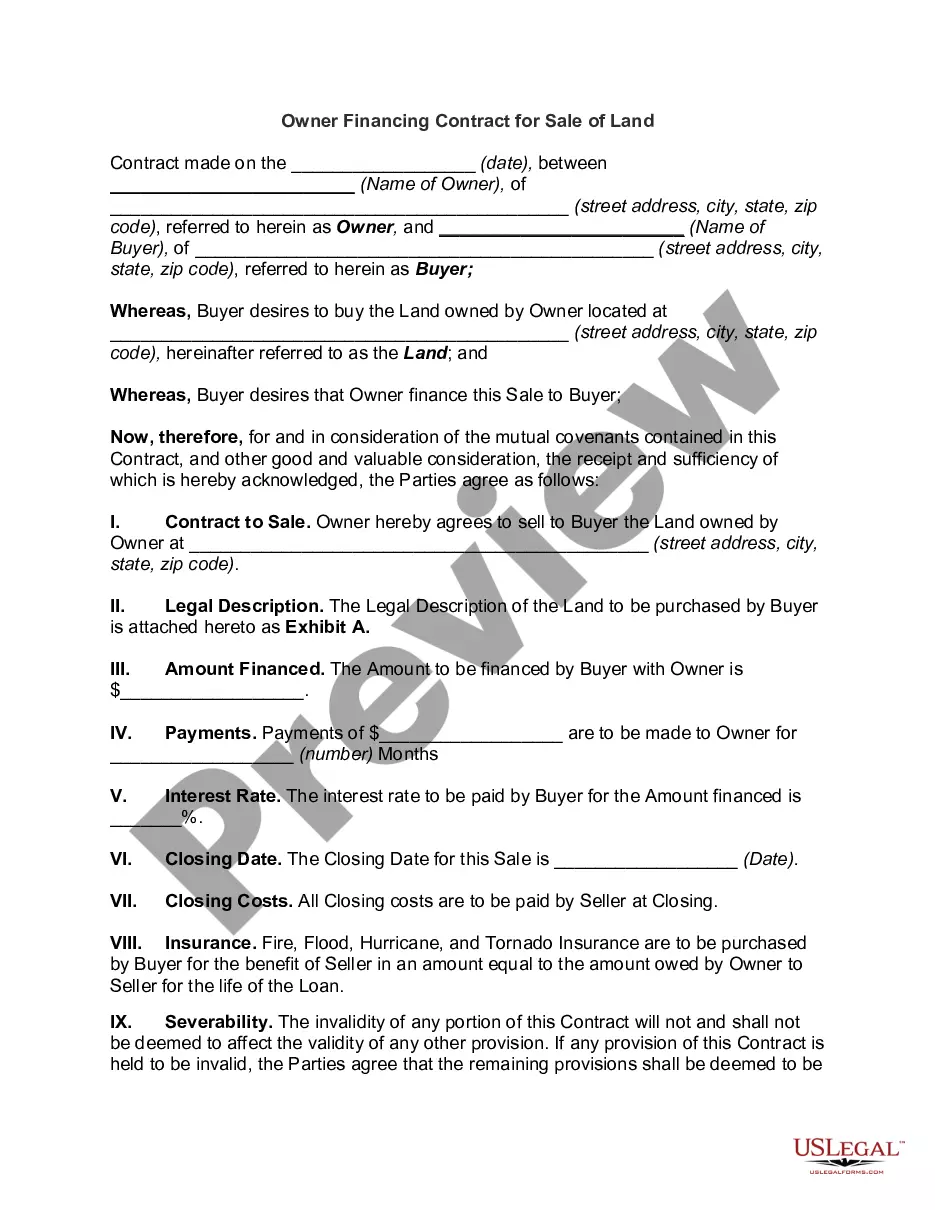
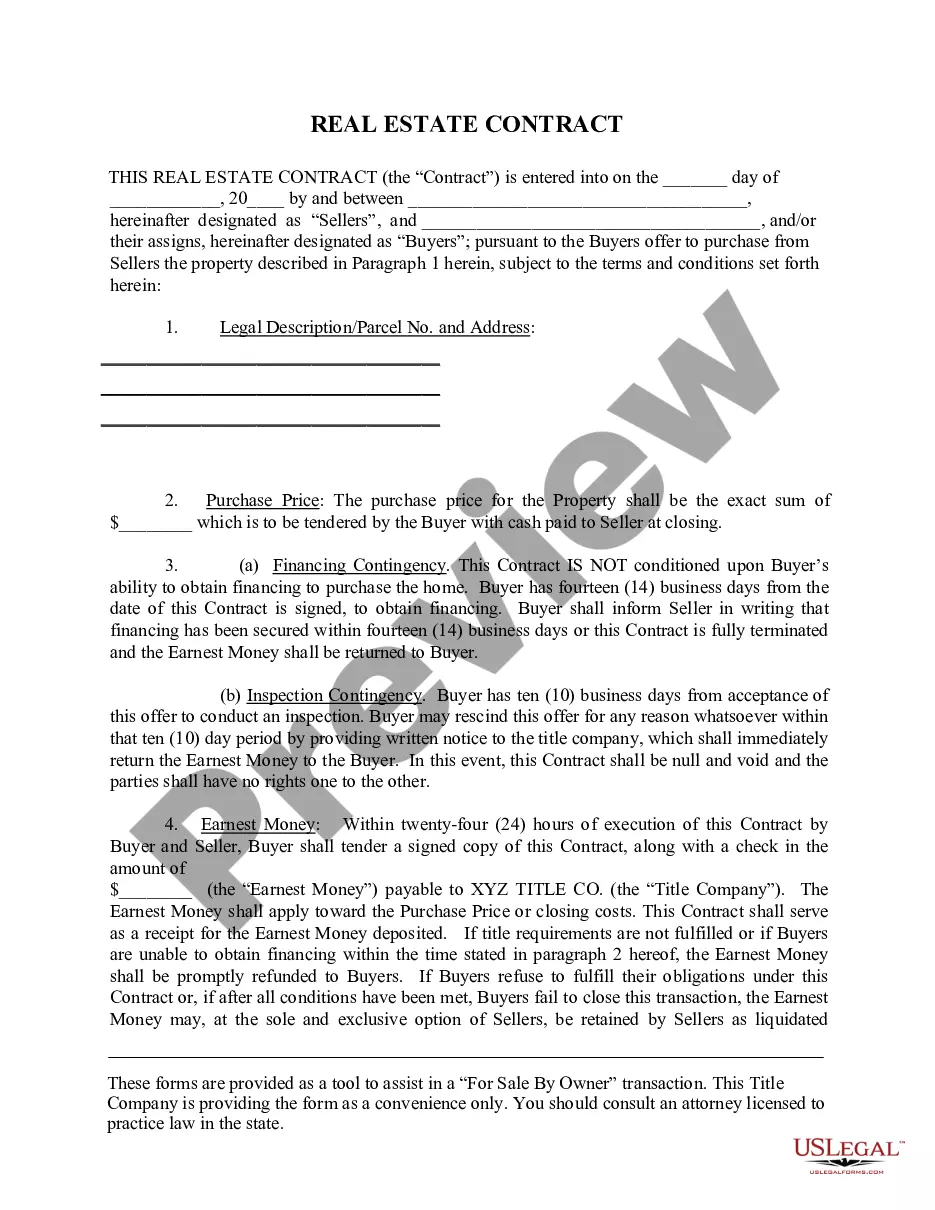
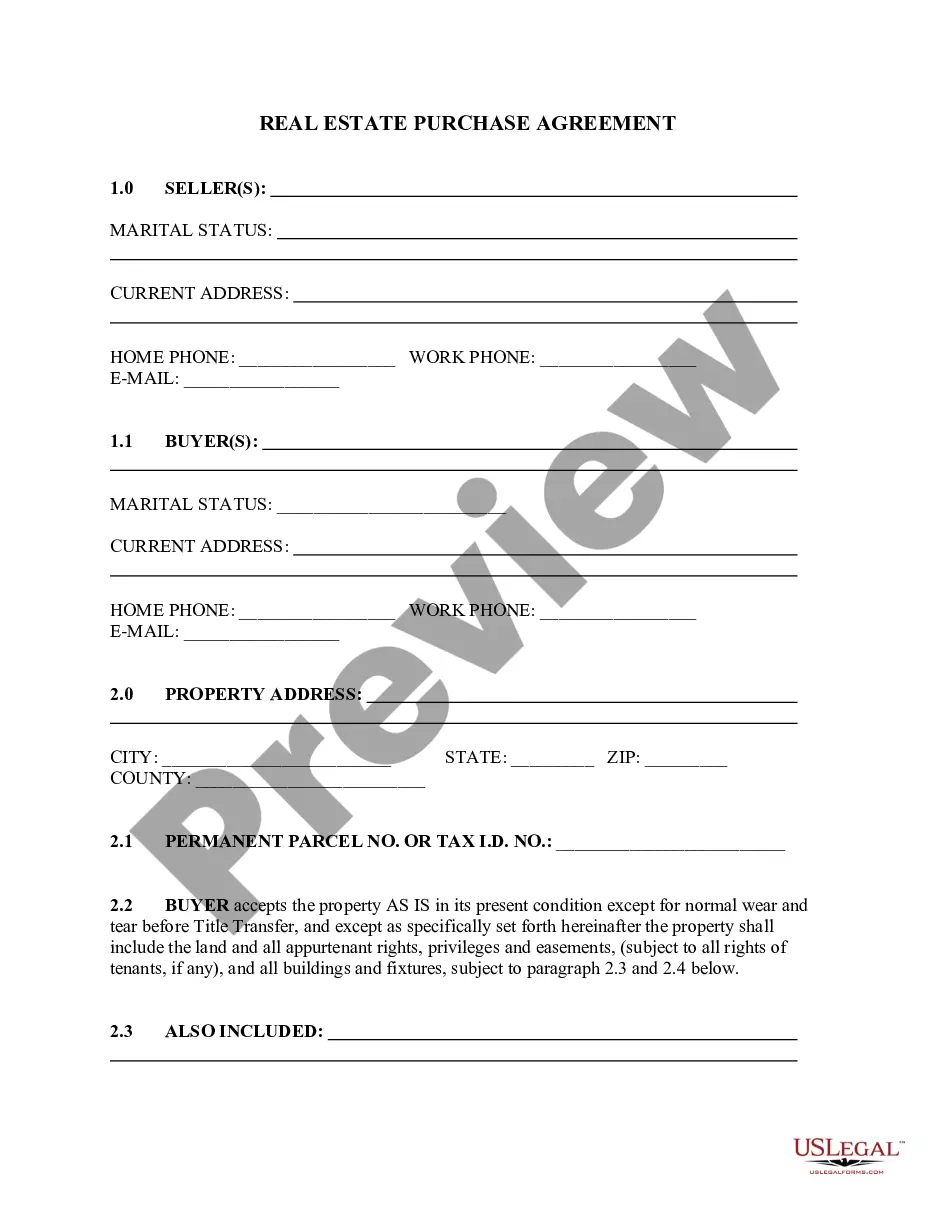
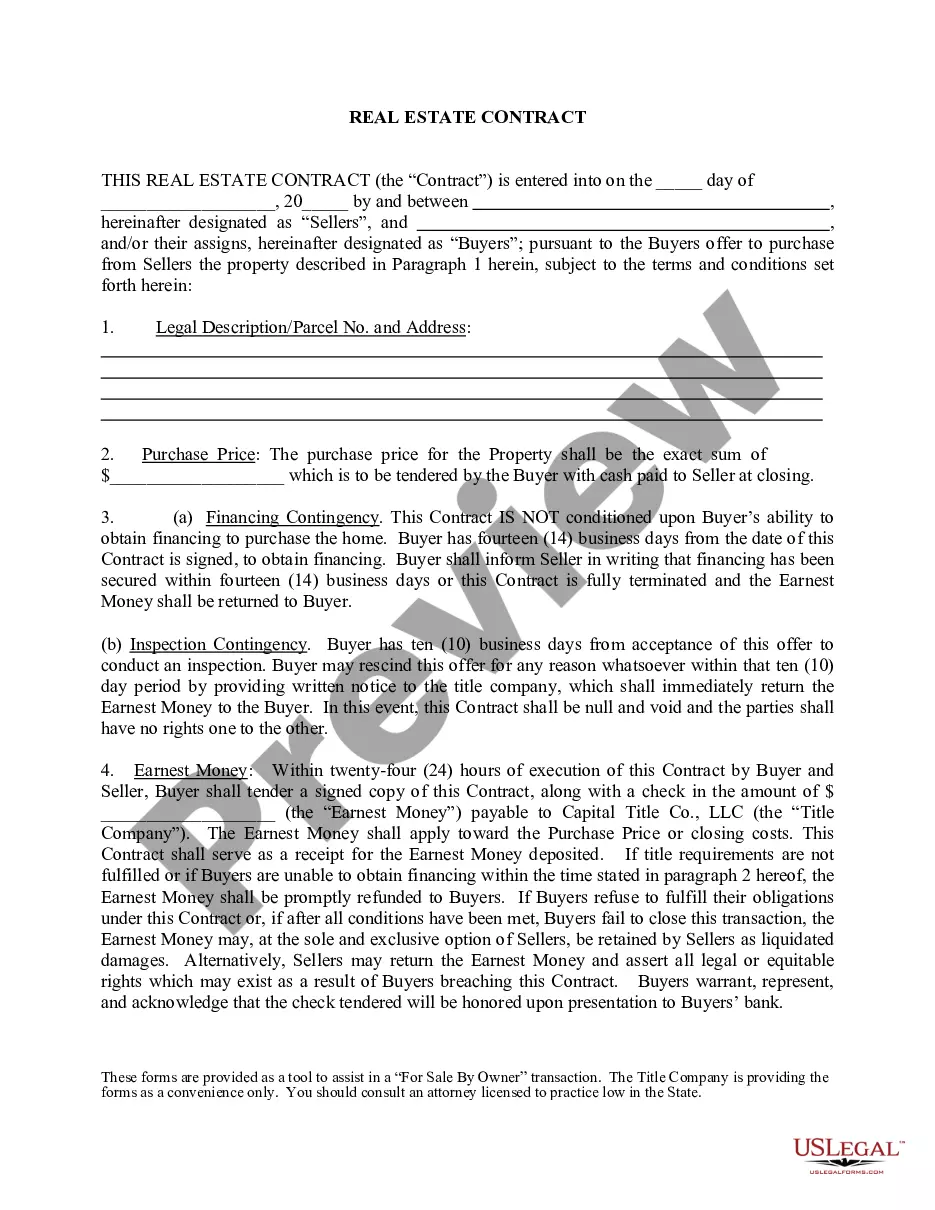
- Agreement or Contract for Deed for Sale and Purchase of Real Estate a/k/a Land or Executory Contract
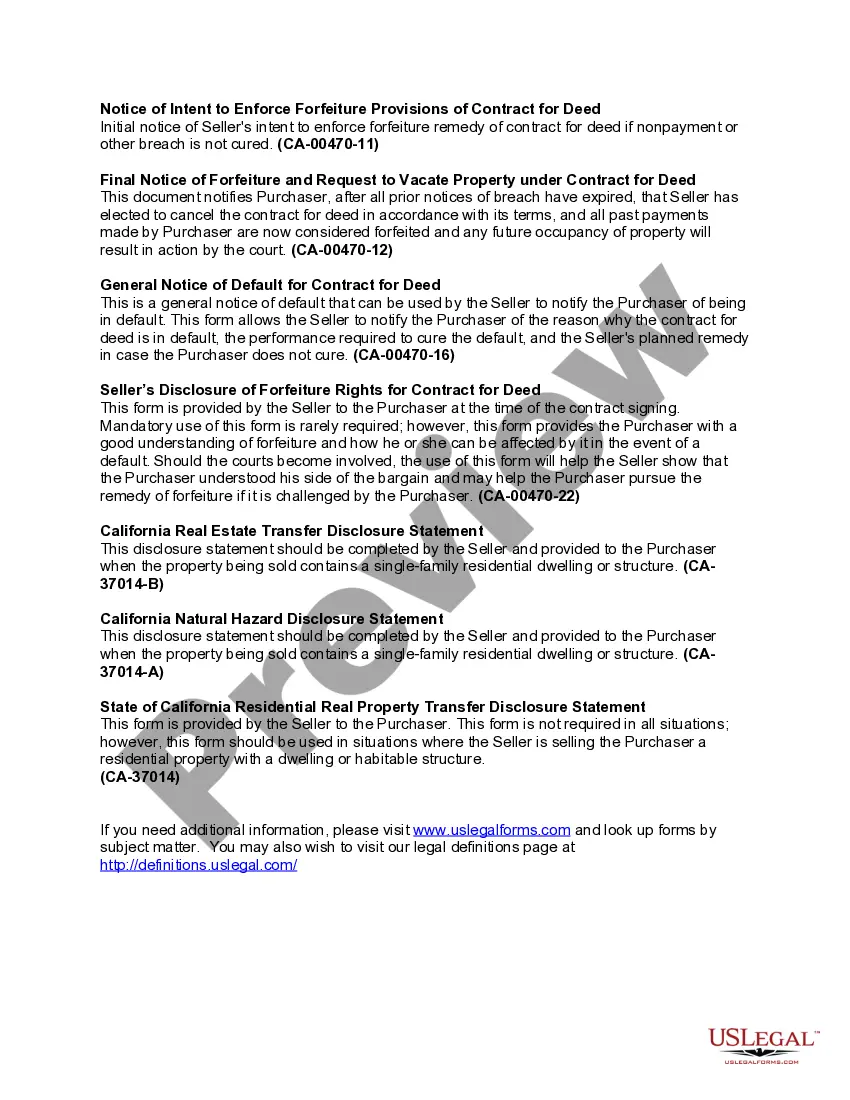
- Notice of Intent to Enforce Forfeiture Provisions of Contact for Deed
- Final Notice of Forfeiture and Request to Vacate Property under Contract for Deed
- General Notice of Default for Contract for Deed
- Seller's Disclosure of Forfeiture Rights for Contract for Deed
- Seller's Disclosure of Financing Terms for Residential Property in connection with Contract or Agreement for Deed a/k/a Land Contract
- Contract for Deed Seller's Annual Accounting Statement
- Notice of Default for Past Due Payments in connection with Contract for Deed
- Final Notice of Default for Past Due Payments in connection with Contract for Deed
- Assignment of Contract for Deed by Seller
- Notice of Assignment of Contract for Deed
When to use this form package
This form package is ideal when:
- You wish to finance real estate without traditional bank involvement.
- You are a seller looking to provide owner financing to a buyer.
- You need to formalize the terms and conditions of a contract for deed.
- You are handling an assignment of the contract for deed to another party.
Who needs this form package
- Home sellers offering financing options to buyers.
- Potential buyers seeking alternative financing solutions.
- Real estate agents involved in owner-financed transactions.
- Investors looking to protect their interests in property deals.
Instructions for completing these forms
- Review all included forms to understand their purposes and requirements.
- Identify the parties involved in the transaction and gather necessary information.
- Complete each form by entering the required details, ensuring accuracy.
- Sign the forms where indicated, adhering to any witness or notarization requirements.
- Distribute the completed forms to all parties involved in the transaction.
Notarization requirements for forms in this package
Forms in this package typically do not require notarization unless required by local law. However, certain documents may benefit from being notarized to enhance their legal validity and enforceability. It is advisable to consult with a legal professional if you have specific concerns regarding notarization.
Get your form ready online
Our built-in tools help you complete, sign, share, and store your documents in one place.
Make edits, fill in missing information, and update formatting in US Legal Forms—just like you would in MS Word.
Download a copy, print it, send it by email, or mail it via USPS—whatever works best for your next step.
Sign and collect signatures with our SignNow integration. Send to multiple recipients, set reminders, and more. Go Premium to unlock E-Sign.
If this form requires notarization, complete it online through a secure video call—no need to meet a notary in person or wait for an appointment.
We protect your documents and personal data by following strict security and privacy standards.

Make edits, fill in missing information, and update formatting in US Legal Forms—just like you would in MS Word.

Download a copy, print it, send it by email, or mail it via USPS—whatever works best for your next step.

Sign and collect signatures with our SignNow integration. Send to multiple recipients, set reminders, and more. Go Premium to unlock E-Sign.

If this form requires notarization, complete it online through a secure video call—no need to meet a notary in person or wait for an appointment.

We protect your documents and personal data by following strict security and privacy standards.
Avoid these common issues
- Failing to include all required signatures.
- Not providing clear financing terms in the Seller's Disclosure.
- Using outdated or incorrect forms not specific to California.
- Not notifying buyers of contract assignments promptly.
Benefits of using this package online
- Convenient access to all necessary forms in one package.
- Edit forms easily and securely from your computer.
- Reliable documents drafted by licensed attorneys specializing in real estate.
- Cost-effective, saving you time and money compared to individual form purchases.
Legal use & context
- Contracts for deed allow sellers to retain ownership of the property until the buyer fulfills all payment obligations.
- These documents are legally binding and enforceable in California, protecting both the seller's and buyer's interests.
- It's important to understand the implications of defaults and forfeiture rights included in these forms.
Quick recap
- This form package provides essential documents for owner financing in California.
- It helps ensure compliance with state-specific real estate laws.
- Using these forms can streamline the process of owner-financed real estate transactions.
- Common mistakes include incomplete signatures and unclear financing terms.
Looking for another form?


Form popularity
FAQ
A contract can be deemed invalid in California due to several factors, including lack of essential elements like mutual consent, lawful purpose, and adequate consideration. Additionally, if the contract violates statutory regulations or if one party lacks the legal capacity to enter into an agreement, it may be rendered invalid. Therefore, utilizing a comprehensive California Contract for Deed Package helps ensure all legalities are met, reducing the risk of invalidation.
A contract for deed carries specific risks, such as the buyer losing their investment if they default on payments. Because the seller retains the title until the contract is fulfilled, you may face complications in transferring ownership if disputes arise. It's essential to fully understand the terms outlined in the California Contract for Deed Package to navigate these challenges effectively.
Yes, a contract for deed is legal in California, provided it adheres to state regulations. These agreements can be a valid option for real estate transactions in the state. To ensure compliance with California laws, consider using a California Contract for Deed Package from uslegalforms, which provides essential resources.
One disadvantage of a contract for deed is that the seller retains the title until the buyer pays in full, which could lead to disputes. Another disadvantage includes potential risks like higher interest rates compared to traditional loans. A comprehensive California Contract for Deed Package can help mitigate these risks.
To write a contract for deed, start by detailing the parties involved, property description, and payment schedule. Clearly outline the responsibilities of both the buyer and seller, ensuring all terms are understandable. With the help of our California Contract for Deed Package, you can easily craft a legally sound document.
Yes, you can assign a contract for deed, but this often requires the seller's consent. Assigning allows the buyer to transfer their rights and obligations to another party. If you are exploring options, the California Contract for Deed Package can provide clarity on assignment terms.
Yes, a land contract and a contract for deed refer to the same type of agreement. This arrangement allows buyers to make payments directly to sellers for property ownership over time. If you're considering a California Contract for Deed Package, this agreement can be highly beneficial for both parties.
To fill out a grant deed in California, enter the names and addresses of both the grantor and the grantee at the top. Provide a clear legal description of the property, which is essential for the deed's validity. Remember to include the grantor’s signature and have the document notarized before submitting it for recording. The California Contract for Deed Package can help you with precise templates.
To fill out a California residential lease agreement, begin by providing the names of the landlord and tenant, along with the rental property's address. Clearly outline the lease term, rental amount, and any special provisions like pet policies. Ensure both parties sign the lease for it to be enforceable. For convenience, consider using our California Contract for Deed Package.
A grant deed in California is valid when it includes the grantor's signature, a clear identification of the grantee, and an accurate legal property description. Additionally, it must be notarized and recorded with the county recorder's office. Following these guidelines ensures your grant deed aligns with the California Contract for Deed Package.