California Lease Subordination Agreement
Understanding this form
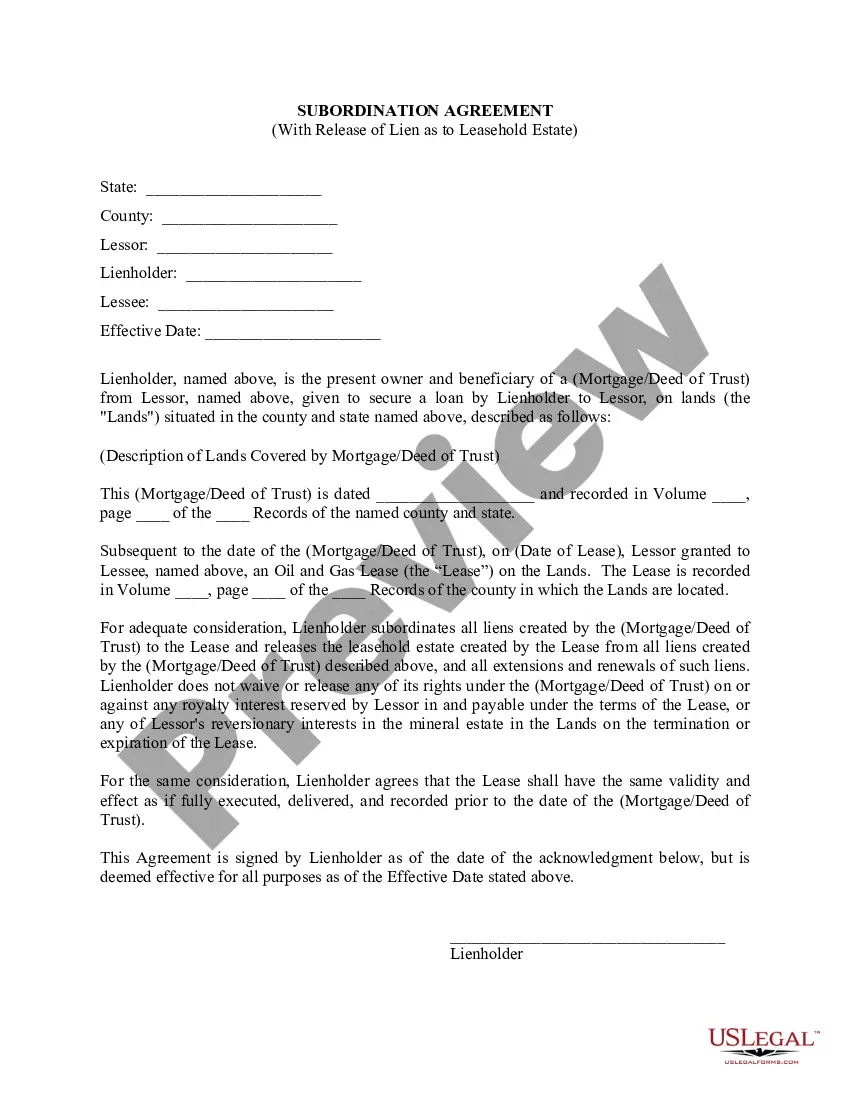
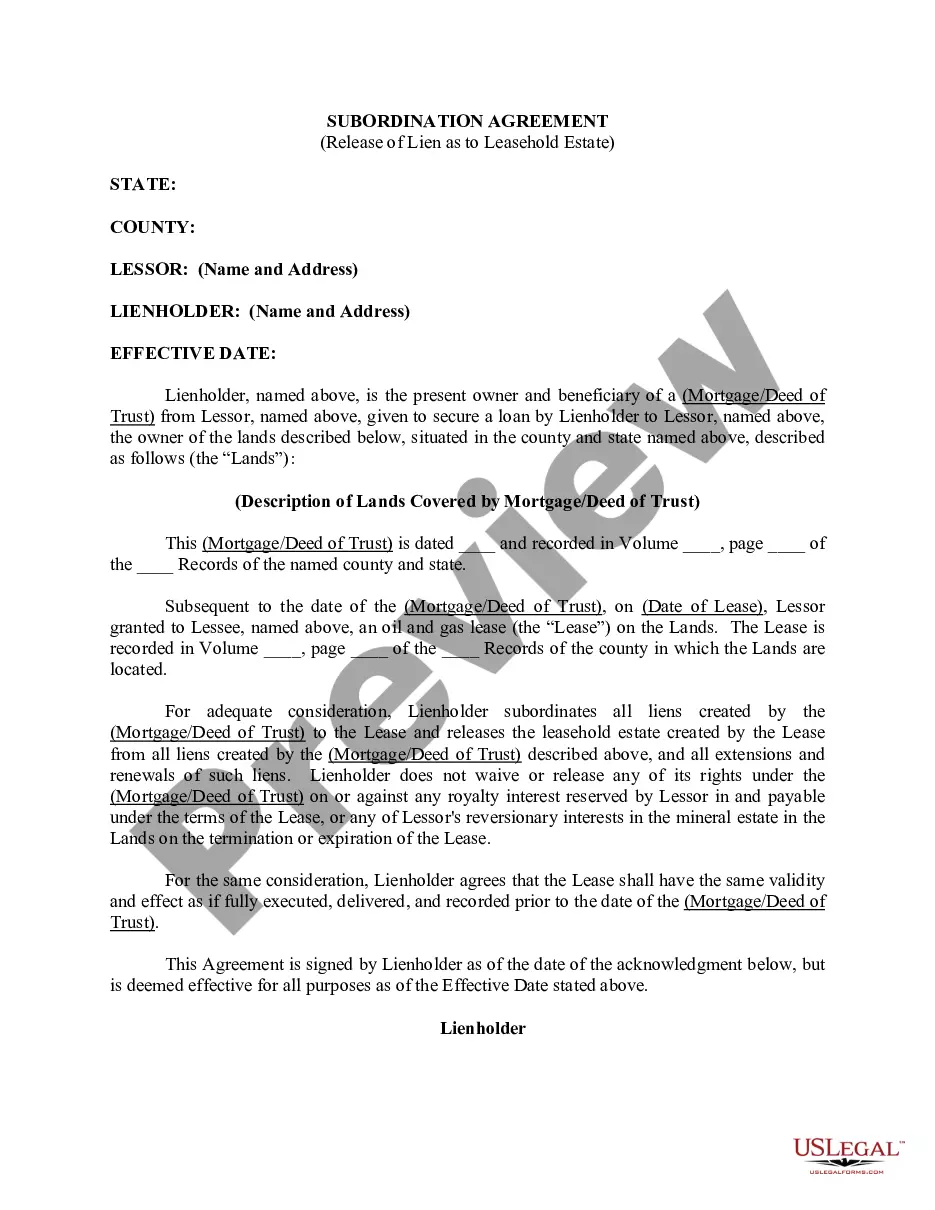
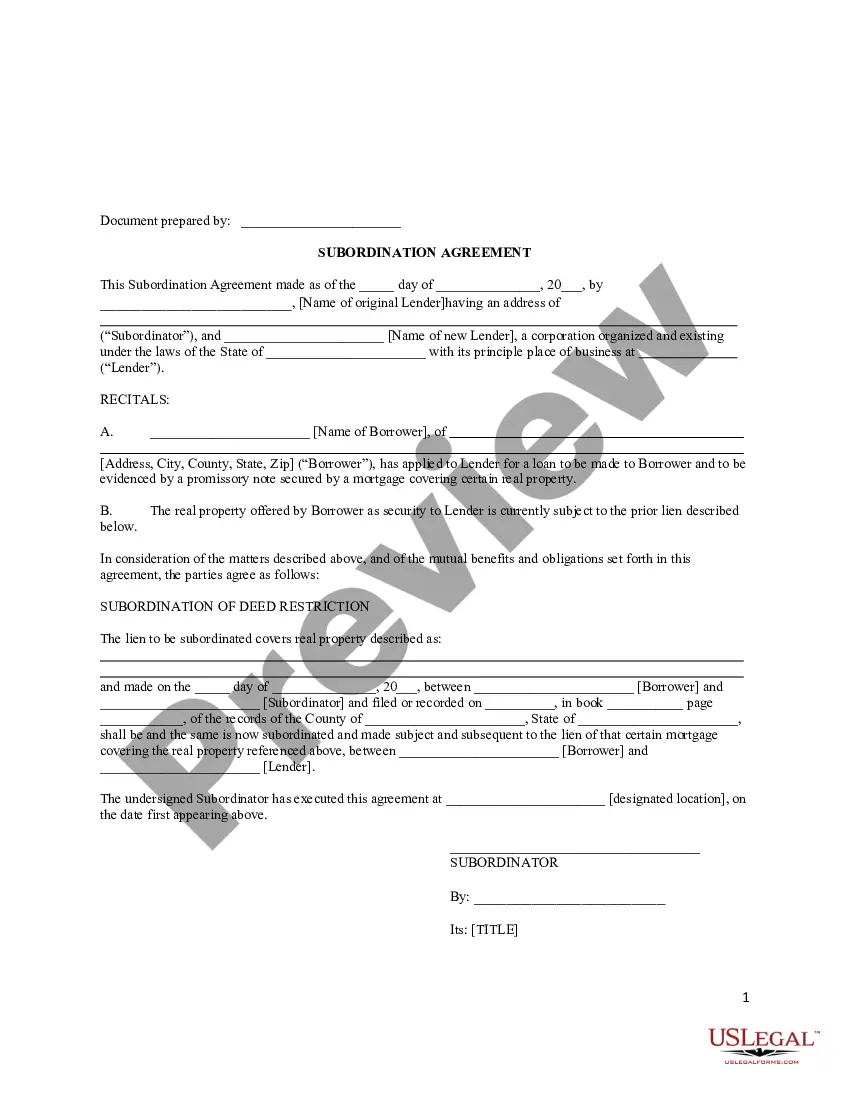
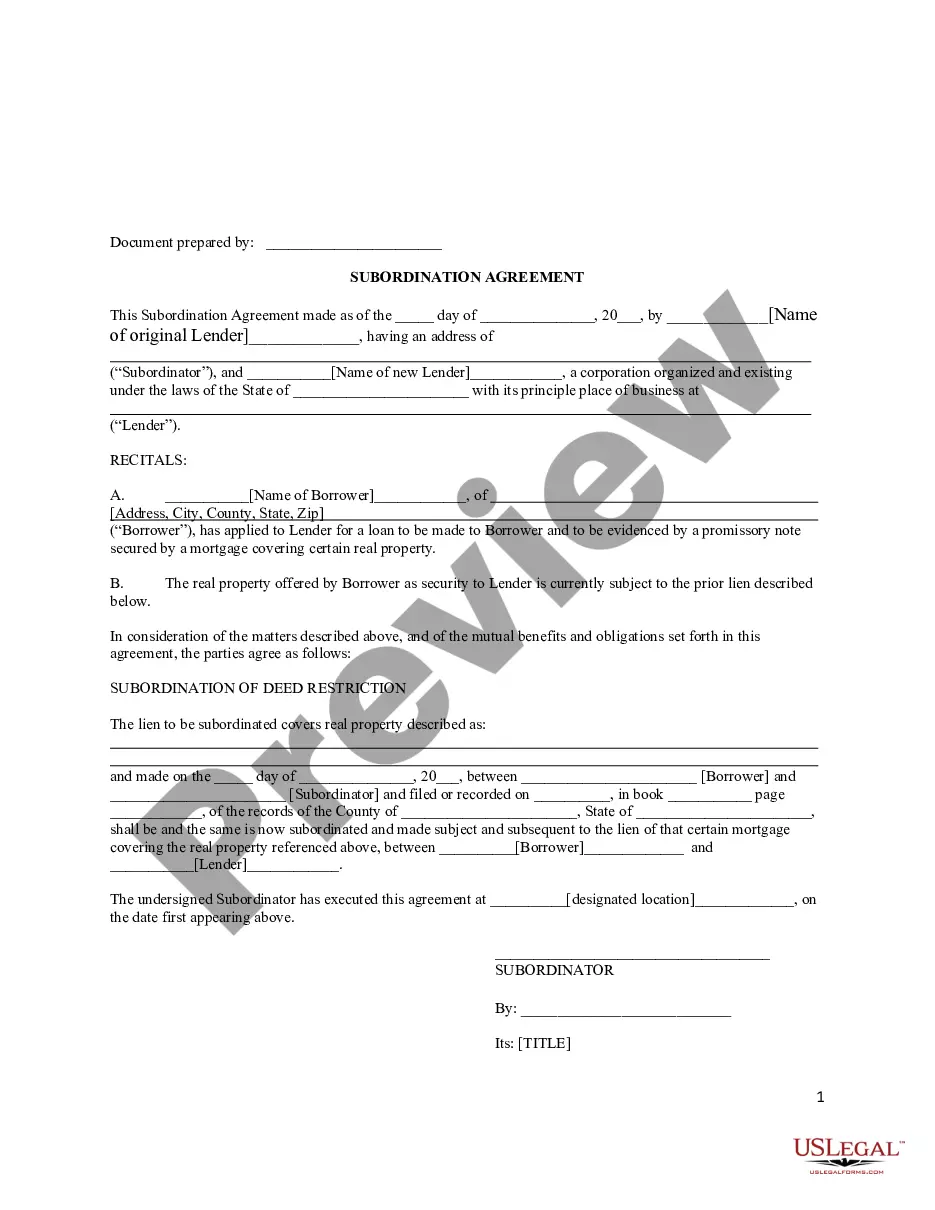
A Lease Subordination Agreement is a legal document that allows a lienholder to place their mortgage or deed of trust in a subordinate position to a mineral, oil, or gas lease. This means that the rights under the lease will take priority over the lender's claim to the property. This agreement is essential for property owners seeking additional financing, as it helps ensure that any new loans are prioritized over previous ones. By using this specific form, you can effectively outline the subordination agreement while preserving the lienholder's interests under the original mortgage or deed of trust.
Main sections of this form
- Identification of parties involved: Lessor, lienholder, and lessee.
- Description of collateral property: Details of the lands covered by the mortgage or deed of trust.
- Details of the mortgage: Reference the original mortgage or deed of trust, including recording information.
- Subordination clause: Stipulation that the mortgage is subordinated to the lease.
- Effective date: The date when the agreement is intended to take effect.
Situations where this form applies
This form should be used when a property owner with an existing mortgage wishes to enter into a new mineral, oil, or gas lease and needs to ensure that the lease takes precedence over their current mortgage. This scenario typically arises when a property owner seeks additional funding to finance improvements or developments on the property. Subordination is crucial in these instances to facilitate new financial arrangements without risking foreclosure on the property.
Who needs this form
- Property owners who hold an existing mortgage and want to lease their land for mineral or gas extraction.
- Lessee who is entering into an oil and gas lease agreement.
- Lenders or lienholders who need to formalize their subordination rights regarding existing mortgages.
- Real estate attorneys assisting clients with leasing agreements and associated financing matters.
Steps to complete this form
- Identify all parties involved in the agreement: the lessor (property owner), lienholder (lender), and lessee (tenant).
- Clearly describe the property that is subject to the mortgage and the lease.
- Fill in the details of the original mortgage or deed of trust, including the date and recording information.
- Include the effective date of the subordination agreement.
- Have the lienholder sign the document, indicating their agreement to subordinate the mortgage.
Does this document require notarization?
This document requires notarization to meet legal standards. US Legal Forms provides secure online notarization powered by Notarize, allowing you to complete the process through a verified video call, available 24/7.
Get your form ready online
Our built-in tools help you complete, sign, share, and store your documents in one place.
Make edits, fill in missing information, and update formatting in US Legal Forms—just like you would in MS Word.
Download a copy, print it, send it by email, or mail it via USPS—whatever works best for your next step.
Sign and collect signatures with our SignNow integration. Send to multiple recipients, set reminders, and more. Go Premium to unlock E-Sign.
If this form requires notarization, complete it online through a secure video call—no need to meet a notary in person or wait for an appointment.
We protect your documents and personal data by following strict security and privacy standards.

Make edits, fill in missing information, and update formatting in US Legal Forms—just like you would in MS Word.

Download a copy, print it, send it by email, or mail it via USPS—whatever works best for your next step.

Sign and collect signatures with our SignNow integration. Send to multiple recipients, set reminders, and more. Go Premium to unlock E-Sign.

If this form requires notarization, complete it online through a secure video call—no need to meet a notary in person or wait for an appointment.

We protect your documents and personal data by following strict security and privacy standards.
Common mistakes
- Failing to clearly identify all parties involved can lead to confusion about rights and responsibilities.
- Inaccurate or incomplete descriptions of the property may cause issues in enforcement.
- Not specifying the effective date, which can affect the timing of the agreement's implementation.
- Assuming that the agreement automatically applies in all jurisdictions without confirming local rules.
Why complete this form online
- The online form is readily accessible and can be downloaded immediately for convenience.
- Users can easily edit and customize the template for their specific situation.
- The forms provided are drafted by licensed attorneys, ensuring legal reliability and compliance.
Legal use & context
- This agreement clarifies the relative priorities of the lienholder and the lease, essential in legal disputes.
- Proper execution can prevent conflicts between lienholders and lessees which may arise in financial transactions.
Key takeaways
- A Lease Subordination Agreement is crucial for prioritizing leases over existing mortgages.
- Accurate completion and understanding of the agreement protect the interests of all parties involved.
- Consulting legal professionals can help navigate complex legal requirements related to subordination.
Looking for another form?
Form popularity
FAQ
A subordination clause establishes the relationship between a lease and a mortgage, clarifying who has priority in case of property disputes. In a California Lease Subordination Agreement, this clause allows mortgage lenders to maintain control if the property owner defaults. This is beneficial because it provides assurance to lenders while giving tenants the security of their lease. Using platforms like US Legal Forms can help you draft clear and effective subordination clauses.
Being subordinate to a mortgage means that your lease takes a lower priority than the mortgage lender's rights. In the context of a California Lease Subordination Agreement, this typically protects the lender's interests over those of the tenant if the property gets foreclosed. This arrangement helps secure financing for property owners while maintaining a valid tenancy. Understanding this concept is crucial for tenants who want to know their rights.
To obtain a California Lease Subordination Agreement, start by consulting with your landlord or property manager. They can provide you with the necessary documents and outline the steps involved in creating the agreement. Additionally, you may want to consult an attorney to ensure that the agreement meets legal standards. Online platforms like US Legal Forms offer templates and resources that can simplify this process.
In a California Lease Subordination Agreement, the primary signatories include the landlord and the tenant. Both parties must fully understand the terms before signing, as this document alters the lease's priority concerning other claims against the property. In some cases, lenders may also need to sign, particularly if they hold a mortgage on the property. Engaging a legal expert from platforms like US Legal Forms can help ensure that all necessary parties sign the agreement appropriately.
Typically, a California Lease Subordination Agreement is prepared by the landlord’s attorney or a legal professional experienced in real estate law. This ensures that the agreement meets legal requirements and protects the interests of all parties involved. Additionally, property managers may also draft this document, especially in more straightforward cases. Ultimately, involving a knowledgeable professional can provide peace of mind and clear communication.
Creating a subordination agreement typically requires a written contract that includes specific terms agreed upon by the landlord, tenant, and lender. All parties must sign the agreement to make it legally binding. It's important to outline the rights and responsibilities of each party clearly. For effective management of these documents, consider using resources from US Legal Forms to streamline the process of obtaining a California Lease Subordination Agreement.
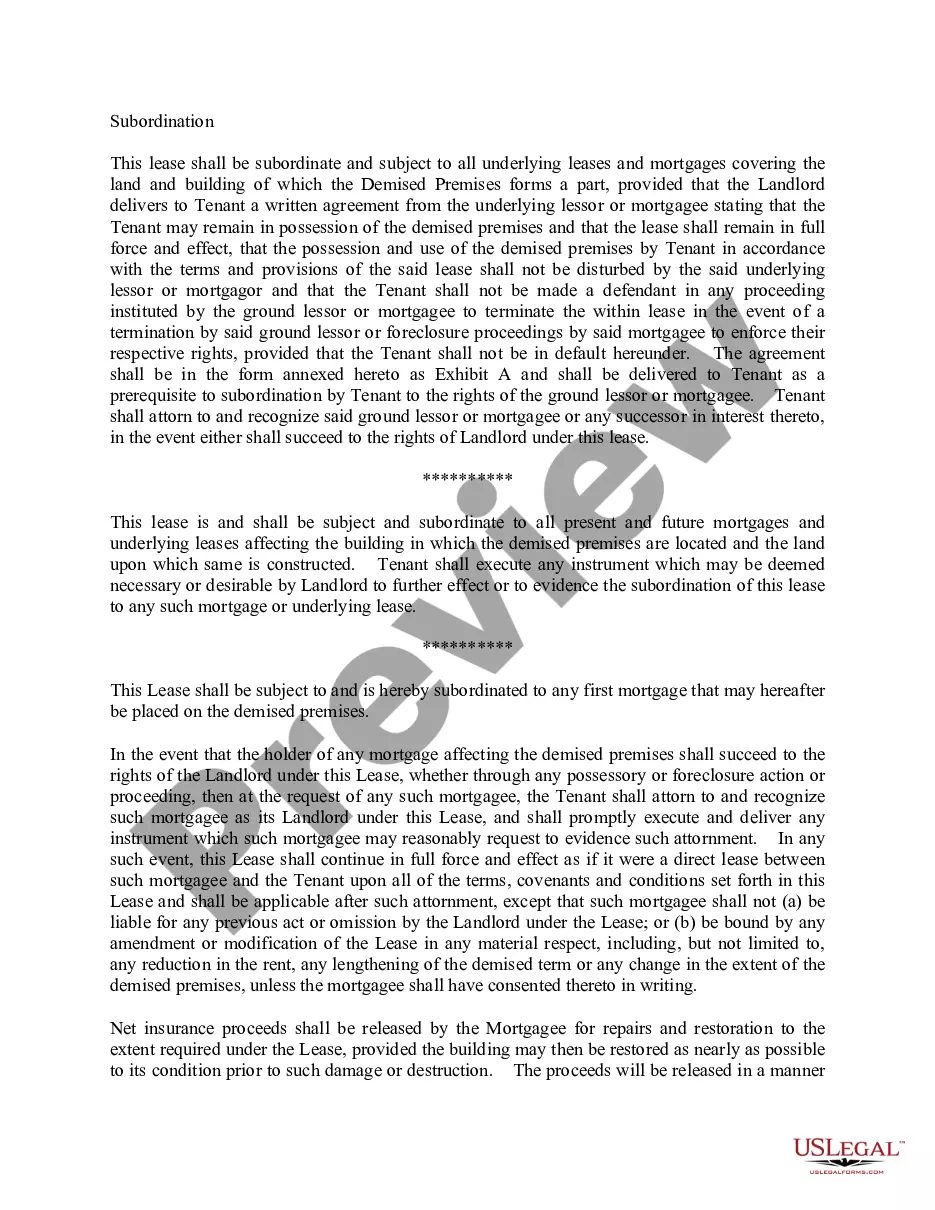
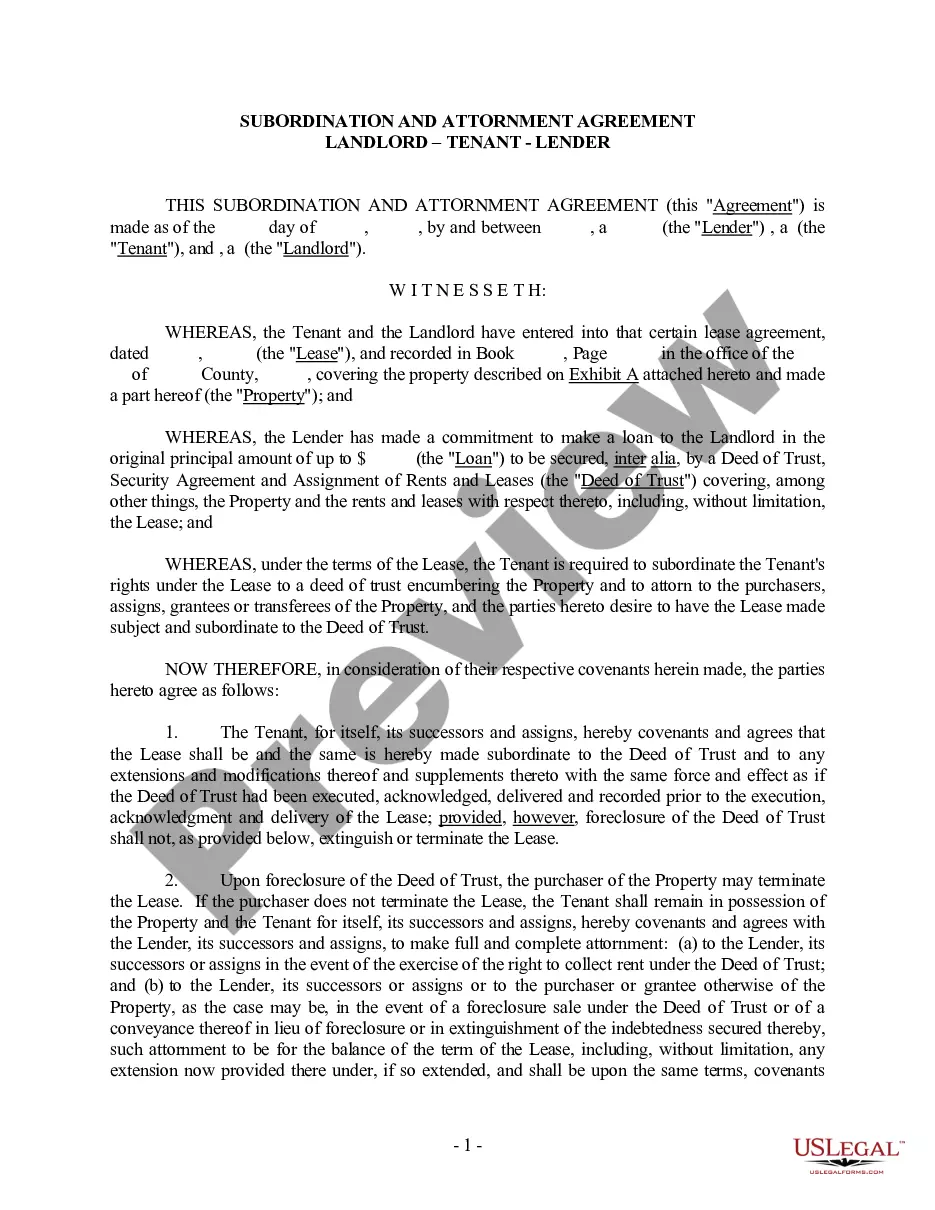
A subordination agreement on a lease is a legal document that establishes the relationship between a lease and a mortgage. In this agreement, the tenant agrees that their lease will become secondary to the mortgage held by the lender. This arrangement is beneficial for landlords to secure financing while ensuring tenants' rights are preserved. Utilizing a California Lease Subordination Agreement provides clarity and protection for all parties involved.
If a lease is not subordinate to a mortgage, the landlord may face challenges in their mortgage negotiations. Essentially, the mortgage lender has priority over the lease, which can complicate the tenant's rights. In situations where the landlord defaults, the tenant might have to vacate the property even if their lease is still in effect. Thus, a California Lease Subordination Agreement is crucial for protecting both the landlord's and tenant's interests.
To fill out a California residential lease agreement, you should gather essential information such as tenant names, property details, and rental terms. Make sure to specify the duration of the lease, rent amount, and security deposit conditions. Utilizing resources like USLegalForms can simplify this process, ensuring your California Lease Subordination Agreement aligns with state regulations and protects your interests.
A subordination agreement clearly defines the order of priority between various interests in a property. For example, if a lease states that it is subordinate to a mortgage, that document is a subordination agreement. Understanding this concept is vital when dealing with a California Lease Subordination Agreement, as it affects both tenant rights and lender interests.