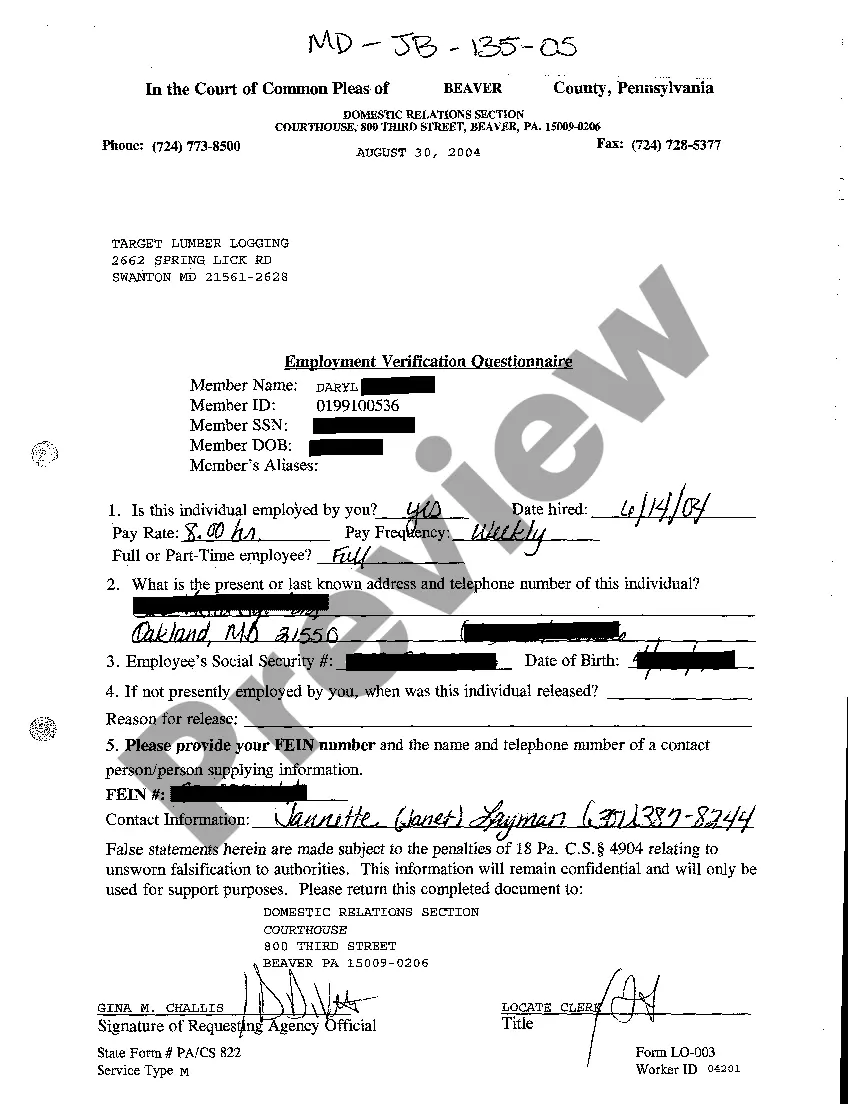
Pennsylvania Tenant Consent to Background and Reference Check
What is this form?
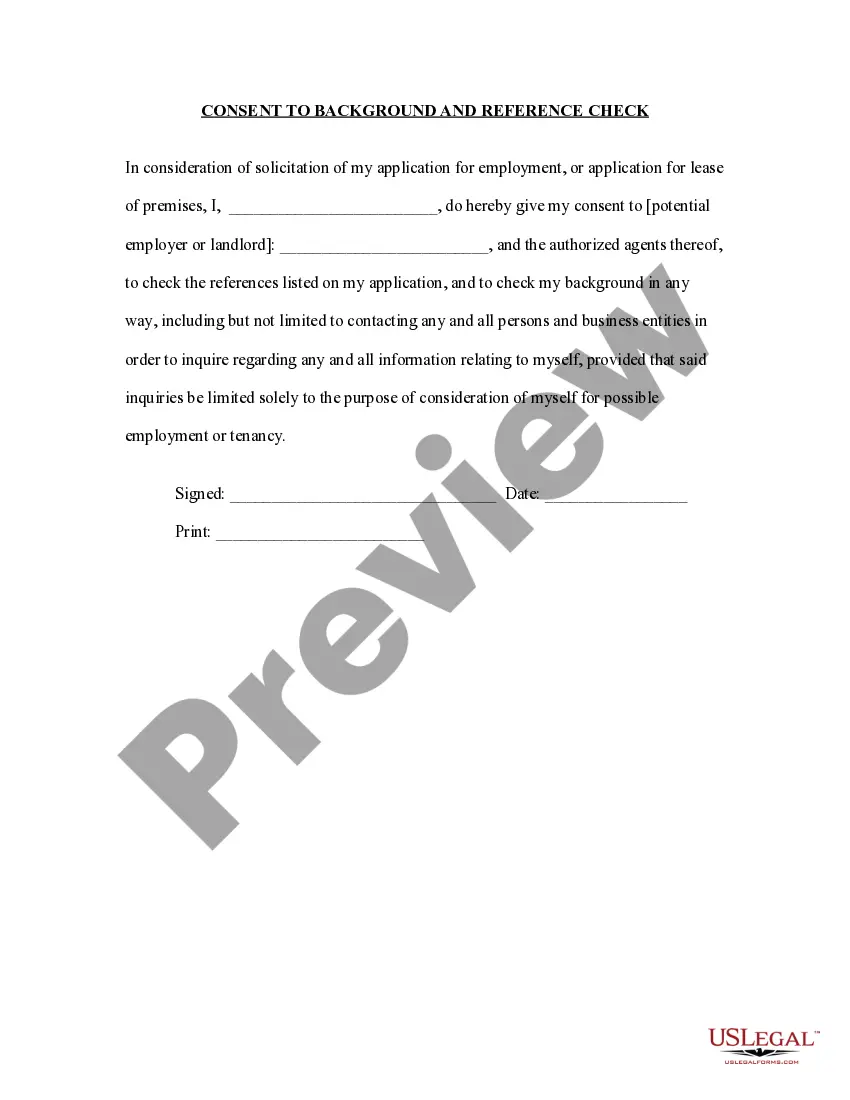
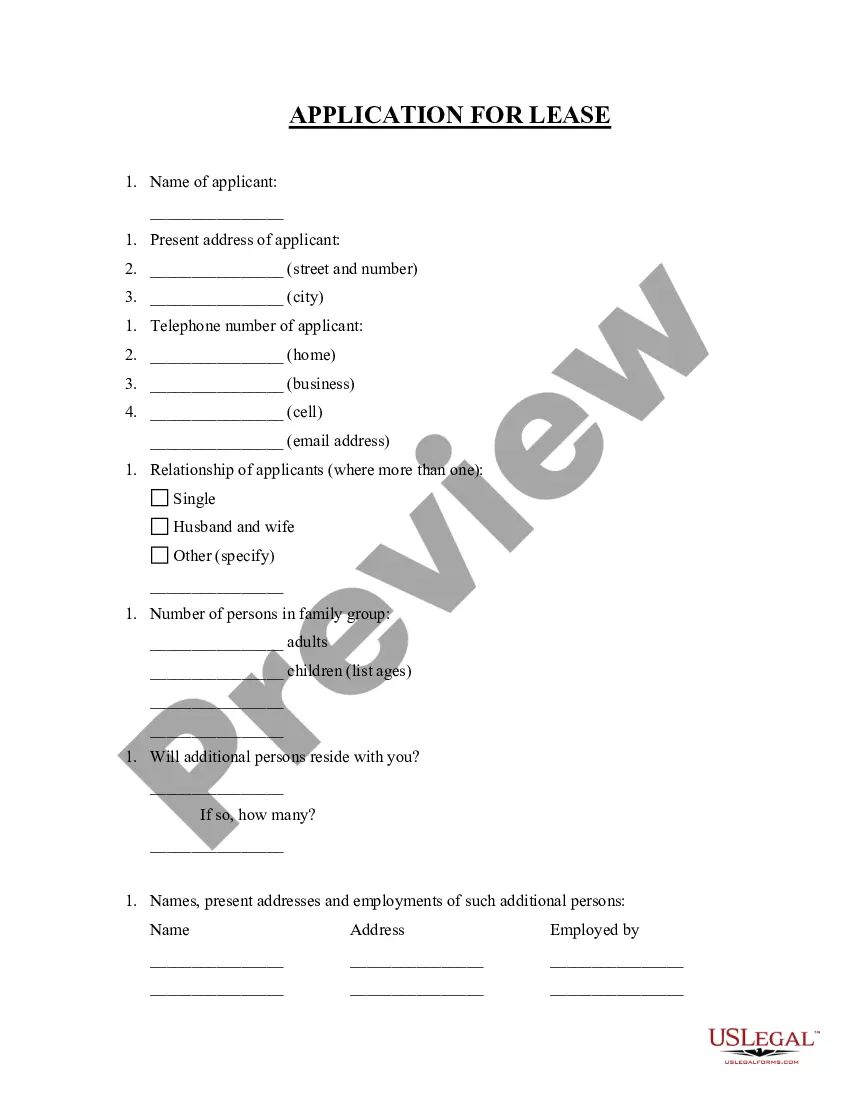
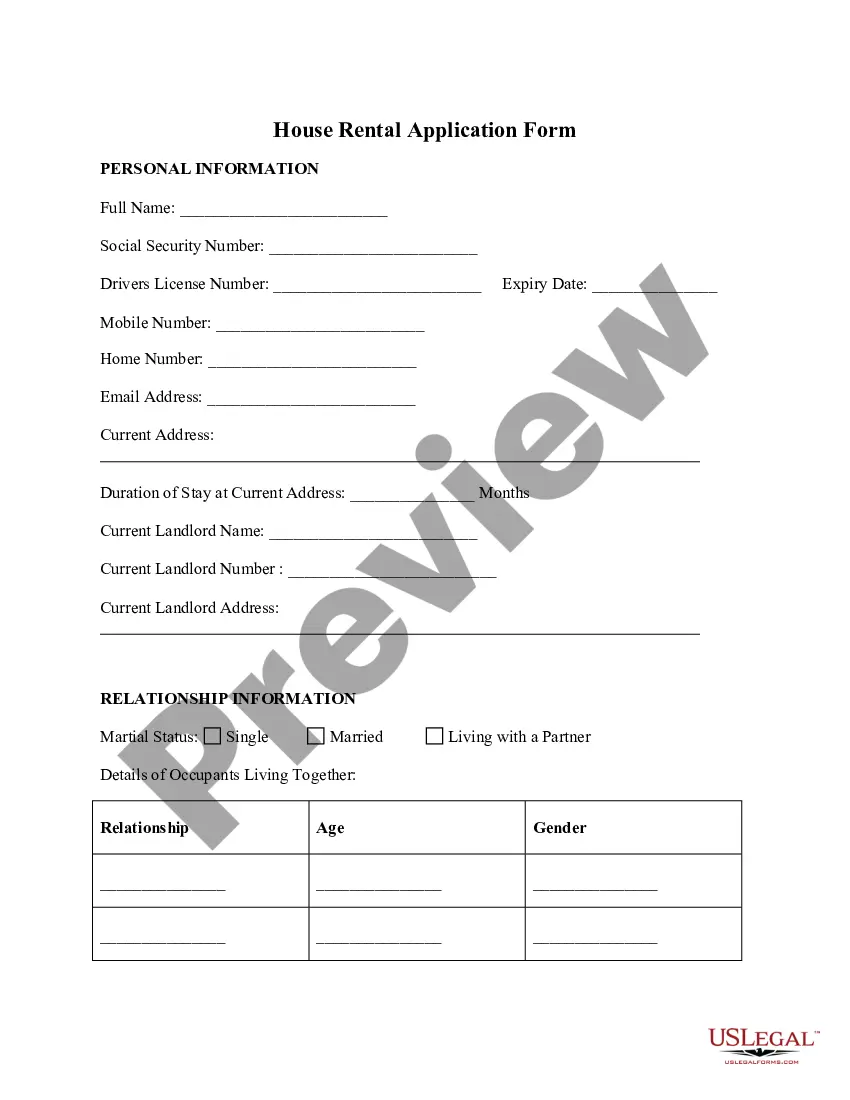
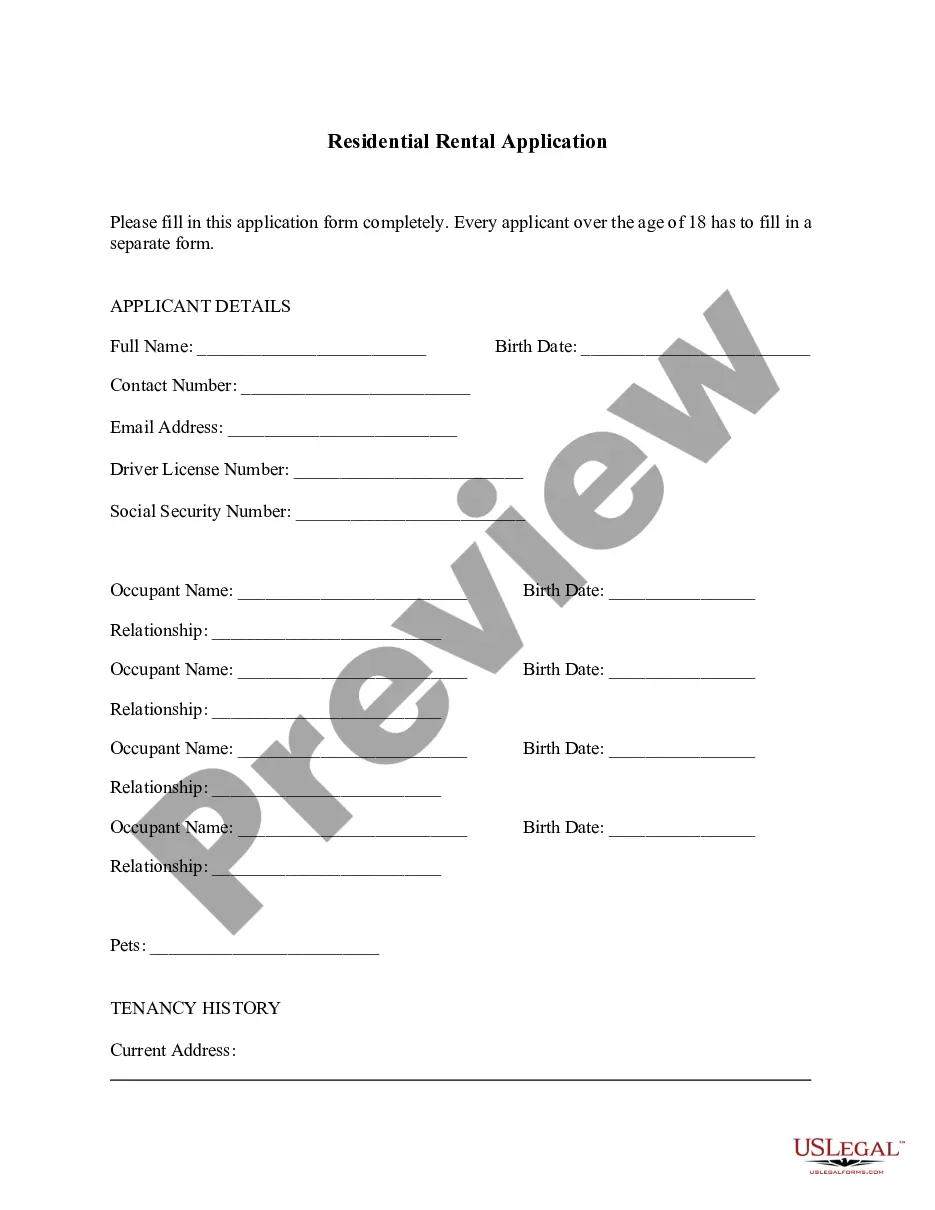
The Tenant Consent to Background and Reference Check is a legal document that allows a landlord to conduct background checks on prospective tenants. This form ensures that the landlord obtains permission from the tenant before accessing personal information, including criminal history and references. It helps differentiate this consent form from rental applications by specifically focusing on the tenant's agreement to allow checks on their background and references.
Key components of this form
- Tenant's name: This is where the tenant's full name is entered.
- Landlord's name: The name of the landlord or property management company is recorded.
- Consent statement: A clear declaration that the tenant consents to background and reference checks.
- Scope of checks: Specifies the types of inquiries that can be conducted, including contacting references and checking criminal history.
- Signature and date: The tenant must sign and date the form to validate consent.
Situations where this form applies
This form should be used when a landlord wishes to screen potential tenants for rental properties. It is essential prior to finalizing a lease agreement to ensure that landlords can assess the suitability of applicants. Use this form whenever prospective tenants are required to undergo background or reference checks as part of the application process.
Who needs this form
- Landlords seeking to screen applicants for tenancy.
- Property managers responsible for conducting background checks on prospective tenants.
- Individuals applying to rent a property who are asked to provide consent for checks.
Steps to complete this form
- Enter the tenant's full name at the top of the form.
- Fill in the landlord's name or the name of the property management company.
- Review the consent statement to ensure it reflects the intended permissions.
- Sign and date the form to finalize consent.
- Provide this completed form to the landlord as part of the rental application.
Notarization requirements for this form
This form does not typically require notarization unless specified by local law. Ensure you verify local regulations regarding notarization requirements for tenant consent forms.
Get your form ready online
Our built-in tools help you complete, sign, share, and store your documents in one place.
Make edits, fill in missing information, and update formatting in US Legal Forms—just like you would in MS Word.
Download a copy, print it, send it by email, or mail it via USPS—whatever works best for your next step.
Sign and collect signatures with our SignNow integration. Send to multiple recipients, set reminders, and more. Go Premium to unlock E-Sign.
If this form requires notarization, complete it online through a secure video call—no need to meet a notary in person or wait for an appointment.
We protect your documents and personal data by following strict security and privacy standards.

Make edits, fill in missing information, and update formatting in US Legal Forms—just like you would in MS Word.

Download a copy, print it, send it by email, or mail it via USPS—whatever works best for your next step.

Sign and collect signatures with our SignNow integration. Send to multiple recipients, set reminders, and more. Go Premium to unlock E-Sign.

If this form requires notarization, complete it online through a secure video call—no need to meet a notary in person or wait for an appointment.

We protect your documents and personal data by following strict security and privacy standards.
Avoid these common issues
- Failing to provide a full legal name may invalidate the form.
- Not signing or dating the form, which is required for consent.
- Omitting the landlord's name can lead to confusion about who is authorized to conduct the checks.
Why complete this form online
- Easy access to the form for immediate download and use.
- User-friendly format allows for quick completion and printing.
- Reliable and legally compliant documents drafted by licensed attorneys.
Key takeaways
- The Tenant Consent to Background and Reference Check is crucial for facilitating safe rental transactions.
- It protects landlords by allowing them to verify tenant backgrounds.
- Compliance with local regulations is essential when conducting background checks.
- This form streamlines the application process for both landlords and tenants.
Looking for another form?

Form popularity
FAQ
How Far Back Does a Background Check Go in PA? In standard cases, a background check report cannot include any records of arrest that did not result in a conviction that are over seven years old.
Summary offenses typically include minor convictions such as harassment, loitering, or disorderly conduct. Summary offenses are still considered criminal history, so they may show up on a Pennsylvania background check. Candidates should disclose these offenses if asked about criminal history on job applications.
SEVEN-YEAR STATES: California, Colorado, Kansas, Maryland, Massachusetts, Montana, Nevada, New Hampshire, New Mexico, New York, Texas, and Washington. In some of these states, the 7-year reporting restriction for convictions only applies if the applicant does not meet a certain salary threshold.
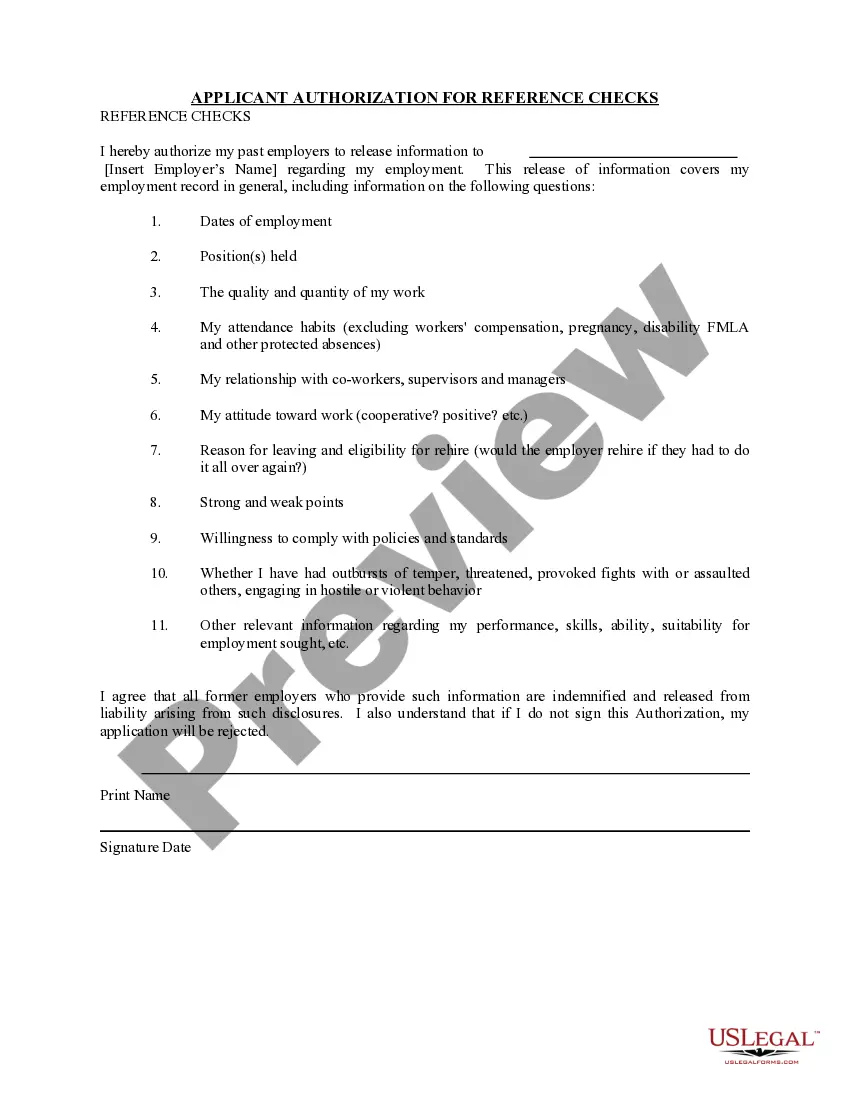
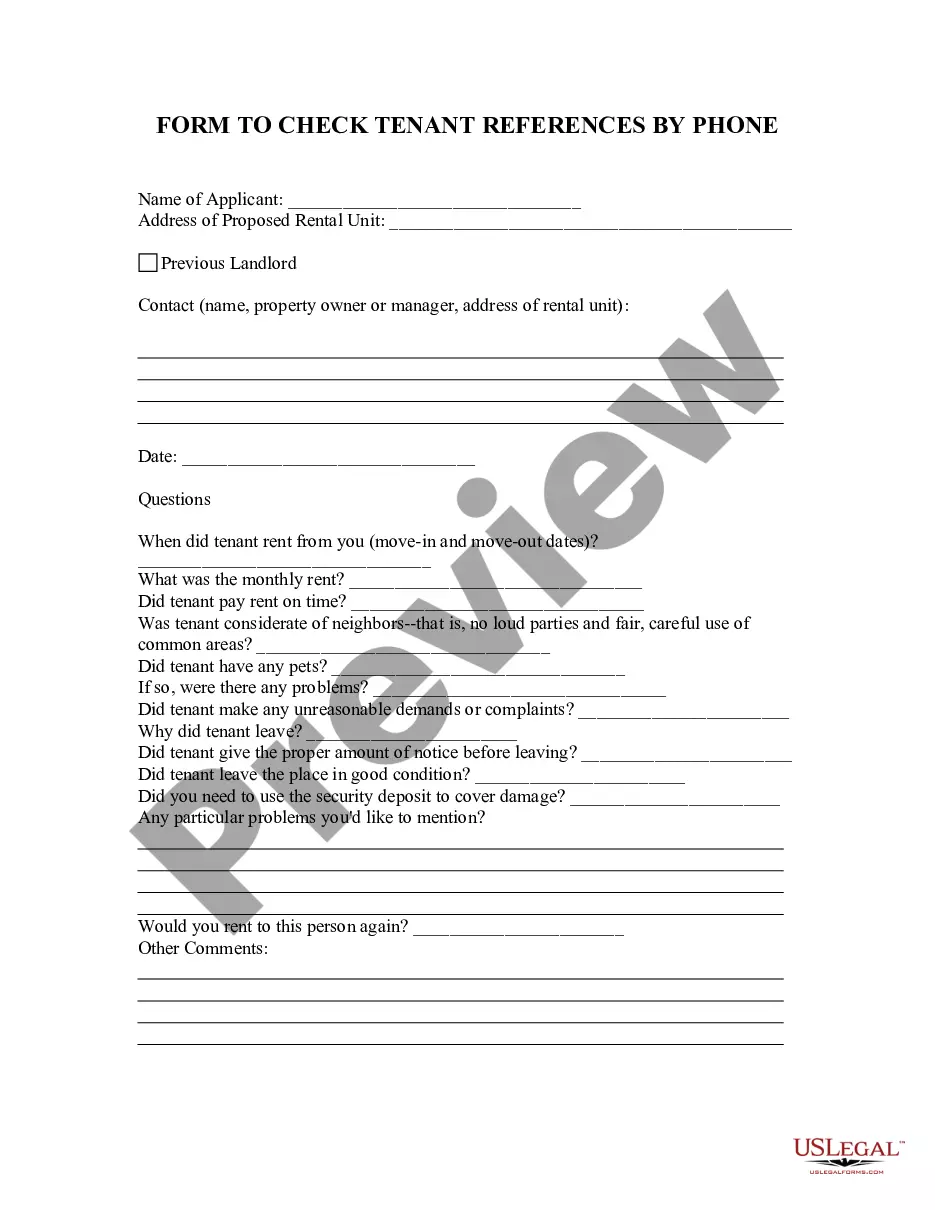
References from past landlords may indicate how an applicant would occupy your property, and this information could help you avoid a bad outcome such as late rent payments, property damage, complaints from neighbors, or an eviction. The eviction process is time-consuming and costly.
Background checks are always done prior to an offer being made. The purpose of the back ground check is to give the employer important info as to your past performance, your education, and any criminal record you may have.
Background check procedures are to be conducted on selected candidates after making a conditional offer of employment, but prior to extending a formal offer of employment, unless an exemption has been granted to the Fair Chance Hiring Policy.
It is typically required in most states for the applicant to give consent to a background check before an employer can run one. The employer is typically banned from running this check without such permission.
Tenant background checks are a way for landlords to screen prospective tenants, identify any potential red flags and help them choose the best renter for their rental property. Background checks can take place after a prospective tenant submits a rental application and are typically done along with a credit report.
Landlord referencing This involves getting in touch with the tenant's previous landlord to find out how they behaved as a tenant. They can tell you if the tenant paid rent on time, if they treated the property with respect and any other information that might influence the decision.