California Grant Deed from Corporation to Individual
What is this form?
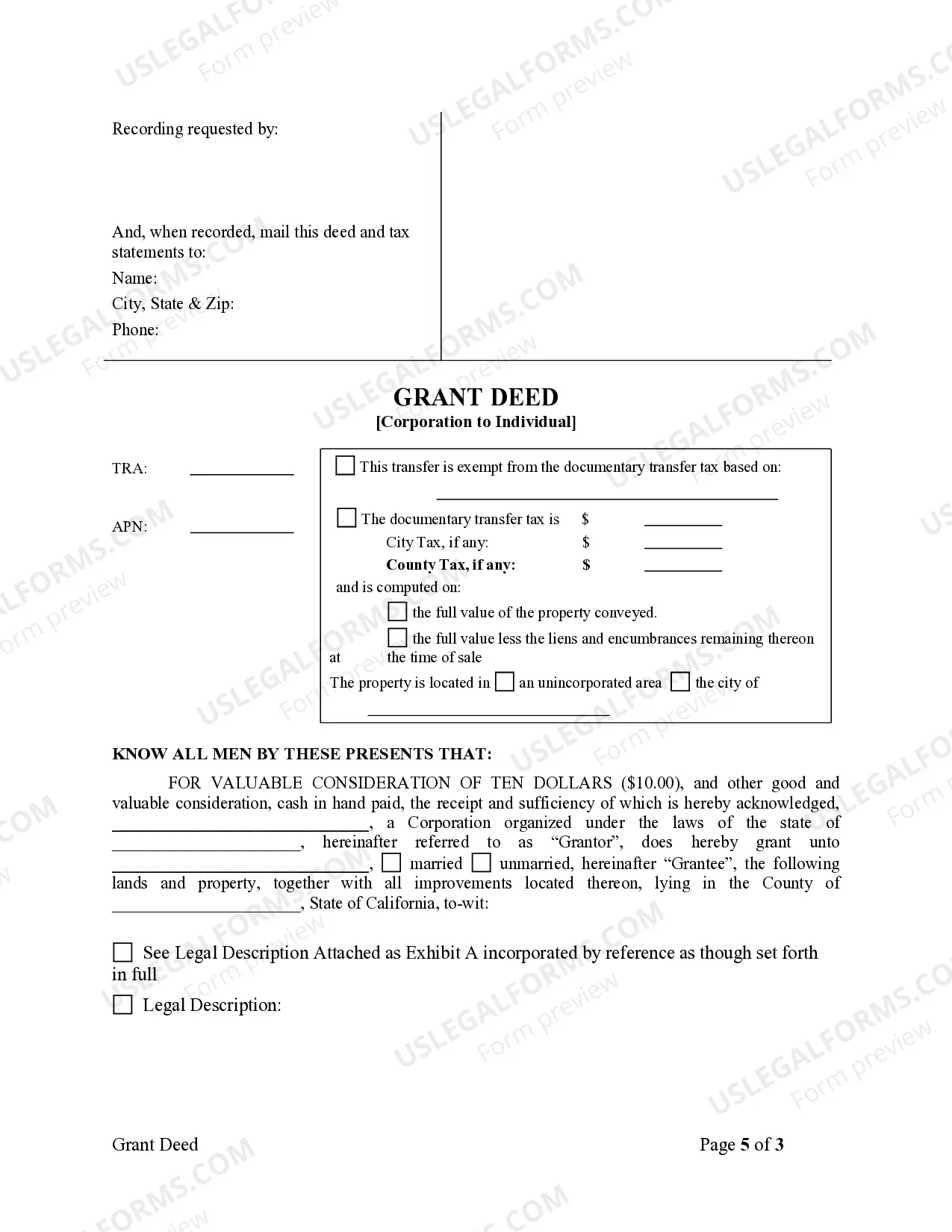
The Grant Deed from Corporation to Individual is a legal document that transfers property ownership from a corporation (the Grantor) to an individual (the Grantee). This deed ensures that the property is conveyed with warranties, particularly regarding clear title and absence of encumbrances, except for reserved interests like oil, gas, and minerals. It differs from other deeds, such as quitclaim deeds, by guaranteeing that the Grantor holds clear title to the property being sold.
Key parts of this document
- Grantor and Grantee identification: Specifies the corporate entity transferring the property and the individual receiving it.
- Property description: A detailed description of the property being conveyed, including any encumbrances or reservations.
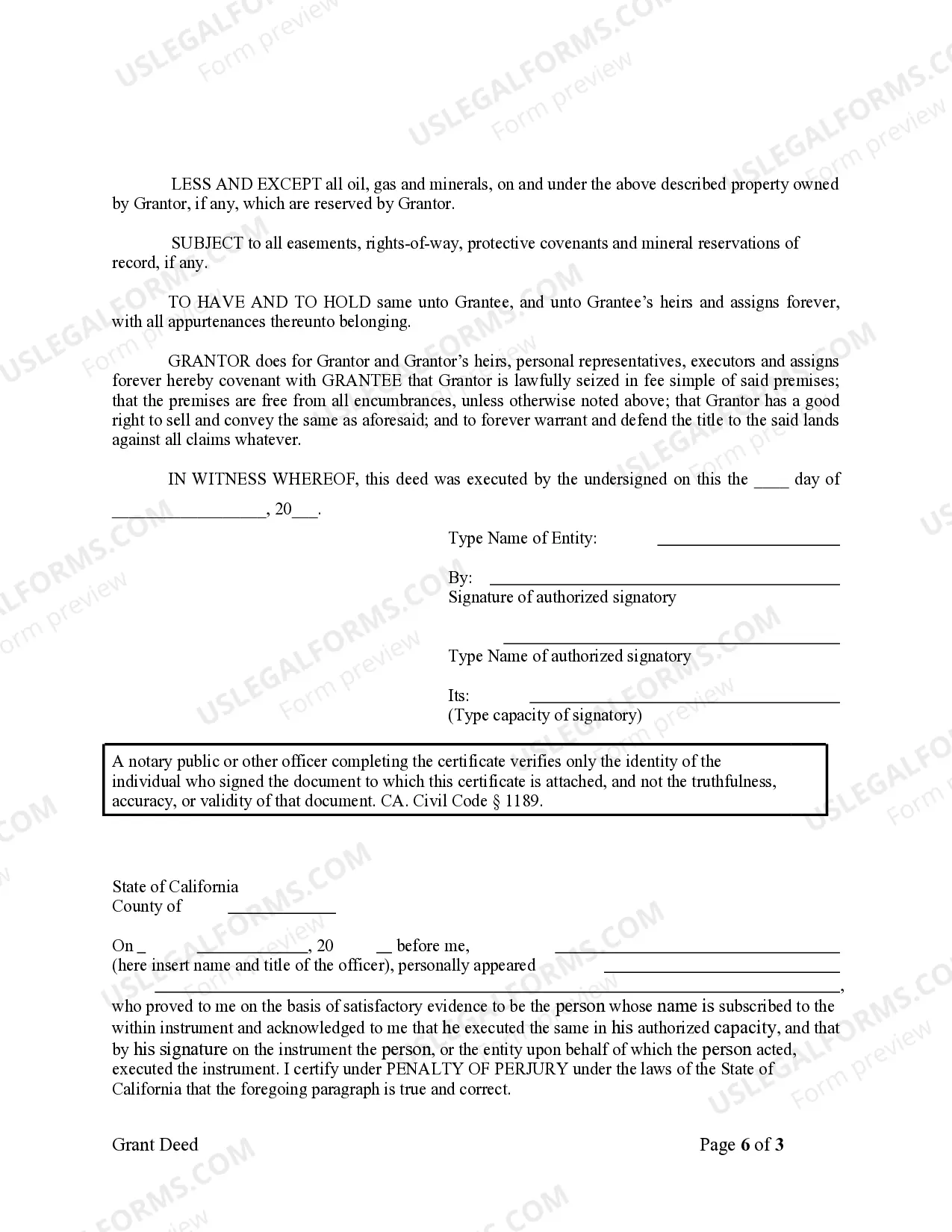
- Covenant of warranty: The Grantor promises that they are the lawful owner and the property is free from any claims.
- Execution date: The date on which the deed is signed and becomes valid.
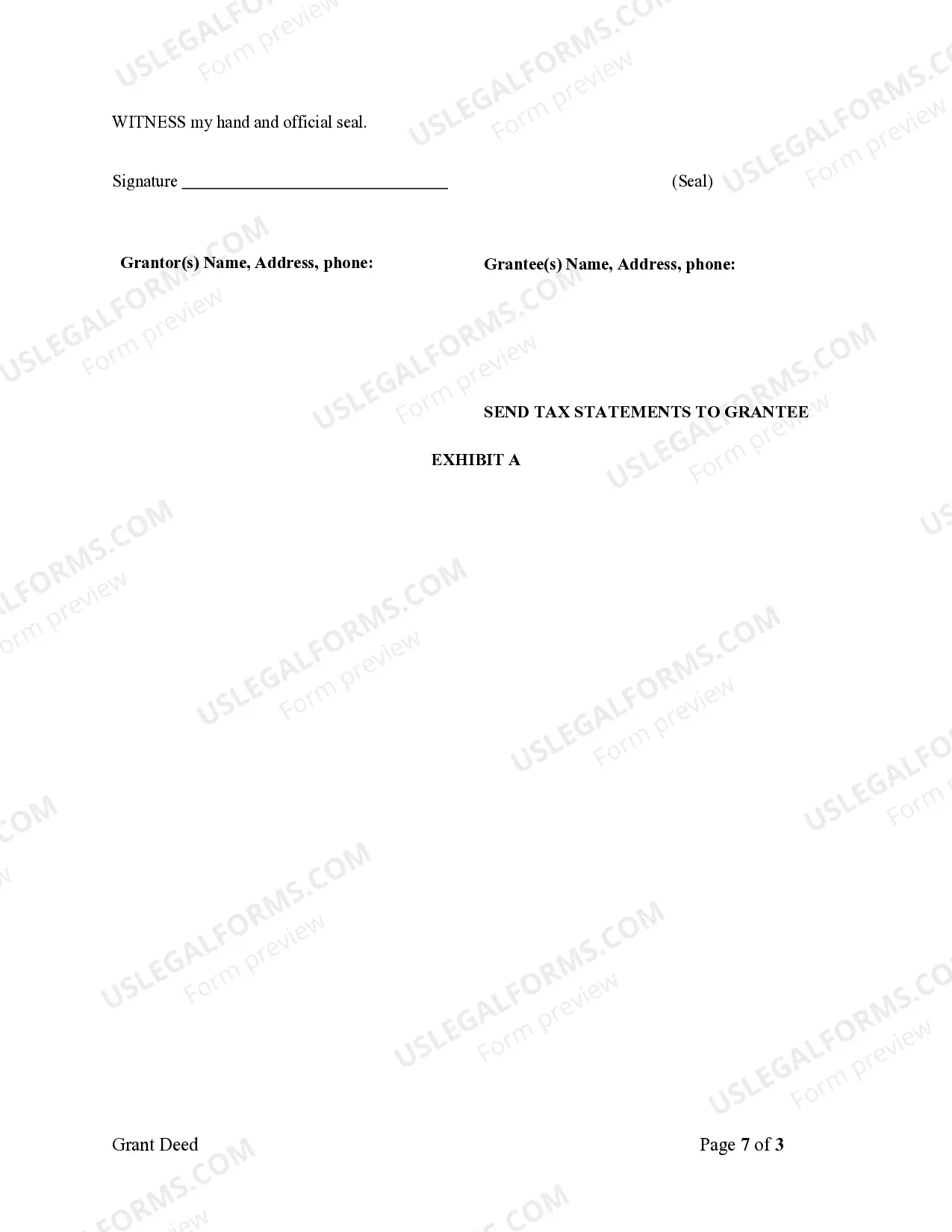
- Signature lines: Spaces for the authorized representative of the corporation and the Grantee to sign.


When to use this document
This form is used when a corporation wishes to transfer ownership of real estate to an individual. Common scenarios include: - Selling property owned by the corporation to an individual. - Transferring property for estate planning purposes. - Facilitating transactions after business restructuring or liquidation.
Who this form is for
- Corporations that own real estate and wish to transfer property to individuals.
- Individuals receiving property from a corporation as part of a sale or gift.
- Real estate professionals assisting with property transfers involving corporate entities.
Steps to complete this form
- Identify the parties involved: Clearly state the full legal name of the corporation as Grantor and the individual as Grantee.
- Describe the property: Provide a complete legal description of the property being transferred.
- Fill in the reservation clauses: Specify any reserved rights or interests relevant to the property, such as oil, gas, or mineral rights.
- Sign and date the deed: Ensure the authorized representative of the corporation and the Grantee sign the document on the designated lines.
- Record the deed: Submit the signed deed to the appropriate local office for property records.
Notarization requirements for this form
To make this form legally binding, it must be notarized. Our online notarization service, powered by Notarize, lets you verify and sign documents remotely through an encrypted video session.
Get your form ready online
Our built-in tools help you complete, sign, share, and store your documents in one place.
Make edits, fill in missing information, and update formatting in US Legal Forms—just like you would in MS Word.
Download a copy, print it, send it by email, or mail it via USPS—whatever works best for your next step.
Sign and collect signatures with our SignNow integration. Send to multiple recipients, set reminders, and more. Go Premium to unlock E-Sign.
If this form requires notarization, complete it online through a secure video call—no need to meet a notary in person or wait for an appointment.
We protect your documents and personal data by following strict security and privacy standards.

Make edits, fill in missing information, and update formatting in US Legal Forms—just like you would in MS Word.

Download a copy, print it, send it by email, or mail it via USPS—whatever works best for your next step.

Sign and collect signatures with our SignNow integration. Send to multiple recipients, set reminders, and more. Go Premium to unlock E-Sign.

If this form requires notarization, complete it online through a secure video call—no need to meet a notary in person or wait for an appointment.

We protect your documents and personal data by following strict security and privacy standards.
Avoid these common issues
- Failing to provide a complete and accurate property description.
- Not including necessary reservation clauses that pertain to mineral rights.
- Omitting signatures or failing to have the deed notarized when required.
- Not confirming that the person signing on behalf of the corporation has the authority to do so.
Why use this form online
- Convenience: Download and complete the form at your own pace.
- Editability: Modify the form to suit specific needs before finalizing.
- Reliability: Use templates drafted by licensed attorneys, ensuring legal compliance.
Looking for another form?
Form popularity
FAQ
To create a California Grant Deed from Corporation to Individual, certain requirements must be met. Firstly, the grant deed must include the legal names of the grantor and grantee, as well as a clear description of the property being transferred. Additionally, signatures from the grantor are necessary, and the deed should be notarized for it to be legally binding. To simplify this process, consider using Uslegalforms, which provides templates and guidance specifically designed for California grant deeds.
The transfer of property without the owner's consent is referred to as a 'forced sale' or 'involuntary transfer.' In most cases, this type of transfer can occur through legal action or under certain circumstances such as tax lien sales. Understanding the implications of a California Grant Deed from Corporation to Individual can help you navigate potential issues associated with property transfers in California.
When a corporation transfers ownership, the deed must be signed by a corporate officer with the authority to do so, often the president or another officer designated by the board of directors. This signature must also be notarized to validate the transaction. This careful process ensures that the California Grant Deed from Corporation to Individual is legally sound and enforceable.
The deed to the property must be signed by an authorized officer of the corporation, typically the president or secretary. This individual acts on behalf of the corporation, ensuring the transfer is legitimate and binding. It is vital that the deed clearly reflects the authority of the signer to prevent any disputes regarding the California Grant Deed from Corporation to Individual.
To obtain a copy of your grant deed in California, you can visit the county recorder’s office where the property is located. Alternatively, many counties provide online access to property records, which allows you to view and download your grant deed. If needed, consider using platforms like USLegalForms to streamline the process and access resources regarding California Grant Deed from Corporation to Individual.
A corporation conveys real estate through a California Grant Deed from Corporation to Individual by executing a deed, which is a legal document that transfers property ownership. The corporation must ensure that the deed includes essential information such as the property description and the grantee’s details. Typically, the corporation’s authorized signatory must sign the deed to validate the transfer. Once signed and recorded, the transfer is legally complete.
To transfer property from one person to another in California, you typically need to prepare a grant deed. This deed must outline the parties involved and the property's legal description. After completing the document, both parties should sign it, and then the deed must be recorded with the county recorder's office. For ease, consider using US Legal Forms for straightforward templates and guidance in this process.
When a corporation transfers ownership of property, the deed must be signed by an authorized officer of the corporation. This ensures that the transfer follows the legal protocols required for corporate transactions. In the case of a California Grant Deed from Corporation to Individual, the corporate seal may also be necessary for validation. Proper documentation and signature are critical in protecting all parties involved.
To change a grant deed in California, you will need to draft a new grant deed that reflects the desired changes. This process involves filling out the appropriate form and obtaining the necessary signatures. It's often advisable to consult legal guidance to ensure the amendment is valid and properly recorded. Using platforms like US Legal Forms can simplify this process, providing you with the right templates and instructions.
Yes, in California, a grant deed serves as proof of ownership. When a person holds a California Grant Deed from Corporation to Individual, it clearly states the transfer of property rights. This legal document helps protect the new owner's interests and establishes their title in the property. Thus, obtaining a properly executed grant deed is crucial for confirming ownership.