California Commercial Contract for Contractor
Overview of this form
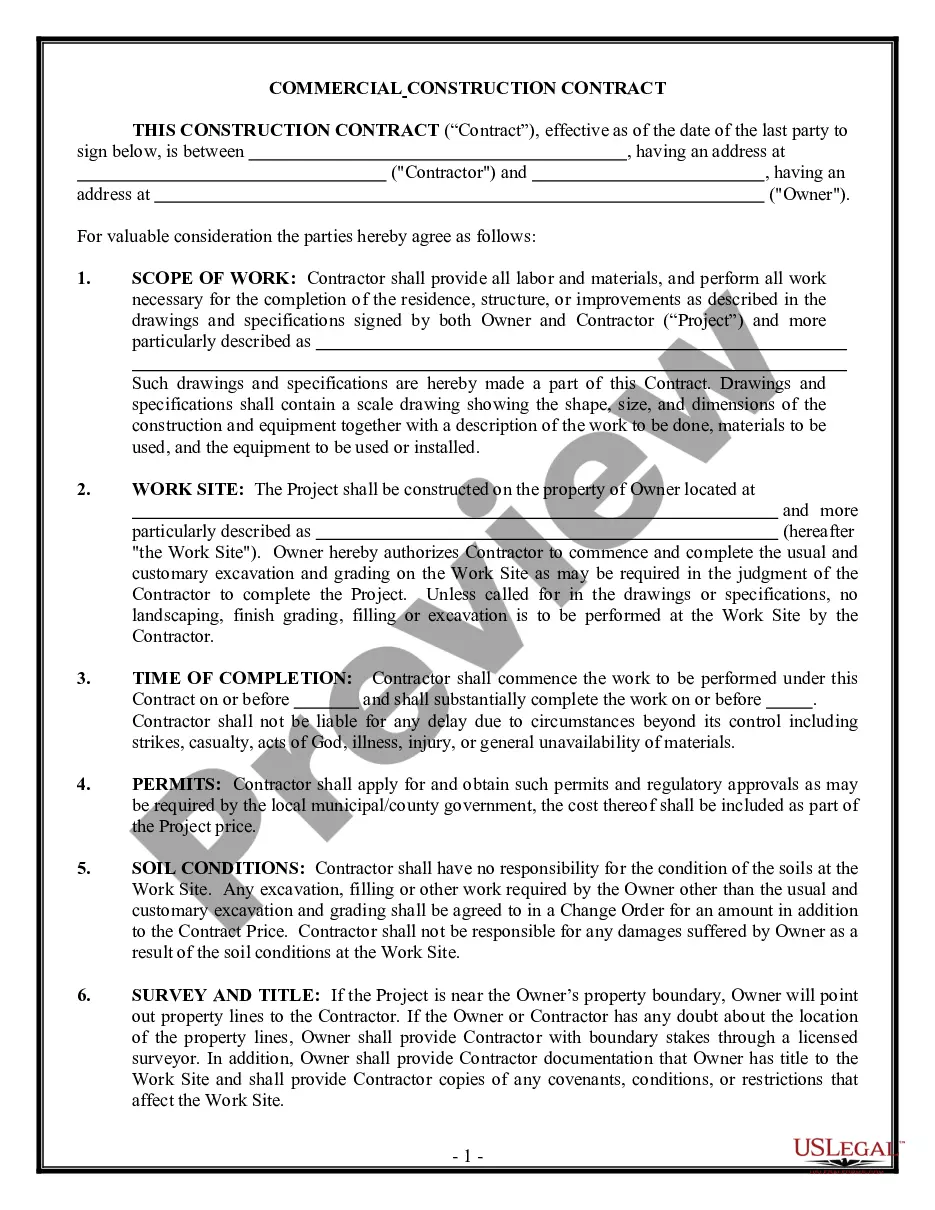
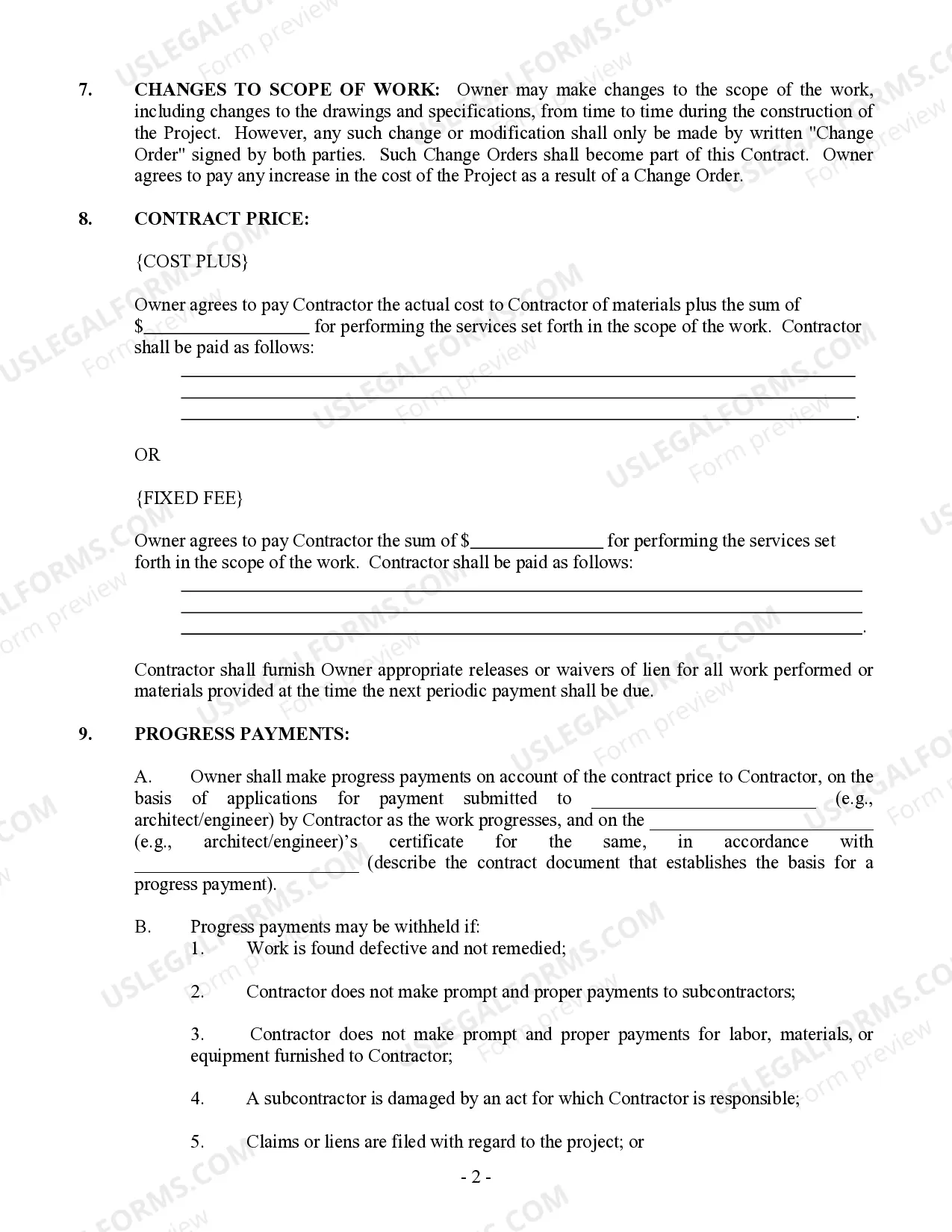
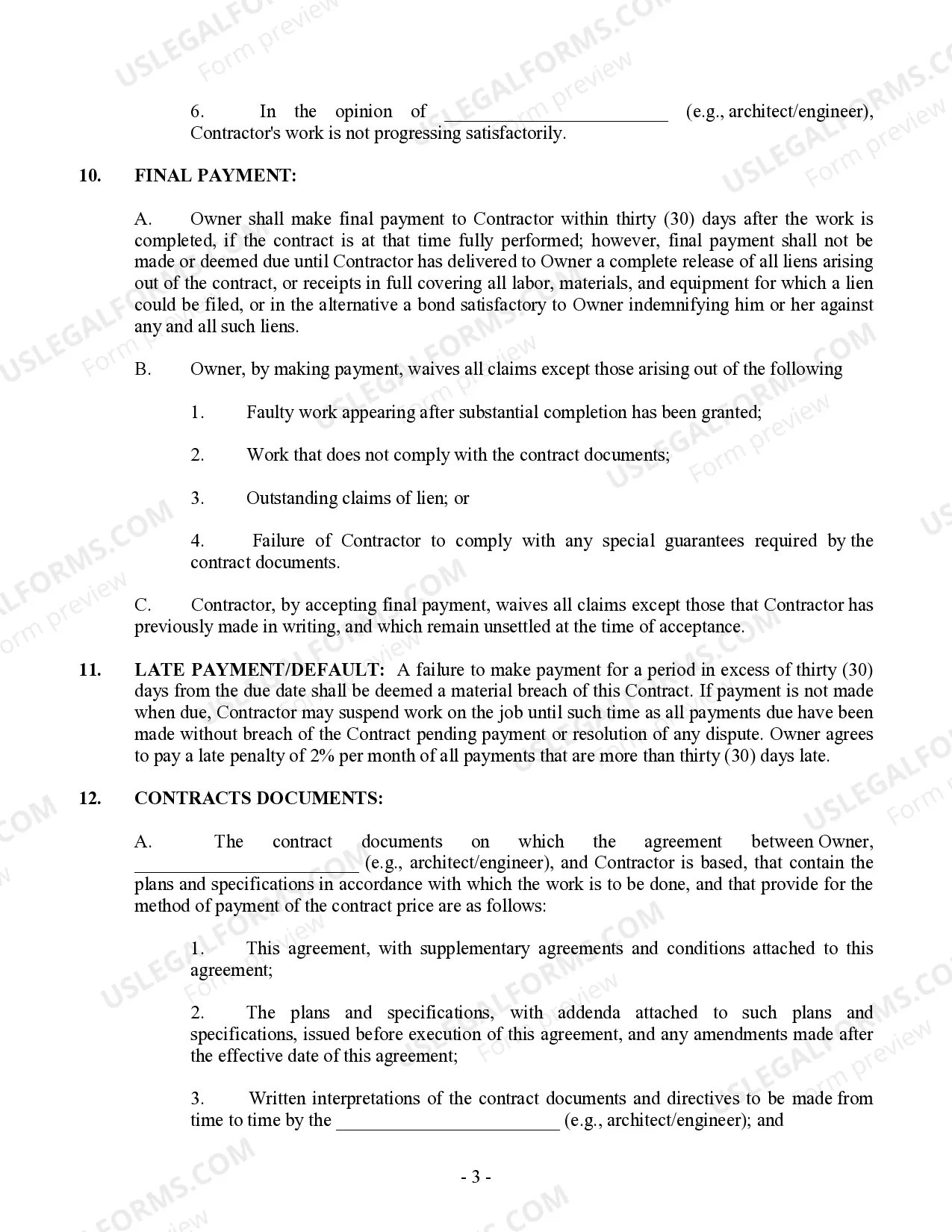
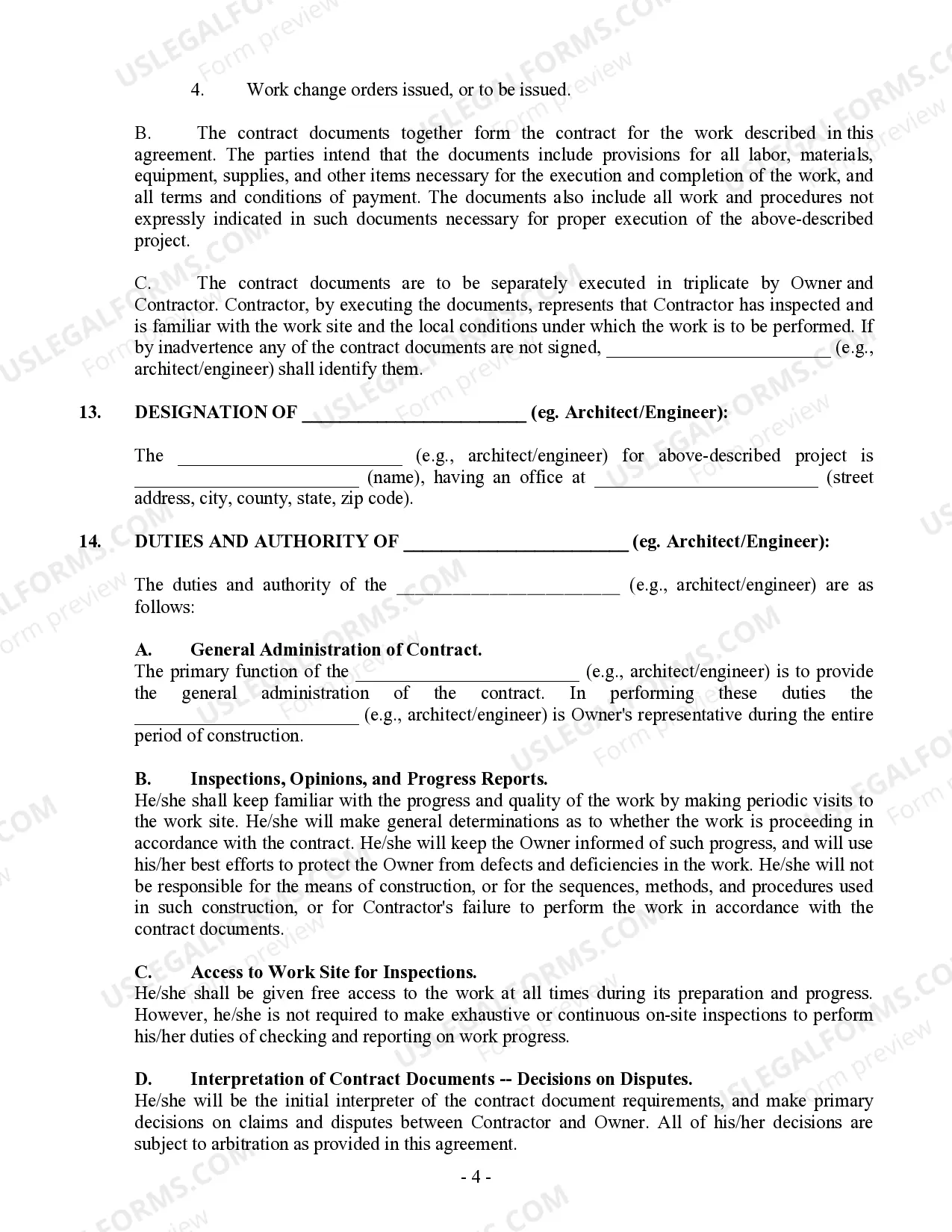
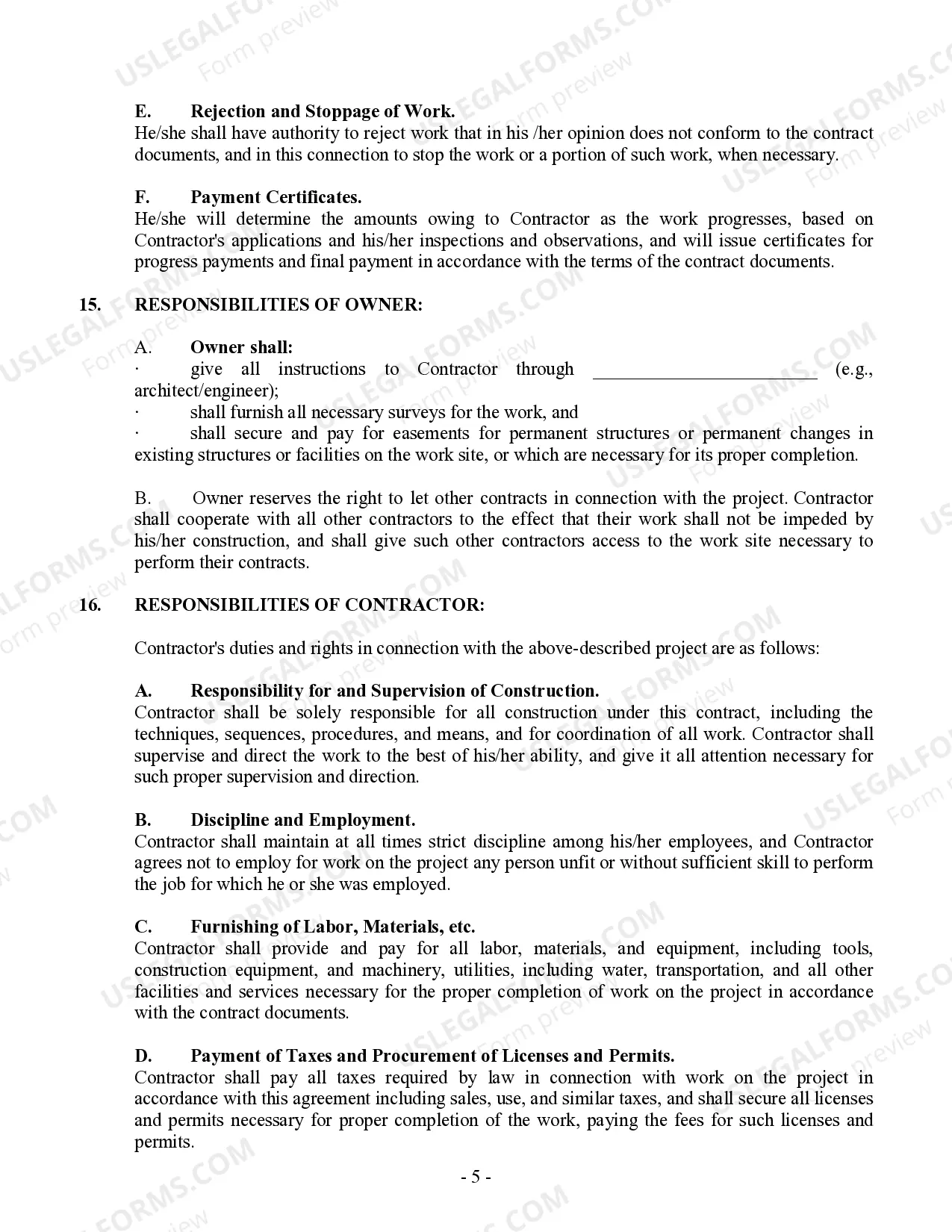
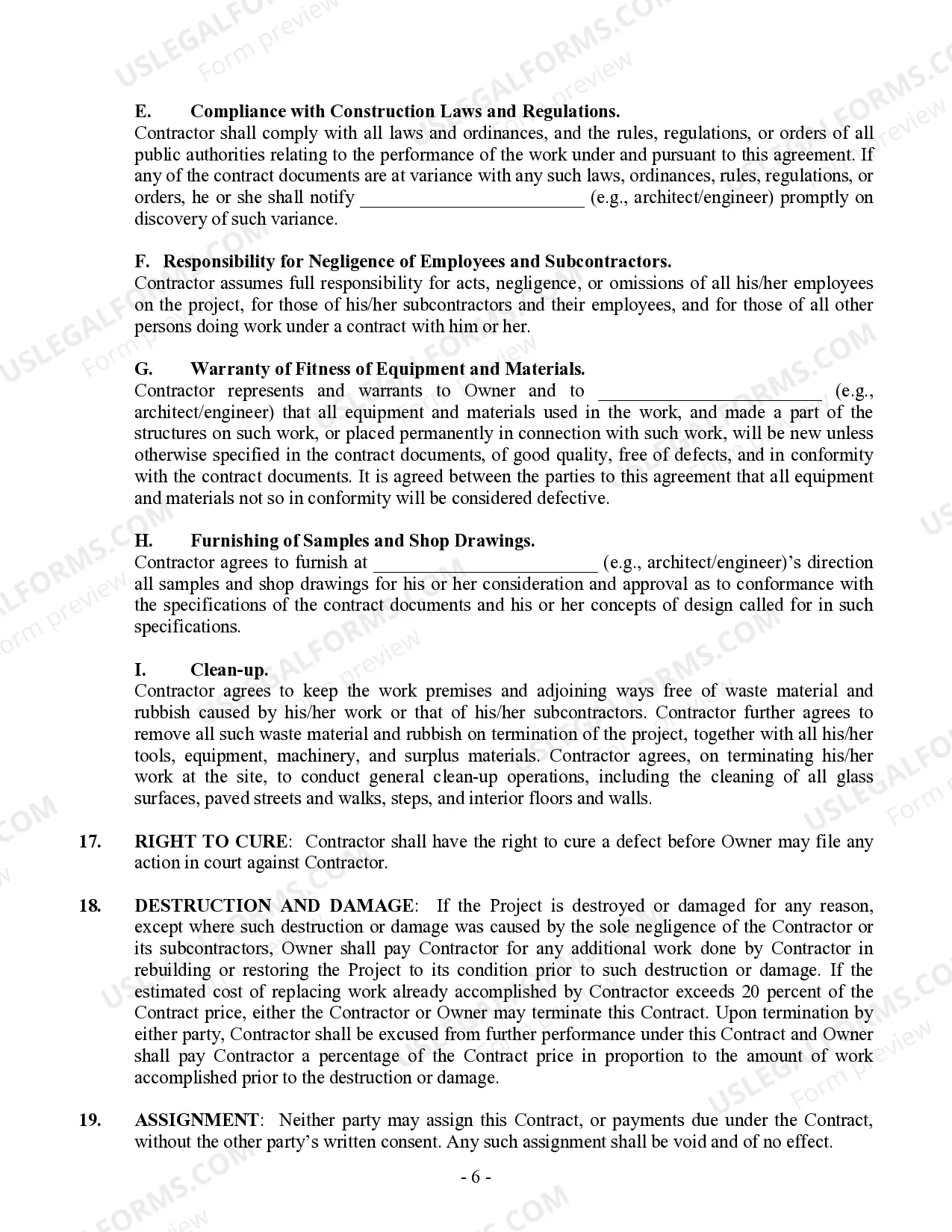
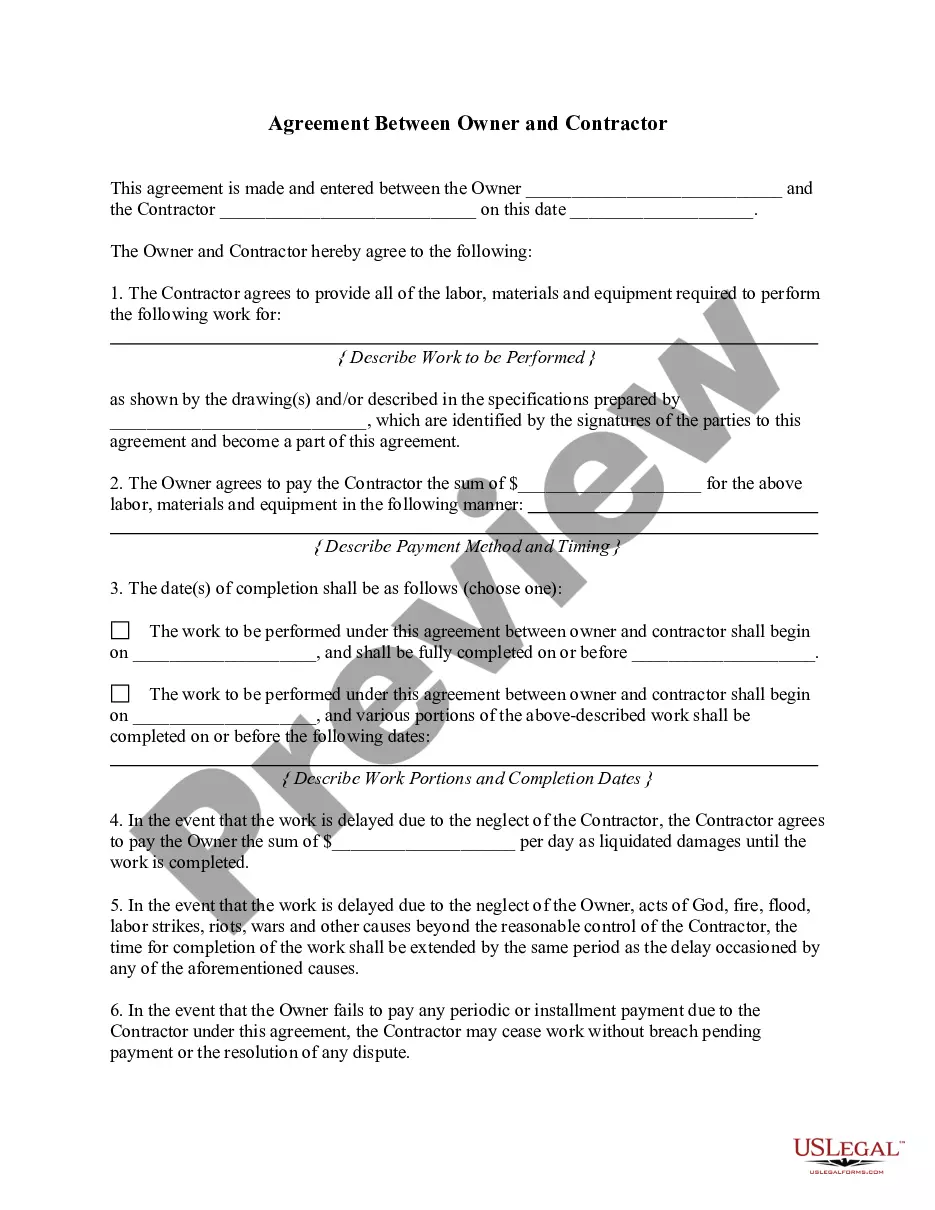
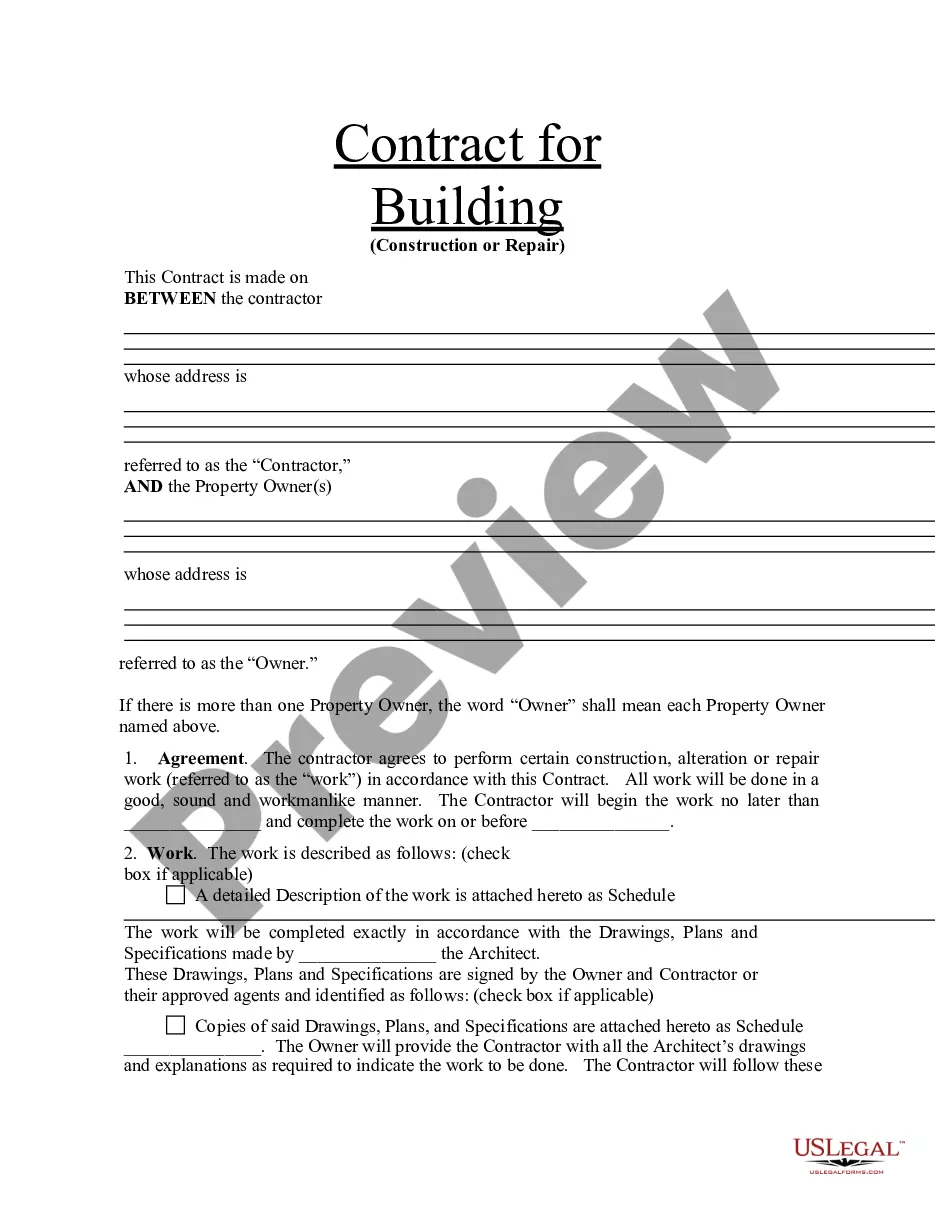
The Commercial Contract for Contractor is a formal agreement between a commercial contractor and a property owner. This contract outlines the terms of construction services, including payment arrangements (either cost plus or fixed fee), project specifications, and other vital components such as change orders, warranties, and insurance. Tailored specifically to comply with the laws of California, this form helps ensure both parties are protected and understand their obligations during a construction project.
Key parts of this document
- Work site description and requirements
- Permits and regulatory approval obligations
- Payment structures including progress and final payments
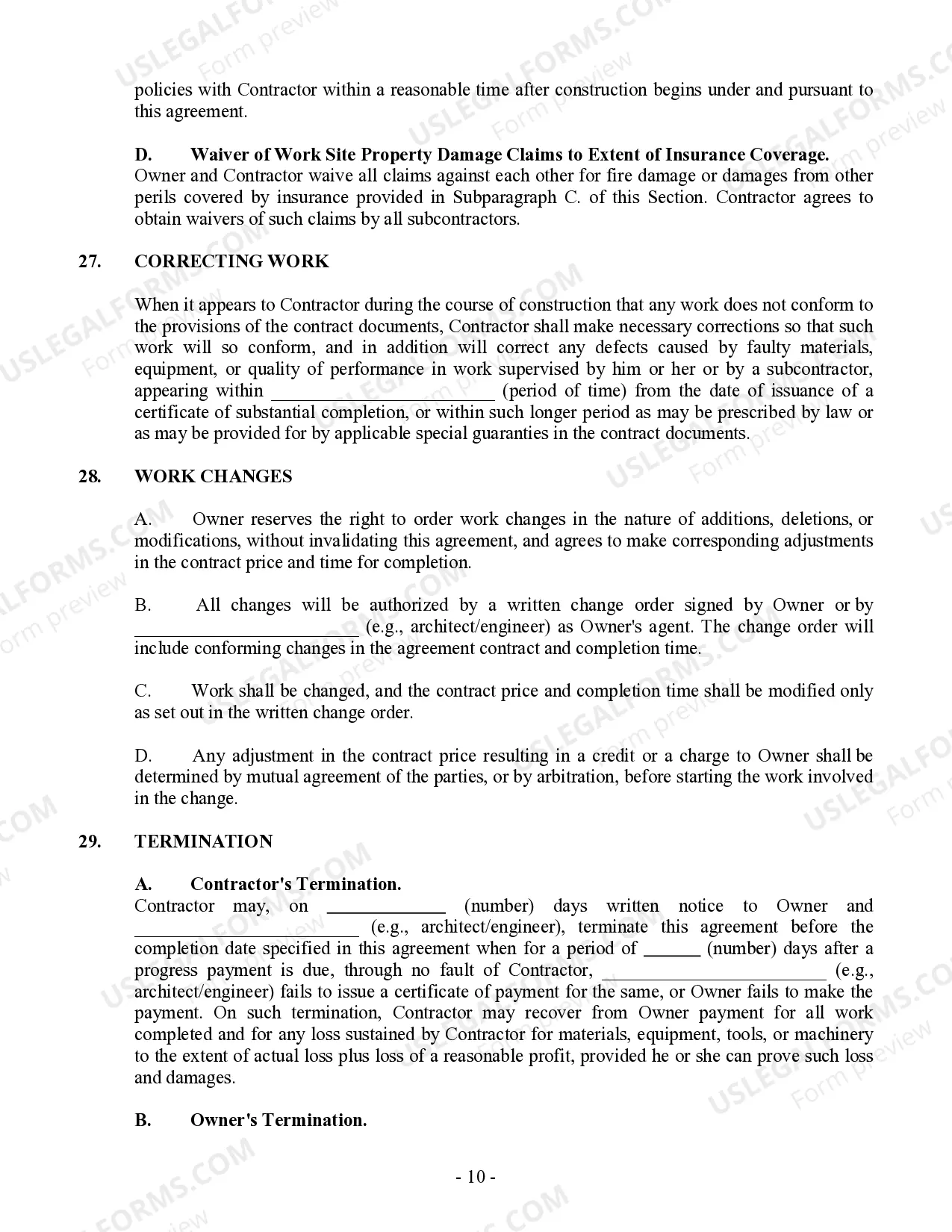
- Conditions for change orders and adjustments to contract price
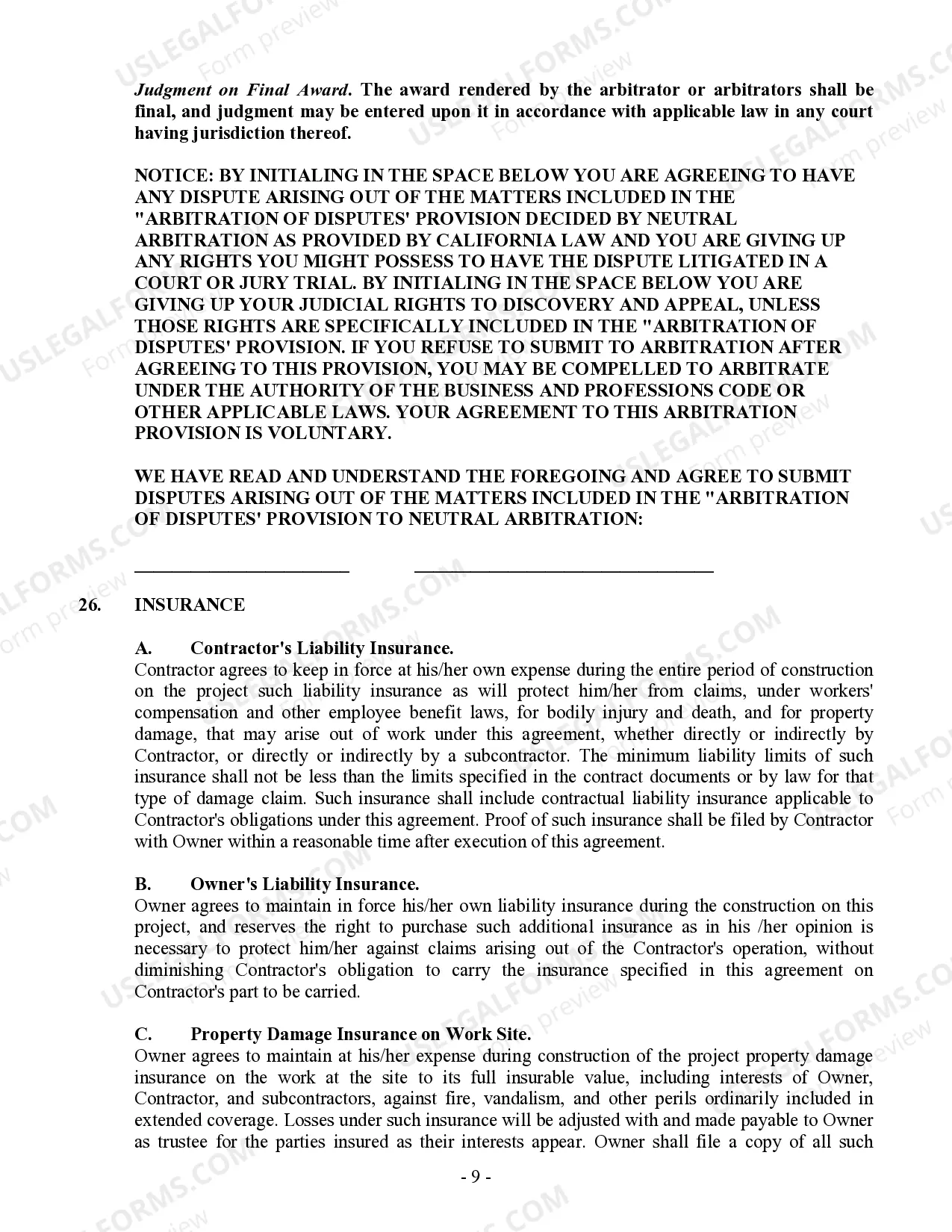
- Insurance and liability requirements for both parties
- Warranty of work and materials stipulations



When to use this document
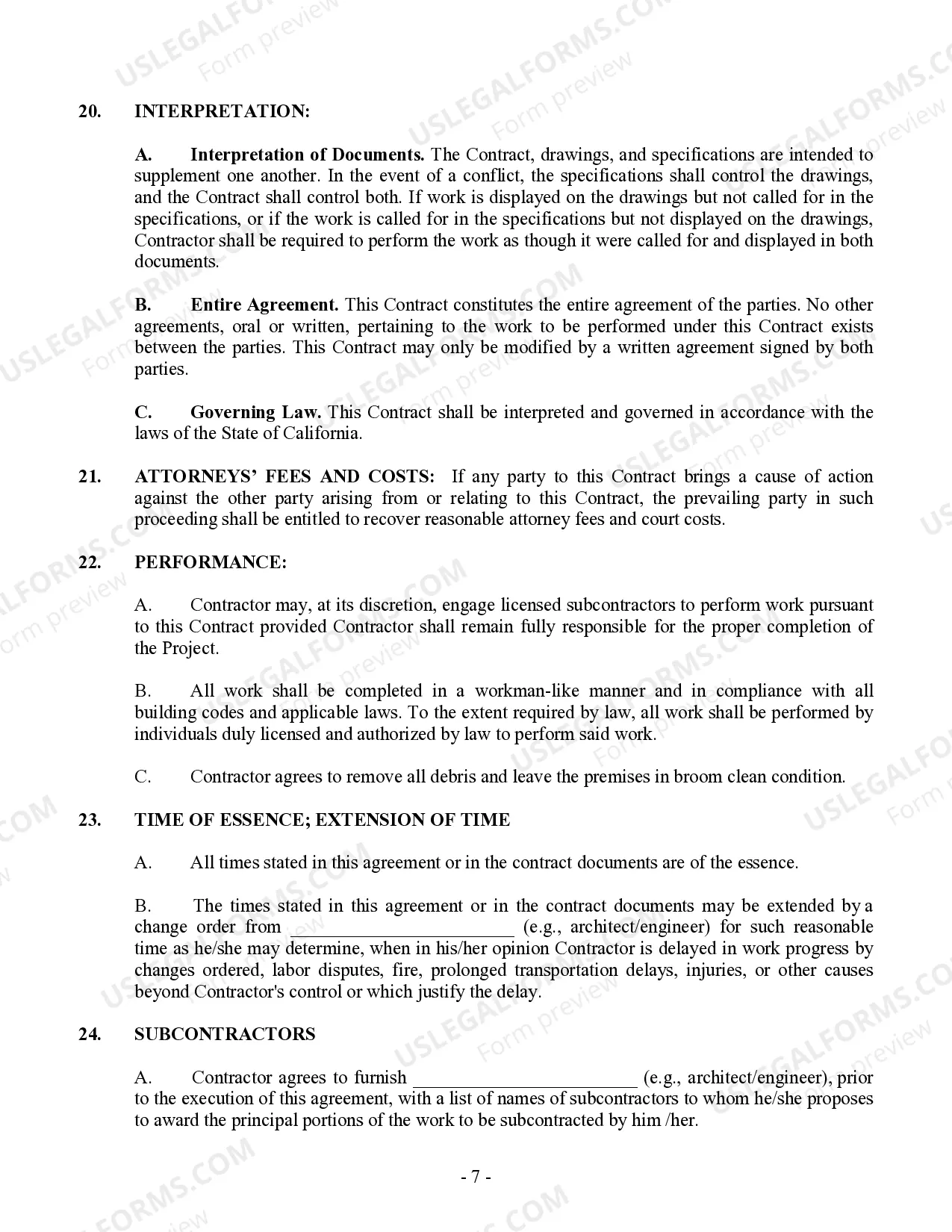
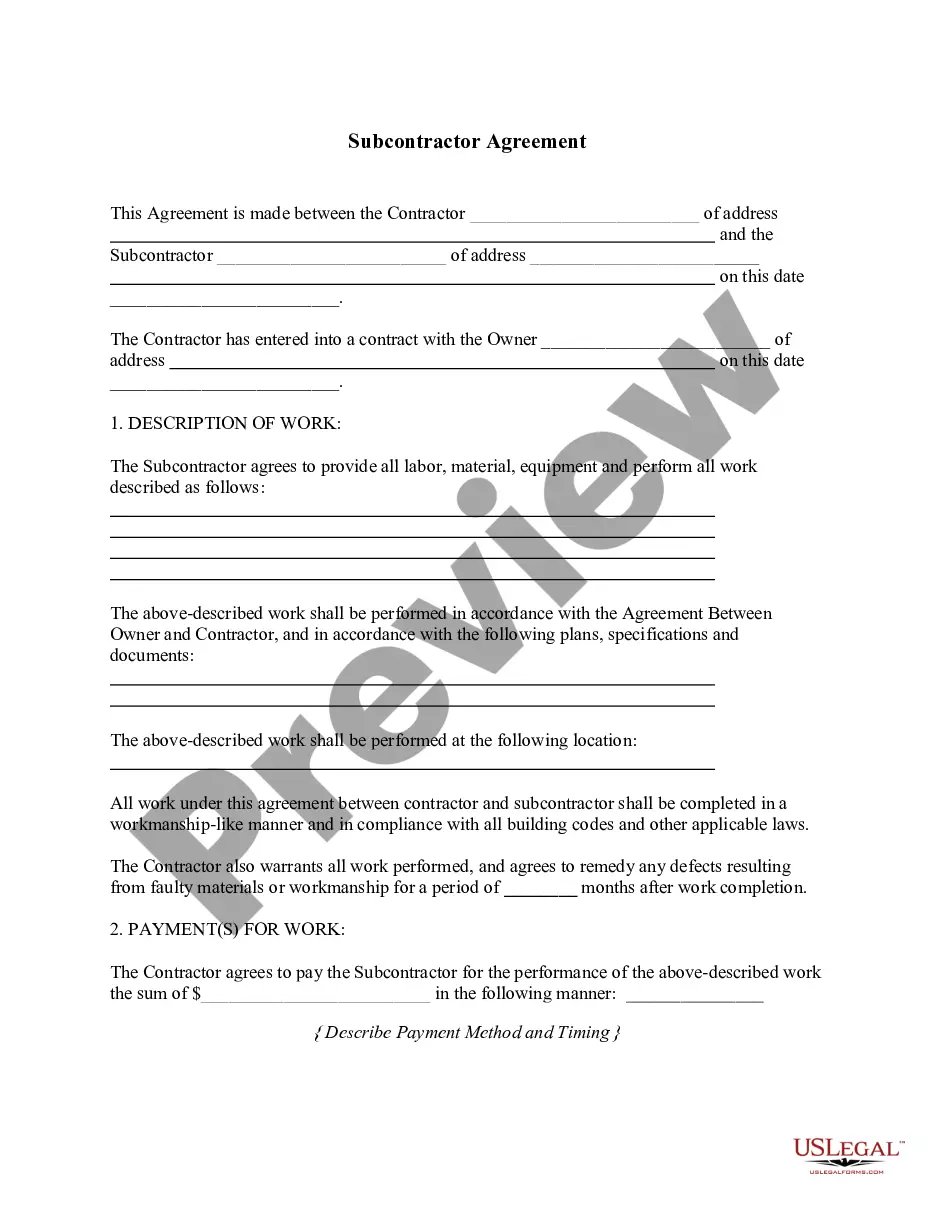
This form should be used when a property owner hires a commercial contractor for a specific construction project. It is particularly useful in situations where payment arrangements need to be clearly defined, such as large-scale renovations, new builds, or renovations involving multiple contractors. Utilize this contract to establish clear legal obligations and protect both parties throughout the construction process.
Intended users of this form
- Commercial contractors looking to formalize their agreements with property owners
- Property owners who require specific work to be done by a contractor
- Subcontractors involved in larger construction projects
- Real estate professionals managing commercial properties
Completing this form step by step
- Identify and enter the names and addresses of the contractor and property owner.
- Specify the work site location where the project will take place.
- Outline the payment structure, including details on progress and final payments.
- List any required permits and responsibilities for obtaining them.
- Include provisions for change orders and conditions for work adjustments.
- Ensure both parties sign and date the contract to validate the agreement.
Is notarization required?
This form does not typically require notarization unless specified by local law. However, having the agreement notarized can enhance its validity and serve as an additional layer of protection for both parties.
Get your form ready online
Our built-in tools help you complete, sign, share, and store your documents in one place.
Make edits, fill in missing information, and update formatting in US Legal Forms—just like you would in MS Word.
Download a copy, print it, send it by email, or mail it via USPS—whatever works best for your next step.
Sign and collect signatures with our SignNow integration. Send to multiple recipients, set reminders, and more. Go Premium to unlock E-Sign.
If this form requires notarization, complete it online through a secure video call—no need to meet a notary in person or wait for an appointment.
We protect your documents and personal data by following strict security and privacy standards.

Make edits, fill in missing information, and update formatting in US Legal Forms—just like you would in MS Word.

Download a copy, print it, send it by email, or mail it via USPS—whatever works best for your next step.

Sign and collect signatures with our SignNow integration. Send to multiple recipients, set reminders, and more. Go Premium to unlock E-Sign.

If this form requires notarization, complete it online through a secure video call—no need to meet a notary in person or wait for an appointment.

We protect your documents and personal data by following strict security and privacy standards.
Common mistakes
- Failing to clearly define the scope of work and project specifications.
- Not specifying payment terms and schedules correctly.
- Overlooking regulatory requirements for permits.
- Leaving sections incomplete or unsigned.
- Not addressing breach of contract consequences and remedies.
Benefits of completing this form online
- Convenient access to a standard contract that simplifies the legal process.
- Editability allows customization to fit specific project needs.
- Reliability through attorney-drafted language that complies with California law.
Legal use & context
- The contract is enforceable under California law, offering protections for both parties.
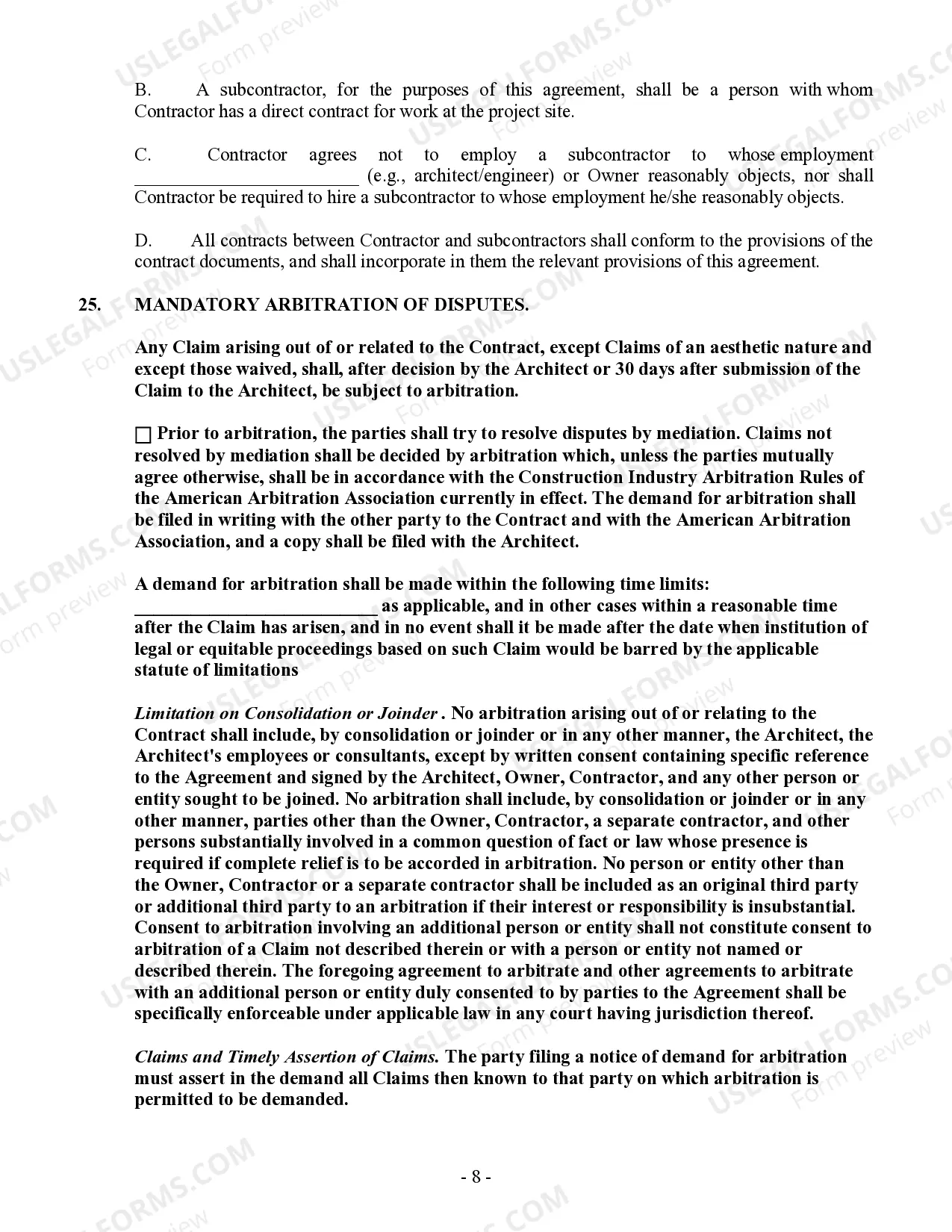
- It outlines remedies for breach and sets clear guidelines for dispute resolution.
- Properly executed, it aids in preventing misunderstandings and potential legal issues in commercial construction projects.
Key takeaways
- Your Commercial Contract for Contractor establishes clear expectations and responsibilities.
- Ensure all essential components are completed to maintain legal enforceability.
- Utilize the form to safeguard your interests, whether you are a contractor or a property owner.
Looking for another form?



Form popularity
FAQ
If you encounter a contractor working without a license in California, report them to the Contractors State License Board (CSLB). You can file a complaint online or call their office for assistance. Taking action helps maintain industry standards and protects consumers from unqualified providers.
To create a California Commercial Contract for Contractor, start by outlining the project's scope, payment terms, and deadlines. Include specific responsibilities and any required licenses or insurance. Using templates from trusted sources like uslegalforms can simplify the process, ensuring compliance with California laws.
To be valid, a California Commercial Contract for Contractor must contain mutual consent, lawful consideration, and the legal ability of parties to enter the agreement. Terms and conditions must be clear and not against public policy. Ensuring all these elements are present will help you create a valid contract.
An unsigned California Commercial Contract for Contractor is generally unenforceable unless some actions indicate acceptance, often seen with performance or partial payment. Courts may recognize certain agreements under specific circumstances, but it is best to have all parties sign to validate the contract. A written and signed contract improves legal protection.
Several factors can render a California Commercial Contract for Contractor invalid, such as lack of mutual consent or consideration. Additionally, illegal terms or the absence of essential elements like capacity can void the agreement. Always ensure your contract meets California's legal standards to avoid invalidation.
While not all contracts need to be in writing to be valid, having a written California Commercial Contract for Contractor provides clear evidence of the agreement's terms. It enhances understanding and reduces the risk of disputes. For significant projects, a written agreement is highly advisable.
Writing up a contract involves organized steps, starting with identifying the involved parties. Clearly state the terms, responsibilities, and timelines to prevent misunderstandings. For those unfamiliar with formatting, seeking assistance from resources like uslegalforms can help create effective contracts tailored to your needs.
To write a commercial contract, such as a California Commercial Contract for Contractor, begin with a clear title and introduction. Specify the parties involved, and provide definitions for relevant terms. Follow up with detailed terms and conditions, addressing payment, delivery, and dispute resolution to protect both parties.
Writing a contract for a contractor in California involves defining the scope of work, including timelines and payment schedules. Ensure that the contract contains protective clauses, such as liability and indemnity provisions. Utilizing templates from platforms like uslegalforms can simplify this process and ensure compliance with California standards.
To draw up a California Commercial Contract for Contractor, begin by gathering all necessary specifications, including project details and participant roles. Next, draft the terms of engagement, focusing on deadlines and payment terms. Lastly, review and modify the contract to incorporate any legal requirements pertinent to California law.