Arkansas Warranty Deed from Individual to Two Individuals as Tenants in Common
What this document covers
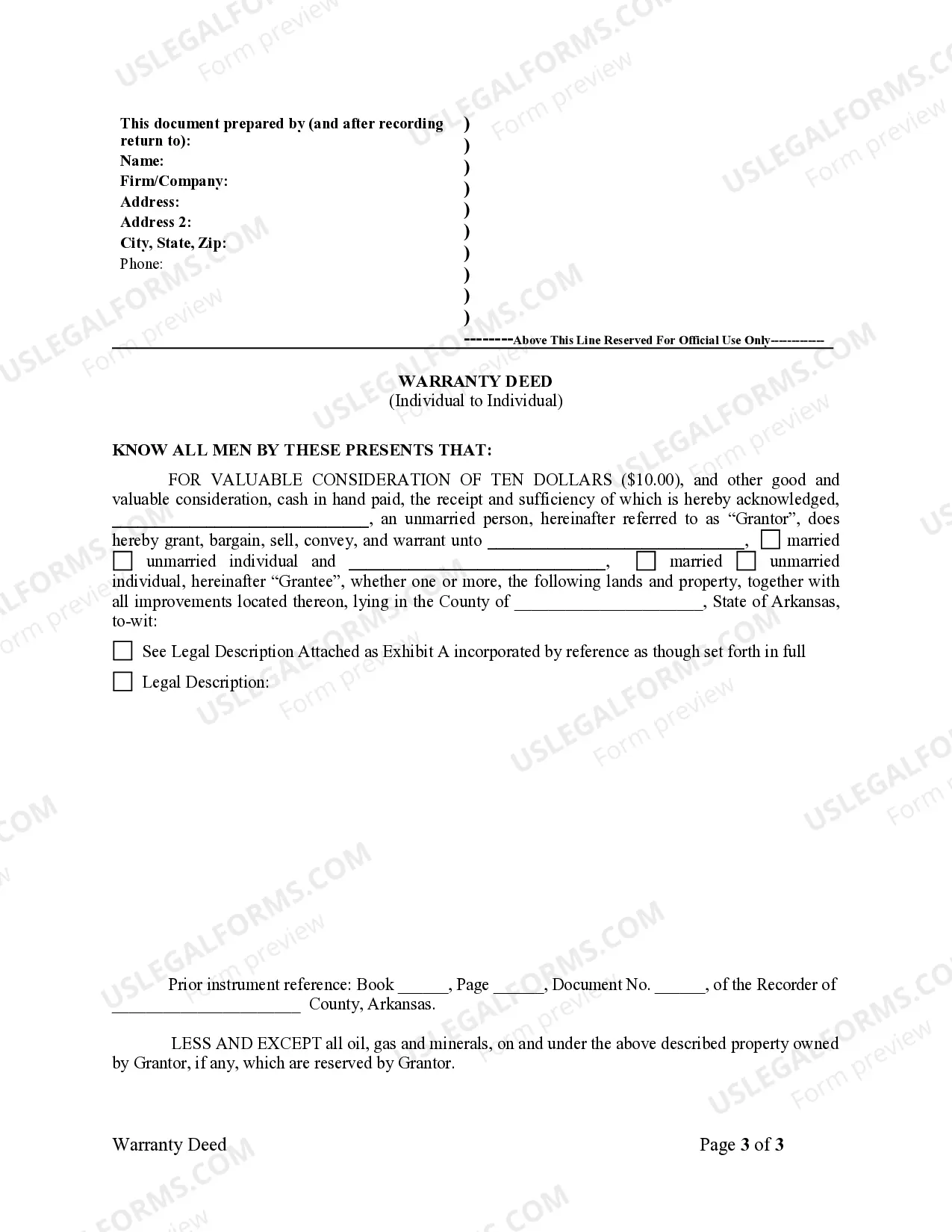
This Warranty Deed from Individual to Two Individuals as Tenants in Common is a legal document used to transfer property ownership from one individual (the grantor) to two individuals (the grantees) who will hold the title as tenants in common. This form ensures that each grantee has an undivided share in the property, enabling them to sell or transfer their interest separately. It differs from other conveyance documents such as a joint tenancy deed, which grants rights of survivorship to the grantees.
Main sections of this form
- Identity of the Grantor and Grantees: Clear identification of the property owner transferring the deed and the individuals receiving it.
- Property Description: An accurate description of the property being transferred, including any improvements or attachments.
- Consideration Amount: A statement about the payment or value exchanged for the property.
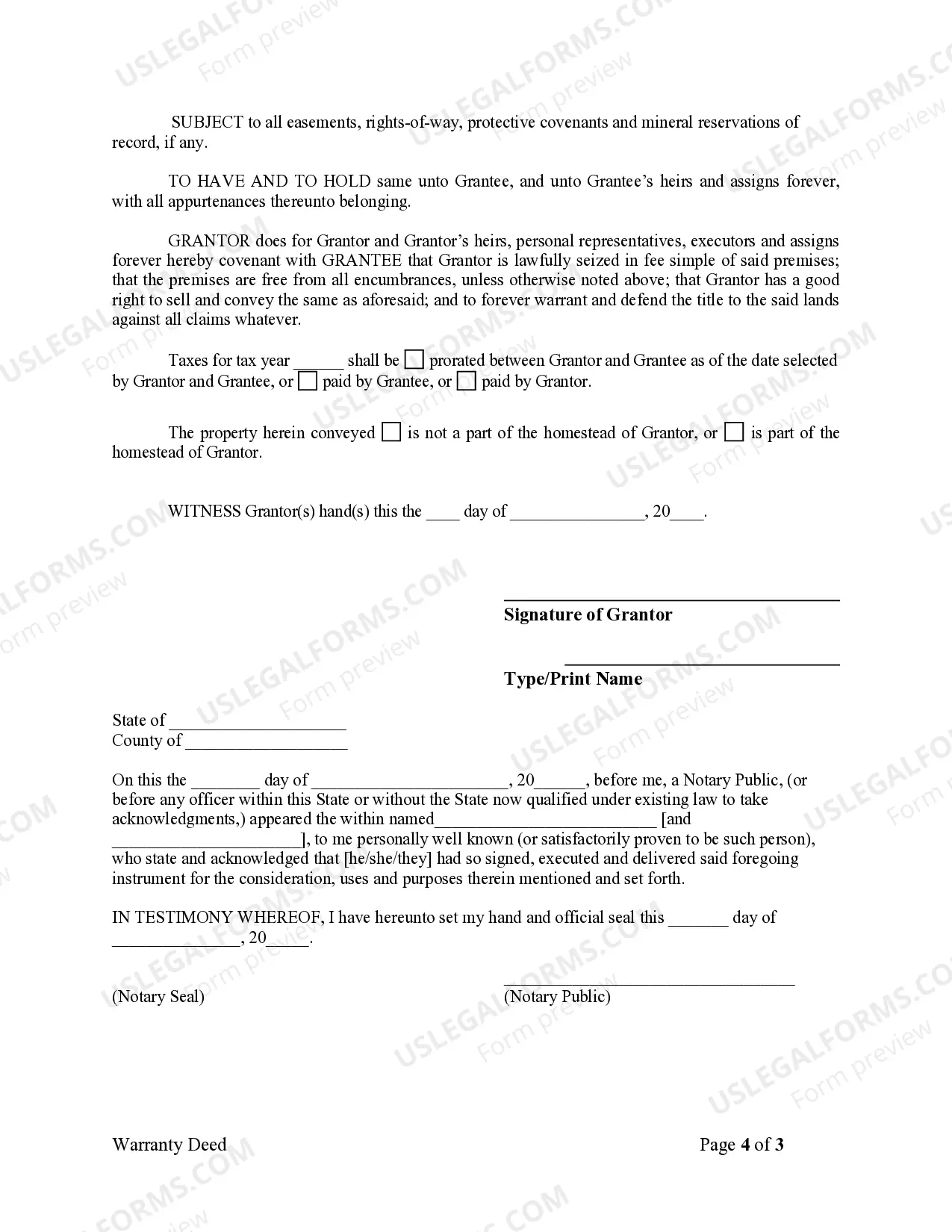
- Covenants: Assurance from the grantor that they have the right to convey the property and that it is free of encumbrances, unless stated otherwise.
- Signatures and Acknowledgment: Required signatures from the grantor along with any notary acknowledgment if applicable.








When this form is needed
This form should be used when an individual wishes to transfer ownership of real property to two other individuals who will jointly own the property as tenants in common. Scenarios include family members passing property to relatives, friends sharing an investment property, or when parties want to own property together but maintain separate interests. It is also relevant in estate planning or property division during a divorce.
Who can use this document
- Individuals looking to transfer property ownership to two people.
- Homeowners wanting to share property ownership as tenants in common for investment or personal reasons.
- Real estate professionals assisting clients in property transactions.
Instructions for completing this form
- Identify the grantor and each grantee by providing their full legal names.
- Specify the exact property being conveyed, including its description and any attachments, as detailed in an attached exhibit if necessary.
- State the consideration amount indicating the payment (e.g., ten dollars or more) exchanged for the property transfer.
- Have the grantor sign the document in the presence of a notary public if required by local law.
- Ensure that all parties involved receive copies of the completed deed for their records.
Notarization requirements for this form
This document requires notarization to meet legal standards. US Legal Forms provides secure online notarization powered by Notarize, allowing you to complete the process through a verified video call, available 24/7.
Get your form ready online
Our built-in tools help you complete, sign, share, and store your documents in one place.
Make edits, fill in missing information, and update formatting in US Legal Forms—just like you would in MS Word.
Download a copy, print it, send it by email, or mail it via USPS—whatever works best for your next step.
Sign and collect signatures with our SignNow integration. Send to multiple recipients, set reminders, and more. Go Premium to unlock E-Sign.
If this form requires notarization, complete it online through a secure video call—no need to meet a notary in person or wait for an appointment.
We protect your documents and personal data by following strict security and privacy standards.

Make edits, fill in missing information, and update formatting in US Legal Forms—just like you would in MS Word.

Download a copy, print it, send it by email, or mail it via USPS—whatever works best for your next step.

Sign and collect signatures with our SignNow integration. Send to multiple recipients, set reminders, and more. Go Premium to unlock E-Sign.

If this form requires notarization, complete it online through a secure video call—no need to meet a notary in person or wait for an appointment.

We protect your documents and personal data by following strict security and privacy standards.
Avoid these common issues
- Not providing an accurate property description, which can lead to disputes over the transferred property.
- Failing to notarize the document if required, which may invalidate the deed.
- Not including all necessary grantees, which can affect their ownership rights.
Advantages of online completion
- Convenience of downloading and completing the form from home at any time.
- Editability of form fields allows for easy customization to fit specific transaction needs.
- Accessibility of professional drafts created by licensed attorneys, ensuring legal validity.
Looking for another form?
Form popularity
FAQ
To create a valid warranty deed in Arkansas, certain essential elements must be present. These include the legal names of the grantor and grantee, a clear property description, the intent to convey, and the grantor's signature before a notary public. For the Arkansas Warranty Deed from Individual to Two Individuals as Tenants in Common, it is crucial to include language that specifies the tenancy arrangement to ensure that both individuals understand their ownership shares.
The key difference lies in the assurances provided by the two deeds. A warranty deed guarantees that the grantor holds clear title to the property and has the right to sell it, thereby offering protection against future claims. On the other hand, a quitclaim deed simply transfers whatever interest the grantor has without any guarantees, making it less secure. Understanding these differences is essential when considering an Arkansas Warranty Deed from Individual to Two Individuals as Tenants in Common, as it impacts the rights of each tenant.
A warranty deed in Arkansas typically includes the names of the grantor and grantee, the legal description of the property, and language that guarantees clear title. This document serves as a legal proof of property transfer and must be signed by the grantor in front of a notary public. Additionally, when transferring property as an Arkansas Warranty Deed from Individual to Two Individuals as Tenants in Common, the deed should specify the tenancy arrangement to avoid confusion in the future.
Joint tenancy with right of survivorship allows two or more individuals to own property together, and if one owner passes away, their share automatically transfers to the surviving owner(s). This arrangement differs from tenants in common, where shares may not pass automatically. Understanding these terms helps when considering an Arkansas Warranty Deed from Individual to Two Individuals as Tenants in Common.
A warranty deed is created by drafting a legal document that outlines the grantor's promise to defend the title against claims. This document must include certain elements, like the description of the property and the signatures of involved parties. By creating an Arkansas Warranty Deed from Individual to Two Individuals as Tenants in Common, you ensure both parties have equal ownership rights.
Filing a warranty deed in Arkansas involves drafting the deed with the correct legal language. After signing the document in the presence of a notary, bring the deed to the county clerk's office for recording. This process solidifies the transfer of property through an Arkansas Warranty Deed from Individual to Two Individuals as Tenants in Common.
To file a deed in Arkansas, first prepare the deed, ensuring it complies with state requirements. Next, sign the deed in front of a notary public, then take it to your local county clerk's office for recording. Filing an Arkansas Warranty Deed from Individual to Two Individuals as Tenants in Common follows this same process.
To transfer ownership of a property in Arkansas, you need to execute a deed, such as a warranty deed or a quitclaim deed. The deed must be signed by the grantor and notarized, then recorded with the county clerk's office. An Arkansas Warranty Deed from Individual to Two Individuals as Tenants in Common is one way to accomplish this transfer effectively.
A quitclaim deed transfers whatever interest the grantor has in the property without guaranteeing the title. In contrast, a warranty deed provides assurance that the title is clear and guarantees the ownership of the property. This distinction is crucial when executing an Arkansas Warranty Deed from Individual to Two Individuals as Tenants in Common.
Yes, you can file a warranty deed yourself in Arkansas. It's important to ensure the document meets state requirements for an Arkansas Warranty Deed from Individual to Two Individuals as Tenants in Common. However, consider consulting a professional to avoid mistakes that could delay the process.