Alabama Divorce Worksheet and Law Summary for Contested or Uncontested Case of over 25 pages - Ideal Client Interview Form
About this form
This Divorce Worksheet and Law Summary is a comprehensive package designed for individuals considering divorce, whether contested or uncontested. It provides essential information on various aspects of divorce law, including definitions of key terms, child custody, child support, and visitation. It includes worksheets for personal and financial information, allowing users to prepare effectively for their initial consultations with attorneys or to navigate their divorce independently. This package is especially beneficial for those seeking clarity on complex divorce proceedings.
Key components of this form
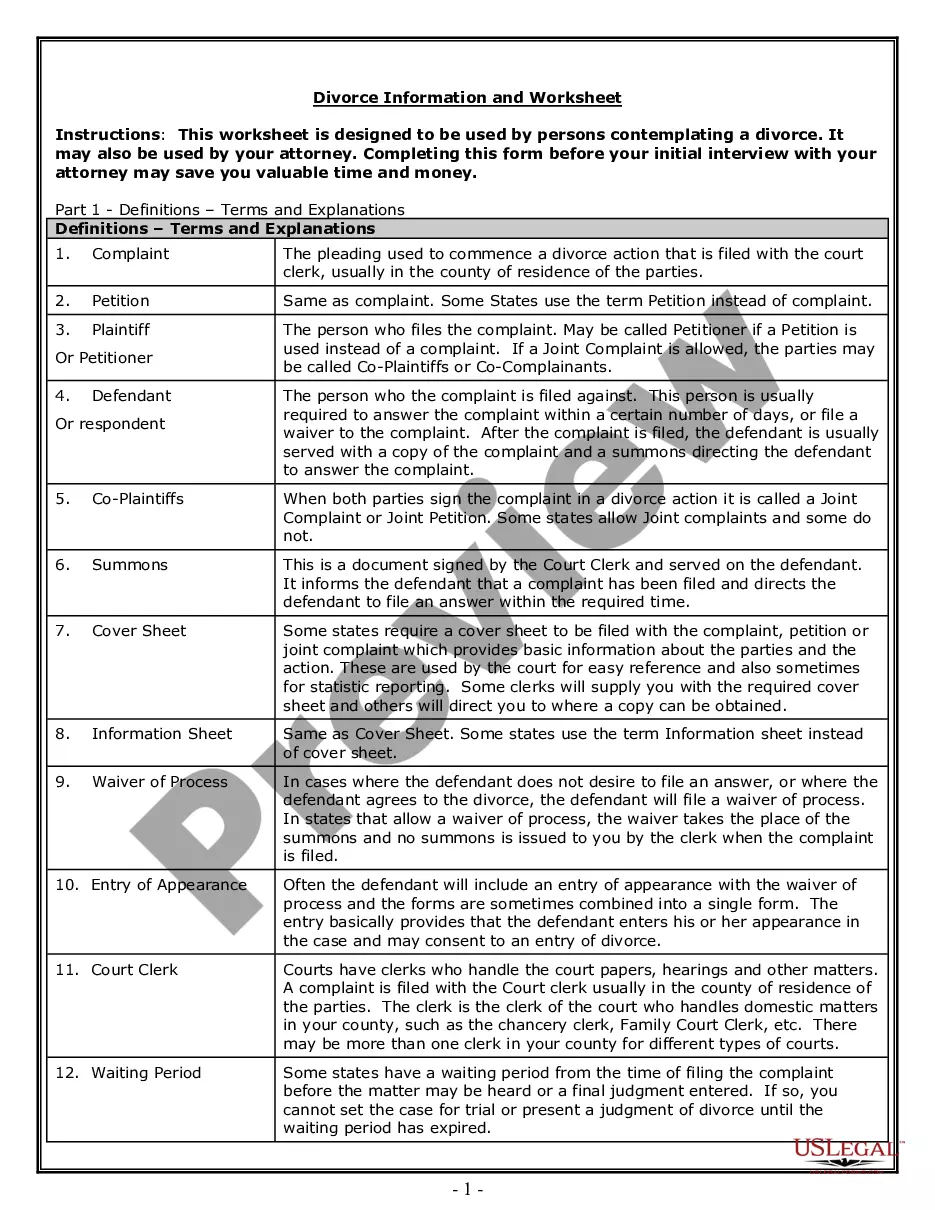
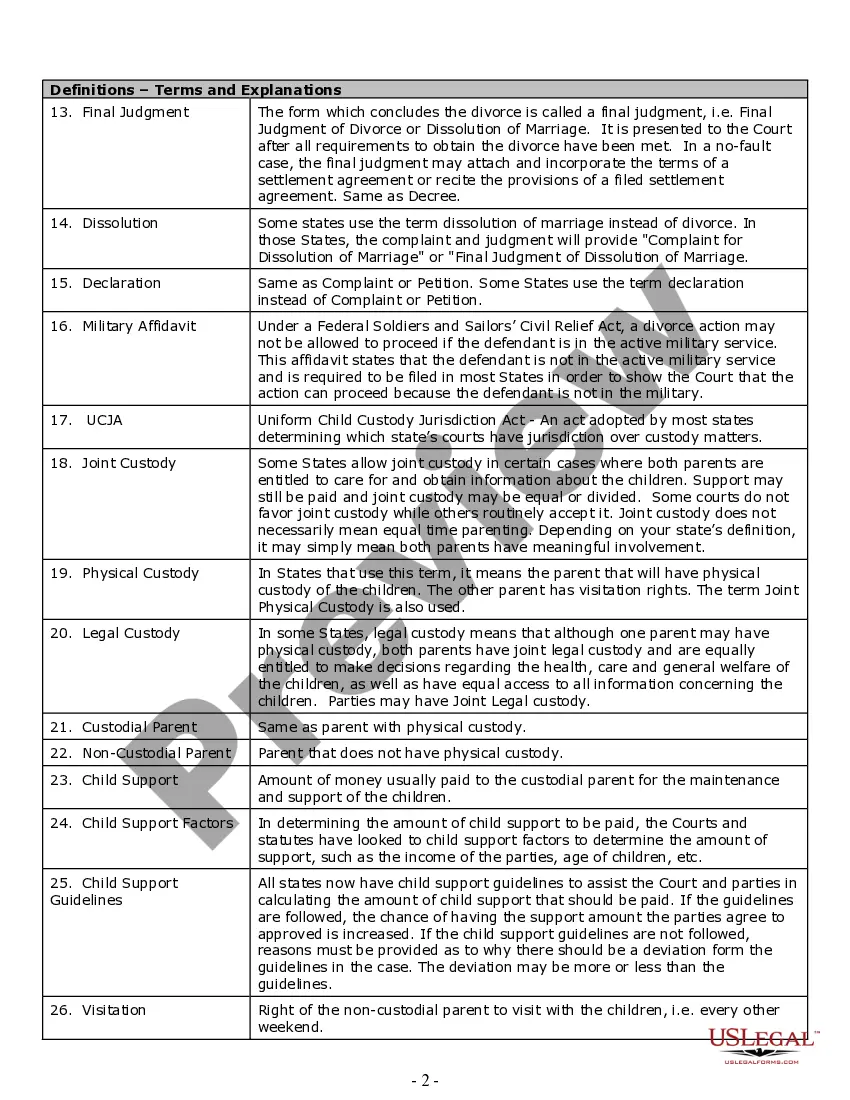
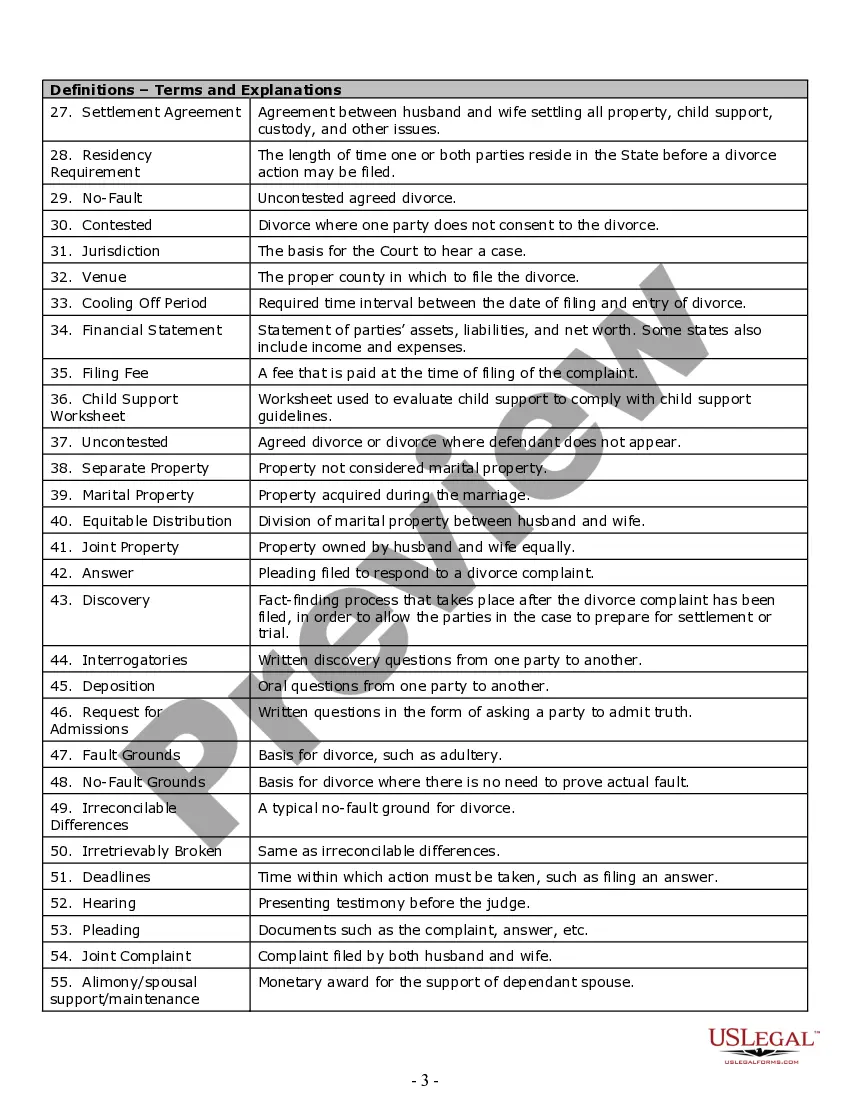
- Definitions: Clear explanations of key terms related to divorce proceedings.
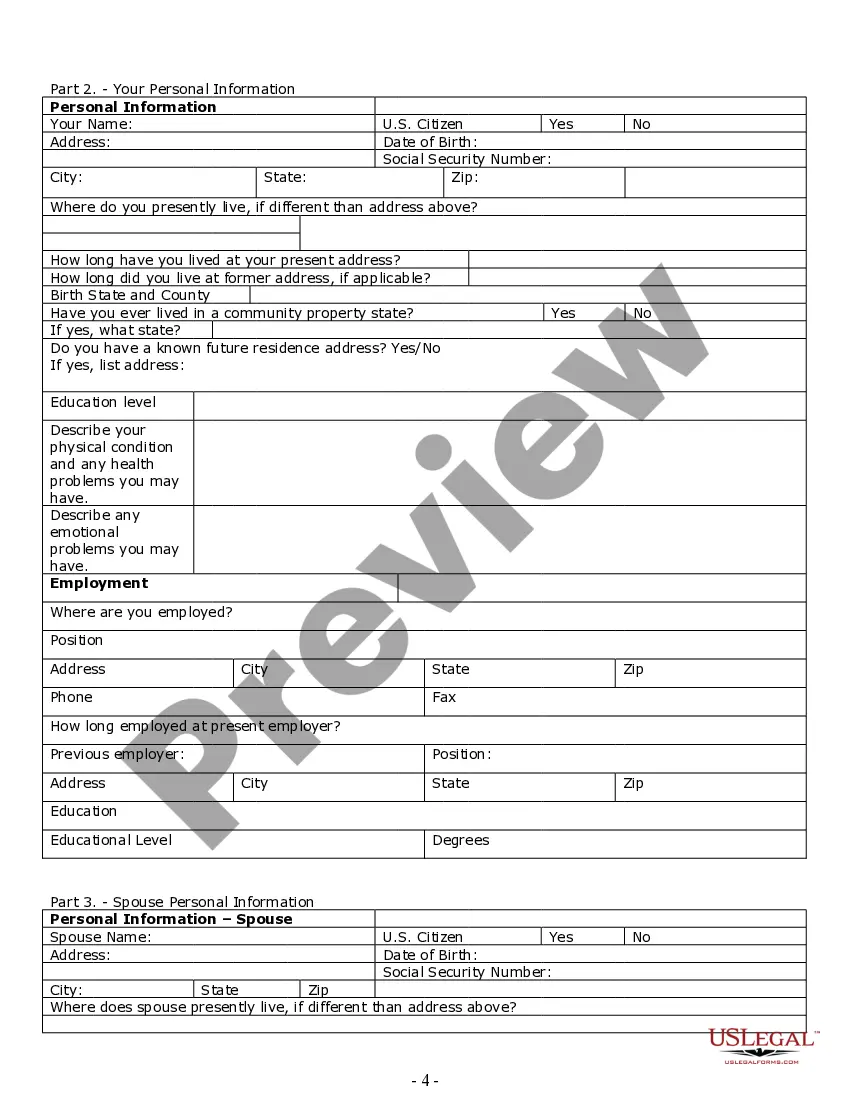
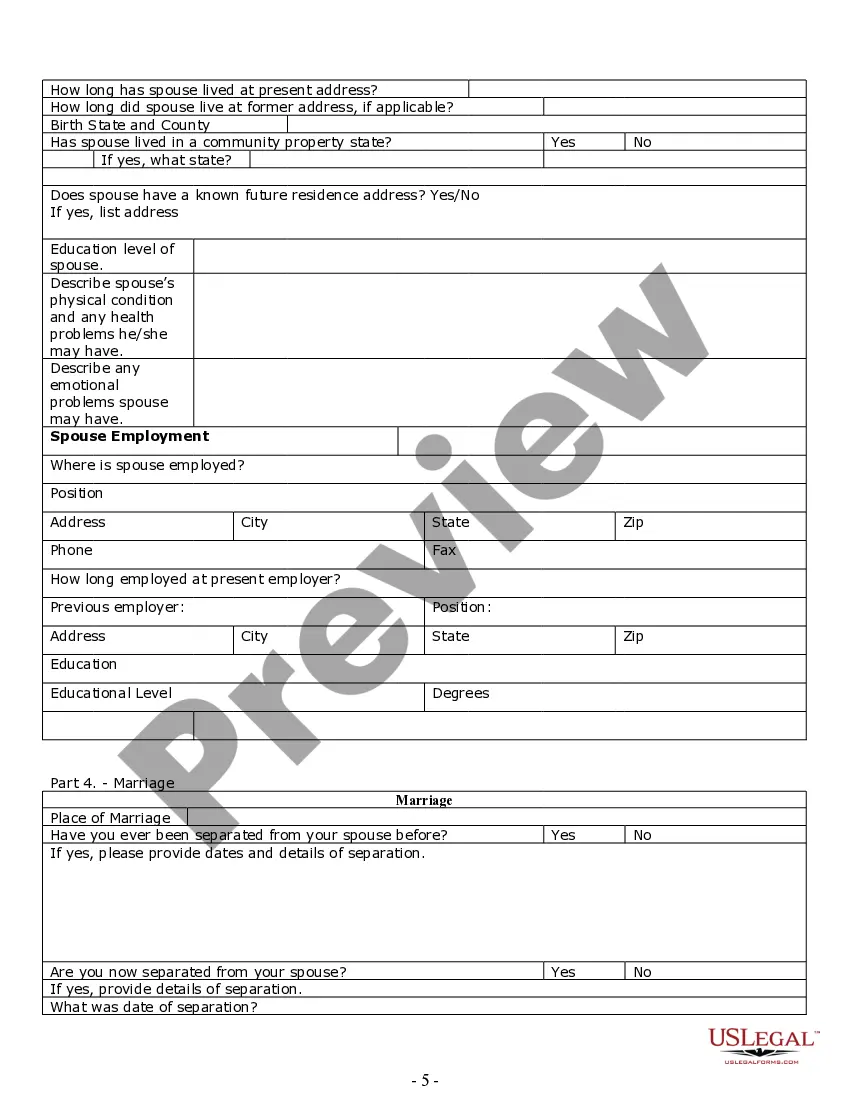
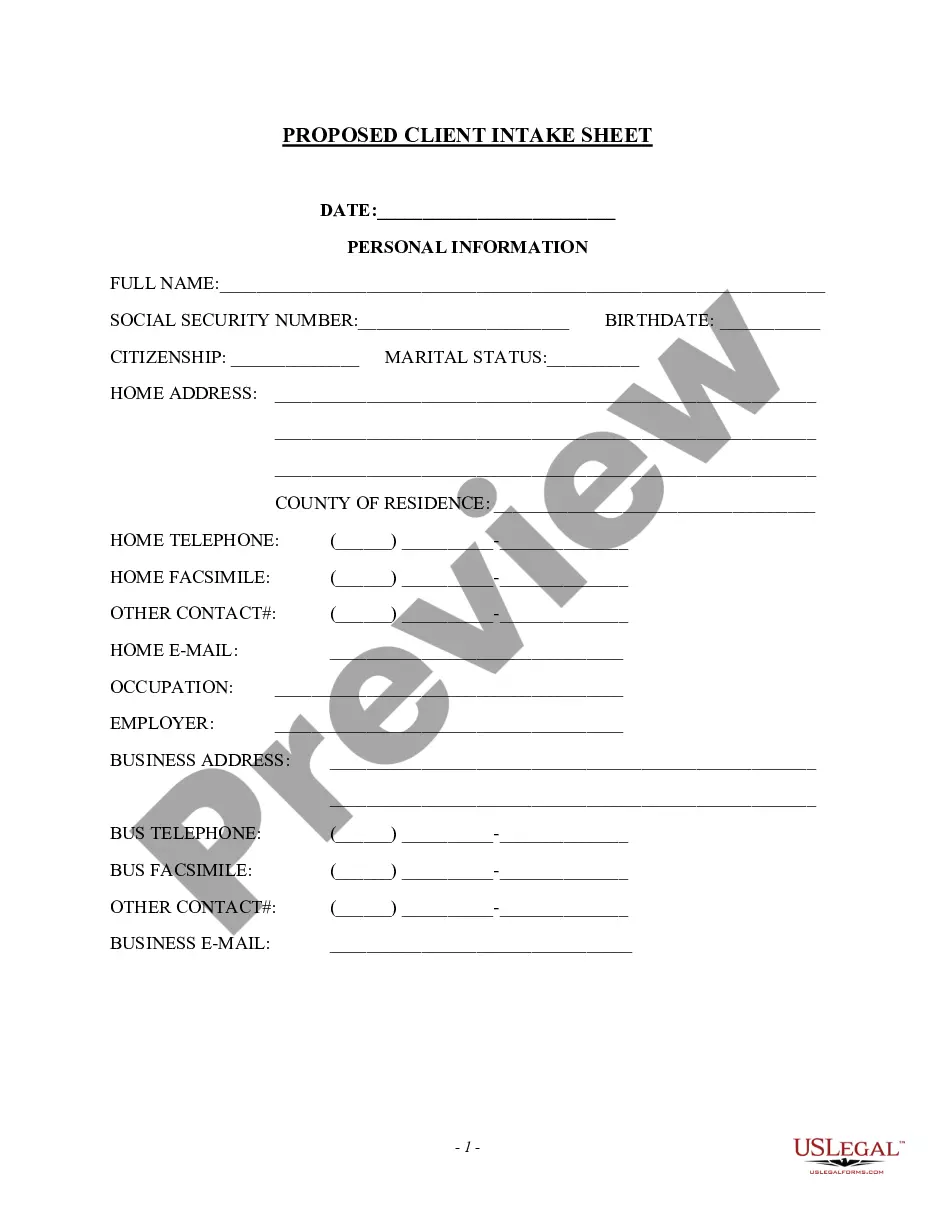
- Personal Information: Sections to collect essential details from both spouses.
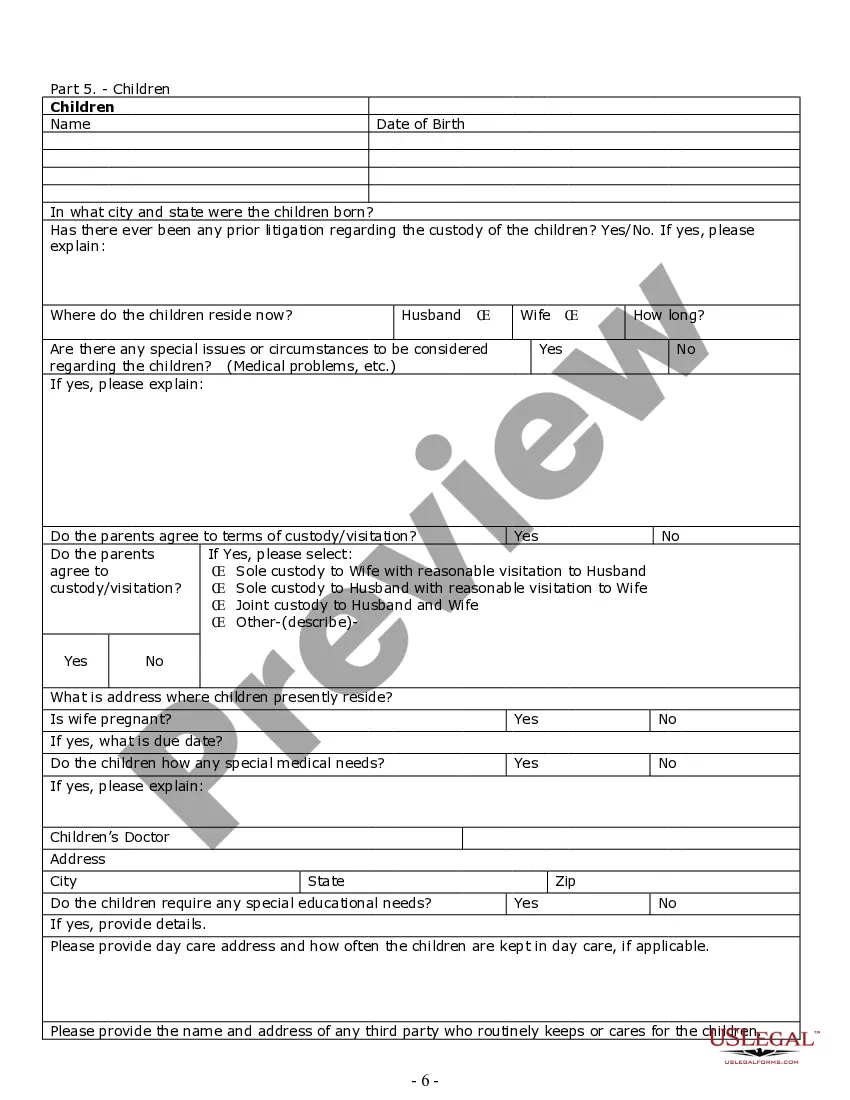
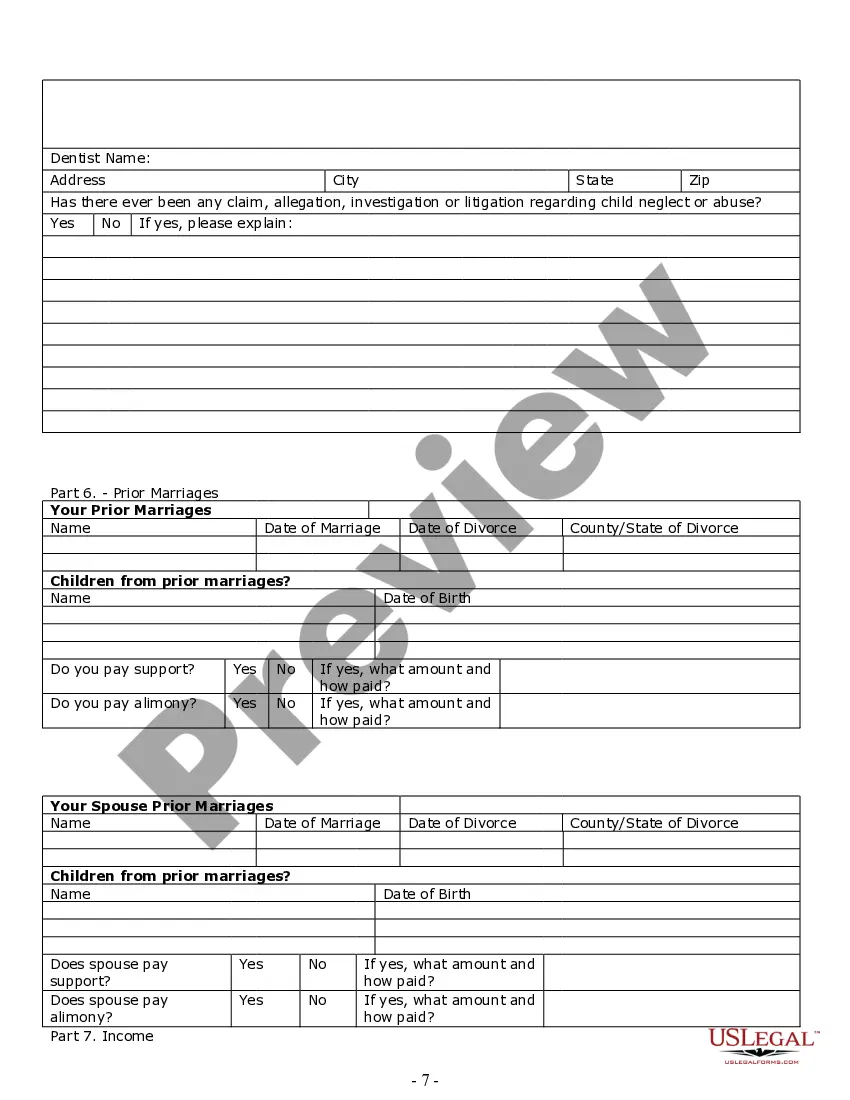
- Children: Information regarding children, custody arrangements, and child support considerations.
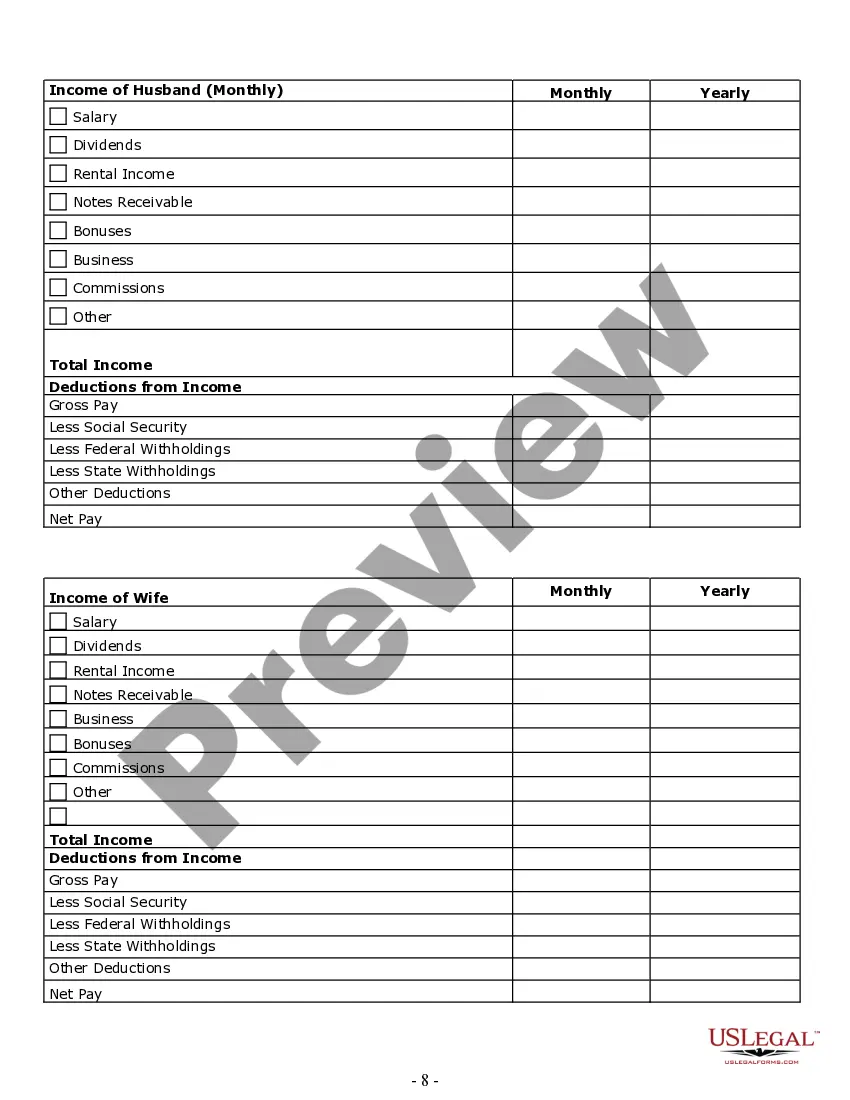
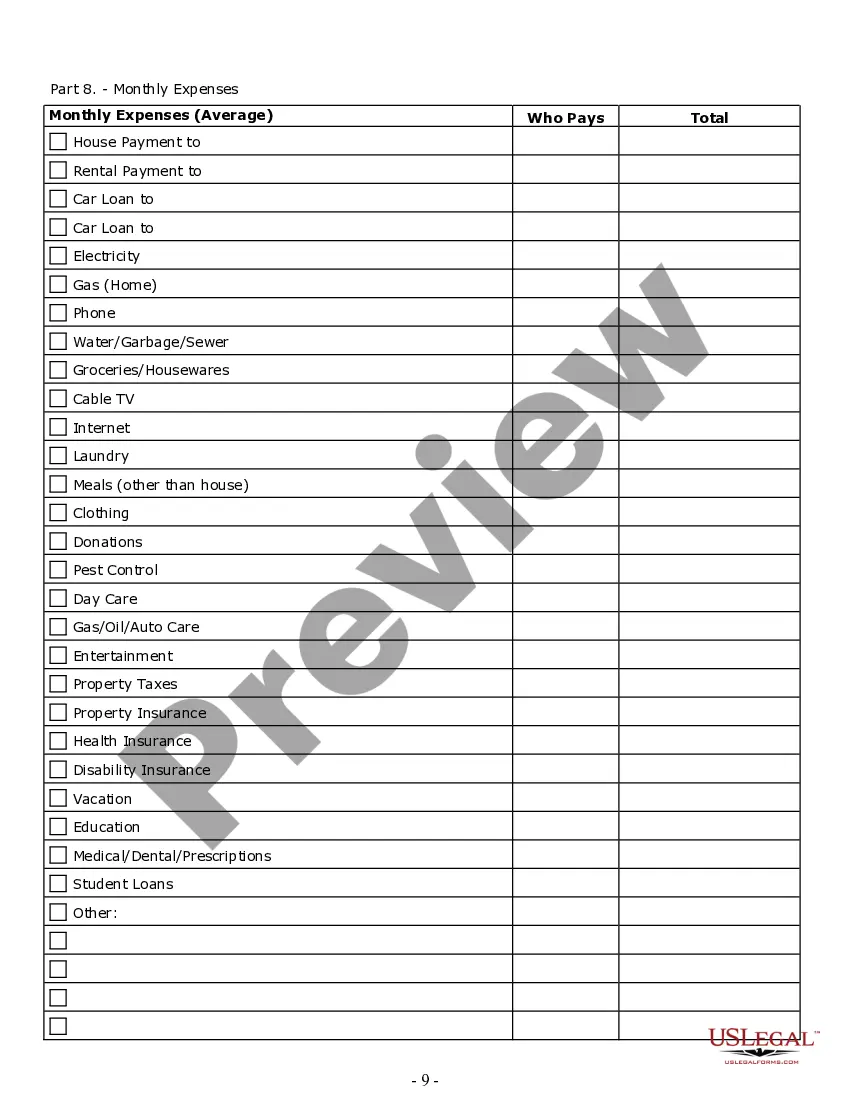
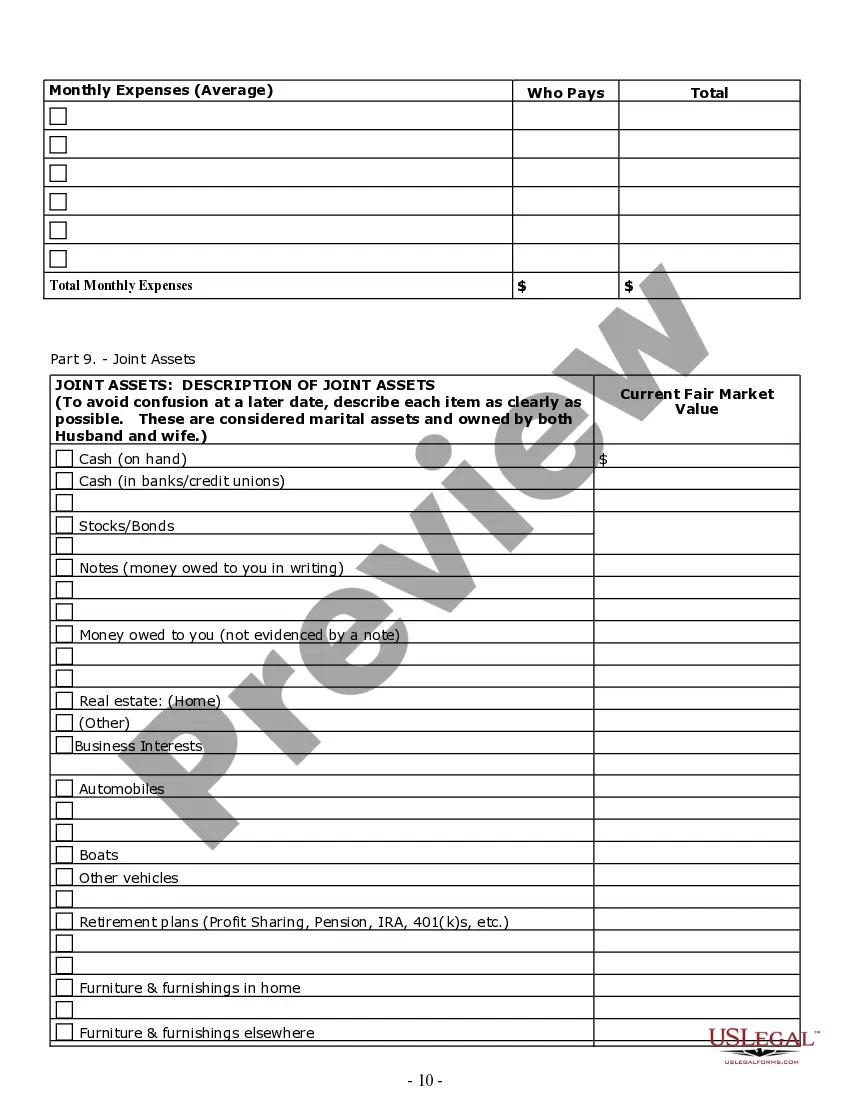
- Financial Data: Worksheets to capture income, expenses, assets, and liabilities.
- Settlement Worksheet: A guide for negotiating property divisions and obligations.
- No-Fault Procedures: Step-by-step instructions for filing for a no-fault divorce.

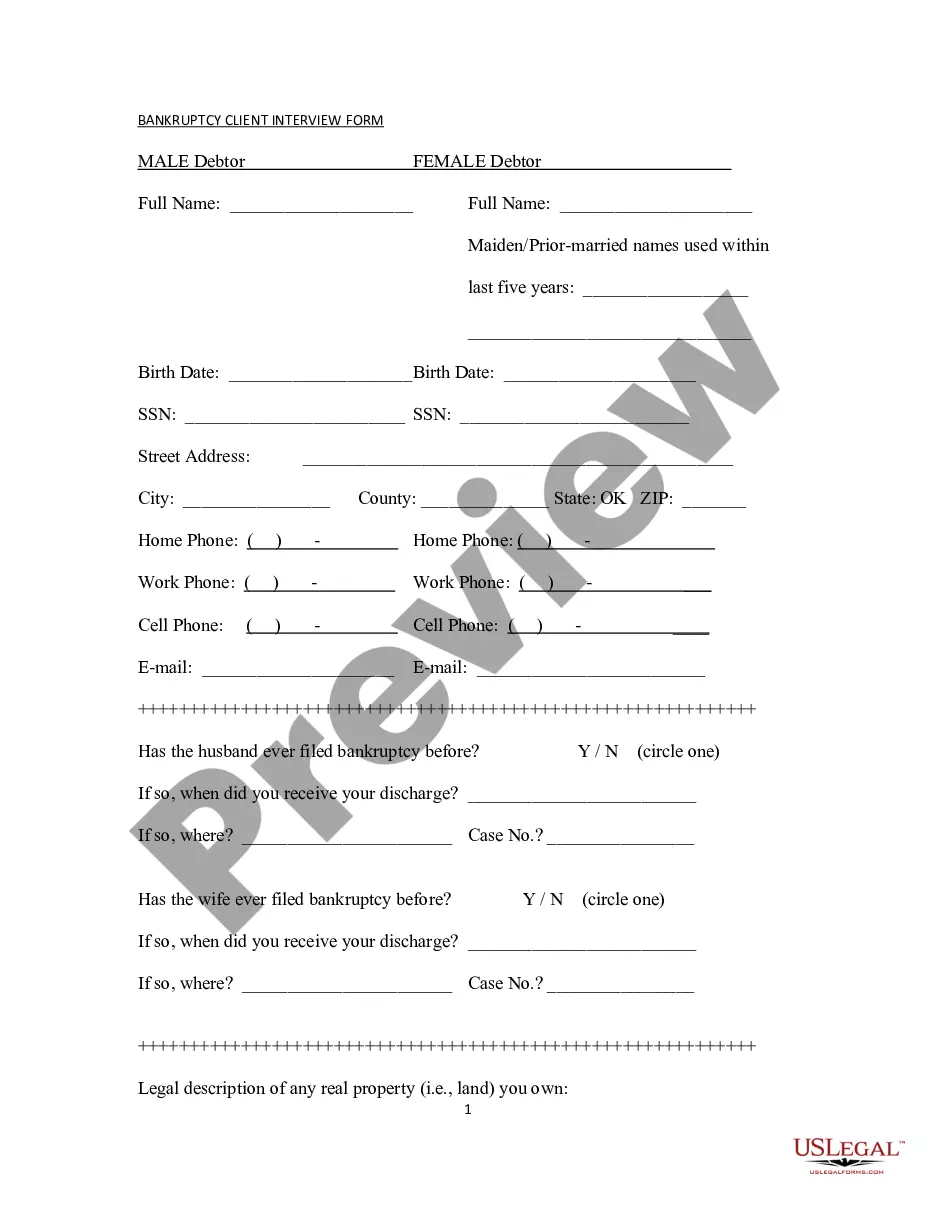
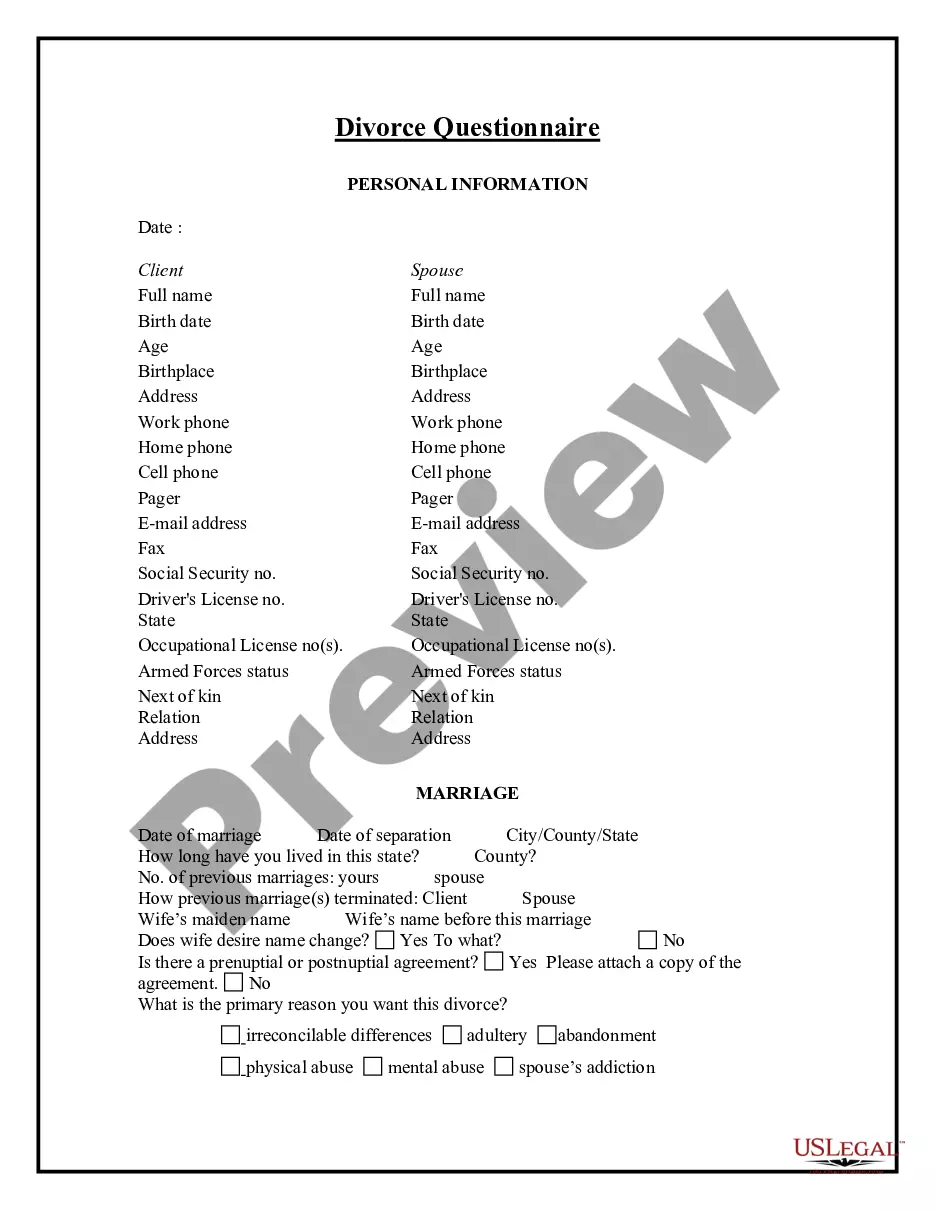
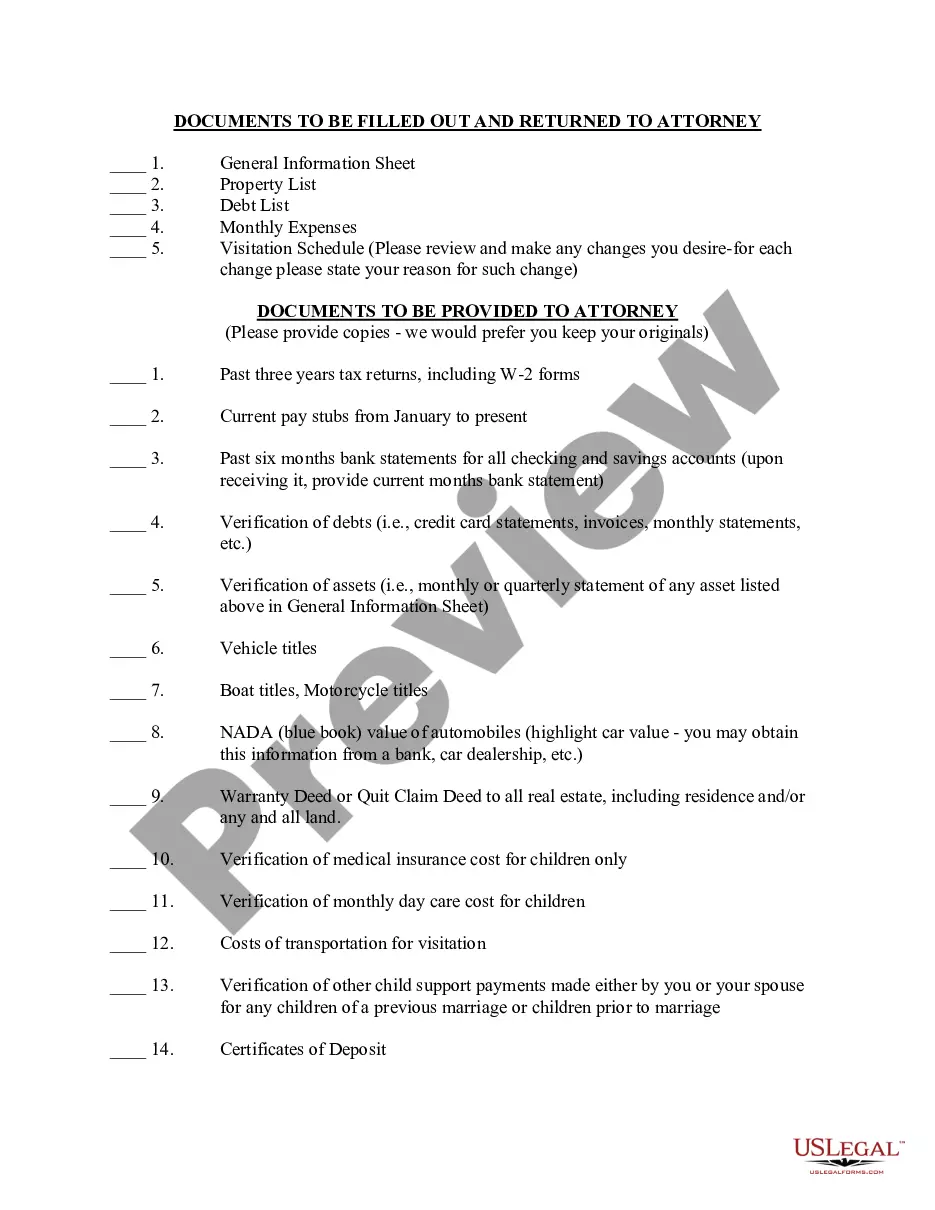

Situations where this form applies
This form is needed when a person is contemplating divorce, whether they anticipate a contested or uncontested process. It can be utilized for understanding the legal implications of marriage dissolution, preparing for attorney consultations, or organizing personal and financial data to facilitate smoother proceedings.
Intended users of this form
This form is suitable for:
- Individuals who are contemplating divorce.
- Spouses looking to negotiate terms amicably.
- Clients preparing for their initial meeting with an attorney.
- Those who wish to understand their legal rights and obligations during a divorce.
Instructions for completing this form
To complete this Divorce Worksheet and Law Summary, follow these steps:
- Start by entering the personal information of both spouses, including names and contact information.
- Fill out the section for children's details, including custody and support arrangements.
- Complete the financial sections detailing income, expenses, assets, and debts.
- Review the definitions section to ensure you understand all terms that will be used in the process.
- Utilize the settlement worksheet to outline proposed divisions of property and obligations.
- Finally, understand the no-fault procedures to ensure your filing aligns with legal requirements.
Does this form need to be notarized?
This form does not typically require notarization unless specified by local law.
Get your form ready online
Our built-in tools help you complete, sign, share, and store your documents in one place.
Make edits, fill in missing information, and update formatting in US Legal Forms—just like you would in MS Word.
Download a copy, print it, send it by email, or mail it via USPS—whatever works best for your next step.
Sign and collect signatures with our SignNow integration. Send to multiple recipients, set reminders, and more. Go Premium to unlock E-Sign.
If this form requires notarization, complete it online through a secure video call—no need to meet a notary in person or wait for an appointment.
We protect your documents and personal data by following strict security and privacy standards.

Make edits, fill in missing information, and update formatting in US Legal Forms—just like you would in MS Word.

Download a copy, print it, send it by email, or mail it via USPS—whatever works best for your next step.

Sign and collect signatures with our SignNow integration. Send to multiple recipients, set reminders, and more. Go Premium to unlock E-Sign.

If this form requires notarization, complete it online through a secure video call—no need to meet a notary in person or wait for an appointment.

We protect your documents and personal data by following strict security and privacy standards.
Typical mistakes to avoid
Common mistakes to avoid when using this form include:
- Failing to provide accurate financial information.
- Not including all relevant details about children, which can lead to custody disputes.
- Leaving sections incomplete, which may result in delays.
- Underestimating the importance of understanding legal definitions that could affect the outcome of the divorce.
Why complete this form online
Benefits of using this form online include:
- Easy access to download and complete the form at your convenience.
- The ability to edit and save the document for future reference or additional information.
- Assurance that the forms are drafted by licensed attorneys, enhancing reliability.
- Legally valid if completed according to state regulations.
- Ensure all information is accurate to prevent issues during proceedings.
- Consult an attorney if there are any uncertainties about the formâs applicability.
Main things to remember
Key takeaways regarding this Divorce Worksheet and Law Summary include:
- It assists in navigating both contested and uncontested divorce scenarios.
- The form is essential for preparing personal, financial, and legal information ahead of consultations.
- Understanding terms and processes can lead to more informed decisions during the divorce.
- Complaint: The formal document filed to start a divorce action.
- Pleading: Legal documents filed in court, including complaints and responses.
- Custody: The legal right to care for and make decisions for children.
- Alimony: Financial support one spouse pays to the other post-divorce.
Looking for another form?

Form popularity
FAQ
If your spouse doesn't agree you simply file a divorce and the judge will make the final decisions. The average cost of a contested divorce is $5,000 per spouse, and takes about 6 months. Some contested divorces can cost $15,000 or more per spouse and take 12 months or longer.
An uncontested divorce usually takes about 6-10 weeks after everything has been signed by both spouses and filed with the court. A contested divorce can take anywhere from 30 days to months or years, depending on if there is a trial or not.
As a general rule, a wife cannot force her husband to pay for their divorce. Each party in the divorce action pays for his or her attorney fees and costs. However, there are circumstances in which a judge may order a husband to pay the wife's attorney fees and costs.
Once the divorce becomes contested, a hearing must take place in order to establish the reasons for contesting the divorce and for the court to resolve those reasons. If both spouses show for the hearing, the court will determine the legal terms of the divorce through testimony and evidence.
When will my divorce be effective? The circuit court can't issue a final court order (known as a "final judgment") until at least 30 days have passed from the date that the summons and complaint were filed with the court.
There is an initial filing fee when you bring your divorce papers to county court, which is $324 in Madison County (plus any fees charged by the court for electronic filing, which brings the total to $337.01).
A contested divorce is accomplished by filing the divorce papers and then serving your spouse with them. Uncontested divorces are easier because both spouses agree on all the issues such as child custody, child support, division of marital assets, and alimony.