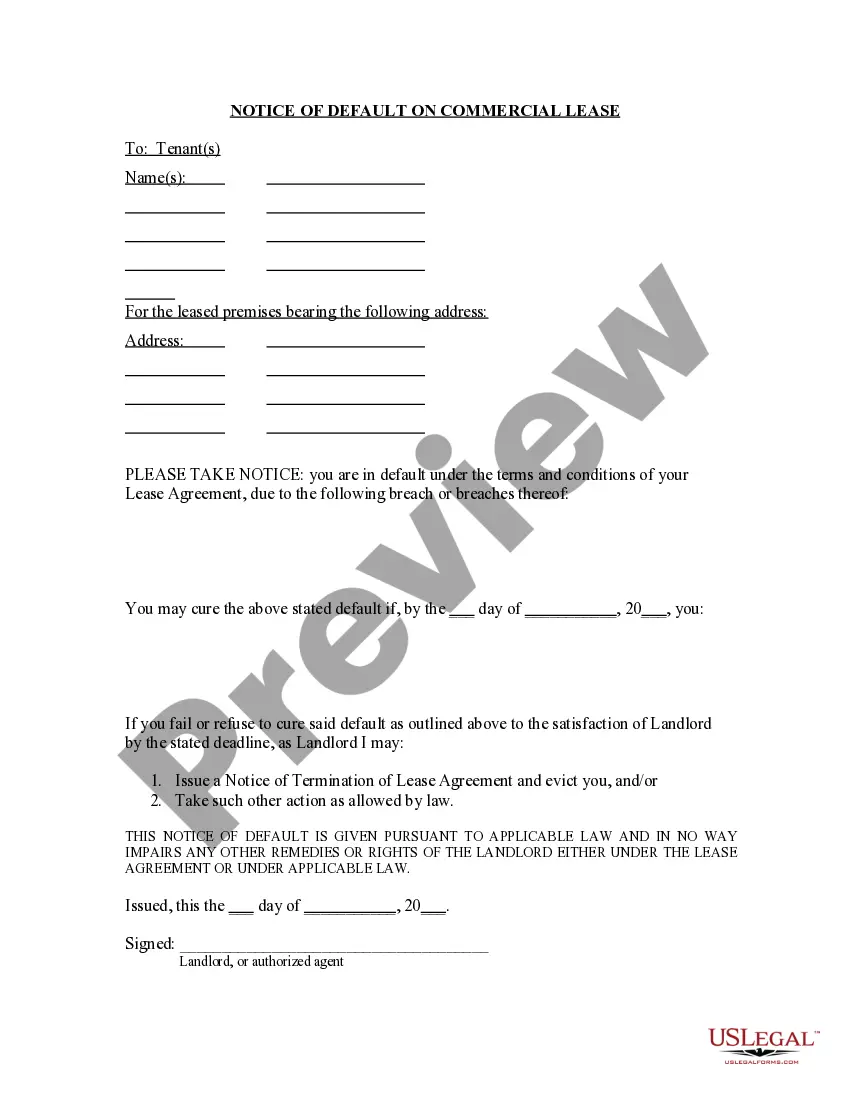
Alaska Letter from Landlord to Tenant as Notice of Default on Commercial Lease
Understanding this form
The Letter from Landlord to Tenant as Notice of Default on Commercial Lease is an essential legal document that formalizes a landlord's notification to a tenant regarding specific breaches of their lease agreement. This notice details the default conditions, outlines what actions the tenant must take to remedy these breaches, and establishes a timeline for compliance. Unlike other lease-related forms, this document is specifically designed to address defaults in a commercial lease context, providing a structured approach for landlords before pursuing further legal actions, such as eviction.
Key parts of this document
- Identification of the landlord and tenant
- Details of the specific lease breaches
- Deadline for the tenant to cure the breaches
- Warning of potential eviction proceedings
- Landlordâs signature and date of notice issuance


When this form is needed
This form is used when a tenant is in default of their commercial lease agreement, specifically in cases where they have failed to fulfill their obligations, such as nonpayment of rent or other lease terms. It is necessary to use this notice when a landlord intends to formally inform the tenant of the defaults and provide an opportunity for them to rectify these issues, thereby preventing potential eviction.
Who this form is for
- Landlords of commercial properties
- Property managers acting on behalf of landlords
- Legal representatives for landlords
How to prepare this document
- Begin by entering the name of the landlord and tenant involved in the lease.
- Clearly list the specific breaches of the lease agreement that have occurred.
- Specify a cure deadline, giving the tenant a clear timeframe to remedy the defaults.
- Include any additional actions that the landlord may take if the breach is not cured.
- Have the landlord or authorized agent sign and date the notice.
Notarization guidance
This form does not typically require notarization unless specified by local law. However, it is always advisable to check your specific state requirements to ensure compliance with any applicable regulations.
Get your form ready online
Our built-in tools help you complete, sign, share, and store your documents in one place.
Make edits, fill in missing information, and update formatting in US Legal Forms—just like you would in MS Word.
Download a copy, print it, send it by email, or mail it via USPS—whatever works best for your next step.
Sign and collect signatures with our SignNow integration. Send to multiple recipients, set reminders, and more. Go Premium to unlock E-Sign.
If this form requires notarization, complete it online through a secure video call—no need to meet a notary in person or wait for an appointment.
We protect your documents and personal data by following strict security and privacy standards.
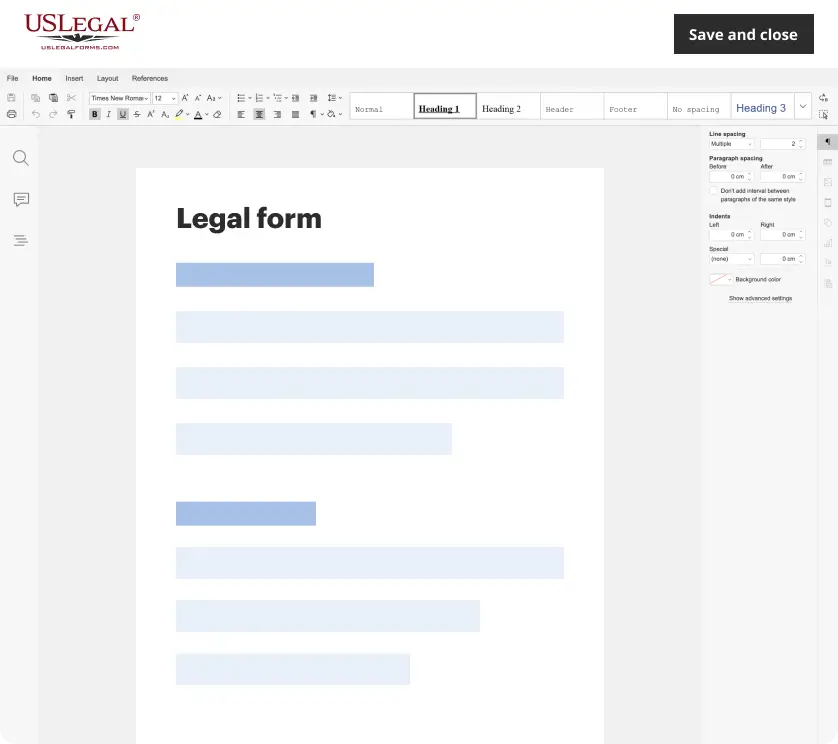
Make edits, fill in missing information, and update formatting in US Legal Forms—just like you would in MS Word.
Download a copy, print it, send it by email, or mail it via USPS—whatever works best for your next step.
Sign and collect signatures with our SignNow integration. Send to multiple recipients, set reminders, and more. Go Premium to unlock E-Sign.
If this form requires notarization, complete it online through a secure video call—no need to meet a notary in person or wait for an appointment.
We protect your documents and personal data by following strict security and privacy standards.
Common mistakes
- Failing to specify the exact breaches of the lease
- Not providing a reasonable deadline for the tenant to cure the breach
- Omitting the landlord's signature and date
- Sending the notice without confirming the required delivery method in your state
Benefits of using this form online
- Convenient access to legally drafted templates at any time
- Edit and customize the form to suit specific lease agreements
- Reliable options that comply with current legal standards
- Easy to download and print for immediate use
Legal use & context
- This notice serves as a prerequisite to eviction proceedings in the event of lease violations.
- Failure to provide this notice could invalidate eviction actions based on breaches.
- This form helps document the landlord's efforts to communicate with the tenant and rectify issues amicably.
Quick recap
- This notice is critical for landlords when addressing defaults in lease agreements.
- It outlines specific breaches and allows tenants a chance to remedy issues.
- Proper completion and issuance are essential to enforce legal rights effectively.
Looking for another form?
Form popularity
FAQ
In most cases the landlord will ask that you remain secondarily responsible for paying the lease if the new tenant defaults. In both cases, there will likely be some charge by the landlord to cover their time and expense in reviewing and approving the arrangement.
Paying the remainder of the rent still owed on the lease in full; Paying a specified amount of liquidated damages as outlined in the contract terms; Paying an additional amount of punitive damages, dependent on local state laws; and/or.
A lease is automatically void when it is against the law, such as a lease for an illegal purpose. In other circumstances, like fraud or duress, a lease can be declared void at the request of one party but not the other.
A break-early fee is a lump sum payment. The amount of the break-early fee will vary greatly depending upon the commercial tenant's specific circumstances. In exchange for the break-early fee, the landlord will agree to release the commercial tenant from all of its obligations under the commercial lease.
The rental property address, including unit number (if applicable) The names of all tenants on the lease agreement. The date the lease violation notice was written. The specific reason for the notice. The time and date the violation occurred (if applicable)
One option for getting out of your commercial lease early is to approach your landlord and request to surrender the lease. A surrender of lease is when both you and the landlord agree to end the lease.However, if the landlord agrees to surrender your lease, you will often have to pay their legal costs.
Tenant default occurs when a Tenant breaches one of the tenant's covenants in its lease. Tenant default can arise in a number of different ways but will typically be for one of the following: Non-payment of rent or other sums reserved under the lease.
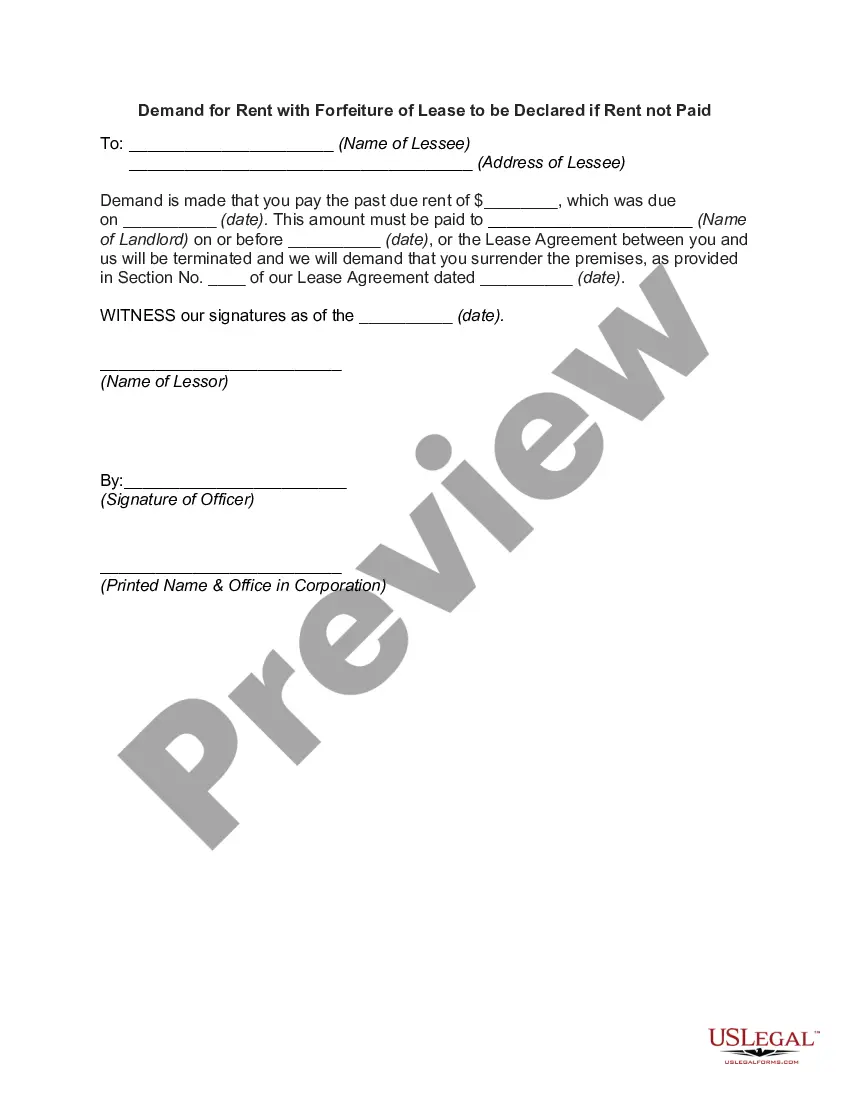
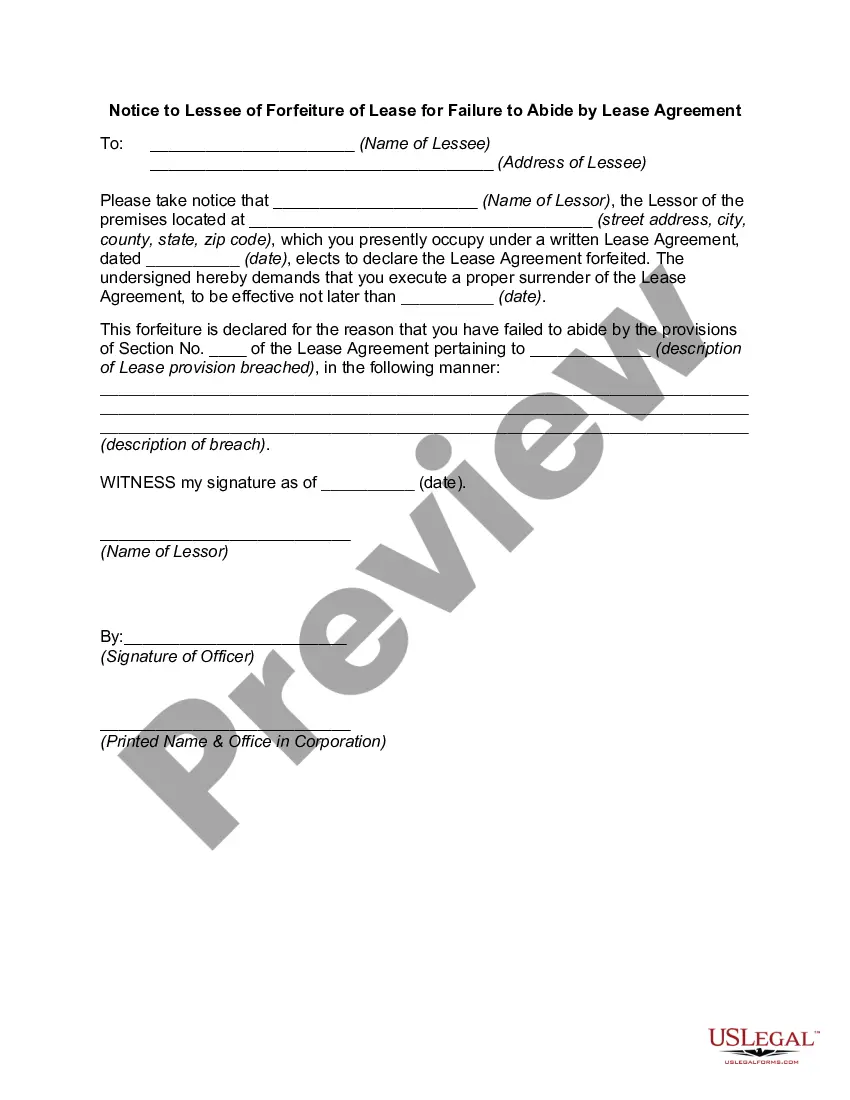
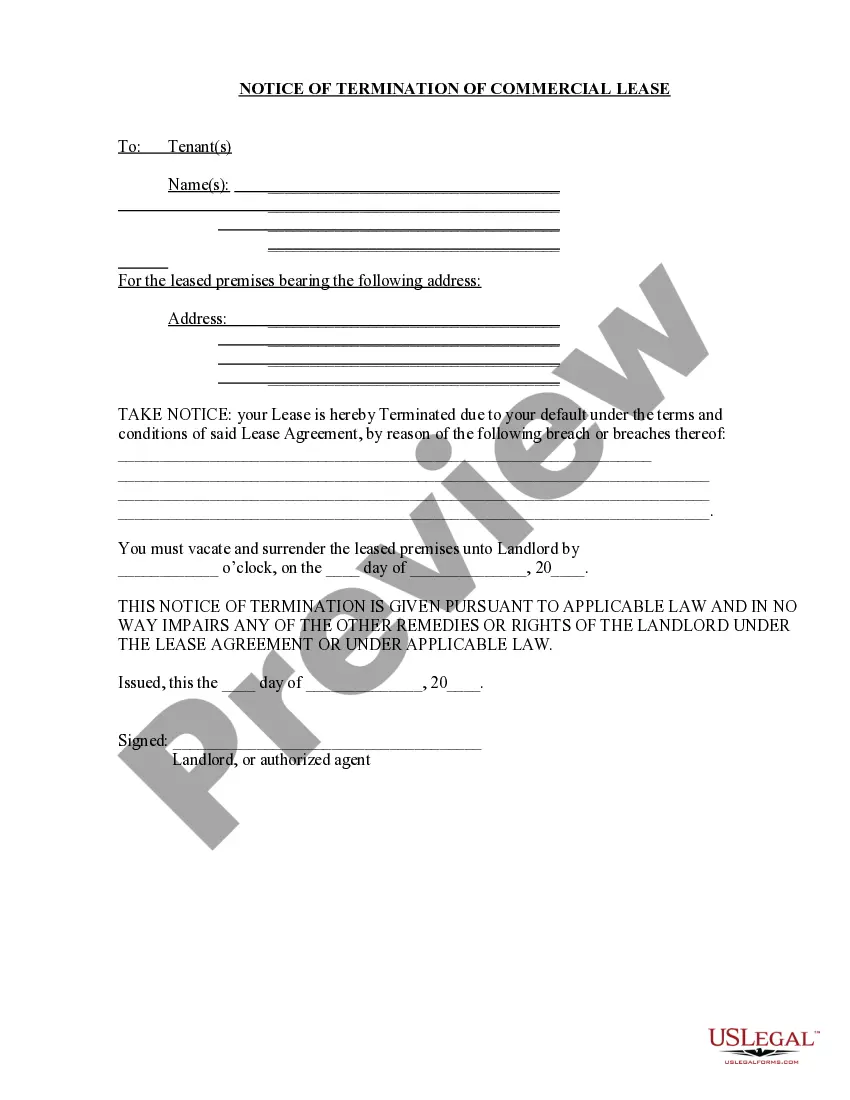
Landlords can try and forfeit a lease if a tenant is in breach of their obligations (this assumes that the lease document includes a right to forfeit).If a commercial lease contains a break clause, either or both parties to the agreement may seek to terminate the lease before its fixed period has ended.
In landlord-tenant law, default refers to the failure of a tenant to timely pay rent due.In general, the landlord is required to give the tenant notice of the default before bringing eviction proceedings or applying security deposit proceeds to the payment in default.