Maine Unconditional Waiver and Release Upon Final Payment - Individual
Overview of this form
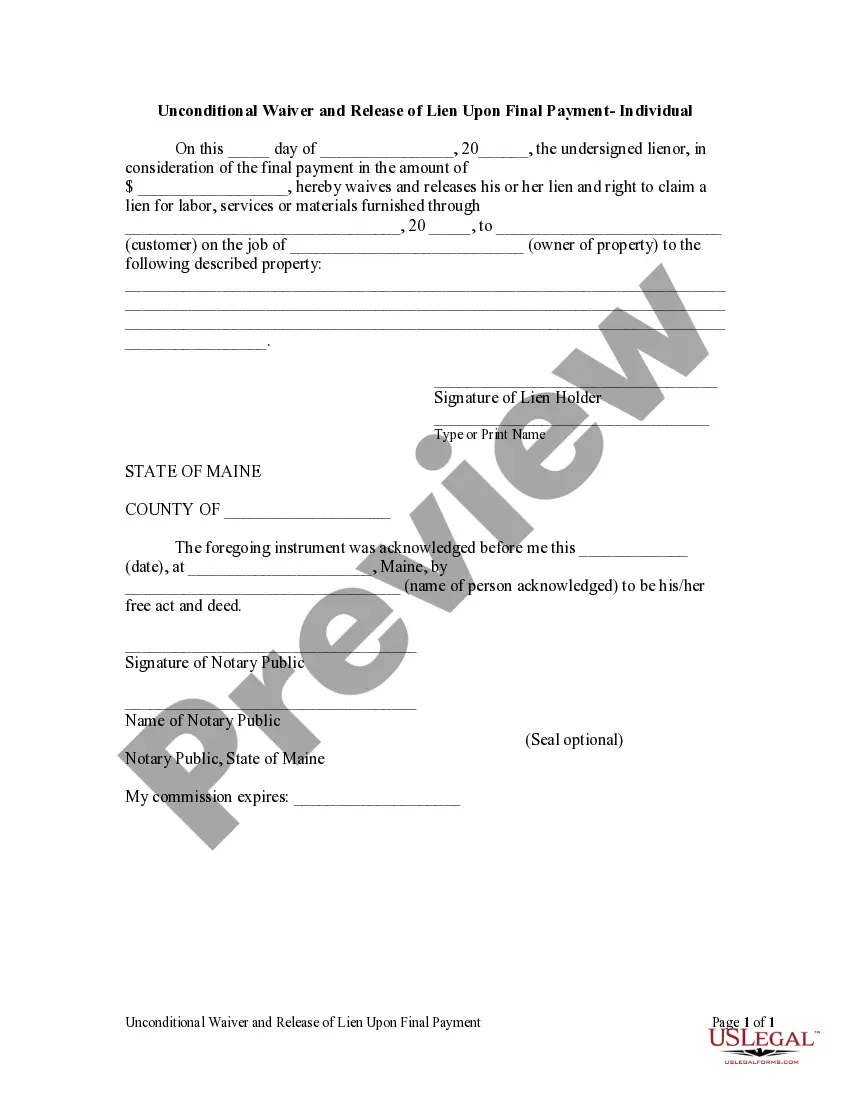
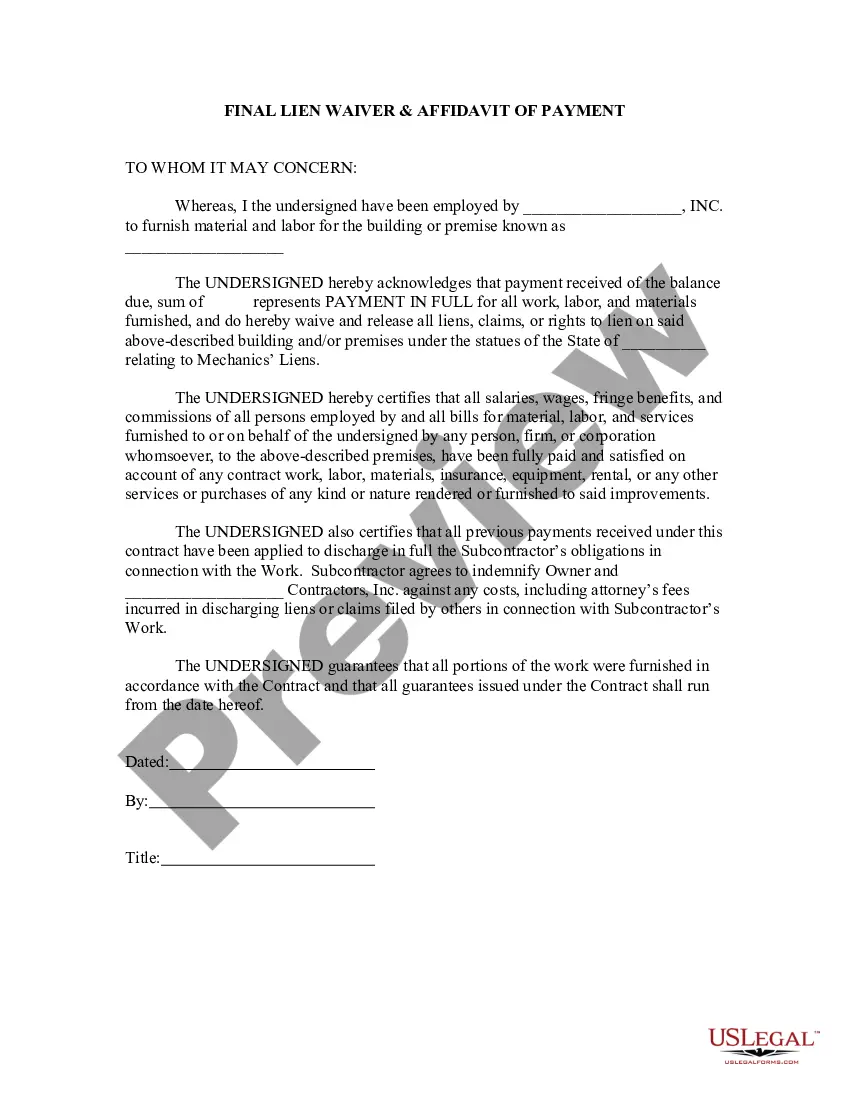
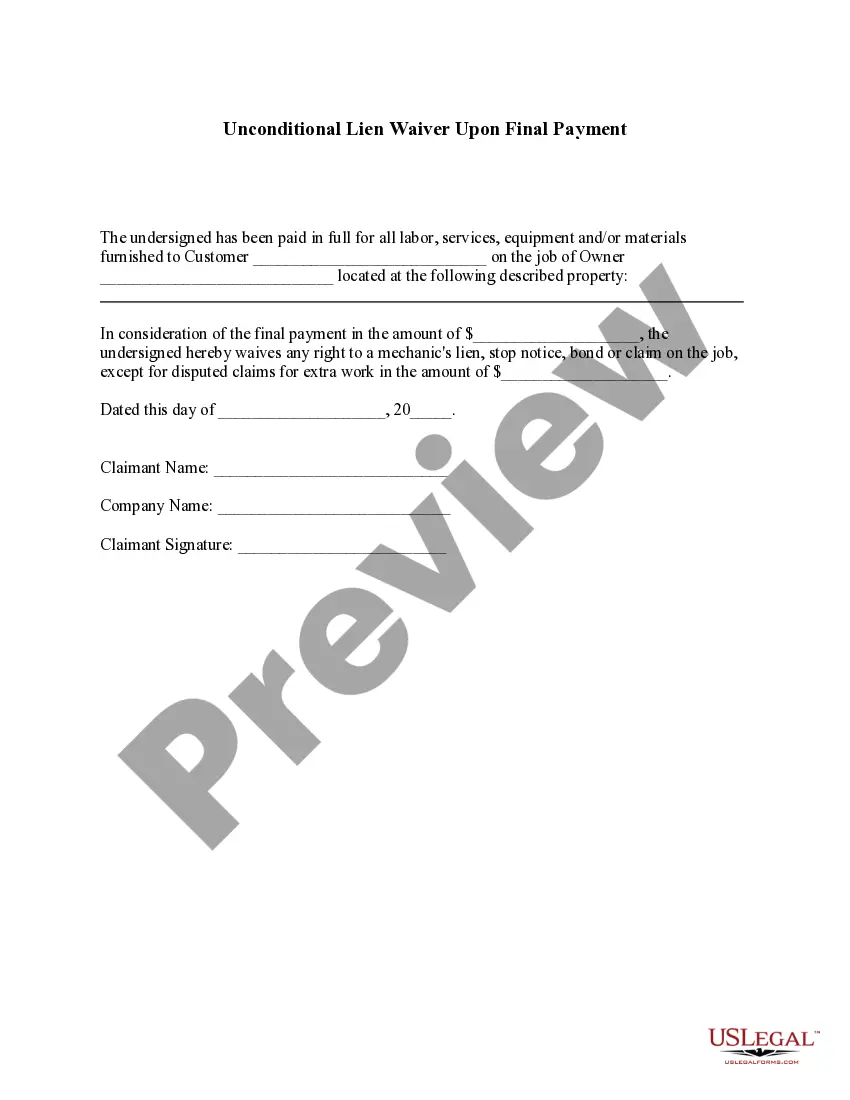
The Unconditional Waiver and Release Upon Final Payment form is a legal document that allows an individual lienor to waive their right to claim a lien after receiving final payment for labor, services, or materials provided. Unlike similar forms that may require additional conditions, this form constitutes an unconditional release, ensuring the lienor cannot pursue claims regarding the work once payment is finalized.
Key parts of this document
- Date of the waiver
- Amount of final payment
- Description of the property and the work completed
- Signature of the lien holder
- Notary acknowledgment section
Common use cases
This form should be used when a contractor, supplier, or service provider has completed their work on a project and has received the final payment. It is designed to confirm that the lienor has no outstanding claims against the property related to the work provided up until a specified date. This is particularly important in construction projects, where lien rights can arise if payments are disputed.
Who needs this form
This form is intended for:
- Individual contractors or service providers who have provided labor or materials
- Subsidiary contractors seeking to release their lien claims
- Property owners or customers who wish to ensure clear title without outstanding liens
Instructions for completing this form
- Fill in the date of signing at the top of the form.
- Enter the final payment amount received.
- Specify the last date of services or materials provided.
- Identify and specify the customer and the property owner.
- Provide a description of the property related to the work done.
- Sign the form as the lien holder and ensure notarization if required.
Does this document require notarization?
Yes, this form must be notarized to be legally valid. The signature of the lien holder must be acknowledged in the presence of a notary public, ensuring that the release is enforceable. US Legal Forms supports integrated online notarization, offering secure video calls with notaries available 24/7.
Get your form ready online
Our built-in tools help you complete, sign, share, and store your documents in one place.
Make edits, fill in missing information, and update formatting in US Legal Forms—just like you would in MS Word.
Download a copy, print it, send it by email, or mail it via USPS—whatever works best for your next step.
Sign and collect signatures with our SignNow integration. Send to multiple recipients, set reminders, and more. Go Premium to unlock E-Sign.
If this form requires notarization, complete it online through a secure video call—no need to meet a notary in person or wait for an appointment.
We protect your documents and personal data by following strict security and privacy standards.

Make edits, fill in missing information, and update formatting in US Legal Forms—just like you would in MS Word.

Download a copy, print it, send it by email, or mail it via USPS—whatever works best for your next step.

Sign and collect signatures with our SignNow integration. Send to multiple recipients, set reminders, and more. Go Premium to unlock E-Sign.

If this form requires notarization, complete it online through a secure video call—no need to meet a notary in person or wait for an appointment.

We protect your documents and personal data by following strict security and privacy standards.
Common mistakes
- Failing to include the correct final payment amount.
- Not updating the date to reflect the actual date of signing.
- Omitting necessary property descriptions which may invalidate the release.
Why use this form online
- Immediate access to the form for download and completion.
- Edit and customize the template to fit your specific needs.
- Convenient access from anywhere without the need for printing or physical delivery.
- Secure and reliable, with ownership maintained after download.
Key takeaways
- This form allows for an unconditional waiver of lien rights upon final payment.
- It is important for contractors and suppliers to protect themselves and property owners from potential claims.
- Always ensure notarization for the document to be legally binding in your jurisdiction.
Looking for another form?


Form popularity
FAQ
An unconditional mechanic's lien waiver states the contractor has in fact been paid in full for the stated work. Write the name of the maker of the check in the space provided on the mechanic's lien release form. Fill in the amount of the payment. Write the name of contractor the payment is being made to.
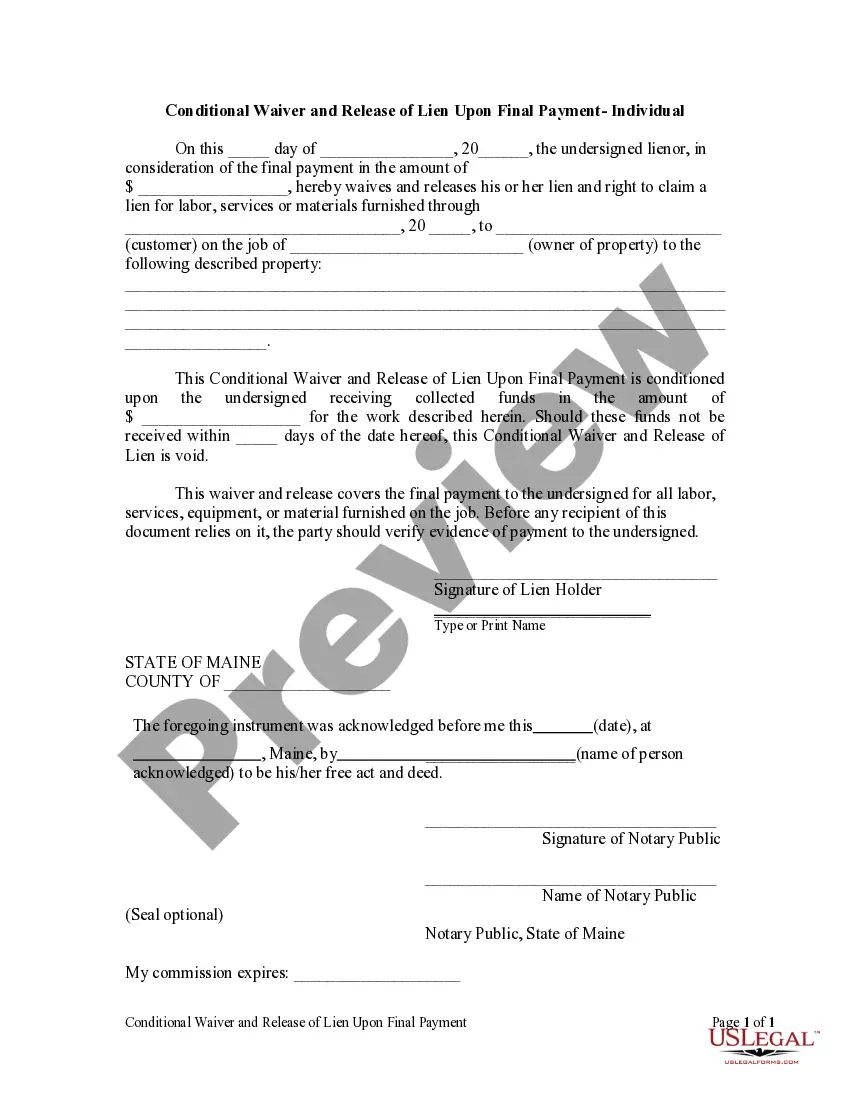
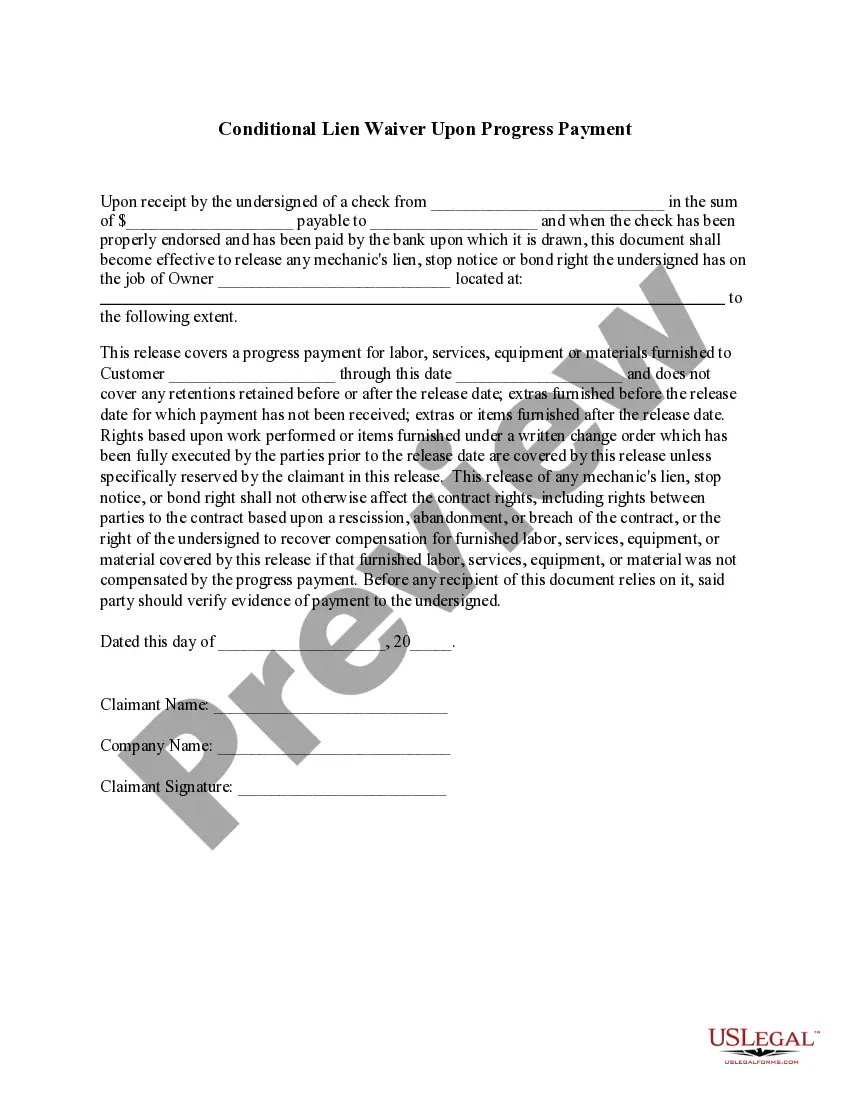
An "Unconditional Waiver and Release Upon Final Payment" extinguishes all claimant rights upon receipt of the payment. A "Conditional Waiver and Release Upon Final Payment" extinguishes all claimant rights upon receipt of the final payment with certain provisions.
Signing an unconditional lien waiver is enforceable even before you get paid. This means that if you sign an unconditional lien waiver before receiving the money and the property owner ends up not paying up, you have already waived your lien rights because you signed the unconditional lien waiver.
Name of Claimant. This is the name the party to be paid, and the party who will be signing the lien waiver document. Name of Customer. Job Location. Owner. Exceptions. Claimant's Signature. Claimant's Title. Date of Signature.
An unconditional release means that there are no restrictions on the release of the lien. This type of lien release is often used in final project documents to confirm that the project is complete, payment has occurred, and you release all future rights to file liens on the project.
A "Conditional Waiver and Release Upon Progress Payment" discharges all claimant rights through a specific date, provided the payments have actually been received and processed. An "Unconditional Waiver and Release Upon Final Payment" extinguishes all claimant rights upon receipt of the payment.