Physical Harassment At Work
Description
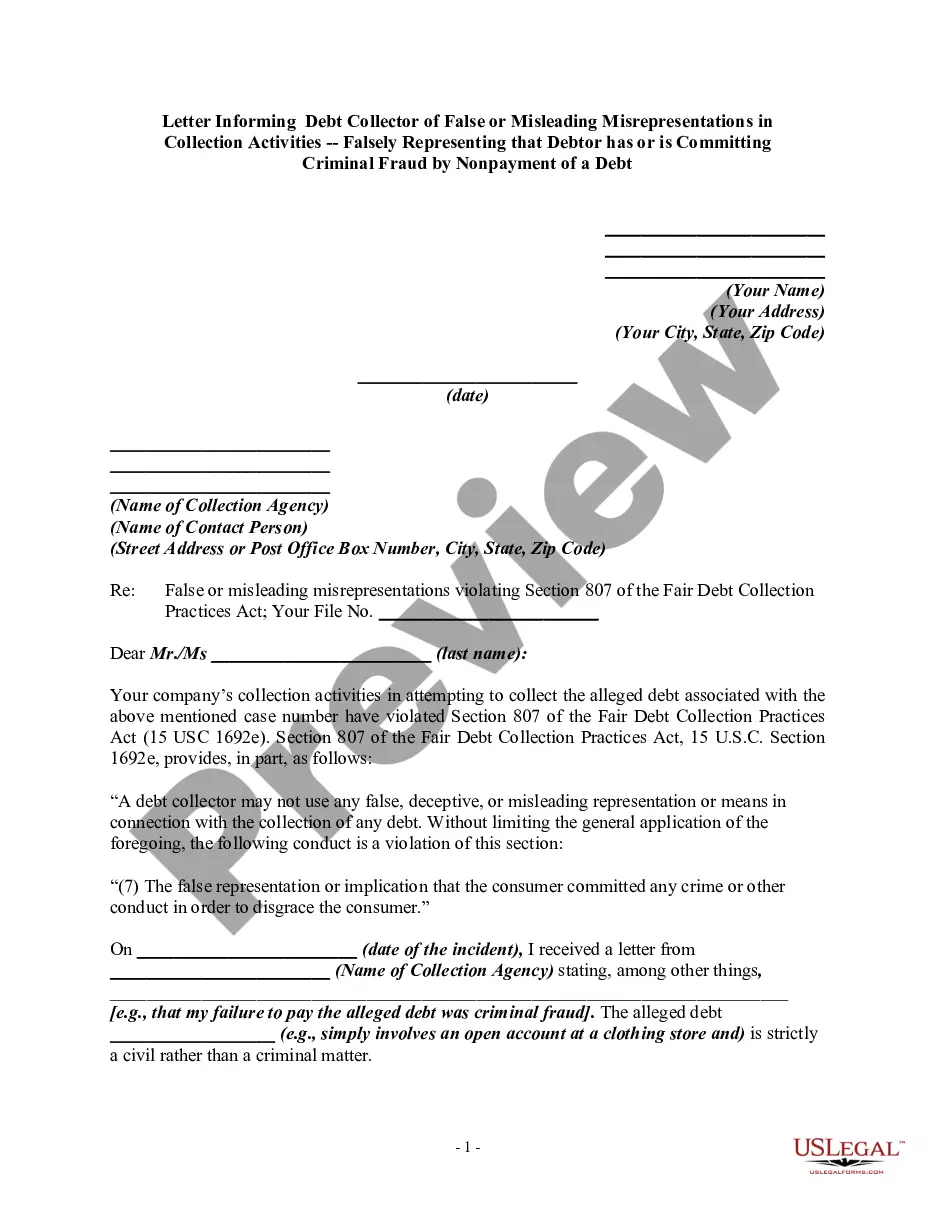


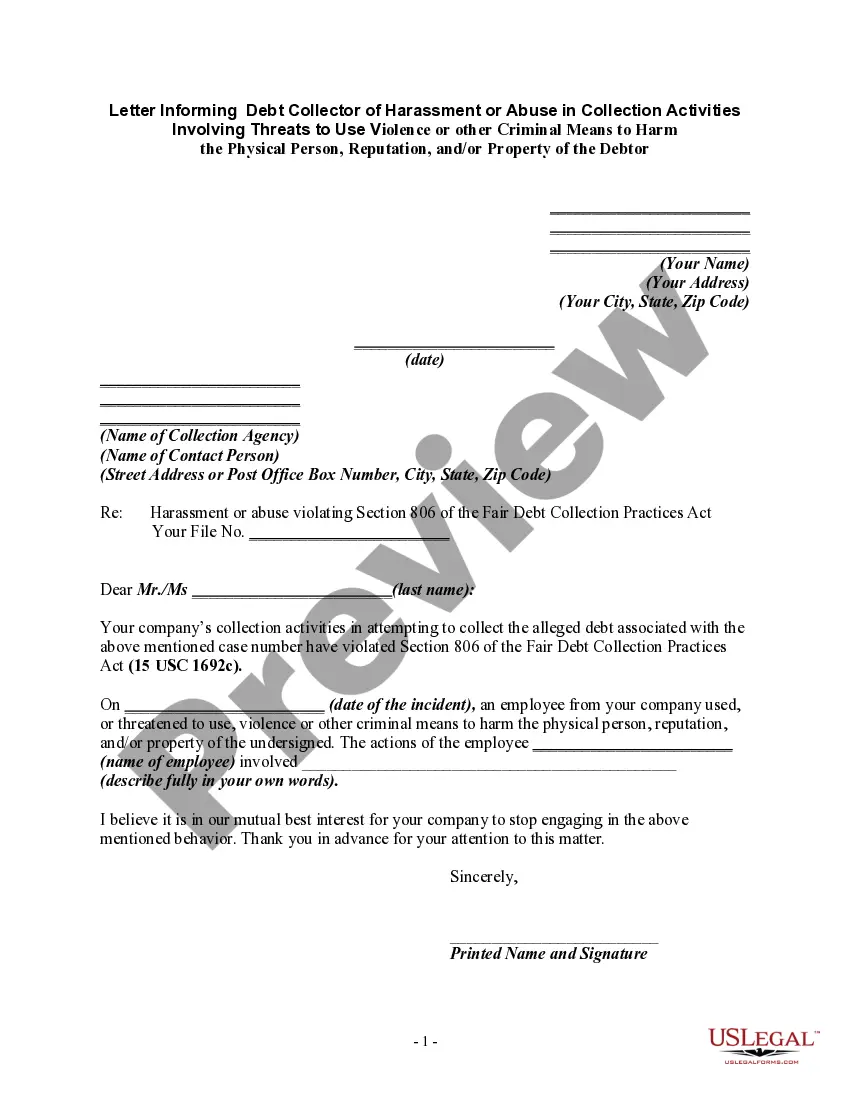
How to fill out Letter Informing Debt Collector Of Harassment Or Abuse In Collection Activities Involving Threats To Use Violence Or Other Criminal Means To Harm The Physical Person, Reputation, And/or Property Of The Debtor?
Handling legal documents and procedures can be a lengthy addition to your entire day.
Physical Harassment At Work and similar forms typically require you to locate them and figure out how to complete them correctly.
Consequently, whether you are managing financial, legal, or personal issues, having a comprehensive and functional online catalog of forms readily available will greatly assist.
US Legal Forms is the premier online platform for legal templates, featuring over 85,000 state-specific forms and a variety of resources to help you complete your documents effortlessly.
Is this your first time using US Legal Forms? Register and create a free account in a few minutes and you will gain access to the form catalog and Physical Harassment At Work. Then, follow the steps outlined below to complete your form: Ensure you have located the right form by utilizing the Review feature and reviewing the form details. Choose Buy Now as soon as you are ready, and select the subscription plan that suits you best. Click Download then fill out, eSign, and print the form. US Legal Forms has twenty-five years of experience assisting clients in managing their legal documents. Obtain the form you need today and streamline any process effortlessly.
- Explore the collection of relevant documents accessible with just one click.
- US Legal Forms provides you with state- and county-specific forms available anytime for download.
- Protect your document management processes using a top-notch service that allows you to create any form within minutes without extra or hidden fees.
- Simply Log In to your account, find Physical Harassment At Work and obtain it instantly from the My documents section.
- You can also access previously saved forms.
Form popularity
FAQ
An example of physical harassment at work might be someone repeatedly invading your personal space despite your discomfort. This could also include unwanted touching or aggressive gestures that threaten your sense of safety. Recognizing these examples is vital for taking appropriate action. With US Legal Forms, you can find the necessary legal documentation to address these situations effectively.
Harassment encompasses a range of behaviors that can create a toxic workplace. This includes verbal abuse, threats, and any physical actions that make someone feel uncomfortable. It is essential to recognize these behaviors to ensure a safe work environment. US Legal Forms provides templates and guidance for documenting and addressing such issues.
Physical harassment at work includes any unwanted physical contact that creates an intimidating or hostile environment. This can involve hitting, pushing, or even inappropriate touching. Understanding what constitutes physical harassment is crucial for protecting your rights. You can consult resources like US Legal Forms to learn more about your options.
To report physical harassment at work, gather evidence that supports your claim. This may include emails, text messages, or written notes documenting incidents. Witness statements can also strengthen your case, as they provide additional perspectives on the events. Using a platform like US Legal Forms can help you organize your documentation effectively.
Instances of physical harassment include: giving someone a massage around the neck or shoulders, touching another person's clothing, hair, or body, hugging, kissing, patting, touching or rubbing oneself sexually against another person.
Specifics of what to include in a harassment letter to HR The name of the harasser and their job title. Your relationship with the harasser. Witness statements and the witnesses' job titles. The specific incident or incidents. The dates of the harassment. The location or locations where the harassment took place.
Examples of physical harassment include Unwanted, uninvited or inappropriate touching, patting, hugging or other physical contact (e.g. massaging a person without invitation or deliberately brushing up against them); Punching, hitting, pushing, slapping, kicking, or biting another person.
Preventing and Addressing Physical Harassment Employees who feel they have been subjected to physical harassment have several options for seeking help and acting. They can report the behaviour to their employer, file a complaint with the Equal Employment Opportunity Commission (EEOC), or consult with an attorney.
Preventing and Addressing Physical Harassment Employees who feel they have been subjected to physical harassment have several options for seeking help and acting. They can report the behaviour to their employer, file a complaint with the Equal Employment Opportunity Commission (EEOC), or consult with an attorney.