Option Pool
Description
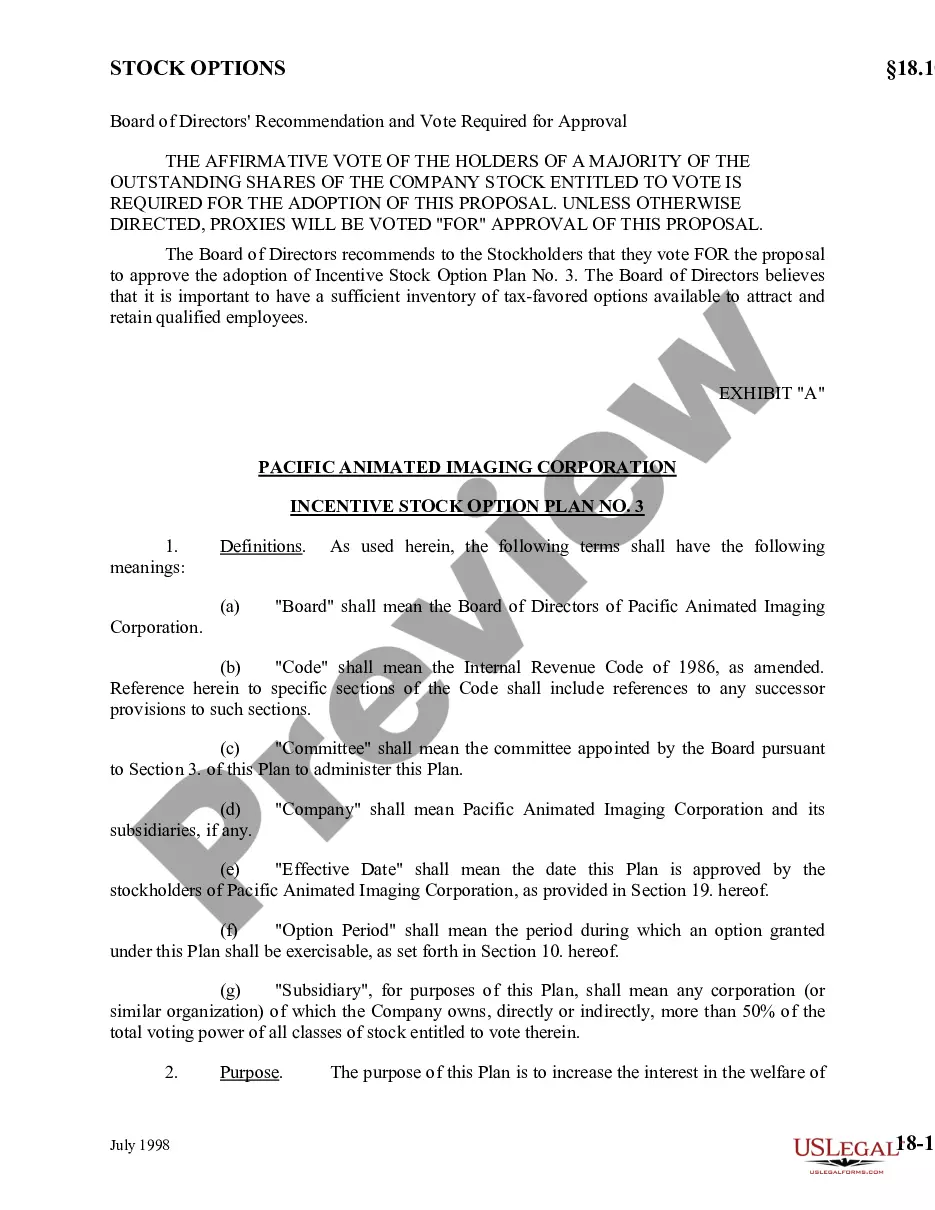
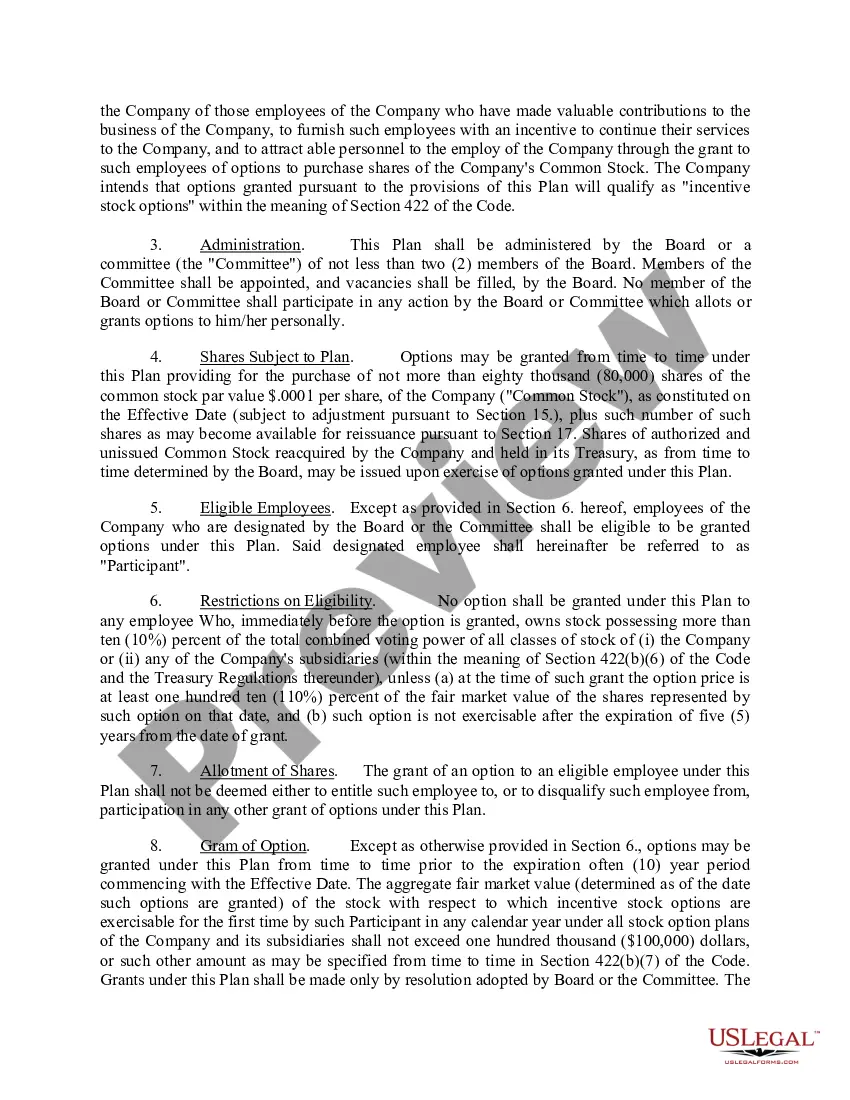
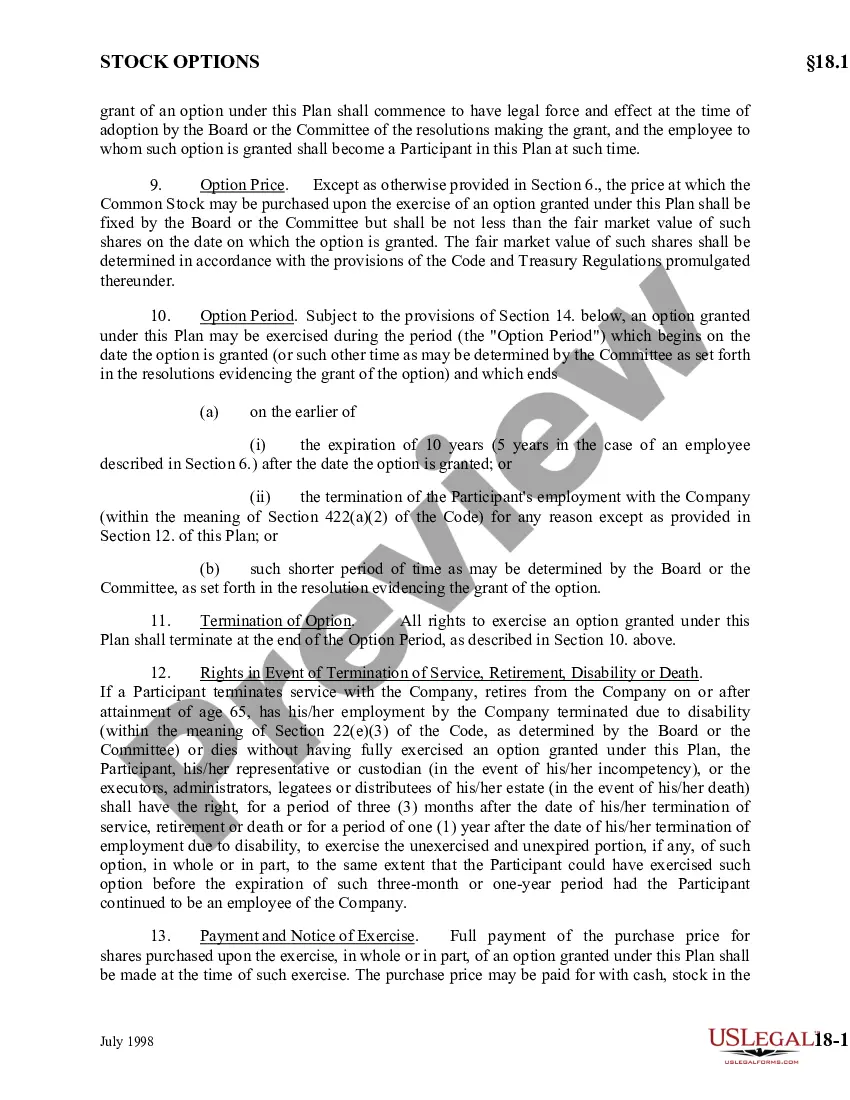
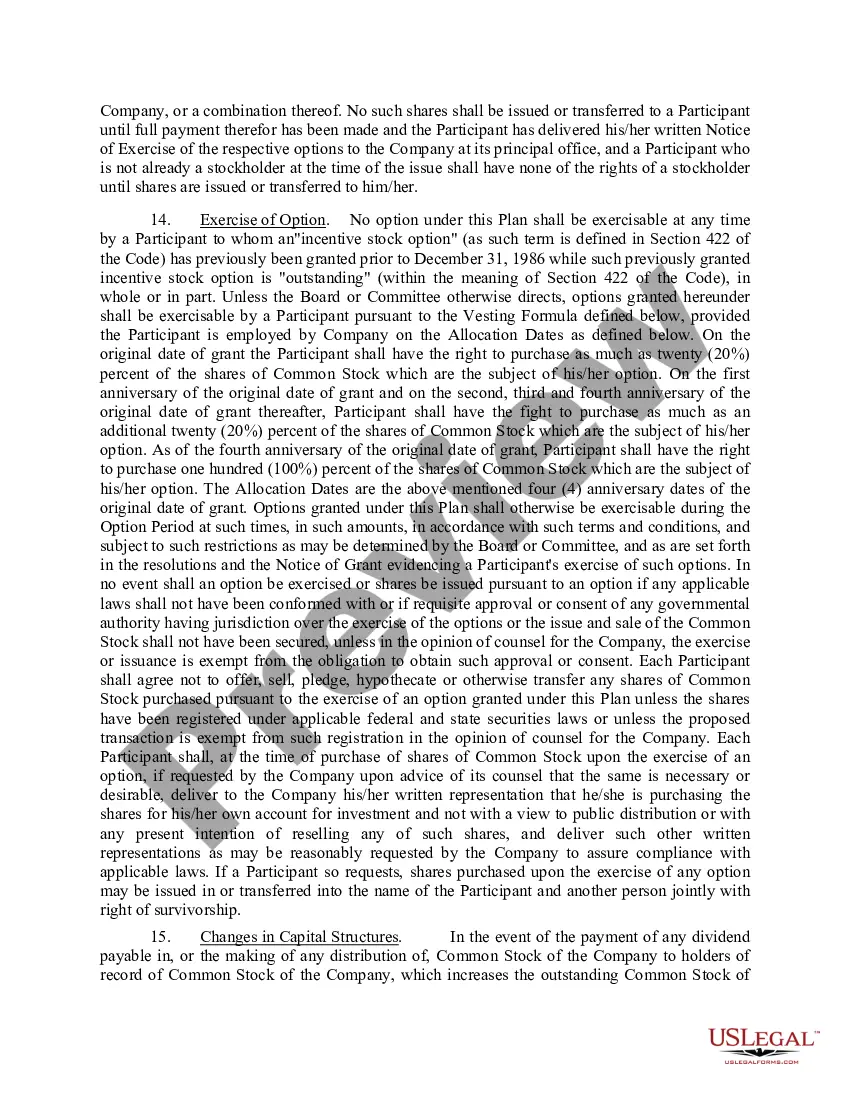
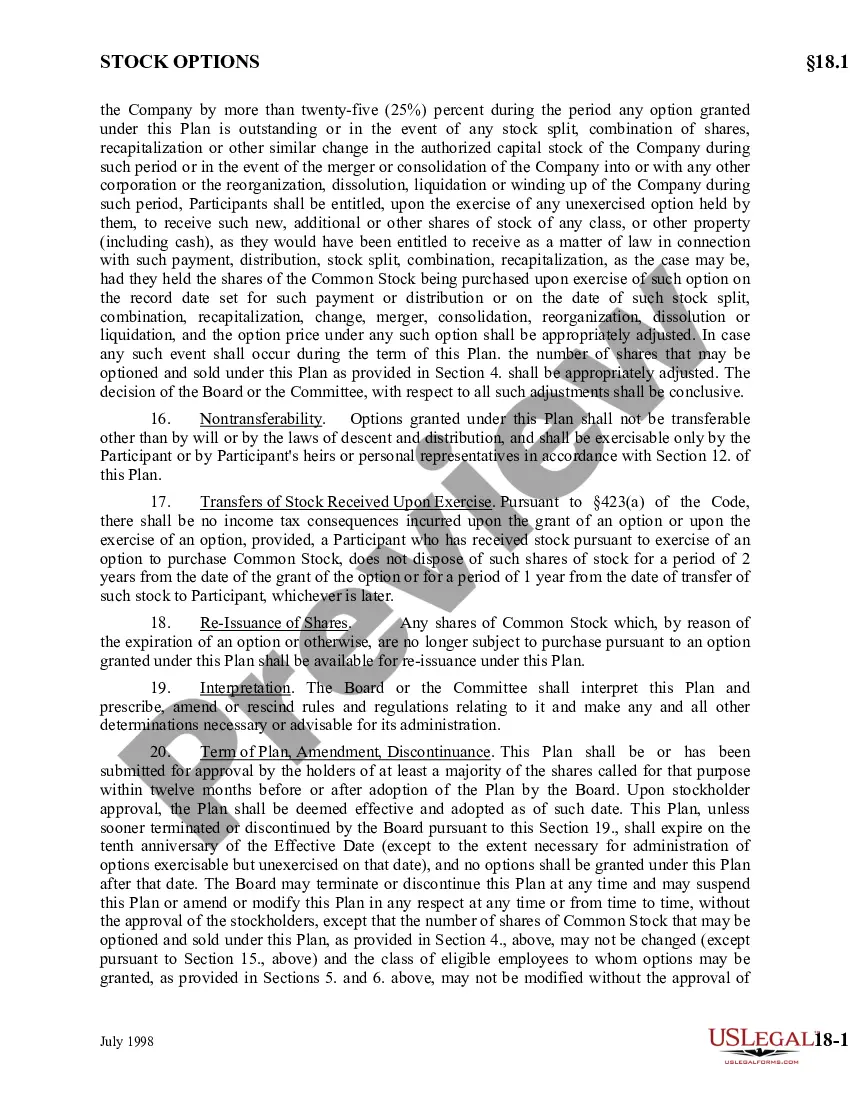
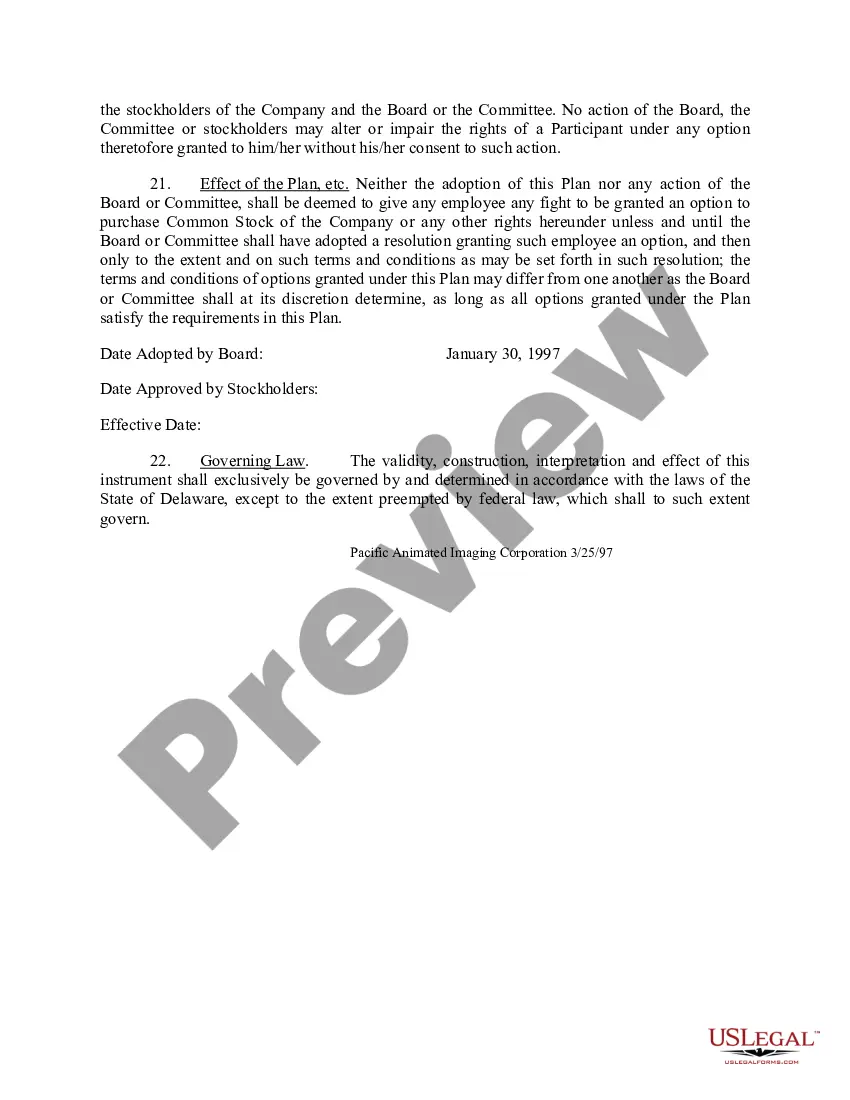
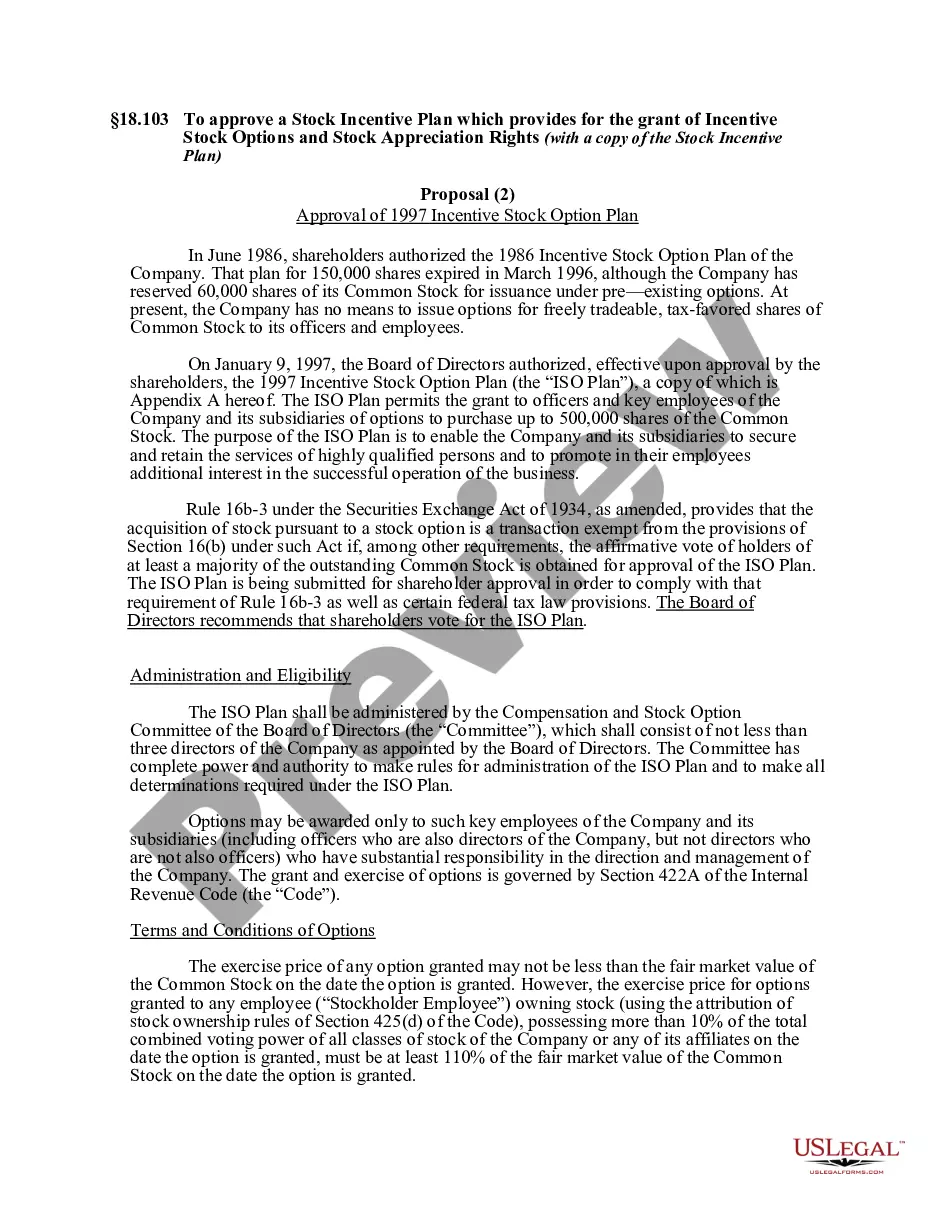
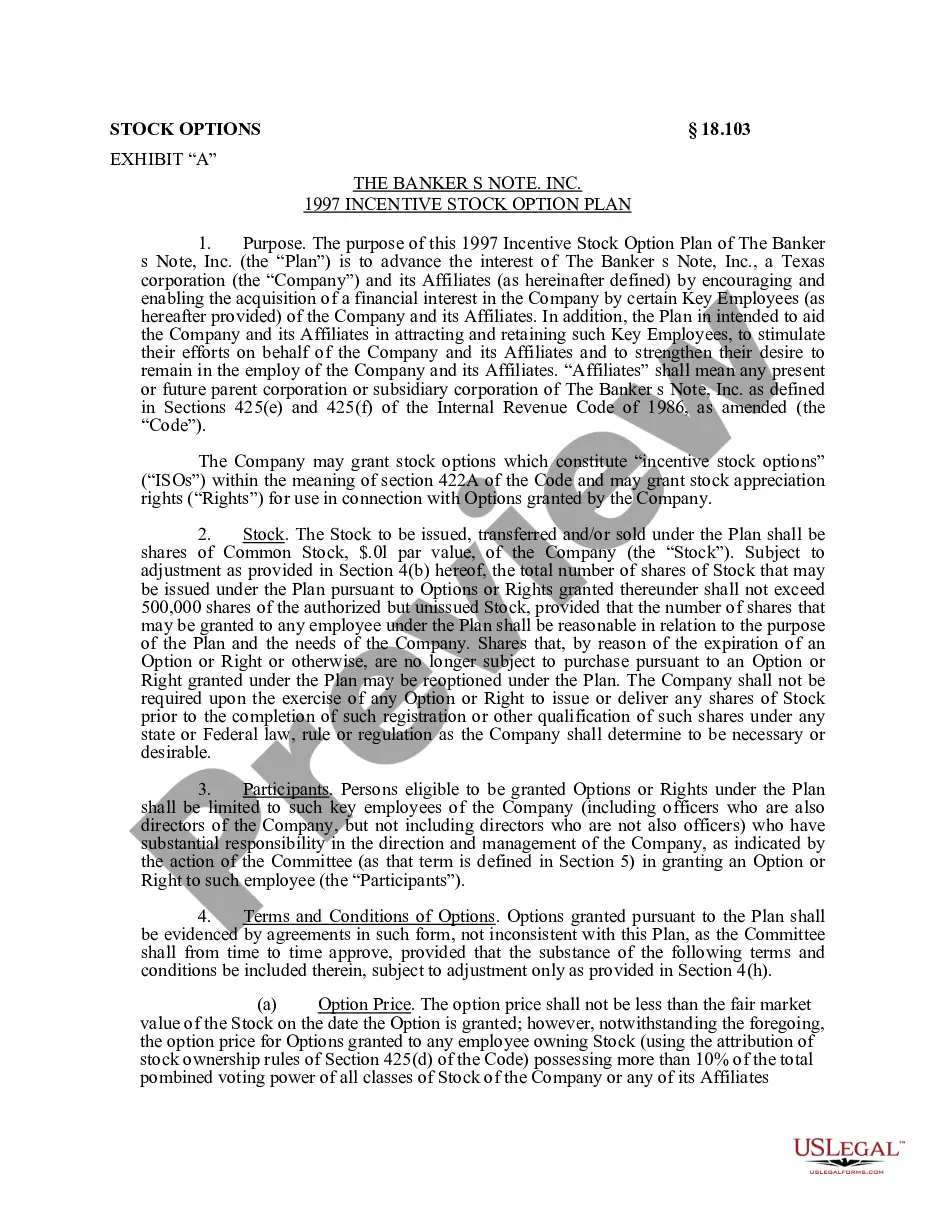




How to fill out Stock Option Plan To Approve Incentive Stock Option Plan Of Pacific Animated Imaging Corp.?
- Log into your US Legal Forms account if you are a returning user. Verify that your subscription is active; renew if necessary.
- If you're a new user, start by previewing the form descriptions to confirm they match your requirements.
- Utilize the search feature above to find any additional forms that align with your local jurisdiction and needs.
- After selecting the appropriate document, proceed to purchase by clicking the 'Buy Now' button and choosing a suitable subscription plan, ensuring you create an account for access.
- Complete the purchase using your credit card or PayPal, and then download the form to your device.
- Access your saved forms anytime via the 'My Forms' menu in your profile for easy reference.
US Legal Forms simplifies the process of acquiring essential legal documents, with a vast library of over 85,000 editable forms at your disposal.
Take the next step in managing your option pool effectively—explore US Legal Forms today and ensure your legal documents are completed accurately.
Form popularity
FAQ
Determining the size of your option pool depends on various factors, including your company’s stage, industry standards, and talent acquisition strategy. A commonly accepted benchmark for a startup is to allocate around 10% to 20% of the company’s total shares to the option pool. Finding the right size ensures you can attract and retain talent, while also keeping investors satisfied with your equity distribution.
During an acquisition, the fate of an option pool can vary depending on the terms established between the acquiring company and the target. Typically, unvested options may be canceled, while vested options can be cashed out or converted into options for the acquiring company’s stock. Understanding how an option pool is treated in an acquisition is crucial, as it affects team morale and retention post-acquisition.
In a Leveraged Buyout (LBO), an option pool refers to shares set aside for management and employees as part of the buyout agreement. This pool aligns the interests of the management team with those of the new investors by incentivizing performance through equity stakes. Having a well-defined option pool in an LBO can enhance both retention and motivation, fostering a positive environment for growth.
An Employee Stock Ownership Plan (ESOP) is a program that provides a company's workforce with an ownership interest in the form of shares. In contrast, an option pool refers to a reserve of stock options set aside for employee incentives and is often used to attract key talent. While both options can enhance employee motivation, an option pool focuses specifically on granting options rather than direct equity ownership.
The $100,000 rule pertains to how much an employee can exercise in incentive stock options (ISOs) while still receiving favorable tax treatment. Essentially, if an employee's options exceed this limit in value for any calendar year, they become subject to regular income tax rather than capital gains tax. This rule is vital for employees seeking to optimize their financial outcomes from an option pool. Understanding this can help employees and employers navigate tax implications effectively.
No, option pool shares are not immediately issued until employees exercise their options. Instead, an option pool reserves a specific number of shares for future grants to employees. This means companies retain the ability to control their share distribution until options are officially exercised. It ensures that option pools can motivate employees while preserving company share flexibility until the time is right.
Setting up an option pool requires a clear understanding of your business’s equity structure and future hiring plans. Typically, you'll start by determining the percentage of the total equity you want to allocate to the pool. After defining the size, you need to draft board resolutions and any required legal documents, which platforms like US Legal Forms can simplify. This structured approach ensures you create an effective option pool aligned with your company’s objectives.
The size of an option pool typically depends on the company's stage and growth plans. Many startups create an option pool that ranges from 10% to 20% of the total shares outstanding. It's crucial to balance the needs of attracting talent with the equity interests of existing shareholders. Using tools like those offered by US Legal Forms can guide you in determining the ideal size for your option pool.
Creating an option pool involves several steps, including determining the size of the pool and drafting the plan documents. Start by assessing the company's growth and talent acquisition needs, then set a percentage of equity to reserve. Next, involve legal experts to ensure compliance with relevant laws and regulations. By utilizing services like uslegalforms, companies can efficiently create an option pool that both satisfies investors and motivates employees.
Expanding the option pool usually requires approval from existing shareholders and sometimes involves amending the company’s charter. Typically, this is approached during new funding rounds, where founders justify the need for a larger pool to attract key talent. For companies aspiring to grow, a larger option pool can provide flexibility in hiring and rewarding employees. Utilizing a platform like uslegalforms can streamline the legal process involved in expanding the option pool.