Exempt Non Exempt Classification
Description
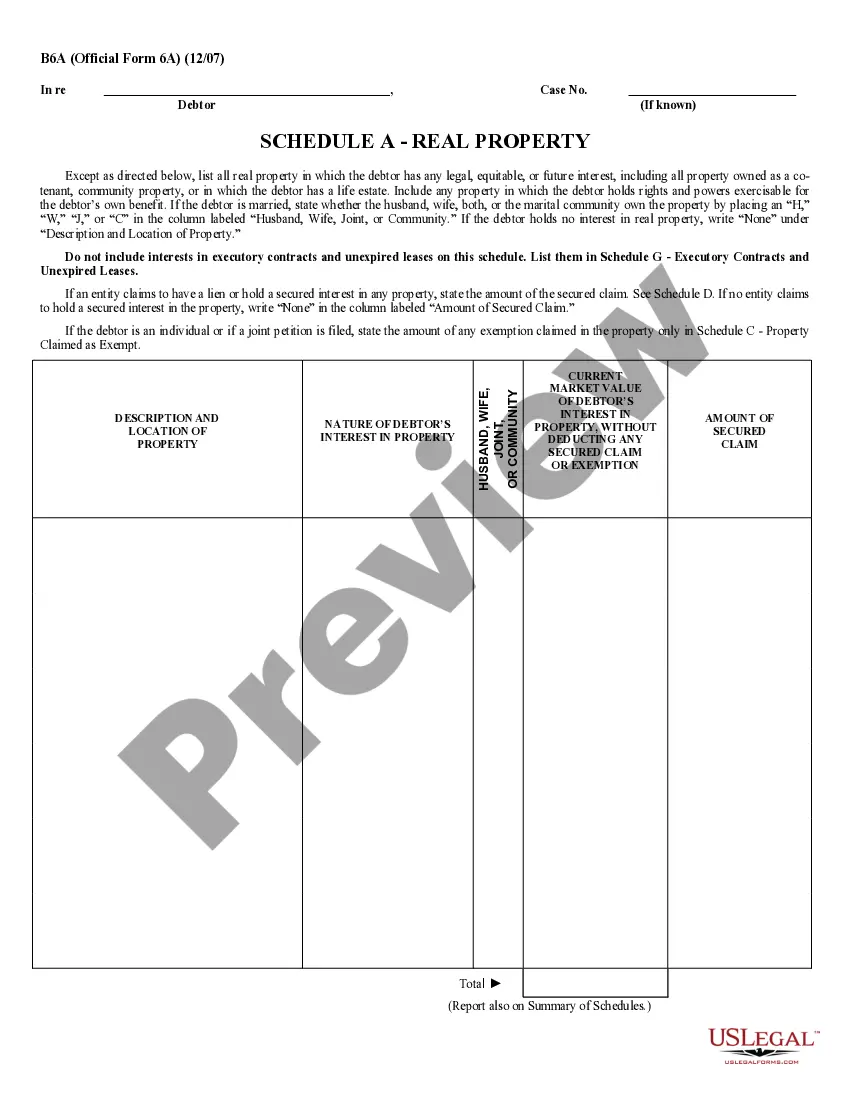
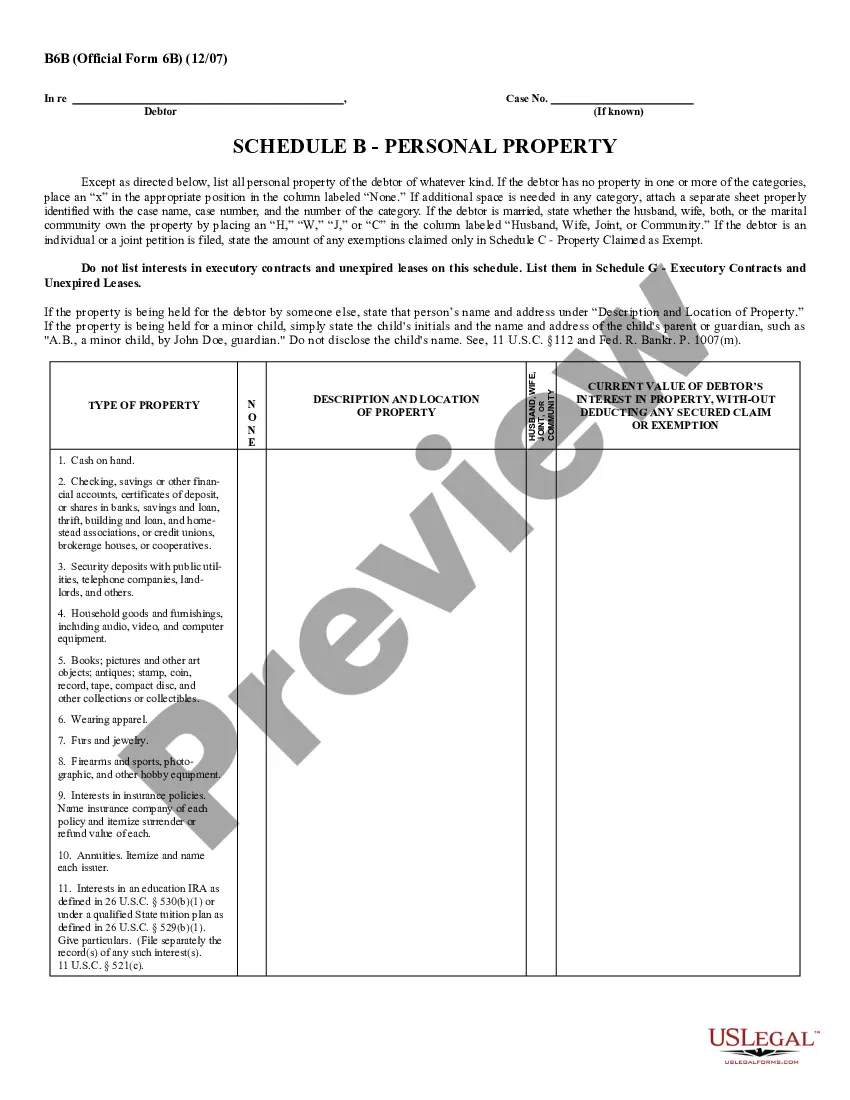


How to fill out Property Claimed As Exempt - Schedule C - Form 6C - Post 2005?
Identifying a preferred location to obtain the most up-to-date and pertinent legal documents is a significant part of navigating bureaucracy. Securing the correct legal documents necessitates precision and meticulousness, which underscores the importance of sourcing Exempt Non Exempt Classification samples exclusively from reliable providers, such as US Legal Forms. An incorrect template can squander your time and prolong your current circumstances. With US Legal Forms, you have minimal concerns. You can access and review all pertinent information concerning the document's application and significance for your situation as well as in your specific state or county.
Follow these steps to complete your Exempt Non Exempt Classification.
Once you have the form on your device, you can modify it using the editor or print it and fill it out manually. Eliminate the stress that comes with your legal paperwork. Explore the comprehensive US Legal Forms catalog where you can discover legal samples, assess their applicability to your case, and download them instantly.
- Utilize the library navigation or search feature to find your template.
- Examine the form's description to verify if it meets the standards of your state and area.
- Check the form preview, if available, to confirm that the template is indeed what you are looking for.
- Return to the search and find the suitable template if the Exempt Non Exempt Classification does not align with your needs.
- Once you are confident about the form's applicability, download it.
- If you are a registered user, click Log in to verify and access your chosen forms in My documents.
- If you haven't created an account yet, click Buy now to acquire the template.
- Select the pricing plan that fits your needs.
- Proceed with the registration to complete your order.
- Finalize your purchase by selecting a payment method (credit card or PayPal).
- Choose the file format for downloading Exempt Non Exempt Classification.
Form popularity
FAQ
To be considered an exempt employee in California, an employee will generally need to meet a strict duties test. For most exemptions, more than 50 percent of an employee's time must be spent performing exempt job duties.
Nonexempt: Employees primarily performing work that is subject to the overtime provisions of the Fair Labor Standards Act. Overtime pay is required.
Exemptions are typically applied on an individual workweek basis. Employees performing exempt and non-exempt duties in the same workweek are normally not exempt in that workweek.
Nonexempt: Employees primarily performing work that is subject to the overtime provisions of the Fair Labor Standards Act. Overtime pay is required.
Exempt employees usually hold administrative, professional, or executive positions. They're ?exempt? from the Fair Labor Standards Act overtime regulations and, therefore, not entitled to overtime pay. Nonexempt employees are typically paid hourly and perform more manual or technical duties.