Performance Evaluation
Description
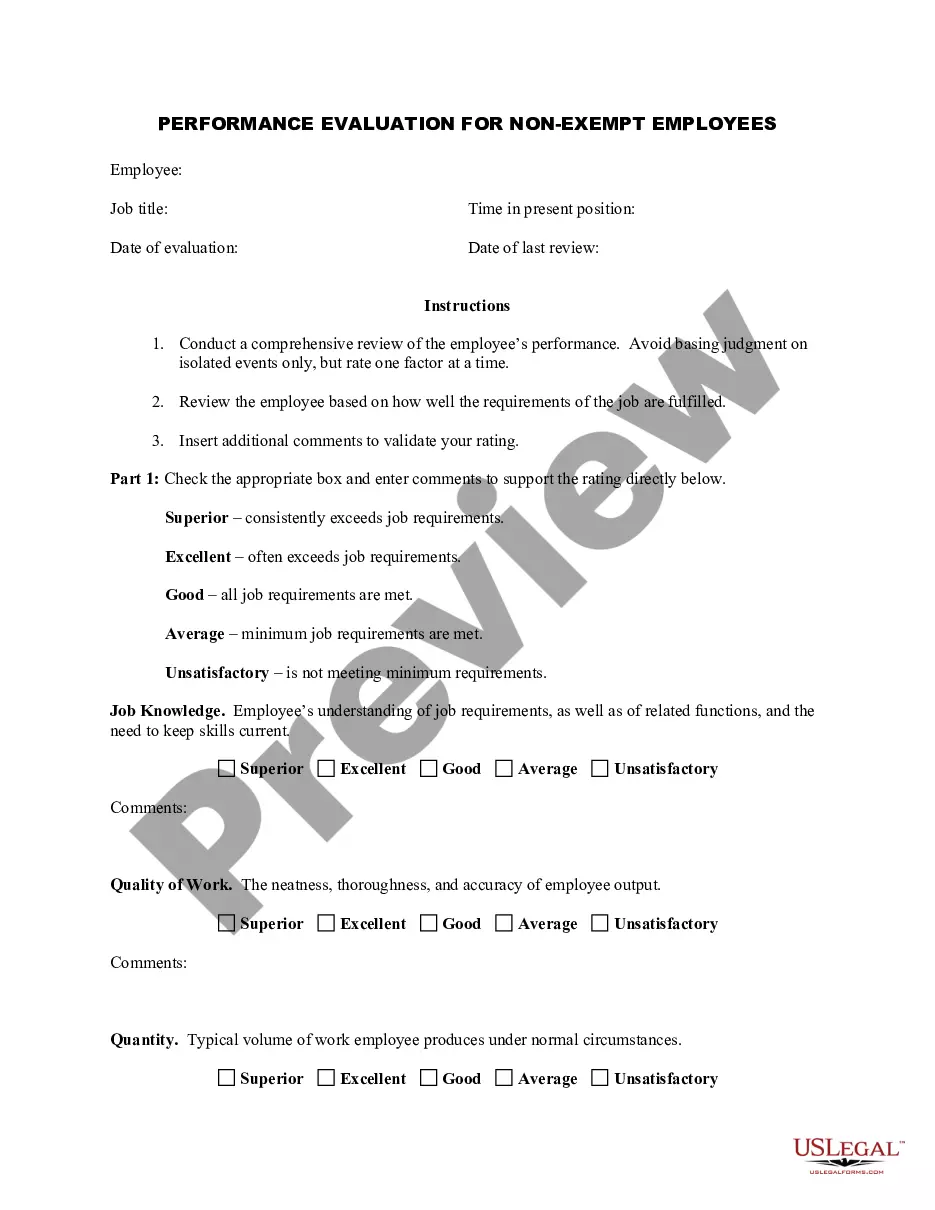
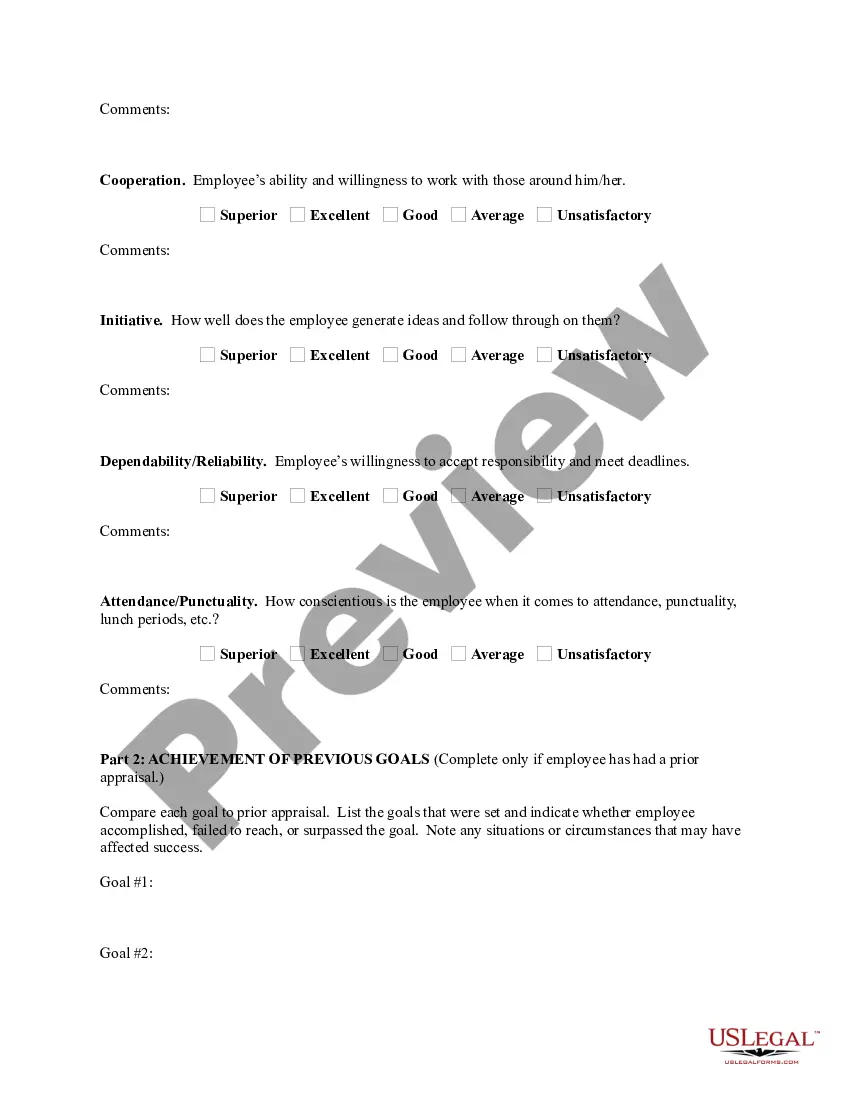
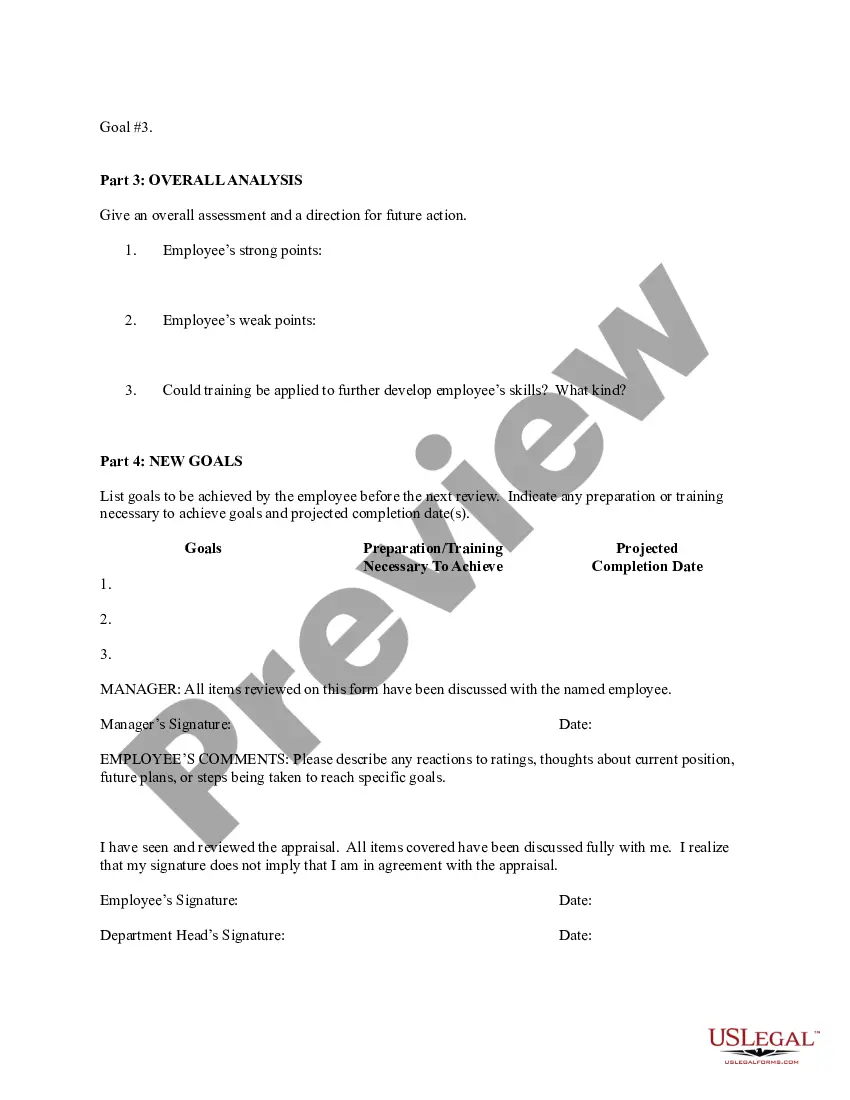
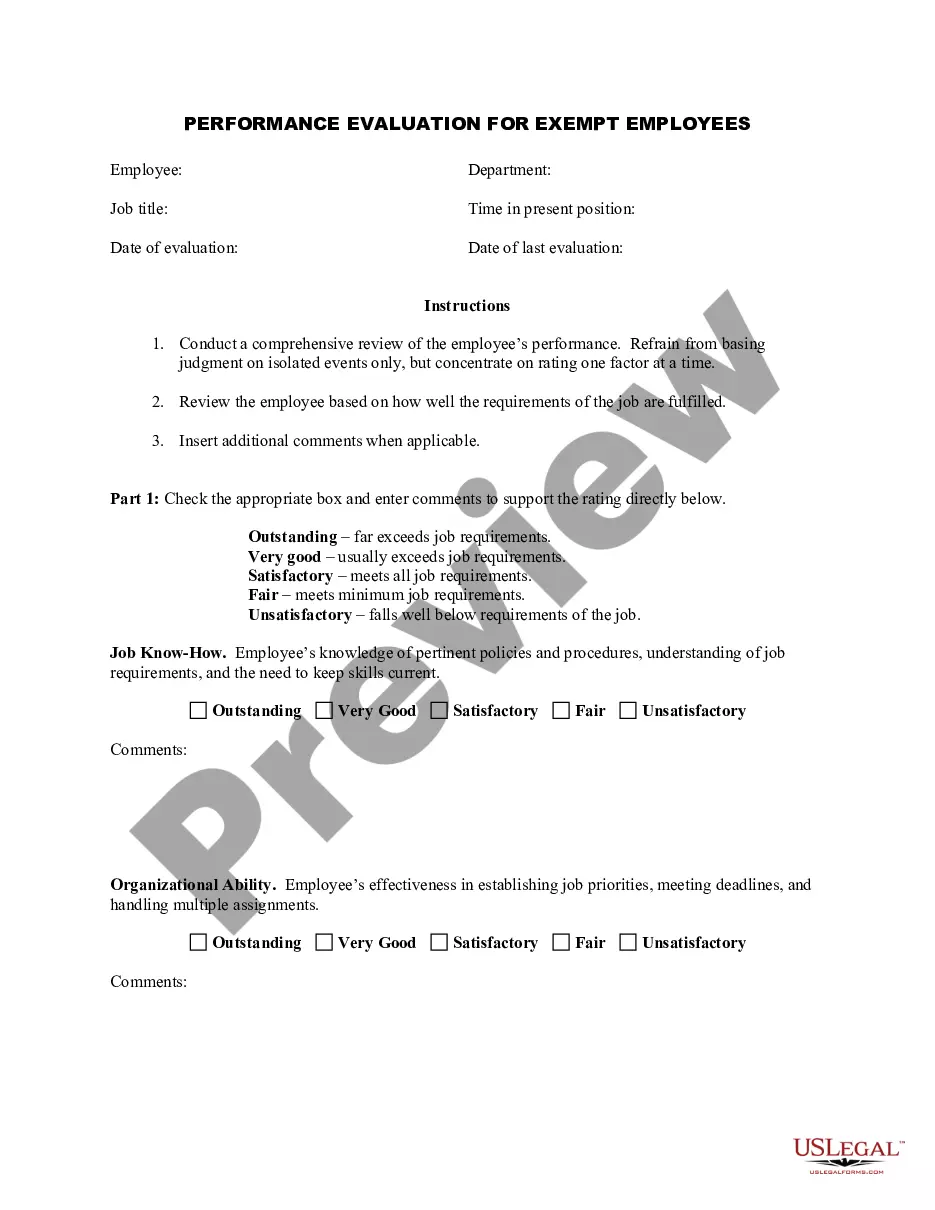
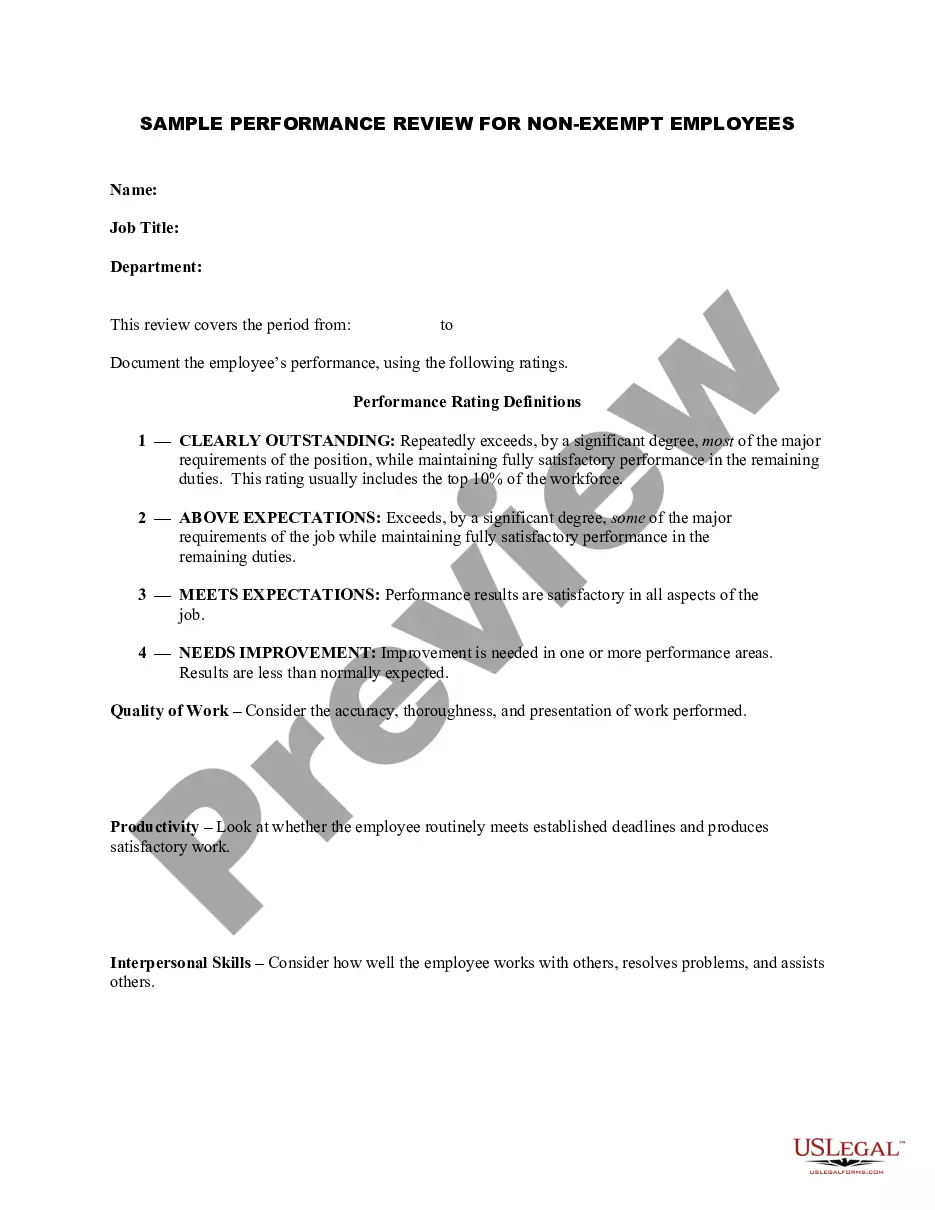



How to fill out Performance Evaluation For Nonexempt Employees?
- If you have previously signed up for US Legal Forms, log in to your account and click the Download button to retrieve your performance evaluation form. Ensure your subscription is active, and renew it if necessary.
- For first-time users, begin by previewing the form descriptions to find a performance evaluation template that matches your needs and complies with local regulations.
- If the first form you check doesn't fit your requirements, use the Search function to explore other available templates until you find the right one.
- Once you locate an appropriate form, click the Buy Now button and select your preferred subscription plan. You will need to create an account to access the library fully.
- Complete your purchase by entering your payment information via credit card or PayPal.
- After the transaction, download the form to your device and access it anytime through the My Forms section of your profile.
US Legal Forms enables efficient performance evaluations by providing users with extensive resources at their fingertips.
Start today for easy access to your legal forms and ensure your documents are accurate and professionally crafted.
Form popularity
FAQ
Performance reviews should be documented in a way that captures essential feedback and insights. Use a consistent format that includes both qualitative and quantitative data to support your evaluations. Documenting these reviews properly not only helps in tracking progress but also provides a reference for future evaluations. Consider using tools like US Legal Forms to manage and organize your performance evaluation documentation efficiently.
Writing a performance evaluation involves clear and honest communication about the employee’s job performance. First, outline their key responsibilities and assess their performance based on those criteria. Include specific examples that highlight achievements and areas where improvement is needed. Remember, a well-articulated performance evaluation can motivate employees and guide their future development.
To conduct a performance evaluation, start by setting specific goals relevant to the employee’s role. Gather feedback from various sources, including peers and supervisors, to get a well-rounded view. Next, meet with the employee to discuss their performance openly while focusing on both strengths and areas for improvement. Using a structured format can streamline this process, ensuring the performance evaluation is fair and effective.
Yes, you can request a copy of your performance review at any time. Doing so allows you to reflect on your performance and understand how to improve in the future. Make sure to approach your manager or HR department with this request for a smoother process. Your performance evaluation is a key tool for learning and development in your career.
To request a performance evaluation, start by communicating your interest clearly to your supervisor or HR representative. You might outline your reasons, such as wanting to discuss personal development or career progression. Make sure to be polite and professional in your request, as this demonstrates your commitment to your role. Engaging in this process increases the likelihood of receiving valuable feedback that informs your growth.
Yes, you can ask for your performance review at any time. Requesting this feedback indicates your willingness to learn and grow within your role. It can open the door to constructive conversations about your strengths and areas that need improvement. Make your request formally through the appropriate channels, such as your supervisor or HR department, to ensure a timely response.
The best way to evaluate performance involves setting clear expectations and criteria early on. Additionally, regular check-ins and continuous feedback can provide ongoing insights into performance. Evaluating performance should be a collaborative process, allowing for meaningful discussions between employees and supervisors. Utilizing structured tools can enhance the process and ensure more accurate assessments.
Absolutely, you are allowed to see your performance review. Most organizations recognize the importance of providing employees with access to this information. Performance evaluations are designed to facilitate communication between you and management. If you have not received your review, consider discussing it with your supervisor or HR.
Yes, you can request a copy of your performance review. Accessing your performance evaluation is crucial for understanding feedback on your work. It provides a documented reflection of your performance, helping you track your progress over time. If your organization follows specific procedures, be sure to check with your HR department regarding their policy on sharing performance reviews.
To carry out a performance evaluation, start by reviewing set goals and objectives. Next, gather input from various sources, including self-assessments and feedback from supervisors or peers. Then, analyze the data collected to provide a comprehensive evaluation. A well-structured performance evaluation helps ensure fairness and objectivity while fostering employee growth.