Warning Letter For Insubordination
Description
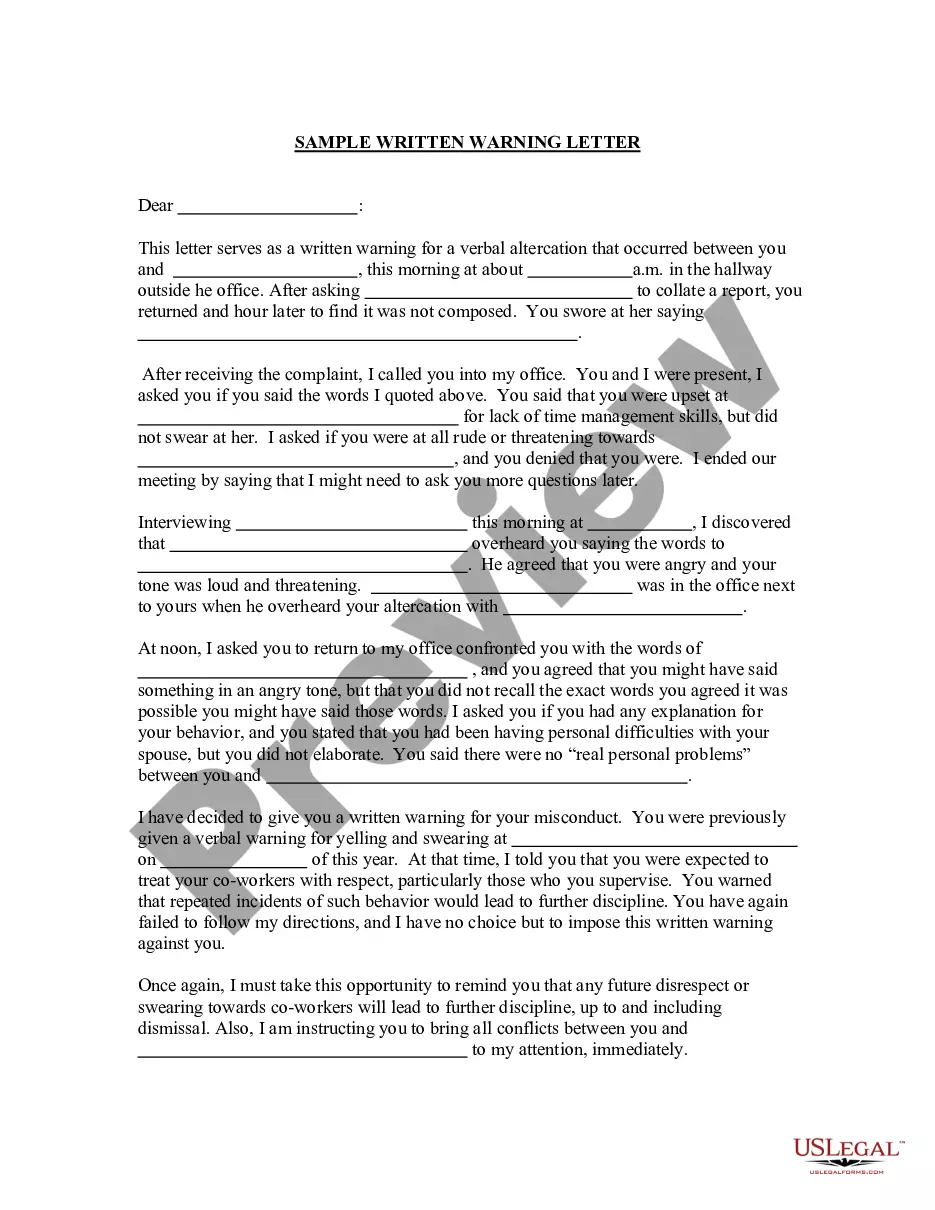
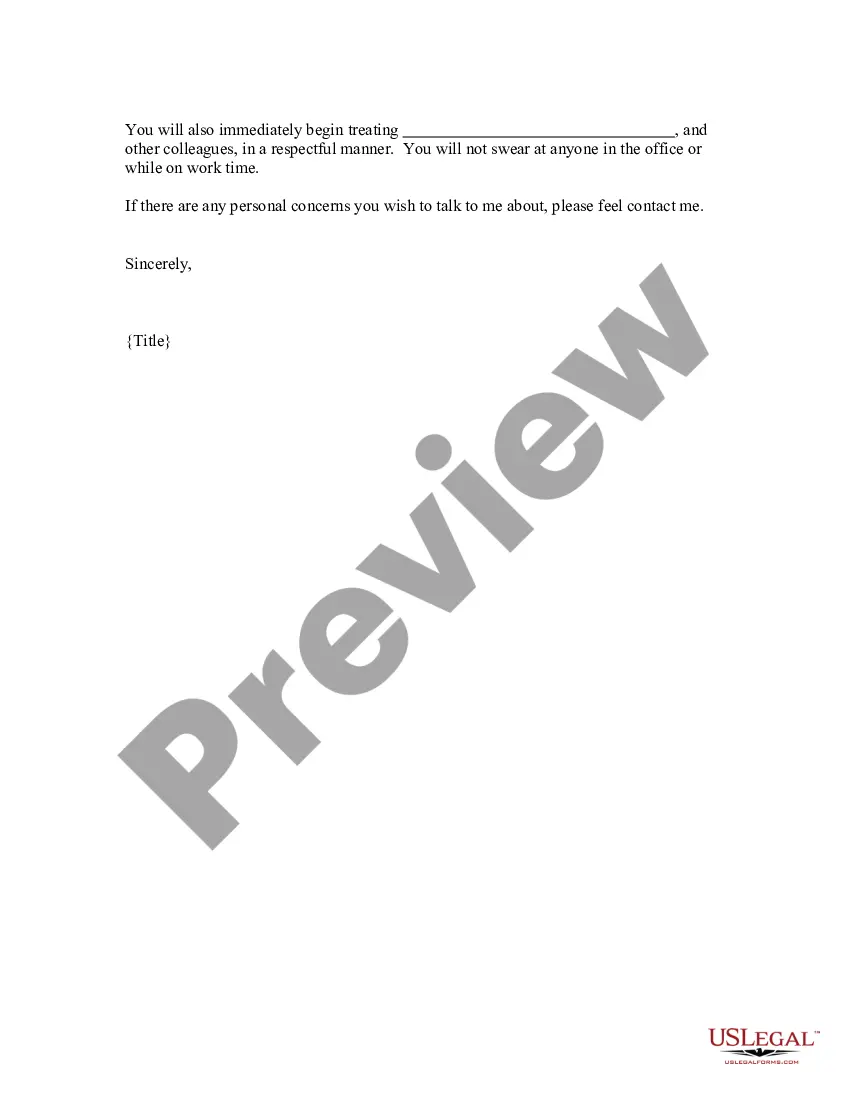
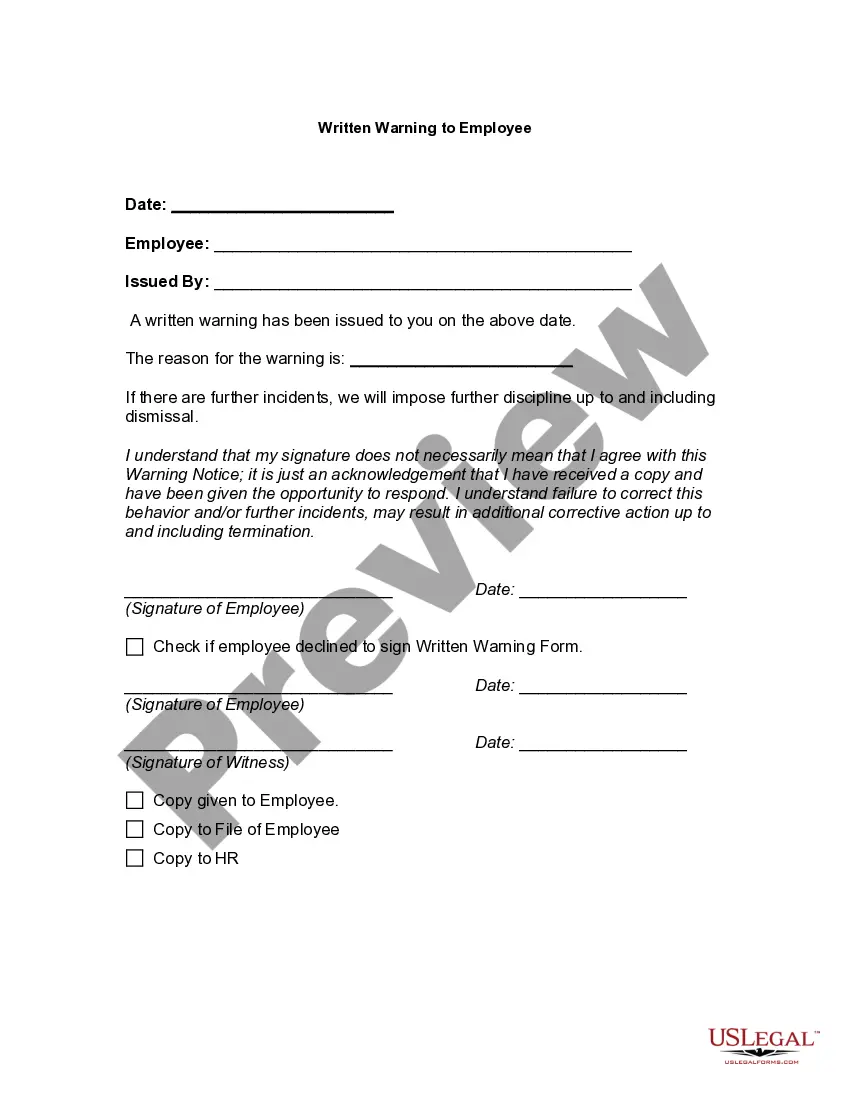
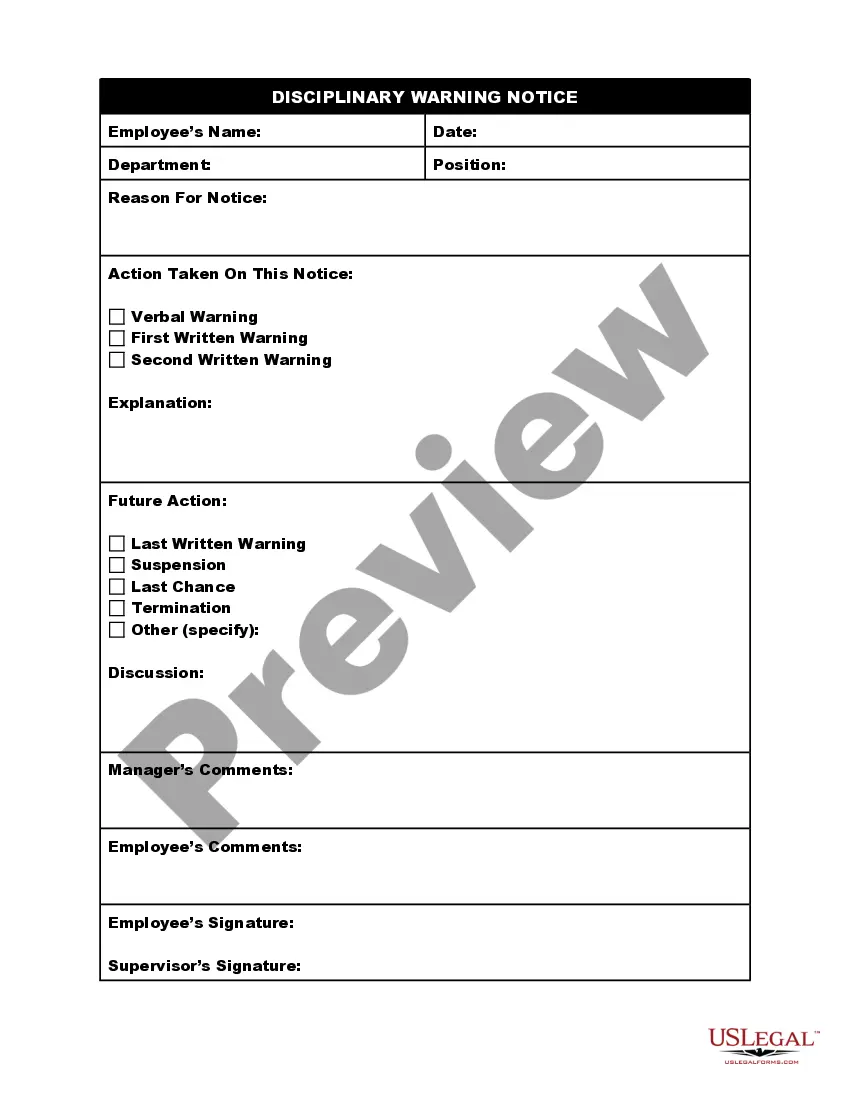
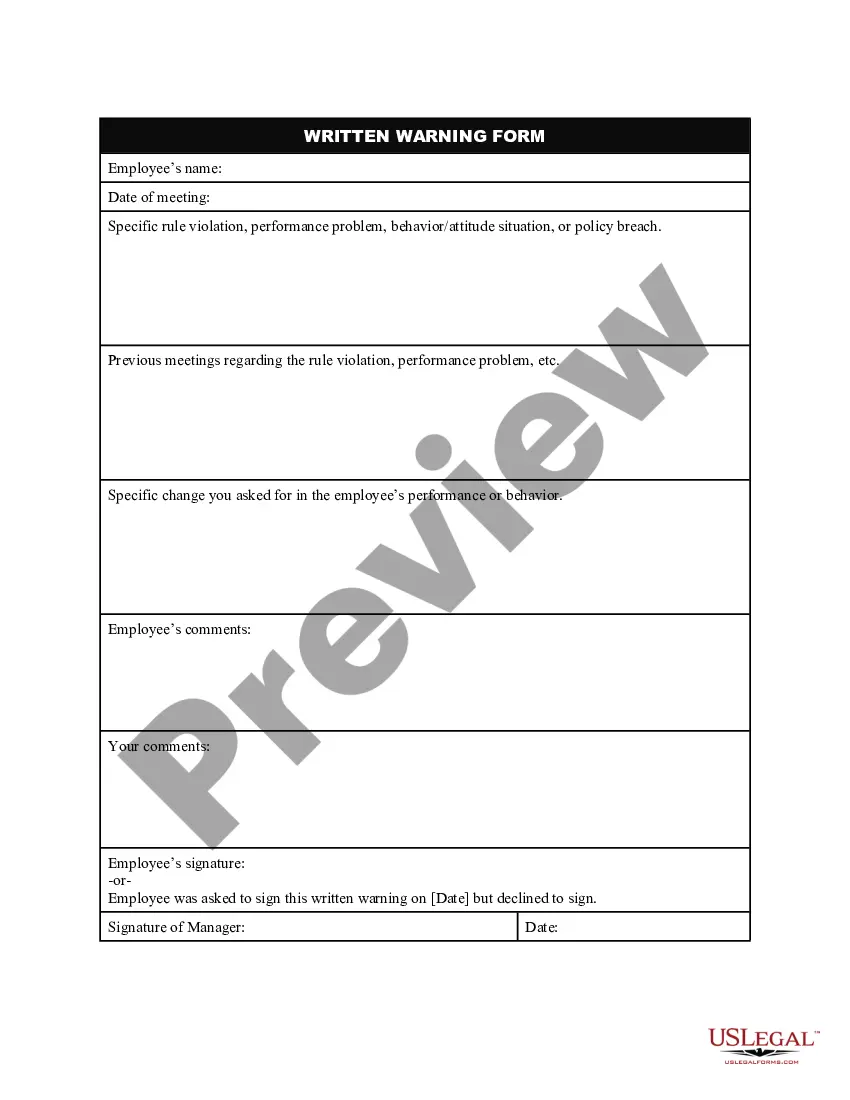
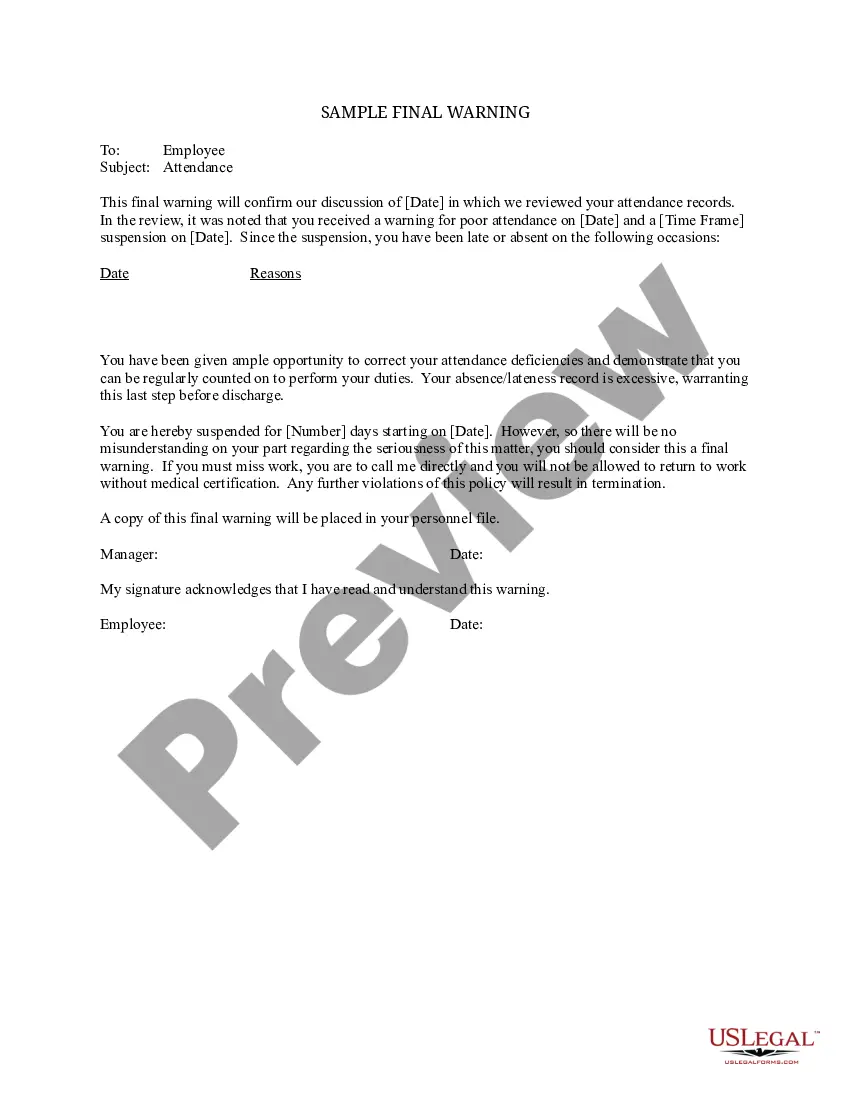
Get your form ready online
Our built-in tools help you complete, sign, share, and store your documents in one place.
Make edits, fill in missing information, and update formatting in US Legal Forms—just like you would in MS Word.
Download a copy, print it, send it by email, or mail it via USPS—whatever works best for your next step.
Sign and collect signatures with our SignNow integration. Send to multiple recipients, set reminders, and more. Go Premium to unlock E-Sign.
If this form requires notarization, complete it online through a secure video call—no need to meet a notary in person or wait for an appointment.
We protect your documents and personal data by following strict security and privacy standards.

Make edits, fill in missing information, and update formatting in US Legal Forms—just like you would in MS Word.

Download a copy, print it, send it by email, or mail it via USPS—whatever works best for your next step.

Sign and collect signatures with our SignNow integration. Send to multiple recipients, set reminders, and more. Go Premium to unlock E-Sign.

If this form requires notarization, complete it online through a secure video call—no need to meet a notary in person or wait for an appointment.

We protect your documents and personal data by following strict security and privacy standards.
Looking for another form?
How to fill out Sample Written Warning Letter?
Legal administration can be exasperating, even for the most experienced professionals.
When you seek a Warning Letter For Insubordination and lack the time to dedicate to finding the proper and current version, the process can be taxing.
US Legal Forms accommodates any needs you might have, ranging from personal to business documents, all in one platform.
Utilize advanced features to prepare and oversee your Warning Letter For Insubordination.
Listed below are the steps to follow after acquiring the form you require: Confirm it is the correct form by previewing it and reviewing its description.
- Access a collection of articles, guides, and manuals pertinent to your scenario and requirements.
- Save time and effort seeking the documents you need, and leverage US Legal Forms’ sophisticated search and Review feature to find Warning Letter For Insubordination and procure it.
- If you possess a subscription, Log In to your US Legal Forms account, search for the form, and obtain it.
- Review your My documents tab to check the documents you've previously stored and manage your folders as you wish.
- If it’s your initial experience with US Legal Forms, create an account and gain unrestricted access to all the benefits of the repository.
- A robust web form repository can be transformative for anyone who wants to manage these circumstances efficiently.
- US Legal Forms stands as a frontrunner in online legal documents, providing over 85,000 state-specific legal templates available for your convenience.
- With US Legal Forms, you can access state or county-specific legal and organizational paperwork.
Form popularity
FAQ
Qualifying as insubordination typically involves intentional acts of defiance against a supervisor's authority, such as ignoring instructions or challenging decisions. Inconsistent adherence to company policies can also fall under this category. To ensure clarity and enforce accountability, it is often recommended to issue a warning letter for insubordination to formally address these behaviors and set clear expectations for future conduct.
While both insubordination and disrespect involve a disregard for authority, they are not the same. Insubordination refers specifically to refusing to follow directives, whereas disrespect can manifest through rude comments or dismissive behavior without an explicit refusal to comply. Understanding these differences is important when considering the appropriate actions, like issuing a warning letter for insubordination, to address the situation.
Insubordination at work generally includes failing to comply with reasonable requests from a supervisor, refusing to perform assigned tasks, or showing disrespect towards authority figures. This behavior disrupts the workplace and undermines team dynamics. When such issues arise, a warning letter for insubordination can effectively communicate the seriousness of the situation and outline expectations moving forward.
Evidence of insubordination often includes instances where an employee refuses to follow a direct order or demonstrates a lack of respect for authority. For instance, if an employee openly defies a supervisor's instructions or shows persistent non-compliance with company policies, this behavior can be documented. Such evidence is crucial when preparing a warning letter for insubordination, as it supports the claims made against the employee.
To draft a warning letter for disrespectful behavior, first document the incidents that illustrate the behavior. Explain why this conduct is unacceptable, and outline the company policies that apply. Set a clear path for improvement and the consequences of continued disrespect. Utilizing a platform like US Legal Forms can help by providing templates that guide you in crafting an effective warning letter.
Writing to an employee about disrespectful behavior involves stating the specific actions that were disrespectful. Be transparent about how their actions affected team dynamics or productivity. Suggest ways to improve their behavior in the future and express your willingness to support them through this process. This ensures the tone is constructive and focused on growth.
When writing a warning letter for insubordination, start with your contact information, date, and employee details. Clearly outline the reason for the warning, referencing specific incidents and company policies. Include a straightforward message about the expectations moving forward and a timeframe for reassessment. This format holds the employee accountable while encouraging improvement.
Yes, you can give a warning for insubordination. It is essential to establish a clear understanding of employee responsibilities and expectations. If an employee fails to follow directives or shows disrespect, a warning letter for insubordination serves as a necessary formal notice. This helps foster a respectful workplace culture and provides a record of the behavior.
To write a warning for unprofessional behavior, start by summarizing the incident that prompted the warning. Clearly articulate what constituted unprofessional behavior, and reference any relevant company policies. Emphasize the importance of professionalism in the workplace, and outline the next steps, including potential repercussions if the behavior does not improve. This approach maintains clarity and sets firm expectations.
An example of a write-up for insubordination includes detailing the incident where an employee disobeyed a direct order from a supervisor. Be specific about what was said or done, and underscore why this behavior is unacceptable in the workplace. Conclude with a clear statement of improvement expectations. This format ensures a documented record of the insubordination for future reference.