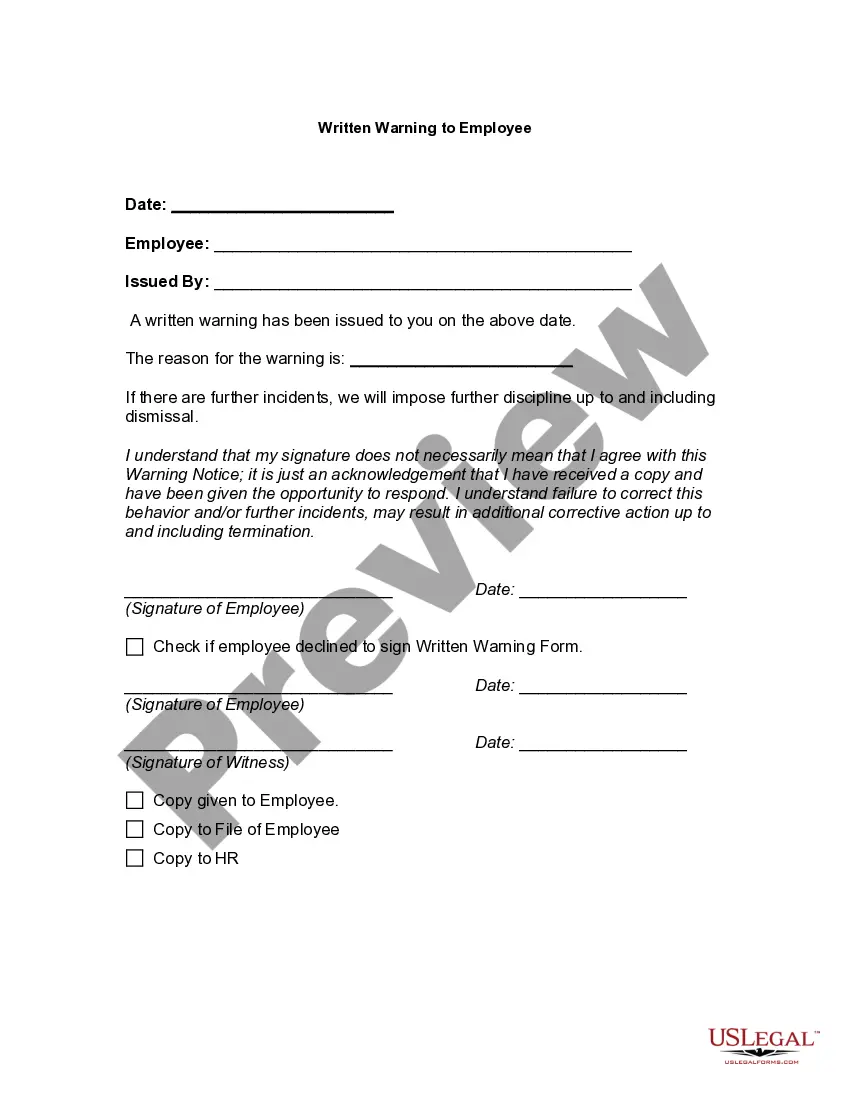
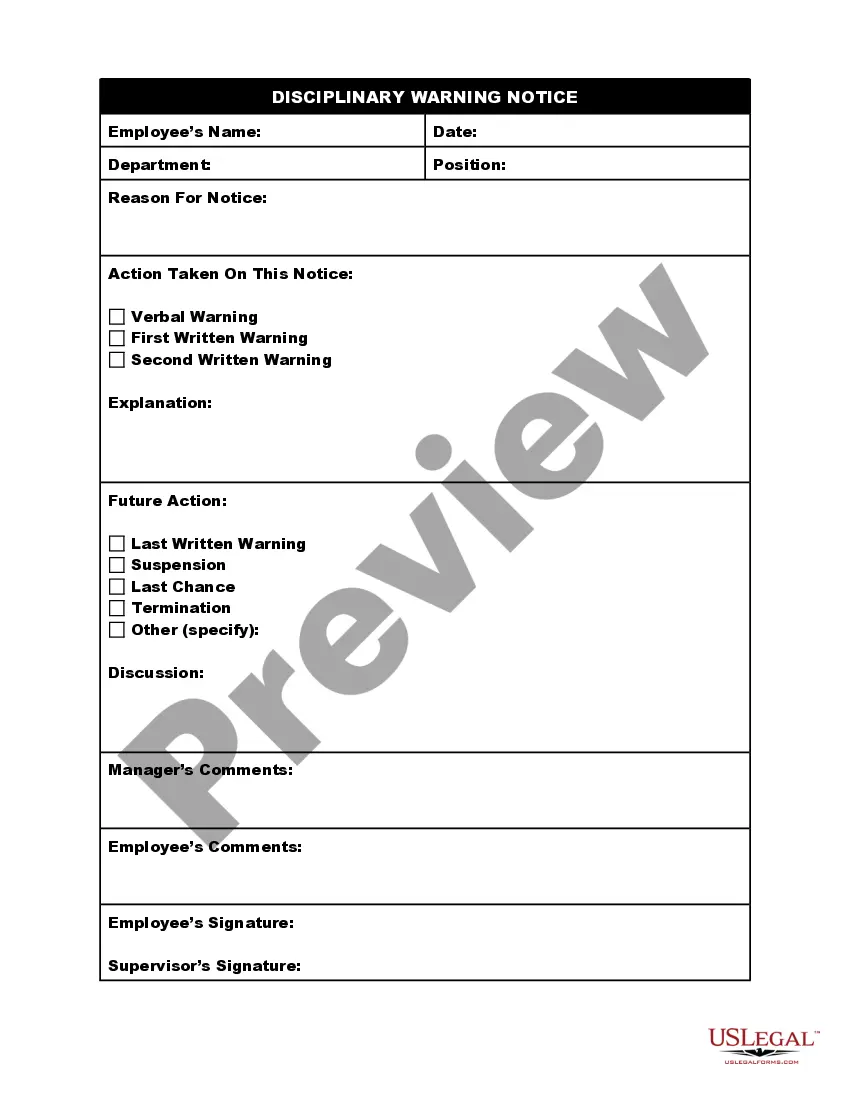
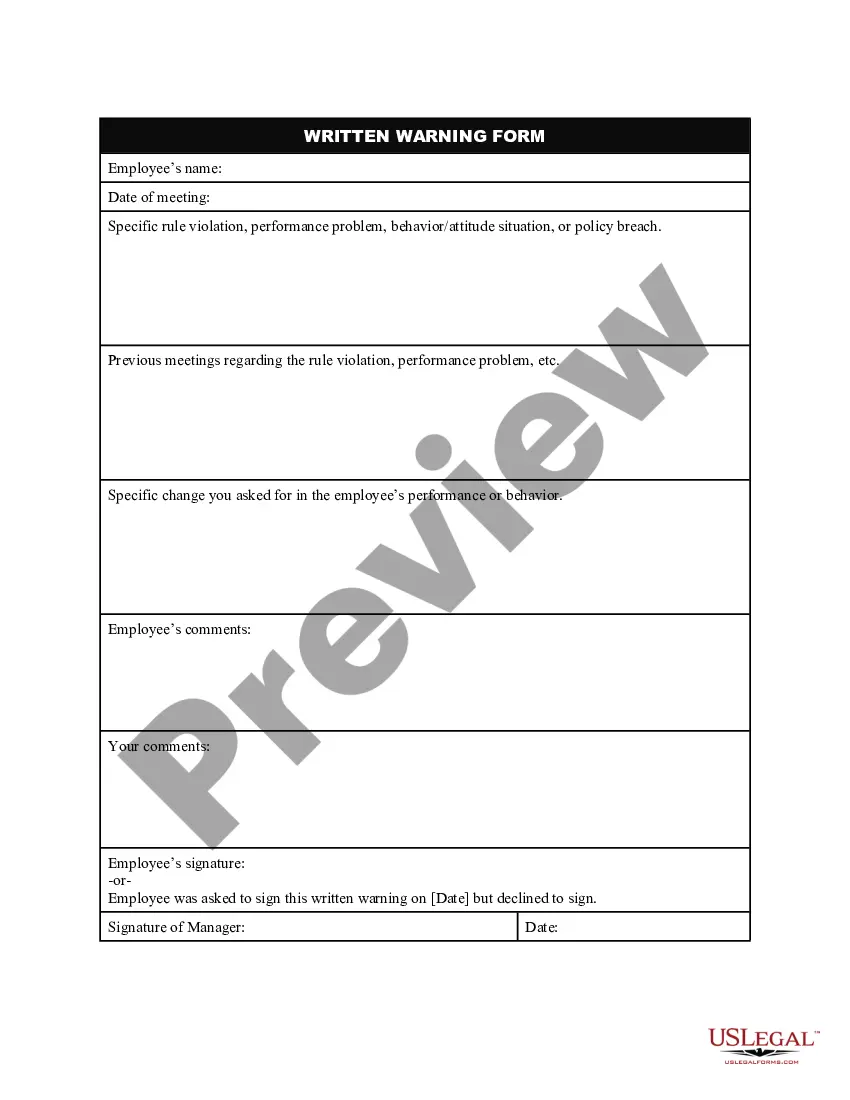
Warning Notice Letter For Disciplinary Action
Description
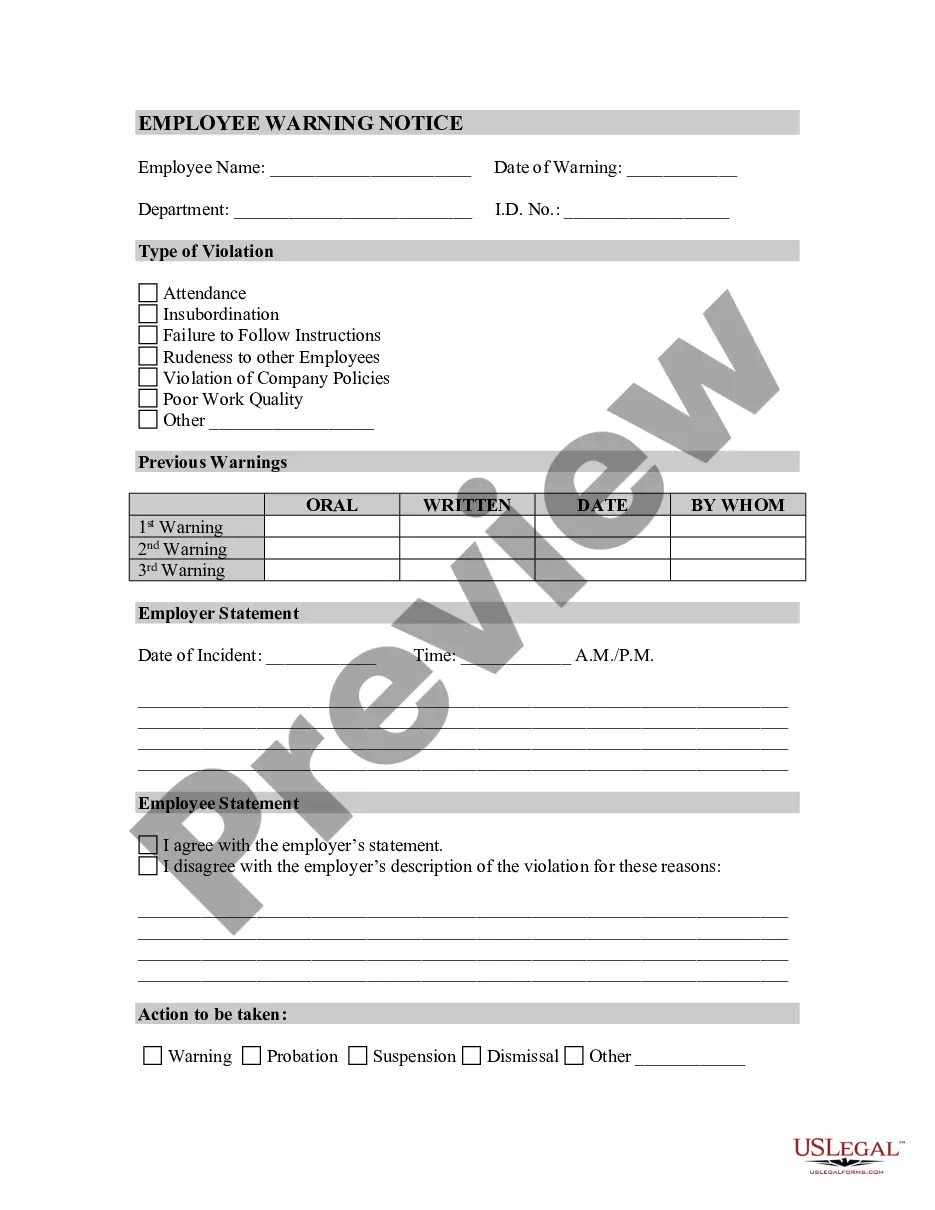
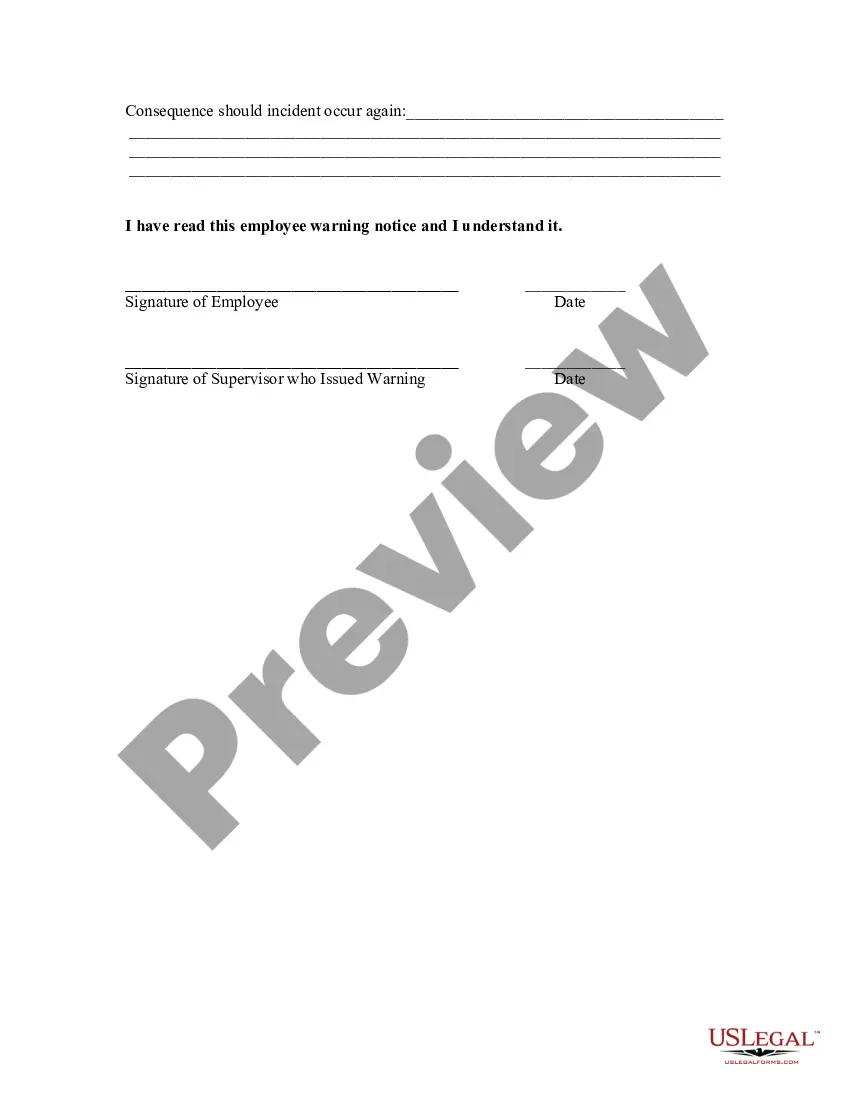
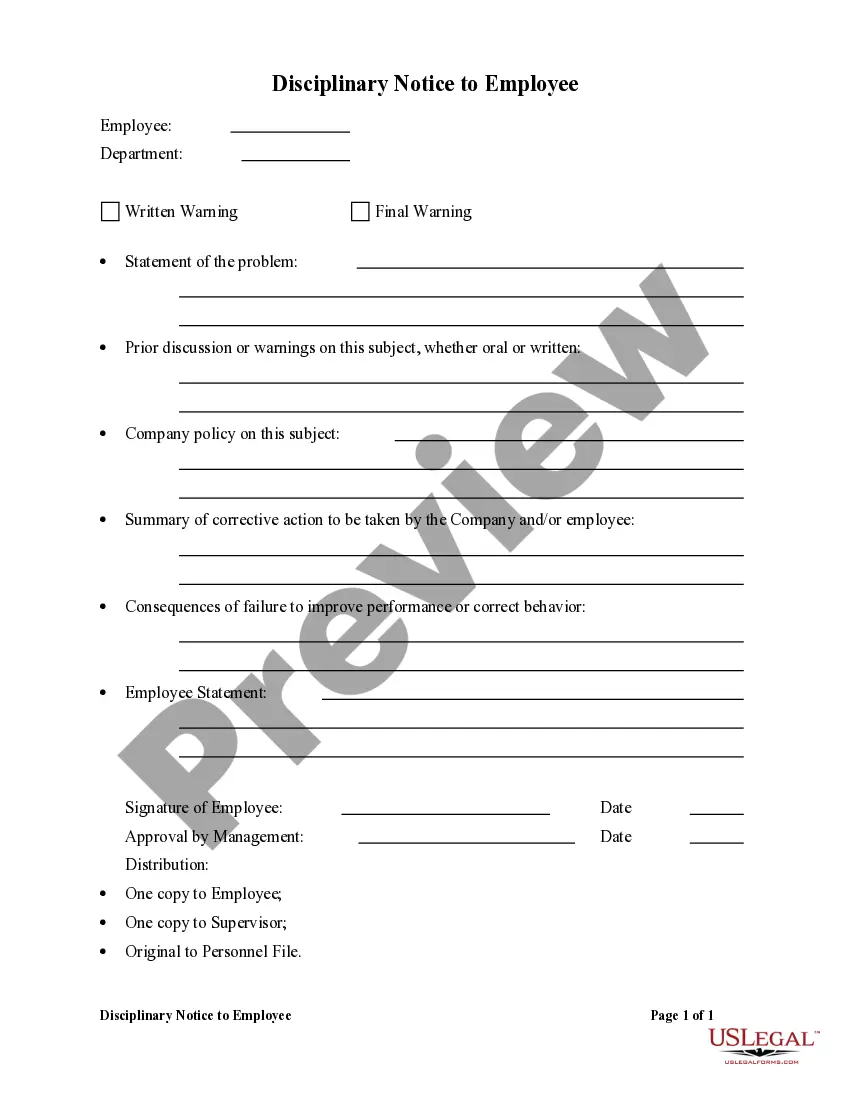
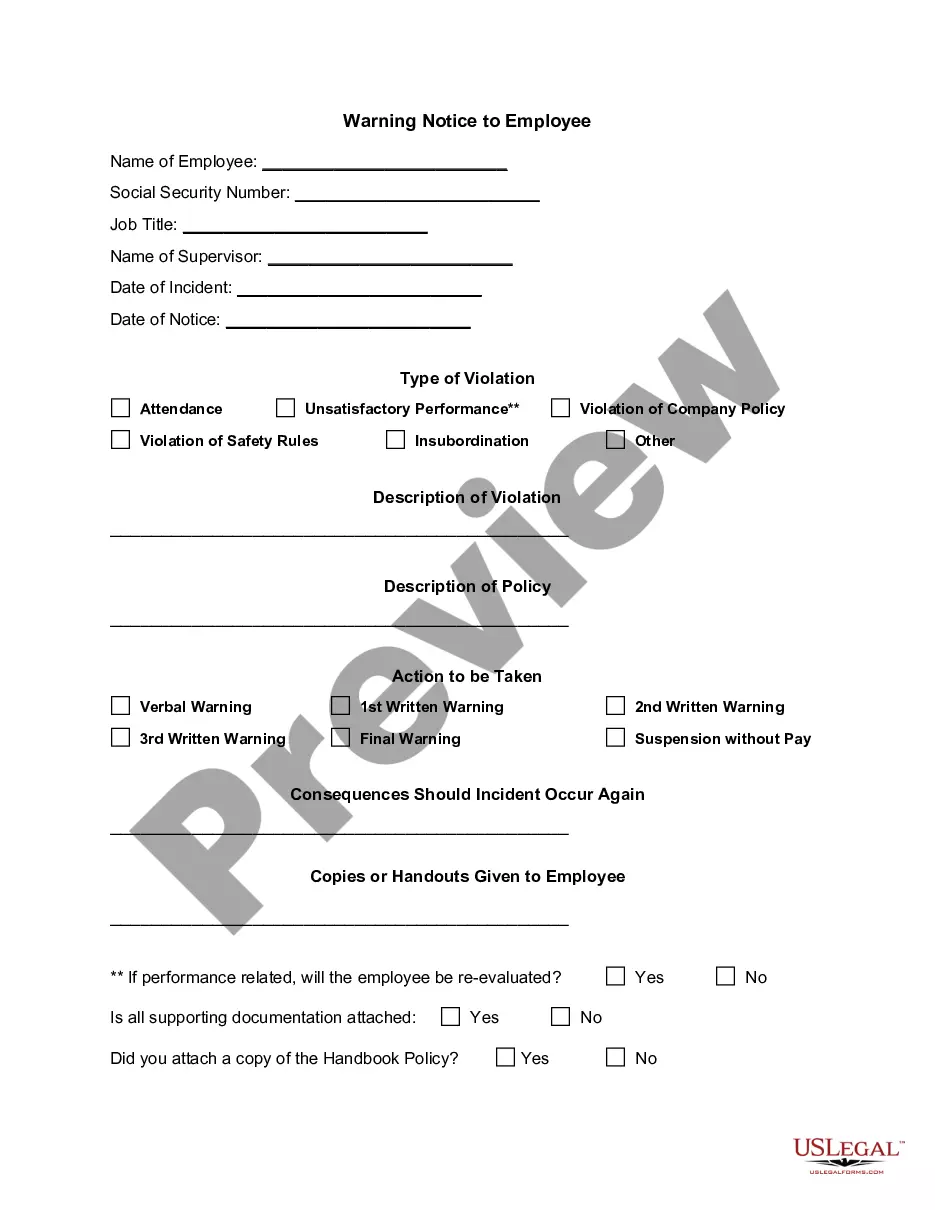
Get your form ready online
Our built-in tools help you complete, sign, share, and store your documents in one place.
Make edits, fill in missing information, and update formatting in US Legal Forms—just like you would in MS Word.
Download a copy, print it, send it by email, or mail it via USPS—whatever works best for your next step.
Sign and collect signatures with our SignNow integration. Send to multiple recipients, set reminders, and more. Go Premium to unlock E-Sign.
If this form requires notarization, complete it online through a secure video call—no need to meet a notary in person or wait for an appointment.
We protect your documents and personal data by following strict security and privacy standards.

Make edits, fill in missing information, and update formatting in US Legal Forms—just like you would in MS Word.

Download a copy, print it, send it by email, or mail it via USPS—whatever works best for your next step.

Sign and collect signatures with our SignNow integration. Send to multiple recipients, set reminders, and more. Go Premium to unlock E-Sign.

If this form requires notarization, complete it online through a secure video call—no need to meet a notary in person or wait for an appointment.

We protect your documents and personal data by following strict security and privacy standards.
Looking for another form?

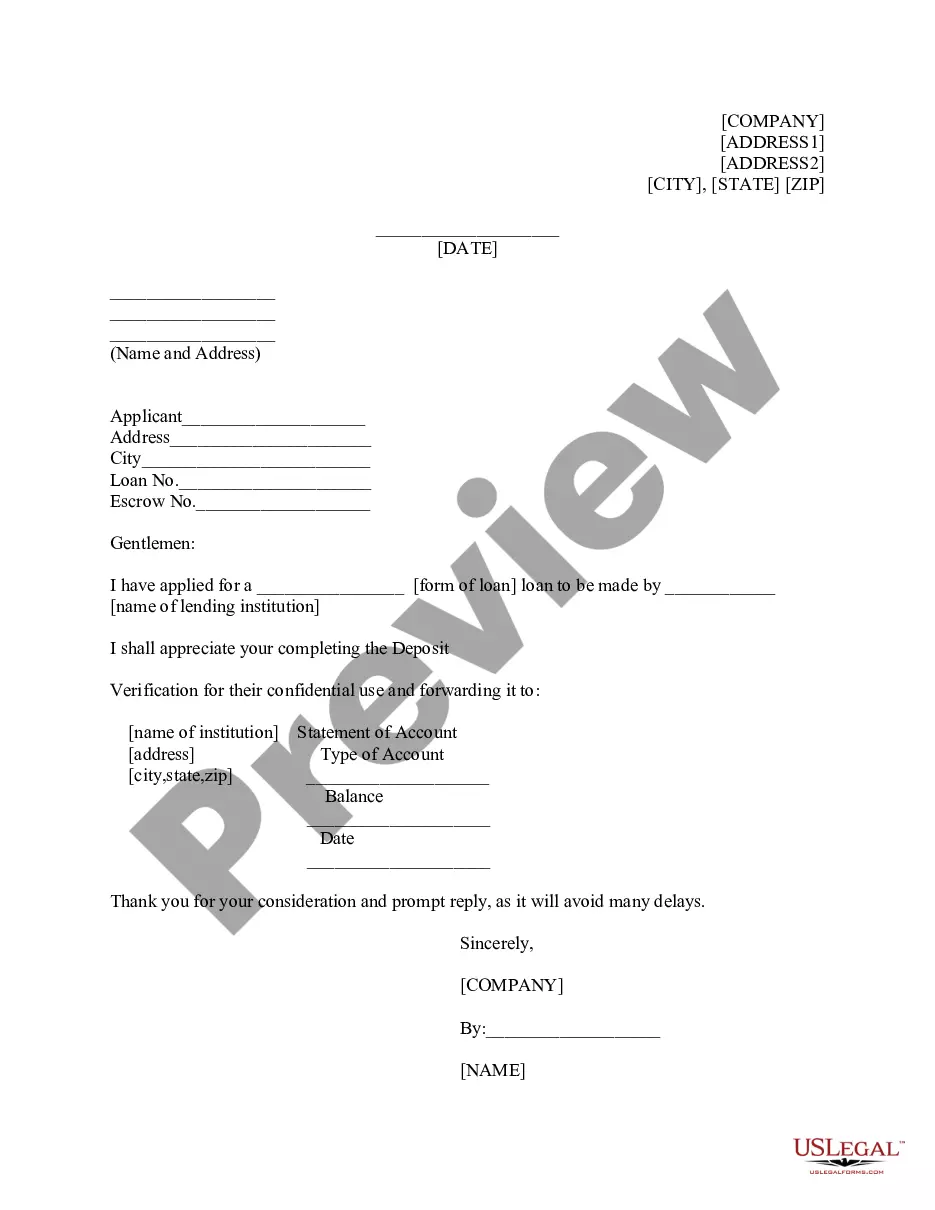



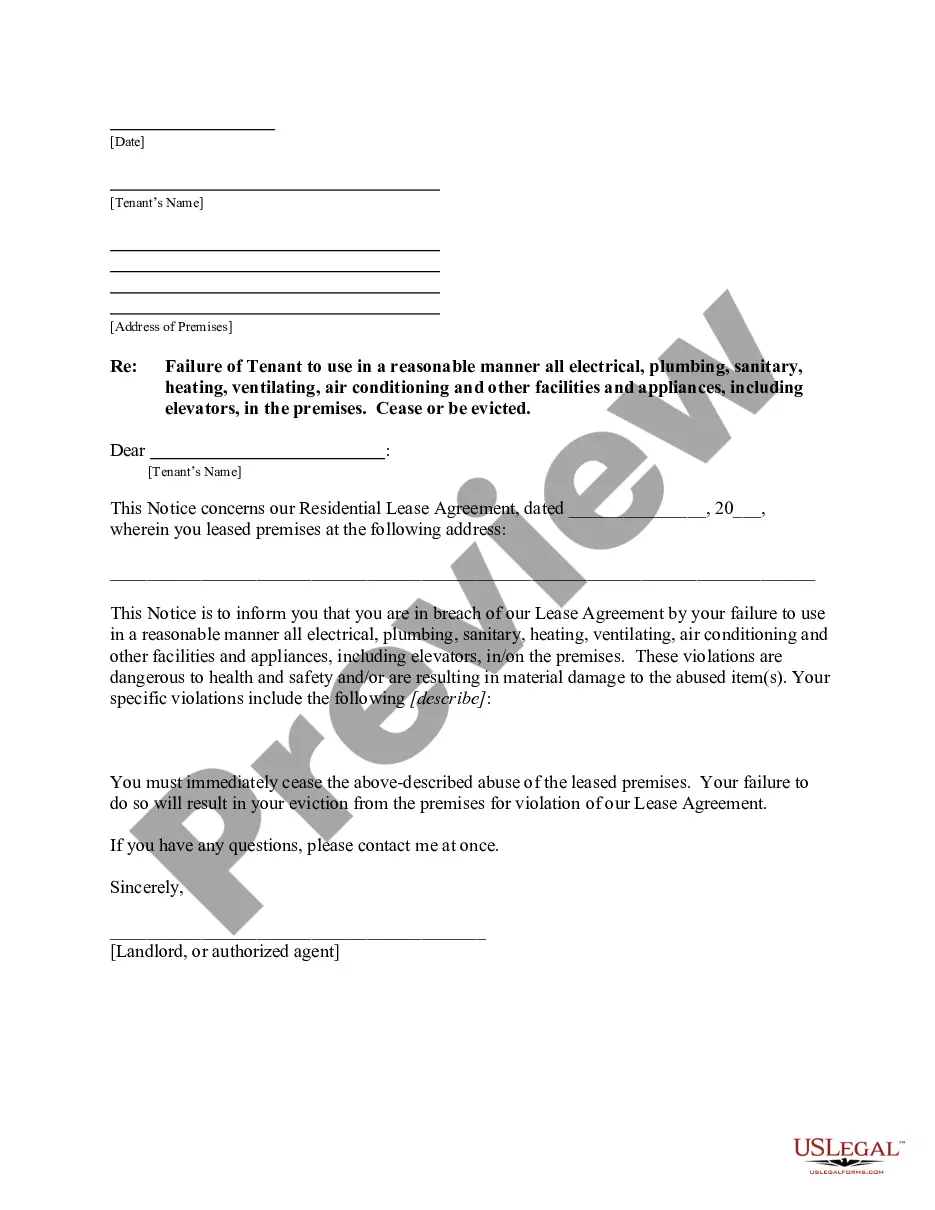

How to fill out Employee Warning Notice?
It's clear that you cannot transform into a legal expert instantaneously, nor can you learn how to swiftly create a Warning Notice Letter for Disciplinary Action without a designated skill set.
Drafting legal documents is a lengthy process necessitating specialized education and abilities.
So why not entrust the compilation of the Warning Notice Letter for Disciplinary Action to the professionals.
Preview it (if this option is available) and review the accompanying description to determine if the Warning Notice Letter for Disciplinary Action is what you seek.
If you require a different form, simply restart your search.
- With US Legal Forms, one of the most extensive legal template collections, you can find everything from court documents to templates for internal corporate correspondence.
- We recognize the significance of compliance and adherence to both federal and state regulations.
- That’s why, on our platform, all forms are locally relevant and current.
- Here's how you can start on our website and secure the document you need in just minutes.
- Look for the form you want using the search bar located at the top of the page.
Form popularity
FAQ
A written warning itself does not count as a violation; rather, it addresses prior misconduct by an employee. It is a formal method to notify an employee that their behavior has been unacceptable and needs to change. However, continued infractions after a written warning may lead to further disciplinary action. Understanding how to properly document these situations through a warning notice letter for disciplinary action can protect both the employee and the organization.
Yes, a written warning is a form of discipline within the workplace. It serves to document specific employee misconduct and communicate the seriousness of the issue. The written warning allows the employee to understand that their actions have consequences and highlights the steps needed to rectify their behavior. Crafting a clear warning notice letter for disciplinary action is essential for effective communication in these situations.
To write an effective warning letter for a violation of rules, start by clearly stating the purpose of the letter. Include details of the violation, such as dates and specific behaviors that prompted the letter. Next, outline the corrective actions required and the potential consequences of failure to comply. Utilizing a template for a warning notice letter for disciplinary action can simplify this process and ensure clarity.
Yes, a final written warning is considered a disciplinary action. It serves to formally address serious rule violations while giving the employee a chance to improve their behavior. Typically, a final written warning outlines the specific issues and expectations for future conduct. Understanding the importance of a warning notice letter for disciplinary action is crucial for employers to maintain a structured work environment.
The number of warnings before facing disciplinary action can vary by organization, but it is generally between one to three warnings. Each warning notice letter for disciplinary action builds on the previous one, creating a structured process. The aim is to provide sufficient feedback and opportunities for improvement. Understanding this structure can help you navigate workplace expectations more effectively.
Yes, a written warning is classified as a disciplinary action. It documents performance or behavioral issues in a formal manner, serving as a part of an employee’s work record. A warning notice letter for disciplinary action communicates concerns clearly, enabling employees to understand the situation. This helps in establishing a constructive path toward improvement for the individual.
Writing a disciplinary warning letter requires a clear format and specific details. You should start with the date, followed by the employee's name and address. Then, state the concerns, citing specific examples, and underlining the consequences if issues persist. A well-structured warning notice letter for disciplinary action will guide the employee on how to improve and what steps to take to avoid further action.
Typically, you should receive a warning before a disciplinary action is enforced. This warning serves as an opportunity for you to address and improve upon specific issues. By issuing a warning notice letter for disciplinary action, organizations show their commitment to fair practices. It ensures you are informed of your faults and the expectations moving forward, which is critical for your professional development.
While it is technically possible to face disciplinary action without prior warning, it is not common practice. Most organizations follow a progressive discipline policy that requires a warning notice letter for disciplinary action before severe penalties. This approach protects the rights of employees and provides them a chance to rectify their behavior. Therefore, most employers will issue warnings before moving to more serious consequences.
Absolutely, a warning letter falls under disciplinary actions. This letter formally communicates concerns regarding an employee's conduct or performance. By issuing a warning notice letter for disciplinary action, you ensure that there is a record of the behavior that needs correction. This practice helps maintain transparency and fairness within the workplace.