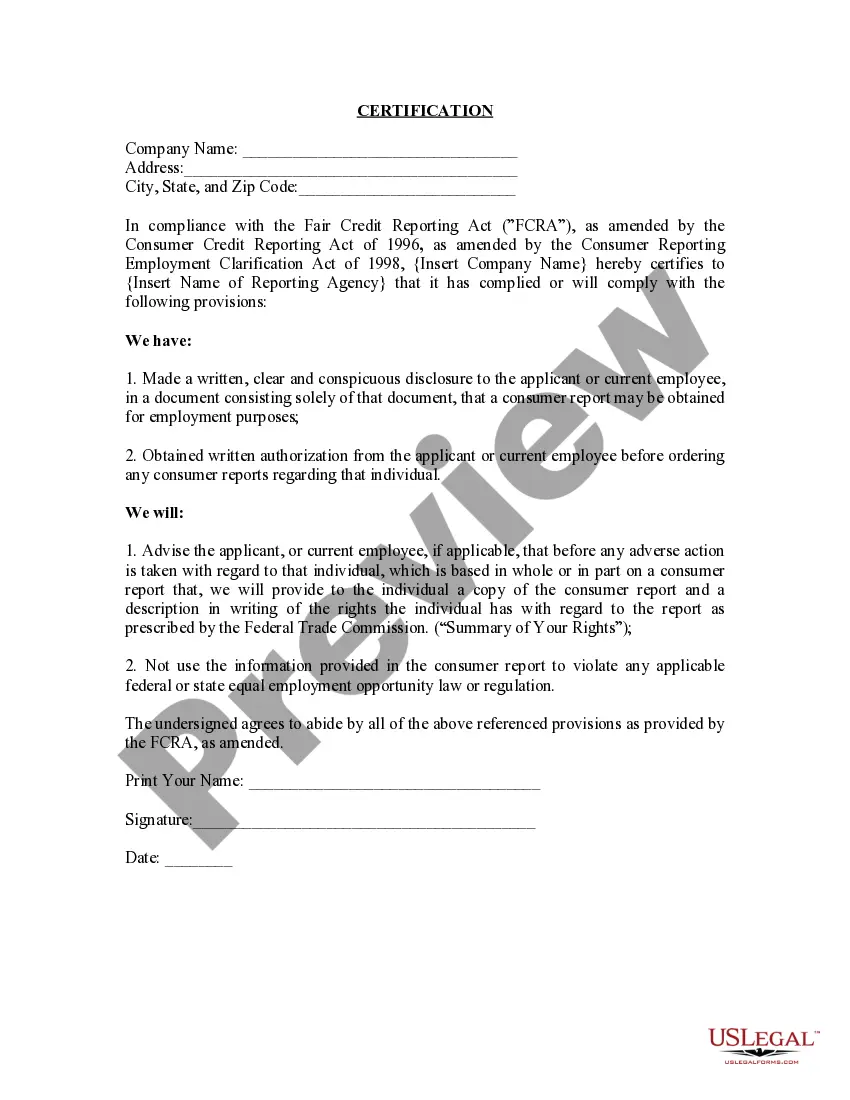
Fcra For Ngos
Description
Get your form ready online
Our built-in tools help you complete, sign, share, and store your documents in one place.
Make edits, fill in missing information, and update formatting in US Legal Forms—just like you would in MS Word.
Download a copy, print it, send it by email, or mail it via USPS—whatever works best for your next step.
Sign and collect signatures with our SignNow integration. Send to multiple recipients, set reminders, and more. Go Premium to unlock E-Sign.
If this form requires notarization, complete it online through a secure video call—no need to meet a notary in person or wait for an appointment.
We protect your documents and personal data by following strict security and privacy standards.

Make edits, fill in missing information, and update formatting in US Legal Forms—just like you would in MS Word.

Download a copy, print it, send it by email, or mail it via USPS—whatever works best for your next step.

Sign and collect signatures with our SignNow integration. Send to multiple recipients, set reminders, and more. Go Premium to unlock E-Sign.

If this form requires notarization, complete it online through a secure video call—no need to meet a notary in person or wait for an appointment.

We protect your documents and personal data by following strict security and privacy standards.
Looking for another form?



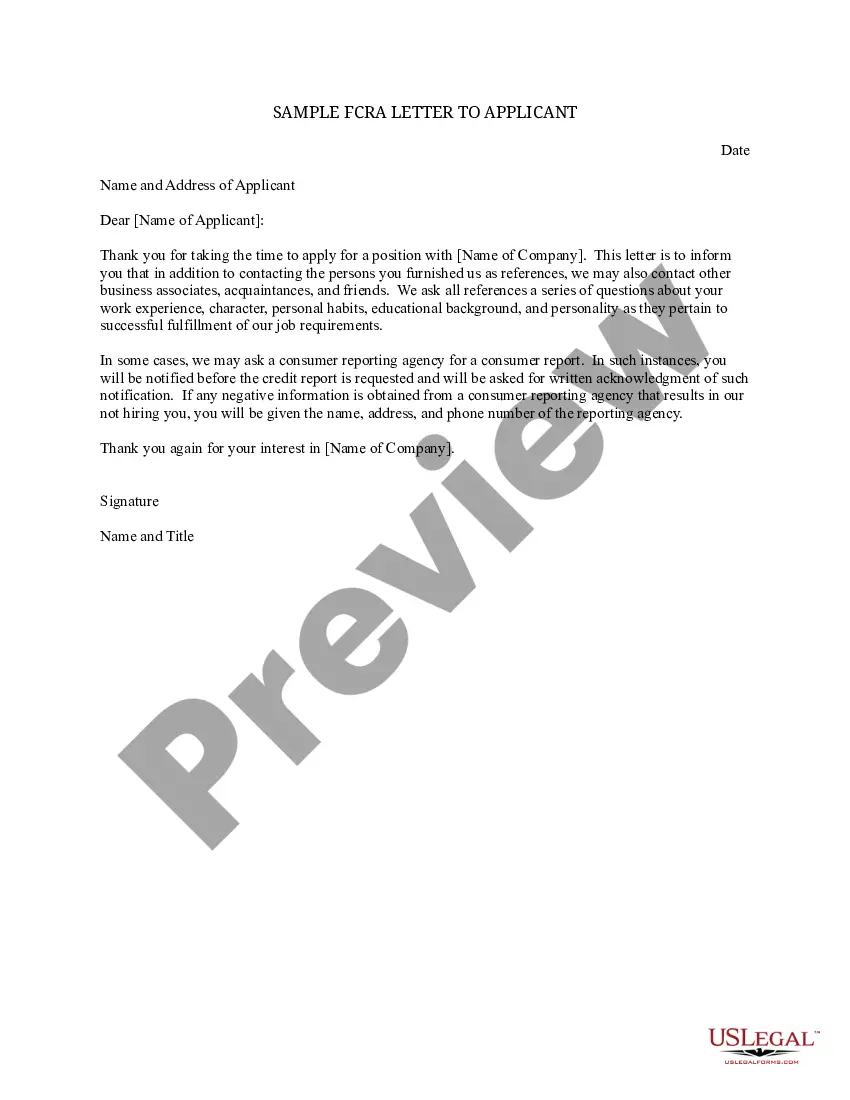
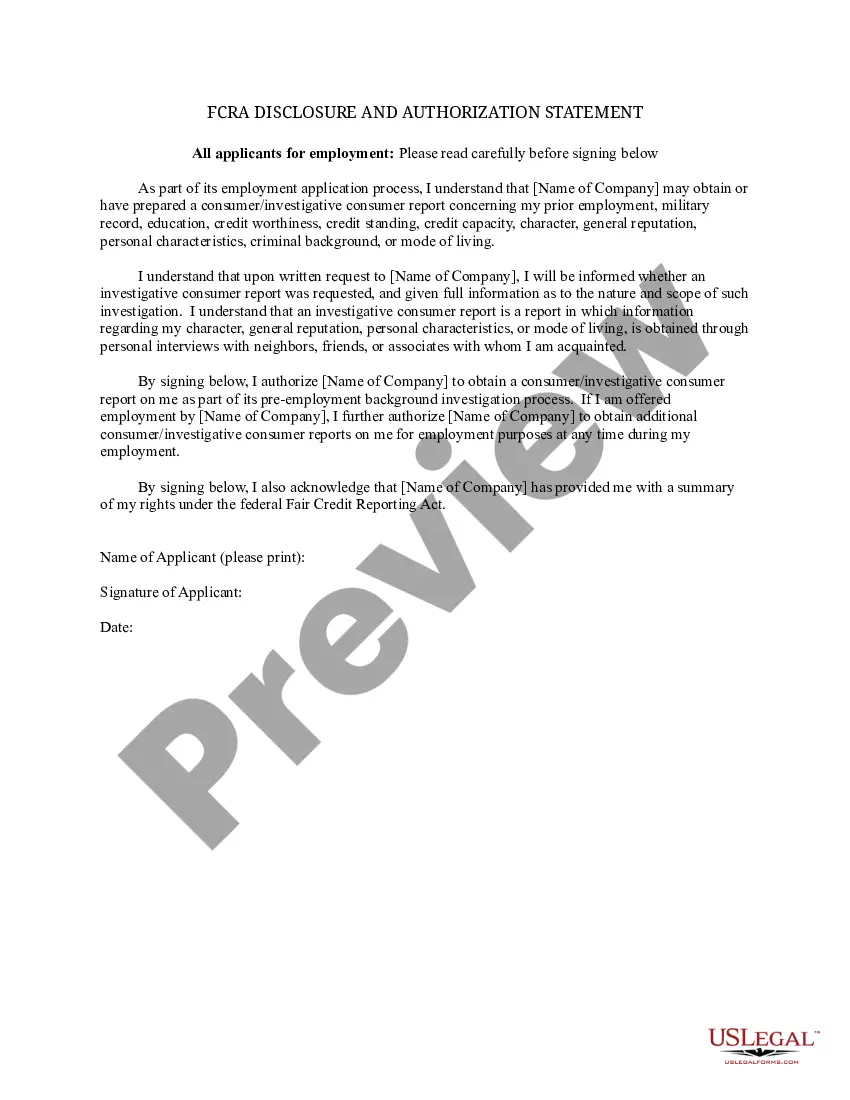
How to fill out FCRA Certification Letter To Consumer Reporting Agency?
- Start by visiting the US Legal Forms website. If you are an existing user, simply log in to your account to renew your subscription if necessary, before you proceed to download your forms.
- In case you are a new user, begin by exploring the extensive online library of over 85,000 legal forms. Use the preview mode to examine the FCRA forms relevant to NGOs and ensure they align with your local jurisdiction requirements.
- Utilize the search tab if you need to look for additional templates. Make sure to verify the consistency of the forms with your requirements before proceeding.
- Click on the 'Buy Now' button for the FCRA form you need, and select a subscription plan that suits you. If you haven't registered yet, create an account to gain access.
- Complete your purchase using either your credit card or PayPal account, ensuring that your payment details are secure.
- Once your payment is processed, download the form to your device. You can access it anytime from the My Forms section of your profile.
In summary, US Legal Forms provides a streamlined process for NGOs to obtain FCRA-related documents efficiently. Their robust collection of forms and access to premium expert assistance ensures your documents are accurate and compliant.
Start your journey towards compliance today by visiting US Legal Forms and exploring their offerings!
Form popularity
FAQ
The minimum balance requirement under FCRA is not just a regulatory guideline; it serves as a crucial part of your financial planning. Maintaining this balance helps NGOs ensure they can meet their compliance obligations and avoid potential legal issues. Organizations should regularly review their balance to ensure continued compliance.
The rules of FCRA govern how NGOs can accept and utilize foreign funds. These include ensuring that funds are used solely for the specified purposes and reporting all transactions transparently. Familiarizing yourself with these rules is vital for compliance and the sustainable operation of your NGO.
The minimum balance in an FCRA account is set to ensure NGOs have adequate funds to comply with regulations. It is generally advisable to keep a sustainable amount that meets legal requirements and covers operational costs. Understanding this balance helps NGOs plan better and maintain their financial health.
FCRA documents are essential papers required for NGOs to legally receive foreign contributions. These include registration certificates, annual financial statements, and details regarding board members. Proper documentation ensures that your organization adheres to FCRA compliance, ultimately supporting your mission more effectively.
For an FCRA account, it is essential to maintain a minimum balance as specified by the governing regulations. This balance acts as a safeguard to ensure the funds are readily available for compliance and operational purposes. Regular monitoring of this balance can help NGOs avoid penalties and maintain good standing.
The most crucial reporting requirement under FCRA for NGOs is the obligation to submit annual returns. These returns must detail the funds received and how they were utilized, ensuring transparency and accountability. Compliance with this requirement helps maintain trust with stakeholders and supports the organization's ongoing activities.
FCRA primarily classifies into two main categories: the registration of NGOs and prior permission for receiving funds. Registered NGOs enjoy ongoing compliance, while others may require specific approval. Learning about these types helps NGOs make informed decisions when seeking foreign contributions under FCRA for NGOs.
The FCRA License is an official authorization allowing NGOs to receive foreign contributions. This license is crucial for operating legally and maintaining donor trust. If your NGO aims to accept international donations, understanding FCRA for NGOs and securing this license is essential for success.
The FCRA rules establish guidelines for how NGOs can accept and utilize foreign contributions in India. These rules ensure that donations align with the national interest and prevent misuse. Familiarizing yourself with FCRA for NGOs can help organizations navigate these regulations and remain compliant.
There are approximately 40,000 NGOs in India that hold a valid FCRA registration. This enables them to legally receive foreign donations, significantly expanding their funding opportunities. Understanding the importance of FCRA for NGOs allows them to thrive while adhering to regulatory frameworks.