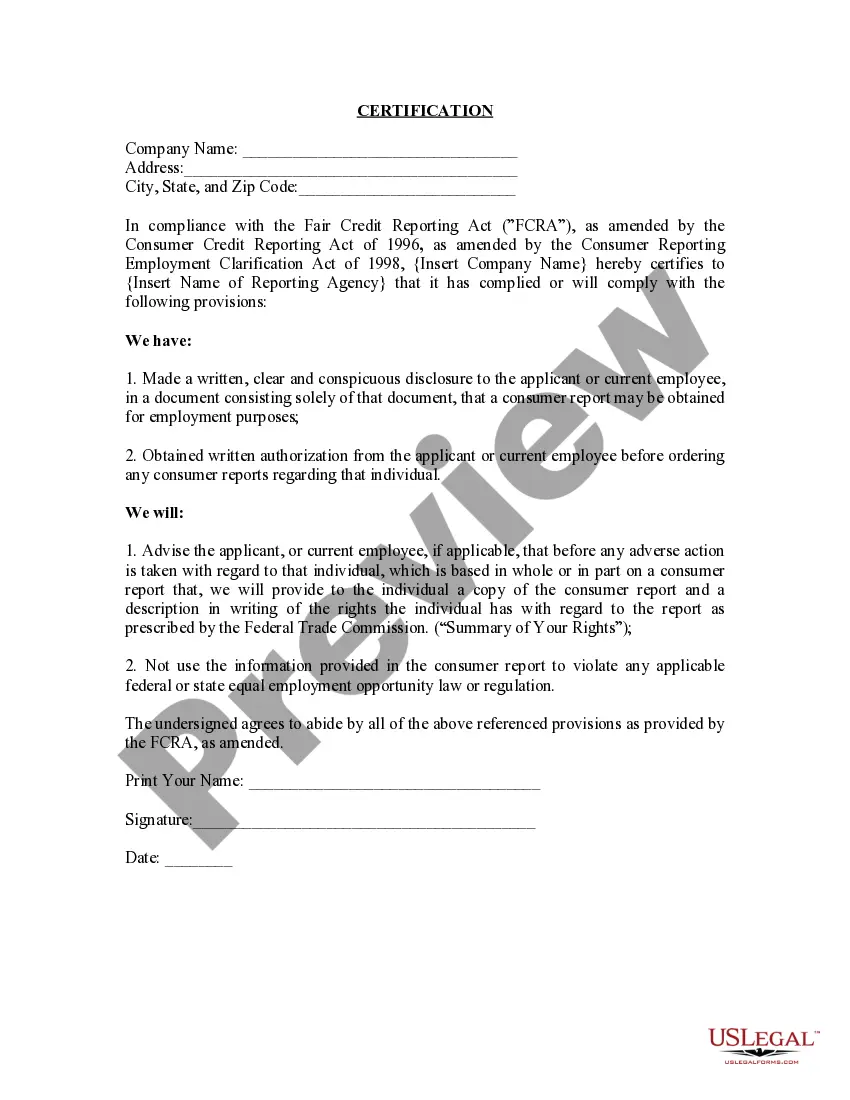
Fcra For Employers
Description
Get your form ready online
Our built-in tools help you complete, sign, share, and store your documents in one place.
Make edits, fill in missing information, and update formatting in US Legal Forms—just like you would in MS Word.
Download a copy, print it, send it by email, or mail it via USPS—whatever works best for your next step.
Sign and collect signatures with our SignNow integration. Send to multiple recipients, set reminders, and more. Go Premium to unlock E-Sign.
If this form requires notarization, complete it online through a secure video call—no need to meet a notary in person or wait for an appointment.
We protect your documents and personal data by following strict security and privacy standards.

Make edits, fill in missing information, and update formatting in US Legal Forms—just like you would in MS Word.

Download a copy, print it, send it by email, or mail it via USPS—whatever works best for your next step.

Sign and collect signatures with our SignNow integration. Send to multiple recipients, set reminders, and more. Go Premium to unlock E-Sign.

If this form requires notarization, complete it online through a secure video call—no need to meet a notary in person or wait for an appointment.

We protect your documents and personal data by following strict security and privacy standards.
Looking for another form?






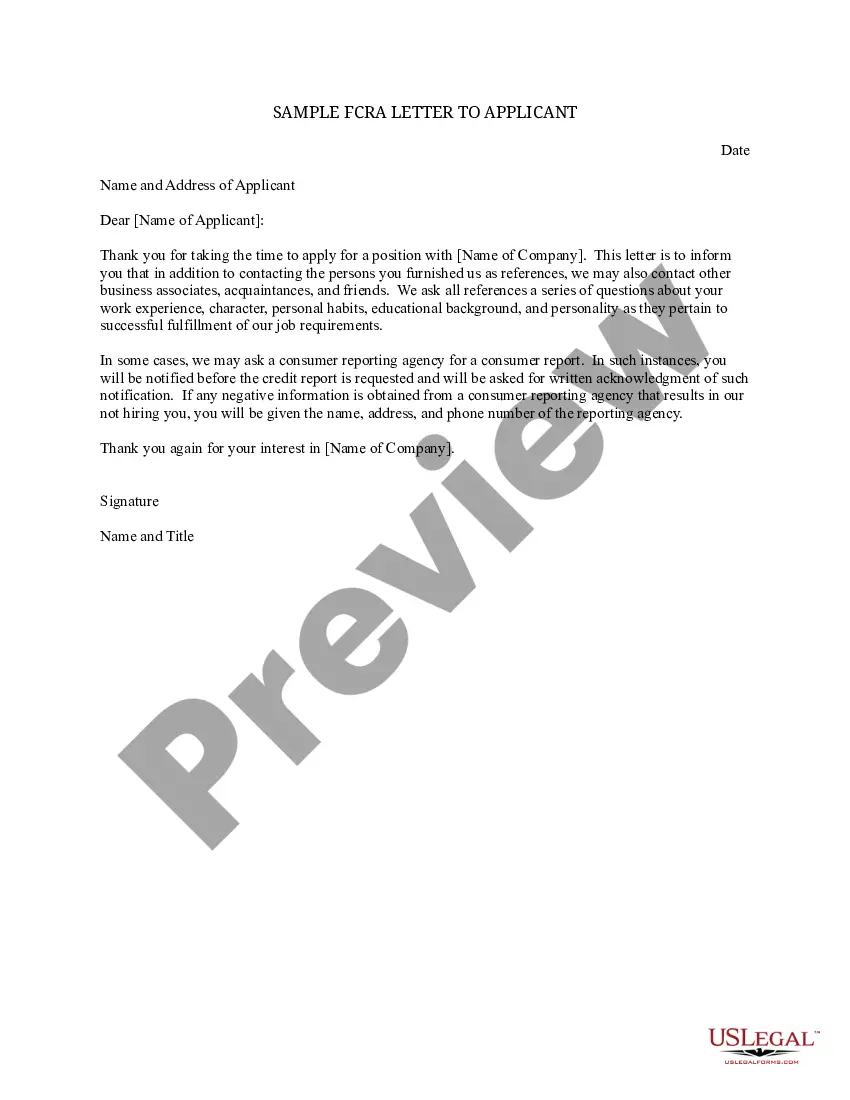
How to fill out FCRA Certification Letter To Consumer Reporting Agency?
- If you are a returning user, simply log in to access your account and download the necessary form template via the Download button. Ensure that your subscription is active; if needed, renew it based on your payment plan.
- For new users, start by browsing the extensive form collection. Utilize the Preview mode and check the form description to confirm it aligns with your specific requirements and complies with local laws.
- If you find a need for a different template, use the Search tab to locate the correct document. Confirm that it suits your needs before proceeding.
- Purchase your selected document by clicking the Buy Now button. Choose a subscription plan that fits your requirements and create an account to unlock the full range of resources available.
- Finalize your purchase by entering your payment details through credit card or PayPal. Once the transaction is confirmed, download your form.
- Access your downloaded document and save it on your device. You can find it later in the My Forms section of your profile.
In conclusion, US Legal Forms empowers employers to efficiently access a comprehensive library of legal documents that simplify the complexities of compliance with the FCRA. By following the steps outlined, you can ensure that you are taking the necessary actions to protect your business and adhere to legal standards.
Get started with US Legal Forms today and enhance your legal compliance with ease!
Form popularity
FAQ
Yes, you can run a consumer report on yourself, and this practice is often encouraged to help you understand what potential employers may see. By reviewing your own report, you can identify and correct any inaccuracies beforehand. This proactive step enables individuals to manage their personal information effectively and supports a smoother application process.
The FCRA for HR focuses on the human resources team's responsibility to conduct background checks in accordance with federal regulations. HR professionals must be aware of their obligations under the FCRA to ensure they protect job candidates’ rights. Maintaining FCRA compliance not only fosters trust but also enhances the organization’s hiring process.
The FCRA covers various aspects related to consumer reporting, including the accuracy of information, the rights of individuals to dispute inaccuracies, and how employers can use background check results. It ensures that background information is used responsibly in employment decisions. Understanding what is covered under FCRA helps employers avoid potential compliance pitfalls.
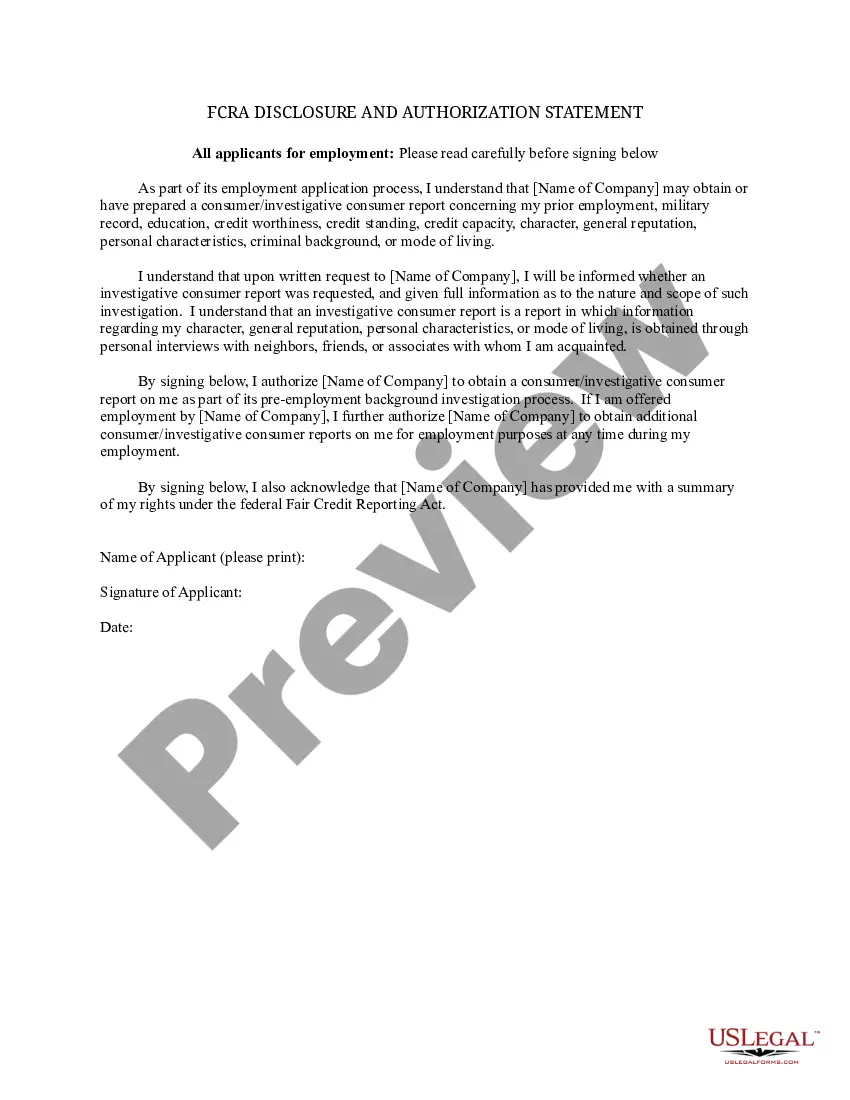
FCRA requirements for employers include obtaining written consent from candidates before conducting background checks. Additionally, employers must provide disclosures about the nature and scope of the investigation. Following these requirements is essential for employers to operate within the law and maintain ethical hiring standards.
The main purpose of the FCRA is to protect consumers from misuse of their personal information during the hiring process. By establishing guidelines for background checks, the FCRA empowers individuals with rights regarding their consumer reports. Employers who follow these guidelines support fair hiring while safeguarding employees' rights.
FCRA for employment refers to the legal framework that regulates how employers conduct background checks on potential hires. It ensures that employers obtain candidates' consent before accessing their consumer reports. This aspect of FCRA promotes ethical hiring practices, which can bolster an employer’s reputation and safeguard against legal issues.
An FCRA background check typically reveals a candidate’s credit history, criminal records, and employment verification among other details. This comprehensive review allows employers to assess the suitability of an applicant for a position. Implementing FCRA background checks helps employers make informed decisions while maintaining compliance with federal regulations.
Employers need FCRA compliance to ensure their hiring practices are fair and lawful. The Fair Credit Reporting Act (FCRA) protects job candidates by regulating how background checks are conducted. By adhering to FCRA guidelines, employers can mitigate risks associated with discrimination claims and promote a transparent hiring process.
Regulation Z primarily governs consumer credit protection, particularly for personal accounts, rather than business accounts. However, some aspects may impact small businesses that qualify as consumers under certain conditions. Understanding the distinctions between Regulation Z and business compliance can clarify how financial responsibilities apply to your operations.
As previously mentioned, the FCRA applies to businesses, especially in the context of employment. It mandates that businesses follow specific steps in utilizing consumer reports during hiring and employment. Employers must stay informed about FCRA stipulations to ensure their practices are compliant and respectful of individual rights.