Work Employee Policies For Small Churches
Description

Get your form ready online
Our built-in tools help you complete, sign, share, and store your documents in one place.
Make edits, fill in missing information, and update formatting in US Legal Forms—just like you would in MS Word.
Download a copy, print it, send it by email, or mail it via USPS—whatever works best for your next step.
Sign and collect signatures with our SignNow integration. Send to multiple recipients, set reminders, and more. Go Premium to unlock E-Sign.
If this form requires notarization, complete it online through a secure video call—no need to meet a notary in person or wait for an appointment.
We protect your documents and personal data by following strict security and privacy standards.

Make edits, fill in missing information, and update formatting in US Legal Forms—just like you would in MS Word.

Download a copy, print it, send it by email, or mail it via USPS—whatever works best for your next step.

Sign and collect signatures with our SignNow integration. Send to multiple recipients, set reminders, and more. Go Premium to unlock E-Sign.

If this form requires notarization, complete it online through a secure video call—no need to meet a notary in person or wait for an appointment.

We protect your documents and personal data by following strict security and privacy standards.
Looking for another form?



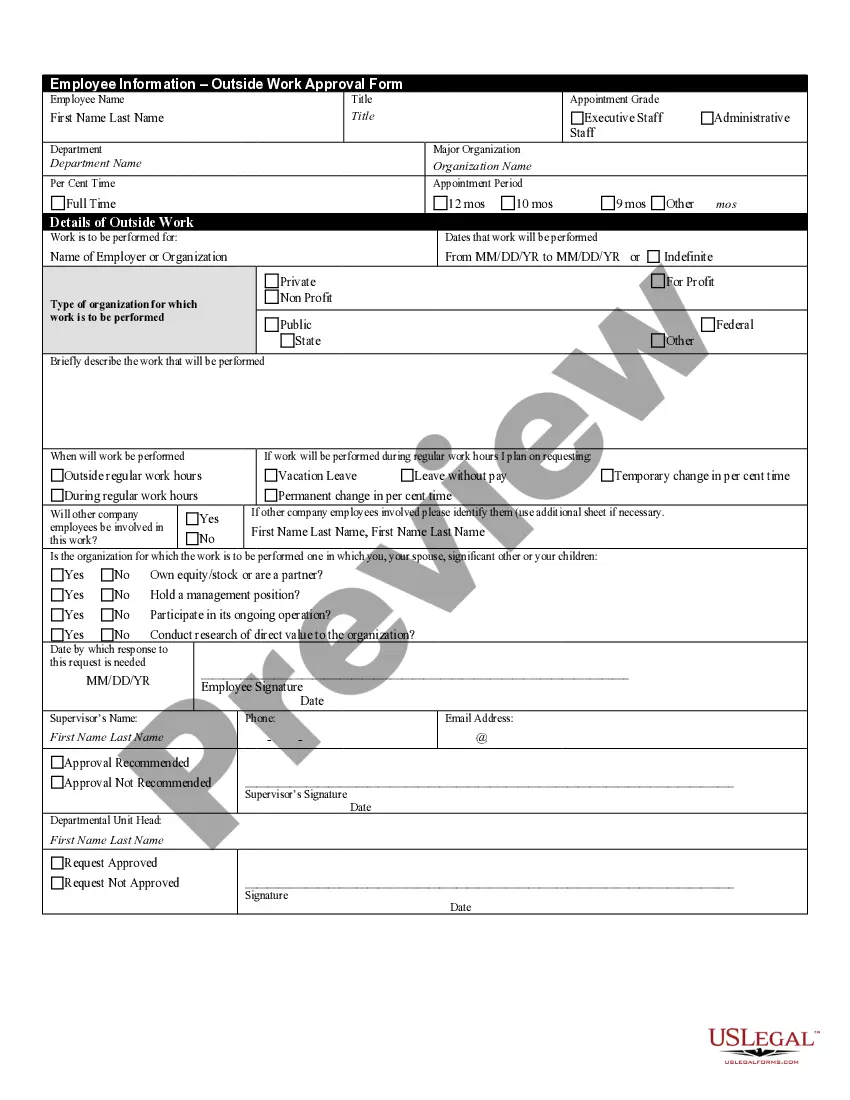
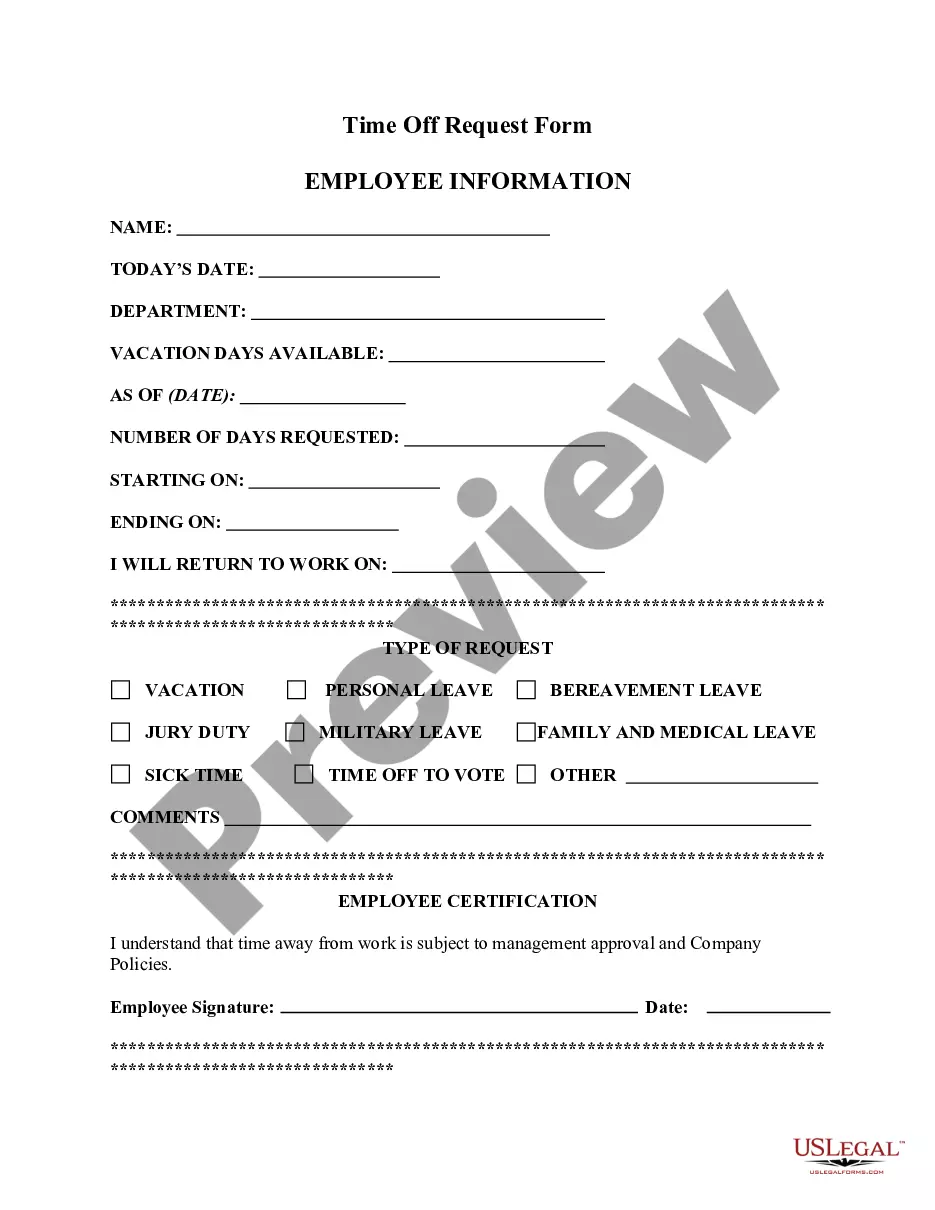
How to fill out Outside Work Approval Form?
It’s well known that you cannot transform into a legal expert instantly, nor can you swiftly learn how to draft Work Employee Policies For Small Churches without possessing a specialized skill set.
Assembling legal documents is a labor-intensive task that necessitates a certain level of education and expertise. So why not entrust the development of the Work Employee Policies For Small Churches to the experts.
With US Legal Forms, one of the most comprehensive legal template collections, you can find anything from court papers to templates for internal communication.
If you need a different template, restart your search.
Create a free account and choose a subscription plan to purchase the document. Click Buy now. Once the payment is completed, you can download the Work Employee Policies For Small Churches, complete it, print it, and forward or send it to the necessary parties or organizations.
- We understand how essential compliance and conformity to federal and state regulations are.
- That’s why, on our site, all documents are location-specific and current.
- Here’s how you can begin with our website and acquire the document you need in just a few minutes.
- Locate the template you require using the search bar at the top of the page.
- Preview it (if this feature is available) and review the accompanying description to verify if Work Employee Policies For Small Churches is what you’re looking for.
Form popularity
FAQ
Three essential organizational policies include a code of conduct, an anti-discrimination policy, and a conflict resolution procedure. These policies create a safe and respectful workplace, which is vital for small churches. By establishing clear work employee policies for small churches, leaders can ensure that everyone understands the expected behaviors and how to address issues effectively.
Examples of the 80/20 rule include: 80% of church events attended by 20% of members, 80% of donations coming from 20% of congregants, 80% of volunteers participating in 20% of activities, 80% of complaints originating from 20% of issues, and 80% of resources utilized by 20% of programs. Recognizing these patterns can help small churches refine their work employee policies to engage a broader audience and optimize resource allocation.
Donation amounts can vary widely depending on the church's needs and its community's financial capabilities. Many churches suggest a percentage of income, often around 10%, as a general guideline. It’s important for small churches to communicate their financial needs clearly and create work employee policies that encourage transparency and generosity within the congregation.
HR policies for nonprofit organizations focus on recruitment, training, and employee rights. These policies often emphasize fairness, inclusivity, and compliance with labor laws. For small churches, creating tailored work employee policies can help in managing staff effectively, ensuring that everyone understands their rights and responsibilities within the organization.
The number of full-time staff a church should have depends largely on its size and activities. Generally, small churches might operate effectively with one or two full-time staff members, while larger congregations require more. Establishing clear work employee policies for small churches helps in defining roles and responsibilities, ensuring that staff workload is manageable and effective.
The 80/20 rule in churches suggests that 80% of the work is done by 20% of the people. This principle highlights the importance of engaging more members in church activities to distribute responsibilities evenly. By implementing effective work employee policies for small churches, leaders can encourage broader participation and reduce burnout among key volunteers.
Yes, a small business, including a small church, can greatly benefit from having an employee handbook. An employee handbook outlines work employee policies for small churches, providing clear expectations for employees and promoting a positive work environment. It serves as a valuable resource for both management and staff, helping to prevent misunderstandings and disputes. By using tools and templates from US Legal Forms, small churches can easily create a comprehensive employee handbook tailored to their unique needs.
Many small churches do not have a formal HR department like larger organizations. However, it is essential for small churches to implement work employee policies for small churches to ensure compliance with employment laws and to support their staff effectively. These policies can help define roles, responsibilities, and procedures, making it easier for church leaders to manage their workforce. Utilizing resources like US Legal Forms can assist churches in developing the necessary documentation and policies.