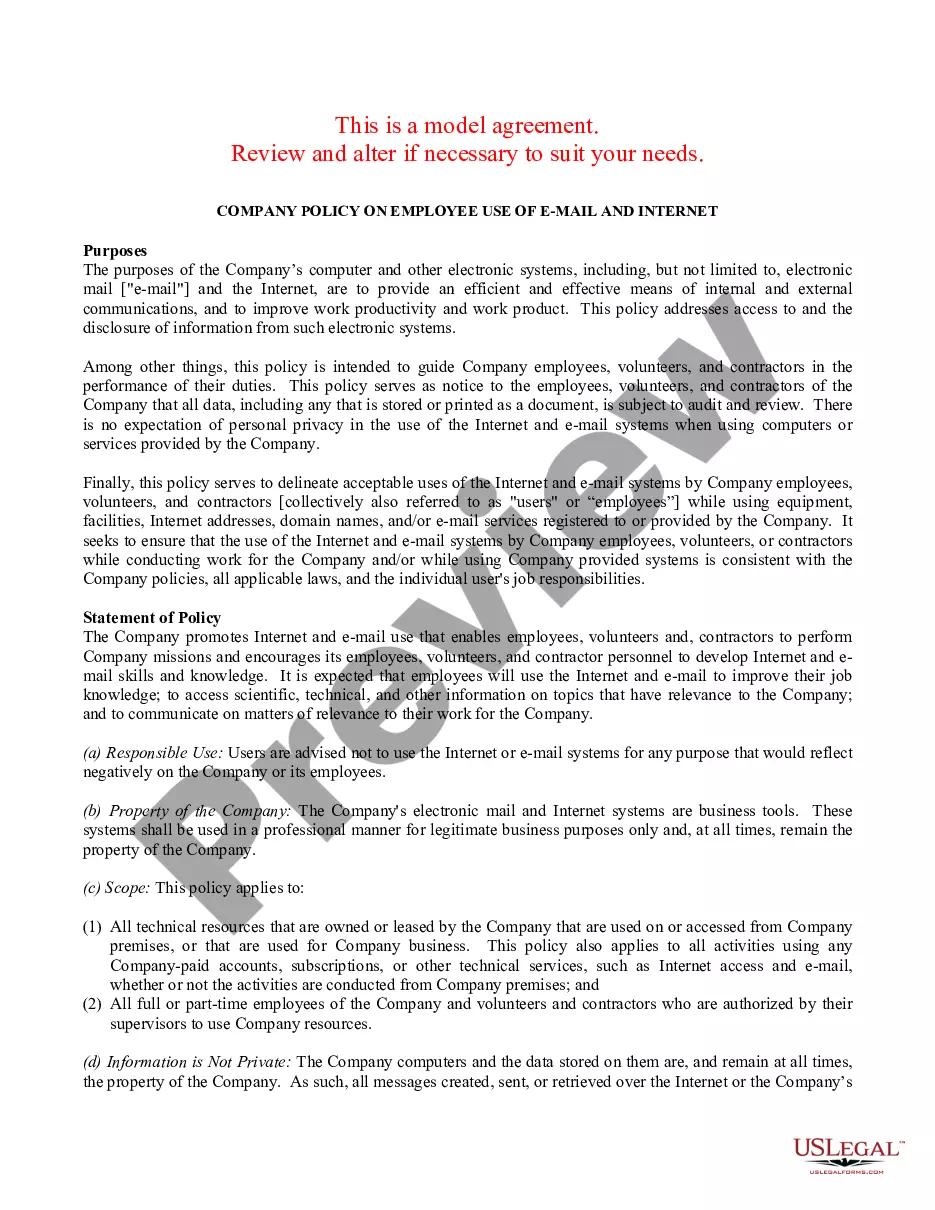
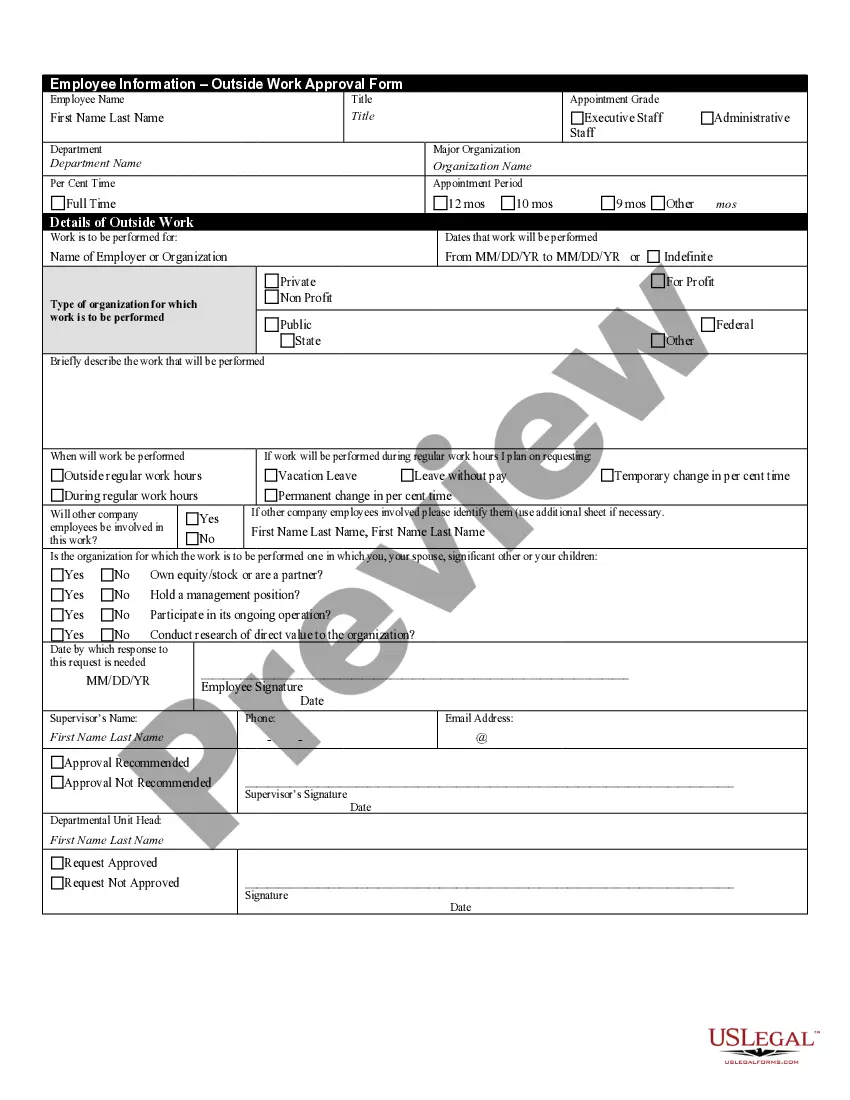
Other Employment Policy
Description
Get your form ready online
Our built-in tools help you complete, sign, share, and store your documents in one place.
Make edits, fill in missing information, and update formatting in US Legal Forms—just like you would in MS Word.
Download a copy, print it, send it by email, or mail it via USPS—whatever works best for your next step.
Sign and collect signatures with our SignNow integration. Send to multiple recipients, set reminders, and more. Go Premium to unlock E-Sign.
If this form requires notarization, complete it online through a secure video call—no need to meet a notary in person or wait for an appointment.
We protect your documents and personal data by following strict security and privacy standards.

Make edits, fill in missing information, and update formatting in US Legal Forms—just like you would in MS Word.

Download a copy, print it, send it by email, or mail it via USPS—whatever works best for your next step.

Sign and collect signatures with our SignNow integration. Send to multiple recipients, set reminders, and more. Go Premium to unlock E-Sign.

If this form requires notarization, complete it online through a secure video call—no need to meet a notary in person or wait for an appointment.

We protect your documents and personal data by following strict security and privacy standards.
Looking for another form?






How to fill out Outside Work - Strict Policy?
Managing legal documents can be exasperating, even for experienced professionals.
When you're in search of an alternative Employment Policy and lack the time to invest in finding the correct and current version, the process can be overwhelming.
US Legal Forms addresses all requirements you may have, from personal to business documents, all in one location.
Utilize state-of-the-art tools to fill out and manage your alternative Employment Policy.
Here are the steps to follow after downloading your desired form: Confirm it’s the correct document by previewing it and checking its details. Ensure that the template is valid in your state or county. Click Buy Now when you’re prepared. Choose a subscription plan. Select the format you need, and Download, complete, sign, print, and submit your documents. Enjoy the US Legal Forms online library, supported by 25 years of expertise and reliability. Transform your daily document management into a smooth and user-friendly experience today.
- Access a valuable library of articles, guides, manuals, and resources related to your situation and requirements.
- Save time and effort in finding the documents you require, using US Legal Forms’ advanced search and Review tool to locate and retrieve your alternative Employment Policy.
- If you have a monthly membership, Log Into your US Legal Forms account, locate the form, and obtain it.
- Check the My documents tab to review the documents you've previously stored and manage your folders as necessary.
- If it's your first visit to US Legal Forms, create an account for unlimited access to all the benefits of the library.
- A powerful web form repository can significantly improve handling these circumstances.
- US Legal Forms is a leading provider of online legal documents, offering over 85,000 state-specific legal templates available whenever needed.
- With US Legal Forms, you can access local legal and business forms.
Form popularity
FAQ
Three essential organizational policies you must follow include the anti-discrimination policy, the confidentiality policy, and the workplace safety policy. Each of these policies plays a crucial role in ensuring a safe, fair, and respectful environment for all employees. Your other employment policy should incorporate these elements to promote a comprehensive understanding among your team.
The 2-year contractor law provides guidelines for defining when a contractor might be classified as an employee. This classification impacts benefits and taxation, making it important for both employers and contractors to understand. A well-crafted other employment policy can facilitate clarity in these situations.
The 2-year contractor rule generally refers to a guideline for how a contractor's employment is evaluated after two years of service with the same client. This may affect how the IRS views their employment status and tax obligations. Developing a compliant other employment policy is essential for businesses in these situations.
The 24-month rule for contractors typically refers to the classification of workers based on their contract duration. If a contractor works for the same client for over 24 months, they might be evaluated differently regarding tax implications and employment status. Adhering to this rule is essential for an effective other employment policy.
Step 1 ? Management Support. ... Step 2 - Consult with staff. ... Step 3 - Define the terms of the policy. ... Step 4 - Put the policies in writing and publicise them. ... Step 5 - Training and regular referral. ... Step 6 ? Implementation. ... Step 7 - Evaluate and review.
The most typical method is to check with the employee's previous employers or have a background screening done on the suspect's job history. Many firms forbid employees from holding down a second job.
Seven steps for implementing policies and procedures Study the requirements. ... Take into account the results of your risk assessment. ... Optimize and align your document(s) ... Structure your document. ... Write your document. ... Get your document approved. ... Training and awareness of your employees.
Employment policy contributes to creating a positive work environment, including a positive work culture, good work conditions, setting out expectations for behavior and conduct, etc. Employment policy also ensures that organizations follow the laws and regulations related to the different types of employees.
Nine Tips for Writing an Employee Handbook Keep It Simple & Engaging. Use Your Handbook As A Communication Tool. Pay Attention to Format and Visuals. Clearly Mention Work Hours, Compensations, and Benefits. Mention Your Company Culture & How Employees Can Maintain The Same. Mention Legal Issues. Mention Employee Appreciation.
