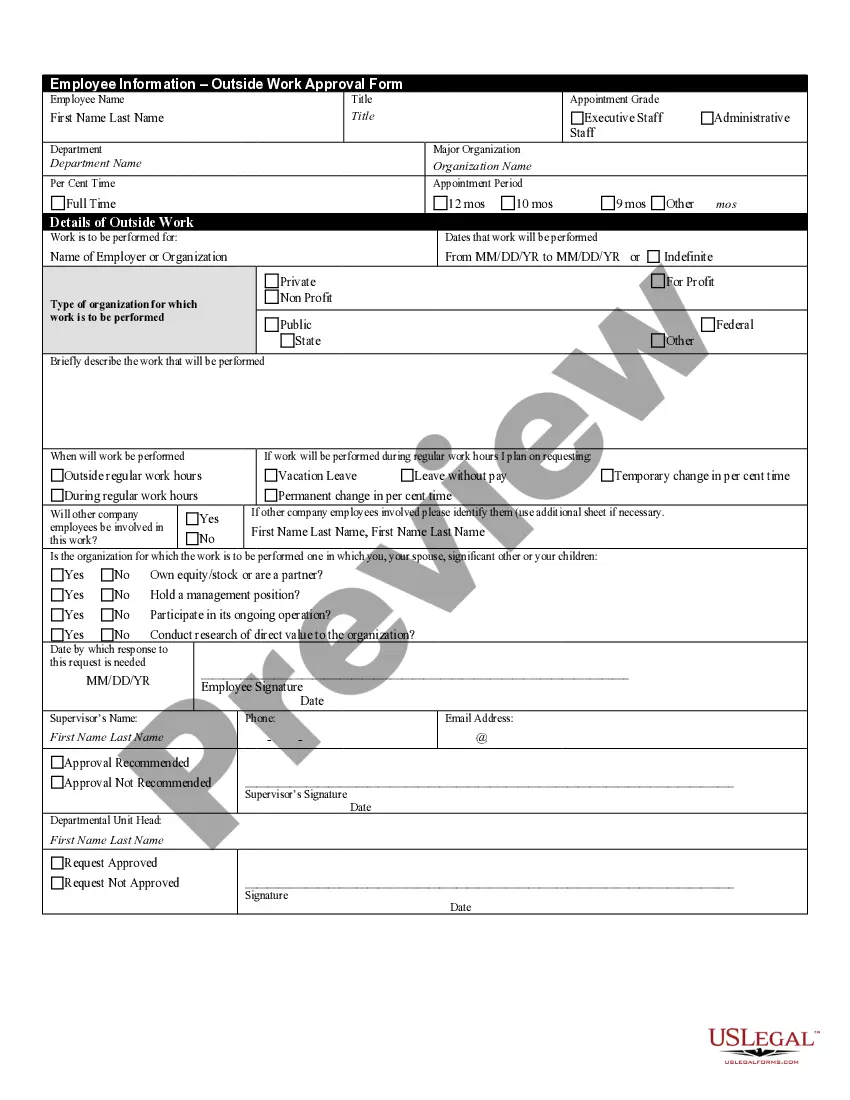
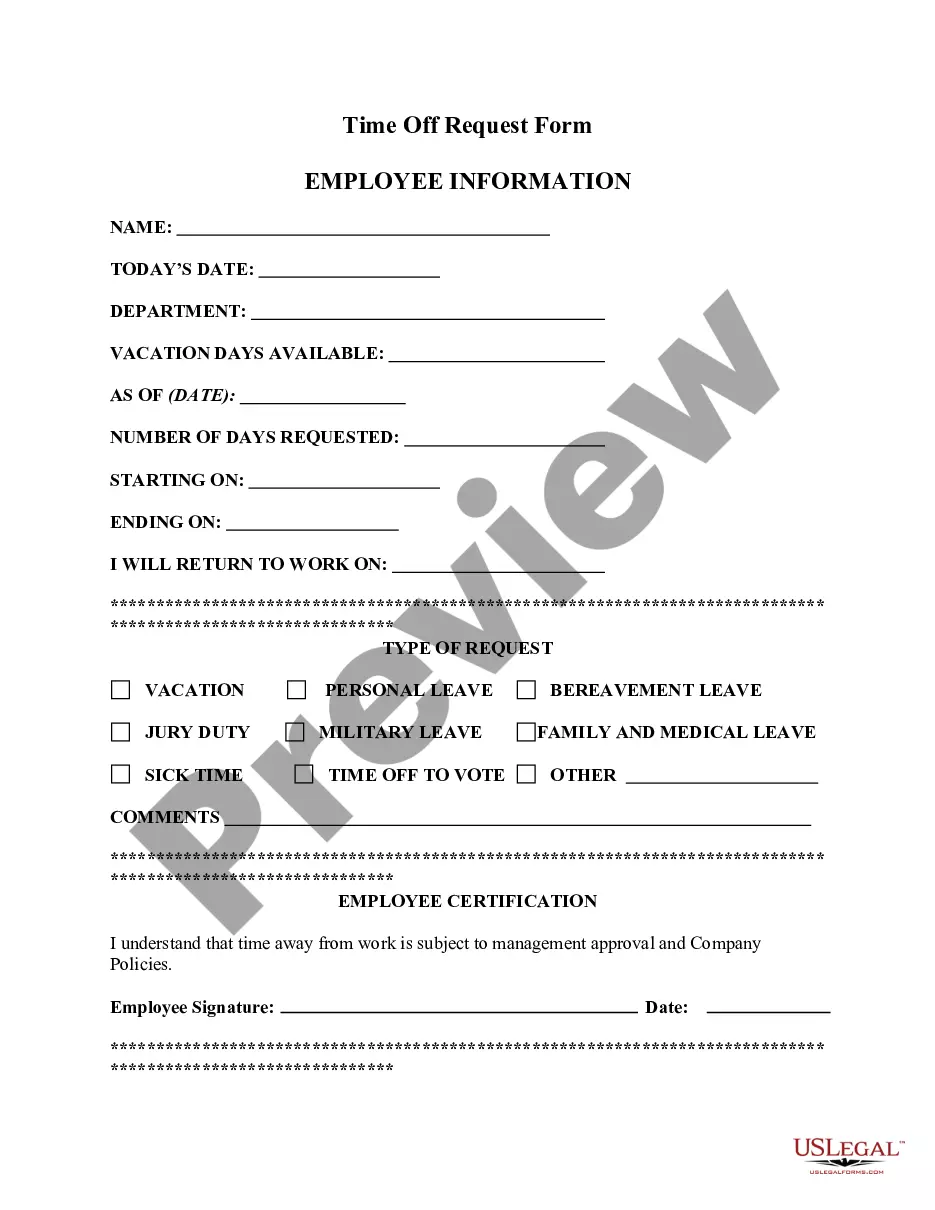
Work Employee Policies For Employees
Description

Get your form ready online
Our built-in tools help you complete, sign, share, and store your documents in one place.
Make edits, fill in missing information, and update formatting in US Legal Forms—just like you would in MS Word.
Download a copy, print it, send it by email, or mail it via USPS—whatever works best for your next step.
Sign and collect signatures with our SignNow integration. Send to multiple recipients, set reminders, and more. Go Premium to unlock E-Sign.
If this form requires notarization, complete it online through a secure video call—no need to meet a notary in person or wait for an appointment.
We protect your documents and personal data by following strict security and privacy standards.

Make edits, fill in missing information, and update formatting in US Legal Forms—just like you would in MS Word.

Download a copy, print it, send it by email, or mail it via USPS—whatever works best for your next step.

Sign and collect signatures with our SignNow integration. Send to multiple recipients, set reminders, and more. Go Premium to unlock E-Sign.

If this form requires notarization, complete it online through a secure video call—no need to meet a notary in person or wait for an appointment.

We protect your documents and personal data by following strict security and privacy standards.
Looking for another form?






How to fill out Outside Work Approval Form?
Locating a reliable source to obtain the most up-to-date and suitable legal templates is a significant part of dealing with red tape. Securing the correct legal documents demands accuracy and meticulousness, which highlights the necessity of sourcing Work Employee Policies For Employees solely from trustworthy providers, such as US Legal Forms. An incorrect template can squander your time and delay your current situation. With US Legal Forms, you can feel reassured. You can access and review all the information concerning the document’s applicability and significance for your situation and in your state or locality.
Follow these steps to finalize your Work Employee Policies For Employees.
Once you have the form on your device, you can modify it with the editor or print it out and complete it manually. Avoid the hassle associated with your legal paperwork. Explore the extensive US Legal Forms collection to find legal templates, validate their applicability to your situation, and download them immediately.
- Utilize the catalog navigation or search box to locate your sample.
- Examine the form’s description to verify if it meets the requirements of your state and county.
- View the form preview, if available, to confirm that the template is indeed the one you seek.
- Return to the search and find the appropriate template if the Work Employee Policies For Employees does not satisfy your needs.
- If you are confident about the form’s applicability, download it.
- When you are a registered user, click Log in to verify and access your selected documents in My documents.
- If you do not have an account yet, click Buy now to acquire the form.
- Select the pricing option that suits your needs.
- Proceed with the registration to complete your purchase.
- Finalize your transaction by choosing a payment method (credit card or PayPal).
- Select the file format for downloading Work Employee Policies For Employees.
Form popularity
FAQ
Creating a policy involves several key steps. First, identify the need for the policy to address specific issues or regulations. Next, gather information and consult stakeholders to gather insights. Then, draft the policy, review it for clarity, and seek feedback. After revisions, finalize the document and communicate it to employees. Lastly, monitor the policy's effectiveness and make adjustments as needed. For structured guidance, consider using US Legal Forms to develop clear work employee policies for employees.
Filling out an employee information form involves providing essential details such as your name, contact information, and job title. Make sure to include your emergency contact and tax information accurately to avoid any delays in payroll processing. Carefully read each section and follow any instructions provided. For a streamlined process, refer to templates offered by US Legal Forms, which can help you create effective work employee policies for employees.
An example of a work policy is an attendance policy, which outlines expectations regarding employee attendance, punctuality, and procedures for reporting absences. This policy helps create a structured work environment and ensures that employees understand their responsibilities. By establishing clear guidelines, you promote accountability and foster a culture of professionalism. For detailed examples and templates, explore US Legal Forms, where you can find various work employee policies for employees.
To write an effective employee policy, start by clearly defining the purpose and scope of the policy. Gather input from relevant stakeholders to ensure the policy reflects your organization's values and legal requirements. Use simple language to outline the rules and expectations for employees, making sure to include consequences for non-compliance. For comprehensive templates, consider using platforms like US Legal Forms, which specialize in work employee policies for employees.
Employees should be friendly and collaborative. They should try not to disrupt the workplace or present obstacles to their colleagues' work. All employees must be open for communication with their colleagues, supervisors or team members. We expect employees to not abuse their employment benefits.
Health, disability, life, and workers' comp insurance information. Retirement plans, like a 401(k) Paid time off (PTO) Other leave policies, such as parental leave, sick leave, or jury duty.
Policies and Procedures Americans with Disabilities Act. Personal Safety. Sexual Harassment. Drug and Alcohol. Violence and Weapons. Attendance. Hours of Work. Meal and Rest Periods.
Nine Tips for Writing an Employee Handbook Keep It Simple & Engaging. Use Your Handbook As A Communication Tool. Pay Attention to Format and Visuals. Clearly Mention Work Hours, Compensations, and Benefits. Mention Your Company Culture & How Employees Can Maintain The Same. Mention Legal Issues. Mention Employee Appreciation.
8 Keys to Creating an Effective Employee Handbook #1: Know your history. ... #2: Identify required policies. ... #3: Include other must-have policies. ... #4: Know what policies to avoid. ... #5: Draft policies that reflect company values. ... #6: Set the tone. ... #8: Gather feedback.