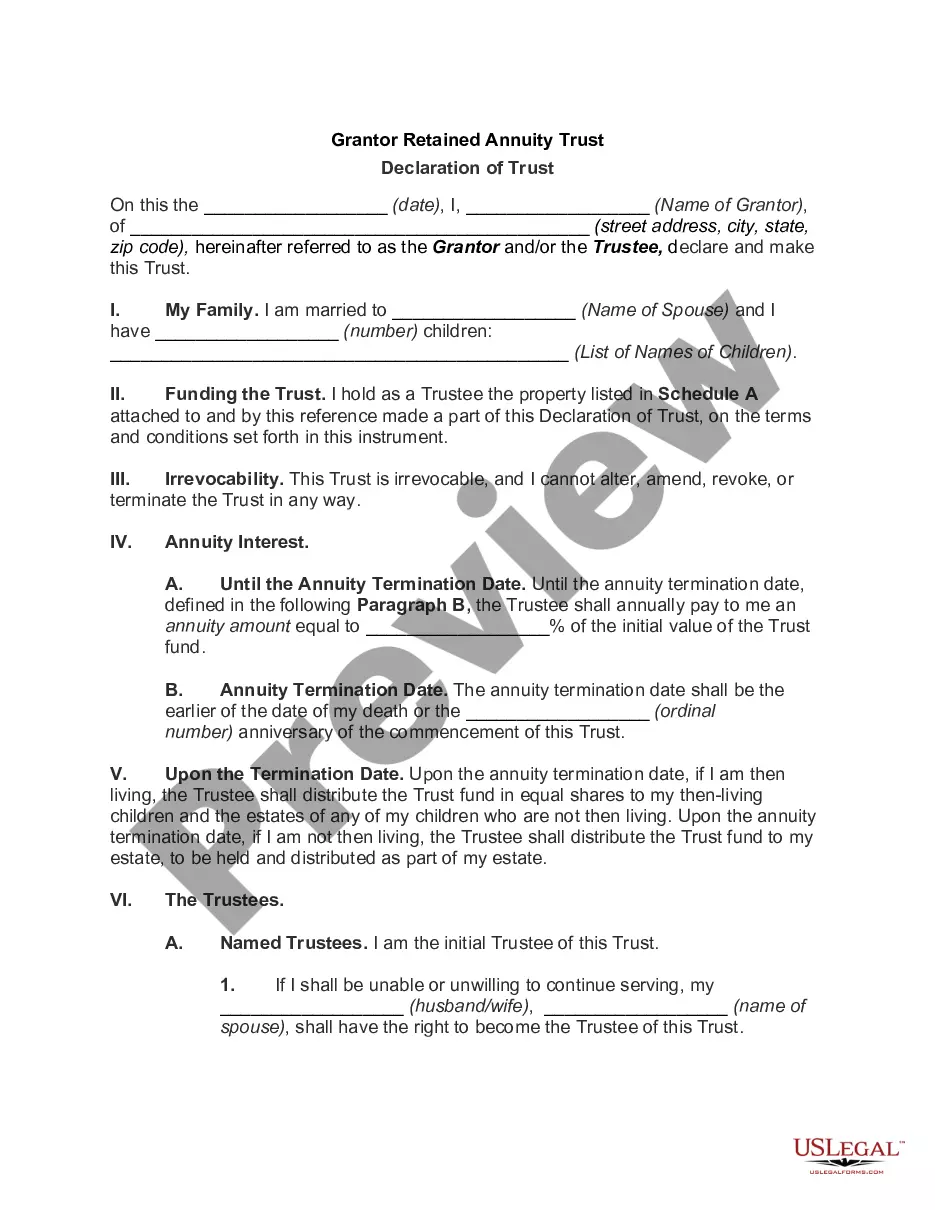
Grantor Retained Annuity Trust Taxation
Description

Get your form ready online
Our built-in tools help you complete, sign, share, and store your documents in one place.
Make edits, fill in missing information, and update formatting in US Legal Forms—just like you would in MS Word.
Download a copy, print it, send it by email, or mail it via USPS—whatever works best for your next step.
Sign and collect signatures with our SignNow integration. Send to multiple recipients, set reminders, and more. Go Premium to unlock E-Sign.
If this form requires notarization, complete it online through a secure video call—no need to meet a notary in person or wait for an appointment.
We protect your documents and personal data by following strict security and privacy standards.

Make edits, fill in missing information, and update formatting in US Legal Forms—just like you would in MS Word.

Download a copy, print it, send it by email, or mail it via USPS—whatever works best for your next step.

Sign and collect signatures with our SignNow integration. Send to multiple recipients, set reminders, and more. Go Premium to unlock E-Sign.

If this form requires notarization, complete it online through a secure video call—no need to meet a notary in person or wait for an appointment.

We protect your documents and personal data by following strict security and privacy standards.
Looking for another form?








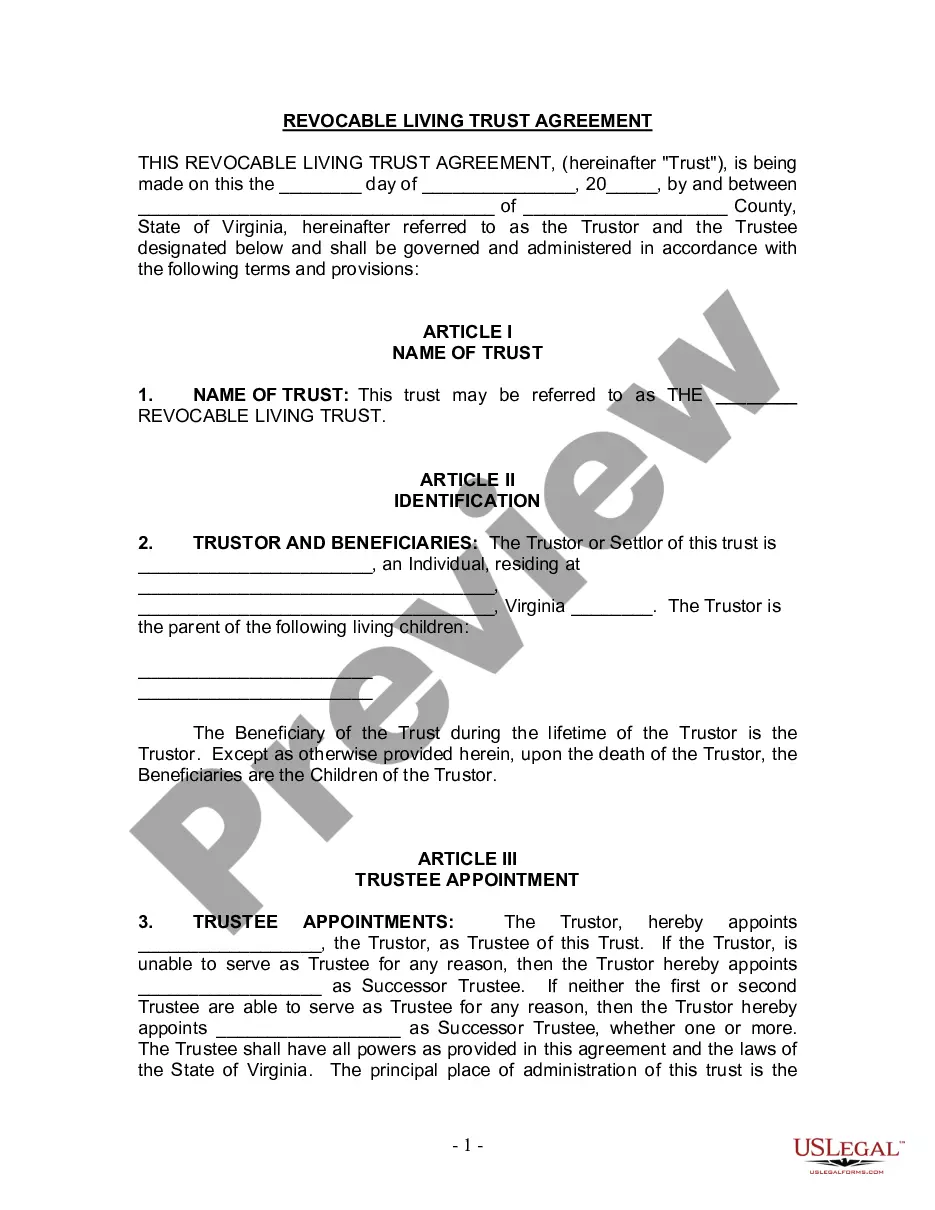

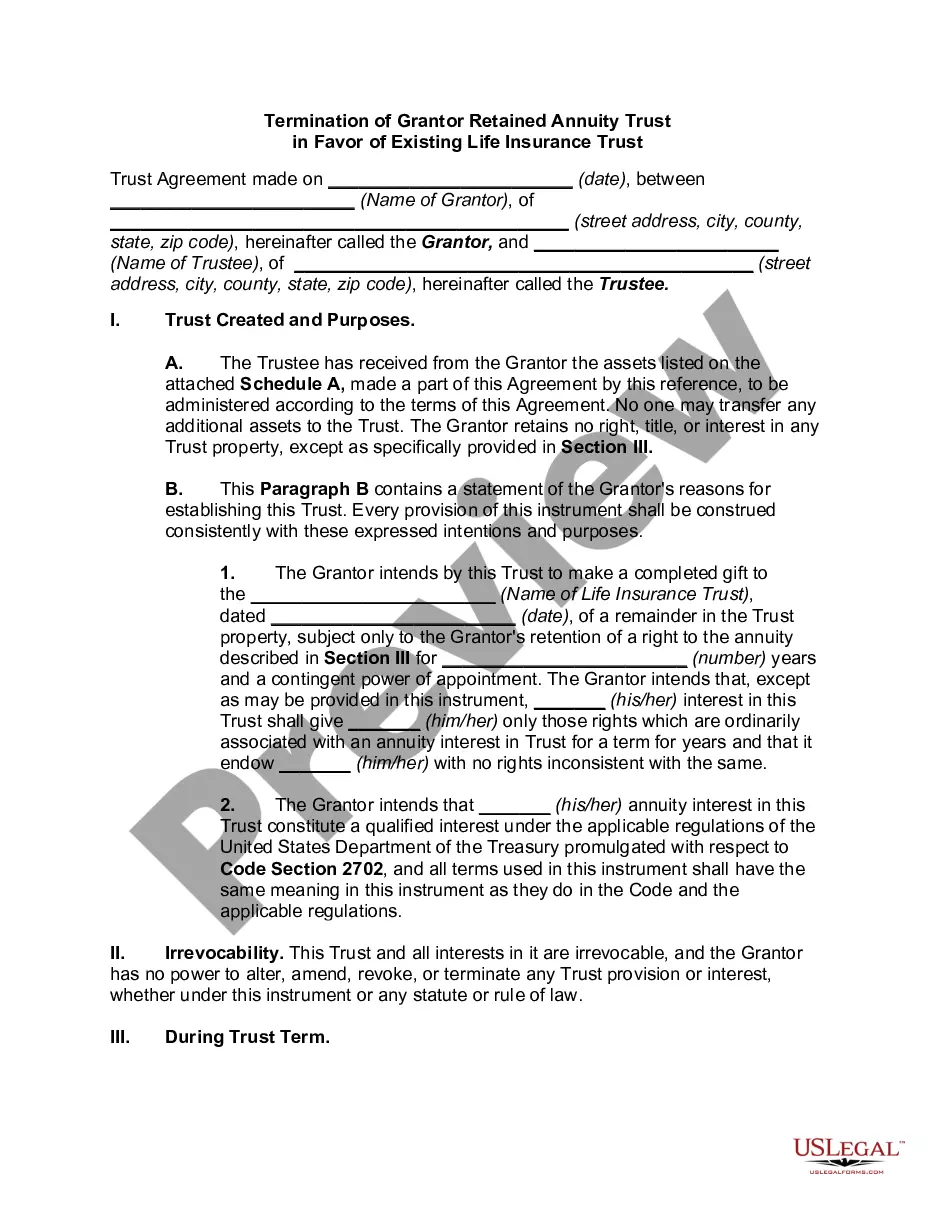
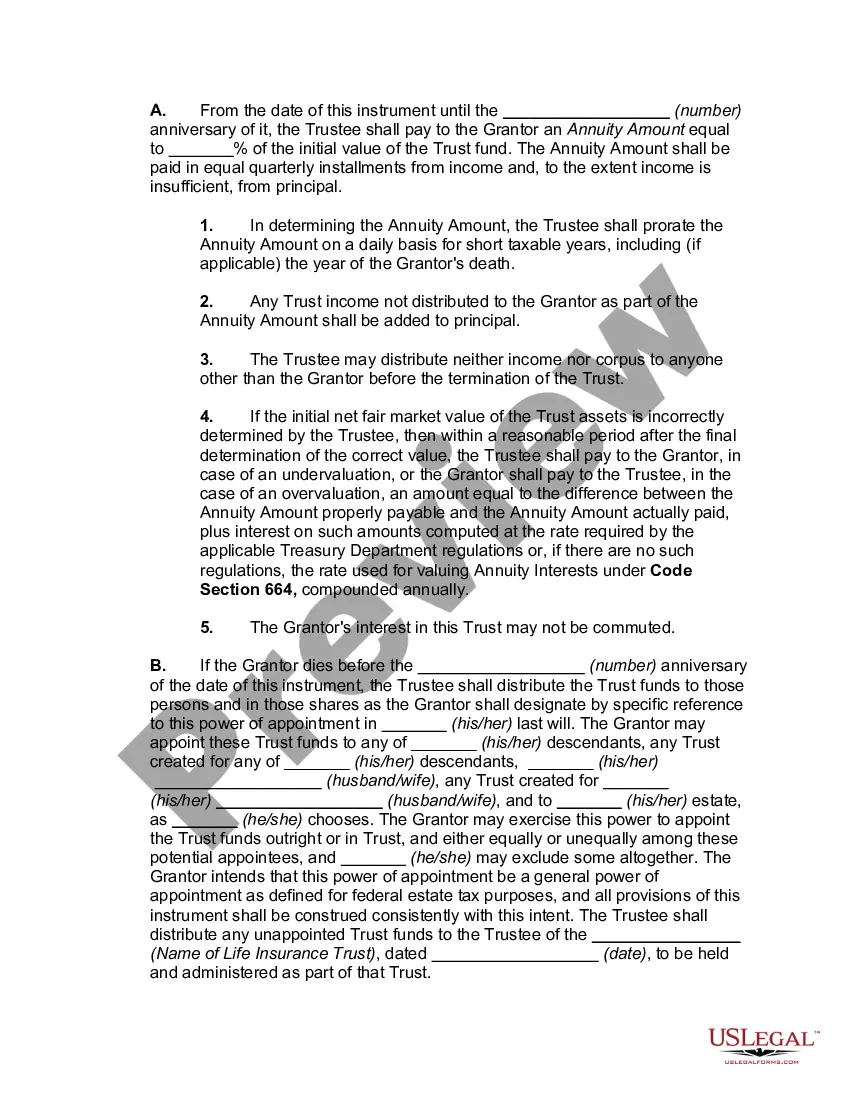
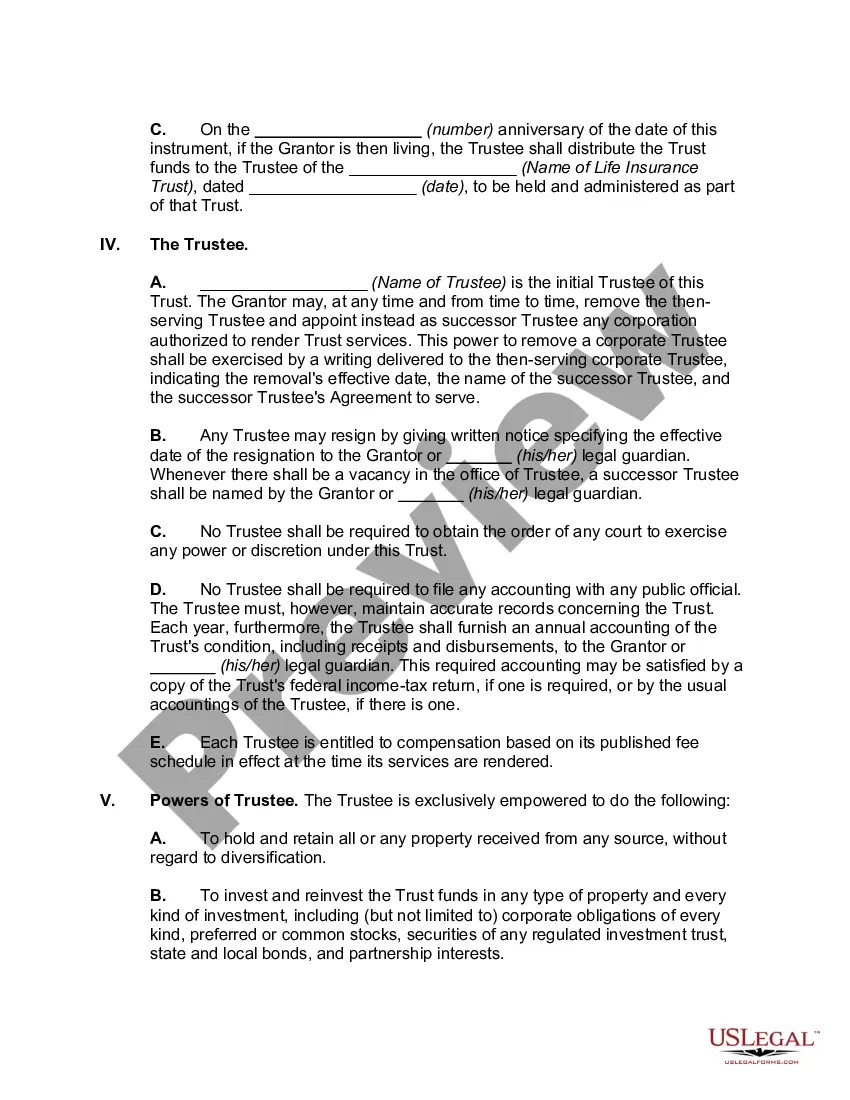
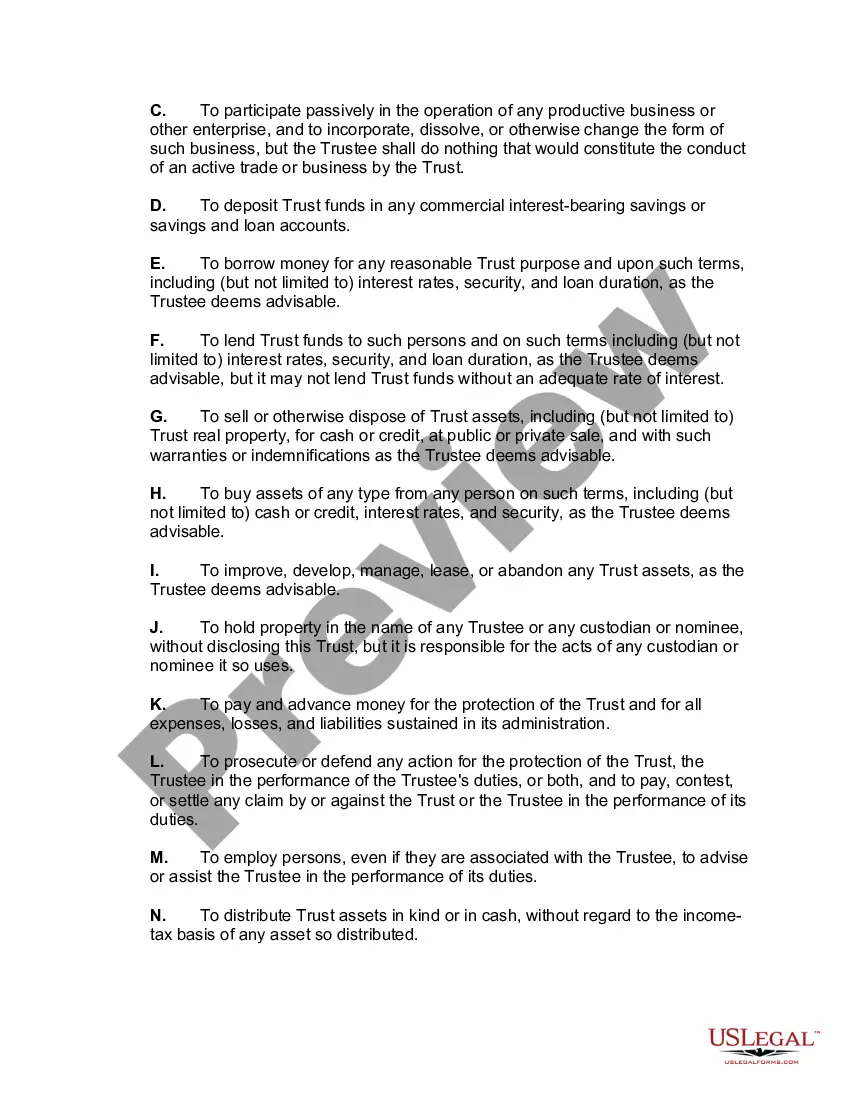
How to fill out Termination Of Grantor Retained Annuity Trust In Favor Of Existing Life Insurance Trust?
- If you're a returning user, log in to your account and check that your subscription is active before downloading the required template.
- For first-time users, start by exploring the Preview mode to review the form description and ensure it meets your needs while adhering to local jurisdiction requirements.
- Should you need alternative templates, utilize the Search functionality at the top of the page to find the right document that fits your criteria.
- Once you've selected the suitable form, click on the Buy Now button and select your preferred subscription plan, making sure to register for an account.
- Proceed to purchase by entering your payment details through credit card or PayPal to complete your subscription.
- Finally, download the form to your device, allowing you to fill it out and access it anytime from the My Forms section of your account.
US Legal Forms provides a vast library of over 85,000 customizable legal documents, empowering users and attorneys alike to create precise legal paperwork effortlessly.
Experience the ease of handling legal forms today. Start your journey with US Legal Forms and ensure your legal needs are met efficiently!
Form popularity
FAQ
Report distributions from an irrevocable trust using IRS Form 1041, where you’ll list the distributions made and their corresponding tax implications for the beneficiaries. Keep in mind that these distributions may trigger tax consequences for those receiving them. When dealing with grantor retained annuity trust taxation, it is wise to seek guidance from a qualified tax advisor to ensure accurate reporting.
Income earned by a grantor trust is typically taxed to the grantor, meaning the grantor must report this income on their personal tax return. This structure is beneficial in certain situations, particularly when considering grantor retained annuity trust taxation, as it allows for potential tax advantages. Always consult with a tax professional to understand your specific obligations and ensure proper handling.
Yes, income distributed from an irrevocable trust is generally taxable to the beneficiaries receiving it. This is particularly relevant when discussing grantor retained annuity trust taxation, as the income from such trusts flows through to the grantor or beneficiaries based on the structure of the trust. It’s advisable to review this scenario with a tax professional to navigate the implications.
An irrevocable trust may need to issue Form 1099 if it makes distributions that meet the IRS thresholds. This applies to distributions of income to beneficiaries, as they may need to report this income on their individual tax returns. Always remember to consider grantor retained annuity trust taxation when preparing these forms, as they significantly impact tax reporting.
Reporting income from an irrevocable grantor trust involves using IRS Form 1041, which is designed for estate and trust income tax returns. It's crucial to understand that the grantor may still be responsible for paying taxes on the income generated by the trust, depending on the specific circumstances. In the case of grantor retained annuity trust taxation, consult a tax advisor to ensure compliance and accurate reporting.
Trust-owned annuities are taxed based on the type of trust and its structure. If the annuity is inside a revocable trust, the grantor pays taxes on the income. However, if it’s part of an irrevocable trust, different rules apply regarding grantor retained annuity trust taxation. Utilizing services such as uslegalforms can simplify the creation and management of these trusts, helping you navigate the tax landscape effectively.
A revocable trust is typically not taxed as a separate entity; instead, the grantor pays taxes on the trust's income. This means any interest or dividends generated within the trust are reported on the grantor's personal tax return. Understanding the nuances of grantor retained annuity trust taxation is vital, especially if you plan to incorporate a GRAT into your estate strategy. Consulting a tax expert can clarify any uncertainties.
A Grantor Retained Annuity Trust (GRAT) allows a grantor to transfer assets into a trust while retaining the right to receive annuity payments for a specific period. At the end of this period, the remaining assets go to the beneficiaries. Planning around grantor retained annuity trust taxation can help you realize tax savings when the trust assets appreciate. Using platforms like uslegalforms can help you establish a GRAT effectively.
Payments received from a GRAT are typically taxed as ordinary income to the grantor. These payments are part of the annuity stream the grantor retains, so while they provide income, they also have tax implications. Familiarizing yourself with grantor retained annuity trust taxation can help you prepare for these tax responsibilities. Professional guidance can assist in maximizing the advantages of your GRAT.
A Grantor Retained Annuity Trust (GRAT) is generally not taxed at the trust level; instead, the grantor is responsible for taxes on the trust's income. This includes interest and dividends generated within the GRAT. Understanding grantor retained annuity trust taxation can offer significant tax benefits if structured correctly. It is essential to follow IRS guidelines to ensure compliance and optimize tax implications.