Irrevocable Beneficiary Ontario
Description
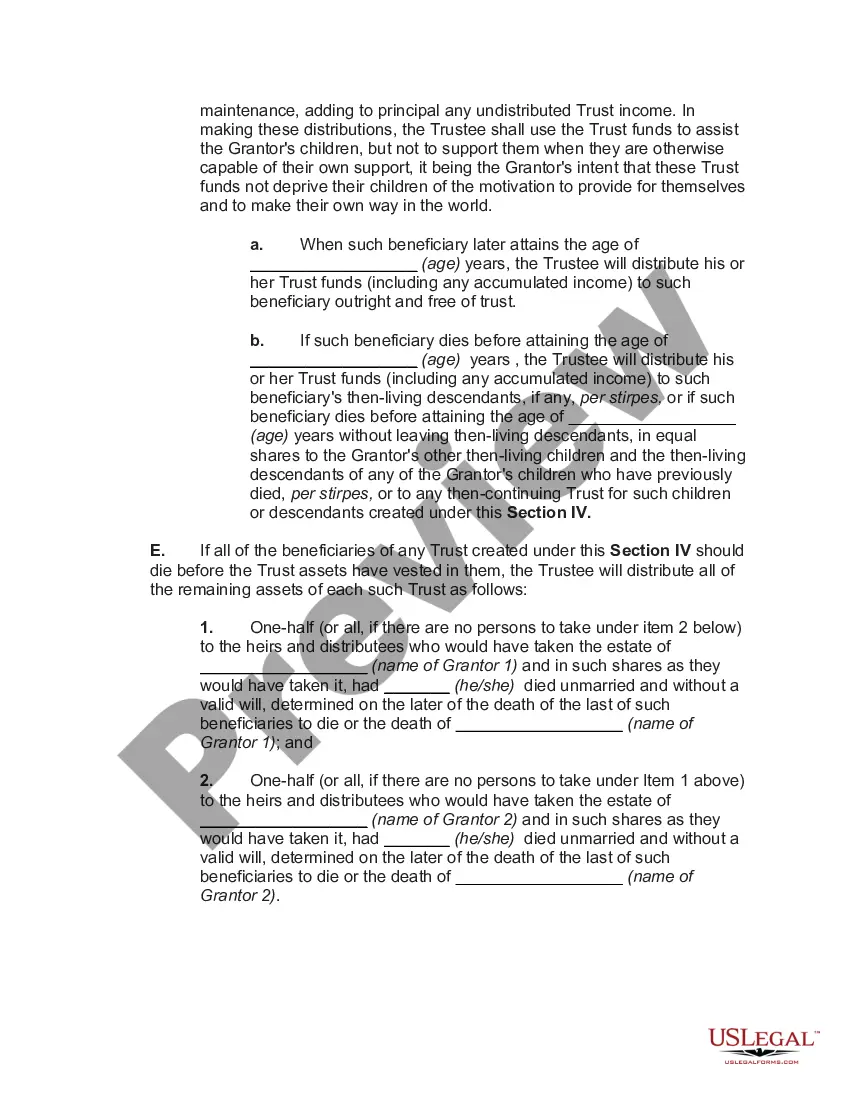
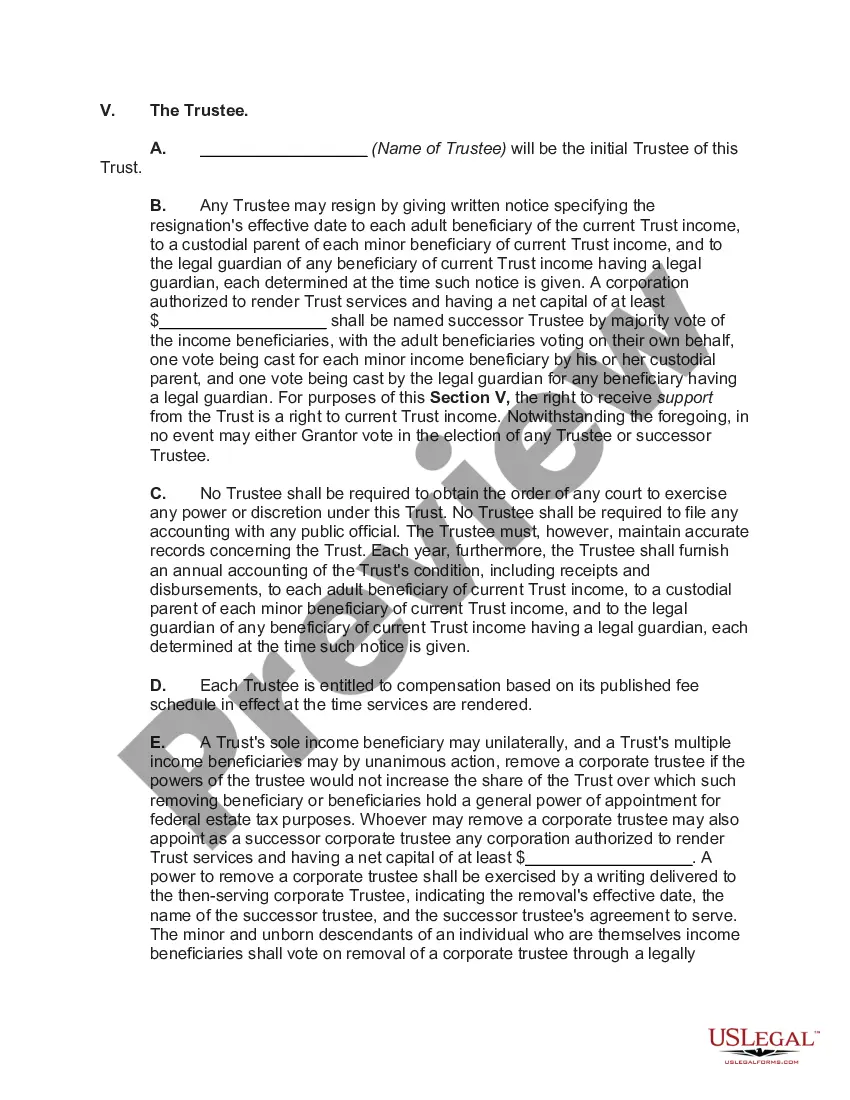
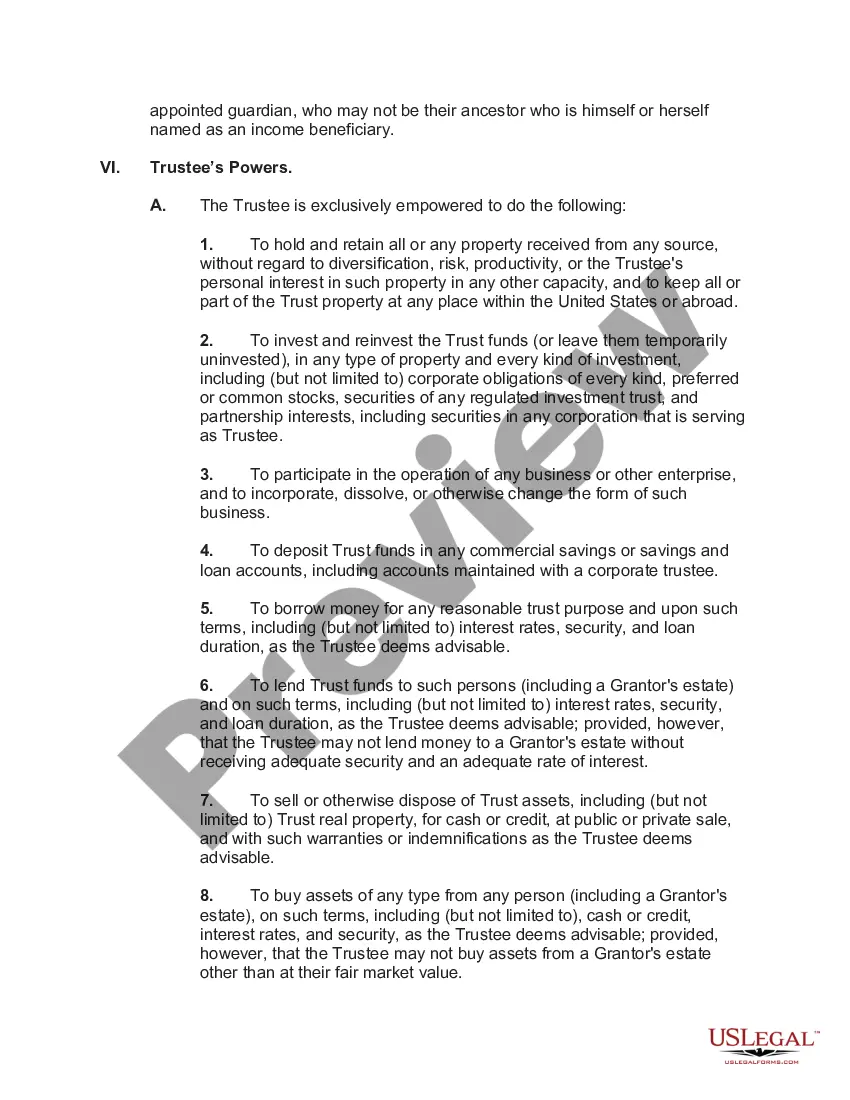
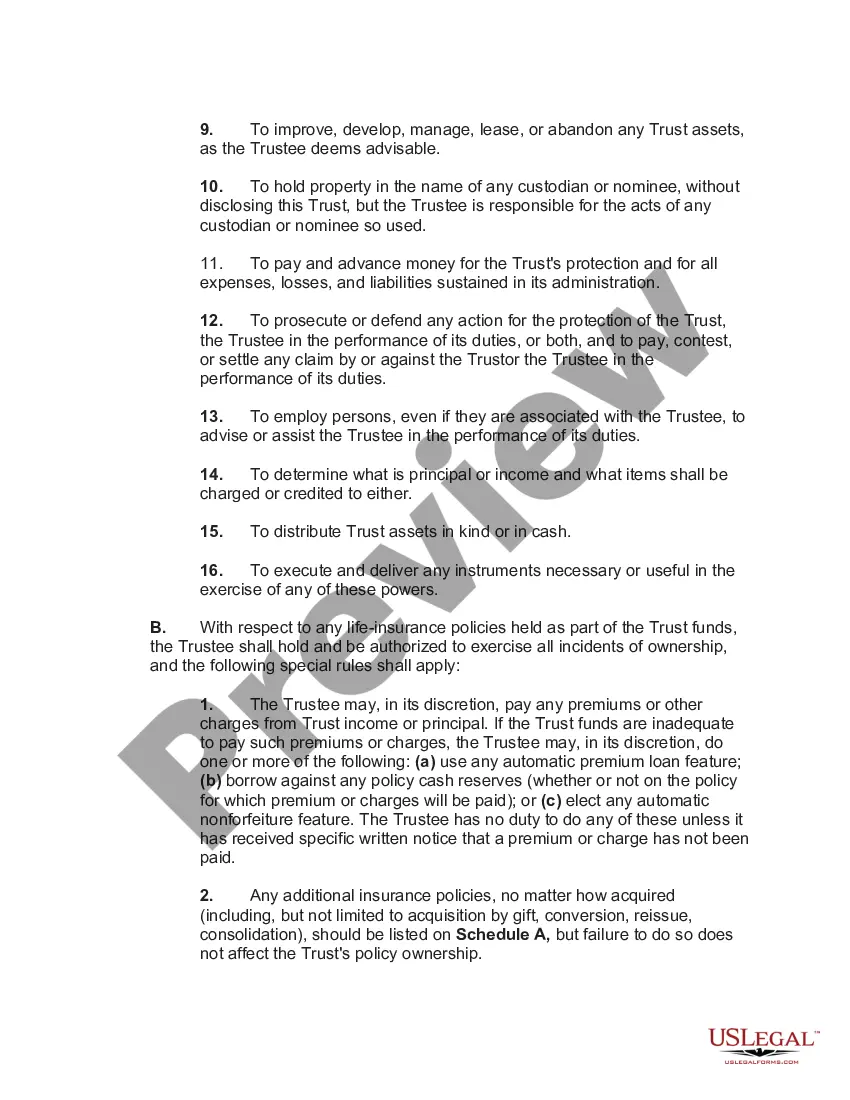

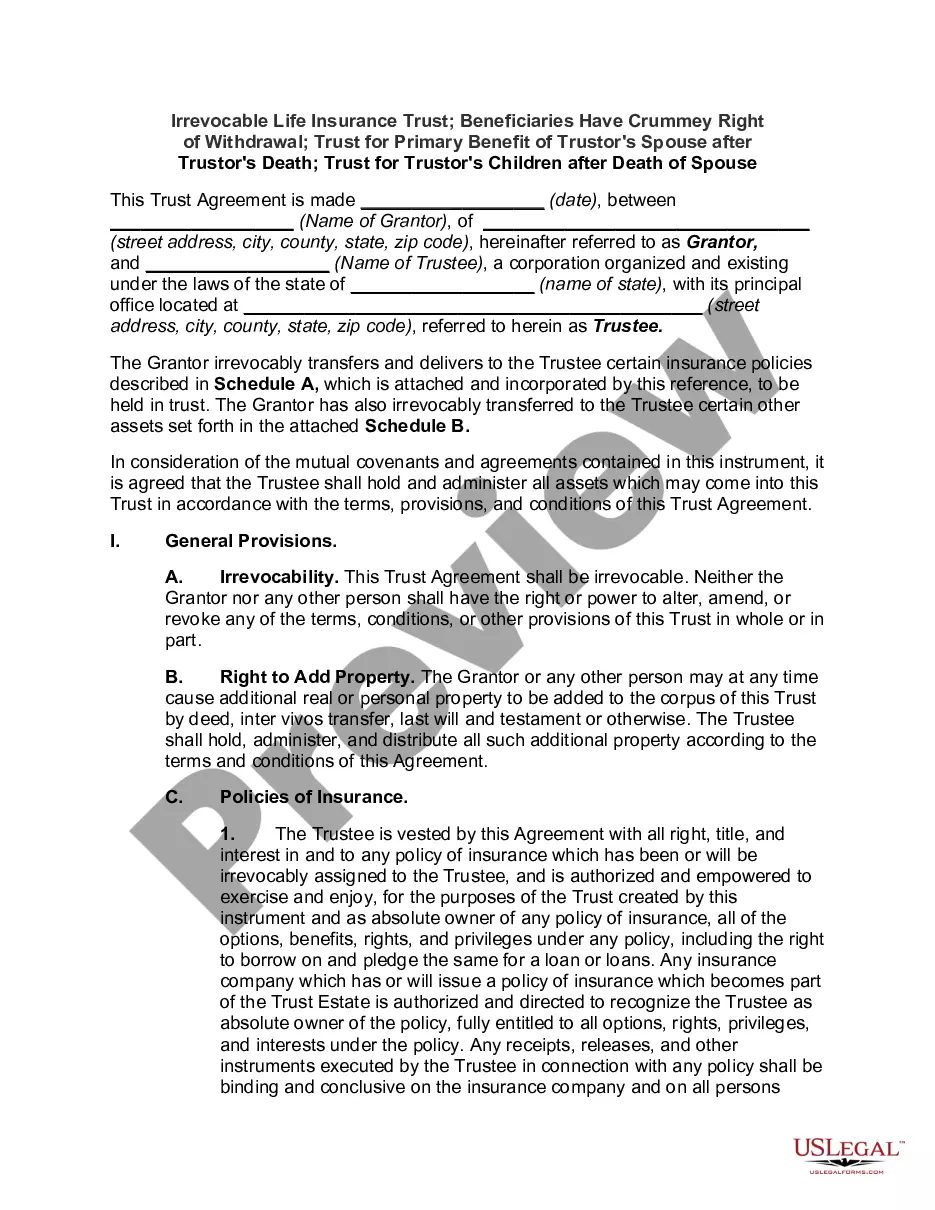
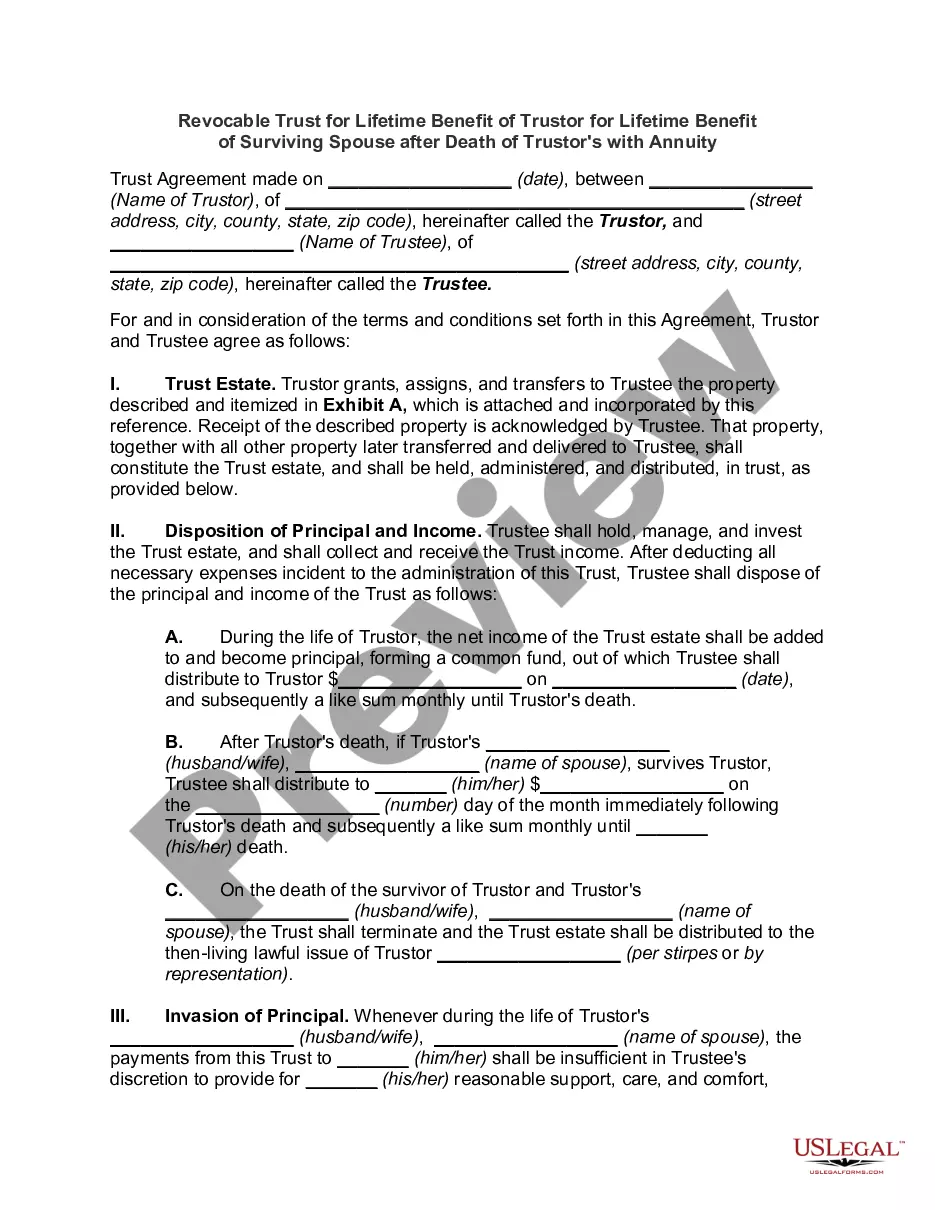
Get your form ready online
Our built-in tools help you complete, sign, share, and store your documents in one place.
Make edits, fill in missing information, and update formatting in US Legal Forms—just like you would in MS Word.
Download a copy, print it, send it by email, or mail it via USPS—whatever works best for your next step.
Sign and collect signatures with our SignNow integration. Send to multiple recipients, set reminders, and more. Go Premium to unlock E-Sign.
If this form requires notarization, complete it online through a secure video call—no need to meet a notary in person or wait for an appointment.
We protect your documents and personal data by following strict security and privacy standards.

Make edits, fill in missing information, and update formatting in US Legal Forms—just like you would in MS Word.

Download a copy, print it, send it by email, or mail it via USPS—whatever works best for your next step.

Sign and collect signatures with our SignNow integration. Send to multiple recipients, set reminders, and more. Go Premium to unlock E-Sign.

If this form requires notarization, complete it online through a secure video call—no need to meet a notary in person or wait for an appointment.

We protect your documents and personal data by following strict security and privacy standards.
Looking for another form?










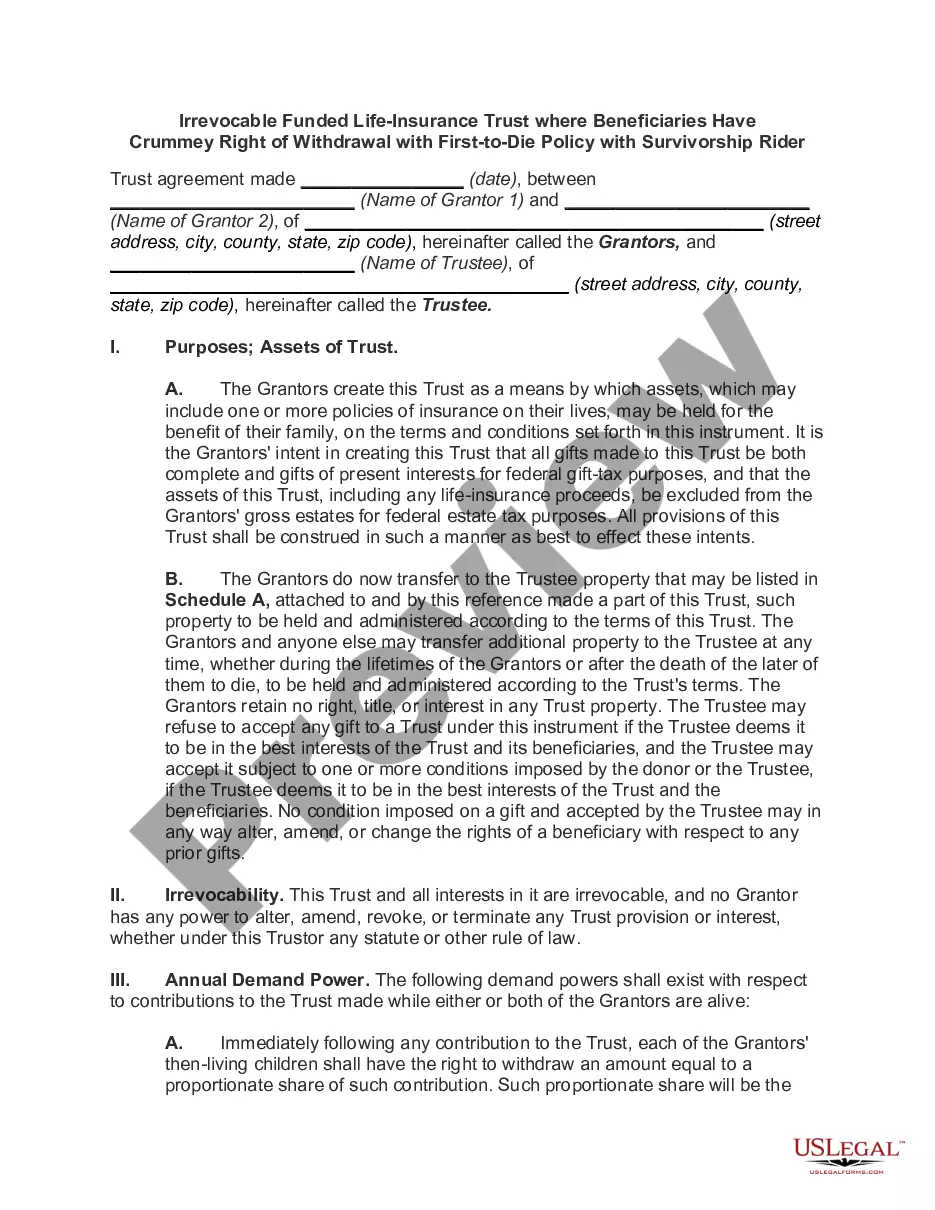
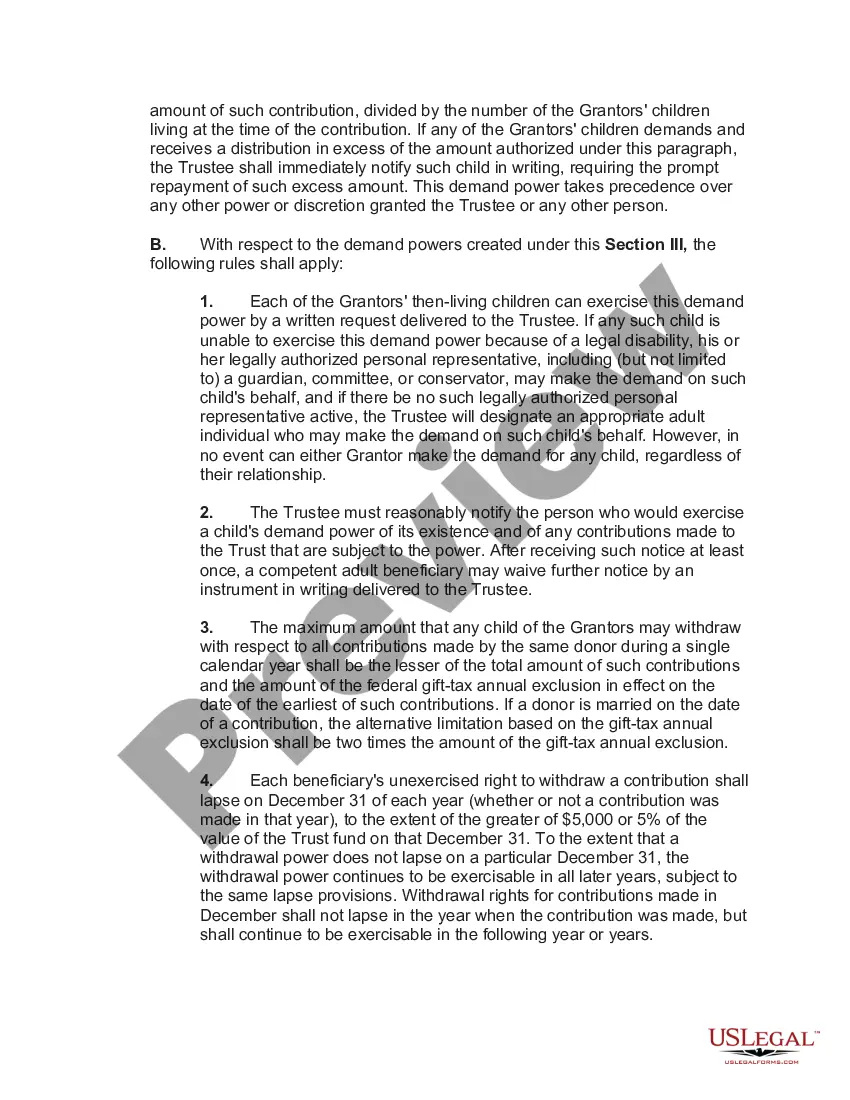
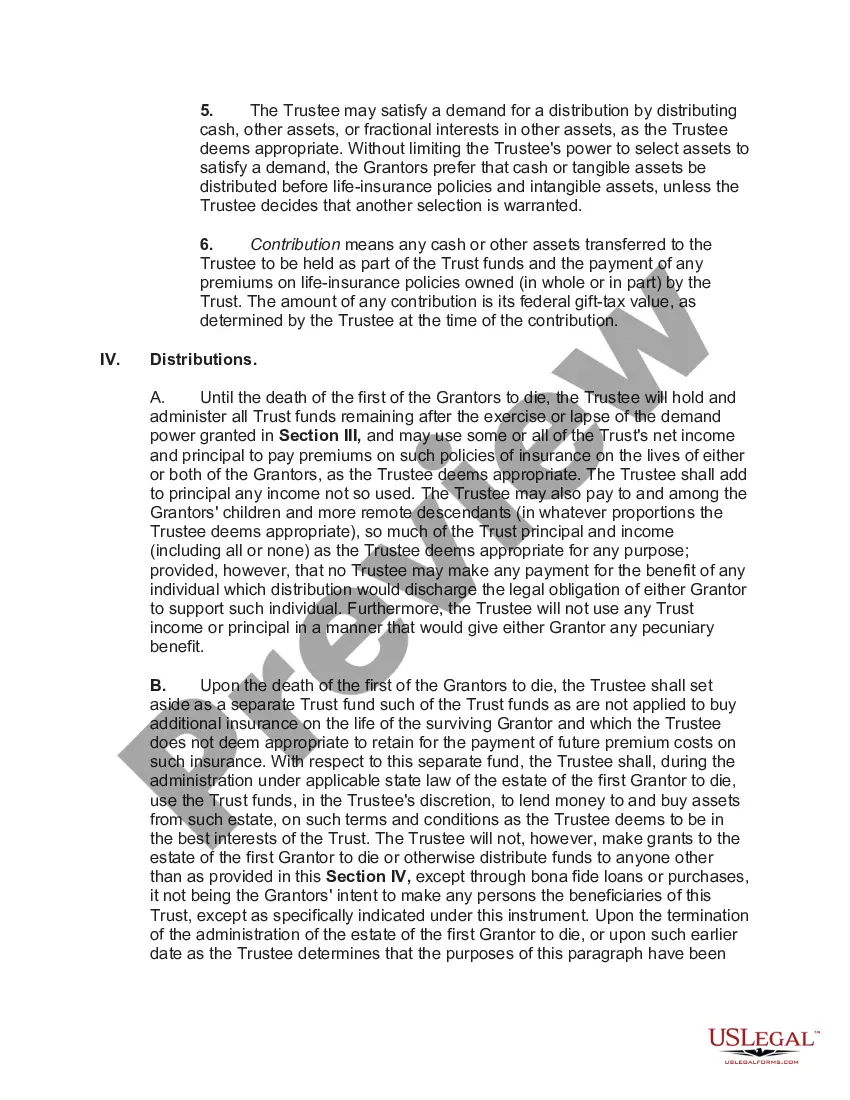
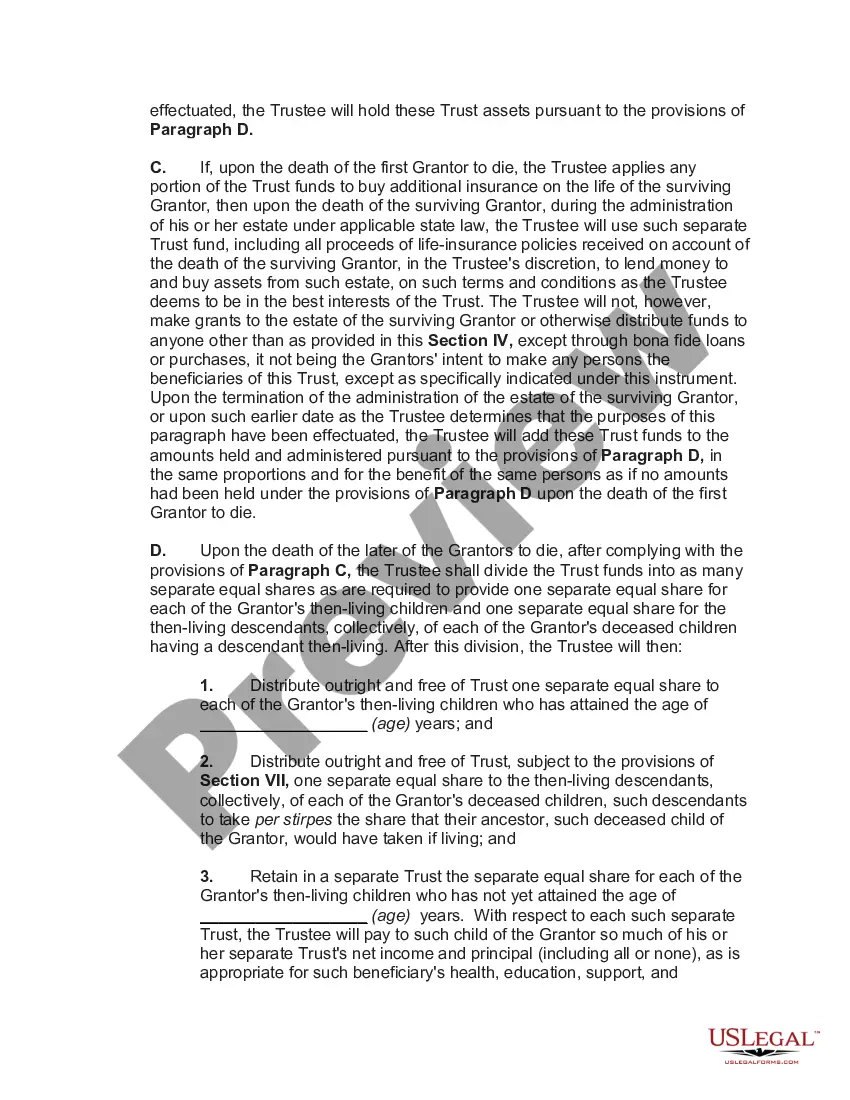
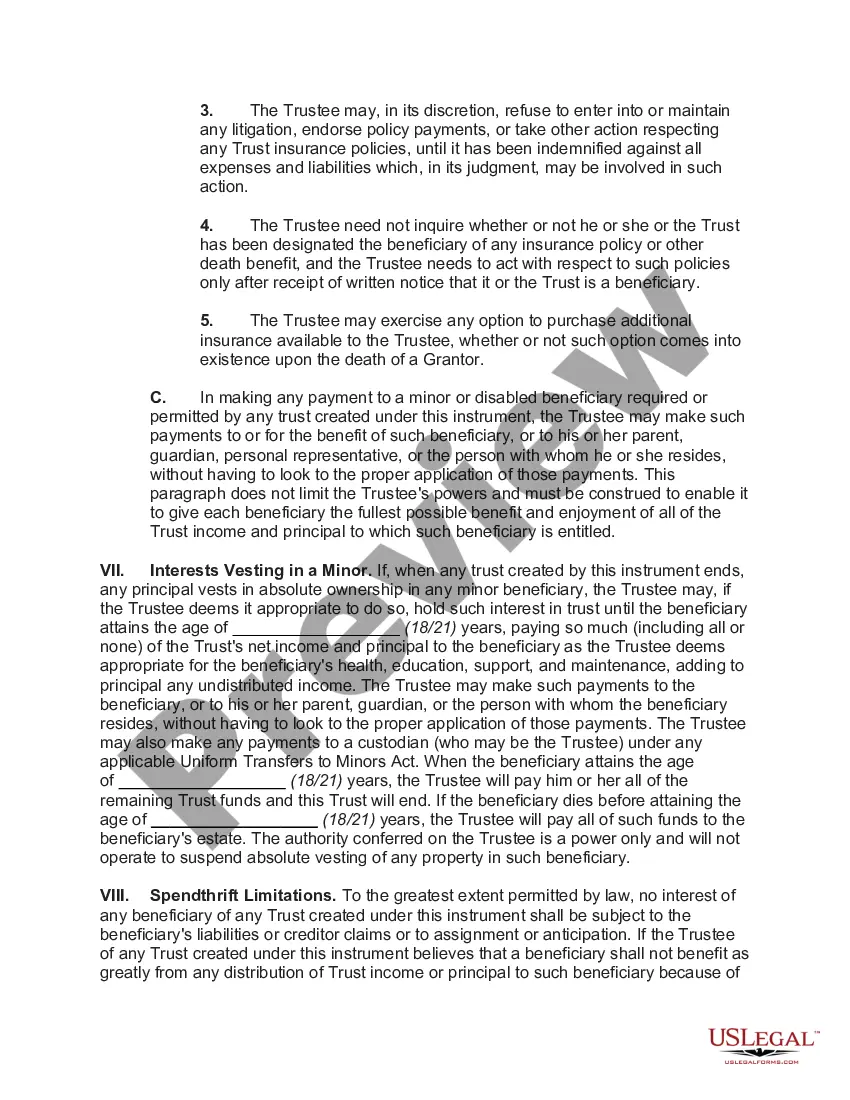
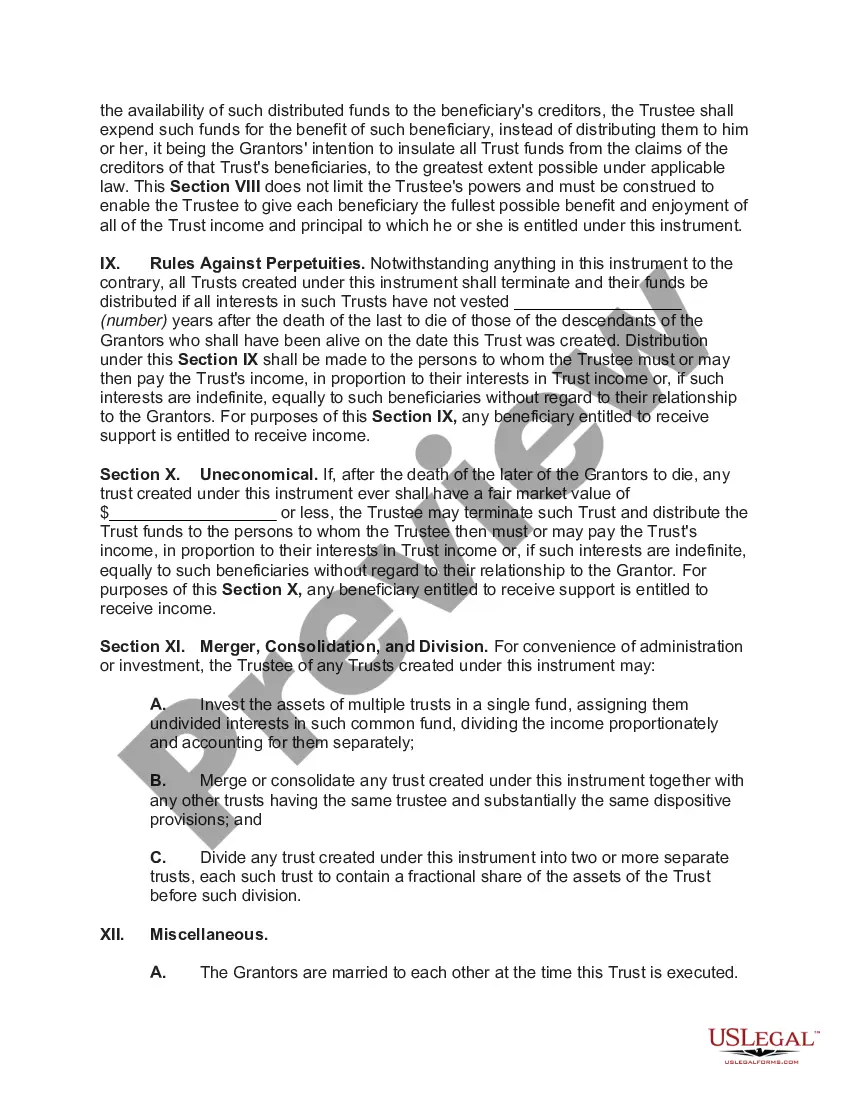
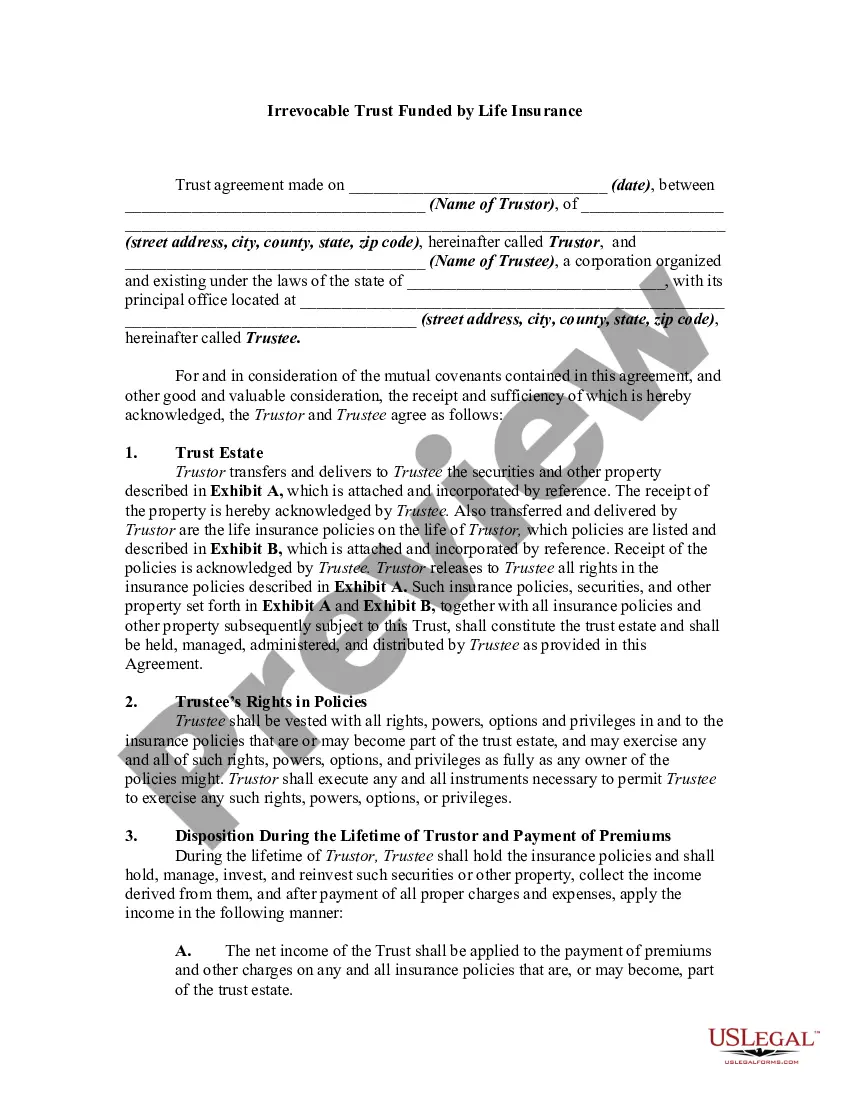
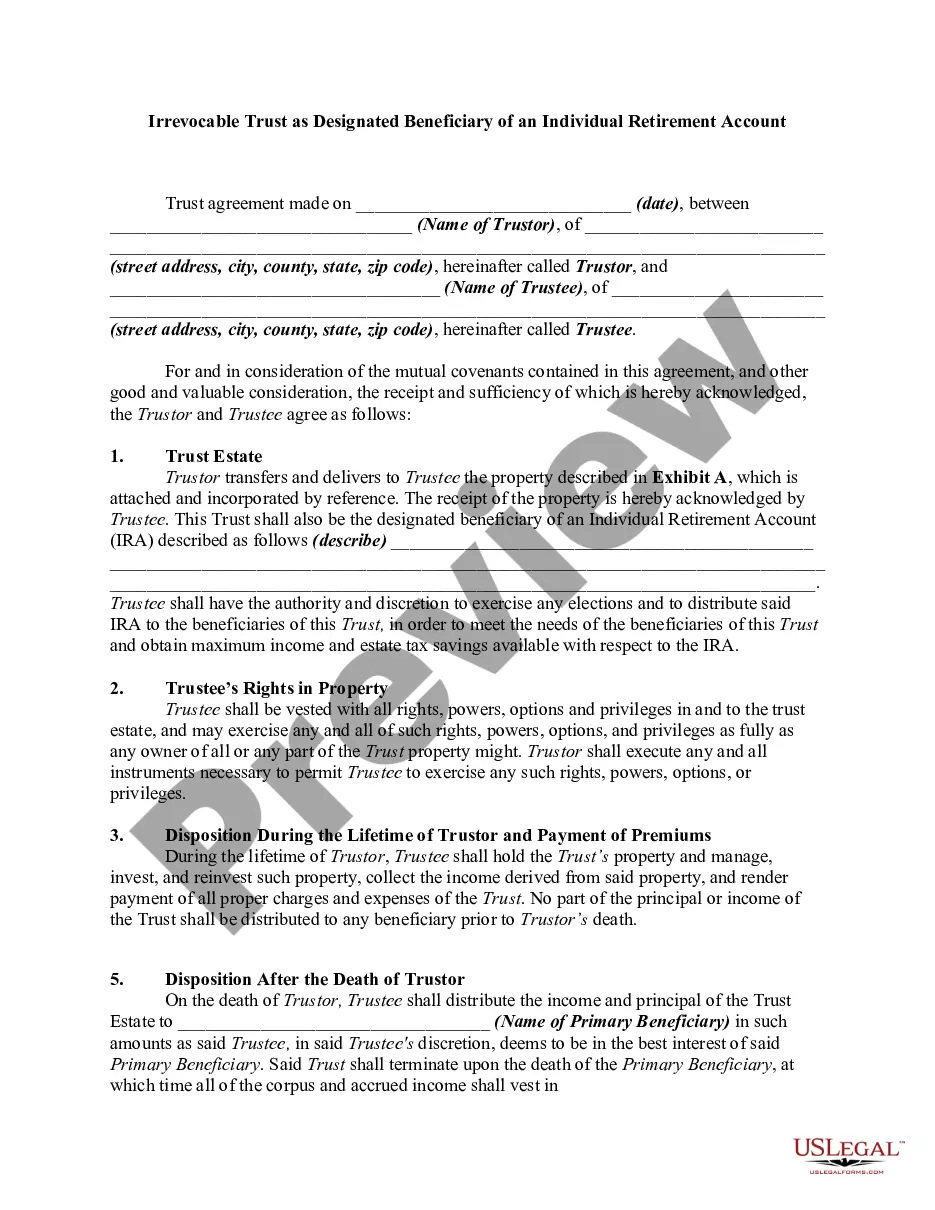
How to fill out Irrevocable Funded Life Insurance Trust Where Beneficiaries Have Crummey Right Of Withdrawal With First To Die Policy With Survivorship Rider?
- Log in to your US Legal Forms account if you are a returning user; else, create a new account.
- Browse through the extensive collection and check the preview and description of the irrevocable beneficiary form to ensure it aligns with your jurisdiction’s requirements.
- If necessary, use the search functionality to locate additional templates suitable for your needs.
- Select the form and click on the 'Buy Now' button to choose your desired subscription plan, which unlocks access to the extensive library.
- Complete your purchase using your preferred payment option, either credit card or PayPal.
- Download the form to your device; you can access it anytime from the 'My Forms' section of your profile.
With US Legal Forms, you benefit from a robust collection of legal documents that are not only comprehensive but also easy to use. This service supports both individuals and attorneys, ensuring that you have the right tools to execute precise and legally compliant documents with confidence.
Start your journey towards simple legal form completion today. Visit US Legal Forms to access the resources you need!
Form popularity
FAQ
To become an irrevocable beneficiary, one must be specifically named in the legal documents at the establishment of a policy or account. This designation requires careful thought, as it limits changes to the beneficiary status. If you need help with this process, platforms like US Legal Forms can provide the necessary legal documents.
When an irrevocable beneficiary passes away, the benefits associated with that designation usually go to their estate unless otherwise specified. This could mean that the proceeds are distributed according to their will or the laws of intestacy in Ontario. Thus, it’s wise to consider the implications of your beneficiary choice carefully.
The right to change an irrevocable beneficiary lies primarily with the beneficiary themselves, as their consent is required for any changes. This provision makes it essential to choose a reliable and trusted individual when naming an irrevocable beneficiary in Ontario. Always ensure that this decision aligns with your overall estate plan.
Yes, in Canada, a designated beneficiary on a bank account generally takes precedence over a will. This means that if you name an irrevocable beneficiary on your bank account, they will receive those funds directly, despite what your will states. It’s important to keep this in mind when structuring your estate plan.
In Canada, the primary difference lies in control. Revocable beneficiaries offer the account holder the ability to change them at will, while irrevocable beneficiaries are permanent and require consent for any changes. Understanding this distinction is crucial when considering your estate plans involving an irrevocable beneficiary in Ontario.
A revocable beneficiary can be altered or removed by the policyholder at any time, allowing for flexibility in estate planning. Conversely, an irrevocable beneficiary, once named, cannot be changed without their consent in Ontario. This means that if you choose an irrevocable beneficiary, you must ensure it's the right choice, as it locks in that person's entitlement.
Choosing an irrevocable trust in Ontario allows you to protect your assets while providing for beneficiaries in a structured way. Once the trust is established, you cannot modify or revoke it, which ensures your wishes remain intact. This stability can be beneficial in tax planning and protecting assets from creditors. If you need assistance setting up such a trust or understanding its implications, uslegalforms can provide valuable resources and templates to guide you.
Having an irrevocable beneficiary in Ontario provides security and assurance that the named individual will receive the designated benefits without the risk of changes. This designation can be crucial for maintaining family financial stability or ensuring funds go to dependents. Furthermore, once selected, this type of beneficiary cannot easily be altered, which can deter potential disputes. It is an important estate planning tool for managing your assets.
If a beneficiary refuses an inheritance in Ontario, the refusal usually means the inheritance will pass to the next eligible beneficiary, as outlined in the will or under the law. An irrevocable beneficiary in Ontario cannot later change their decision without mutual consent. This can lead to complications if multiple beneficiaries are involved, so it's wise to seek legal advice. Understanding these dynamics can help you navigate inheritance matters effectively.
To fill out beneficiary paperwork, start by gathering necessary information such as your name, address, and relationship to the beneficiary. Clearly designate whether the beneficiary is revocable or irrevocable; if it’s irrevocable, be mindful of the implications in Ontario. Ensure you follow the specific requirements of your insurance provider, and consider using templates available from U.S. Legal Forms to simplify the process.