Special Needs Trust Qualified Expenses
Description

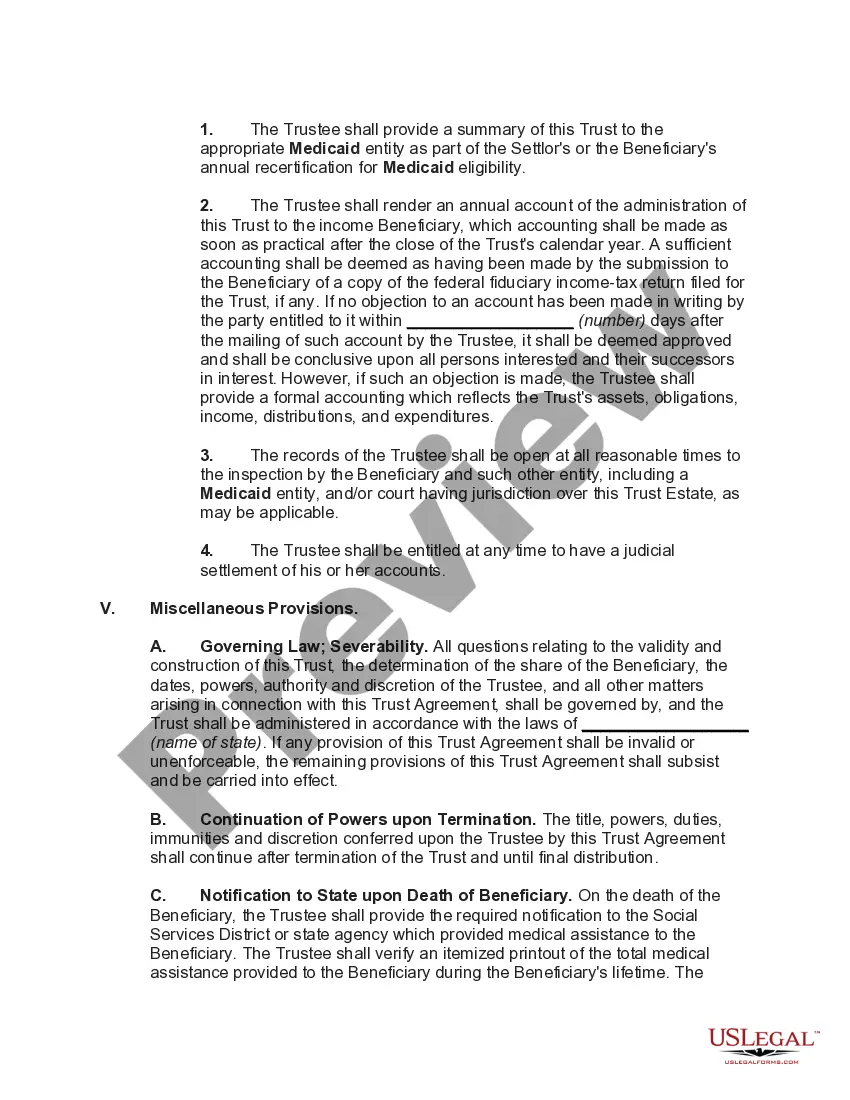
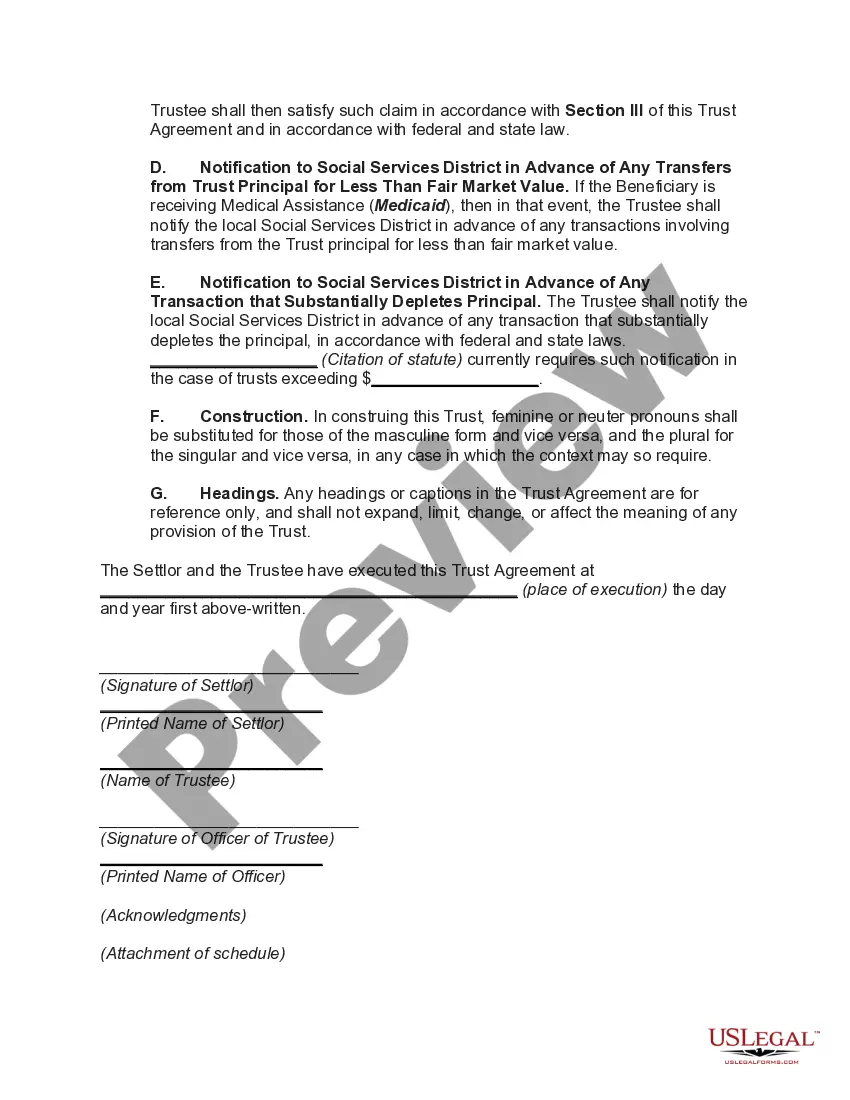
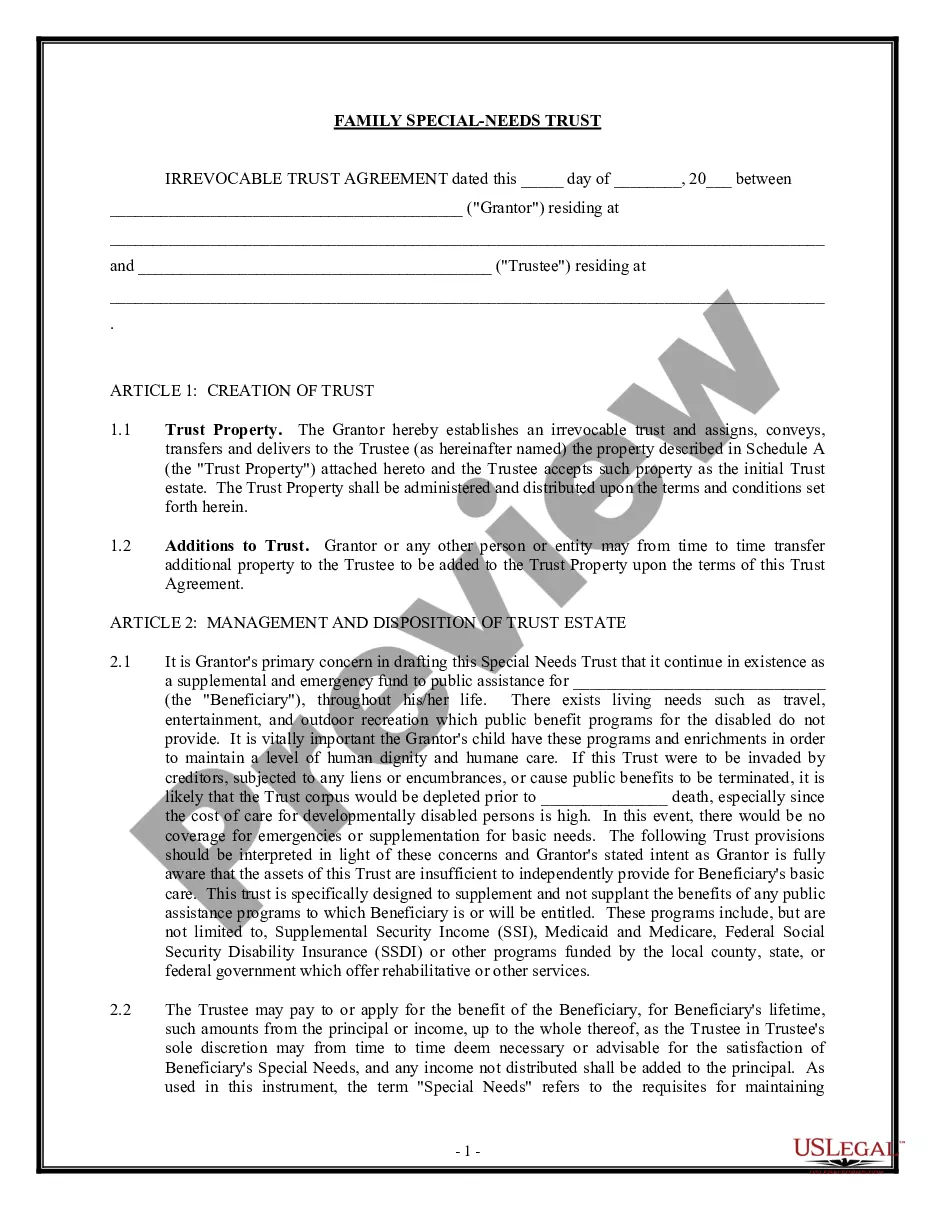
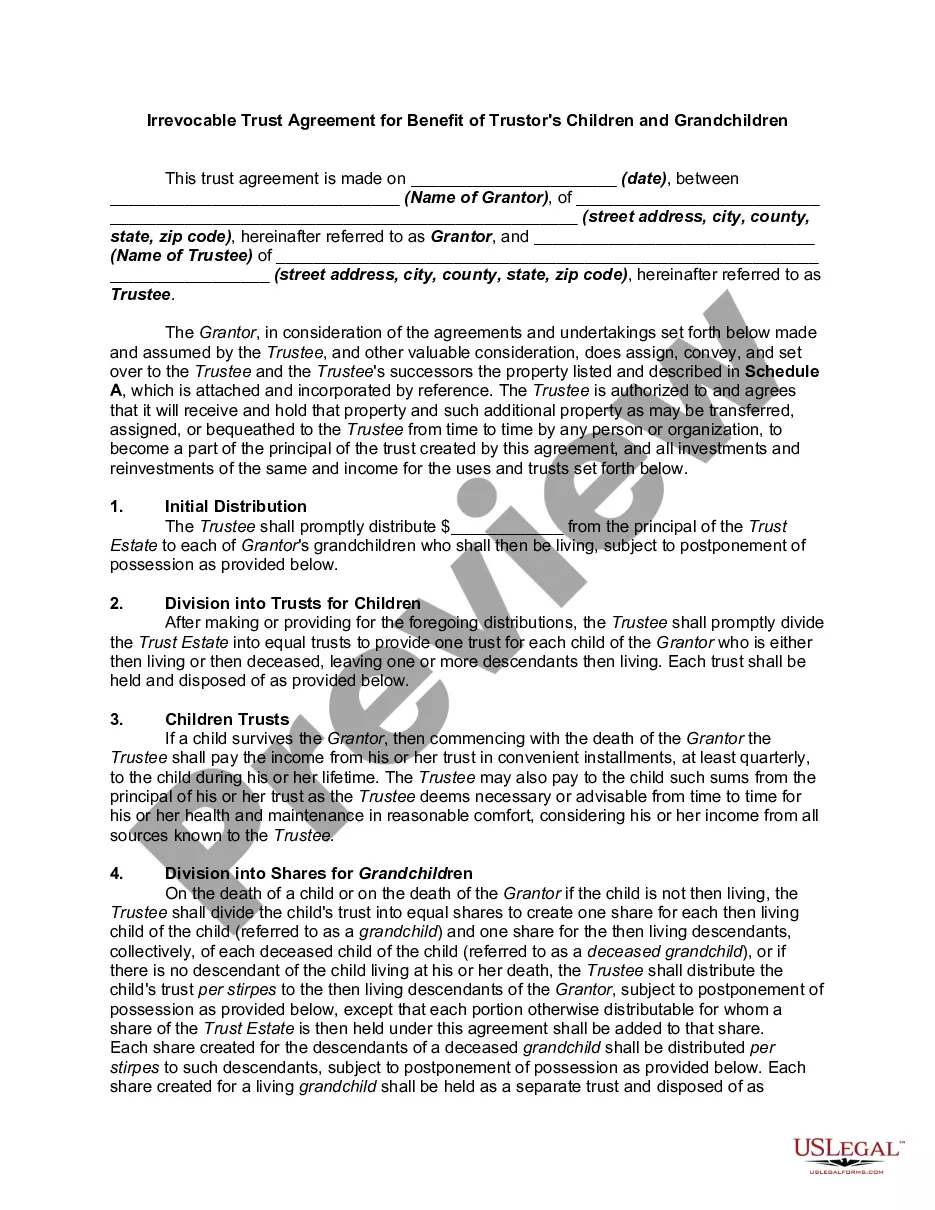

Get your form ready online
Our built-in tools help you complete, sign, share, and store your documents in one place.
Make edits, fill in missing information, and update formatting in US Legal Forms—just like you would in MS Word.
Download a copy, print it, send it by email, or mail it via USPS—whatever works best for your next step.
Sign and collect signatures with our SignNow integration. Send to multiple recipients, set reminders, and more. Go Premium to unlock E-Sign.
If this form requires notarization, complete it online through a secure video call—no need to meet a notary in person or wait for an appointment.
We protect your documents and personal data by following strict security and privacy standards.

Make edits, fill in missing information, and update formatting in US Legal Forms—just like you would in MS Word.

Download a copy, print it, send it by email, or mail it via USPS—whatever works best for your next step.

Sign and collect signatures with our SignNow integration. Send to multiple recipients, set reminders, and more. Go Premium to unlock E-Sign.

If this form requires notarization, complete it online through a secure video call—no need to meet a notary in person or wait for an appointment.

We protect your documents and personal data by following strict security and privacy standards.
Looking for another form?





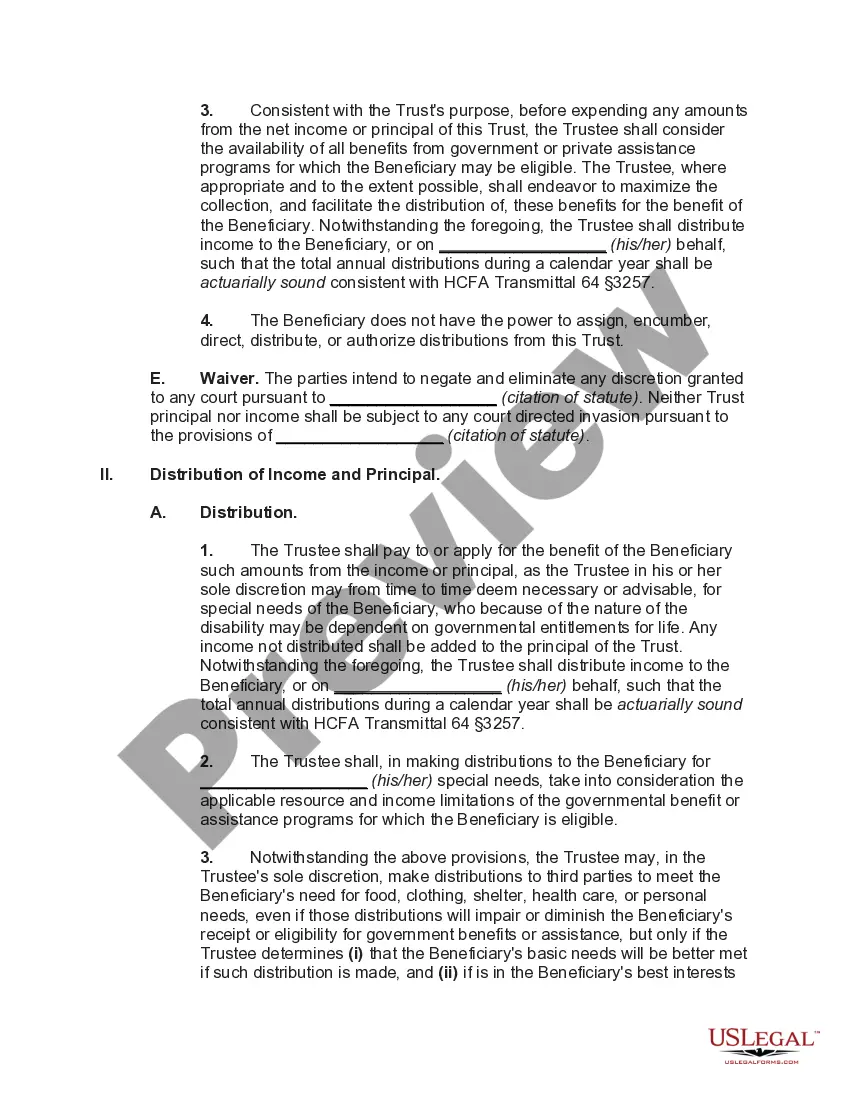
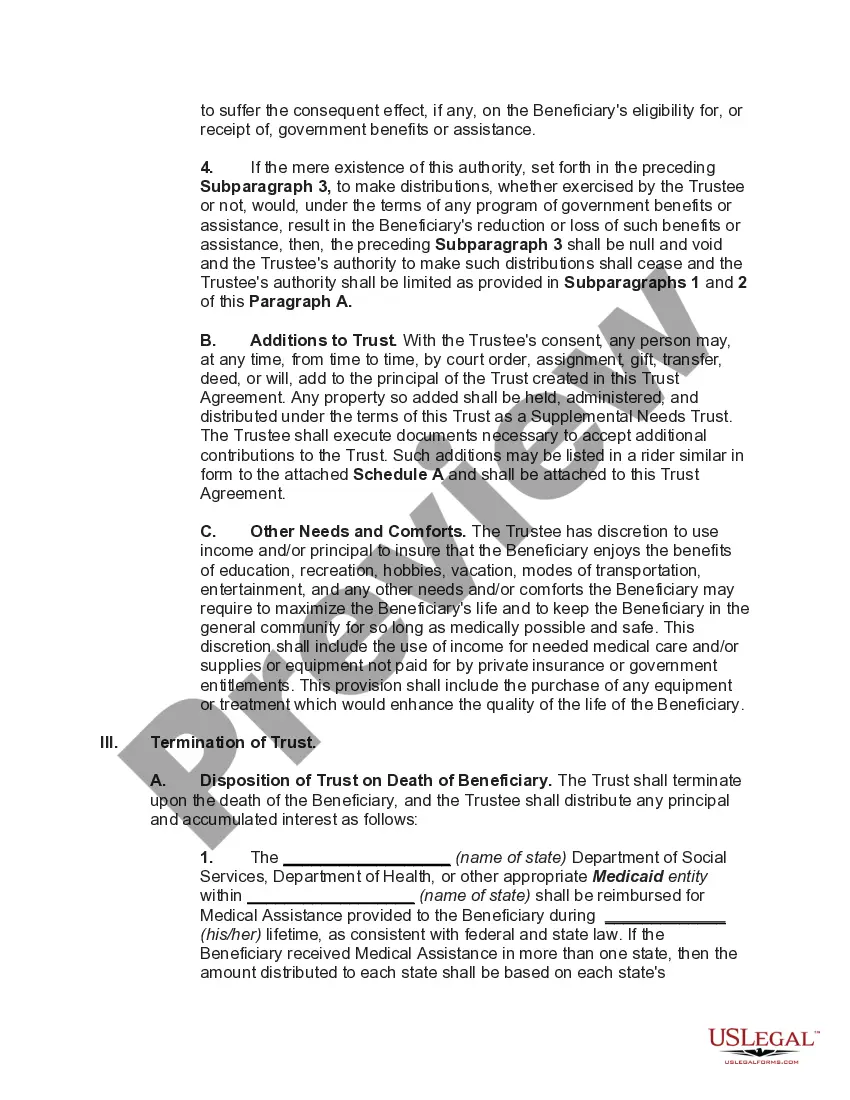
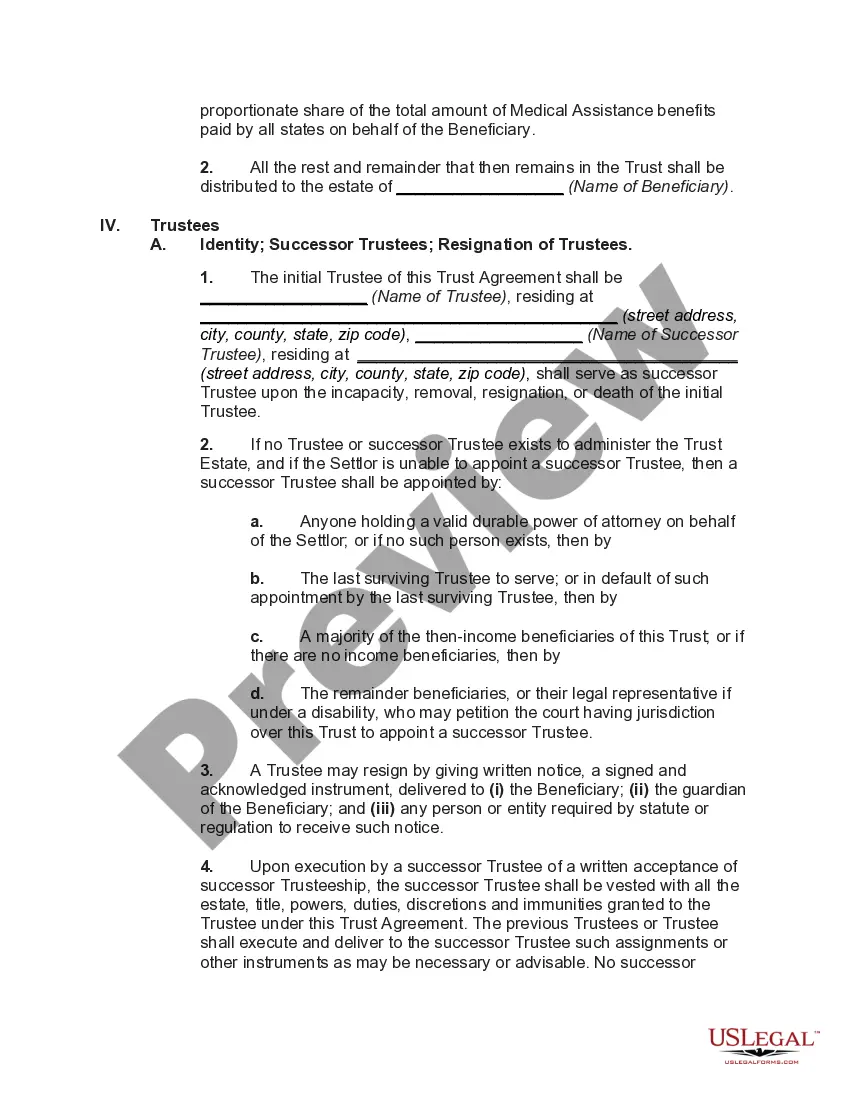
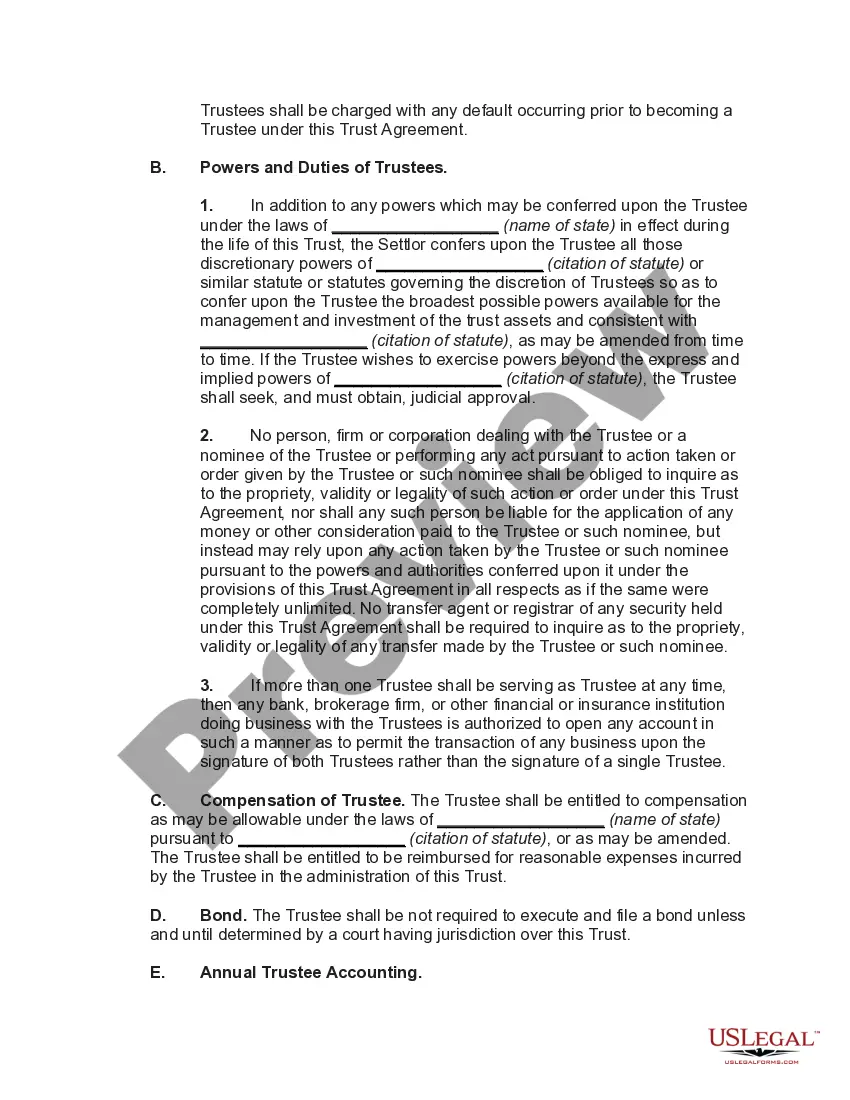
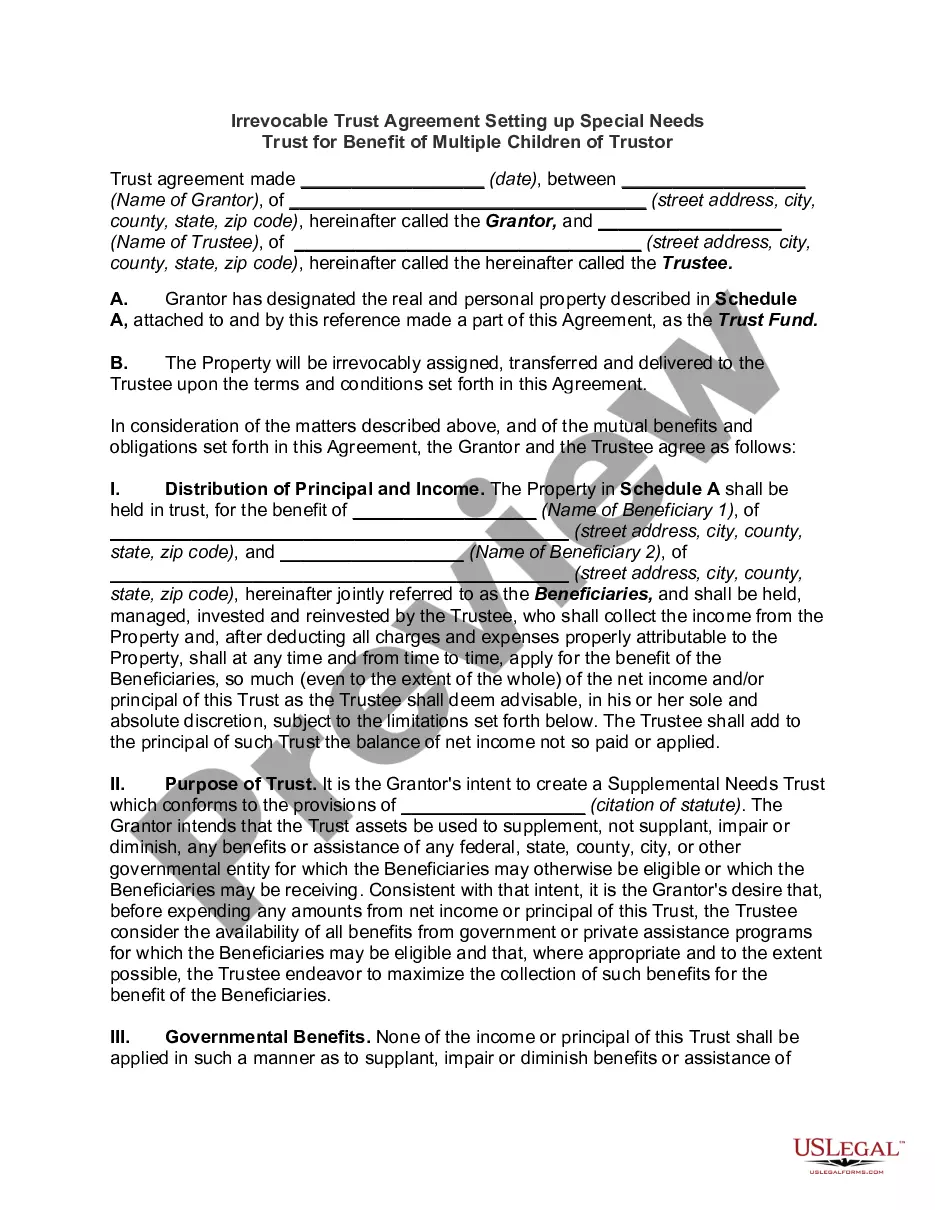
How to fill out Special Needs Irrevocable Trust Agreement For Benefit Of Disabled Child Of Trustor?
- Log in to your US Legal Forms account if you're a returning user and ensure your subscription is active. If it's expired, renew it according to your plan.
- Explore the Preview mode and form description to confirm you’ve selected the appropriate special needs trust form that meets your local jurisdiction requirements.
- If necessary, utilize the Search tab to find alternative documents that may better suit your needs.
- Purchase the selected document by clicking the Buy Now button and choosing your desired subscription plan. Registration is required to access the library.
- Complete your purchase by entering your payment details using credit card or PayPal.
- Finally, download your form and save it for easy access in the My Forms section of your profile.
With US Legal Forms, you gain access to a vast library of over 85,000 legal forms, ensuring you can find the right documentation quickly and efficiently.
Empower yourself to successfully set up a special needs trust today. Log in or register with US Legal Forms and take control of your legal needs!
Form popularity
FAQ
The standard deduction for a special needs trust, classified as a qualified disability trust, currently stands at $4,300. This allows the trust to reduce its taxable income, which can ultimately benefit the beneficiaries. Keeping detailed records of all special needs trust qualified expenses can maximize the funds available for your loved ones.
The tax rate for a special needs trust is generally determined by the trust's income level, which is subject to income tax brackets like individual taxpayers. Trusts can be taxed at higher rates than individuals, depending on their taxable income. Therefore, regularly evaluating your special needs trust qualified expenses can help in minimizing tax liabilities.
The standard deduction for a trust is $100 for most trusts. However, certain qualified disability trusts can receive a larger deduction, aligning more closely with individual taxpayer deductions. Understanding the standard deduction can significantly impact the overall tax strategy for your special needs trust qualified expenses.
The exemption amount for a qualified disability trust is currently set at $4,300. This amount refers to the income that a qualified disability trust can earn without being subject to federal income tax. This exemption is particularly beneficial as it allows the trust to maximize its resources for special needs trust qualified expenses.
A special needs trust itself is not typically tax deductible, but certain expenses related to managing the trust may be deductible. For example, administrative costs or legal fees associated with the trust's operation could qualify. Always consult with a tax professional to explore which special needs trust qualified expenses you can deduct for your specific situation.
To file taxes on a special needs trust, you must complete IRS Form 1041, which is the income tax return for estates and trusts. This form requires you to report income generated by the trust, including any distributions made to beneficiaries. It’s important to track and document all special needs trust qualified expenses carefully to ensure accurate reporting and compliance with tax regulations.
Yes, a qualified disability trust can deduct medical expenses that fall within the definition of special needs trust qualified expenses. This deduction helps reduce the overall taxable income of the trust. Ensure that all medical costs are documented and categorized correctly for proper filing. Navigating these deductions can be complex, so professional advice can be beneficial.
Expenses that can be deducted from trust income primarily include operational costs, investment expenses, and special needs trust qualified expenses for medical care, education, and maintenance of the beneficiary. Keeping diligent records of all deductions strengthens your tax filings. Engaging a financial advisor or tax professional can guide you through this detailed process. This aids in maximizing the benefits of trust income management.
The rules for a qualified disability trust ensure that funds are used for the beneficiary's benefit. Key to these rules is that the trust must meet certain eligibility criteria, including being established for a disabled individual and adhering to special needs trust qualified expenses stipulations. This helps protect the beneficiary's eligibility for government assistance. Reviewing these rules closely enhances compliance and beneficiaries' well-being.
Filing taxes on a special needs trust involves specific steps, including understanding IRS Form 1041. Ensure that all special needs trust qualified expenses are accounted for to reduce the taxable income of the trust. It is vital to document all necessary expenses and consult with tax experts familiar with special needs trusts. This approach helps ensure accuracy and compliance with regulations.