Low - Trust
Description


Get your form ready online
Our built-in tools help you complete, sign, share, and store your documents in one place.
Make edits, fill in missing information, and update formatting in US Legal Forms—just like you would in MS Word.
Download a copy, print it, send it by email, or mail it via USPS—whatever works best for your next step.
Sign and collect signatures with our SignNow integration. Send to multiple recipients, set reminders, and more. Go Premium to unlock E-Sign.
If this form requires notarization, complete it online through a secure video call—no need to meet a notary in person or wait for an appointment.
We protect your documents and personal data by following strict security and privacy standards.

Make edits, fill in missing information, and update formatting in US Legal Forms—just like you would in MS Word.

Download a copy, print it, send it by email, or mail it via USPS—whatever works best for your next step.

Sign and collect signatures with our SignNow integration. Send to multiple recipients, set reminders, and more. Go Premium to unlock E-Sign.

If this form requires notarization, complete it online through a secure video call—no need to meet a notary in person or wait for an appointment.

We protect your documents and personal data by following strict security and privacy standards.
Looking for another form?
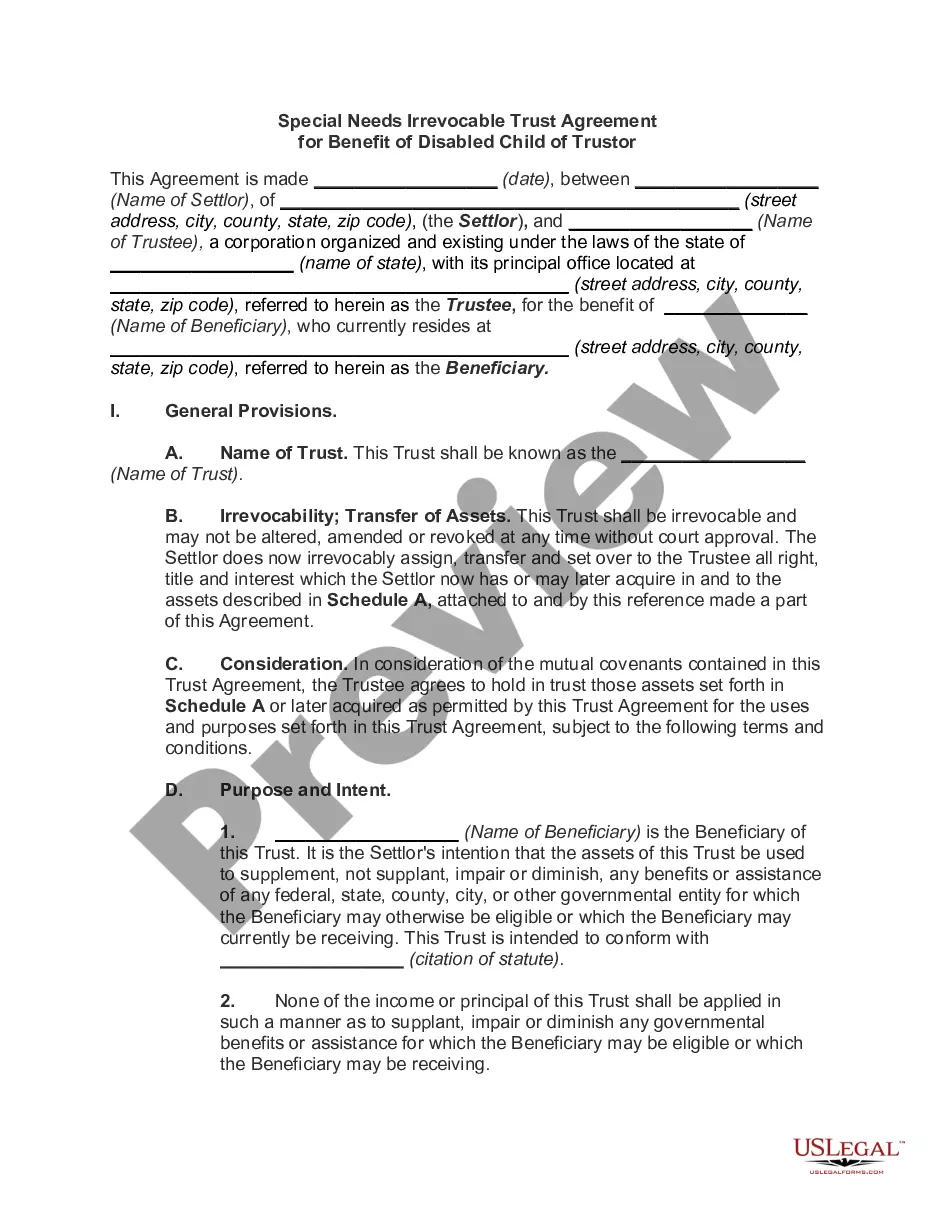
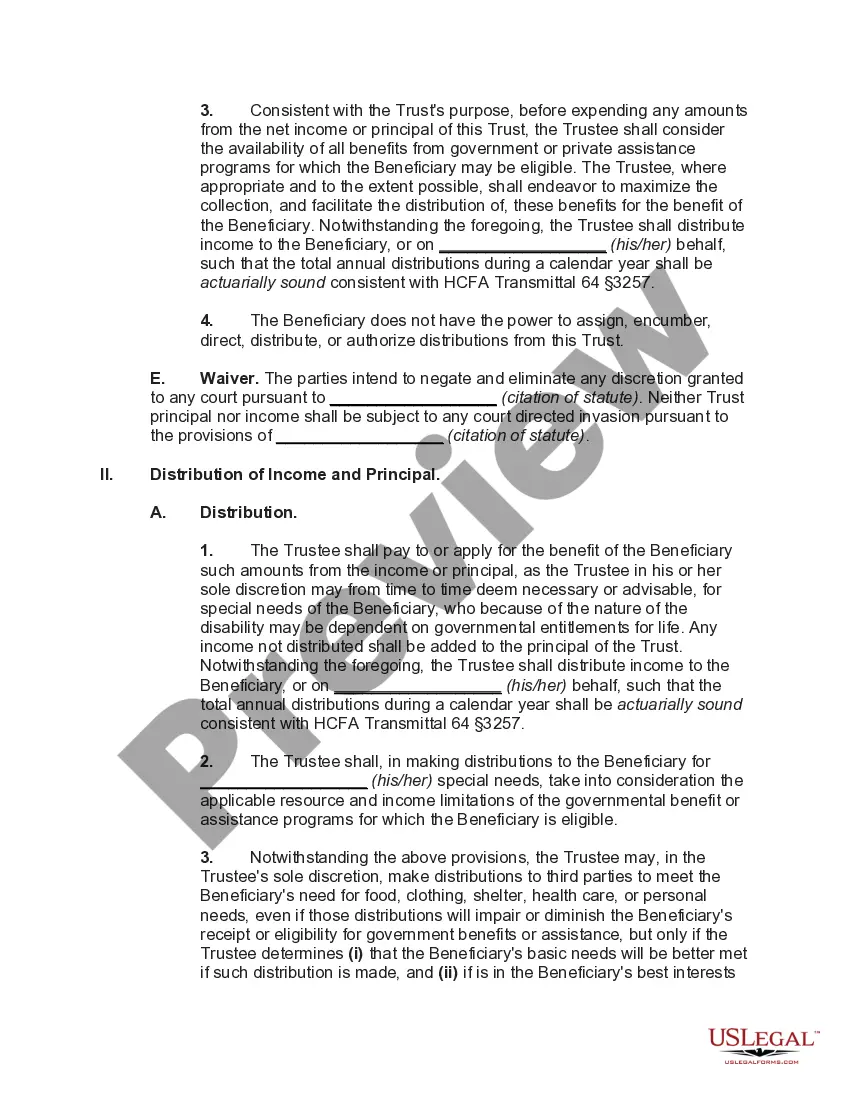
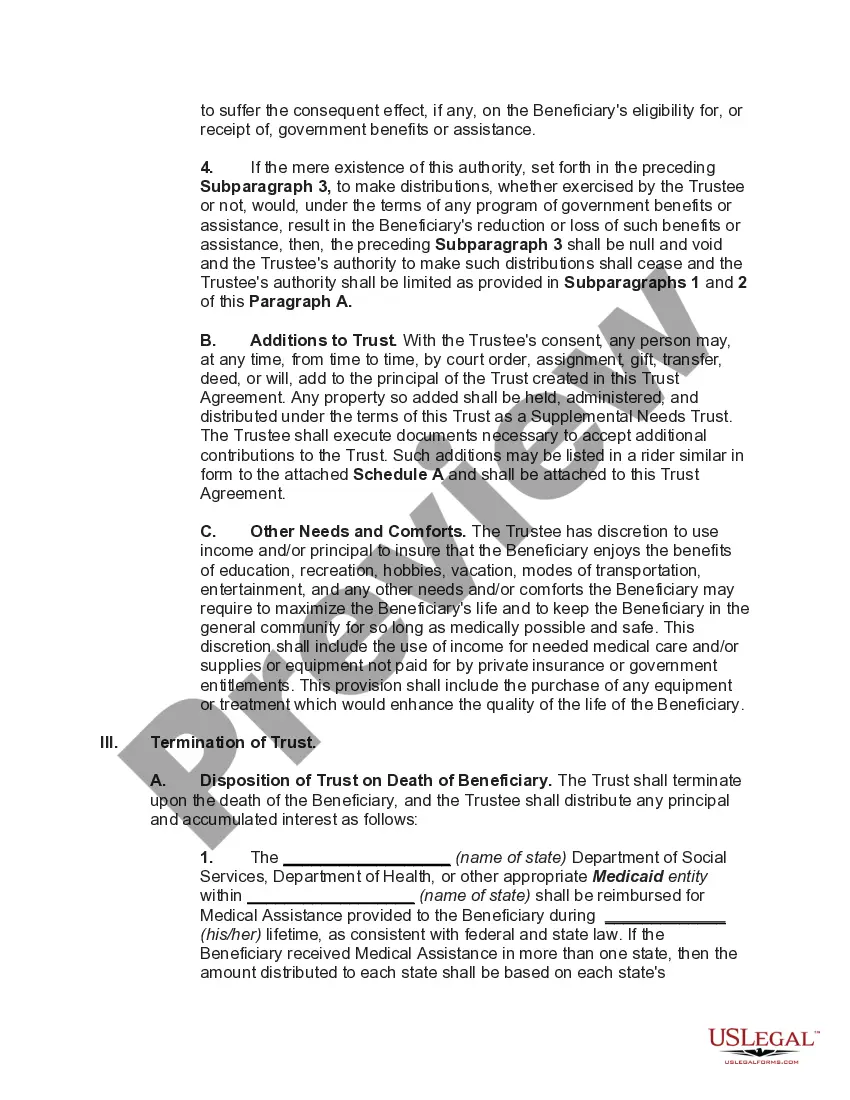
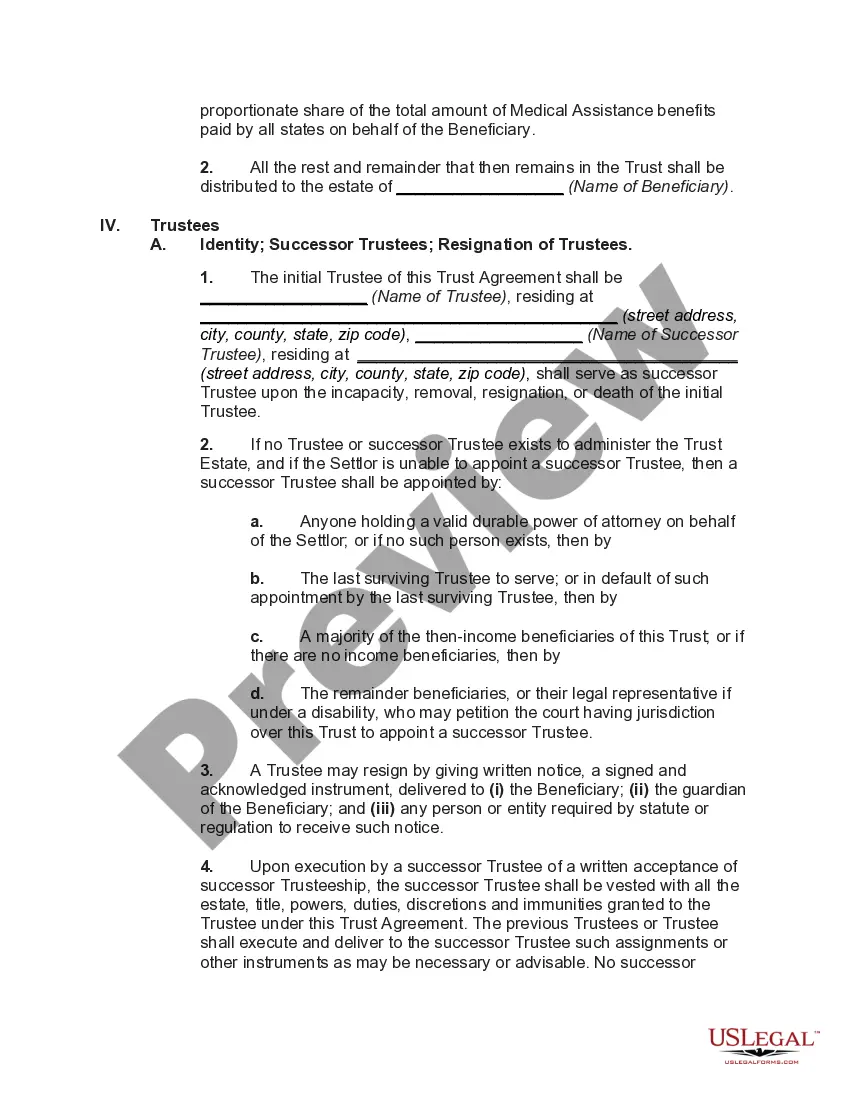
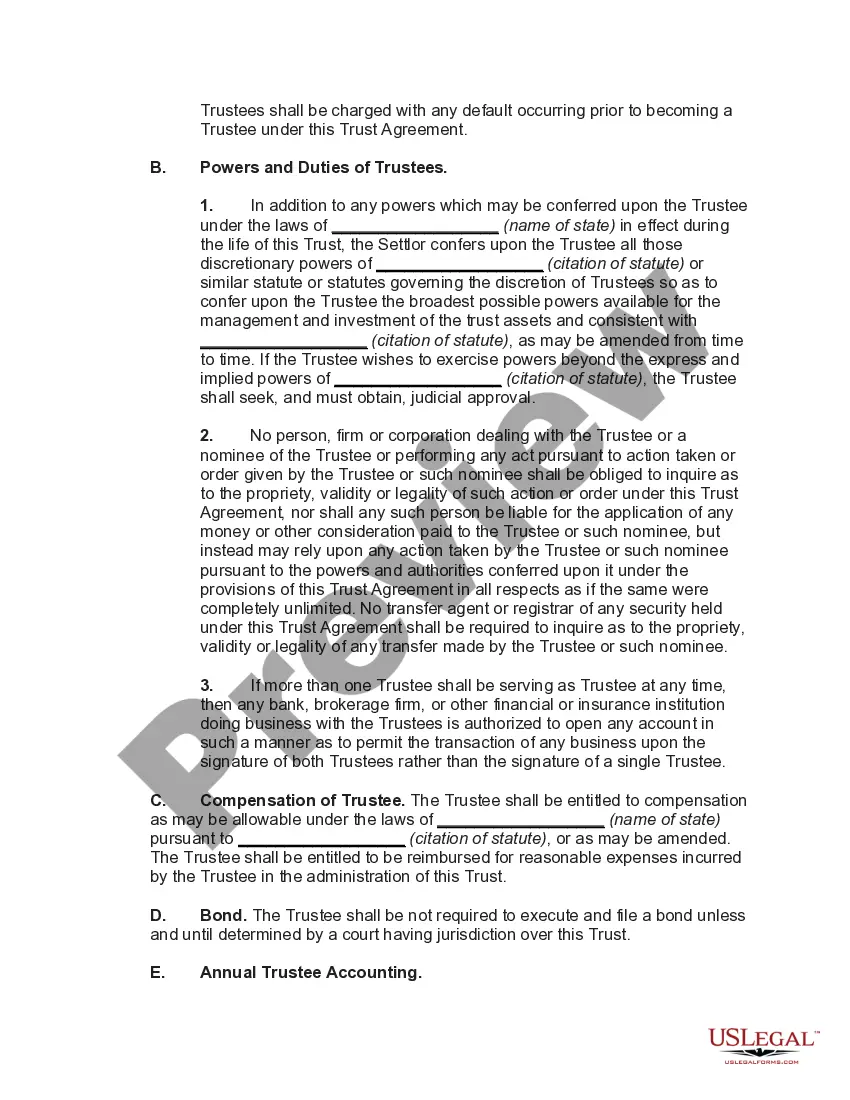
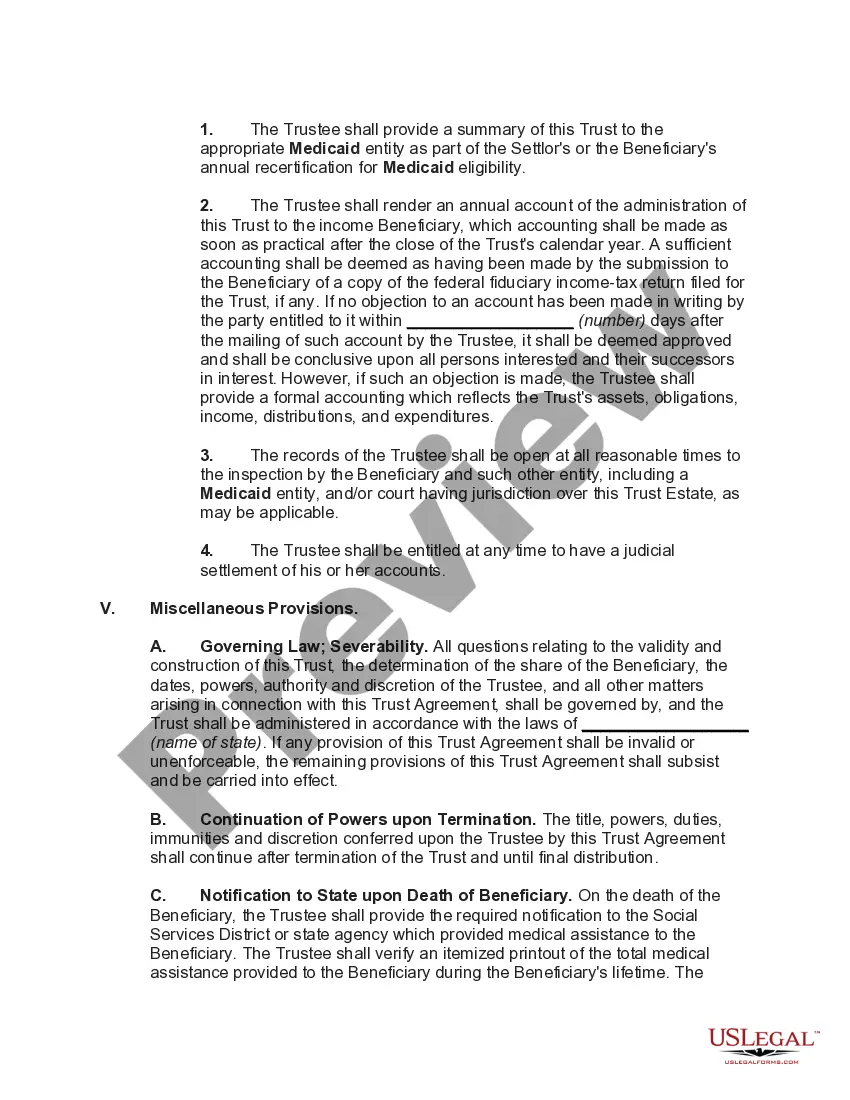
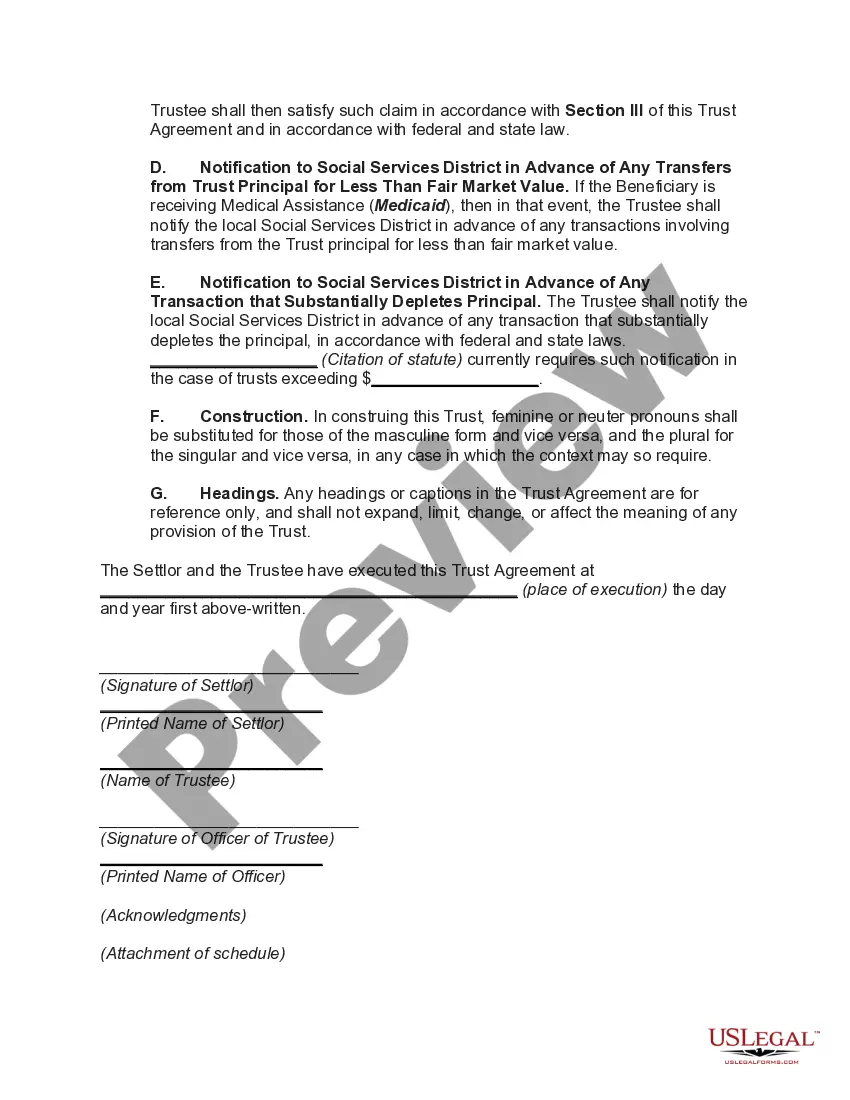
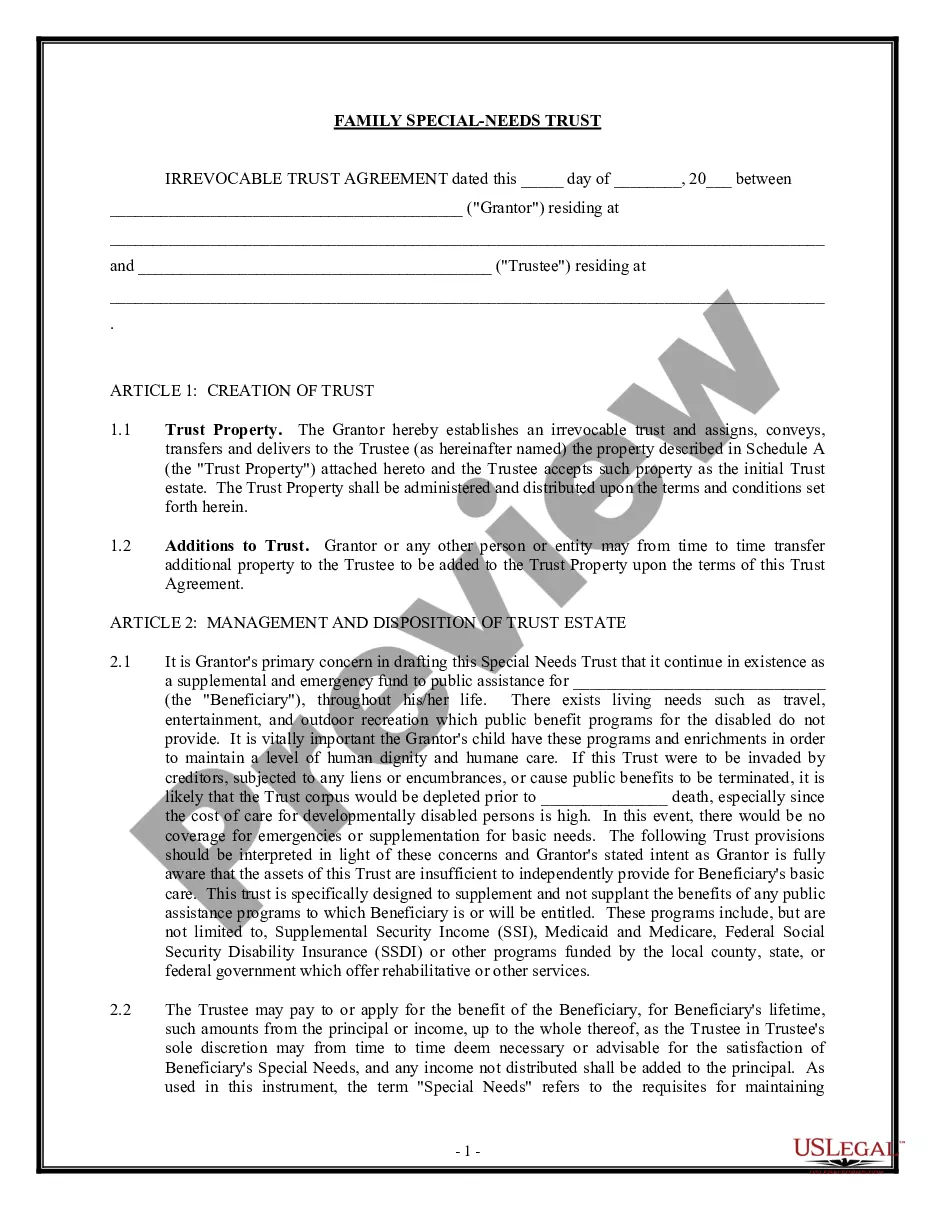
How to fill out Special Needs Irrevocable Trust Agreement For Benefit Of Disabled Child Of Trustor?
- If you are a returning user, start by logging into your account. Verify that your subscription is current; if it’s not, follow the prompt to renew your plan.
- For new users, begin by exploring the vast collection of legal forms on our website. Make sure to utilize the Preview mode to check the description and ensure the template meets your needs as per your local regulations.
- If you encounter any discrepancies, use the Search feature to find the correct legal form. This helps avoid potential issues later.
- Select the document you need and click on the Buy Now option. Choose a subscription plan that fits your requirements while creating an account to access the library of forms.
- Complete your purchase by entering your payment details via credit card or PayPal for a hassle-free transaction.
- Once purchased, download the document to your device for completing it later. You can access it anytime through the My Forms section of your profile.
Using US Legal Forms not only provides access to a robust collection of legal documents but also ensures that users receive necessary support. Our platform empowers users to create legally sound documents while enhancing trust with legal processes.
Get started today and turn the challenges of low-trust environments into opportunities for effective document management!
Form popularity
FAQ
If a trust has no income, you generally do not need to file a final Form 1041. However, if you distributed assets or had other tax obligations, filing could still be necessary. Reviewing your trust’s specific situation is important to maintain compliance. Utilizing resources like US Legal Forms can provide clarity on when and how to file appropriately.
For a trust to be required to file taxes, it usually needs to have a gross income of $600 or more for the tax year. This rule applies especially to complex trusts that have specific tax reporting obligations. However, ensuring compliance with the IRS is critical for maintaining a low-trust profile. Tools like US Legal Forms can assist you in tracking these requirements effectively.
The minimum income threshold to file a trust return varies based on the type of trust. Generally, if your trust's gross income is $600 or more, it needs to file a Form 1041. Additionally, if any beneficiary is a non-resident alien, the trust must file regardless of income. Being aware of these thresholds can help ensure compliance and maintain a low-trust strategy.
To close a trust with the IRS, you must file a final Form 1041, also known as the U.S. Income Tax Return for Estates and Trusts. This form summarizes the income, deductions, and distributions of the trust. After reporting the trust’s activities and settling any outstanding tax liabilities, you can formally close the trust. Using US Legal Forms can help you understand and complete the necessary paperwork efficiently.
The new IRS rule on trusts introduces changes that aim to enhance transparency and ensure compliance with tax regulations. Generally, low-trust structures must disclose more information to the IRS, reducing the chance of errors. Understanding these rules is essential for individuals and organizations managing a low-trust approach. Consulting with a tax professional or using a platform like US Legal Forms can simplify navigating these regulations.
Indeed, getting kicked in CSGO adversely affects your trust factor. Each kick may signal to the system that you are unreliable as a player, leading to a reduced trust factor. To build your standing back up, remain in matches until completion and interact positively with your fellow gamers.
As mentioned, getting rid of a low trust factor involves showing reliability in your gaming habits. Engage positively in matches, avoid team killing or frequent disconnects, and focus on nurturing a cooperative playing environment. The more reliable and consistent you are, the better your trust factor will become.
Fixing your trust factor requires a commitment to better gameplay habits. Monitor your actions during games, avoid behaviors that lead to penalties, and engage positively with your teammates. Regularly showcasing good sportsmanship will help reinforce a higher trust factor over time.
To eliminate a low trust factor, you should work towards demonstrating good sportsmanship. Participate in matches without getting involved in toxic behavior, and stay active in gameplay. Over time, continued positive actions will help restore your trust factor.
Improving a low trust factor in CSGO involves changing your gaming behavior. Engage positively with your teammates, avoid any form of toxicity, and focus on playing according to the game rules. With consistent positive actions, you can gradually see an improvement in your trust factor.