Utah Excavator Contract for Contractor
Overview of this form
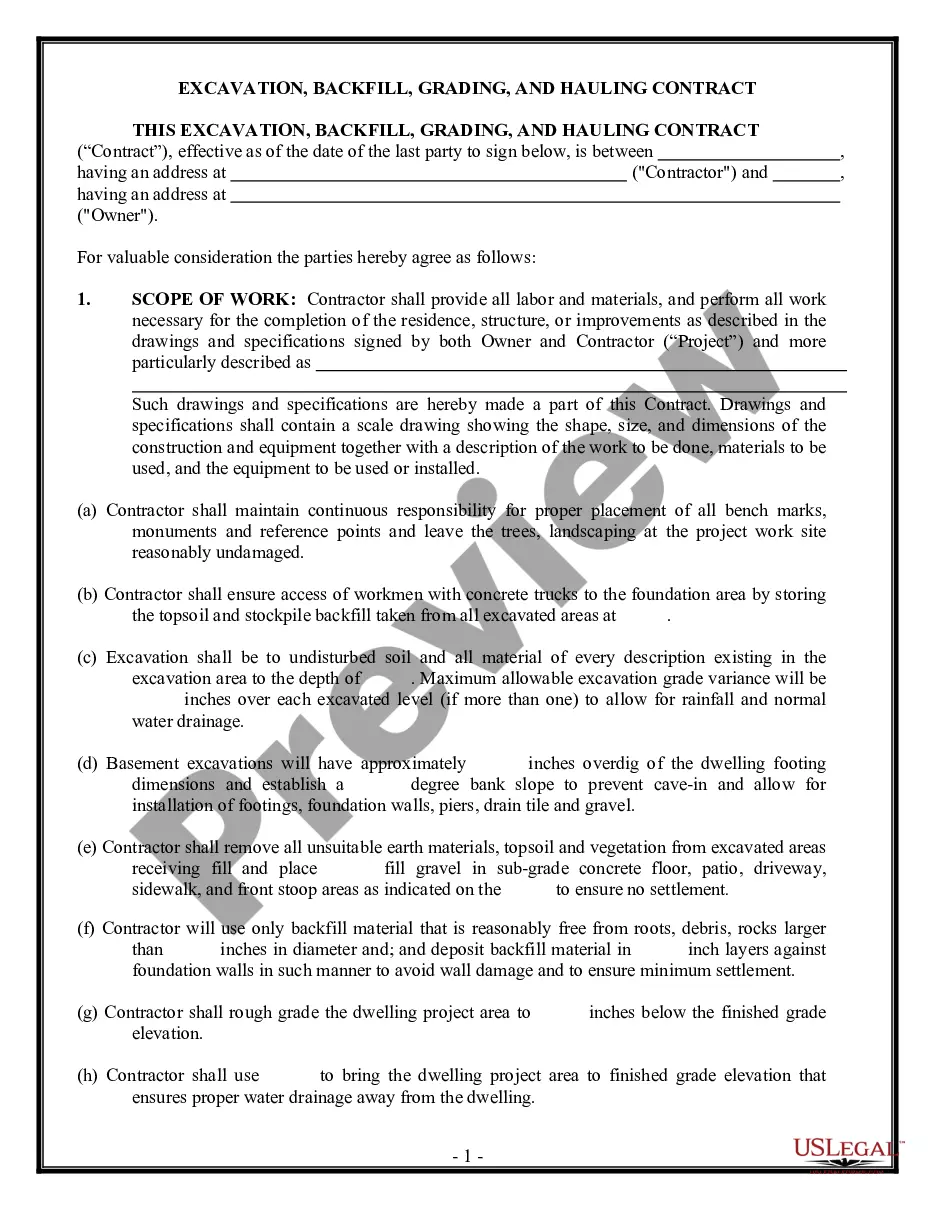
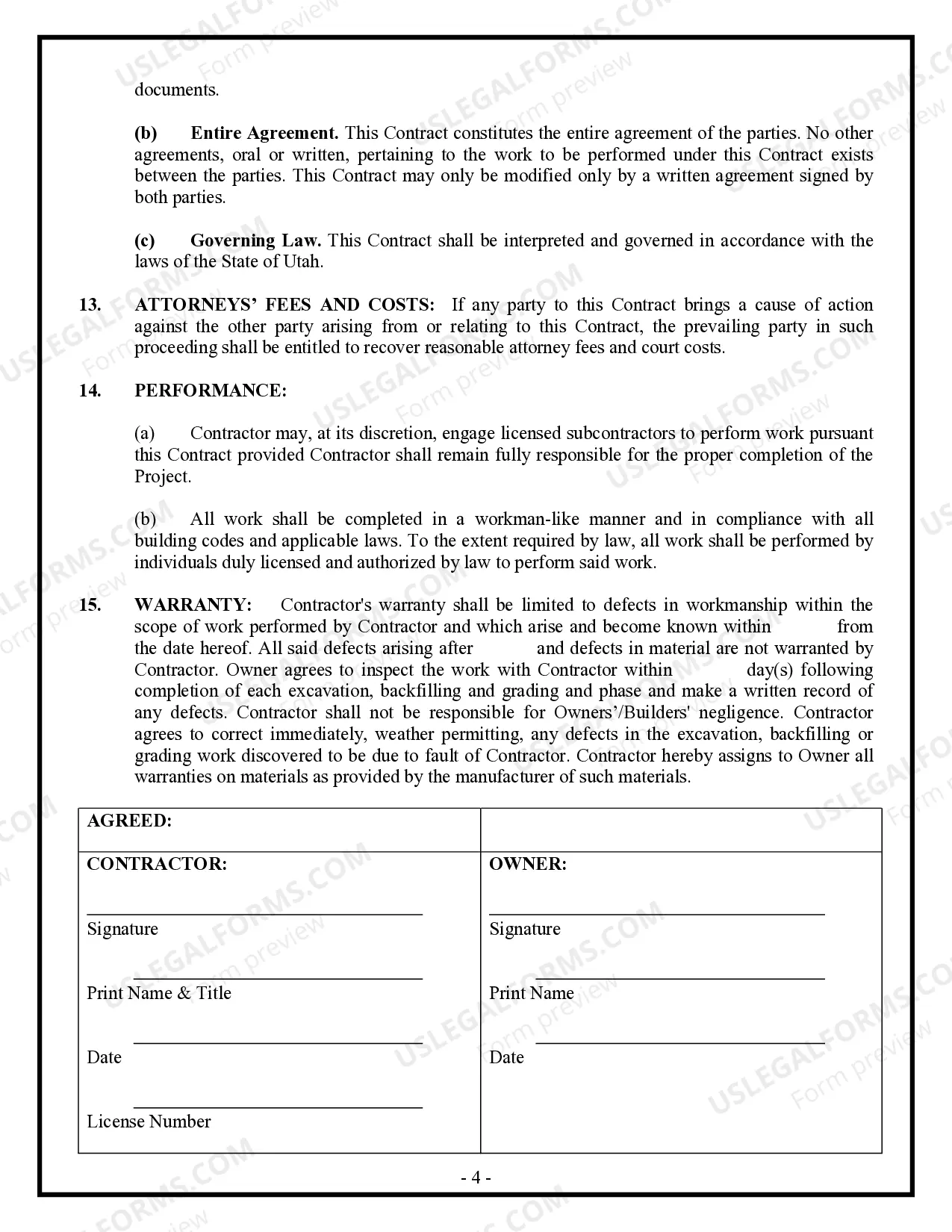
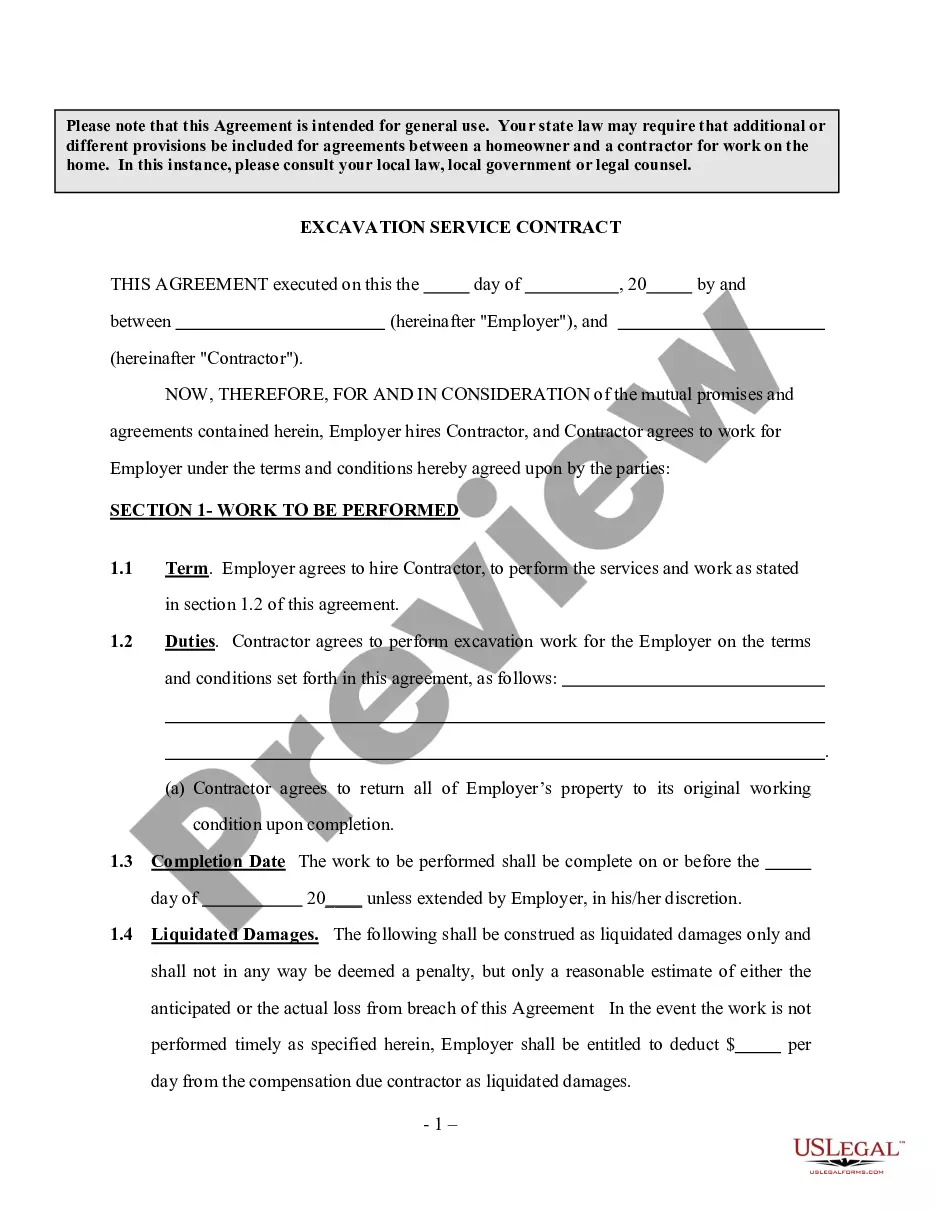
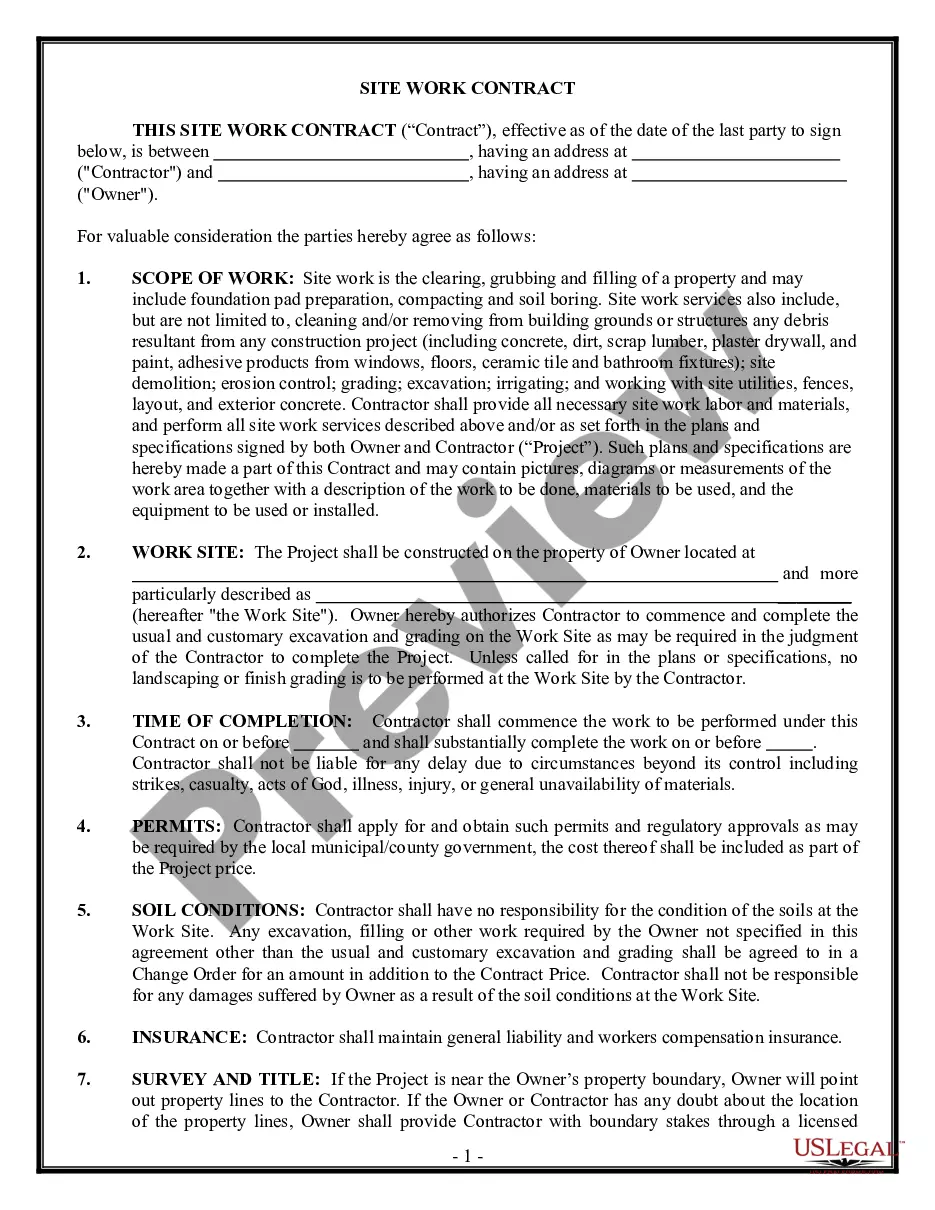
The Excavator Contract for Contractor is a legal document designed for agreements between Excavator Contractors and Property Owners. This contract can be structured with either a cost-plus or fixed fee payment arrangement. It addresses important aspects such as change orders, work site information, warranties, and insurance requirements, ensuring all parties have a clear understanding of their obligations. This form is particularly tailored to comply with the laws of the State of Utah, setting it apart from other general excavator contracts.
Key parts of this document
- Responsibilities of the Owner, including providing necessary labor and safety measures.
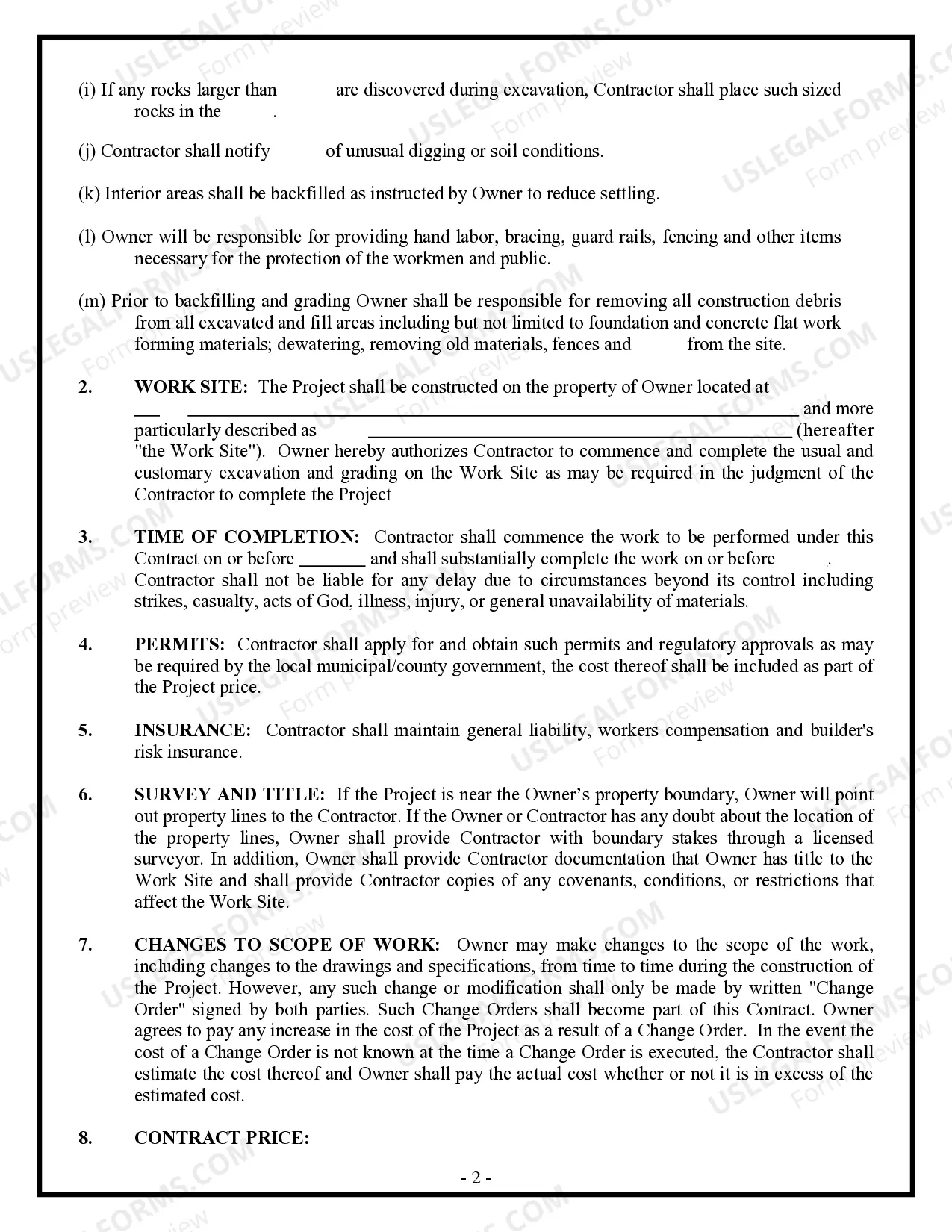
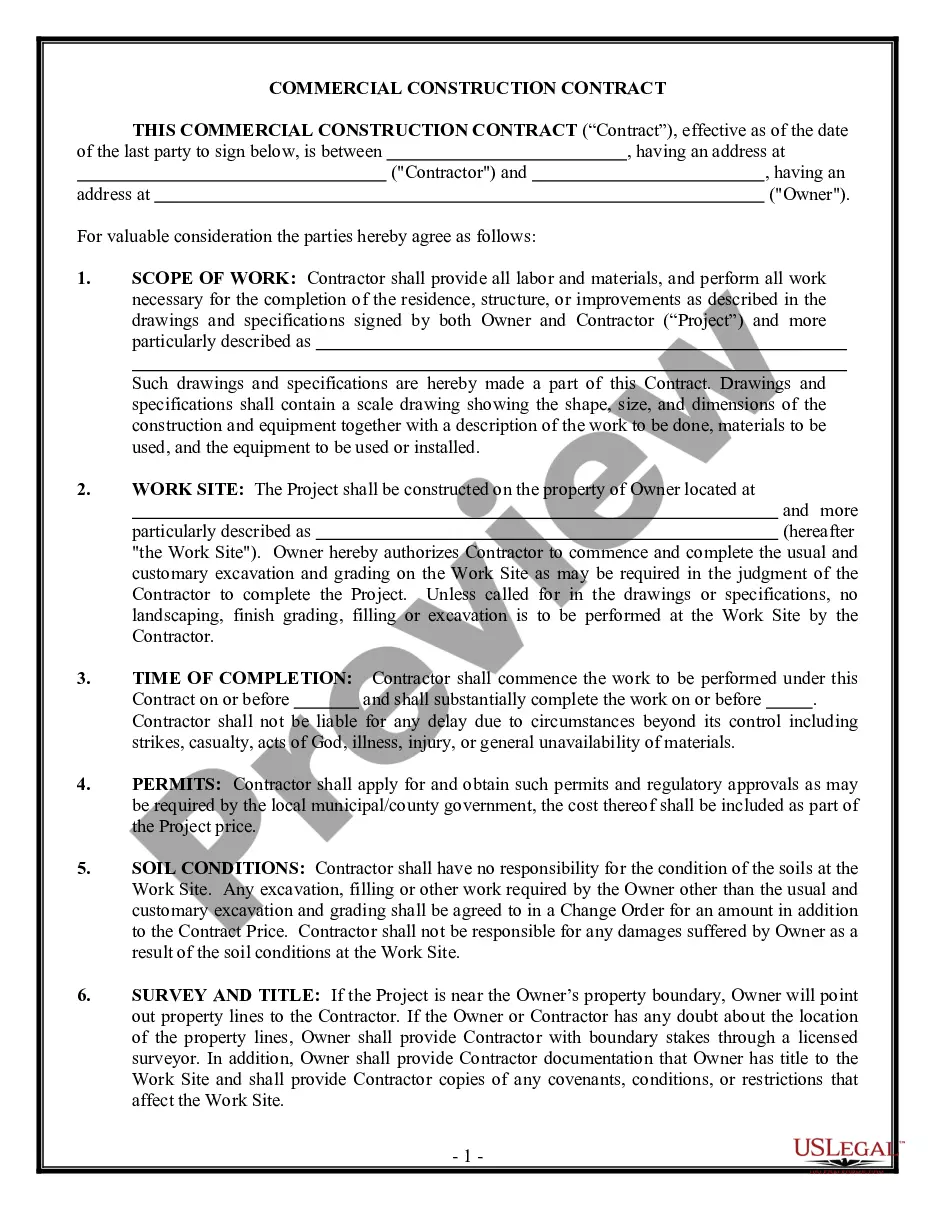
- Requirement for the Contractor to obtain necessary permits and approvals.
- Insurance obligations for the Contractor, including general liability and workers compensation.
- Clarification of property boundaries and survey requirements for the project.
- Provision for changes to the scope of work, including the process for issuing change orders.

Common use cases
This form is essential when a property owner hires an excavator contractor for projects such as land clearing, grading, or trenching work. It is particularly useful for defining the terms of the project, managing expectations, and ensuring legal protections for both the contractor and the property owner. Use this form when you need a clear written contract that outlines work scope, liabilities, and payment structures.
Intended users of this form
- Excavator Contractors who require a formal contract to define their scope of work.
- Property Owners hiring contractors for excavation and land development projects.
- Parties involved in projects located in Utah who seek compliance with state regulations.
Completing this form step by step
- Identify and enter the names and contact information of the parties involved.
- Specify the work site and any relevant property boundaries.
- Detail the scope of work, including project phases and deliverables.
- Outline payment terms and include any cost-plus or fixed fee agreements.
- Have both parties sign and date the contract to execute the agreement.
Does this form need to be notarized?
This form does not typically require notarization unless specified by local law. However, having the signatures notarized can provide an additional layer of authenticity and legal assurance for both parties involved in the contract.
Get your form ready online
Our built-in tools help you complete, sign, share, and store your documents in one place.
Make edits, fill in missing information, and update formatting in US Legal Forms—just like you would in MS Word.
Download a copy, print it, send it by email, or mail it via USPS—whatever works best for your next step.
Sign and collect signatures with our SignNow integration. Send to multiple recipients, set reminders, and more. Go Premium to unlock E-Sign.
If this form requires notarization, complete it online through a secure video call—no need to meet a notary in person or wait for an appointment.
We protect your documents and personal data by following strict security and privacy standards.

Make edits, fill in missing information, and update formatting in US Legal Forms—just like you would in MS Word.

Download a copy, print it, send it by email, or mail it via USPS—whatever works best for your next step.

Sign and collect signatures with our SignNow integration. Send to multiple recipients, set reminders, and more. Go Premium to unlock E-Sign.

If this form requires notarization, complete it online through a secure video call—no need to meet a notary in person or wait for an appointment.

We protect your documents and personal data by following strict security and privacy standards.
Common mistakes
- Failing to clearly define the scope of work can lead to misunderstanding and disputes.
- Not including necessary permits and approvals may result in project delays.
- Omitting insurance requirements can leave both parties vulnerable to liability.
- Neglecting to record change orders in writing can complicate project management.
Advantages of online completion
- Convenience of downloading and editing the form at your own pace.
- Immediate access to professionally drafted legal language.
- Ability to customize the contract to fit specific project needs.
- Reliable source backed by licensed attorneys ensuring legal validity.
Legal use & context
- This contract is enforceable as long as it complies with state laws governing construction contracts.
- It is advisable to keep a copy of the signed contract for record-keeping and future reference.
- Parties should understand their rights and obligations outlined in the contract.
What to keep in mind
- The Excavator Contract for Contractor is crucial for defining project terms between contractors and property owners.
- Ensure all aspects of the project, such as permits and insurance, are included in the contract.
- Use this form to manage expectations and protect all parties legally throughout the excavation project.
Looking for another form?
Form popularity
FAQ
Get it in writing. Keep it simple. Deal with the right person. Identify each party correctly. Spell out all of the details. Specify payment obligations. Agree on circumstances that terminate the contract. Agree on a way to resolve disputes.
When you declare yourself as owner-builder on your permit for any type of construction, you are acting as your own general contractor and are taking liability for all work done. That means you can:hire licensed sub-contractors to do all of the work, or any part of the work.
The Utah Residence Lien Recovery Fund is an alternate payment source for contractors, laborers or suppliers whose liens are voided because a homeowner qualifies for protection under the Residence Lien Restriction and Lien Recovery Fund Act.
Your general contractor should provide proof of licensing, bonding and insurance before a project starts, but it's better to have it in hand before you sign any contracts. It's important that contractors carry any licensing and/or certification required for the specific trade or skill they practice.
Name of contractor and contact information. Name of homeowner and contact information. Describe property in legal terms. List attachments to the contract. The cost. Failure of homeowner to obtain financing. Description of the work and the completion date. Right to stop the project.
Name of contractor and contact information. Name of homeowner and contact information. Describe property in legal terms. List attachments to the contract. The cost. Failure of homeowner to obtain financing. Description of the work and the completion date. Right to stop the project.
Identifying/Contact Information. Title and Description of the Project. Projected Timeline and Completion Date. Cost Estimate and Payment Schedule. Stop Work Clause and Stop Payment Clause. Act of God Clause. Change Order Agreement. Warranty.
Get it in writing. Keep it simple. Deal with the right person. Identify each party correctly. Spell out all of the details. Specify payment obligations. Agree on circumstances that terminate the contract. Agree on a way to resolve disputes.
Timeframe or key milestones of the project; hours of work; deliverables of the project; and. way the business will pay the contractor for their services.