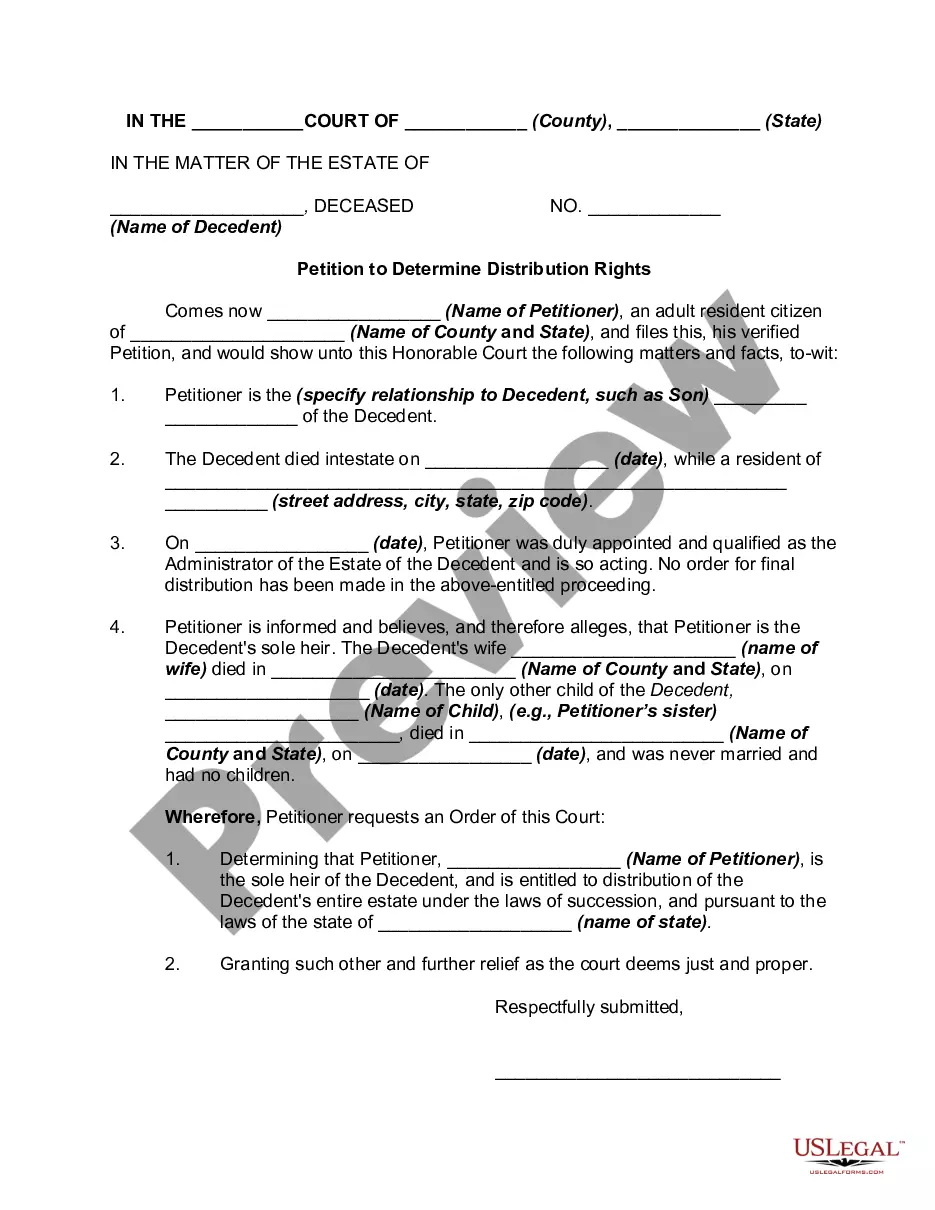
Executor Petition Estate For Sale
Description
Get your form ready online
Our built-in tools help you complete, sign, share, and store your documents in one place.
Make edits, fill in missing information, and update formatting in US Legal Forms—just like you would in MS Word.
Download a copy, print it, send it by email, or mail it via USPS—whatever works best for your next step.
Sign and collect signatures with our SignNow integration. Send to multiple recipients, set reminders, and more. Go Premium to unlock E-Sign.
If this form requires notarization, complete it online through a secure video call—no need to meet a notary in person or wait for an appointment.
We protect your documents and personal data by following strict security and privacy standards.

Make edits, fill in missing information, and update formatting in US Legal Forms—just like you would in MS Word.

Download a copy, print it, send it by email, or mail it via USPS—whatever works best for your next step.

Sign and collect signatures with our SignNow integration. Send to multiple recipients, set reminders, and more. Go Premium to unlock E-Sign.

If this form requires notarization, complete it online through a secure video call—no need to meet a notary in person or wait for an appointment.

We protect your documents and personal data by following strict security and privacy standards.
Looking for another form?



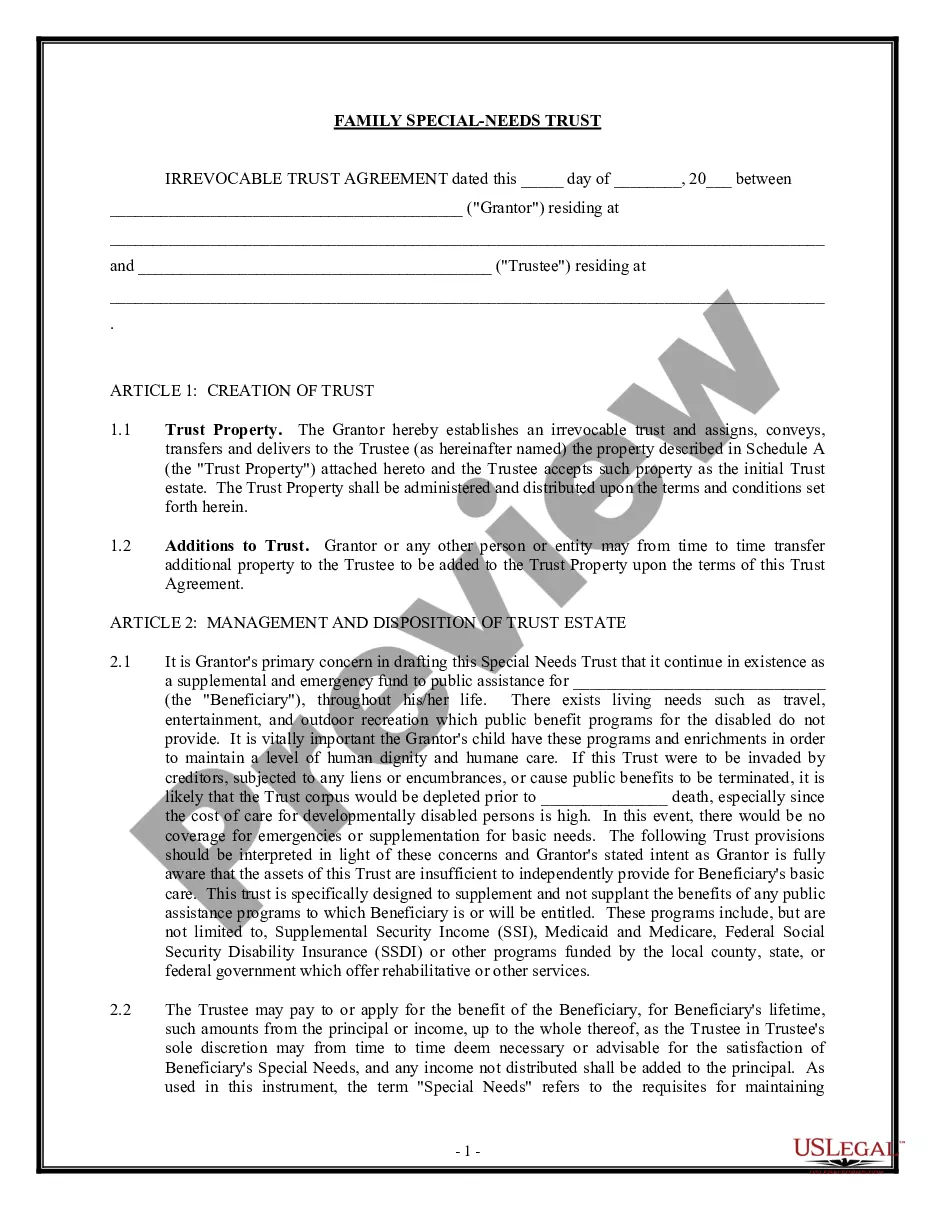






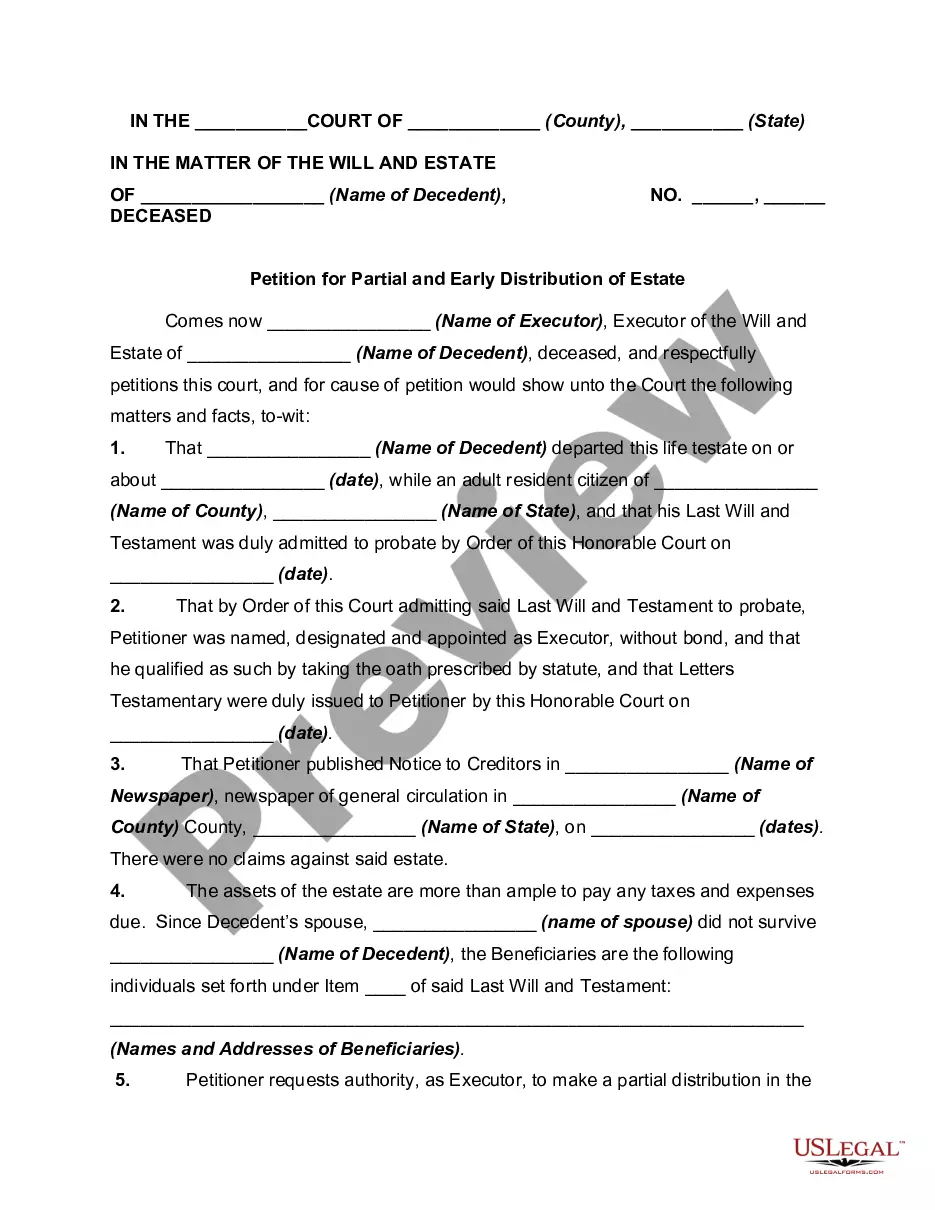
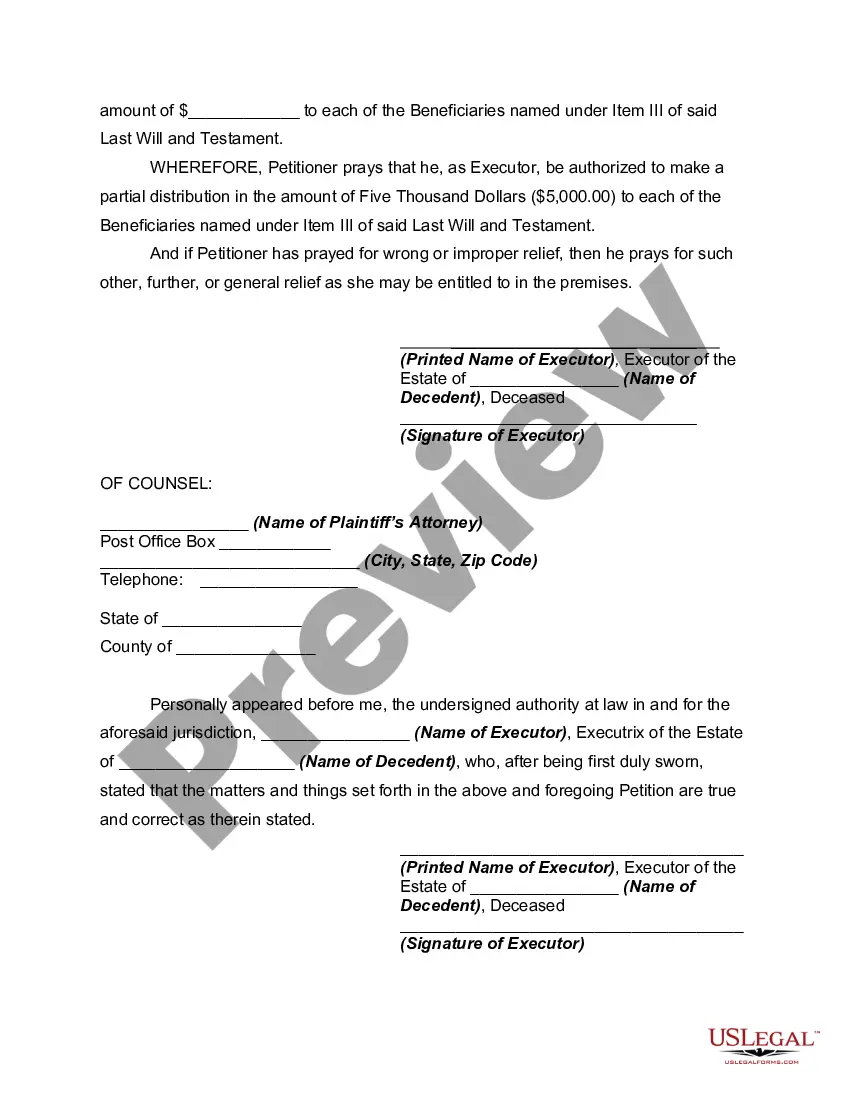
How to fill out Petition For Partial And Early Distribution Of Estate?
It’s well known that you can’t instantly become a legal expert, nor can you swiftly learn how to prepare an Executor Petition Estate For Sale without a relevant background.
Compiling legal paperwork is a lengthy task that necessitates a particular education and skill set. So why not entrust the drafting of the Executor Petition Estate For Sale to the experts.
With US Legal Forms, one of the most extensive collections of legal documents, you can locate everything from judicial forms to templates for internal communications. We recognize how imperative compliance and adherence to federal and local statutes and regulations are. That’s why, on our site, all templates are region-specific and current.
You can regain access to your forms from the My documents tab at any moment. If you’re an established client, you can simply Log In, and locate and download the template from the same tab.
Regardless of the purpose of your documentation—whether it’s financial, legal, or personal—our platform has you covered. Try US Legal Forms today!
- Find the form you require using the search bar at the top of the page.
- Preview it (if this feature is available) and review the accompanying description to ascertain whether Executor Petition Estate For Sale is what you’re looking for.
- Start your search anew if you need any other template.
- Create a free account and select a subscription option to acquire the form.
- Select Buy now. Once the payment is processed, you can access the Executor Petition Estate For Sale, fill it out, print it, and send or mail it to the relevant individuals or organizations.
Form popularity
FAQ
Some of the many tasks the executor needs to handle include: investing any significant surplus cash until the estate is finalized, helping to set up any trusts set out in the Will, cancelling CPP or QPP and other government benefits, handling the transfer of employment, health, pension and retiree benefits and ...
Typically, you need to make it known that you are the executor of the estate and are not taking responsibility for the transaction yourself. You can do this by simply signing your name and putting your title of executor of the estate afterward.
The first thing to understand is that the check belongs to the decedent's estate, not to you. As such, you'll need legal authority to cash or deposit the check. Typically, this requires being named as the executor or administrator of the estate via the probate process.
A Letter of Appointment of Executor helps prove you have been put in charge of someone's estate after they have passed away. As Executor, you've been given the duty to manage the estate and carry out the directions of the will; however, a court may require official documentation.
Every state sets the priority ing to which claims must be paid. The estate's beneficiaries only get paid once all the creditor claims have been satisfied. Usually, estate administration fees, funeral expenses, support payments, and taxes have priority over other claims.