Assets Decedent Without Will
Description
Get your form ready online
Our built-in tools help you complete, sign, share, and store your documents in one place.
Make edits, fill in missing information, and update formatting in US Legal Forms—just like you would in MS Word.
Download a copy, print it, send it by email, or mail it via USPS—whatever works best for your next step.
Sign and collect signatures with our SignNow integration. Send to multiple recipients, set reminders, and more. Go Premium to unlock E-Sign.
If this form requires notarization, complete it online through a secure video call—no need to meet a notary in person or wait for an appointment.
We protect your documents and personal data by following strict security and privacy standards.

Make edits, fill in missing information, and update formatting in US Legal Forms—just like you would in MS Word.

Download a copy, print it, send it by email, or mail it via USPS—whatever works best for your next step.

Sign and collect signatures with our SignNow integration. Send to multiple recipients, set reminders, and more. Go Premium to unlock E-Sign.

If this form requires notarization, complete it online through a secure video call—no need to meet a notary in person or wait for an appointment.

We protect your documents and personal data by following strict security and privacy standards.
Looking for another form?







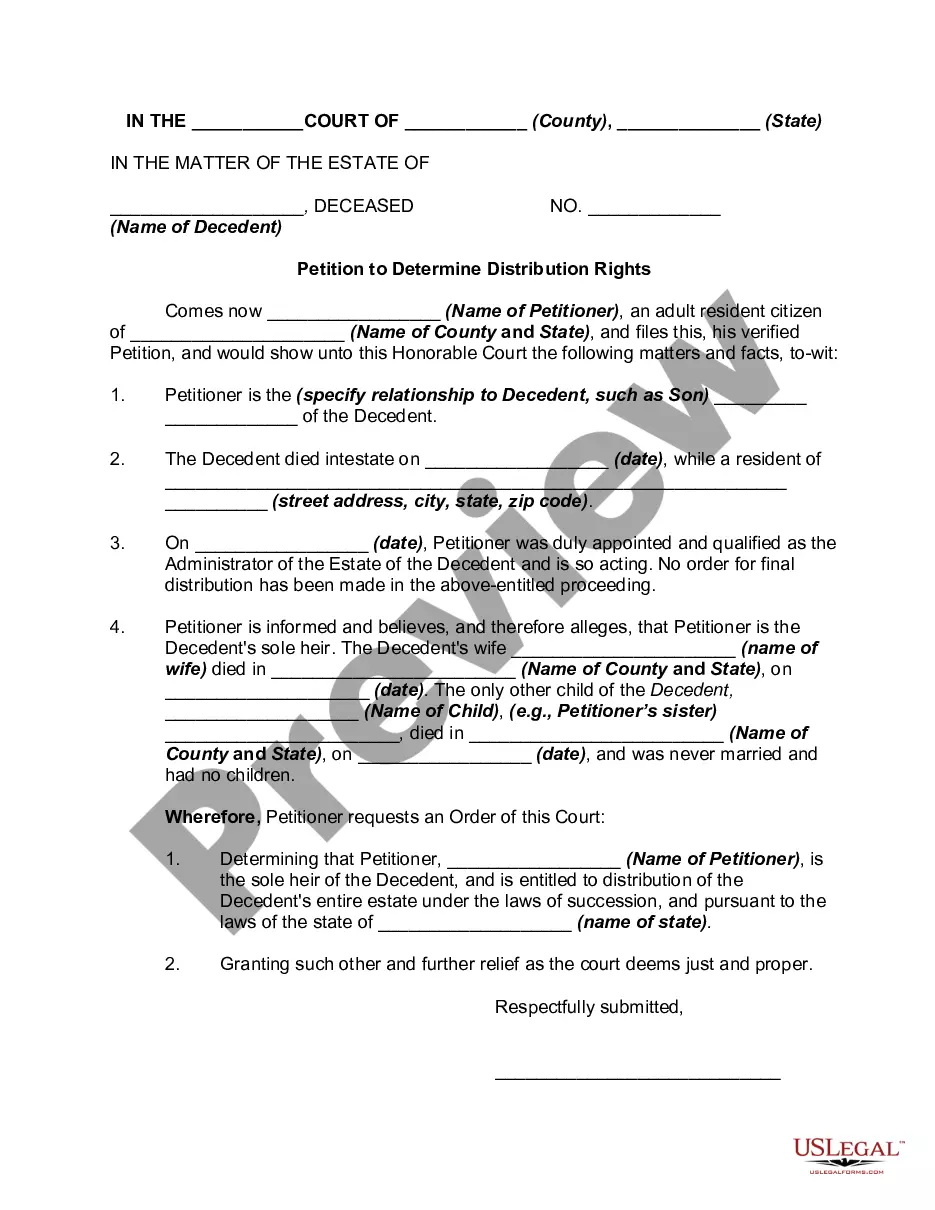
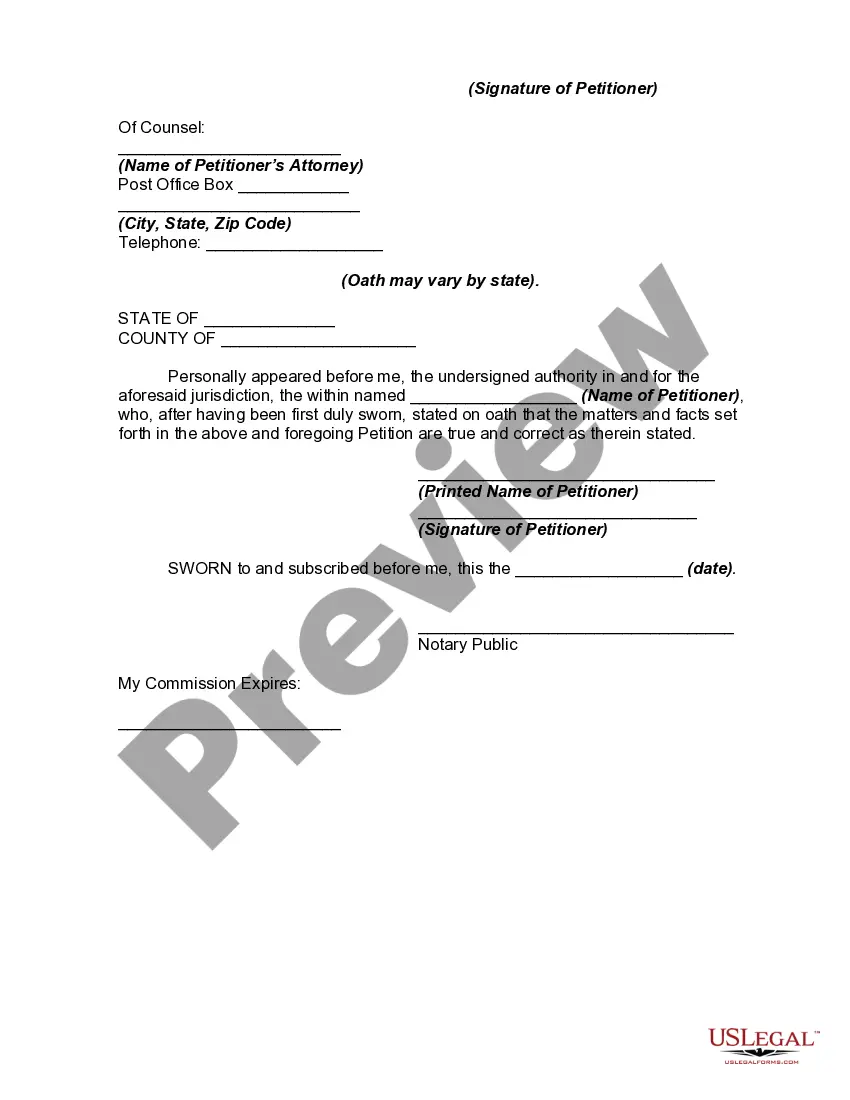
How to fill out Petition To Determine Distribution Rights Of The Assets Of A Decedent?
Legal administration can be daunting, even for seasoned experts.
When searching for an Assets Decedent Without Will and lacking the time to dedicate to finding the appropriate and updated version, the processes can be overwhelming.
Access a resource library of articles, guides, and materials related to your situation and requirements.
Save time and effort searching for the documents you necessitate, and use US Legal Forms’ advanced search and Preview feature to find Assets Decedent Without Will and download it.
Confirm that the sample is recognized in your state or county. Choose Buy Now when you are ready. Select a monthly subscription plan. Choose the format you desire, and then Download, fill out, sign, print, and send your documents. Enjoy the US Legal Forms online library, backed by 25 years of experience and reliability. Transform your daily document management into a seamless and user-friendly process today.
- If you have an account, Log In to your US Legal Forms profile, locate the form, and download it.
- Check your My documents section to review the documents you previously downloaded and to organize your folders as needed.
- If this is your first experience with US Legal Forms, create a free account and gain unlimited access to all advantages of the library.
- Here are the steps to follow after downloading the document you need.
- Ensure it is the correct document by previewing it and examining its details.
- Access state- or county-specific legal and organizational documents.
- US Legal Forms addresses any requirements you may have, from personal to business paperwork, all in one location.
- Utilize advanced tools to complete and manage your Assets Decedent Without Will.
Form popularity
FAQ
Claiming the estate of a deceased person, particularly when dealing with assets decedent without will, involves several steps. First, you must determine if you have legal standing, typically as an heir or beneficiary. Then, you will need to file a petition in the probate court to initiate the process. If no will exists, the court will decide how to distribute the assets based on state laws, ensuring that rightful heirs receive their due share.
In Pennsylvania, if a person passes away without a will, the assets decedent without will are distributed according to state intestacy laws. Generally, the deceased's assets will first go to their spouse and children. If there are no direct descendants, parents, siblings, and more distant relatives may inherit. It’s essential to understand these laws to ensure that the distribution aligns with your intentions.
Heirs typically have a limited time frame to claim property from an estate. Most jurisdictions allow a specific period, often ranging from six months to three years, for heirs to assert their rights to the assets decedent without will. It is crucial to act promptly and consult with a legal expert to navigate any potential requirements. Delays can affect your ability to claim your inheritance.
When someone dies without a will, this situation is referred to as dying intestate. In this case, the assets decedent without will are distributed according to the state’s intestacy laws. This means the court decides on the distribution of the estate, which may not align with the deceased's wishes. Understanding intestate succession is vital for heirs.
If you need to file for an executor of an estate without a will, you should first determine if you qualify as an administrator by checking your relationship to the decedent. Initiate the process by filing a petition for letters of administration in the probate court, which allows you to oversee the distribution of assets decedent without will. This formalizes your role, letting you carry out necessary tasks on behalf of the estate.
To obtain heir property in your name without a will, you should begin by gathering relevant documents that confirm your status as an heir. Next, consider filing a petition for letters of administration in probate court, which allows you to manage the decedent's assets decedent without will. Taking these actions will help you legally claim your share of the estate.
To put heir property in your name, you generally need to establish your claim to the assets decedent without will. Start by collecting documentation proving your relationship to the deceased. Then, you may need to file a petition in court for the partition of the property or execute an affidavit of heirship. By following these steps, you can transfer the property into your name legally.
In New Jersey, if a person dies without a will, their assets decedent without will are distributed according to the state's intestacy laws. Typically, the surviving spouse or domestic partner receives a significant portion of the estate. If there is no spouse, the estate then goes to children, parents, or siblings, depending on the family structure. It is essential to understand these laws to determine who may inherit.
To prove executor without a will, you must file for administration with the probate court. The court will require information regarding the decedent and their assets, even if there is no will. The judge will then appoint an administrator who can manage and distribute the decedent's assets in accordance with state laws. Utilizing UsLegalForms can simplify this process and provide you the necessary forms to move forward.
Proof of an executor of an estate generally includes court documents that designate someone as executor or administrator. This may consist of letters testamentary for a will or letters of administration for cases involving assets of a decedent without a will. These documents confirm the person's legal right to manage the estate and distribute the assets. You can access these forms easily through UsLegalForms to ensure compliance.