Wisconsin Application For Judicial Assignment
About this form
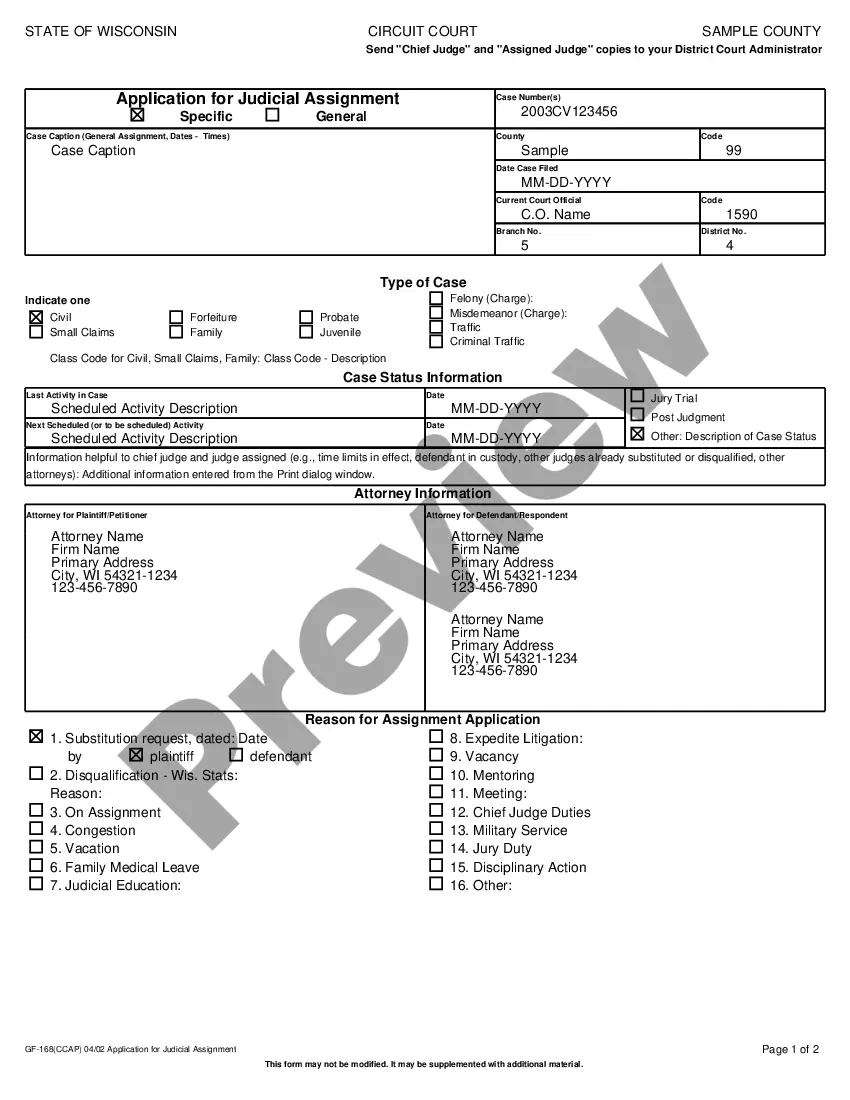
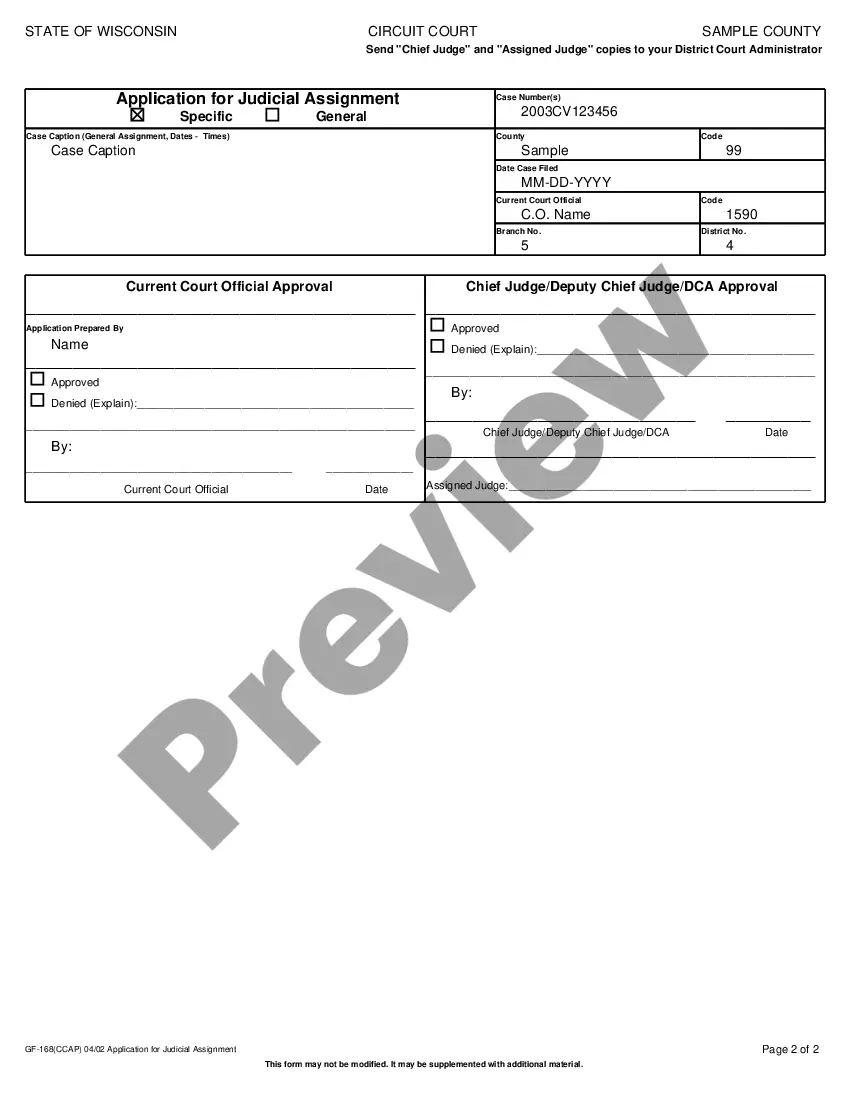
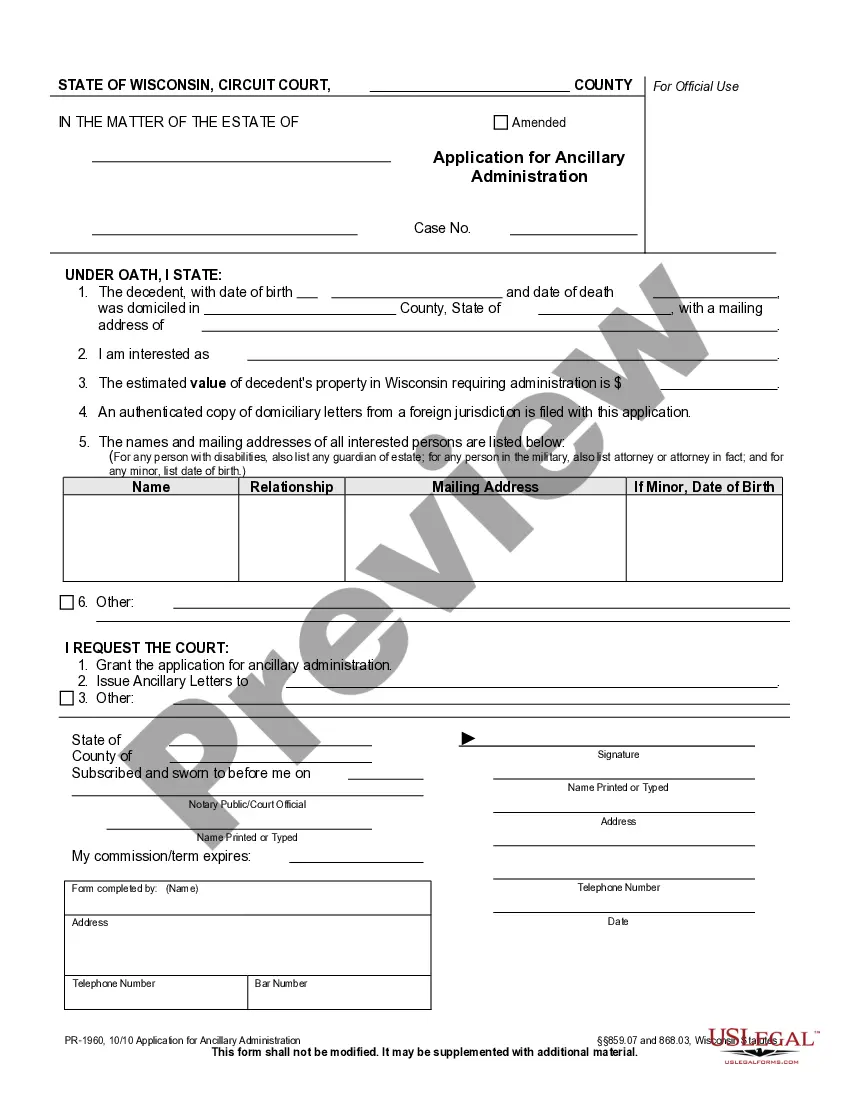
The Application for Judicial Assignment is a legal form used to request the assignment of a judge to a specific case in the Wisconsin circuit courts. This form is crucial for ensuring that cases are managed effectively and are assigned to an appropriate judge, considering factors such as case congestion or scheduling conflicts. Unlike other legal forms, this application is specific to judicial assignments within the Wisconsin circuit court system and is generated through the CCAP system.
Key components of this form
- Type of case: Indicate the nature of the case (e.g., civil, felony, family).
- Case status information: Provide details regarding the current status and any upcoming activities related to the case.
- Attorney information: Include the names and contact information of attorneys for both the plaintiff and defendant.
- Reason for assignment: Specify the reasons for requesting a judicial assignment, such as disqualification or congestion.
- Approval section: Areas for the current court official and chief judge to approve or deny the application.

Common use cases
This form should be used when there is a need to request the assignment of a judge to a specific case within the Wisconsin circuit courts. Common scenarios for using this form include situations where there is a conflict of interest with the assigned judge, significant case backlog, or specific scheduling needs that necessitate a different judge. This application ensures timely and fair handling of cases in the judicial system.
Who can use this document
- Litigants involved in cases within the Wisconsin circuit courts.
- Attorneys representing plaintiffs or defendants in civil, criminal, or family law cases.
- Judicial staff and court officials managing case assignments and scheduling.
- Parties seeking to address congestion or conflicts in their assigned cases.
Instructions for completing this form
- Identify the type of case by selecting from the options provided (civil, criminal, family, etc.).
- Fill in the current status of the case, including scheduled activities and any other relevant information.
- Provide complete attorney information for both the plaintiff and the defendant.
- Select the reason for requesting the judicial assignment and provide any necessary details.
- Obtain signatures from the current court official and the chief judge for approval.
Does this form need to be notarized?
This form does not typically require notarization unless specified by local law.
Get your form ready online
Our built-in tools help you complete, sign, share, and store your documents in one place.
Make edits, fill in missing information, and update formatting in US Legal Forms—just like you would in MS Word.
Download a copy, print it, send it by email, or mail it via USPS—whatever works best for your next step.
Sign and collect signatures with our SignNow integration. Send to multiple recipients, set reminders, and more. Go Premium to unlock E-Sign.
If this form requires notarization, complete it online through a secure video call—no need to meet a notary in person or wait for an appointment.
We protect your documents and personal data by following strict security and privacy standards.

Make edits, fill in missing information, and update formatting in US Legal Forms—just like you would in MS Word.

Download a copy, print it, send it by email, or mail it via USPS—whatever works best for your next step.

Sign and collect signatures with our SignNow integration. Send to multiple recipients, set reminders, and more. Go Premium to unlock E-Sign.

If this form requires notarization, complete it online through a secure video call—no need to meet a notary in person or wait for an appointment.

We protect your documents and personal data by following strict security and privacy standards.
Typical mistakes to avoid
- Failing to specify the correct type of case, which can lead to delays.
- Omitting attorney contact information, making it difficult for court officials to reach the parties involved.
- Not providing a clear reason for the judicial assignment, which can result in denial of the application.
- Skipping the approval signatures required from the current court official or chief judge.
Why complete this form online
- Convenience: Complete the form from anywhere at any time without needing to visit a court or legal office.
- Editability: Easily make changes and corrections as needed before finalizing the submission.
- Reliability: Access consistently formatted forms that meet court requirements without the risk of errors.
Looking for another form?



Form popularity
FAQ
The duty Judge shall be responsible for ruling on those matters preliminary to the filing of a complaint, (temporary orders in domestic relations cases, protective orders in domestic violence cases, garnishment, orders to appear in contempt proceedings, etc.)
Judicial notice is used by a court when it declares a fact presented as evidence as true without a formal presentation of evidence. A court can take judicial notice of indisputable facts. If a court takes judicial notice of an indisputable fact in a civil case, the fact is considered conclusive.
Generally speaking, matters of judicial notice have three material requisites: (1) the matter must be one of common and general knowledge; (2) it must be well and authoritatively settled and not doubtful or uncertain; and (3) it must be known to be within the limits of the jurisdiction of the court.
Judicial notice is used by a court when it declares a fact presented as evidence as true without a formal presentation of evidence. A court can take judicial notice of indisputable facts. If a court takes judicial notice of an indisputable fact in a civil case, the fact is considered conclusive. evidence.
A reciprocal assignment is an order, issued annually by the Chief Justice and governed by rule 10.630 of the California Rules of Court that enables judges in neighboring counties to hear matters in each other's courts. Reciprocal assignments are issued upon the agreement of the presiding judges of the courts involved.
Judicial notice and the burden of proof In a civil trial, the fact taken notice of is thereby conclusively proved. In a criminal case, the defendant has the right to contest every fact that might tend to incriminate him.
How are judges assigned to cases?By statute, the chief judge of each district court has the responsibility to enforce the court's rules and orders on case assignments. Each court has a written plan or system for assigning cases. The majority of courts use some variation of a random drawing.
It is a legal procedure that allows the assigned judge to be removed from the case, and another judge to be assigned. A defendant always has this right, however there is a specific process that must be followed within a certain procedural time frame.