West Virginia Mutual Wills containing Last Will and Testaments for Man and Woman living together not Married with No Children
About this form
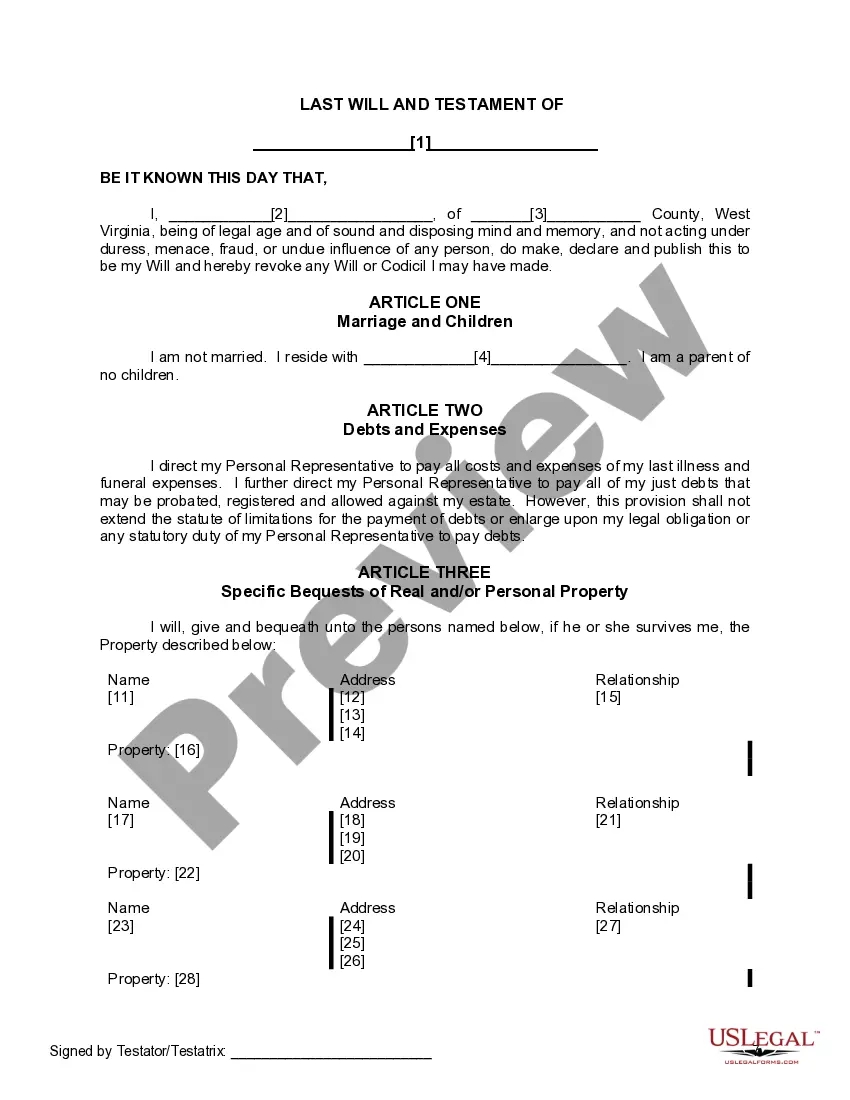
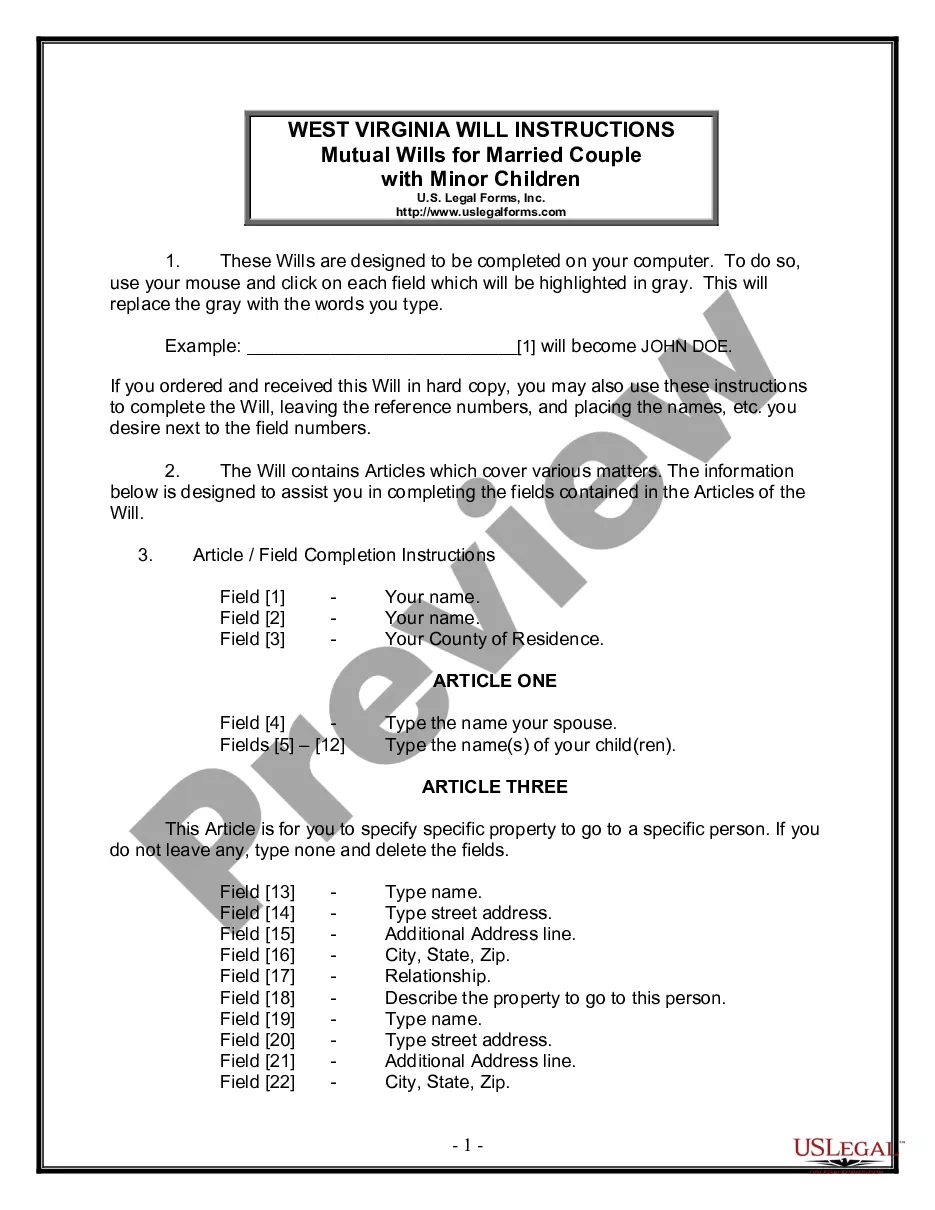
This Mutual Wills package contains Last Will and Testaments for a man and a woman who are living together but are not married and have no children. It allows each partner to designate how their property will be transferred upon their death to their partner, ensuring mutual intentions are honored. Unlike traditional wills, these mutual wills require each party to consider the other's wishes, making them particularly suitable for couples who share property or wish to provide for one another after death.
Main sections of this form
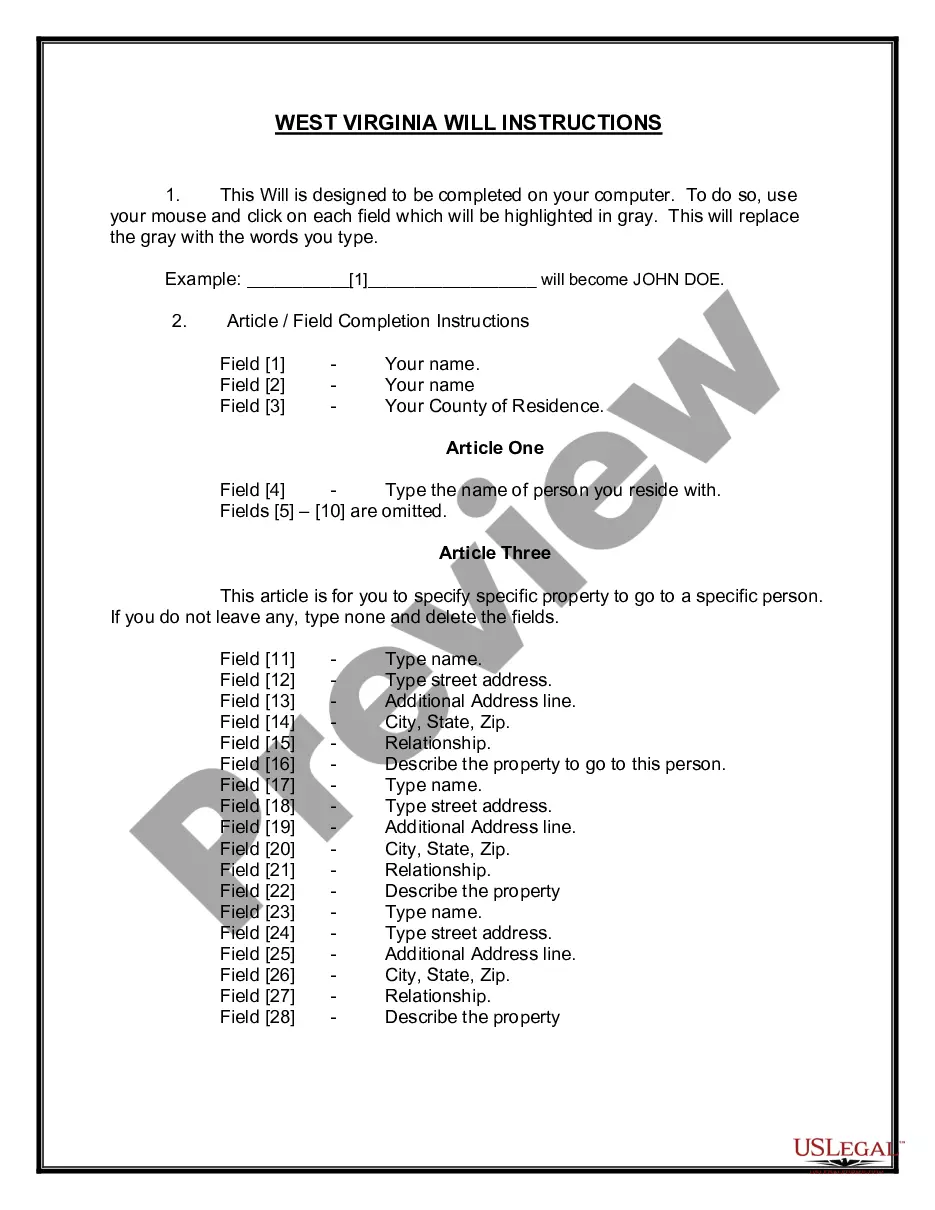
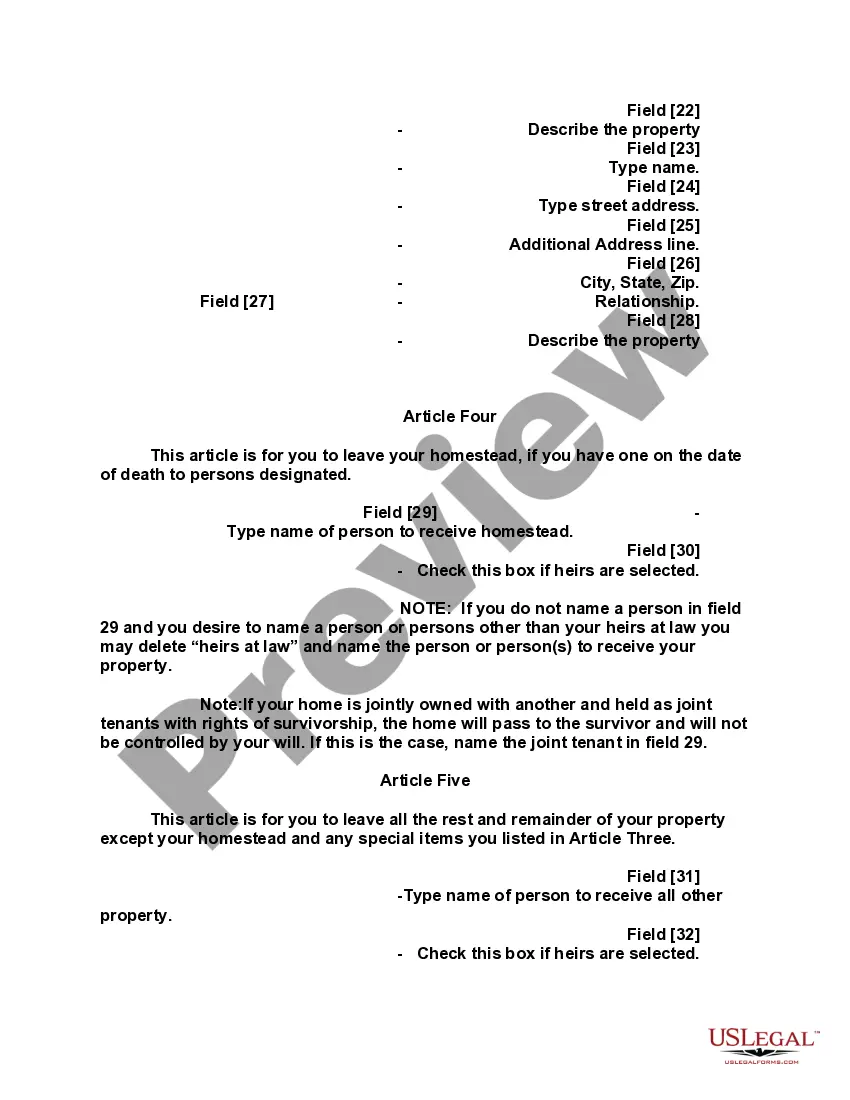
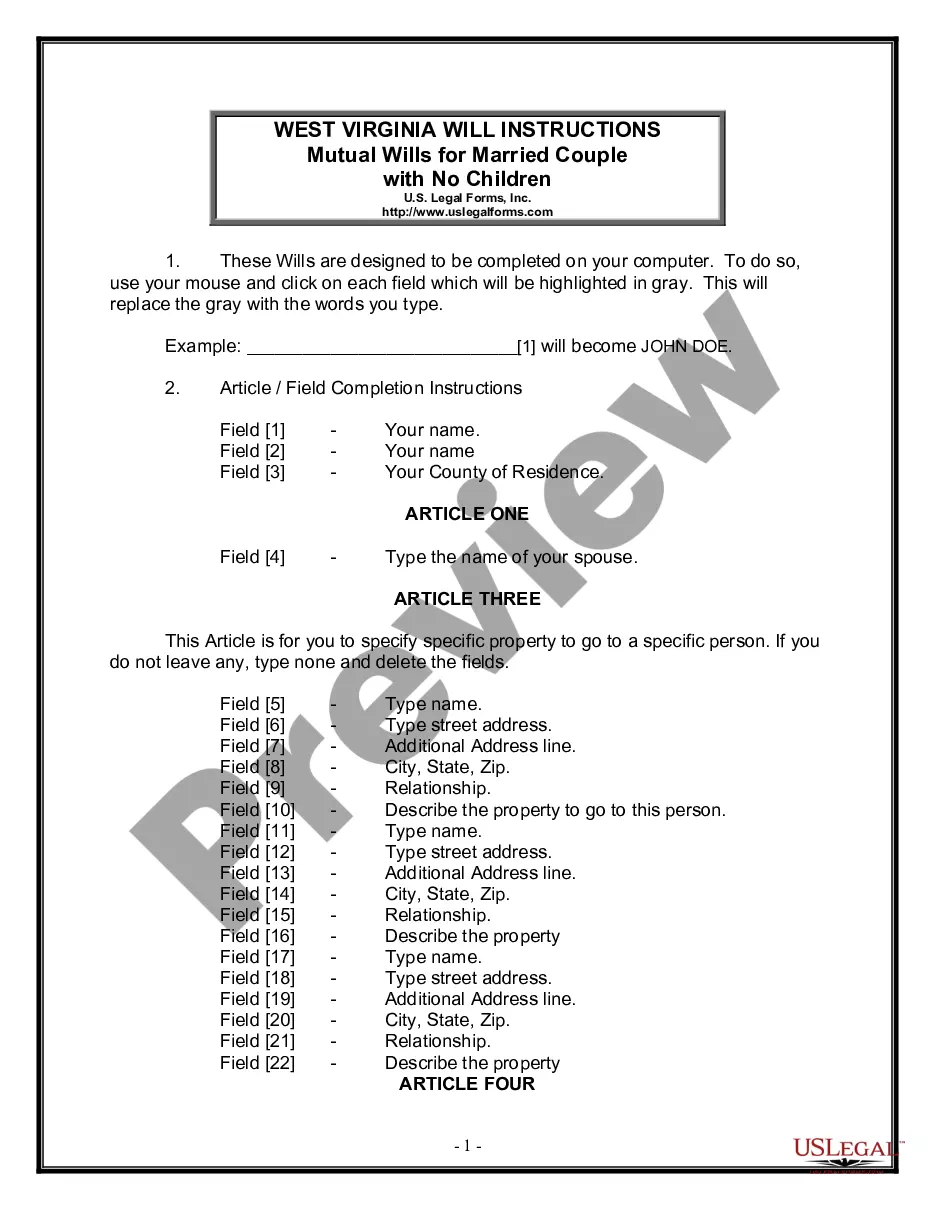
- Personal Information: Fields for entering each party's name and county of residence.
- Marriage and Children Declaration: Acknowledgment that neither party is married and that there are no children.
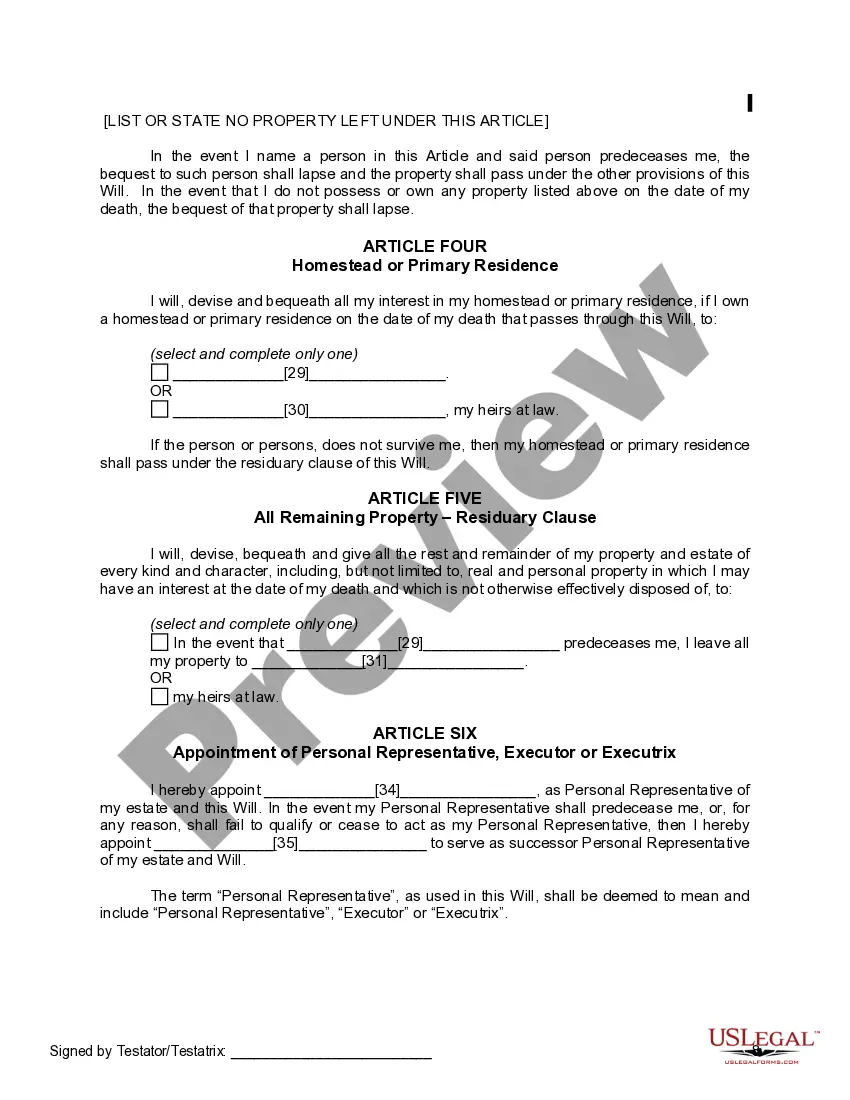
- Specific Bequests: Sections for naming specific items or property to be left to designated individuals.
- Homestead Designation: Instructions for designating the primary residence to a beneficiary.
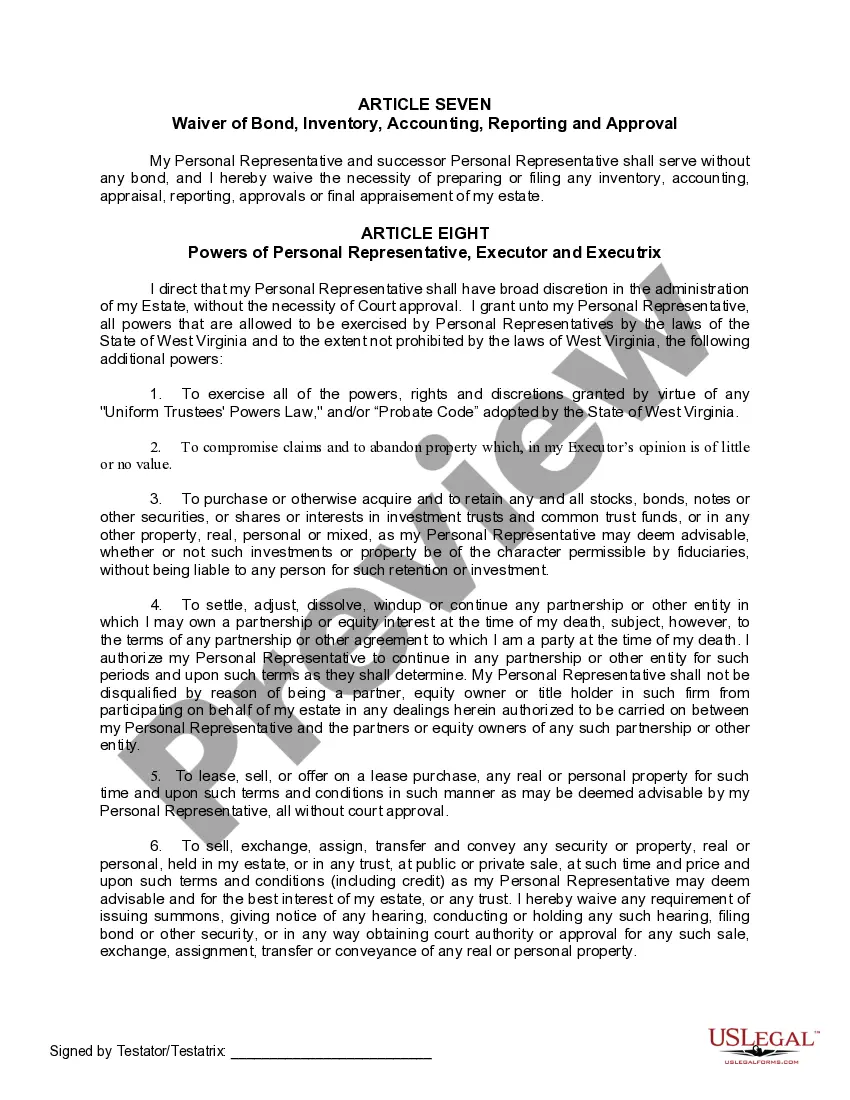
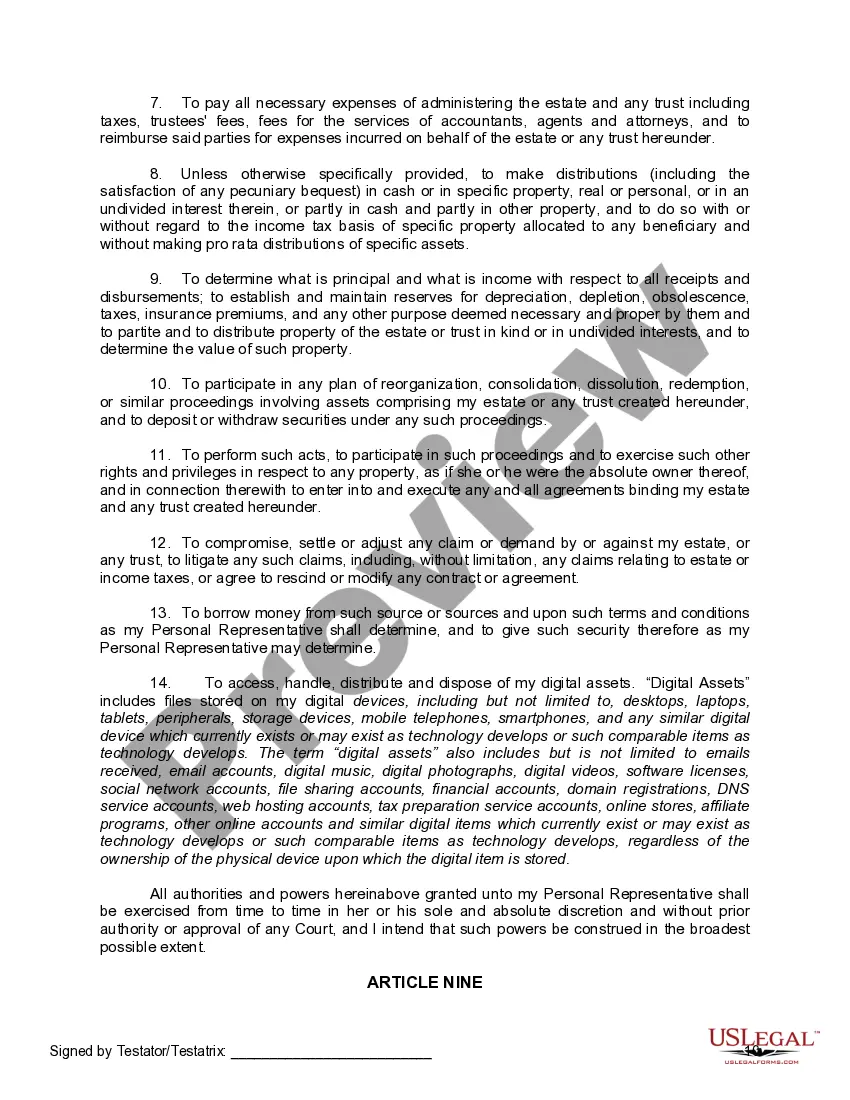
- Personal Representative Appointment: Designation of an individual to manage the estate and fulfill the terms of the will.
- Witness and Notary Sections: Areas for signing and witnessing, ensuring the will's legal validity.

Situations where this form applies
This form is essential for couples living together who wish to ensure that their assets are distributed according to their wishes after death. It is appropriate when both partners want to leave their property to each other, especially when they are not legally married and want to outline their mutual intentions clearly. This will ensures peace of mind regarding property succession and can help prevent disputes among family members after one partnerâs death.
Intended users of this form
- Cohabiting partners who are not legally married.
- Couples without children who want to ensure their property goes to the other partner.
- Individuals seeking to define their mutual estate planning intentions clearly.
Instructions for completing this form
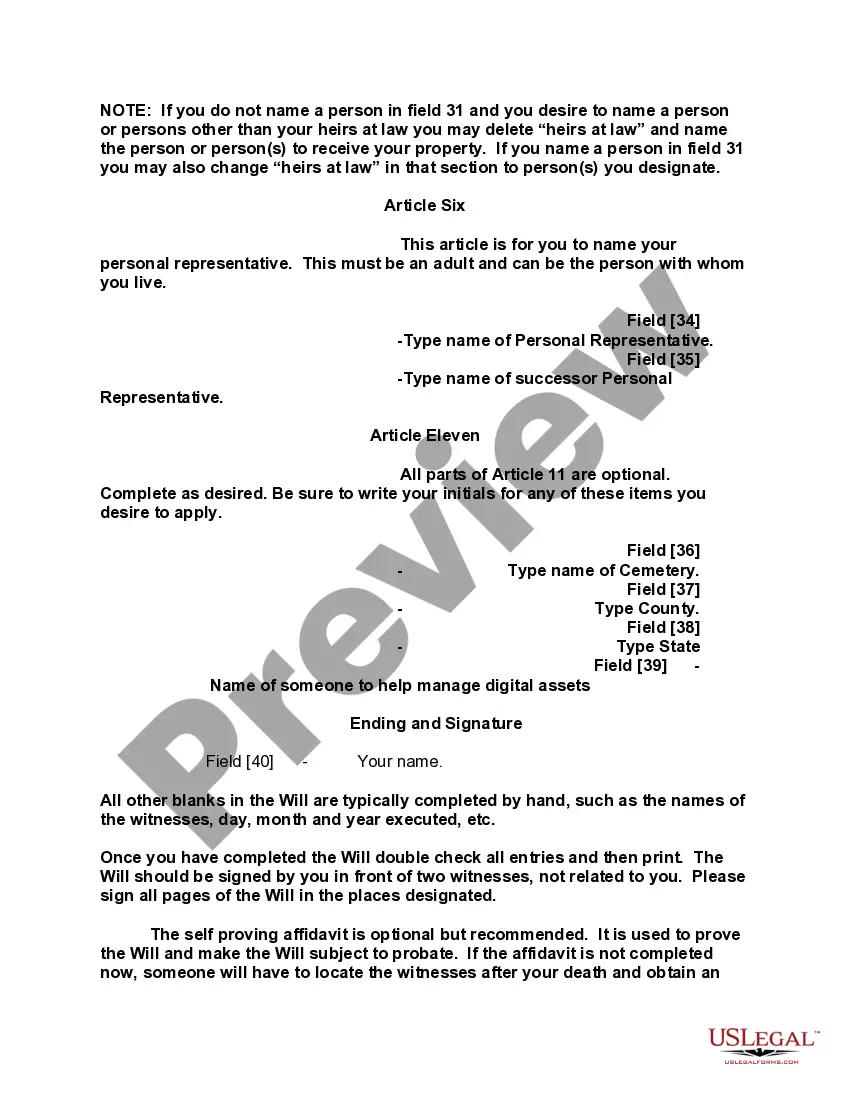
- Identify the parties: Enter the full name of each individual and their county of residence in the designated fields.
- Declare marital status: Confirm that both individuals are not married and have no children.
- Designate property: Use the specific bequest sections to clearly describe any property or items you wish to leave to each other or others.
- Appoint a personal representative: Choose someone to manage the execution of the will and fill in their information.
- Gather witnesses: After completing the will, sign it in the presence of two unrelated witnesses who will also sign the document to validate it.
- Notarization: Consider having the will notarized to create a self-proving affidavit, simplifying the probate process.
Is notarization required?
Yes, this form must be notarized to be legally valid. This ensures that the will is self-proving and simplifies the probate process. US Legal Forms offers integrated online notarization that is available twenty-four-seven, allowing users to complete the notarization securely via video call without having to travel.
Get your form ready online
Our built-in tools help you complete, sign, share, and store your documents in one place.
Make edits, fill in missing information, and update formatting in US Legal Forms—just like you would in MS Word.
Download a copy, print it, send it by email, or mail it via USPS—whatever works best for your next step.
Sign and collect signatures with our SignNow integration. Send to multiple recipients, set reminders, and more. Go Premium to unlock E-Sign.
If this form requires notarization, complete it online through a secure video call—no need to meet a notary in person or wait for an appointment.
We protect your documents and personal data by following strict security and privacy standards.

Make edits, fill in missing information, and update formatting in US Legal Forms—just like you would in MS Word.

Download a copy, print it, send it by email, or mail it via USPS—whatever works best for your next step.

Sign and collect signatures with our SignNow integration. Send to multiple recipients, set reminders, and more. Go Premium to unlock E-Sign.

If this form requires notarization, complete it online through a secure video call—no need to meet a notary in person or wait for an appointment.

We protect your documents and personal data by following strict security and privacy standards.
Avoid these common issues
- Failing to properly sign the will in front of required witnesses.
- Not specifying complete names and addresses for beneficiaries.
- Leaving out the appointment of a personal representative.
- Neglecting to include a self-proving affidavit, which could complicate probate.
- Assuming verbal agreements are enough without documented intentions.
Benefits of using this form online
- Easy access and immediate download available at any time.
- Editable on your device, allowing for precise completion before printing.
- Instructional guidance integrated into the document for ease of understanding.
- Ensures compliance with legal requirements for your specific state.
Key takeaways
- The Mutual Wills form protects partners by ensuring their mutual wishes for asset distribution are respected.
- It is crucial for couples without children who want to provide for each other after death.
- Proper execution requires signatures from two witnesses and may necessitate notarization.
Looking for another form?
Form popularity
FAQ
A will doesn't have to be notarized to be valid. But in most states, you'll want to add a self-proving affidavit to your will, which must be signed by your witnesses and notarized.If you sign your will in a lawyer's office, the lawyer will provide a notary public.
No, in West Virginia, you do not need to notarize your will to make it legal.A self-proving will speeds up probate because the court can accept the will without contacting the witnesses who signed it.
Yes. A will that you write yourself is called a holographic will. Holographic wills are not valid in every state, but they are valid in West Virginia, as long as they are written entirely in the author's handwriting.
Call the county clerk's office in the county where you believe the document will be probated and ask if a will has been filed. You may have to wait 30 days or more before the will is filed. Go the the clerk's office where the will has been filed and ask to see a copy.
Is Probate Required in West Virginia? Yes, the settling of an estatewhether under the terms of a will or under default intestate rulesmust occur according to West Virginia law. In most cases, the deceased person's final wishes are stated in a will document with named heirs, transfers and assets.
A notarized will does not need to be probated.When a person dies leaving behind a will that is not notarized, the law requires that its validity be ascertained by a notary or by a court. Similarly, any non-notarized modification made to a will must be probated, whether the will is notarized or not.
The Will must be filed with the Probate Office of the County Clerk in the county where the decedent lived. A Petition for Probate must be filed as well. This requests the appointment of an executor. If there is no Will, the clerk will appoint someone to serve as the Personal Representative of the estate.
No, in West Virginia, you do not need to notarize your will to make it legal.A self-proving will speeds up probate because the court can accept the will without contacting the witnesses who signed it.