Capital Injection Without Issuing Shares
Description
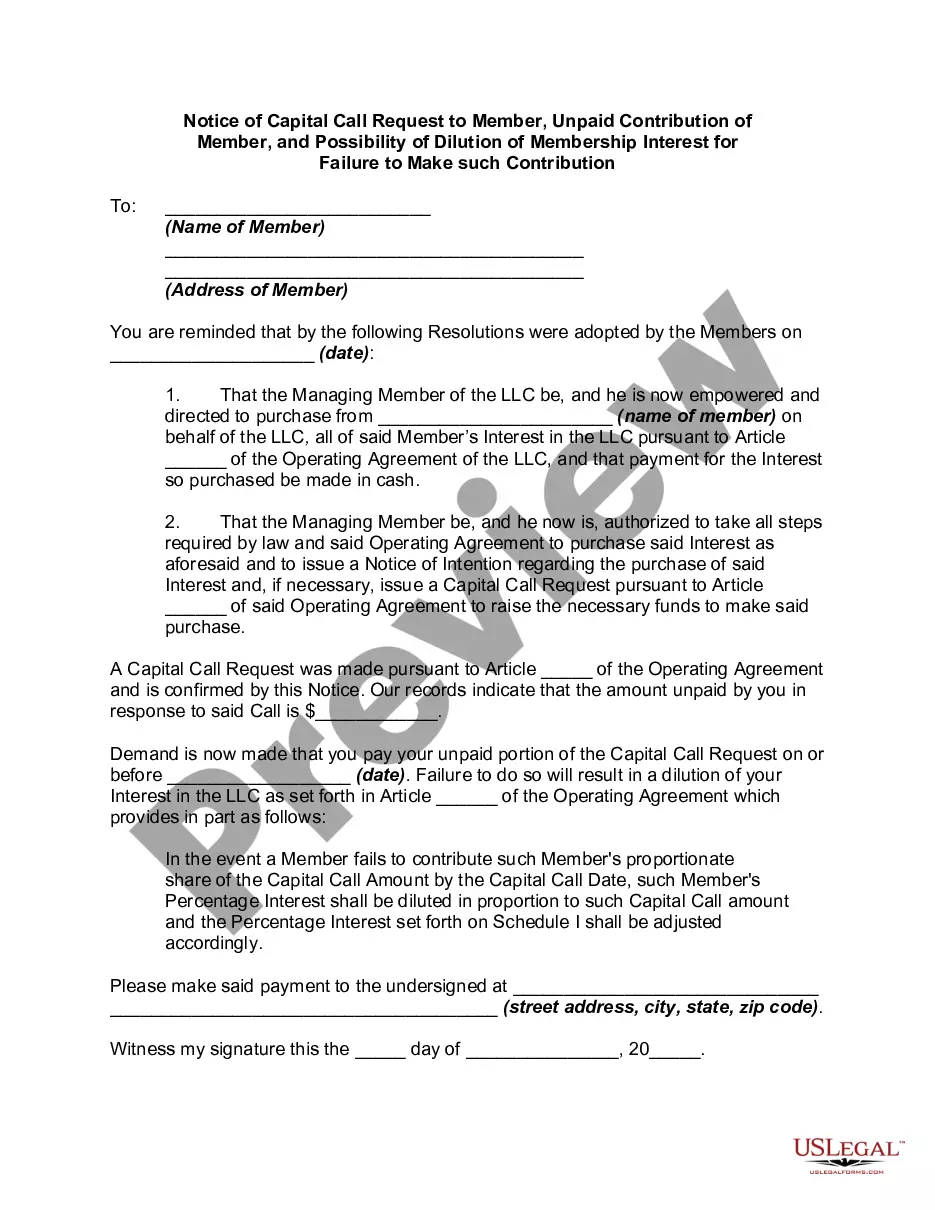

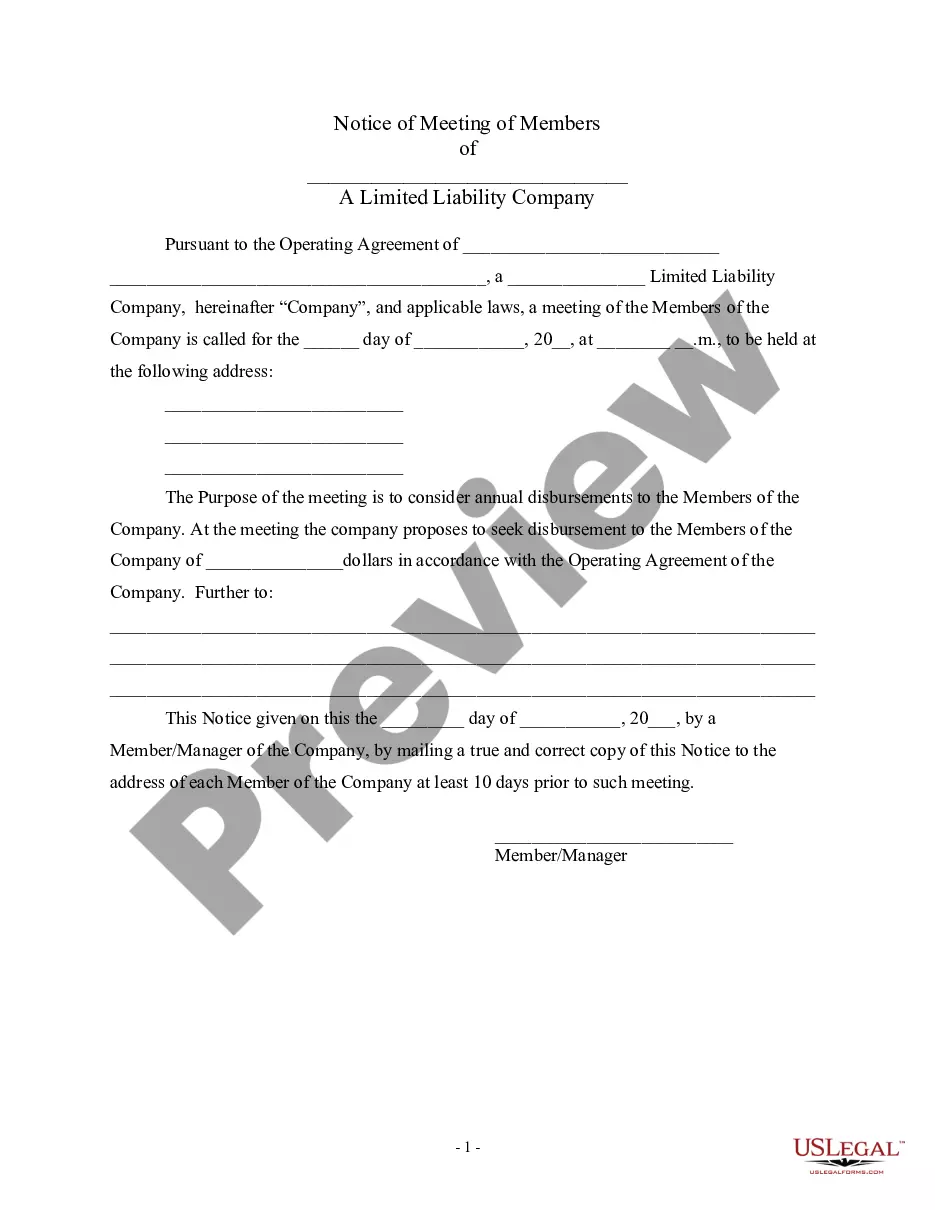





How to fill out Notice Of Capital Call Request To Member, Unpaid Contribution Of Member, And Possibility Of Dilution Of Membership Interest For Failure To Make Such Contribution?
Identifying a reliable location to acquire the latest and suitable legal templates is part of the challenge of navigating bureaucracy.
Choosing the correct legal paperwork requires accuracy and meticulousness, which highlights the necessity of sourcing Capital Injection Without Issuing Shares exclusively from trustworthy providers like US Legal Forms.
Eliminate the stress that comes with your legal documentation. Discover the vast US Legal Forms library where you can easily find legal templates, verify their relevance to your circumstances, and download them instantly.
- Utilize the library navigation or search box to find your template.
- Review the form’s description to determine if it meets the requirements of your state and locality.
- Access the form preview, if available, to ensure the template is indeed the one you need.
- If the Capital Injection Without Issuing Shares does not align with your needs, return to the search for the appropriate template.
- If you are certain about the form’s applicability, download it.
- As a registered user, click Log in to verify and access your selected templates in My documents.
- If you don’t have an account yet, click Buy now to purchase the form.
- Select the pricing plan that meets your needs.
- Proceed with the registration to complete your order.
- Finish your purchase by selecting a payment method (credit card or PayPal).
- Choose the file format for downloading Capital Injection Without Issuing Shares.
- Once you have the form on your device, you can edit it using the editor, or print it and complete it manually.
Form popularity
FAQ
Yes, there are various strategies companies can adopt to raise capital without issuing shares. Options include debt financing, grants, or factoring. Each of these methods serves as a form of capital injection without issuing shares, allowing companies to retain full ownership while still accessing the funds they need.
A capital contribution is the term used to describe a gift of cash or in specie to a company usually made by its controlling shareholder. In some countries, a capital contribution may be made to the equity of the company without the issue of shares.
To avoid excessive founder equity dilution, remember to: Set clear and favorable terms from the start; Limit excess funding with post-money SAFEs; Be wary of pro-rata rights; Base your ESOP pool on data; Limit the amount of stock dilution via accelerators and advisors.
Capital injection refers to a long-term investment in a business. This could be in the form of cash, assets, equity, or debt. Every step requires financial resources, be it establishing an enterprise, growth, expansion, or the revival of a firm. A business cannot survive without consistent induction of capital.
How do you account for capital injection? Capital injection is an accounting treatment, not a financing event. As such, it does not directly impact the balance sheet banking activities. Instead, it's recorded as an equity contribution on the income statement.
Hear this out loud PauseA capital injection is an investment of capital into a project, company, or investment, typically in the form of cash, equity, or debt. Oftentimes, the word injection implies that the company or organization receiving funding may be in financial distress.