Annotated Form of Basic Delaware Limited Partnership Agreement
What this document covers
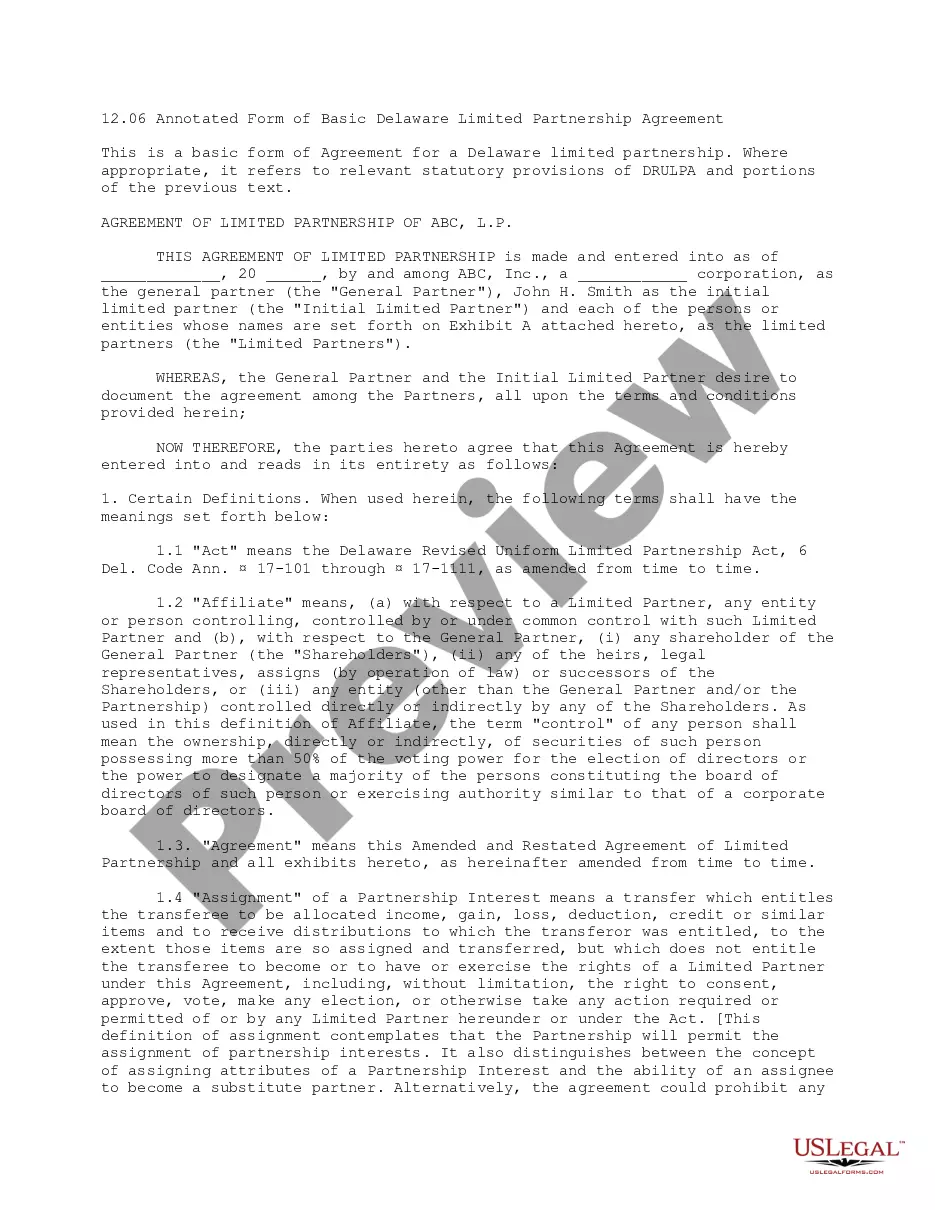
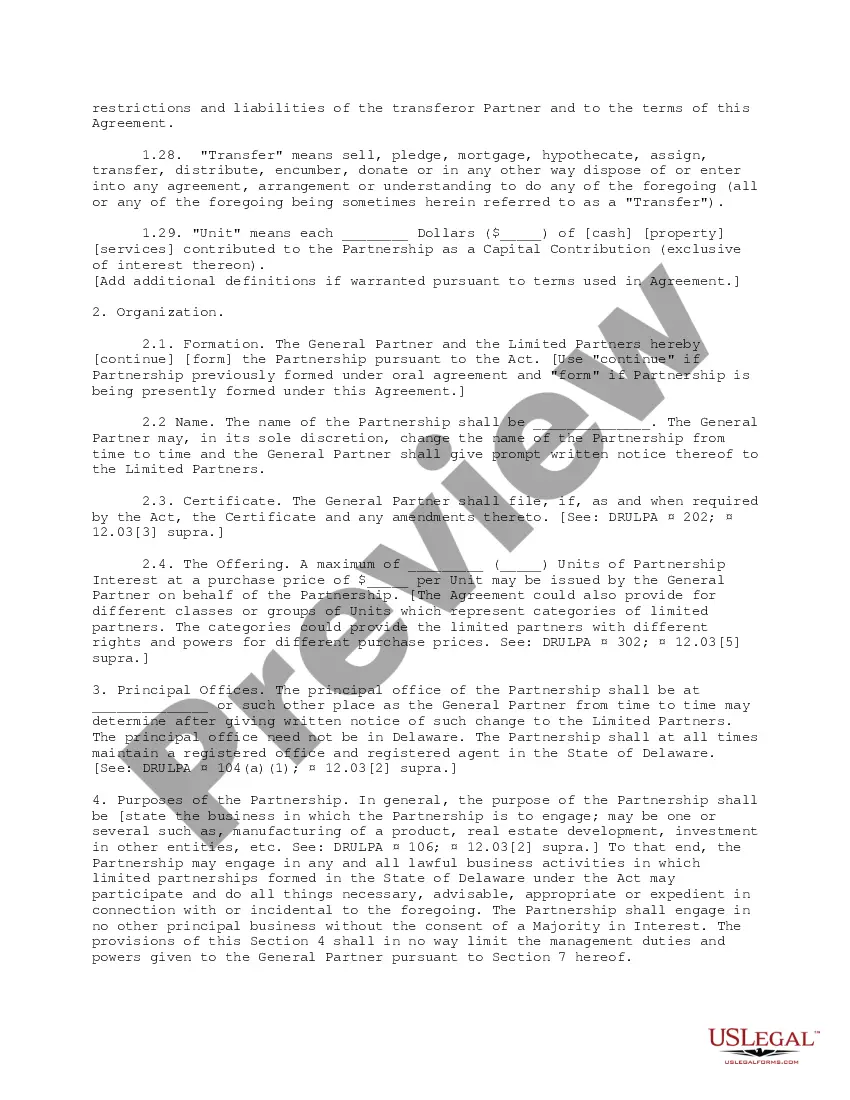
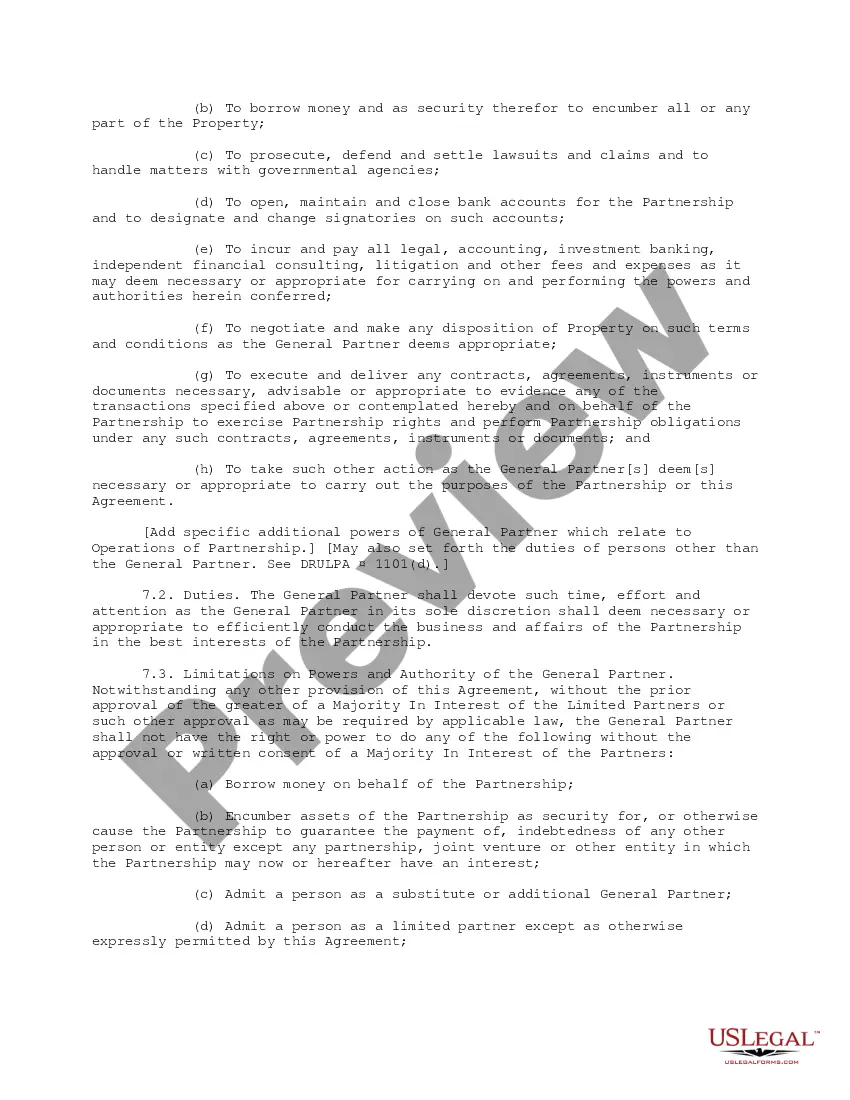
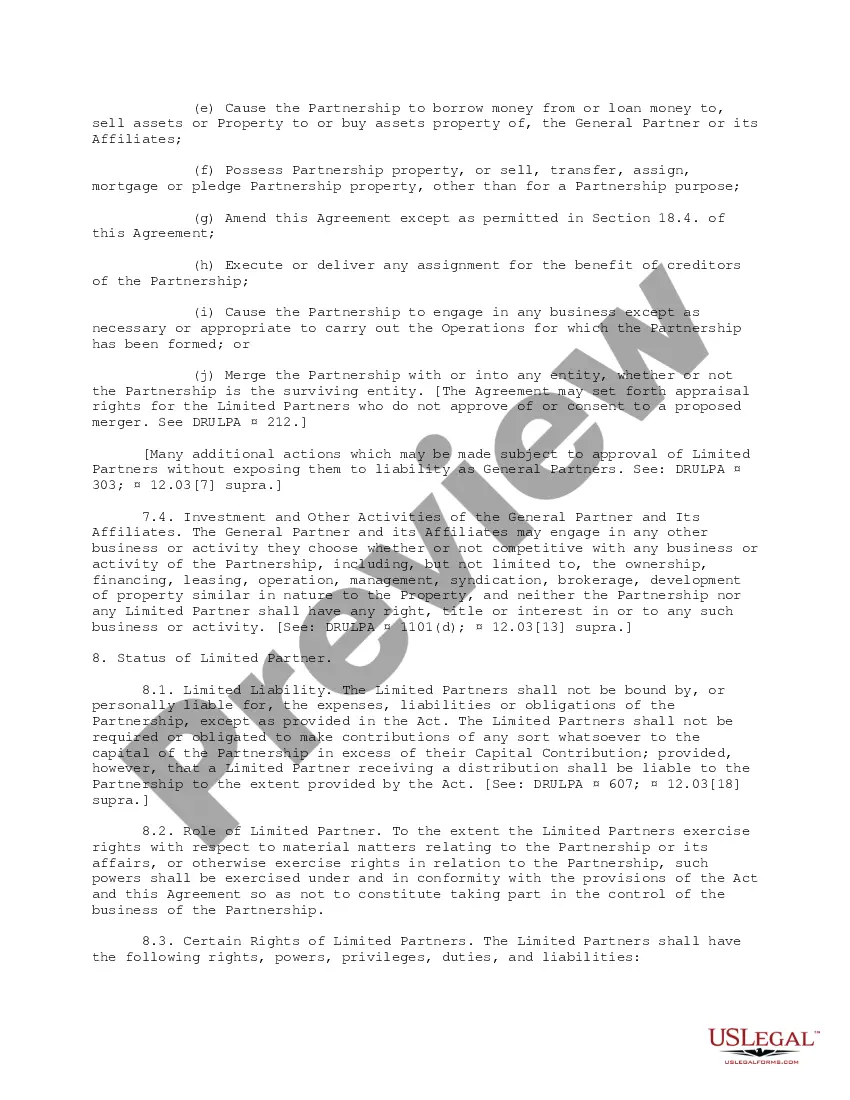
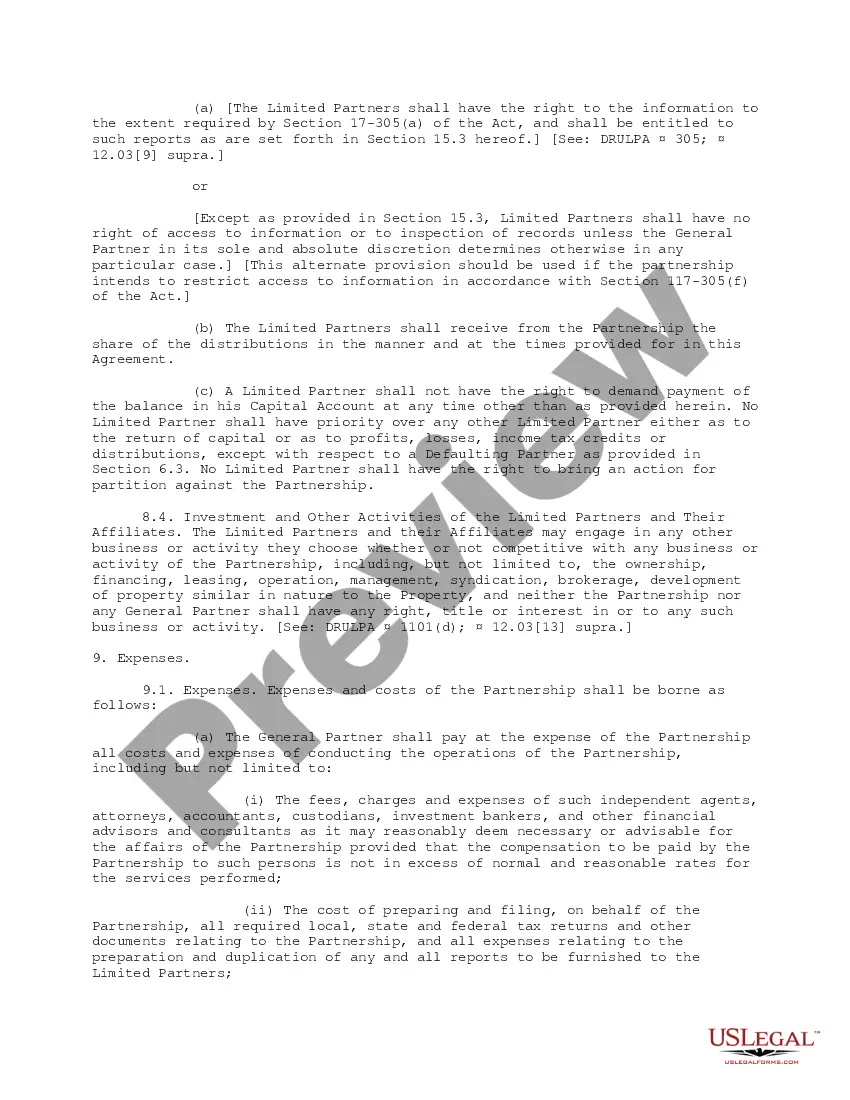
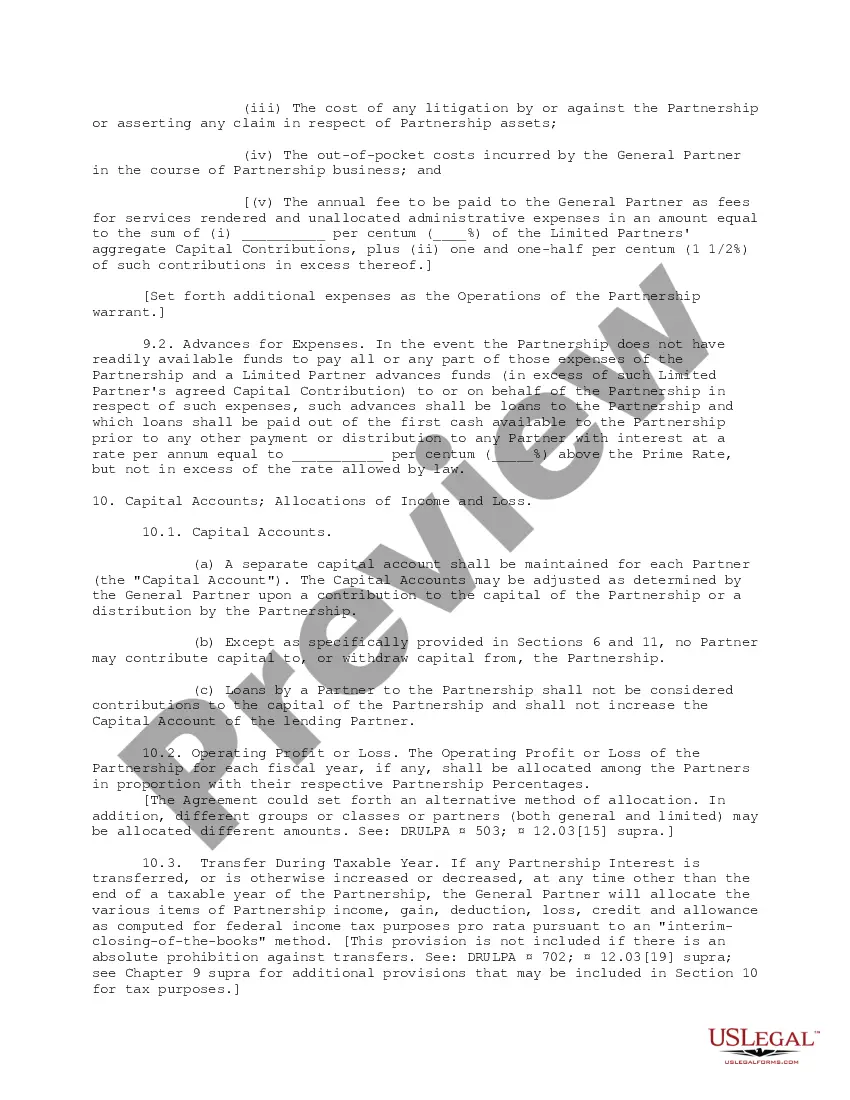
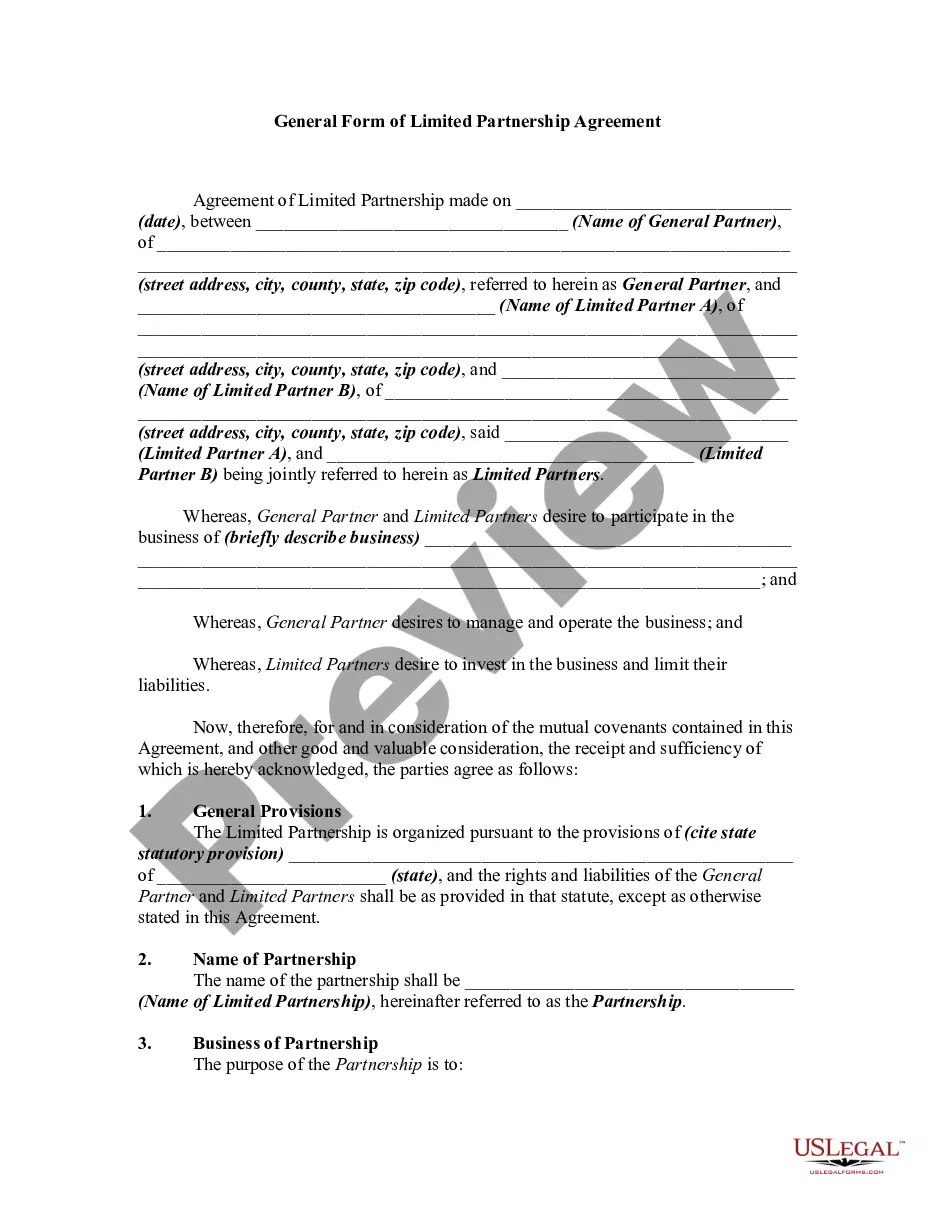
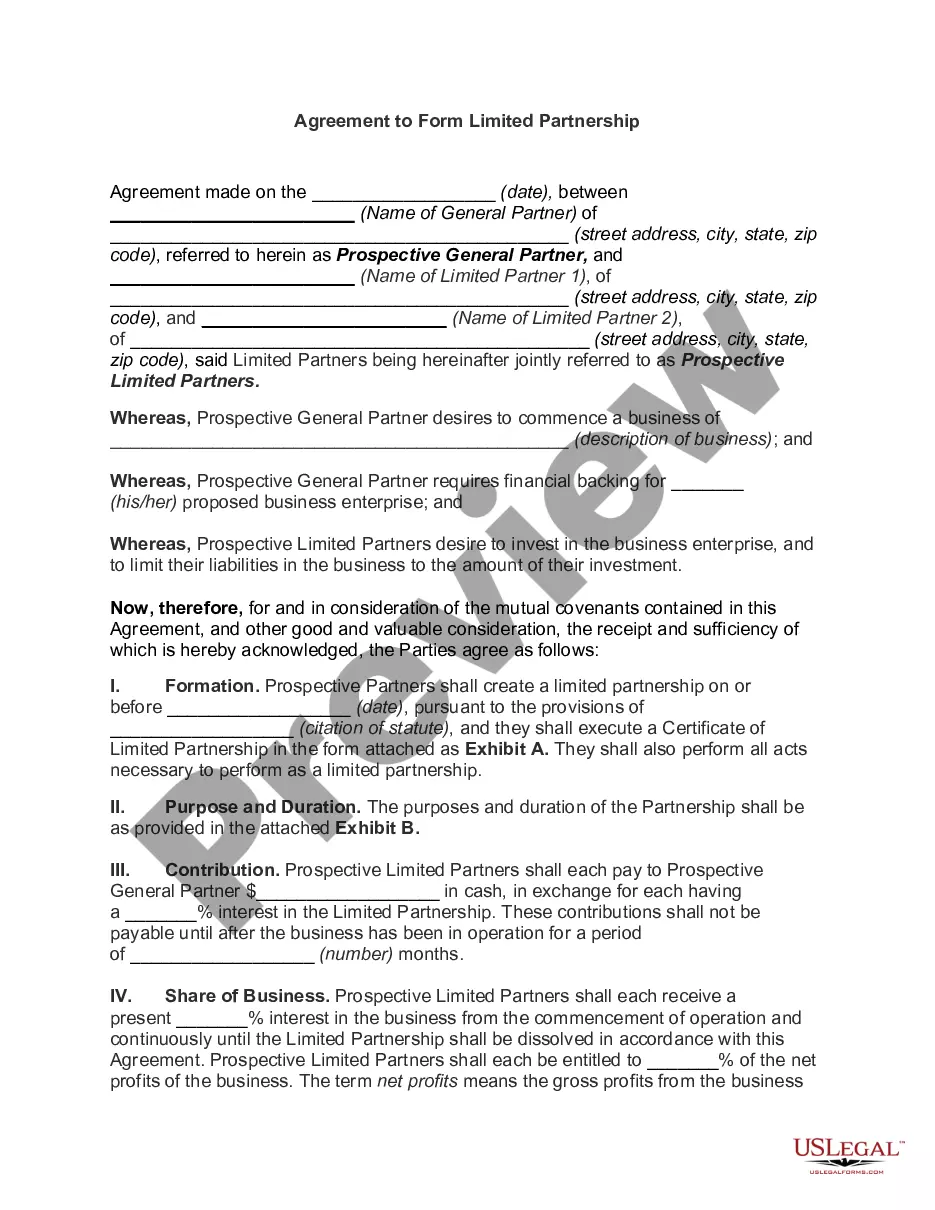
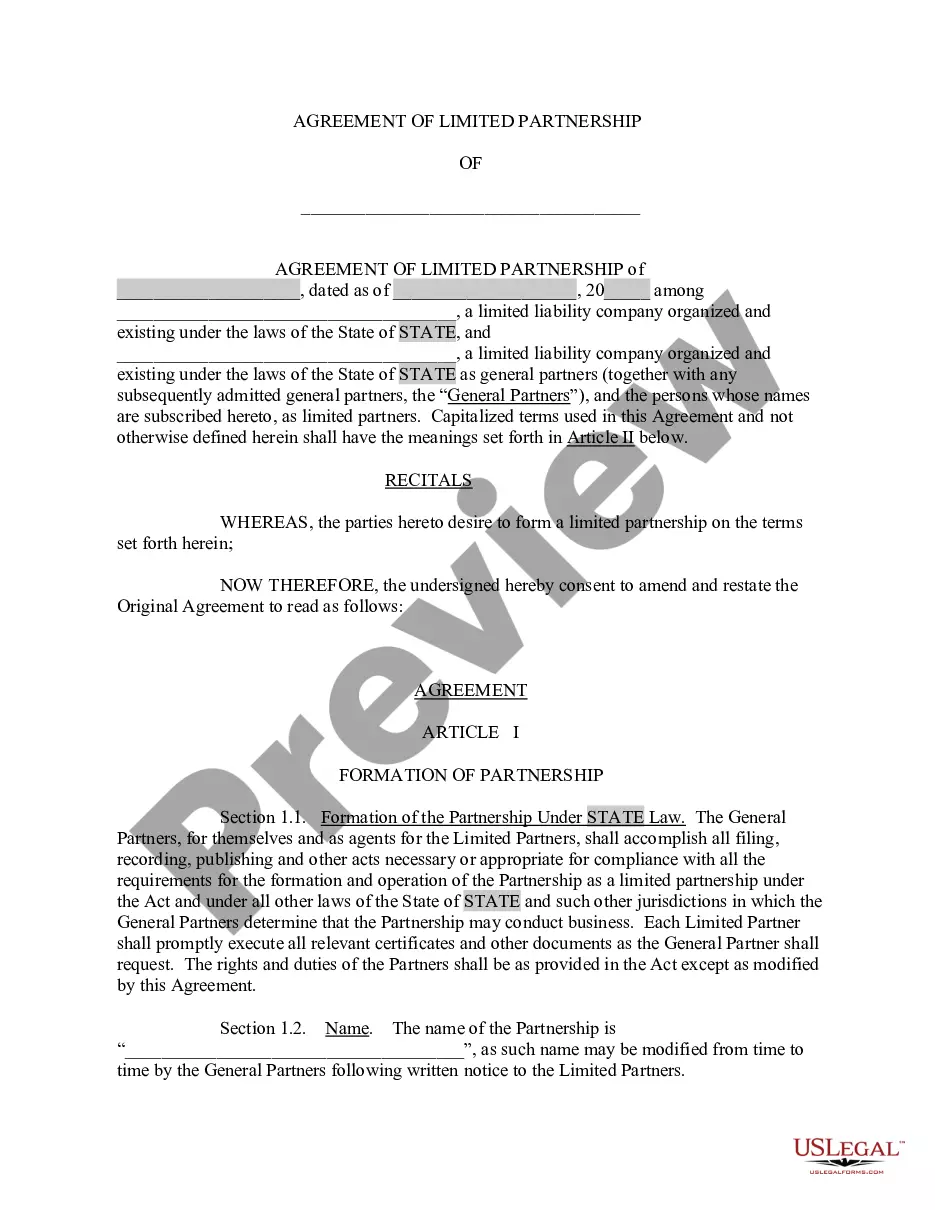
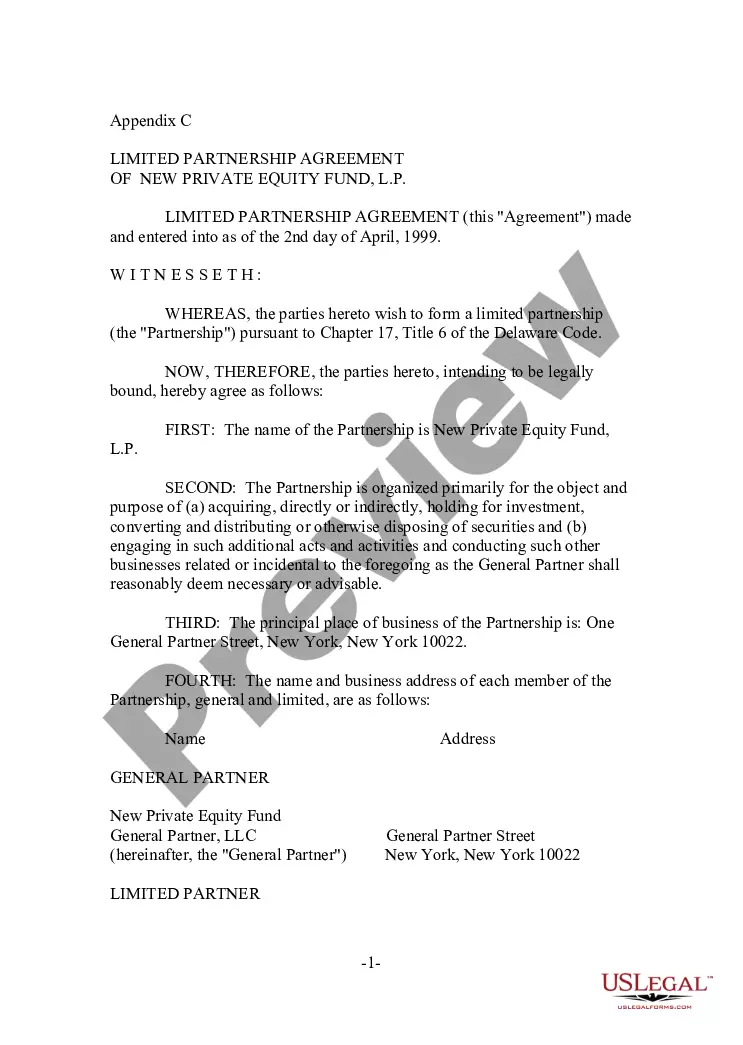
The Annotated Form of Basic Delaware Limited Partnership Agreement is a customizable legal document designed for creating a limited partnership in Delaware. This form, drafted by licensed attorneys, outlines the rights, responsibilities, and operational guidelines for general and limited partners. Unlike other partnership agreements, this template includes annotations that explain various provisions, making it user-friendly for those with little legal experience.
What’s included in this form
- Parties Involved: Identification of the general partner and limited partners.
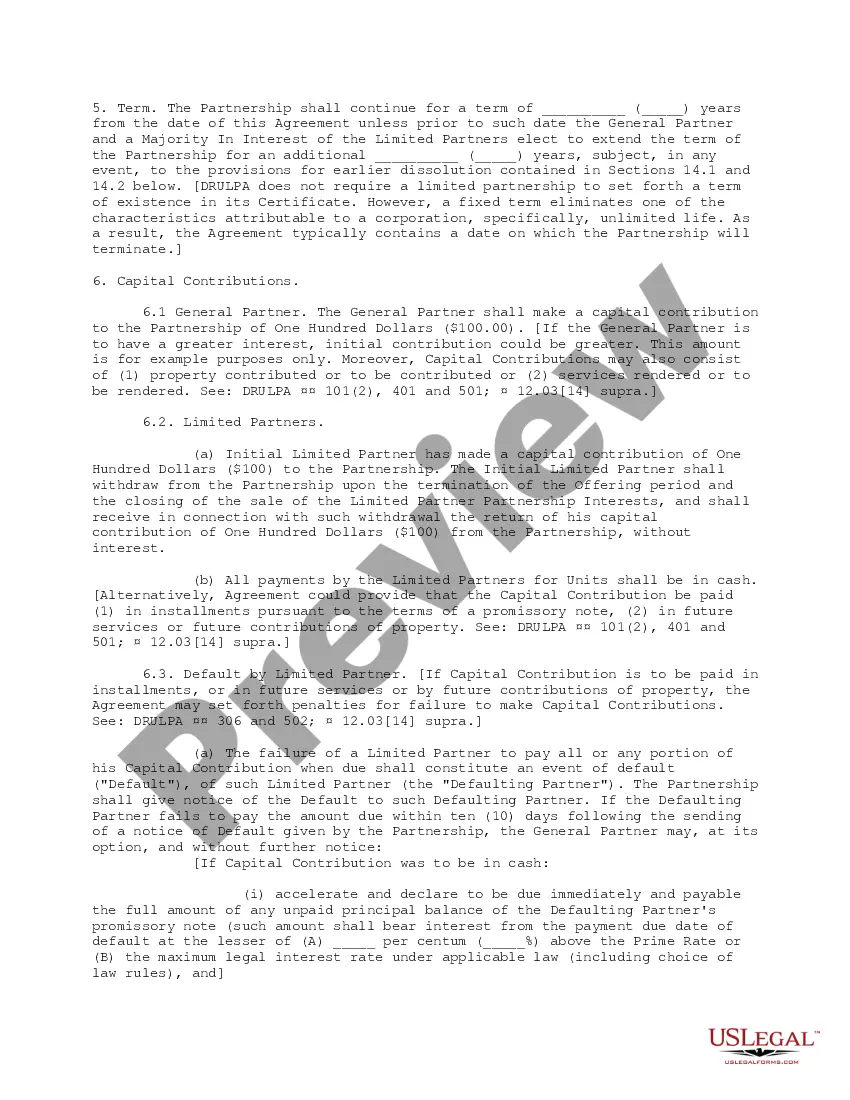
- Capital Contributions: Details on the financial contributions of each partner and their obligations.
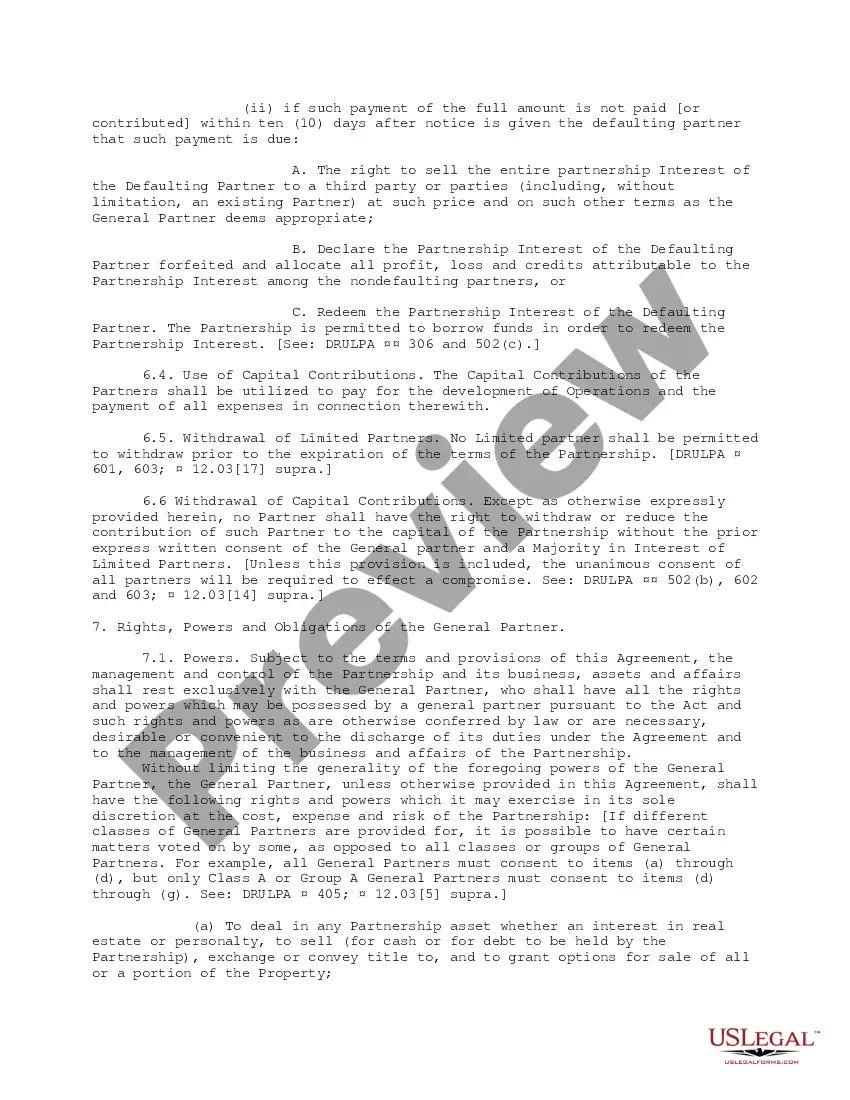
- Management Powers: Defines the rights and powers granted to the general partner.
- Distributions: Outlines how profits and losses are shared among partners.
- Dissolution Procedures: Conditions under which the partnership may be dissolved.



Common use cases
This form is useful when establishing a new limited partnership in Delaware, particularly for businesses involving multiple investors. It is applicable when partners decide to formalize their arrangement, clarify management responsibilities, and outline the terms of investment and profit sharing. Moreover, this form is essential when there is a need for a structured approach to partnership operations.
Intended users of this form
- Entrepreneurs looking to form a new limited partnership in Delaware.
- Investors seeking legal protection and clarity in their partnership agreements.
- Businesses requiring a formal structure to define partner roles and contributions.
- Individuals with minimal legal knowledge needing guidance through a partnership setup.
How to complete this form
- Identify the parties: Clearly state the names and roles of the general and limited partners.
- Enter capital contributions: Specify the amount each partner is contributing to the partnership.
- Define management powers: Outline the rights and responsibilities of the general partner.
- Outline profit distribution: Indicate how profits and losses will be shared among partners.
- Include dissolution terms: Set forth conditions under which the partnership may be terminated.
Notarization requirements for this form
This form does not typically require notarization unless specified by local law. However, it is advisable to consult with a legal professional to confirm any notarization requirements applicable to your partnership agreement.
Get your form ready online
Our built-in tools help you complete, sign, share, and store your documents in one place.
Make edits, fill in missing information, and update formatting in US Legal Forms—just like you would in MS Word.
Download a copy, print it, send it by email, or mail it via USPS—whatever works best for your next step.
Sign and collect signatures with our SignNow integration. Send to multiple recipients, set reminders, and more. Go Premium to unlock E-Sign.
If this form requires notarization, complete it online through a secure video call—no need to meet a notary in person or wait for an appointment.
We protect your documents and personal data by following strict security and privacy standards.

Make edits, fill in missing information, and update formatting in US Legal Forms—just like you would in MS Word.

Download a copy, print it, send it by email, or mail it via USPS—whatever works best for your next step.

Sign and collect signatures with our SignNow integration. Send to multiple recipients, set reminders, and more. Go Premium to unlock E-Sign.

If this form requires notarization, complete it online through a secure video call—no need to meet a notary in person or wait for an appointment.

We protect your documents and personal data by following strict security and privacy standards.
Common mistakes to avoid
- Failing to clearly define capital contributions from each partner.
- Not specifying the management powers and responsibilities of the general partner.
- Omitting necessary terms for dissolution and winding up of the partnership.
- Neglecting to review the document for compliance with state-specific regulations.
Benefits of using this form online
- Immediate access to a professionally drafted legal document.
- Customizable template allows for strategic adaptations based on specific partnership needs.
- Cost-effective solution to establishing a limited partnership without needing extensive legal research.
- User-friendly format with annotations that guide users through complex legal language.
Looking for another form?

Form popularity
FAQ
Pros of a Limited Partnership. Capital Amount is Quite Generous. Limited Partner Faces Limited Liability for Losses. Shared Responsibility of Work. Cons of a Limited Partnership. Breach in Agreement. General Partners Bear Maximum Risk in Case of Debts.
Step One) Choose an LP Name. Step Two) Designate a Registered Agent. Step Three) File the Certificate of Limited Partnership. Step Four) Create a Limited Partnership Agreement. Step Five) Handle Taxation Requirements. Step Six) Obtain Business Licenses and Permits.
Limited partnerships are generally used by hedge funds and investment partnerships as they offer the ability to raise capital without giving up control. Limited partners invest in an LP and have little to no control over the management of the entity, but their liability is limited to their personal investment.
Extensive Documentation Required. Lack of Legal Distinction for General Partners. General Partners' Personal Assets Unprotected. General Partners Liable for Each Others' Actions. Less Protection from Excessive Taxation.
Delaware Revised Uniform Limited Partnership Act (the "Act"). An ELP as such is not an entity with separate legal personality, and cannot own property in its own right; the general statutory position is that the property of the ELP will be held on statutory trusts by the GPs jointly under section 6(2) of the Law.
A Delaware Limited Partnership refers to a business entity in the state of Delaware that consists of at least one general partner and at least one limited partner. The general partner can be either an individual or an entity, such as a corporation.
The most important difference between the LLC and LP relates to the personal liability of the participants.A limited partner typically does not have personal liability for partnership obligations, but is not permitted to participate in the day-to-day management of the limited partnership.