Blind Trust Sample For President
Description
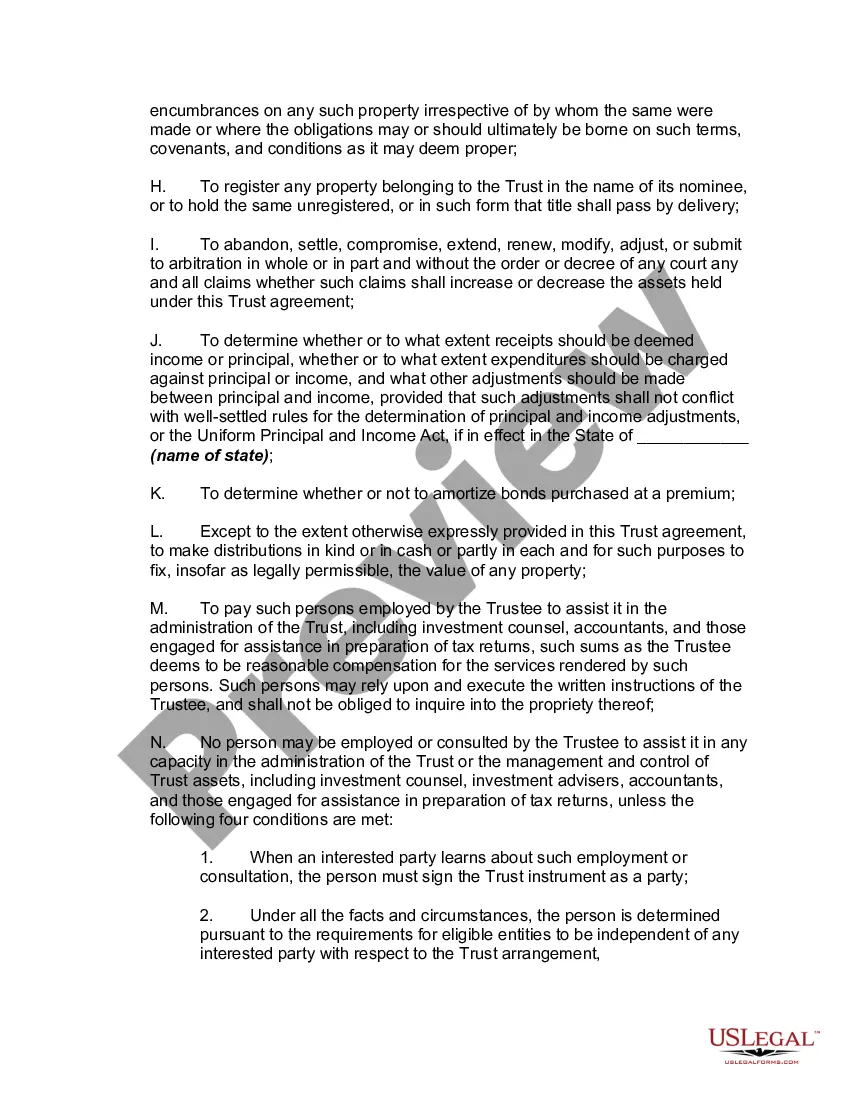
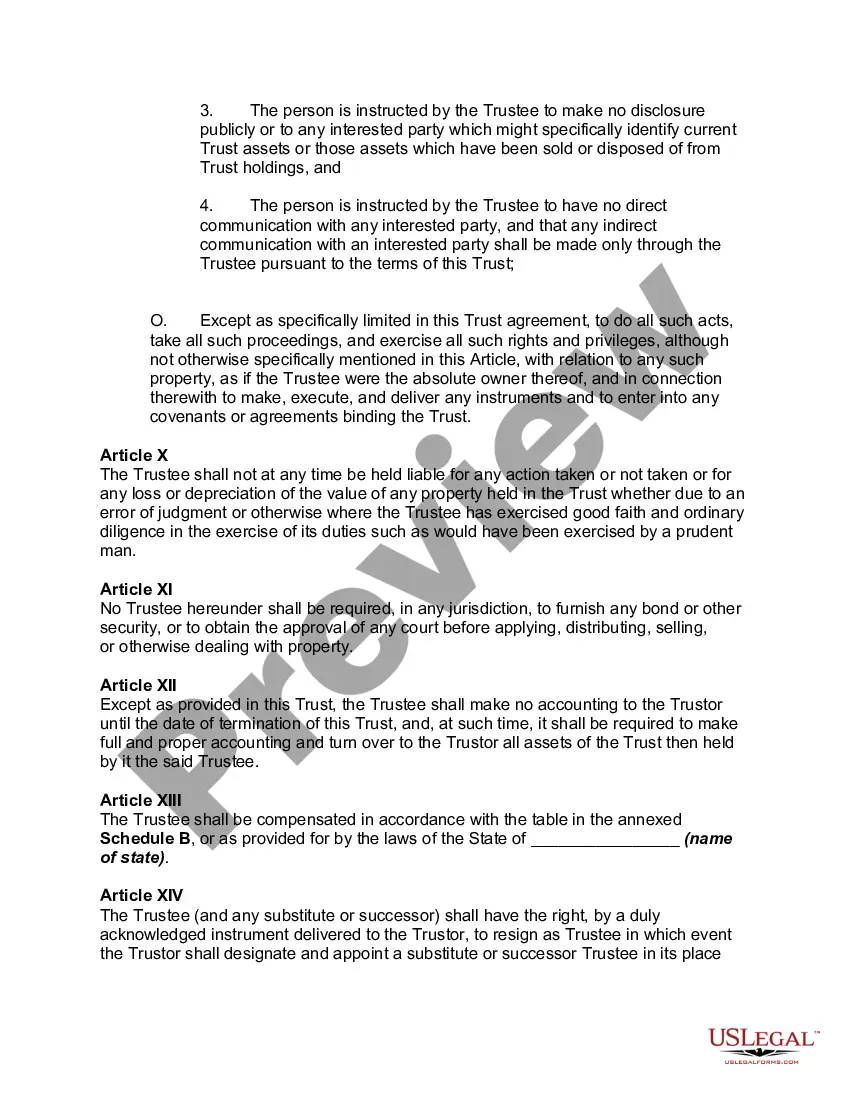
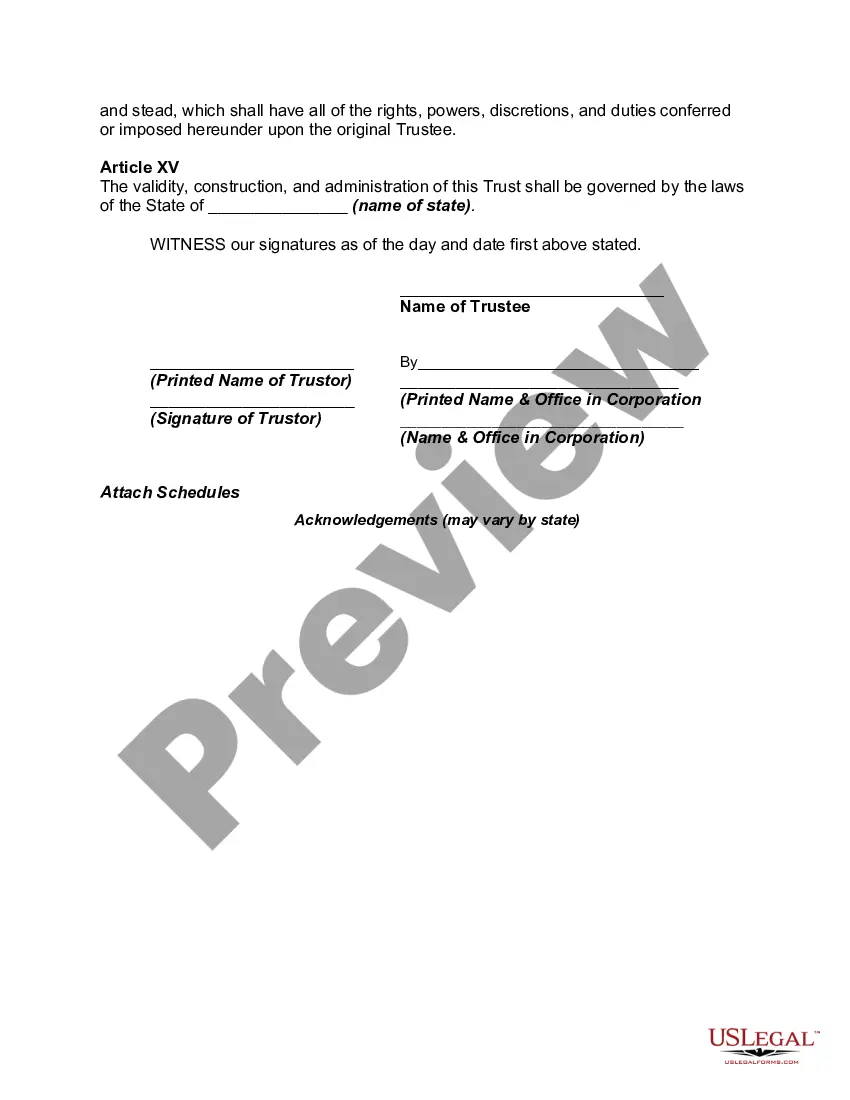
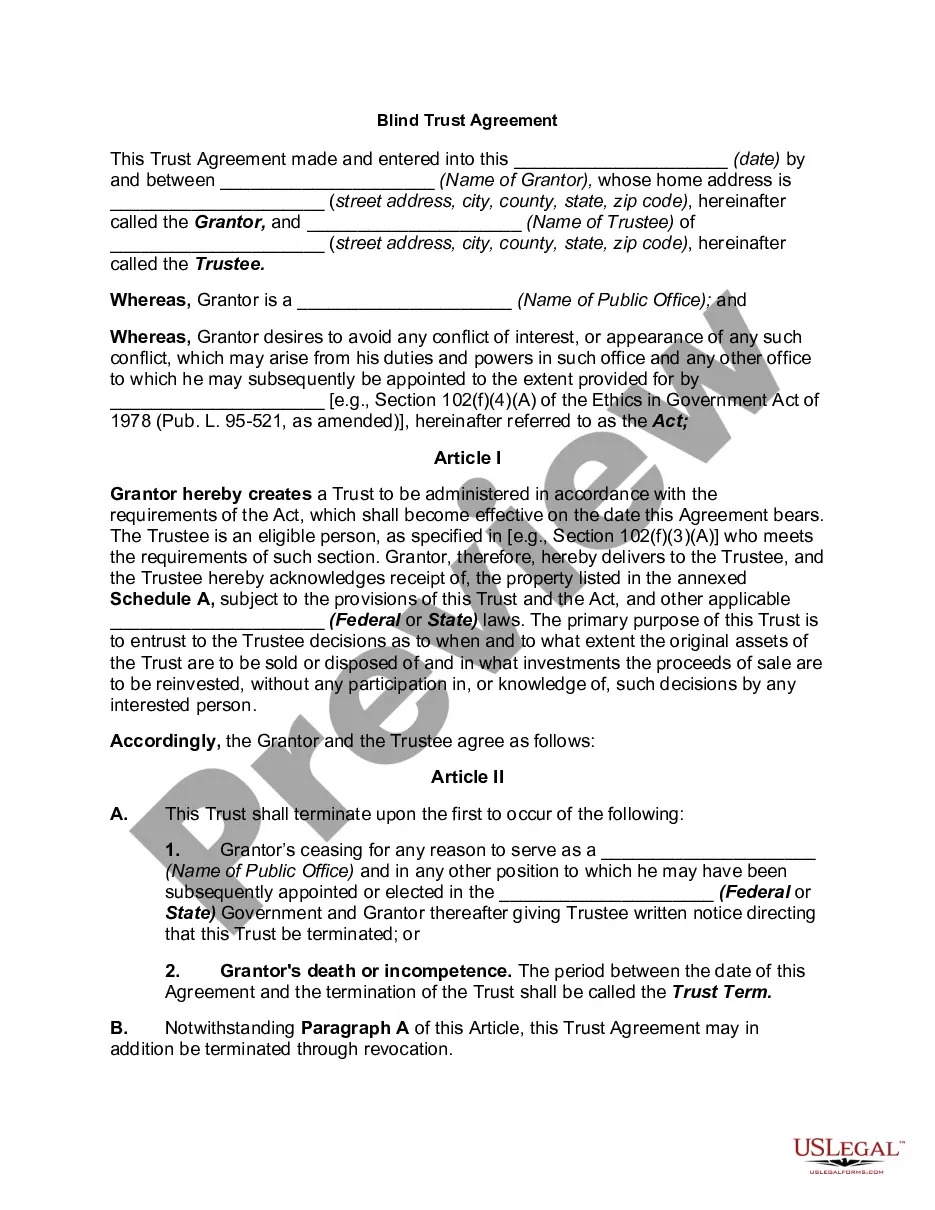
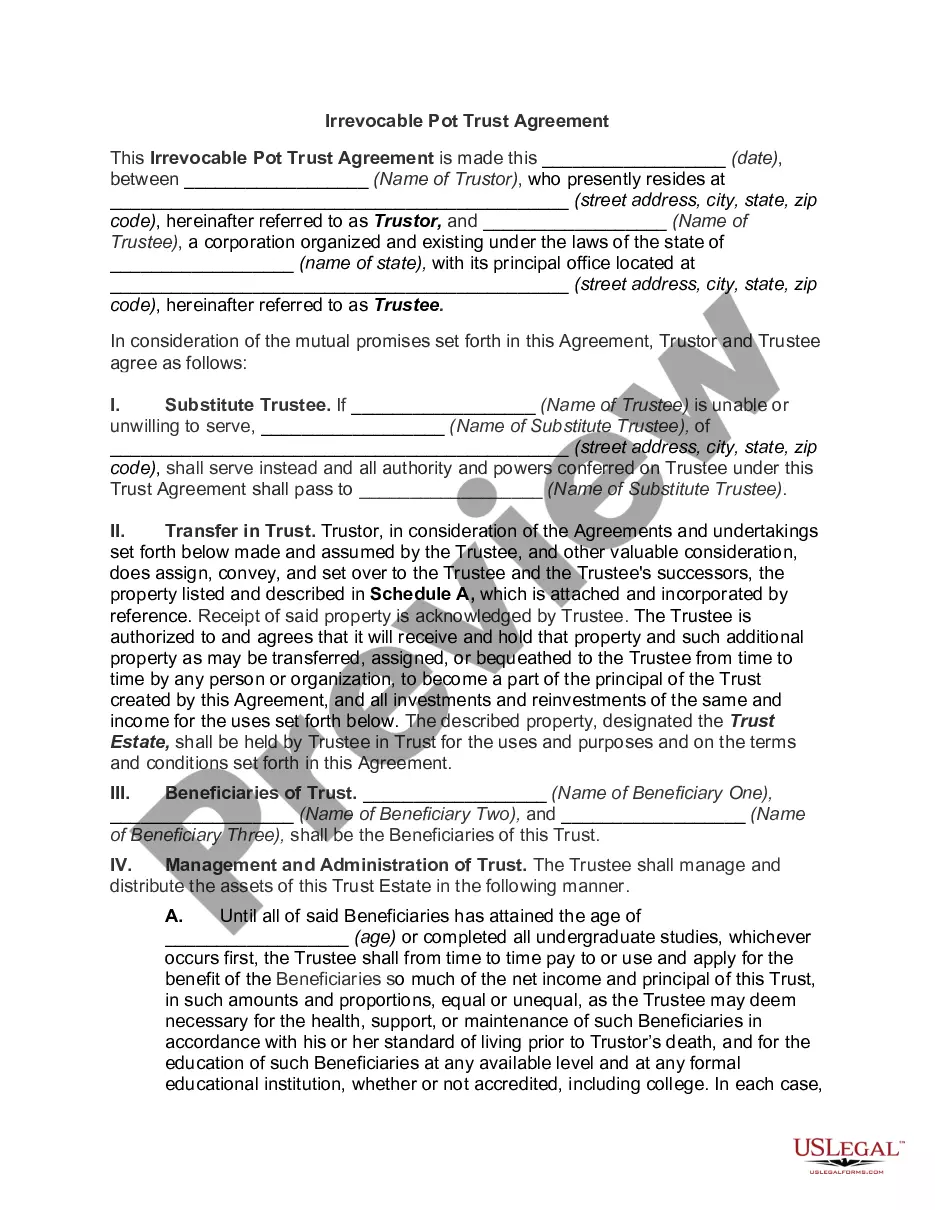
Get your form ready online
Our built-in tools help you complete, sign, share, and store your documents in one place.
Make edits, fill in missing information, and update formatting in US Legal Forms—just like you would in MS Word.
Download a copy, print it, send it by email, or mail it via USPS—whatever works best for your next step.
Sign and collect signatures with our SignNow integration. Send to multiple recipients, set reminders, and more. Go Premium to unlock E-Sign.
If this form requires notarization, complete it online through a secure video call—no need to meet a notary in person or wait for an appointment.
We protect your documents and personal data by following strict security and privacy standards.

Make edits, fill in missing information, and update formatting in US Legal Forms—just like you would in MS Word.

Download a copy, print it, send it by email, or mail it via USPS—whatever works best for your next step.

Sign and collect signatures with our SignNow integration. Send to multiple recipients, set reminders, and more. Go Premium to unlock E-Sign.

If this form requires notarization, complete it online through a secure video call—no need to meet a notary in person or wait for an appointment.

We protect your documents and personal data by following strict security and privacy standards.
Looking for another form?






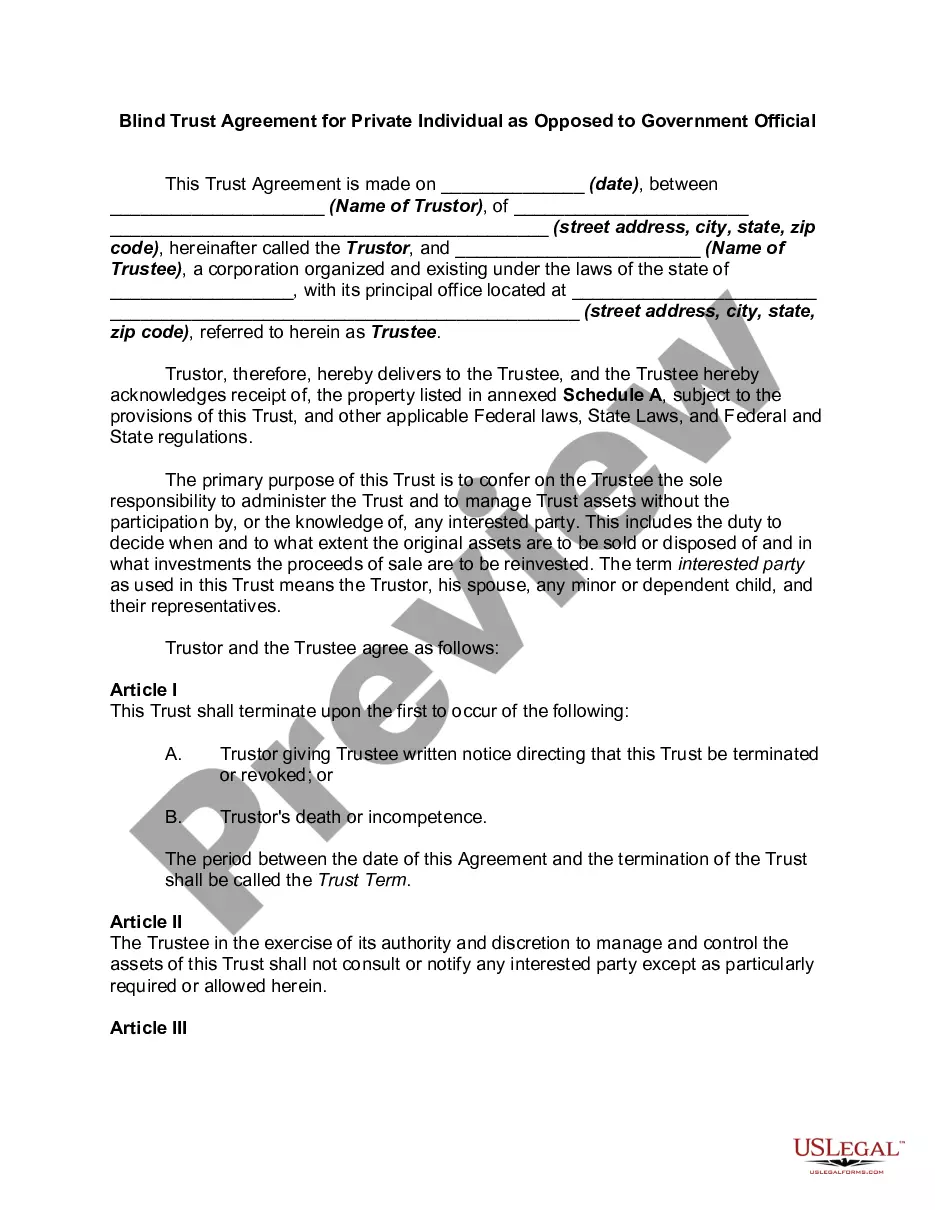
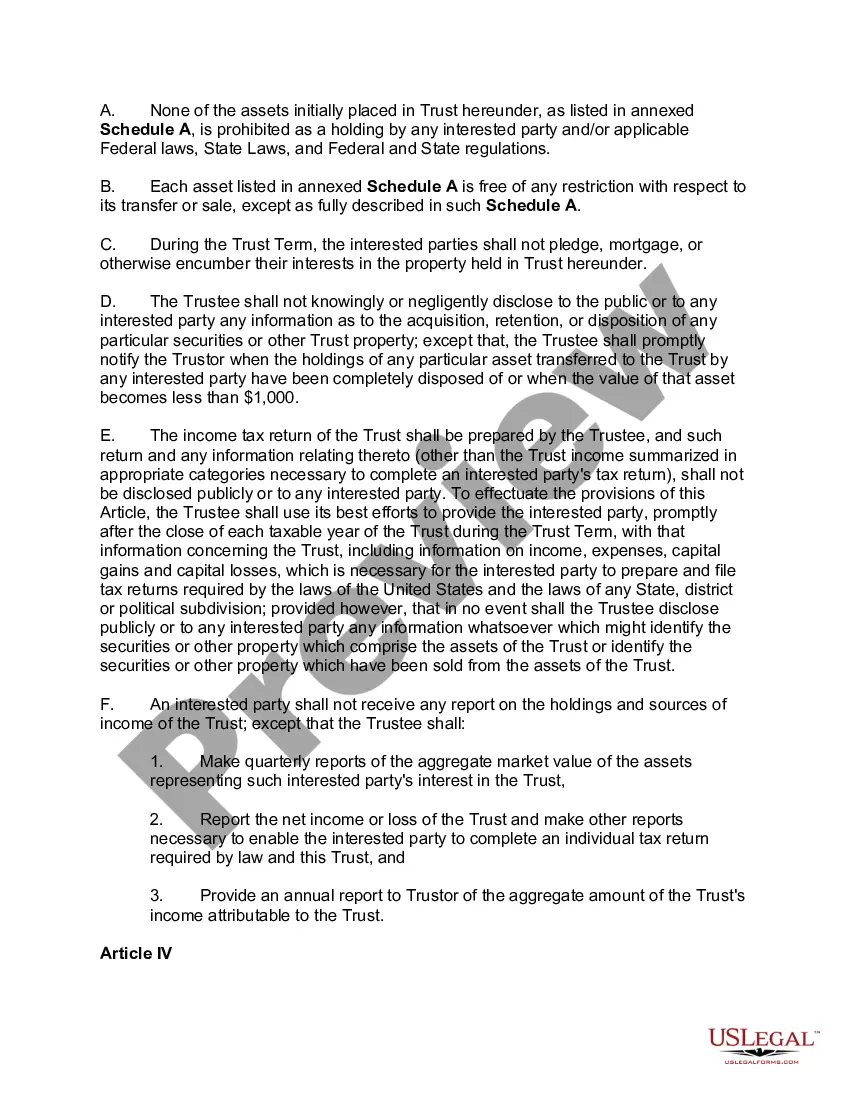
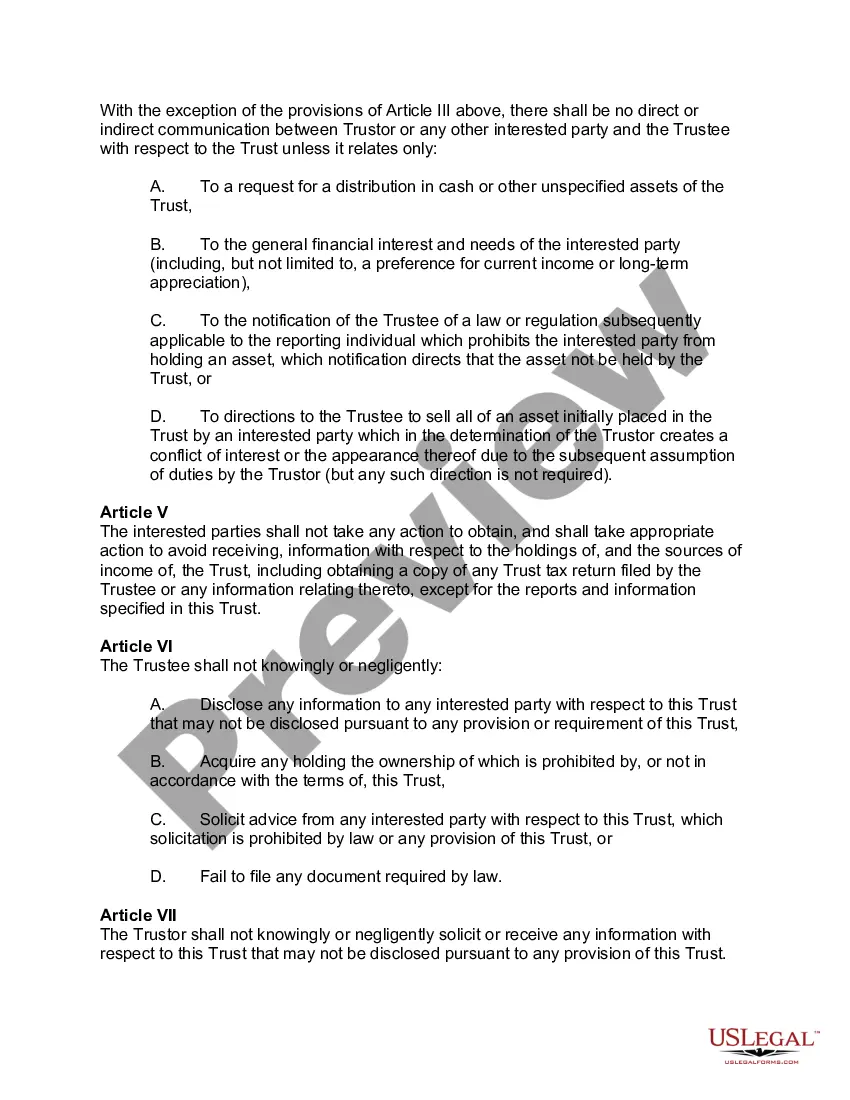
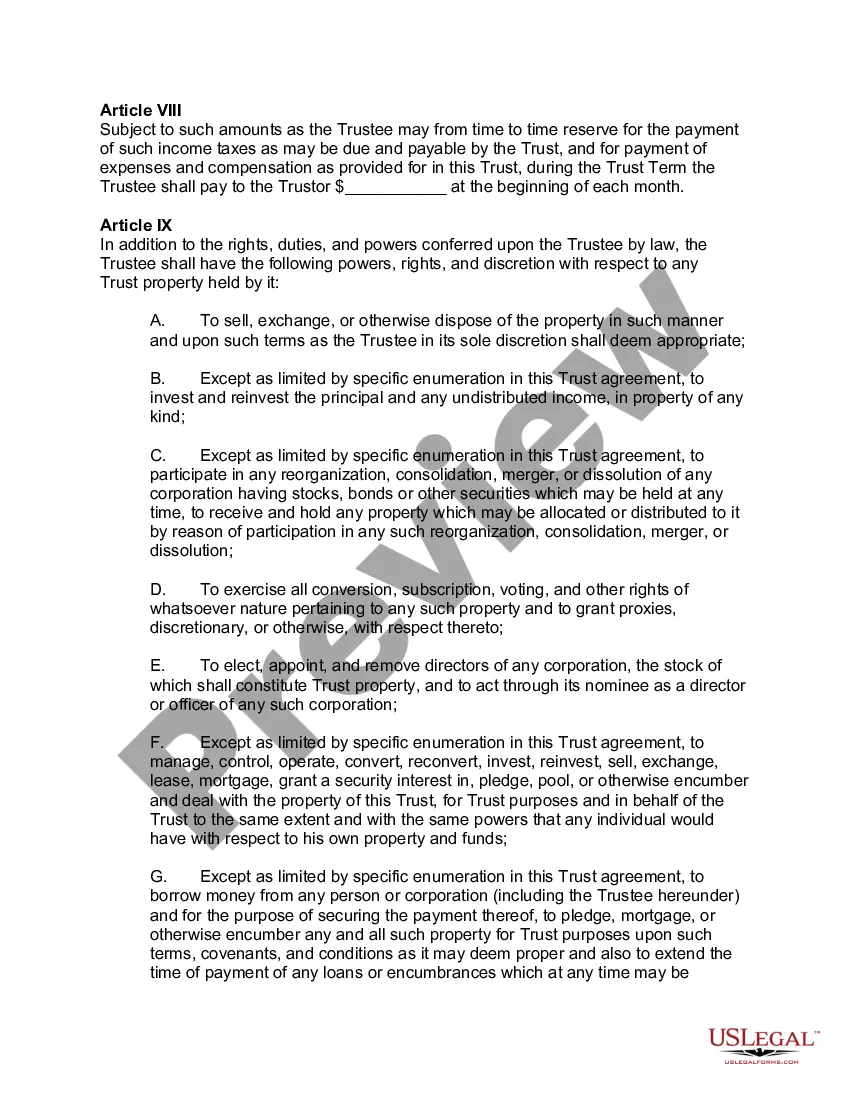
How to fill out Blind Trust Agreement For Private Individual As Opposed To Government?
Creating legal documents from the ground up can frequently feel somewhat daunting.
Certain situations might require extensive research and substantial financial investment.
If you’re looking for a simpler and more cost-effective method to produce a Blind Trust Sample For President or any other documents without unnecessary complications, US Legal Forms is always available to assist you.
Our online repository of over 85,000 current legal documents covers nearly every aspect of your financial, legal, and personal affairs.
Review the form preview and descriptions to make sure you are selecting the form you need. Verify that the form you choose adheres to the rules and regulations of your state and county. Select the appropriate subscription plan to acquire the Blind Trust Sample For President. Download the document, then complete, certify, and print it. US Legal Forms boasts a solid reputation and over 25 years of experience. Join us today and make form completion an easy and streamlined process!
- With just a few clicks, you can quickly obtain state- and county-specific forms carefully crafted for you by our legal experts.
- Utilize our website whenever you need a dependable and trustworthy service to easily find and download the Blind Trust Sample For President.
- If you’re familiar with our services and have set up an account with us before, simply Log In to your account, choose the template, and download it or re-download it anytime from the My documents section.
- Not signed up yet? No problem. It takes minimal time to register and browse the library.
- But before you jump straight to downloading the Blind Trust Sample For President, keep these tips in mind.
Form popularity
FAQ
How to Set Up a Blind Trust Gather the documentation for the assets that you want put into the blind trust. ... Appoint a trustee. ... Create the trust agreement. ... Sign the trust and have it notarized, taking care to follow any recording laws that your state has. Officially transfer the relevant assets into the trust.
In a blind trust, an individual places assets that could otherwise create conflicts of interest into an asset vehicle ("trust"). Control over the trust and its assets are given to an independent trustee, who may buy and sell assets without the knowledge or consent of the beneficiary ("blind").
Blind trusts refers to trusts established so that neither trustor or the beneficiary knows what assets are inside the trust after its creation. The trustee manages the trust until the beneficiaries are supposed to receive the assets or until the trustor closes the trust for those that are revocable.
What Is a Blind Trust? A blind trust is a trust established by the owner (or trustor) giving another party (the trustee) full control of the trust. The trustee has full discretion over the assets and investments while being charged with managing the assets and any income generated in the trust.
A blind trust is most common with public officials whose decisions can directly affect the financial markets, but another example would be creating a blind trust to hide its monetary value from an individual whose behavior and actions would change if they were privy to it.