Release Medical Information With The Client
Description



How to fill out Authorization To Release Medical And Hospital Information To Attorney?
- Log in to your US Legal Forms account if you have used the service before. Ensure your subscription is active; renew it if needed.
- Browse the library to find the correct form. Use the Preview mode to ensure it meets your local jurisdiction's requirements.
- If the form doesn't fit your needs, utilize the Search tab to locate alternative templates that may be more suitable.
- Select the document you need, then click the Buy Now button to choose your preferred subscription plan and register for an account.
- Complete your purchase by entering your payment details via credit card or PayPal.
- Download the completed form to your device for easy access, and find it in the My Forms section of your account whenever you need it.
With US Legal Forms, you can confidently manage the release of medical information using a platform backed by an extensive library and expert assistance.
Start streamlining your legal document processes today—visit US Legal Forms and release medical information with the client effortlessly!
Form popularity
FAQ
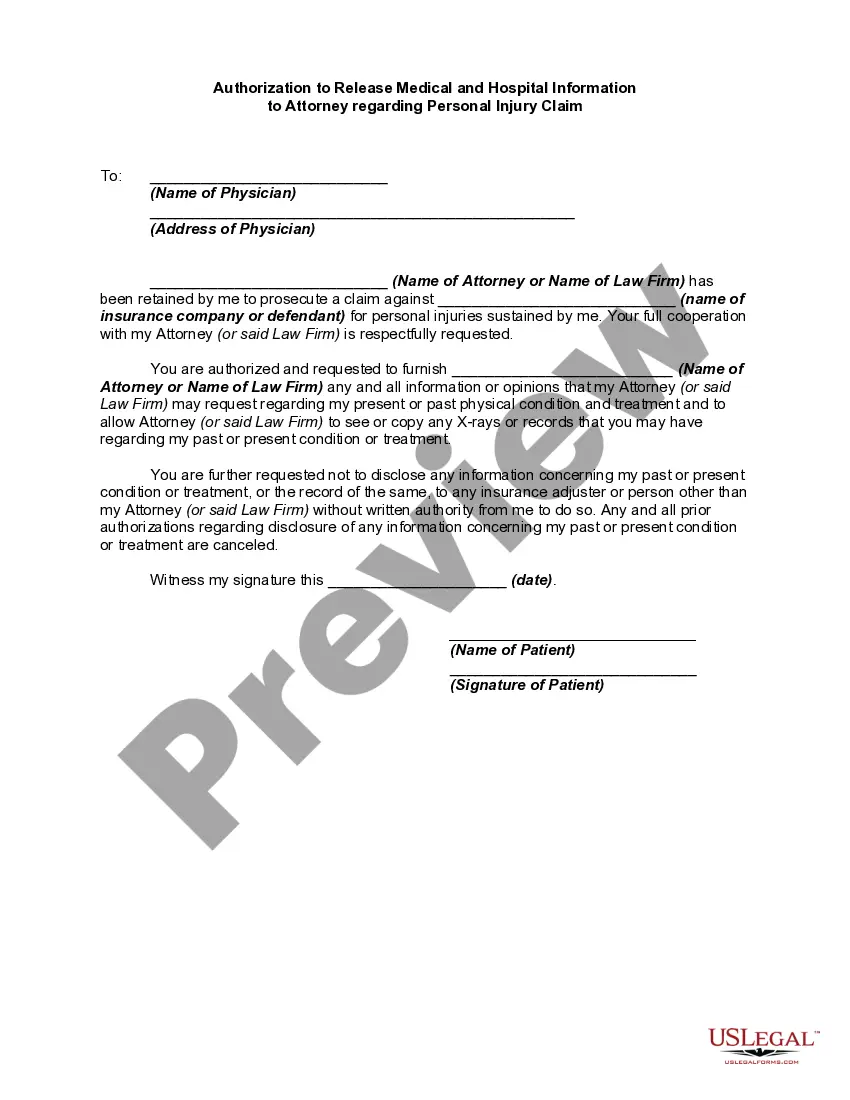
To write an authorization to release information, start by clearly stating the patient's name and the specific information to be released. Include who the information will be shared with, the purpose of the release, and an expiration date for the authorization. Finally, ensure the patient signs the document to validate it. This structured approach will help you effectively release medical information with the client.
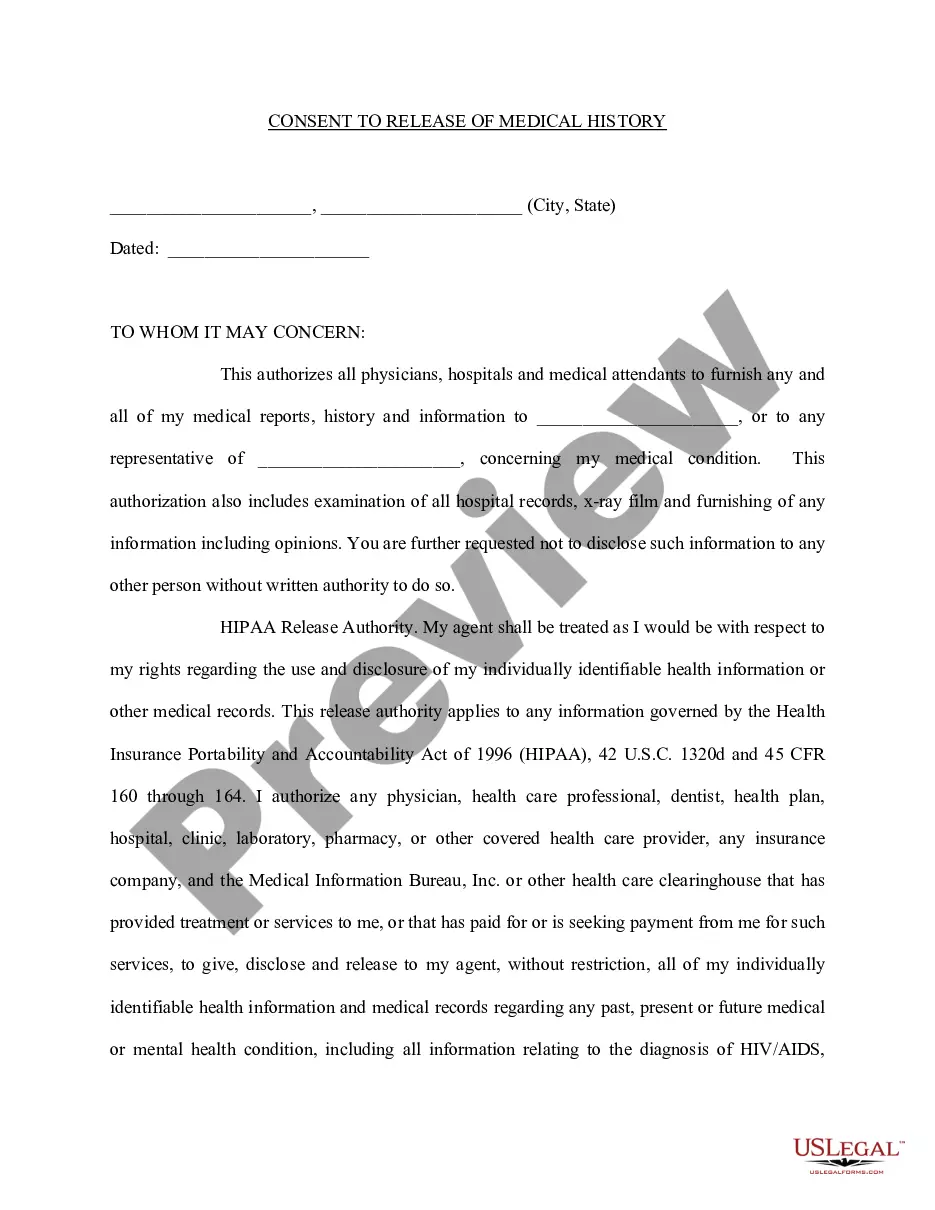
Under HIPAA, there are strict rules for releasing information that include obtaining written consent from the patient. The information released must be limited to what is necessary for the specified purpose, and the recipient must safeguard that information. Understanding these rules is essential if you wish to release medical information with the client while maintaining compliance.
The release form typically includes the patient's identifying details, description of the medical information to be shared, and the purpose for which it is being released. It also specifies the recipient's name and contact information. This clarity ensures that you can efficiently release medical information with the client while adhering to legal standards.
To effectively release medical information with the client, the document must include the patient's name, date of birth, and social security number. It should also clearly state what information is being released and to whom. Lastly, it requires a signature and date from the patient to ensure compliance and validity.
A release of information document should contain specific elements like the patient's identifying information, the description of the information being released, and the purpose of the release. Additionally, it must specify who will receive the information and include a signature from the patient or legal representative. This detailed format is crucial to successfully release medical information with the client.
To fill out a medical consent form, gather necessary personal information, such as your name, date of birth, and contact details. Next, specify the type of medical information you want to release. Also, ensure you include the recipient's details and sign the document. Remember, accurately completing the form is vital to release medical information with the client effectively.
To write a letter for releasing medical records, start with your contact information and date. Address the letter to the appropriate medical provider, and clearly state your intent to release medical information with the client’s authorization. Include specific details about the records you wish to obtain, your relationship with the client, and their consent. Conclude with a polite request for a timely response and your gratitude.
The best way to request the release of medical information involves using a formal written request. Start with clear identification of the client and specify what records are needed to release medical information with the client’s permission. Include a deadline for response, if appropriate, and be polite throughout the inquiry. Employing a structured template can simplify this process and ensure all necessary details are included.
The client possesses the primary authority to release medical information. Individuals must give explicit consent, usually through a signed form, to allow healthcare providers to share their records. In some cases, a legal guardian or authorized representative may also act on behalf of the client. Clarity about this process can ensure smooth access to necessary information.
Clients typically have the right to access their medical records based on laws such as HIPAA. This legislation empowers patients to release medical information with the client, ensuring they have visibility over their own health data. Medical providers must comply by providing these records upon request, as long as proper procedures are followed. Understanding these rights can help clients advocate for their information.