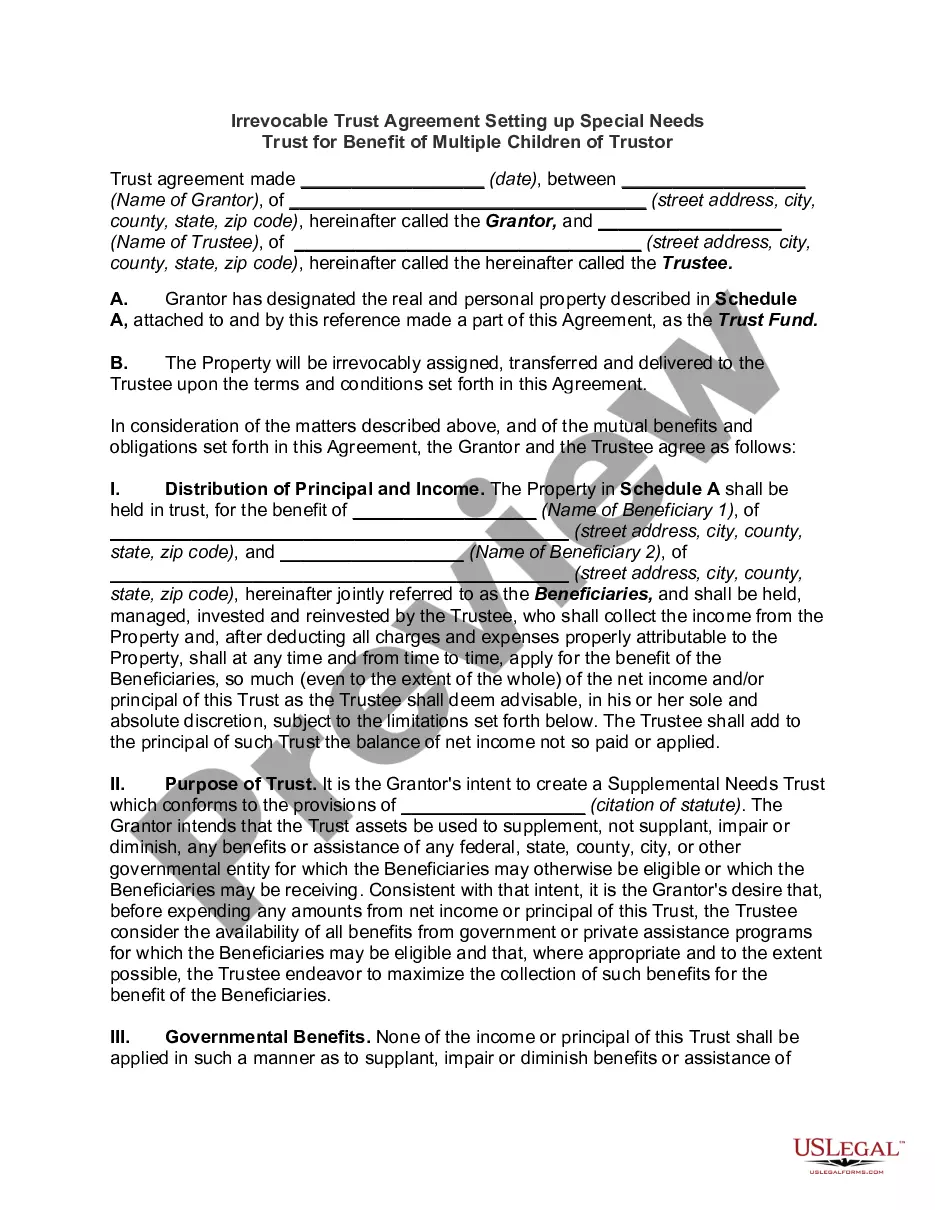
Irrevocable Private Trust
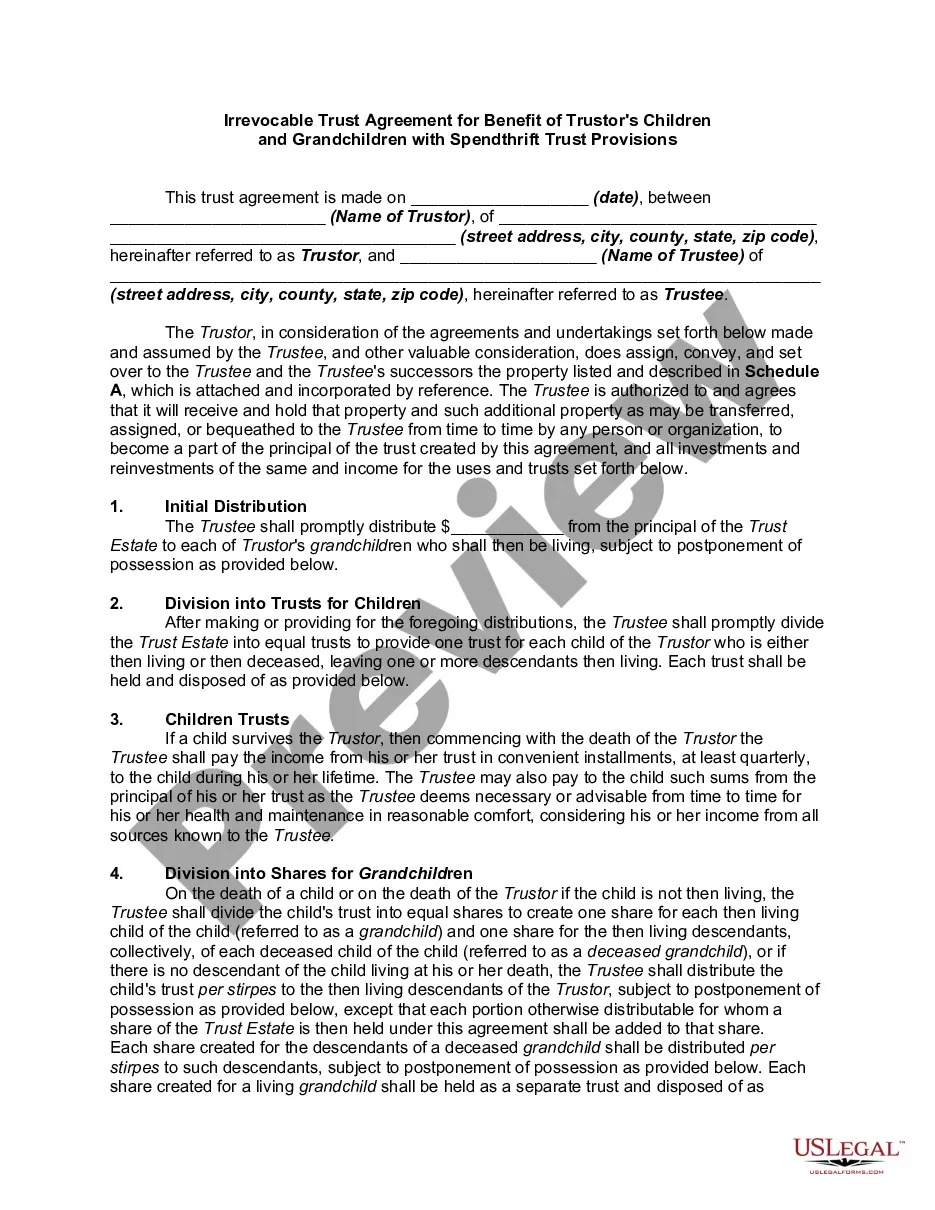
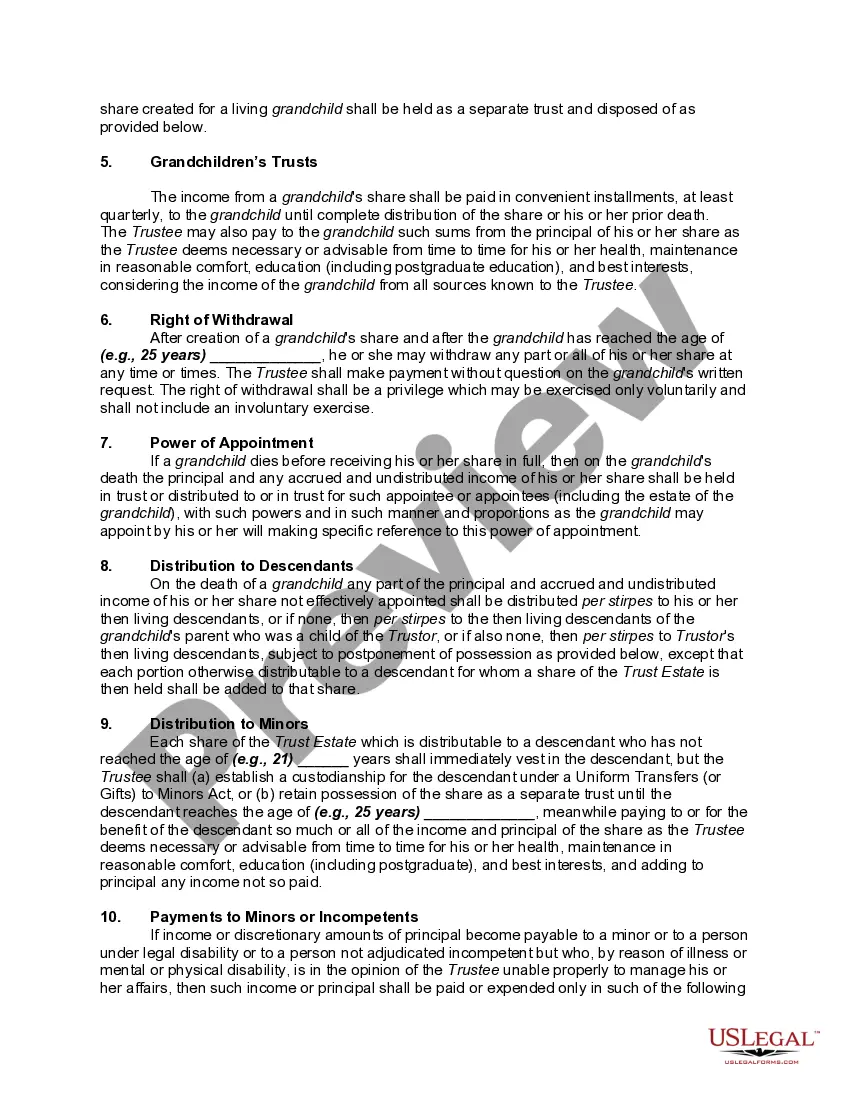
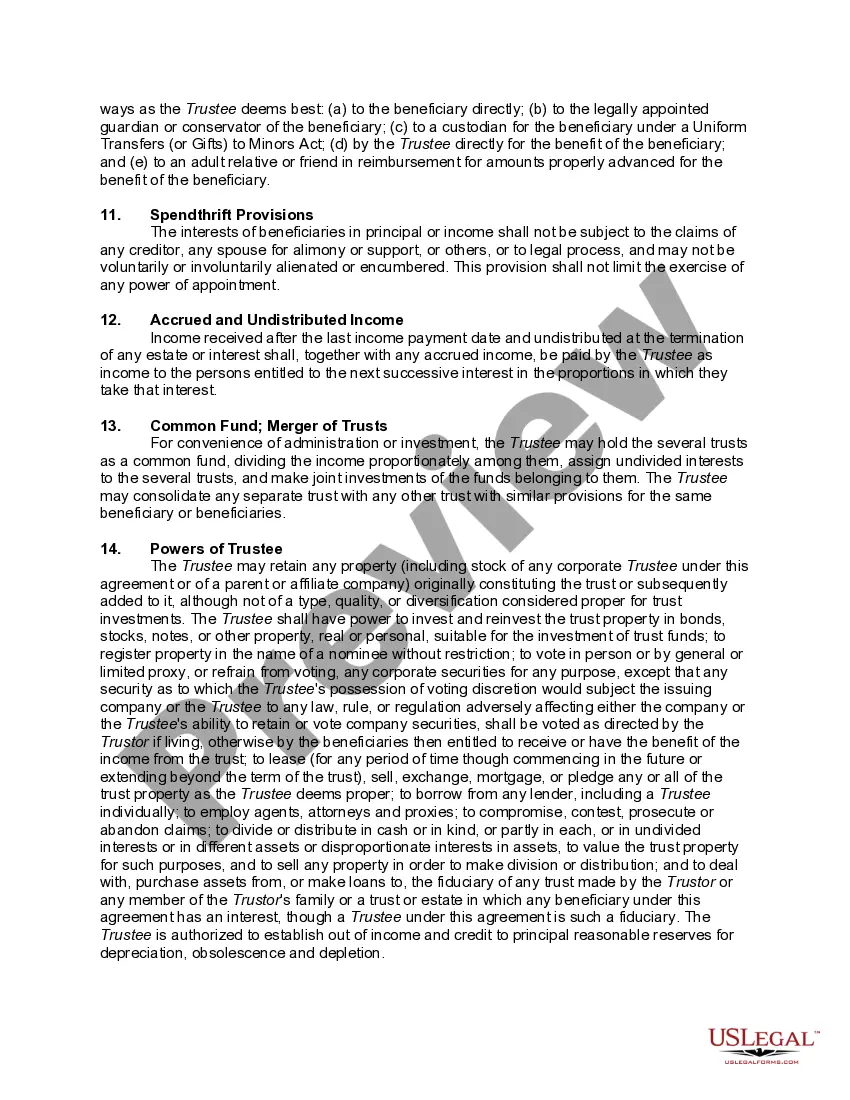
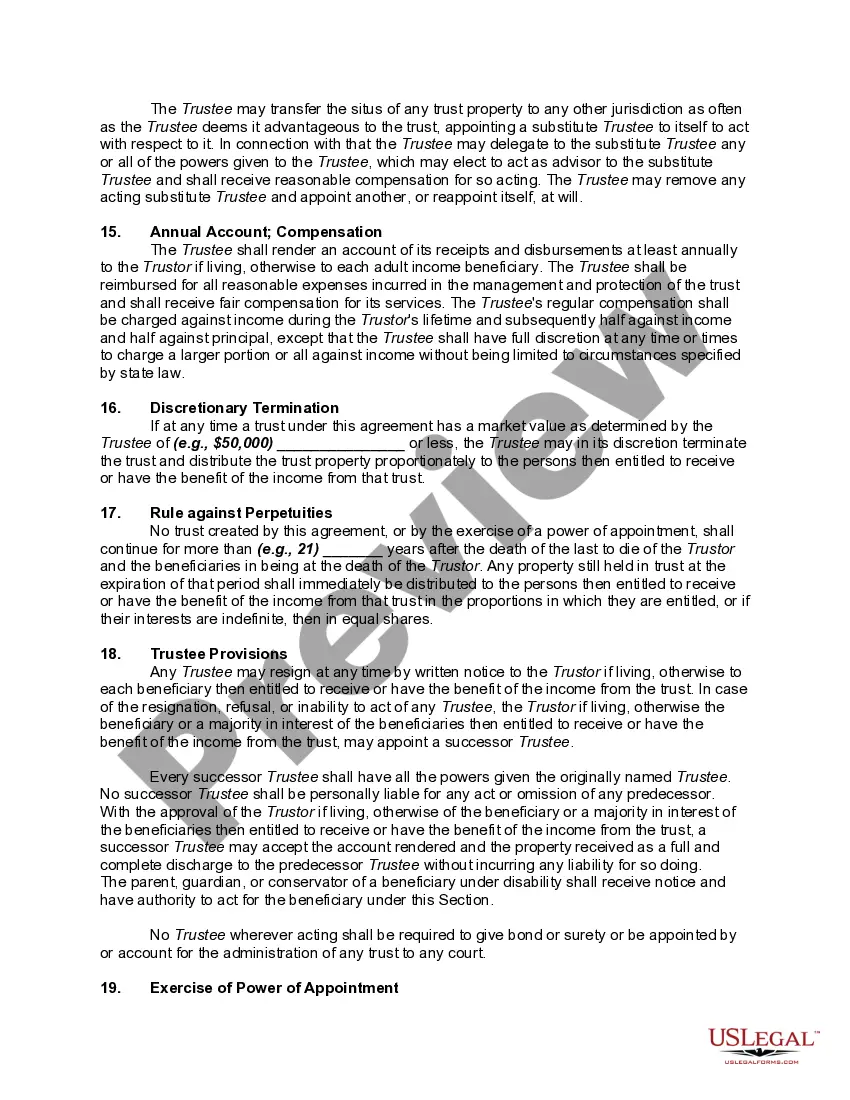
Description

Get your form ready online
Our built-in tools help you complete, sign, share, and store your documents in one place.
Make edits, fill in missing information, and update formatting in US Legal Forms—just like you would in MS Word.
Download a copy, print it, send it by email, or mail it via USPS—whatever works best for your next step.
Sign and collect signatures with our SignNow integration. Send to multiple recipients, set reminders, and more. Go Premium to unlock E-Sign.
If this form requires notarization, complete it online through a secure video call—no need to meet a notary in person or wait for an appointment.
We protect your documents and personal data by following strict security and privacy standards.

Make edits, fill in missing information, and update formatting in US Legal Forms—just like you would in MS Word.

Download a copy, print it, send it by email, or mail it via USPS—whatever works best for your next step.

Sign and collect signatures with our SignNow integration. Send to multiple recipients, set reminders, and more. Go Premium to unlock E-Sign.

If this form requires notarization, complete it online through a secure video call—no need to meet a notary in person or wait for an appointment.

We protect your documents and personal data by following strict security and privacy standards.
Looking for another form?
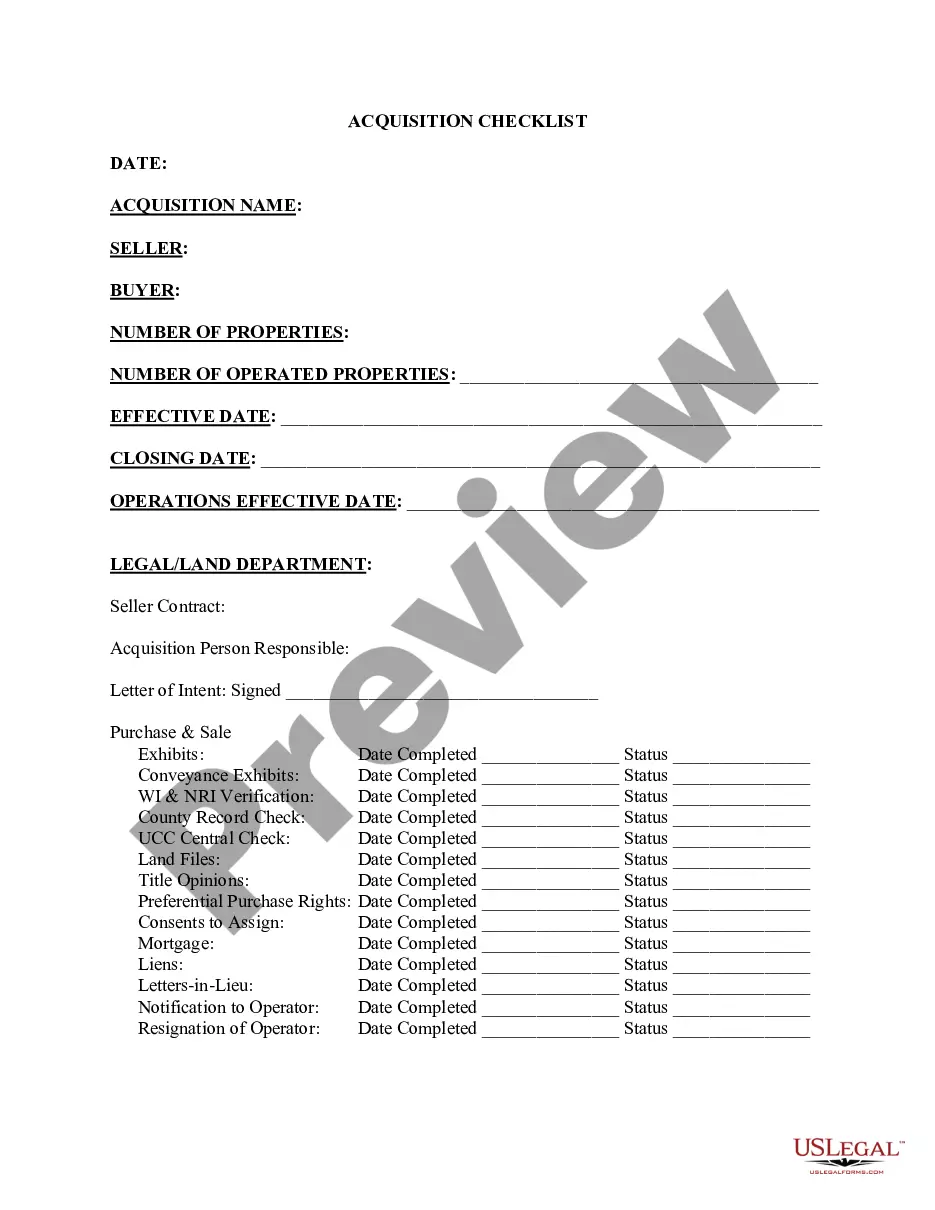
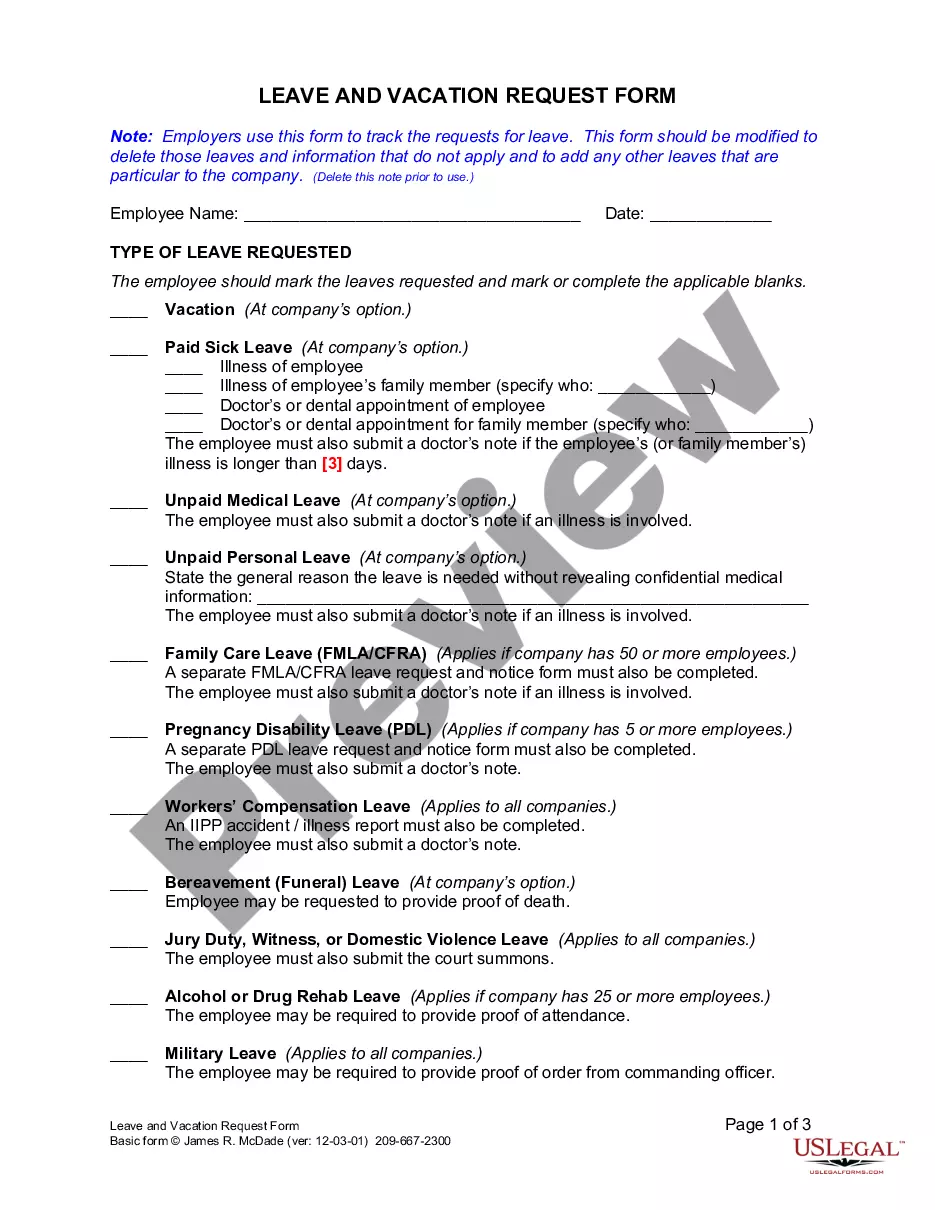
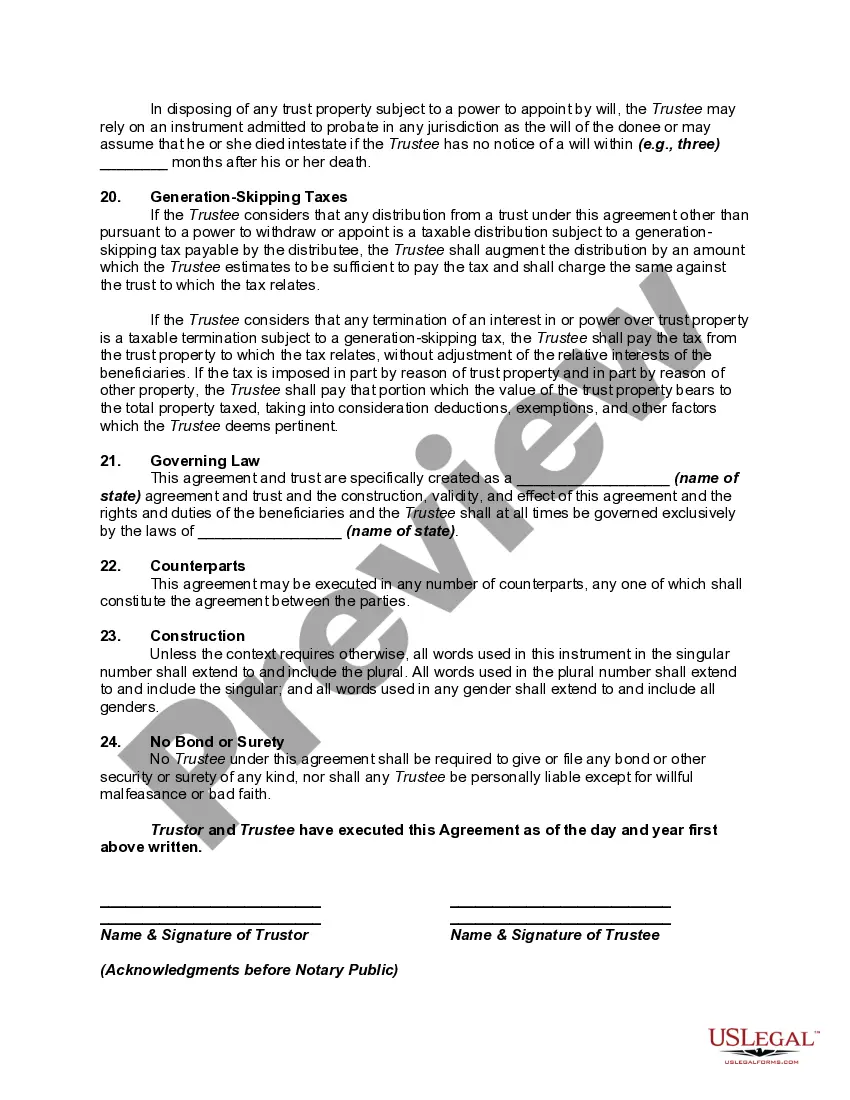
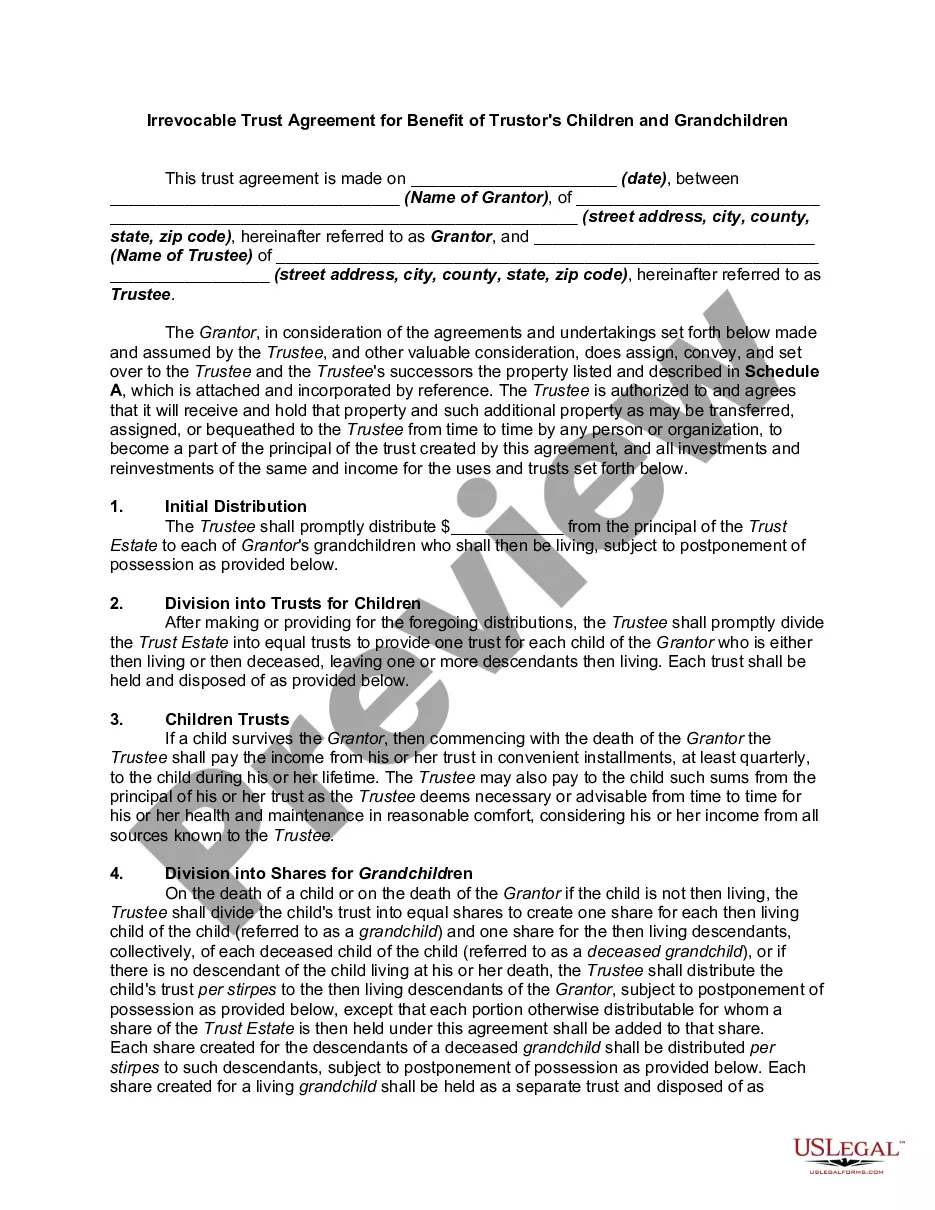
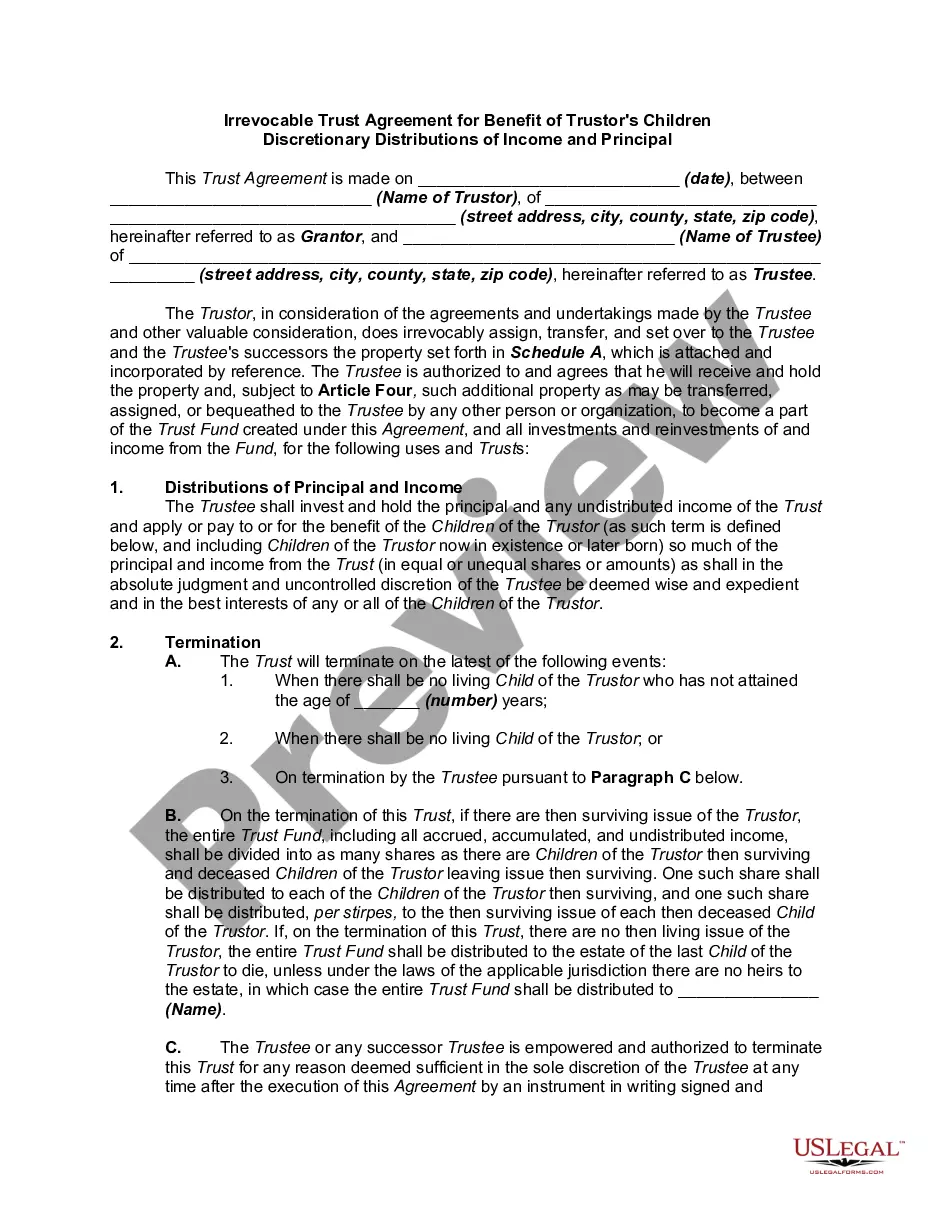
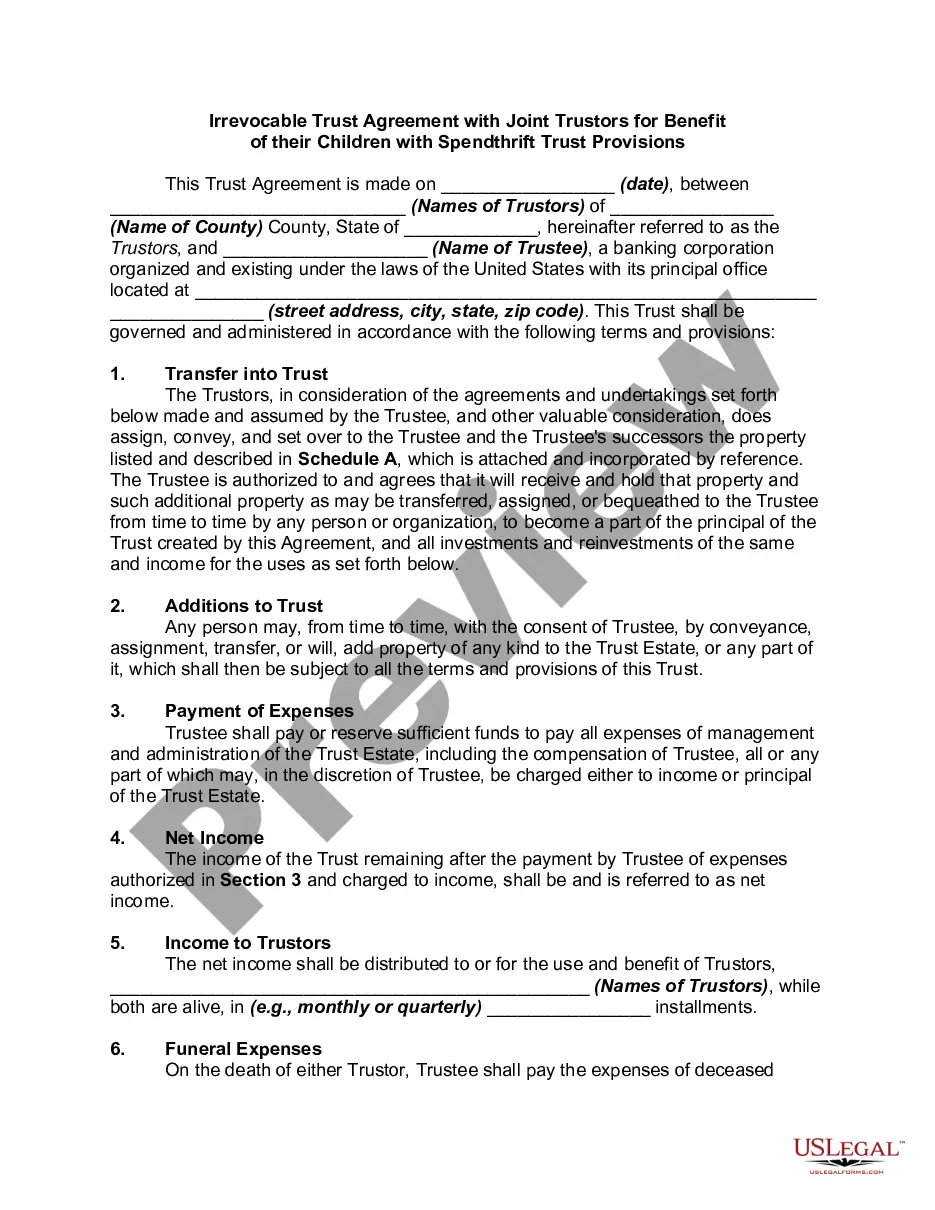
How to fill out Irrevocable Trust Agreement For Benefit Of Trustor's Children And Grandchildren With Spendthrift Trust Provisions?
- If you are a returning user, log in to your account to download the necessary form. Ensure your subscription is active; otherwise, renew as per your plan.
- For first-time users, start by previewing form descriptions to confirm you’ve selected the correct irrevocable private trust template relevant to your jurisdiction.
- Should you need alternative templates, utilize the Search tab for further options if you detect any discrepancies.
- Proceed to purchase the document by clicking 'Buy Now' and selecting a subscription plan that fits your needs. You will be prompted to create an account.
- Complete your transaction by entering your credit card information or utilizing your PayPal account to finalize the subscription.
- Finally, download your selected form to your device so that you can complete it. Access it anytime via the My Forms section in your profile.
In conclusion, US Legal Forms equips users with a vast array of legal documentation options, enhancing the efficiency of creating an irrevocable private trust.
Take control of your legal needs today by exploring the resources available at US Legal Forms!
Form popularity
FAQ
Filling out an irrevocable private trust involves several key steps, starting with gathering necessary information about your assets and beneficiaries. You will need to identify who will serve as the trustee and clarify your wishes for asset distribution. Using a reliable resource such as US Legal Forms can assist you in completing the trust accurately, providing essential templates and instructions to simplify the process while ensuring that your trust is legally sound and secure.
Yes, you can write your own irrevocable private trust; however, it requires careful attention to detail to ensure it meets legal requirements. Drafting your own trust might save costs initially, but it can also lead to mistakes that complicate matters later. Therefore, it is often advisable to use a platform like US Legal Forms, which provides templates and guidance, ensuring that your trust complies with regulations while reflecting your specific needs.
One significant mistake parents often make when establishing an irrevocable private trust is neglecting to clearly define their wishes and the terms of the trust. This lack of clarity can lead to confusion among beneficiaries and potential disputes down the line. Additionally, some parents may fail to consider tax implications or the needs of their heirs, which can affect the trust's effectiveness. It's essential to communicate your intentions clearly and consult an expert to navigate these complexities.
Recently, the IRS has introduced new regulations that affect how irrevocable private trusts are taxed and reported. These updates focus on transparency and require additional documentation in certain cases. It's important to stay informed about these changes to ensure your trust complies with federal tax laws and to optimize tax benefits moving forward.
An irrevocable private trust typically needs to be filed with the IRS if it generates income or if the trust itself has tax reporting obligations. This usually involves filing Form 1041, showing any income the trust earns during the year. Proper filing helps maintain compliance and ensures the trust beneficiary's interests are protected.
The IRS can potentially claim assets within an irrevocable private trust to satisfy tax debts, including your house. However, if set up correctly, the trust can protect your home from certain creditors. Be proactive in understanding your trust's structure and seek legal advice to maximize asset protection.
To file an irrevocable private trust with the IRS, first obtain an Employer Identification Number (EIN) by filing Form SS-4. Once you have the EIN, complete the trust's annual tax return using Form 1041, which reports any income generated by the trust. Ensure you keep accurate records of all transactions to assist in the filing process.
It’s generally advisable to avoid placing assets that you may need control over in an irrevocable private trust. For example, primary residences or assets that could generate significant income should be considered carefully. In addition, personal items or valuable collections might be better kept outside the trust to maintain your direct access to them.
Avoiding taxes on an irrevocable private trust is possible by ensuring that the trust is structured properly under IRS guidelines. For instance, you might use specific exemptions or exclusions that the IRS allows, and allocate income to beneficiaries who are in lower tax brackets. Consulting with a tax professional can provide personalized strategies that maximize your tax benefits.
To set up an irrevocable private trust, start by choosing a trustee who will manage the assets. Next, draft a trust document that outlines the terms and conditions, detailing how the trust operates and who benefits. It’s wise to consult with a legal expert to ensure compliance with state laws and to protect your interests.