Foreign Grantor Trust Revocable
Description





Get your form ready online
Our built-in tools help you complete, sign, share, and store your documents in one place.
Make edits, fill in missing information, and update formatting in US Legal Forms—just like you would in MS Word.
Download a copy, print it, send it by email, or mail it via USPS—whatever works best for your next step.
Sign and collect signatures with our SignNow integration. Send to multiple recipients, set reminders, and more. Go Premium to unlock E-Sign.
If this form requires notarization, complete it online through a secure video call—no need to meet a notary in person or wait for an appointment.
We protect your documents and personal data by following strict security and privacy standards.

Make edits, fill in missing information, and update formatting in US Legal Forms—just like you would in MS Word.

Download a copy, print it, send it by email, or mail it via USPS—whatever works best for your next step.

Sign and collect signatures with our SignNow integration. Send to multiple recipients, set reminders, and more. Go Premium to unlock E-Sign.

If this form requires notarization, complete it online through a secure video call—no need to meet a notary in person or wait for an appointment.

We protect your documents and personal data by following strict security and privacy standards.
Looking for another form?
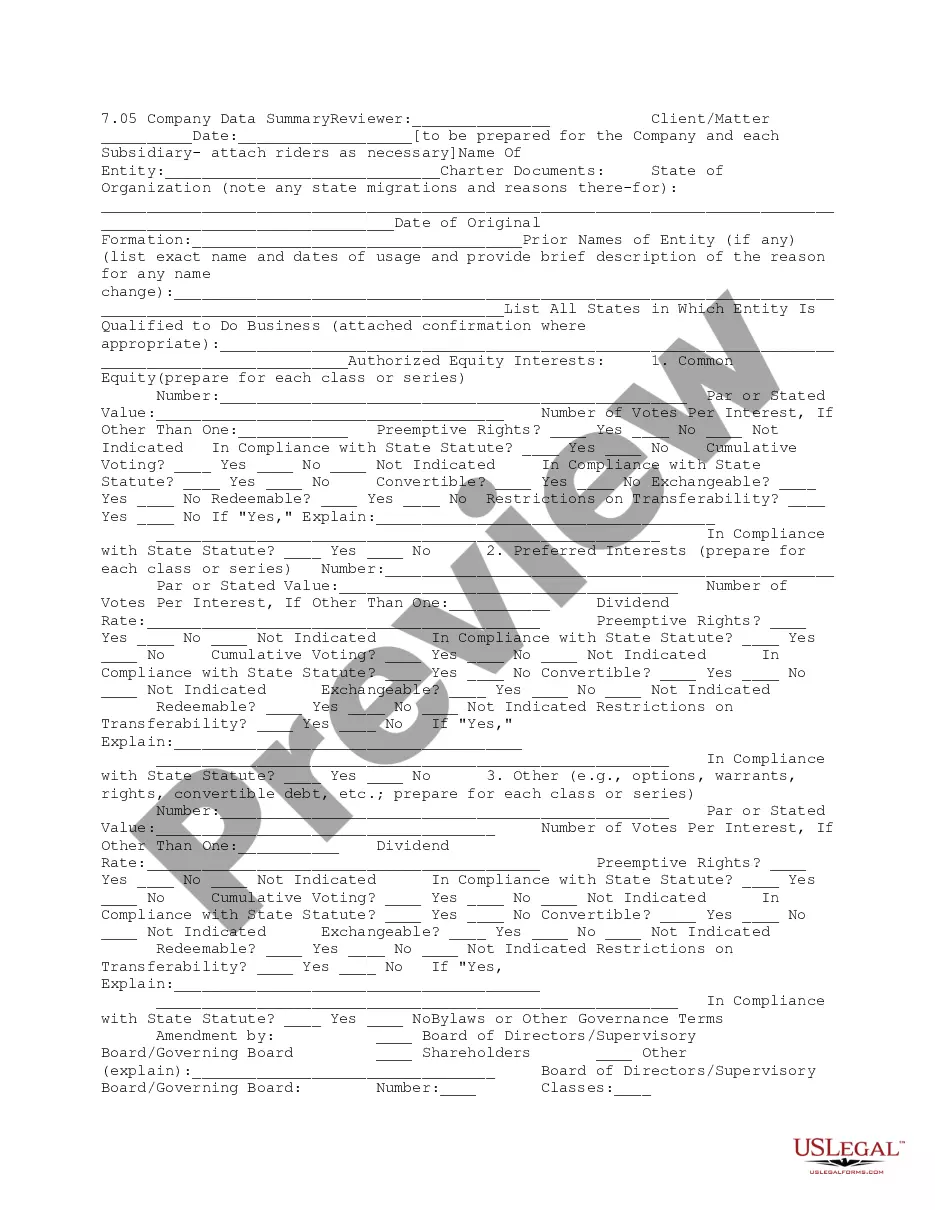







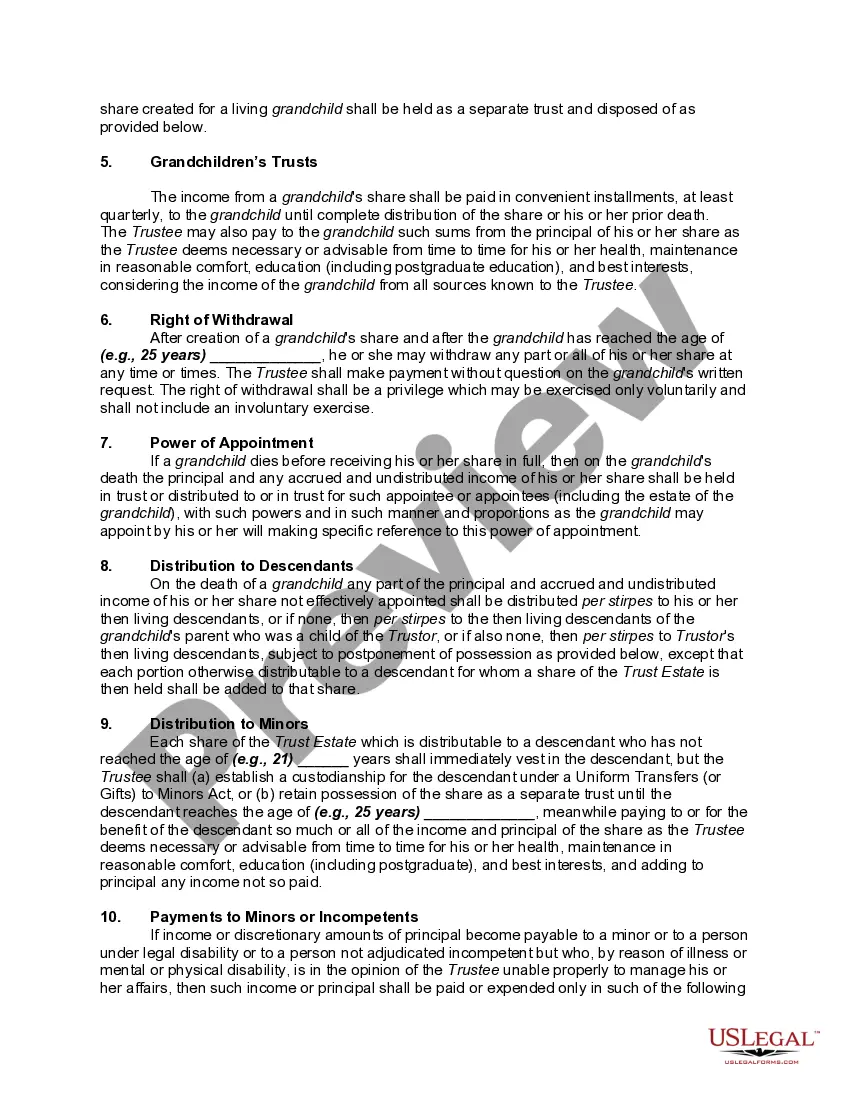
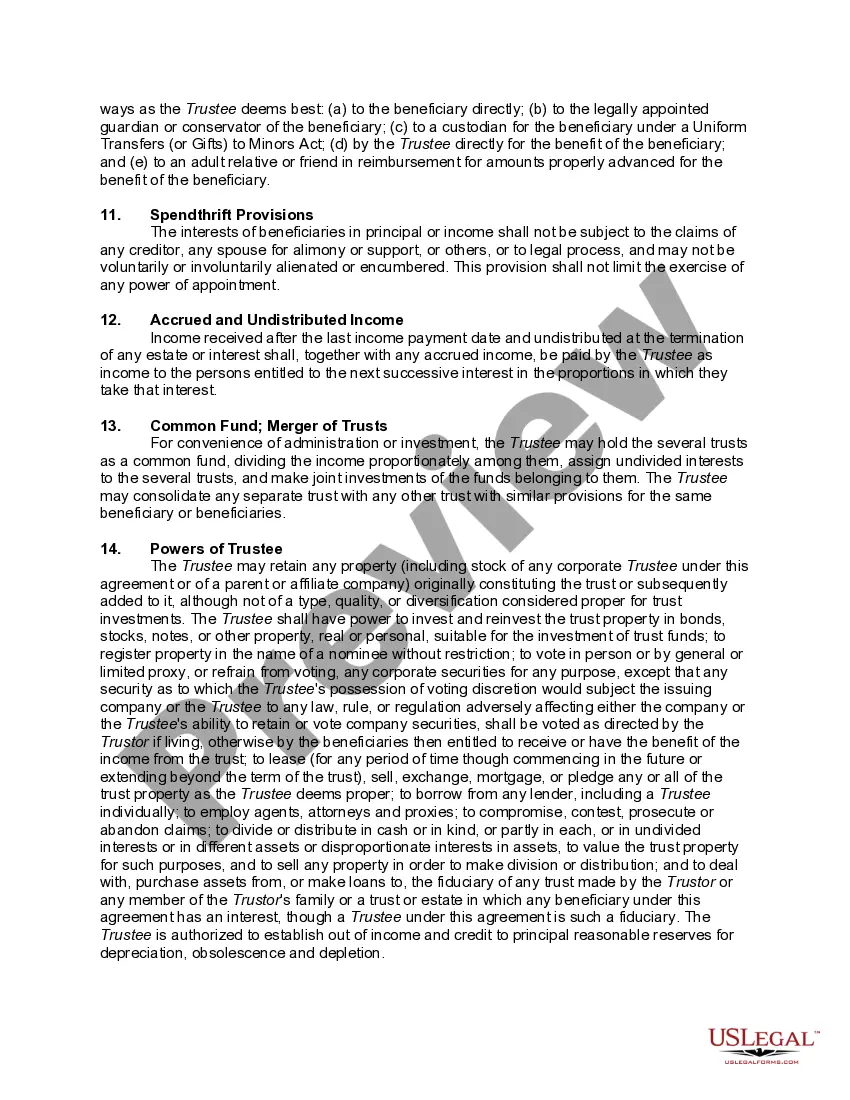
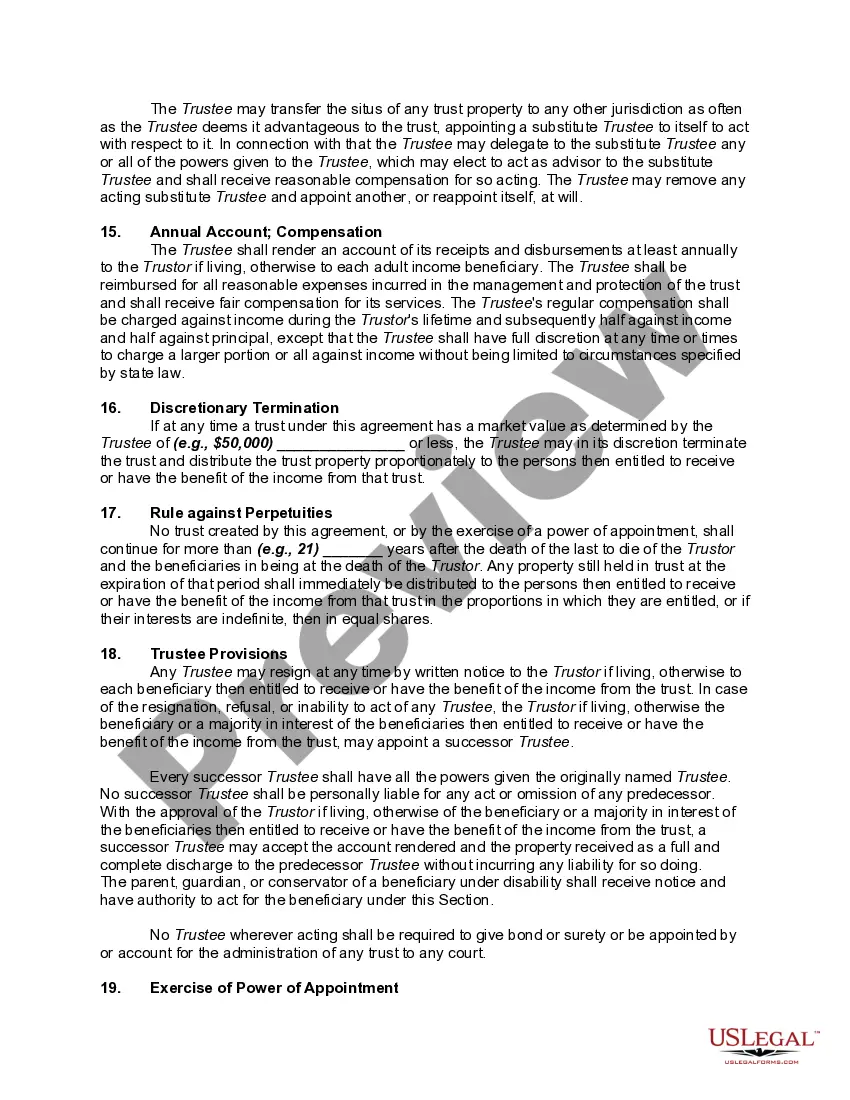
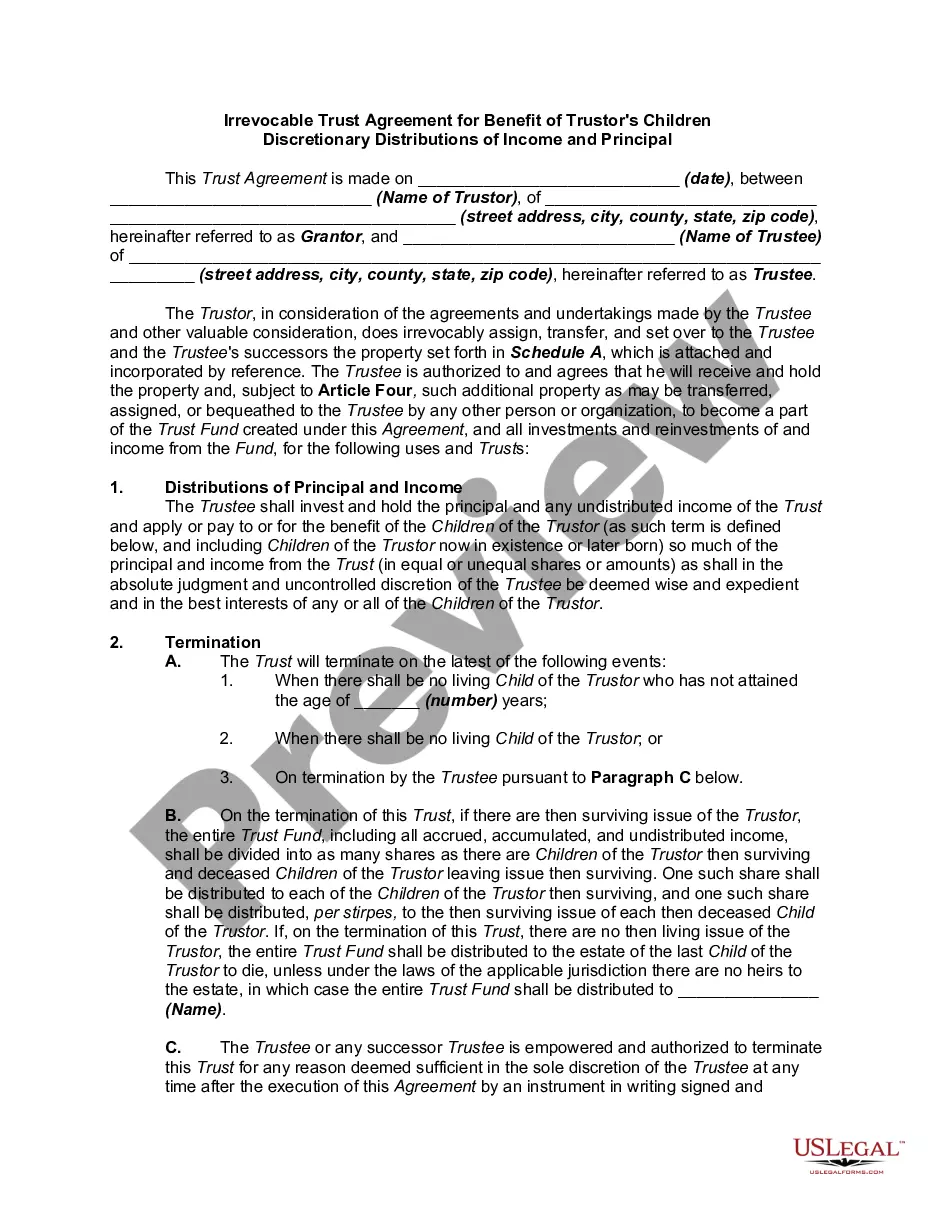
How to fill out Irrevocable Trust Agreement For Benefit Of Trustor's Children And Grandchildren With Spendthrift Trust Provisions?
- If you are a returning user, log in to your account and download the required template by clicking the Download button. Ensure your subscription is active; if not, renew it as per your plan.
- For first-time users, start by reviewing the Preview mode and description of the document. Make sure it suits your needs and aligns with your jurisdiction.
- If necessary, use the Search tab to look for alternative templates. Ensure you've selected the correct one before moving forward.
- Select the Buy Now button and choose your preferred subscription plan. You'll need to register an account for access to our extensive library.
- Complete your purchase by entering your payment information, either through credit card or PayPal.
- Download the document to your device. It will also be accessible later in the My Forms section of your profile.
US Legal Forms empowers both individuals and attorneys to efficiently prepare legal documents with its unparalleled library. Simplifying the drafting process, users can access a wealth of over 85,000 editable forms.
Get started today and unlock the benefits of a streamlined legal experience. Explore our resources and take control of your legal needs!
Form popularity
FAQ
To avoid inheritance tax in the USA, you may consider establishing a properly structured trust. A foreign grantor trust revocable can serve as a strategic tool to manage your assets while minimizing tax liabilities. Engaging with estate planning professionals can provide further insights into creating an effective strategy. Our platform offers resources that make it easier for you to set up a trust that aligns with your goals.
The throwback rule for foreign trusts prevents beneficiaries from deferring taxes on distributions from the trust to future years. Essentially, this rule dictates that any retained income must be taxed in the year it is distributed to beneficiaries. For anyone managing a foreign grantor trust revocable, knowledge of this rule is critical. Utilizing our legal solutions can ensure that you comply with these tax obligations and streamline the management of the trust.
The 5-year rule for trust beneficiaries addresses how distributions and taxes may vary depending on the timing of the trust's establishment. If a trust beneficiary receives assets within this time, it may have tax implications for them. Understanding how this relates to a foreign grantor trust revocable is key for your beneficiaries' financial planning. We can assist you in navigating these concerns through our tailored legal resources.
The 5-year rule for foreign trusts generally refers to the period during which assets transferred to a foreign trust may impact tax liabilities. Specifically, if distributions are made during this period, the IRS may impose tax penalties. For individuals utilizing a foreign grantor trust revocable, being aware of this rule can aid in effective planning. Engaging with our platform can help clarify your options in relation to this rule.
Yes, an irrevocable trust can be subject to the 5-year rule, especially in terms of Medicaid eligibility. This rule states that any assets transferred into an irrevocable trust may be scrutinized for five years for eligibility purposes. Understanding how this rule interacts with your trust planning, including any foreign grantor trust revocable aspects, is vital. We recommend seeking expert guidance to navigate these regulations effectively.
To establish a foreign grantor trust, you'll need to consult with legal or tax professionals who specialize in this area. They can guide you through the necessary documentation and compliance requirements. Additionally, utilizing the US Legal Forms platform can streamline the process, providing you with templates and resources for setting up a foreign grantor trust revocable effectively. Starting on this path can provide significant benefits for your estate planning.
grantor trust typically cannot be revocable, as revocability is a feature of grantor trusts. This means that, in the context of a foreign grantor trust revocable, the grantor retains control over the trust assets during their lifetime. If you're considering trust options, understanding the implications of revocability is crucial. For specific advice tailored to your situation, our platform can help you explore various trust structures.
Yes, distributions from a foreign grantor trust may be taxable, depending on the income type and the beneficiary's tax residency. Tax treatment varies significantly based on individual circumstances and applicable laws. To ensure compliance and minimize tax liabilities, consider consulting with tax experts who can provide personalized guidance.
Distributions from a grantor trust can be taxable, depending on the type of income generated by the trust. Generally, if the trust's income is taxable to the grantor as it is earned, then distributions will also be taxable when received. Understanding the specifics of your grantor trust can clarify your tax liabilities.
Foreign distributions may carry tax implications for the beneficiary, often depending on their residency and applicable tax treaties. If you receive distributions from a foreign trust, you should be aware of how these might affect your tax situation. It's wise to seek advice from a tax professional to navigate these complexities.