Layoffs Policy - Union
About this form
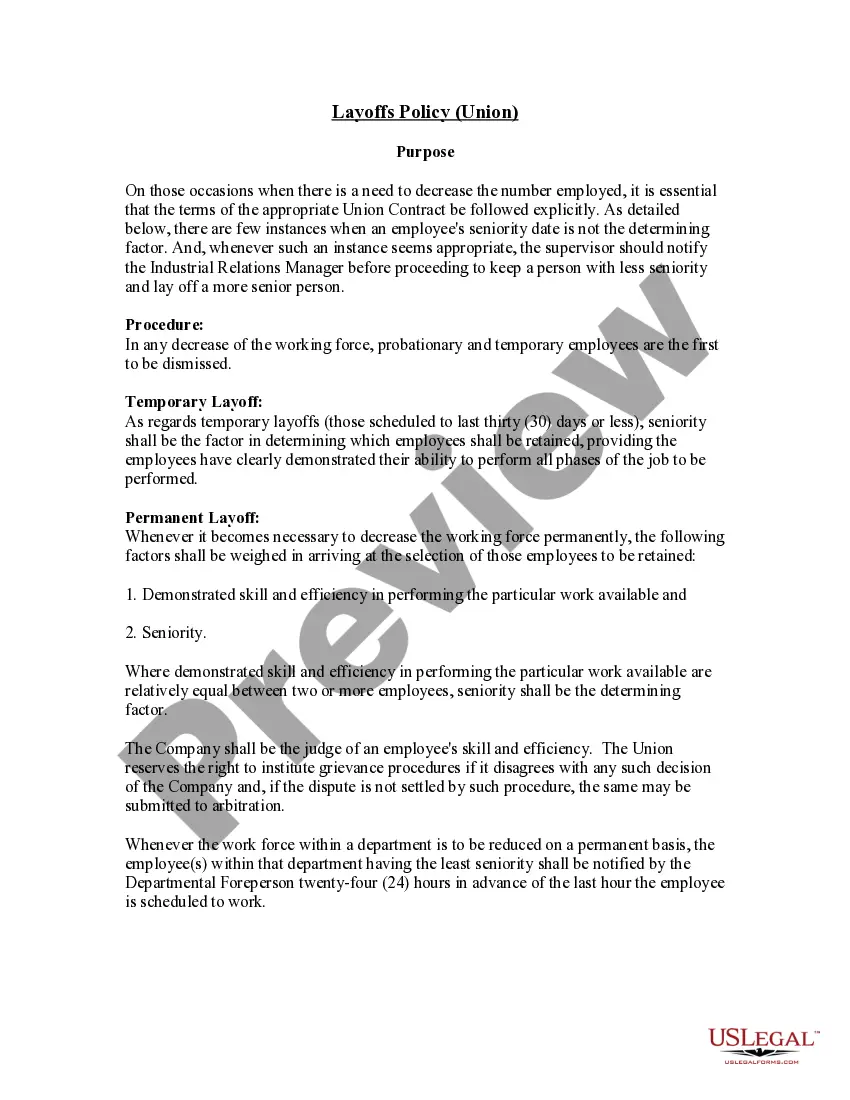
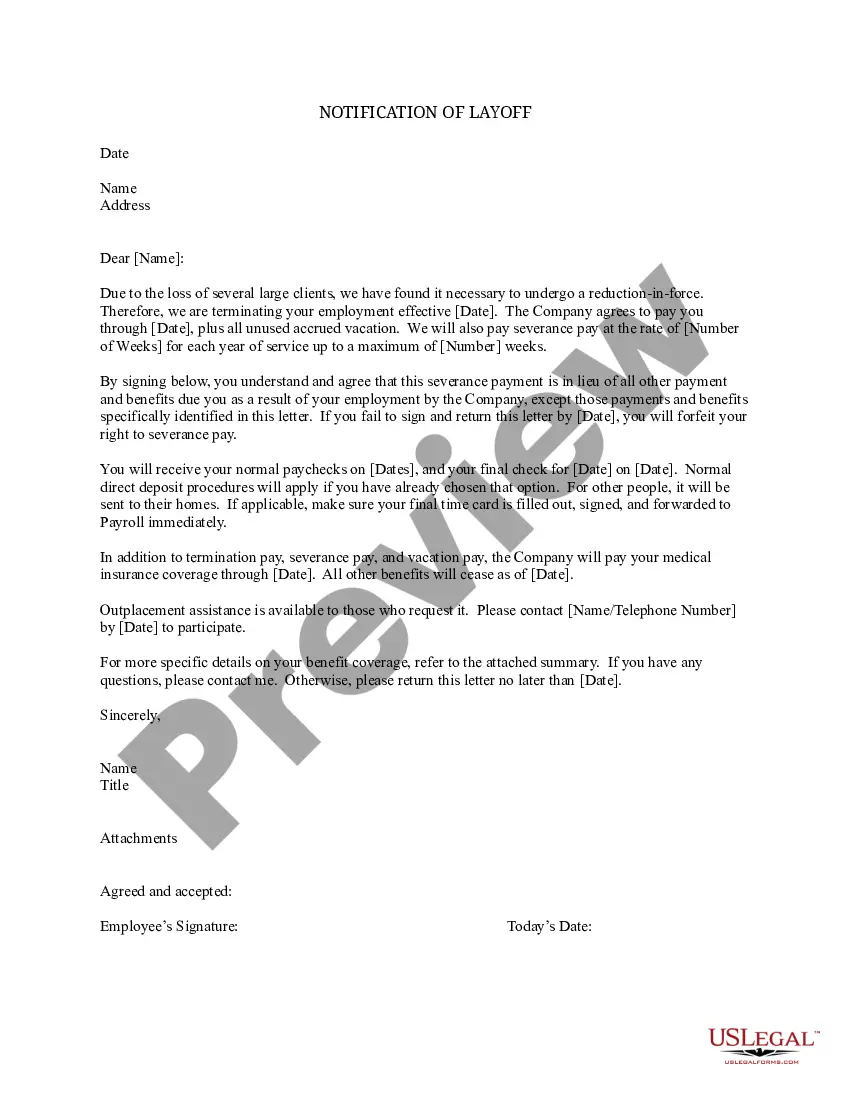
The Layoffs Policy - Union is a legal document designed to outline the procedures and guidelines that apply to employees who are members of a union during layoffs. This policy ensures that layoffs follow the terms of the relevant union contract, distinguishing it from general layoff policies that may not consider union agreements.
Key components of this form
- Purpose: To inform employees about the layoff process and procedures.
- Temporary Layoffs: Guidelines for layoffs expected to last thirty days or less, primarily based on seniority.
- Permanently Layoffs: Key factors considered for permanent layoffs, including skills, efficiency, and seniority.
- Notification Procedure: Rules on how employees are notified prior to layoffs.
- Grievance Procedure: Details on how union members can contest decisions made regarding layoffs.
Situations where this form applies
This form is essential when a company anticipates the need to reduce its workforce, especially if the employees are union members. It provides clear protocols to ensure compliance with union contract terms and fair treatment based on seniority and skills.
Who can use this document
- Employers operating under union agreements facing potential layoffs.
- Human resources professionals who are required to follow union rules regarding workforce reductions.
- Union representatives involved in negotiating or communicating about layoffs with members.
Steps to complete this form
- Review the current union contract to ensure compliance with layoff terms.
- Identify the employees affected by layoffs and classify them by seniority and skill levels.
- Document the justification for each layoff decision.
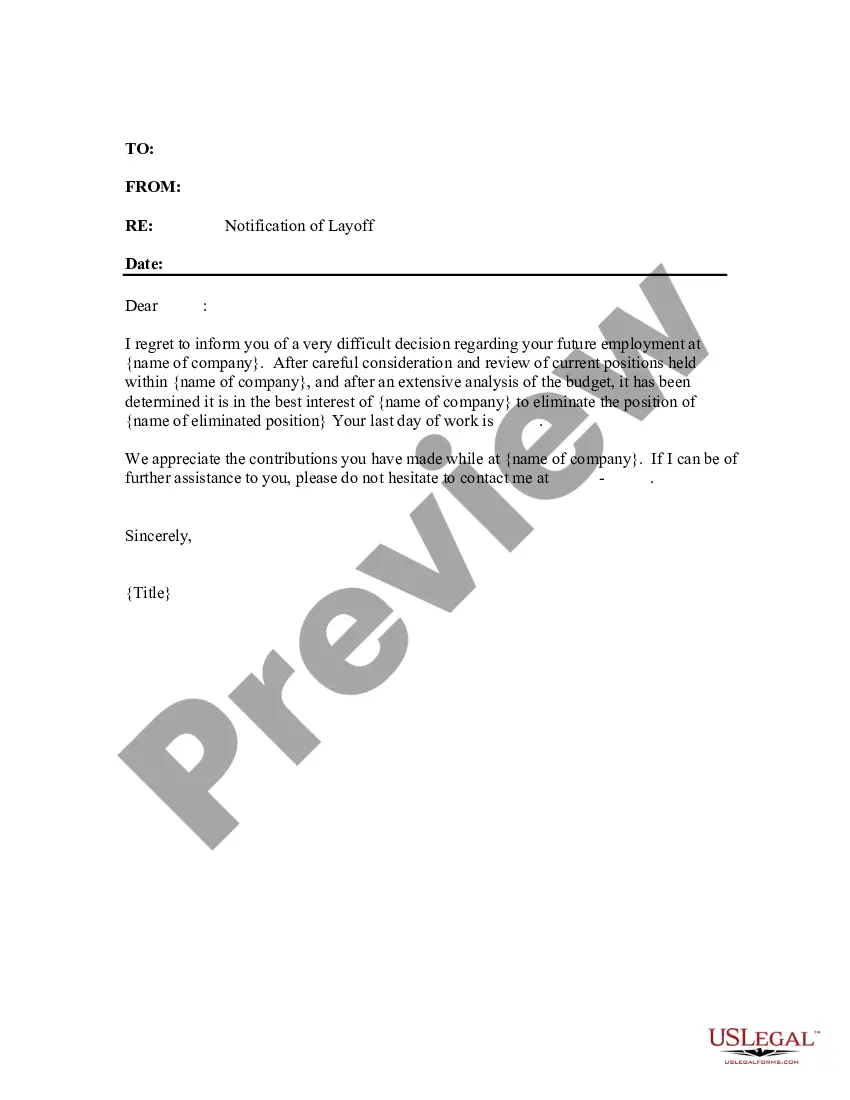
- Notify employees in writing at least twenty-four hours before their last scheduled work hour.
- Follow any grievance procedures outlined in the union contract for employees wishing to contest layoff decisions.
Notarization requirements for this form
This form does not typically require notarization to be legally valid. However, some jurisdictions or document types may still require it. US Legal Forms provides secure online notarization powered by Notarize, available 24/7 for added convenience.
Get your form ready online
Our built-in tools help you complete, sign, share, and store your documents in one place.
Make edits, fill in missing information, and update formatting in US Legal Forms—just like you would in MS Word.
Download a copy, print it, send it by email, or mail it via USPS—whatever works best for your next step.
Sign and collect signatures with our SignNow integration. Send to multiple recipients, set reminders, and more. Go Premium to unlock E-Sign.
If this form requires notarization, complete it online through a secure video call—no need to meet a notary in person or wait for an appointment.
We protect your documents and personal data by following strict security and privacy standards.

Make edits, fill in missing information, and update formatting in US Legal Forms—just like you would in MS Word.

Download a copy, print it, send it by email, or mail it via USPS—whatever works best for your next step.

Sign and collect signatures with our SignNow integration. Send to multiple recipients, set reminders, and more. Go Premium to unlock E-Sign.

If this form requires notarization, complete it online through a secure video call—no need to meet a notary in person or wait for an appointment.

We protect your documents and personal data by following strict security and privacy standards.
Avoid these common issues
- Failing to consult the union contract before implementing layoffs.
- Not providing timely notifications to employees prior to layoffs.
- Overlooking the grievance processes that must be respected.
- Improperly assessing skills and efficiencies of employees without thorough evaluations.
Why use this form online
- Ease of access: Downloadable documents can be customized and tailored to your specific needs.
- Time-efficient: Quickly modify and update policies as necessary without starting from scratch.
- Legal assurance: Documents are drafted by licensed attorneys, ensuring compliance with current laws.
Legal use & context
- This policy is enforceable as long as it aligns with the existing union contract.
- Failure to follow the outlined procedure may expose the company to legal challenges from the union.
- Employers must remain compliant with both state and federal labor laws regarding layoffs.
What to keep in mind
- The Layoffs Policy - Union is essential for ensuring fair treatment during layoffs of union members.
- Senior employees have protections, and processes must be adhered to as outlined in the union contract.
- Timely communication with affected employees is crucial to maintaining trust and compliance.
Looking for another form?


Form popularity
FAQ
There's no law that requires an employer to make layoffs in order of seniority. However, if the more senior employees are over age 40, or are substantially older than the less senior employees who are not being laid off, there is a high risk of being hit with an age bias claim.
Union Workers' Job SecurityUnions protect workers from arbitrary employer actions and provide them with legal support in the event of a workplace issue that could result in discipline or dismissal, such as sexual harassment or a customer complaint.
Non-unionized employers do not have to account for seniority or even experience when recalling employees. It is the exclusive right of the employer to determine the needs of the business as well as which employees best meet these needs.It also means that an employer may choose whose employment it wishes to terminate.
Unions do not provide representation for free. Unions aren't free. Unions may pit workers against companies. Union decisions may not always align with individual workers' wishes. Unions can discourage individuality. Unions can cause businesses to have to increase prices.
In a unionized environment, firing a union employee is rare, unless their conduct is egregious. Steps of progressive disciplinary action include oral notice of concerns, written warning, letter of expectation, mandatory corrective action plan and formal letters of reprimand prior to the actual termination.
A collective bargaining agreement generally does not prohibit an employer from laying off an employee, although it will contain rules and procedures regarding the manner in which an employee is laid-off.These will include rules for the order of lay off, such as by seniority.
Yes2026 though usually the union steps in before termination. The union contract will specify how employees can be terminated, and as long as the employer followed those steps, the union might not have a basis for getting your job back.Also, some employers use probationary periods that allow them to not keep employees.
Most collective agreements have provisions that allow the employer to lay off employees for lack of work.Outside the unionized context, an employer can terminate your employment at any time with or without cause. If the employer is able to prove just cause, they don't have to give you notice or pay you any severance.