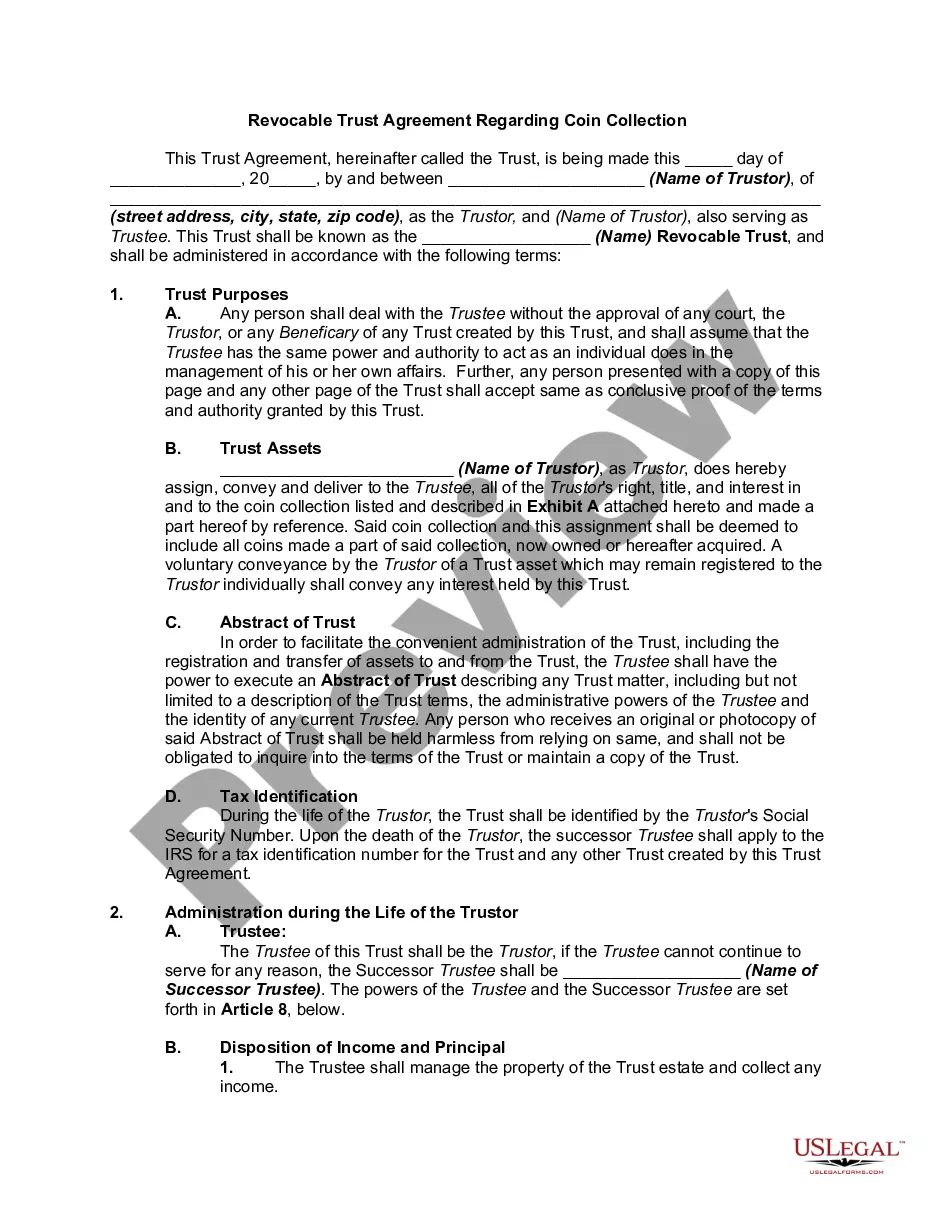
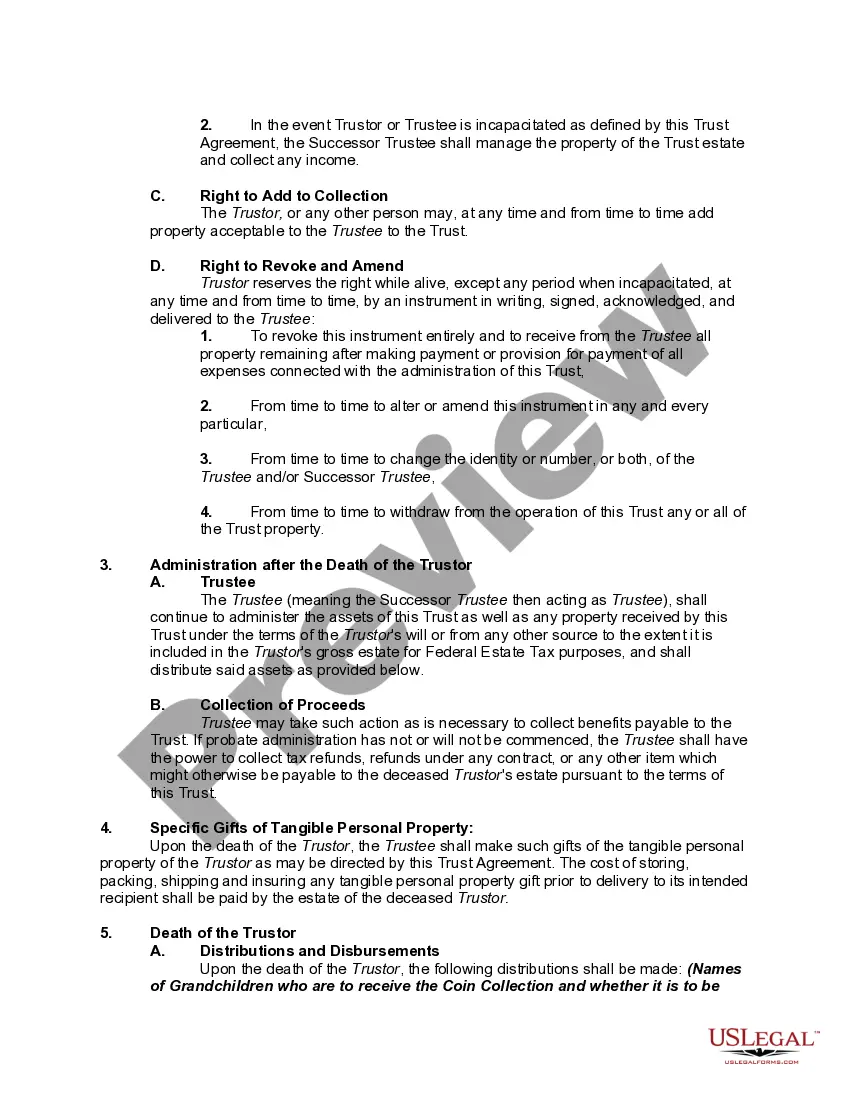
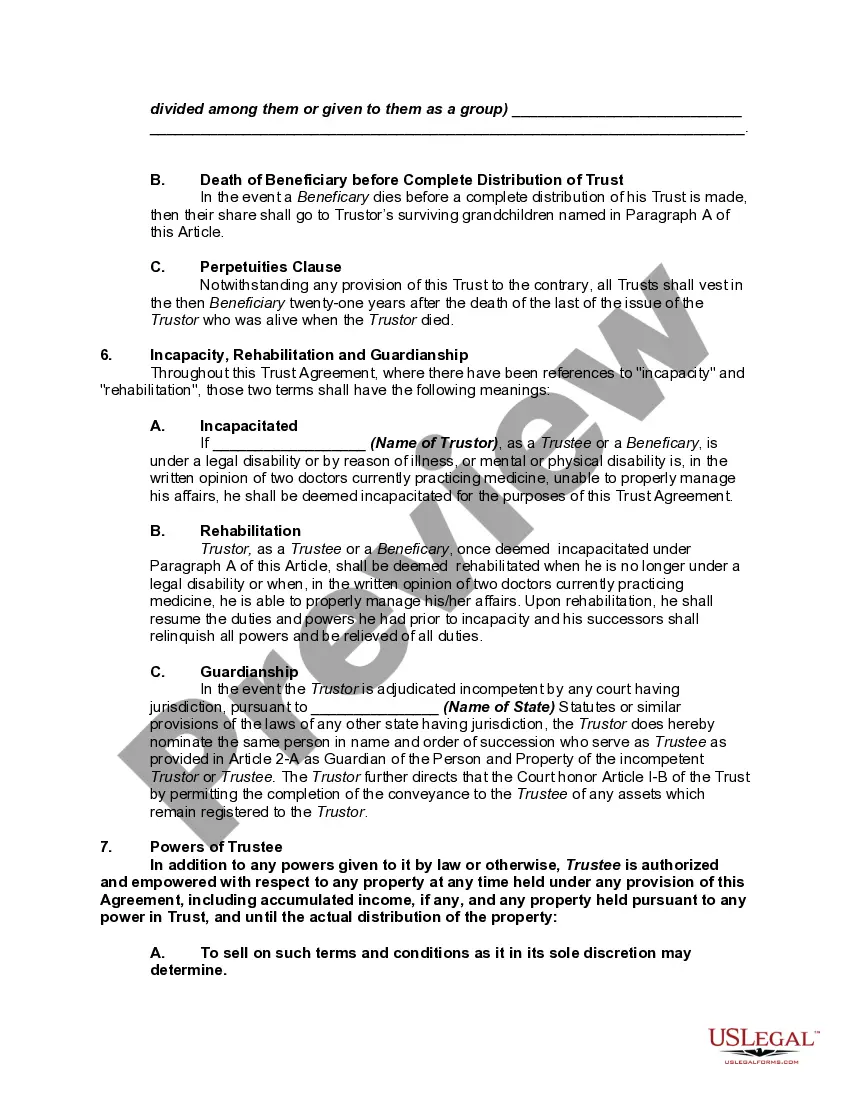
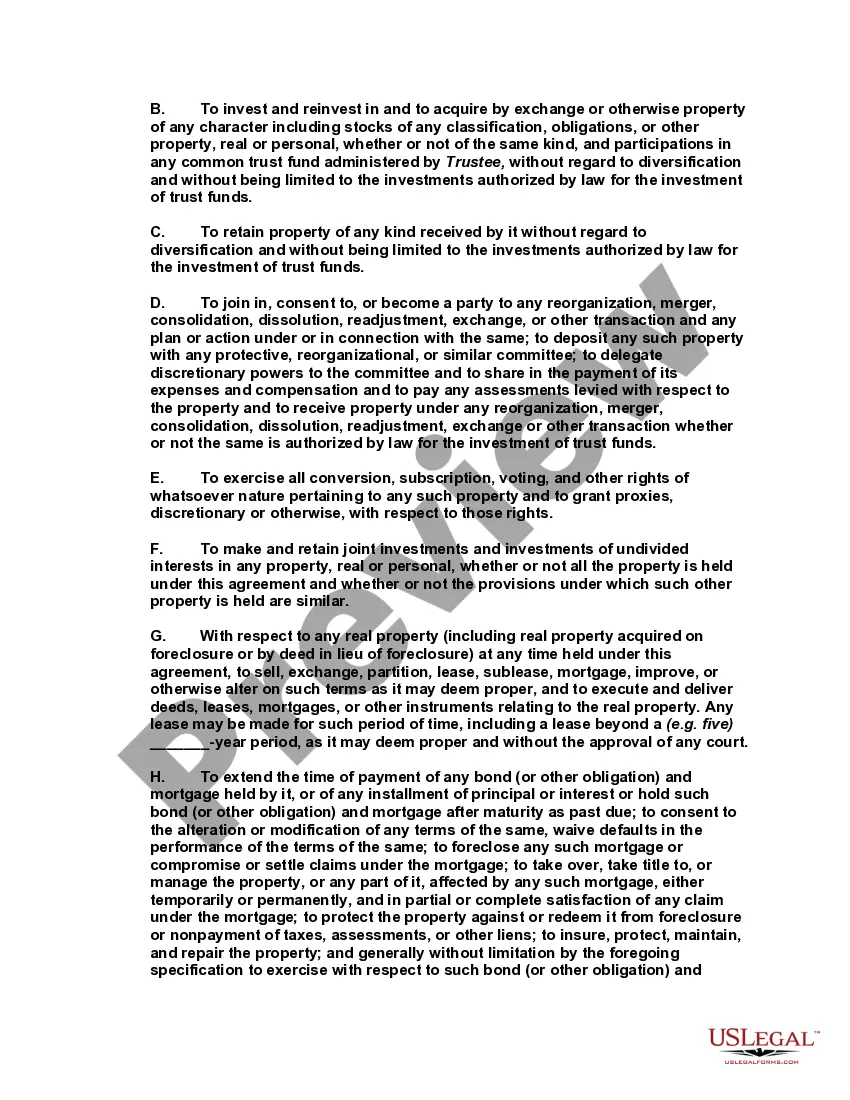
Revocable Truste
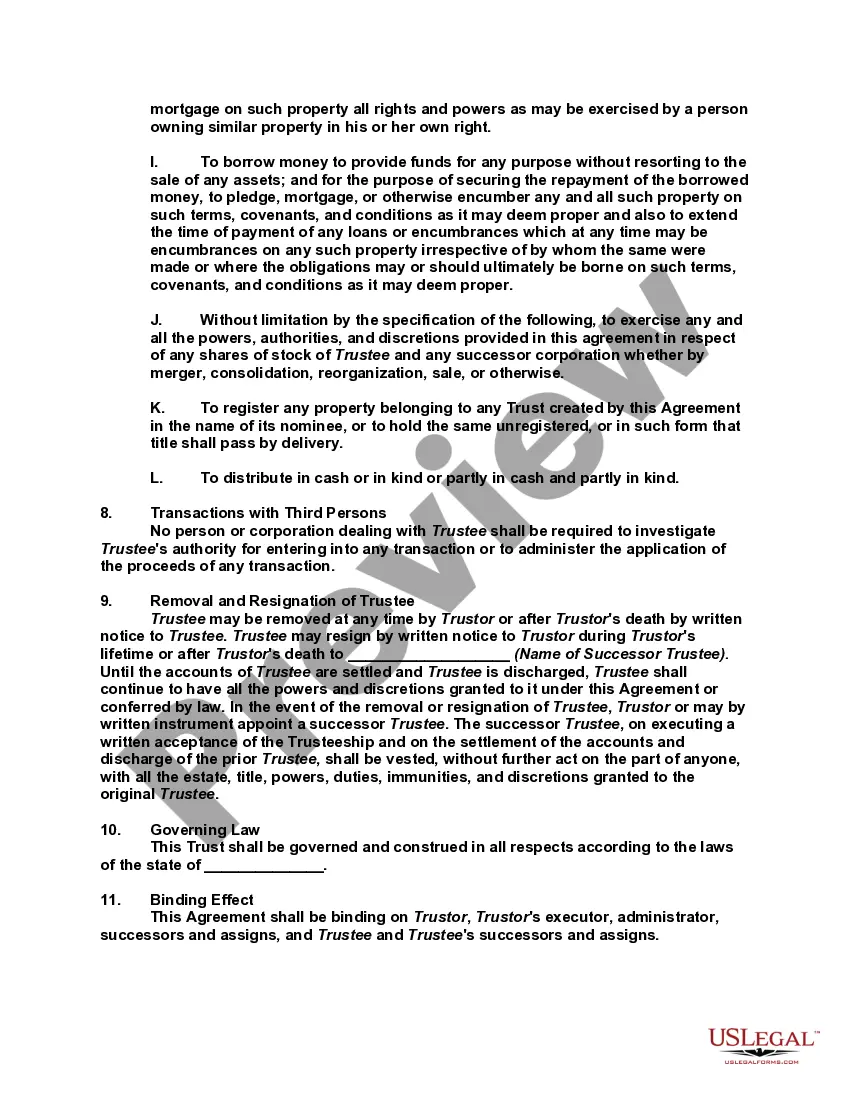
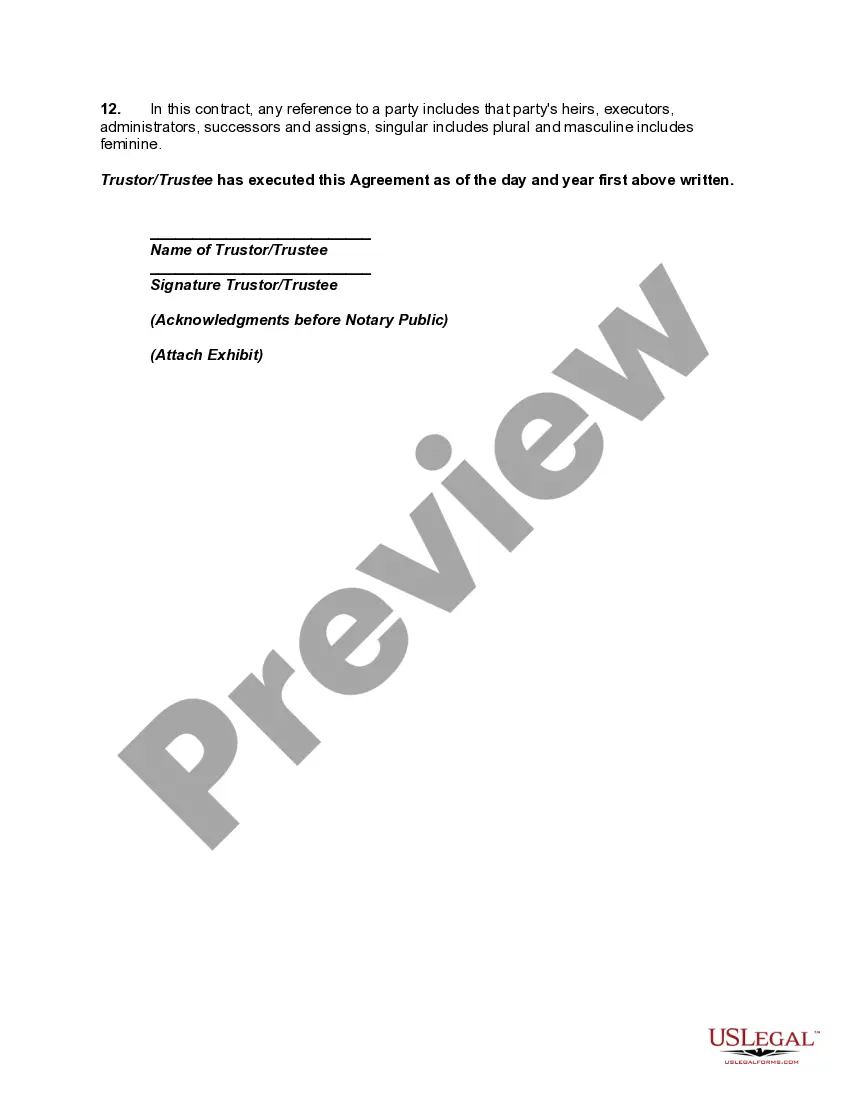
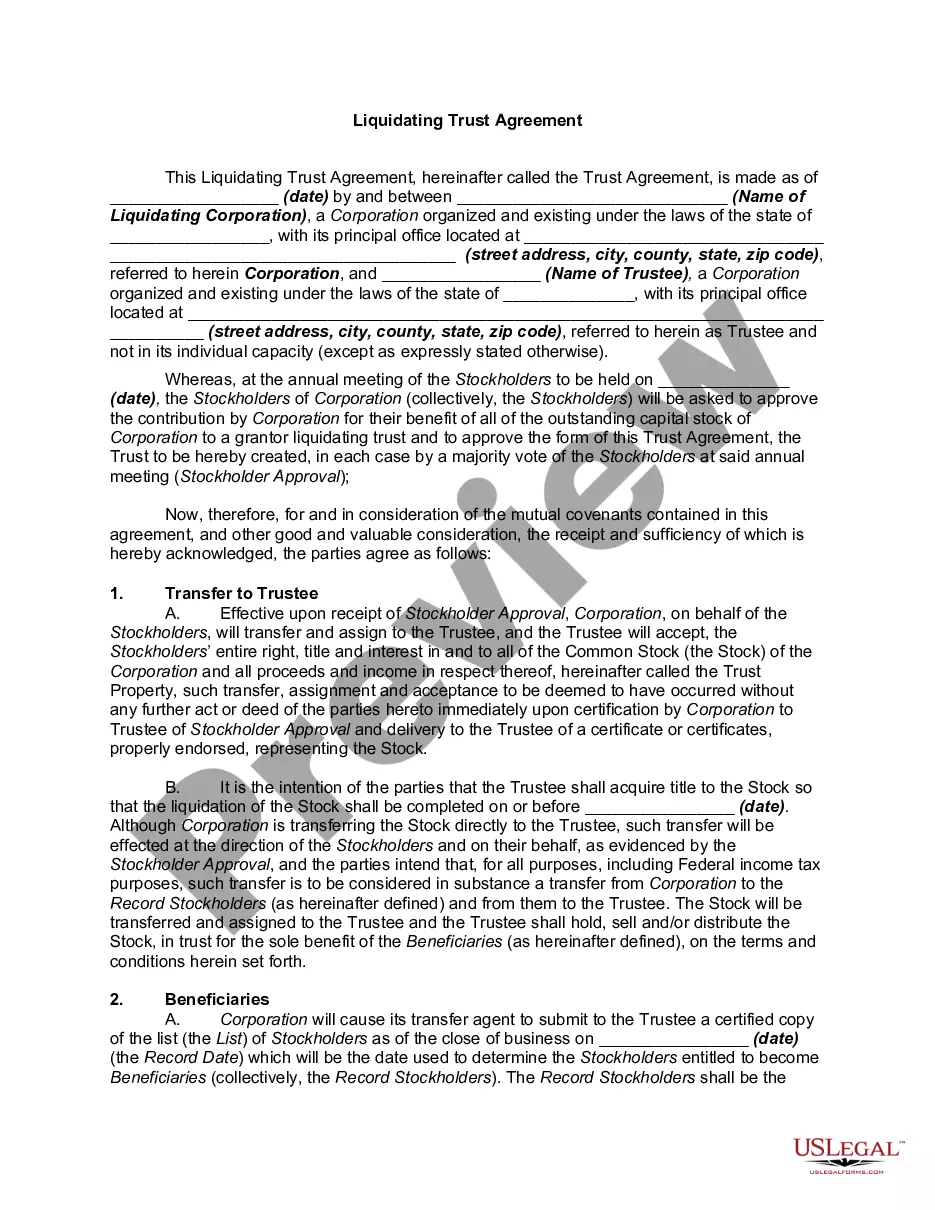
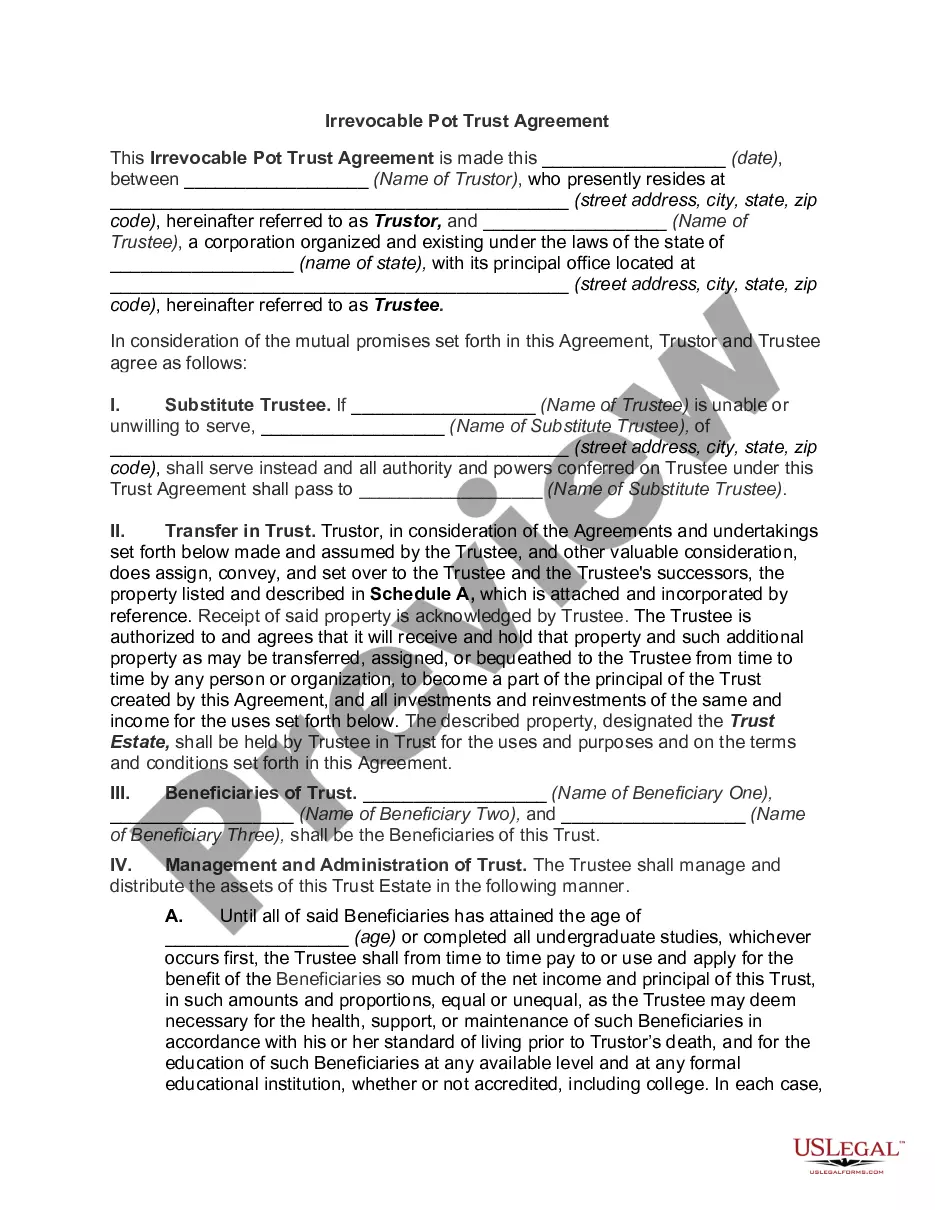
Description
Get your form ready online
Our built-in tools help you complete, sign, share, and store your documents in one place.
Make edits, fill in missing information, and update formatting in US Legal Forms—just like you would in MS Word.
Download a copy, print it, send it by email, or mail it via USPS—whatever works best for your next step.
Sign and collect signatures with our SignNow integration. Send to multiple recipients, set reminders, and more. Go Premium to unlock E-Sign.
If this form requires notarization, complete it online through a secure video call—no need to meet a notary in person or wait for an appointment.
We protect your documents and personal data by following strict security and privacy standards.

Make edits, fill in missing information, and update formatting in US Legal Forms—just like you would in MS Word.

Download a copy, print it, send it by email, or mail it via USPS—whatever works best for your next step.

Sign and collect signatures with our SignNow integration. Send to multiple recipients, set reminders, and more. Go Premium to unlock E-Sign.

If this form requires notarization, complete it online through a secure video call—no need to meet a notary in person or wait for an appointment.

We protect your documents and personal data by following strict security and privacy standards.
Looking for another form?

How to fill out Revocable Trust Agreement Regarding Coin Collection?
- Log in to your US Legal Forms account if you're an existing user, ensuring your subscription is active. If not, renew your plan.
- For first-time users, start by exploring the Preview mode for the revocable truste form. Verify it aligns with your legal requirements.
- Browse other available templates if necessary. Utilize the Search feature to find alternatives that better fit your needs.
- Select the appropriate revocable truste document by clicking the Buy Now button. Choose a subscription plan that suits your needs, and create an account for access.
- Complete your purchase by entering your payment details using a credit card or PayPal.
- Download the finalized version of your revocable truste. Save it to your device and access it later from the My Forms section of your profile.
By following these steps, you can easily create a revocable truste tailored to your estate planning needs.
Ready to get started? Visit US Legal Forms today to access a wealth of legal documents that make estate planning straightforward and efficient.
Form popularity
FAQ
A potential downfall of establishing a revocable truste is the misunderstanding of its limitations. While it serves as a great estate planning tool, it doesn't provide tax benefits or protect assets from lawsuits. Additionally, creating a trust requires diligence in managing and updating it to reflect changes in your financial situation or family dynamics.
Writing a revocable truste involves outlining your wishes regarding the management and distribution of your assets. You will need to include details such as the name of the trust, the trustee, and the beneficiaries. To ensure proper legal compliance, you may want to utilize reputable resources like uslegalforms, which can guide you through the process and provide necessary templates.
One disadvantage of a family trust is that it may not provide the same level of asset protection as other estate planning options. While a revocable truste allows for flexibility during your lifetime, creditors can still reach those assets. Additionally, family trusts require ongoing maintenance and oversight to ensure that they effectively meet their intended purpose.
In addition to retirement accounts and life insurance policies, you might want to exclude assets that you do not want to transfer upon death, such as personal property or assets subject to specific contracts. Managing these assets separately can avoid unintended consequences. Consulting with a professional can help you better understand what to include and exclude from your revocable truste.
You should consider keeping certain assets out of a revocable truste, such as retirement accounts, life insurance policies, and certain jointly owned properties. These assets often have their own beneficiary designations, making them less suitable for inclusion in the trust. Additionally, personal items like vehicles or collectibles may be better managed outside of the trust structure.
While placing your house in a revocable truste has benefits, there are some disadvantages. For instance, transferring your home may trigger reassessment for property tax purposes in certain states. Additionally, if you need to secure a mortgage or refinance your home, you may encounter complexities when dealing with the trust.
Choosing between a revocable and irrevocable trust depends on your financial goals and needs. A revocable truste offers flexibility, allowing you to modify it as your circumstances change. On the other hand, an irrevocable trust provides greater asset protection and potential tax benefits but cannot be altered once established.
Suze Orman believes that a revocable truste is a useful estate planning tool, especially for families looking to pass on their wealth smoothly. She highlights its ability to avoid the probate process, making it easier and faster for heirs. However, she also emphasizes the importance of understanding its limitations and ensuring that the trust is properly funded.
A revocable truste can present some downsides. Firstly, assets in this trust may not receive the same level of asset protection as those in an irrevocable trust. Additionally, while a revocable truste helps avoid probate, it does not shield assets from creditors. Lastly, this type of trust requires ongoing management and oversight, which can add to your responsibilities.
Setting up a revocable truste does not have to be a daunting task. With the right guidance and resources, it can be a straightforward process. Platforms like USLegalForms provide easy to follow templates and expert advice, making it simpler for you to create a revocable truste that matches your needs. Remember, taking the first step can lead to peace of mind for you and your loved ones.