Revocable Living Trust Names
Description
Get your form ready online
Our built-in tools help you complete, sign, share, and store your documents in one place.
Make edits, fill in missing information, and update formatting in US Legal Forms—just like you would in MS Word.
Download a copy, print it, send it by email, or mail it via USPS—whatever works best for your next step.
Sign and collect signatures with our SignNow integration. Send to multiple recipients, set reminders, and more. Go Premium to unlock E-Sign.
If this form requires notarization, complete it online through a secure video call—no need to meet a notary in person or wait for an appointment.
We protect your documents and personal data by following strict security and privacy standards.

Make edits, fill in missing information, and update formatting in US Legal Forms—just like you would in MS Word.

Download a copy, print it, send it by email, or mail it via USPS—whatever works best for your next step.

Sign and collect signatures with our SignNow integration. Send to multiple recipients, set reminders, and more. Go Premium to unlock E-Sign.

If this form requires notarization, complete it online through a secure video call—no need to meet a notary in person or wait for an appointment.

We protect your documents and personal data by following strict security and privacy standards.
Looking for another form?









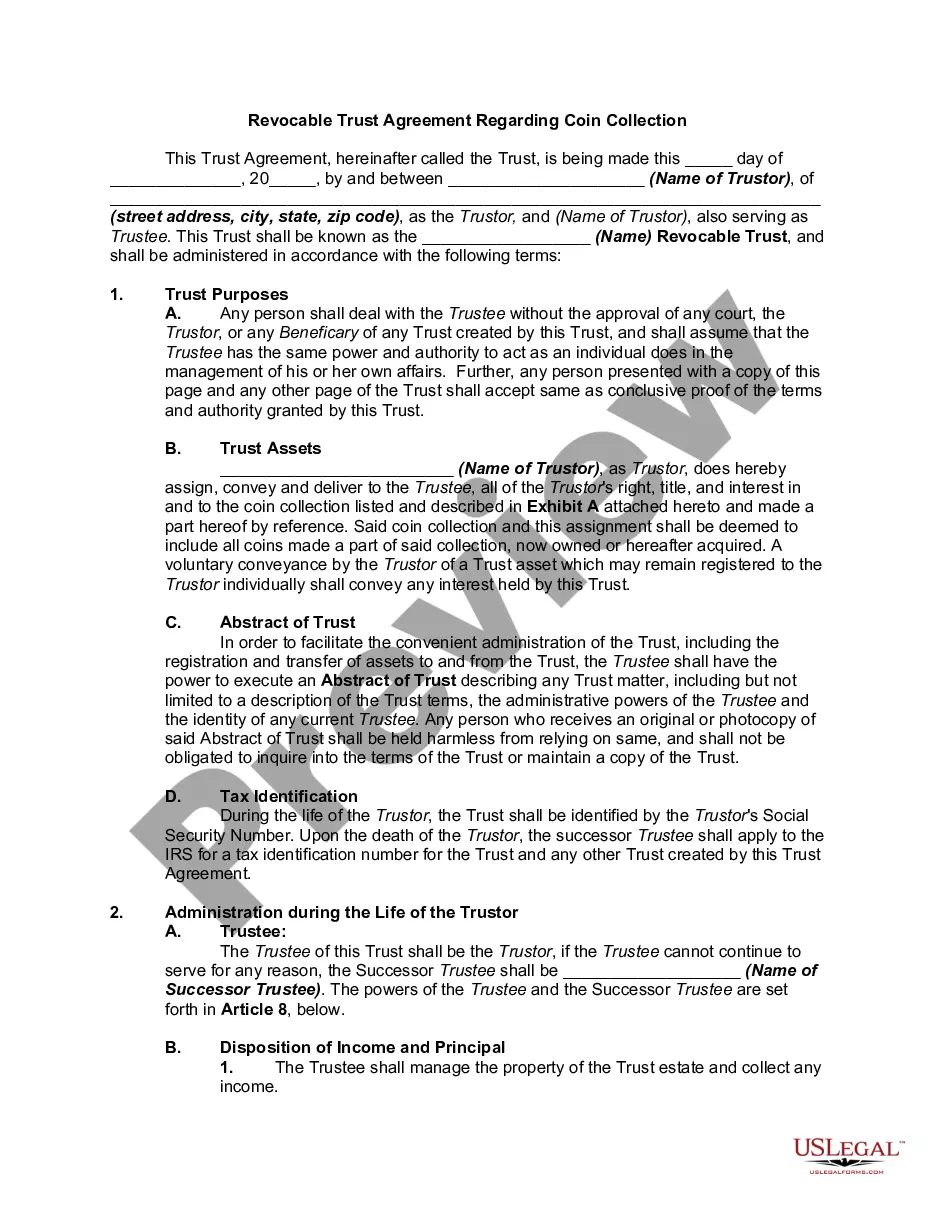
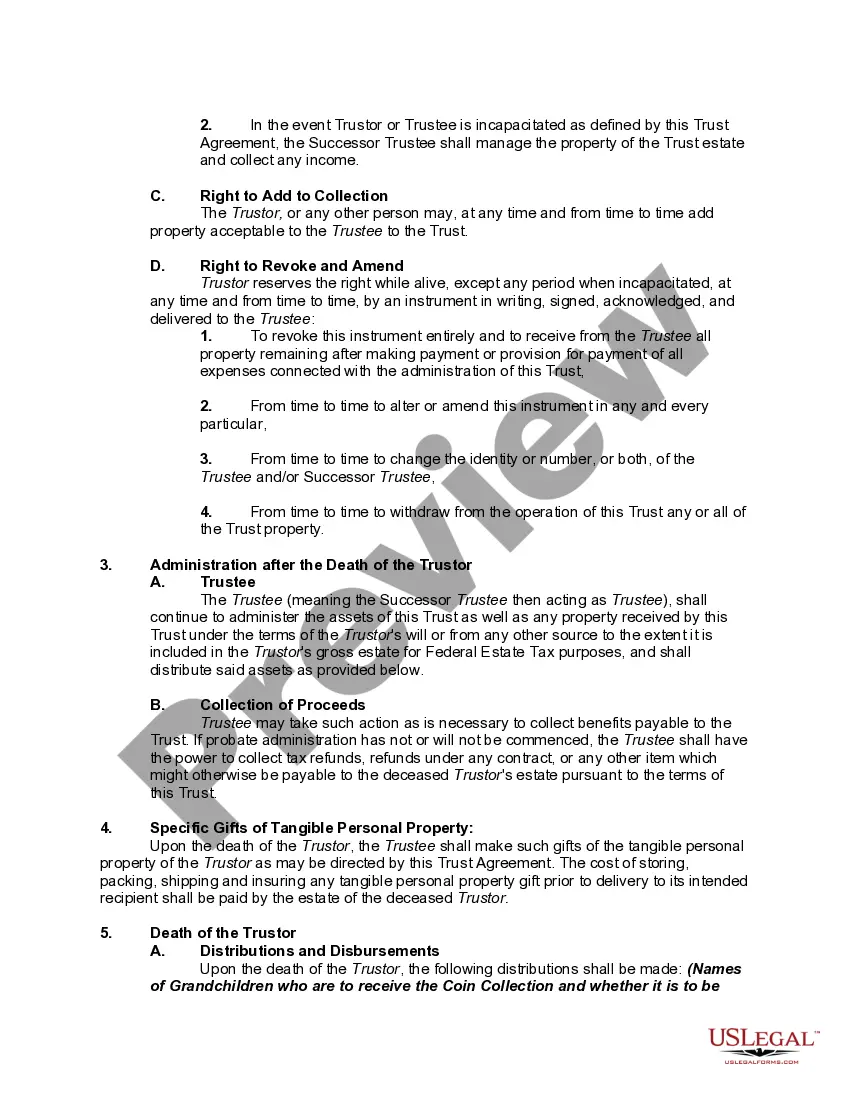
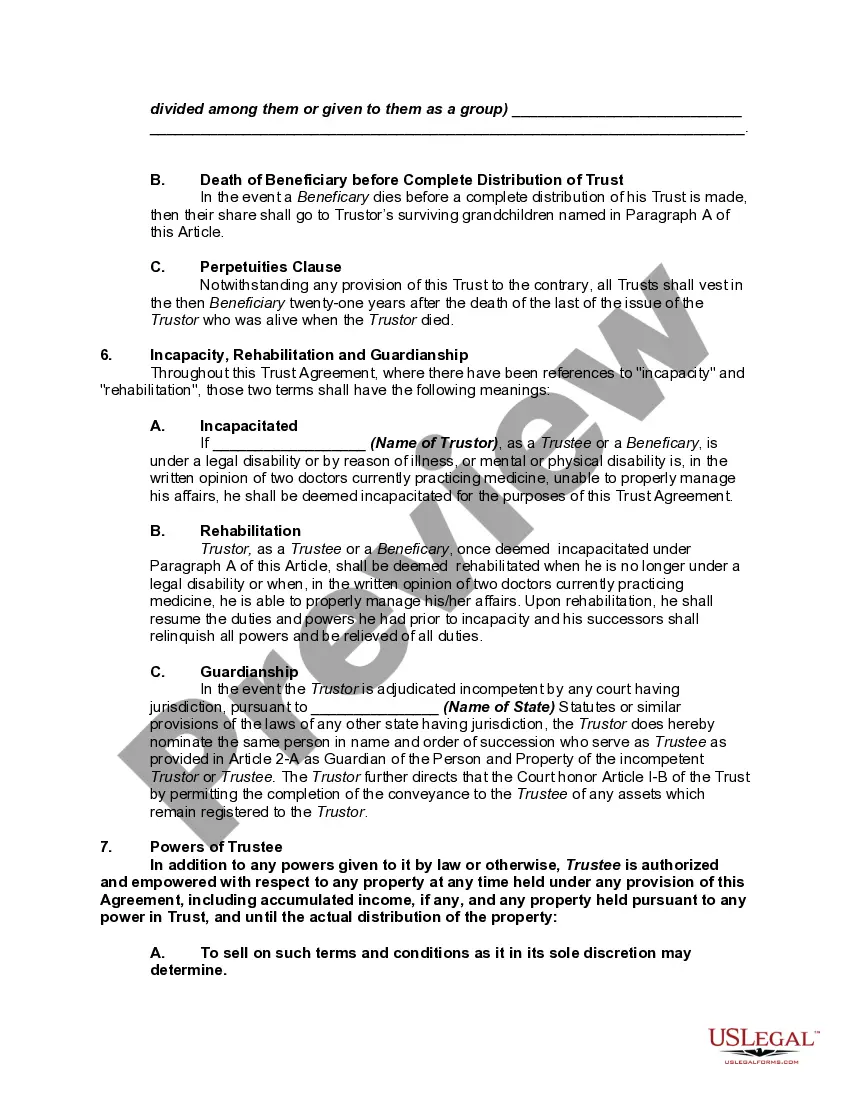
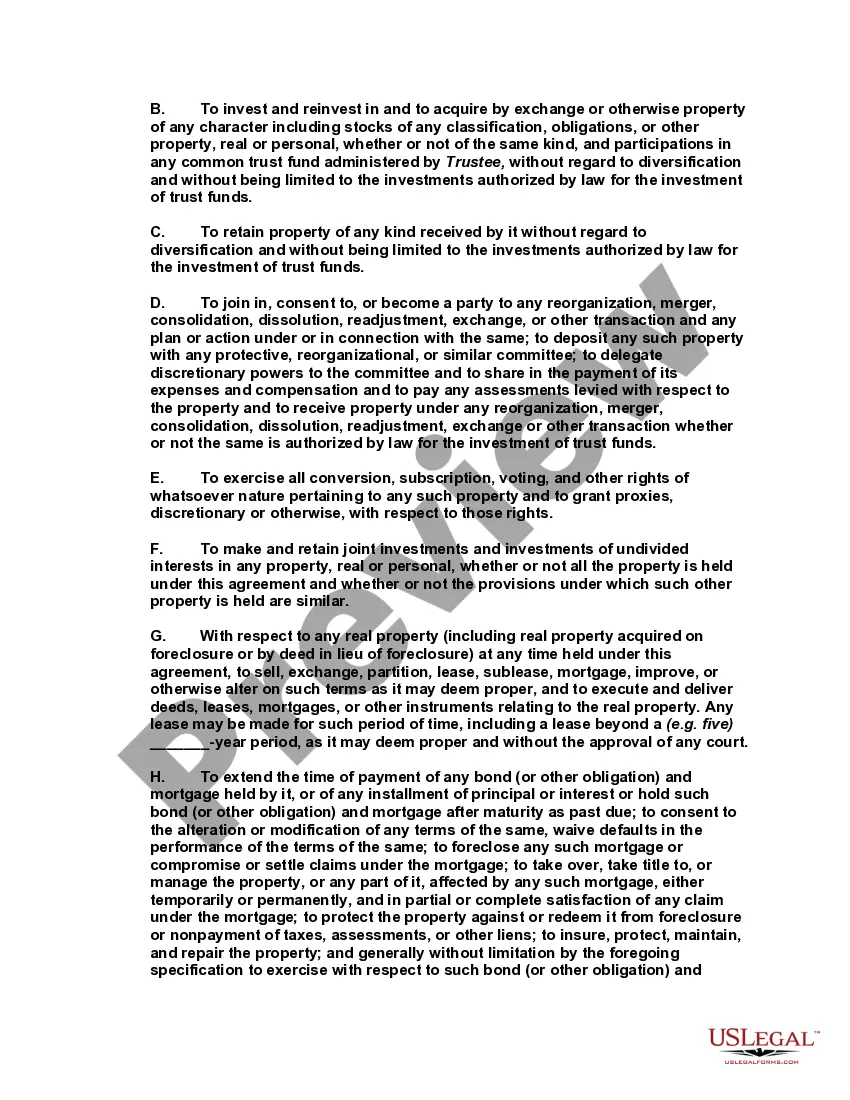
How to fill out Revocable Trust Agreement Regarding Coin Collection?
Creating legal documents from the ground up can occasionally be daunting.
Certain situations may require extensive research and significant financial investment.
If you’re looking for a more straightforward and cost-effective means of generating Revocable Living Trust Names or any other documentation without unnecessary complications, US Legal Forms is always available to assist you.
Our online collection of over 85,000 current legal documents covers nearly every facet of your financial, legal, and personal matters. With just a few clicks, you can promptly access state- and county-compliant templates meticulously crafted for you by our legal experts.
US Legal Forms has an impeccable reputation and over 25 years of expertise. Join us today and make form execution a simple and efficient process!
- Utilize our platform whenever you require trustworthy and dependable services that enable you to swiftly find and download the Revocable Living Trust Names.
- If you’re familiar with our services and have previously registered an account with us, simply Log In to your account, find the template, and download it or re-download it at any time in the My documents section.
- Don't have an account? No worries. Setting it up takes just a few minutes, allowing you to explore the catalog.
- Before you dive into downloading Revocable Living Trust Names, follow these guidelines.
- Examine the document preview and descriptions to confirm that you have located the form you need.
Form popularity
FAQ
Generally, a revocable trust does not need to be filed with the IRS as long as the grantor is alive. The income generated by the trust is reported on your personal tax return, so the IRS does not require a separate filing for revocable living trust names. However, it's important to consult a tax professional if you have specific questions about your situation. Utilizing resources from US Legal Forms can help clarify requirements and ensure compliance.
Yes, you can file a revocable trust yourself, but it requires careful attention to detail. By understanding the legal requirements and following the correct procedures, you can effectively manage your revocable living trust names. However, consider using platforms like US Legal Forms to simplify the process. They provide templates and guidance to ensure your trust meets all legal standards.
A revocable trust offers flexibility, but it also has some downsides. One major concern is that assets in a revocable living trust are still considered part of your estate for tax purposes. This means that if your estate exceeds the exempt amount, your heirs may face higher taxes. Furthermore, revocable living trust names do not provide the same level of asset protection as irrevocable trusts, which may leave your assets vulnerable to creditors.
An example of a revocable trust name could be 'The Johnson Family Revocable Living Trust'. This name clearly indicates the family it belongs to, while also denoting that it is a revocable trust. It's essential to choose a name that resonates with your intention and familial connections. Using platforms like USLegalForms can provide additional examples to inspire your trust naming process.
To write your own revocable living trust, start by defining your assets and deciding who will manage them. Next, outline how you want your assets distributed upon your passing. You can use resources like USLegalForms to access templates and guidance that simplify the process. This way, you can craft a personalized document that reflects your wishes and meets legal standards.
When naming your revocable living trust, consider using your name or a combination of your name and a descriptive term. For instance, you might choose 'John Smith Revocable Living Trust' or 'The Smith Family Revocable Living Trust'. This clarity helps identify the trust’s purpose and makes it easily recognizable. Always ensure that the name you select complies with your state’s legal requirements.
It's generally in your best interest to go with a shorter name for your trust since the longer a name the higher the chance of misspellings or issues with abbreviations due to a lack of space on forms. In other words, ?Doe Family Trust dated 10/11/12? is preferable to ?John R. Doe and Jane U.
In light of this requirement, people often choose to shorten the name of the trust?in this example perhaps to the ?Smith Family Trust? rather than the ?John H. and Mildred R. Smith Family Trust.? The title of the trust accounts and real estate would be ?John H. Smith, Trustee of the Smith Family Trust.?
RLT stands for Revocable Living Trust in legal terms. This can save your family emotional stress and financial grief by not having to wait for probate after your death.
Most trusts are named after the Trust Creators and also include the date the trust was created. Examples are ?John and Jane Smith Revocable Trust dated 1/1/20?; or ?Smith Family Trust dated 1/1/20?; or ?John W. Smith and Jane A. Smith Revocable Family Trust dated 1/1/20?.