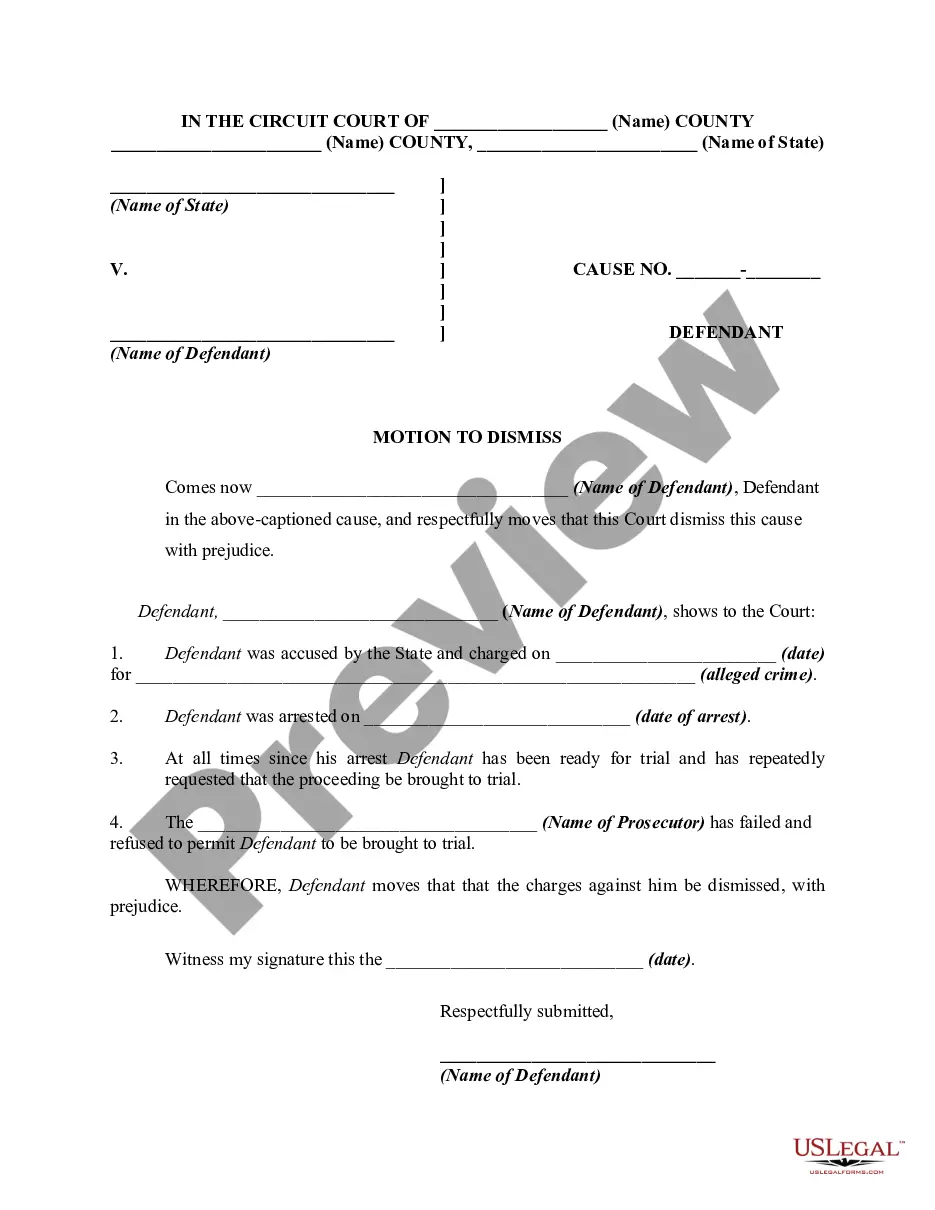
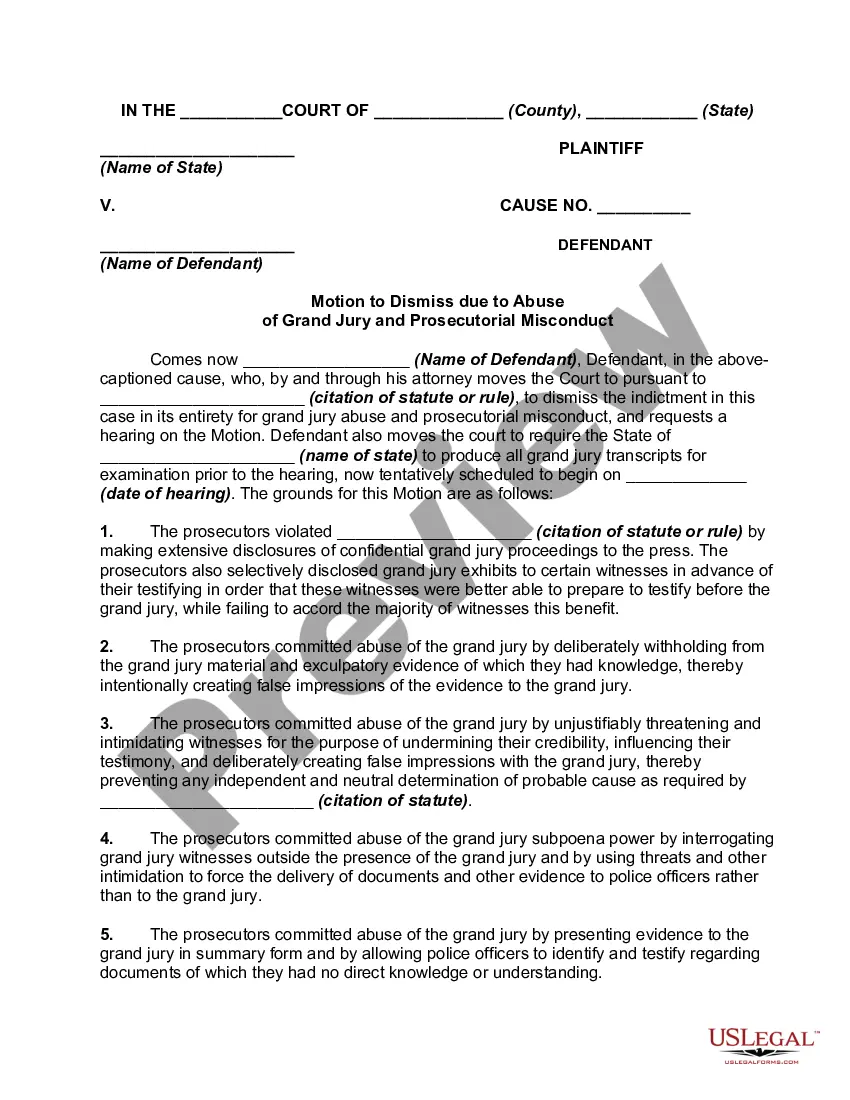
Motion To Dismiss Charges
Description


Get your form ready online
Our built-in tools help you complete, sign, share, and store your documents in one place.
Make edits, fill in missing information, and update formatting in US Legal Forms—just like you would in MS Word.
Download a copy, print it, send it by email, or mail it via USPS—whatever works best for your next step.
Sign and collect signatures with our SignNow integration. Send to multiple recipients, set reminders, and more. Go Premium to unlock E-Sign.
If this form requires notarization, complete it online through a secure video call—no need to meet a notary in person or wait for an appointment.
We protect your documents and personal data by following strict security and privacy standards.

Make edits, fill in missing information, and update formatting in US Legal Forms—just like you would in MS Word.

Download a copy, print it, send it by email, or mail it via USPS—whatever works best for your next step.

Sign and collect signatures with our SignNow integration. Send to multiple recipients, set reminders, and more. Go Premium to unlock E-Sign.

If this form requires notarization, complete it online through a secure video call—no need to meet a notary in person or wait for an appointment.

We protect your documents and personal data by following strict security and privacy standards.
Looking for another form?
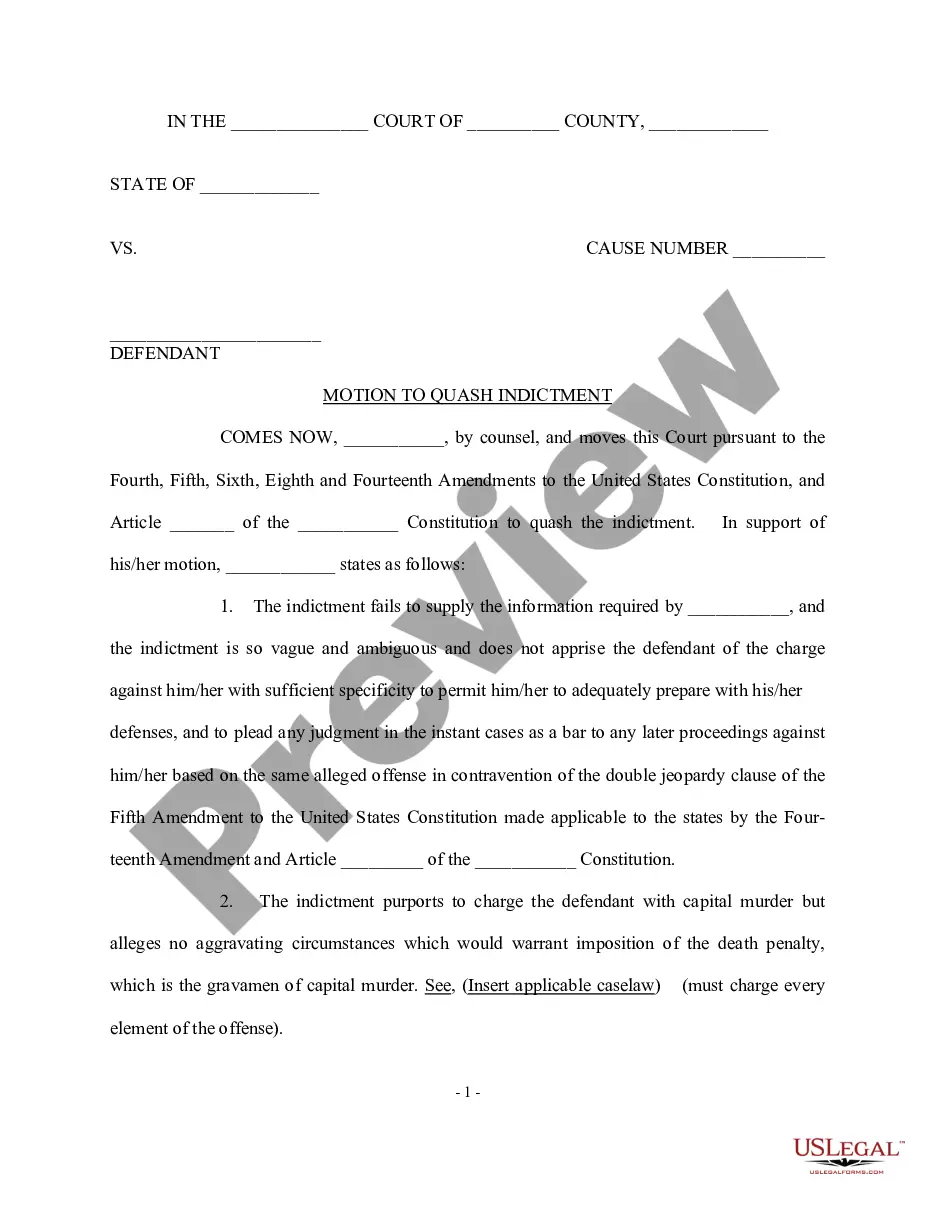
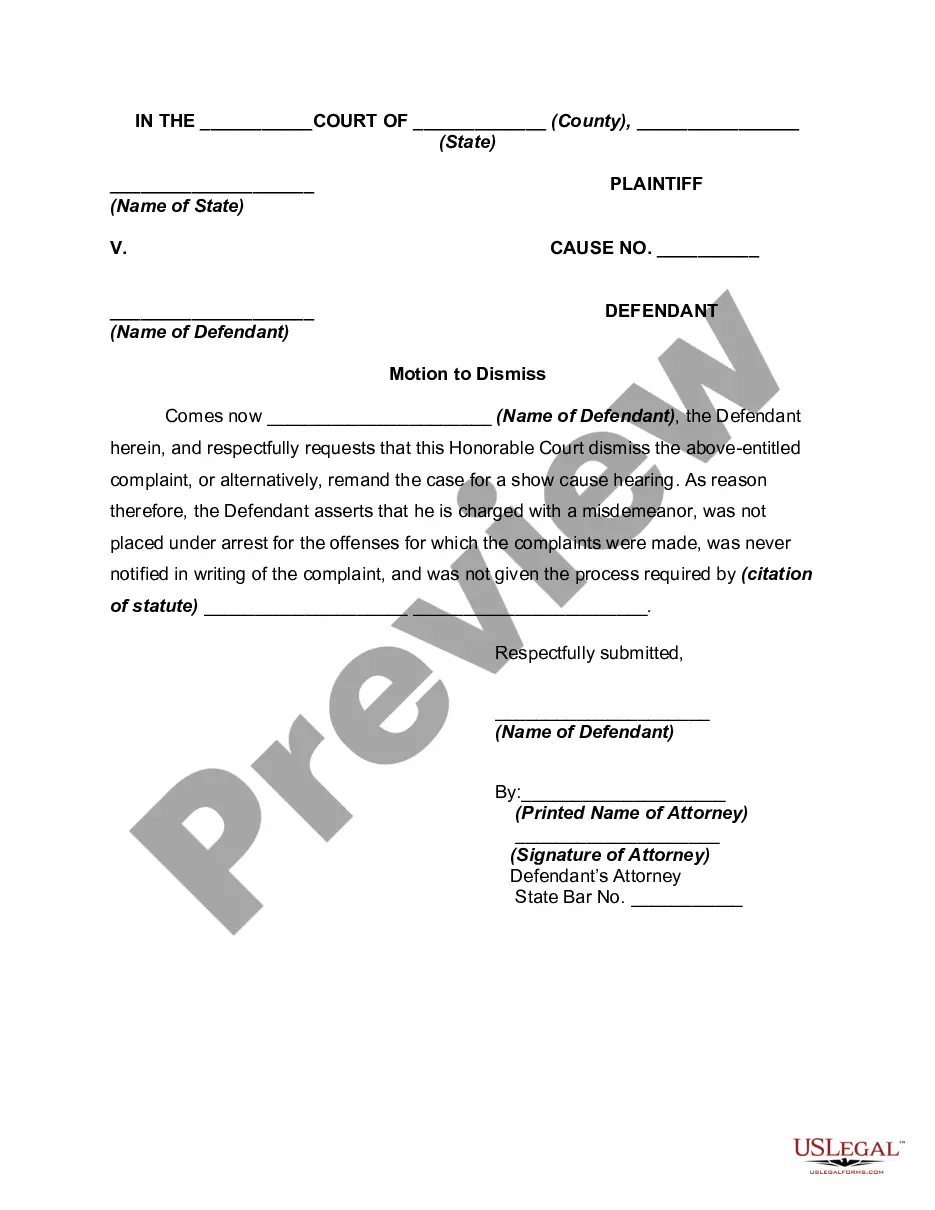
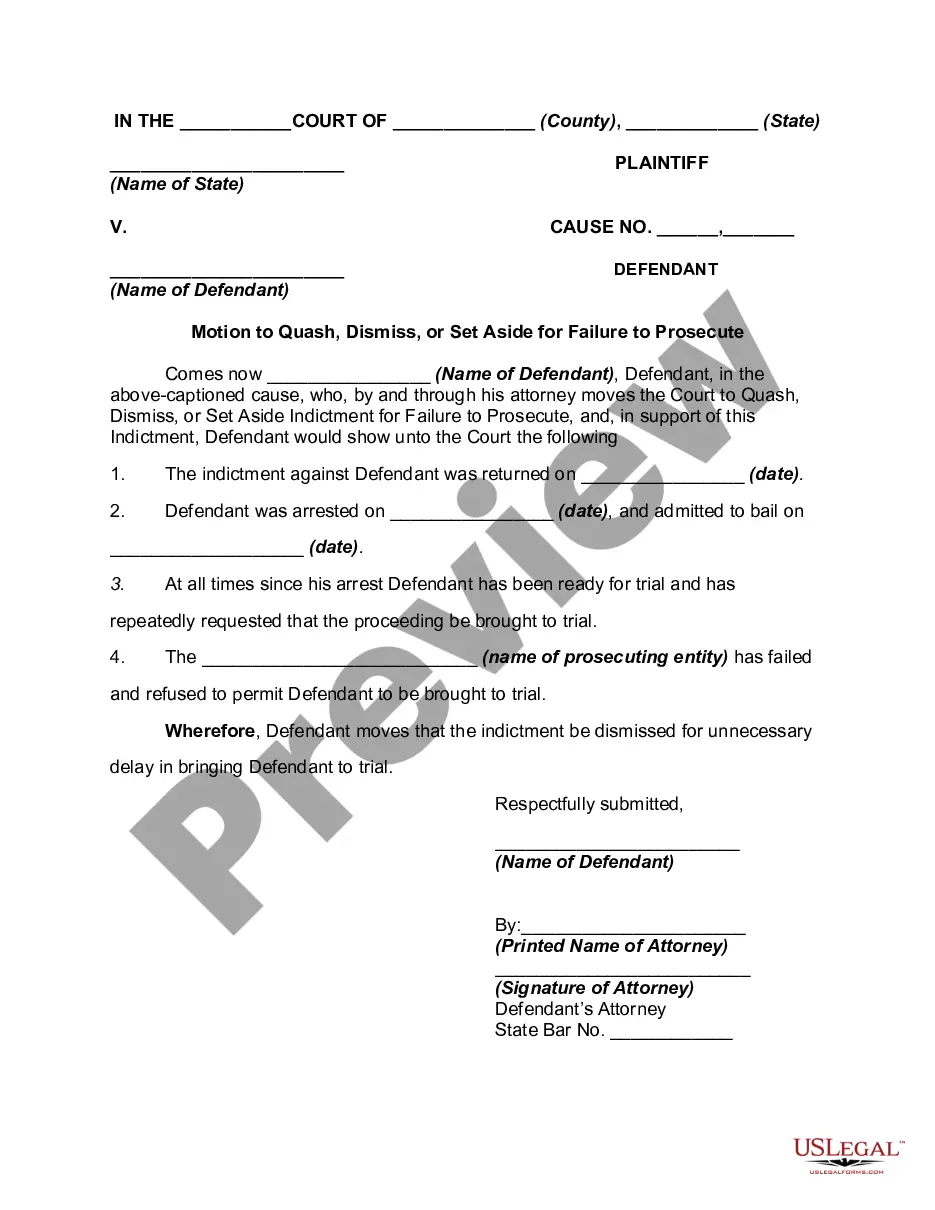
How to fill out Motion To Quash, Dismiss, Or Set Aside Criminal Charges For Failure To Prosecute?
Acquiring legal documents that adhere to national and local laws is essential, and the web provides numerous choices to select from.
However, what good is it to spend time searching for the suitable Motion To Dismiss Charges template online when the US Legal Forms online library already has such templates gathered in one location.
US Legal Forms is the largest digital legal repository with over 85,000 fillable forms created by attorneys for every professional and life situation.
Utilize the Preview option or the text description to verify it meets your requirements.
- They are simple to navigate with all documents sorted by state and intended use.
- Our experts keep up with legislative updates, ensuring that your documentation is always current and compliant when obtaining a Motion To Dismiss Charges from our site.
- Acquiring a Motion To Dismiss Charges is quick and effortless for both existing and new users.
- If you already possess an account with an active subscription, Log In and save the document template you require in the desired format.
- If you are new to our site, follow the instructions below.
Form popularity
FAQ
A motion to dismiss is typically written by the defendant or their attorney if they are represented. When writing this motion, it is essential to include compelling arguments and legal justifications for dismissing the charges. If you seek assistance, platforms like uslegalforms can provide helpful resources and templates for your motion.
Writing a proper motion includes clearly stating the title, grounds for the motion, and the specific relief you seek. Use straightforward language, and support your arguments with legal precedents or statutes. Additionally, ensure the motion is formatted correctly and adheres to court rules to prevent delays or rejections.
Filing a motion to dismiss without a lawyer involves researching your case and the relevant laws. You must draft a motion that clearly states your reasons and provides supporting documentation. Resources like uslegalforms can offer templates and guidance to help you navigate this process effectively and increase your chances of success.
Yes, you can file a motion by yourself, commonly known as proceeding pro se. However, it requires a good understanding of legal procedures and court rules. If you choose to represent yourself, ensure your motion to dismiss charges is clear, concise, and supported by relevant evidence to strengthen your case.
To file a motion in a criminal case, you must prepare a written document outlining the reasons for your request. This motion must include specific legal arguments, applicable laws, and any supporting evidence. After preparing the motion, you should submit it to the court where your case is being heard, following local rules for filing.
Someone files a motion to dismiss charges to challenge the legal basis of the case against them. This legal tool can remove cases lacking sufficient evidence or clear legal violations. By filing a motion to dismiss, defendants can effectively argue for the termination of prosecution before trial, potentially saving time and resources.
Arguing a motion to dismiss requires presenting clear and compelling reasons why the charges should not proceed. You should focus on aspects such as insufficient evidence or legal missteps by the prosecution. Preparing an effective argument involves articulating these points and providing supporting evidence. Resources available through platforms like USLegalForms can guide you in crafting a strong argument for your motion to dismiss charges.
Several reasons can lead to a case being dismissed, including lack of evidence, legal technicalities, or failure to follow proper procedures. If the prosecution cannot prove their case or if rights were violated, those can also be grounds for a motion to dismiss charges. Each case is unique, and identifying the specific reasons in your situation is crucial. Ensuring you gather all necessary documentation can support your motion effectively.
Yes, you can file your own motion to dismiss, but it is often wise to consult with a legal professional. While individuals have the right to represent themselves, the nuances of the law can be complex. A well-crafted motion is important to explain why the charges against you should be dismissed. Utilizing platforms like USLegalForms can provide you with the resources to create a solid motion, enhancing your chances of success.
A motion to dismiss should be granted when the court finds that there is no basis for a trial. Typically, this occurs when there are clear deficiencies in the charges, such as lack of evidence or failure to state a claim. Understanding when to file such a motion is crucial, as it can significantly impact your case’s direction. By leveraging a motion to dismiss charges effectively, you can preserve your rights and potentially shorten the legal journey.