Grand Jury For A Year
Description
Get your form ready online
Our built-in tools help you complete, sign, share, and store your documents in one place.
Make edits, fill in missing information, and update formatting in US Legal Forms—just like you would in MS Word.
Download a copy, print it, send it by email, or mail it via USPS—whatever works best for your next step.
Sign and collect signatures with our SignNow integration. Send to multiple recipients, set reminders, and more. Go Premium to unlock E-Sign.
If this form requires notarization, complete it online through a secure video call—no need to meet a notary in person or wait for an appointment.
We protect your documents and personal data by following strict security and privacy standards.

Make edits, fill in missing information, and update formatting in US Legal Forms—just like you would in MS Word.

Download a copy, print it, send it by email, or mail it via USPS—whatever works best for your next step.

Sign and collect signatures with our SignNow integration. Send to multiple recipients, set reminders, and more. Go Premium to unlock E-Sign.

If this form requires notarization, complete it online through a secure video call—no need to meet a notary in person or wait for an appointment.

We protect your documents and personal data by following strict security and privacy standards.
Looking for another form?








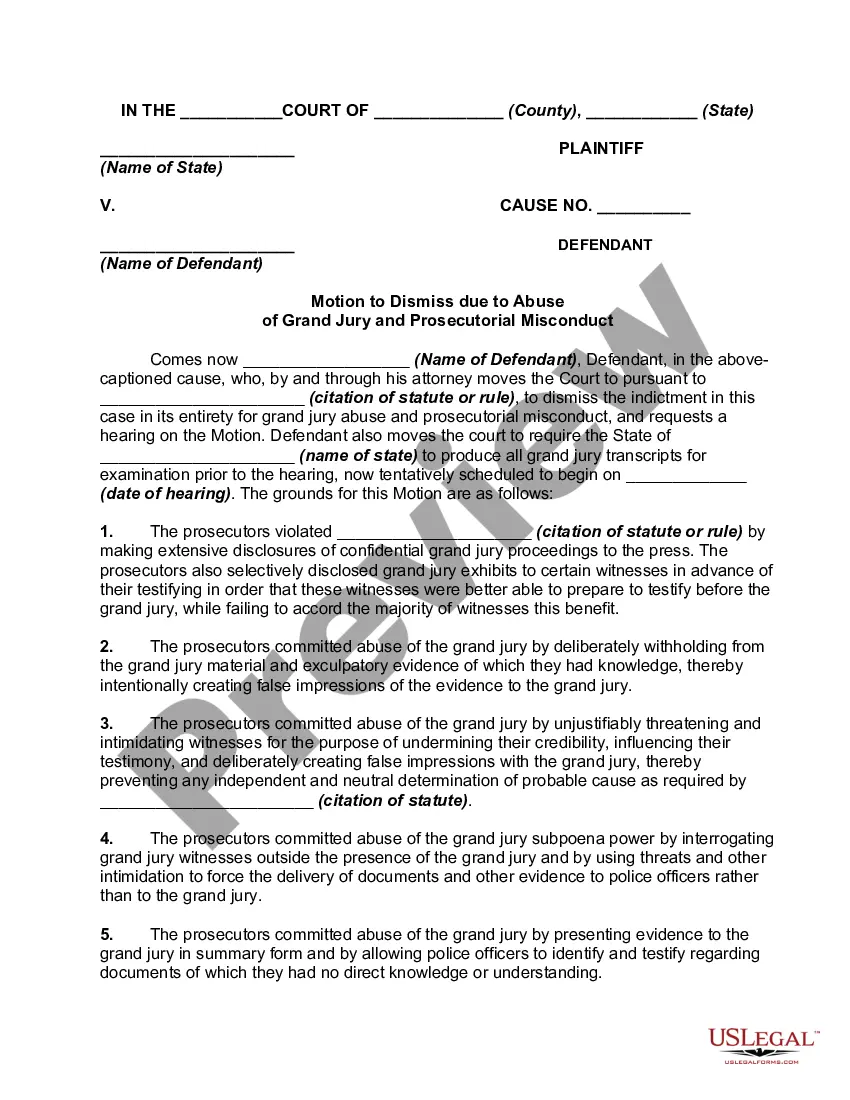
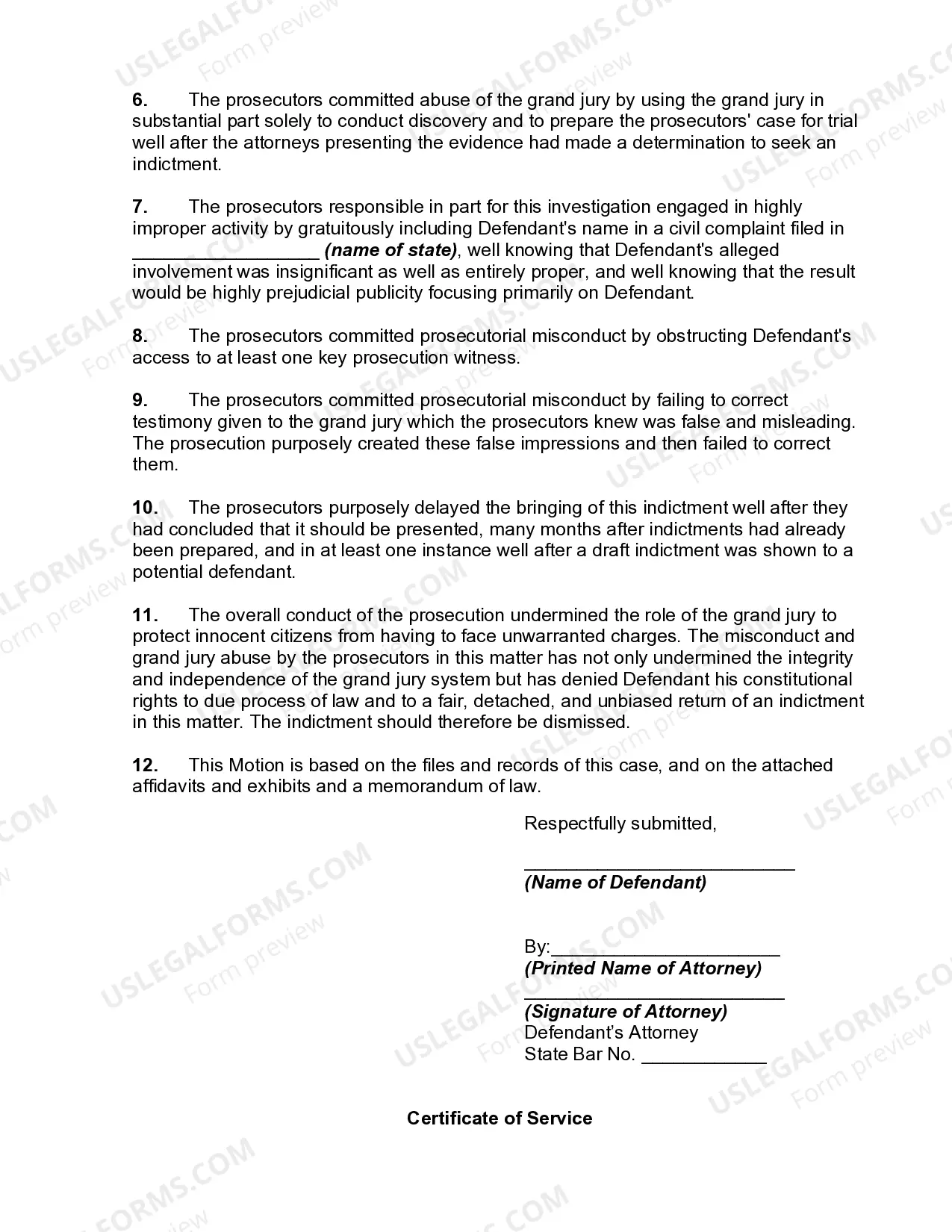
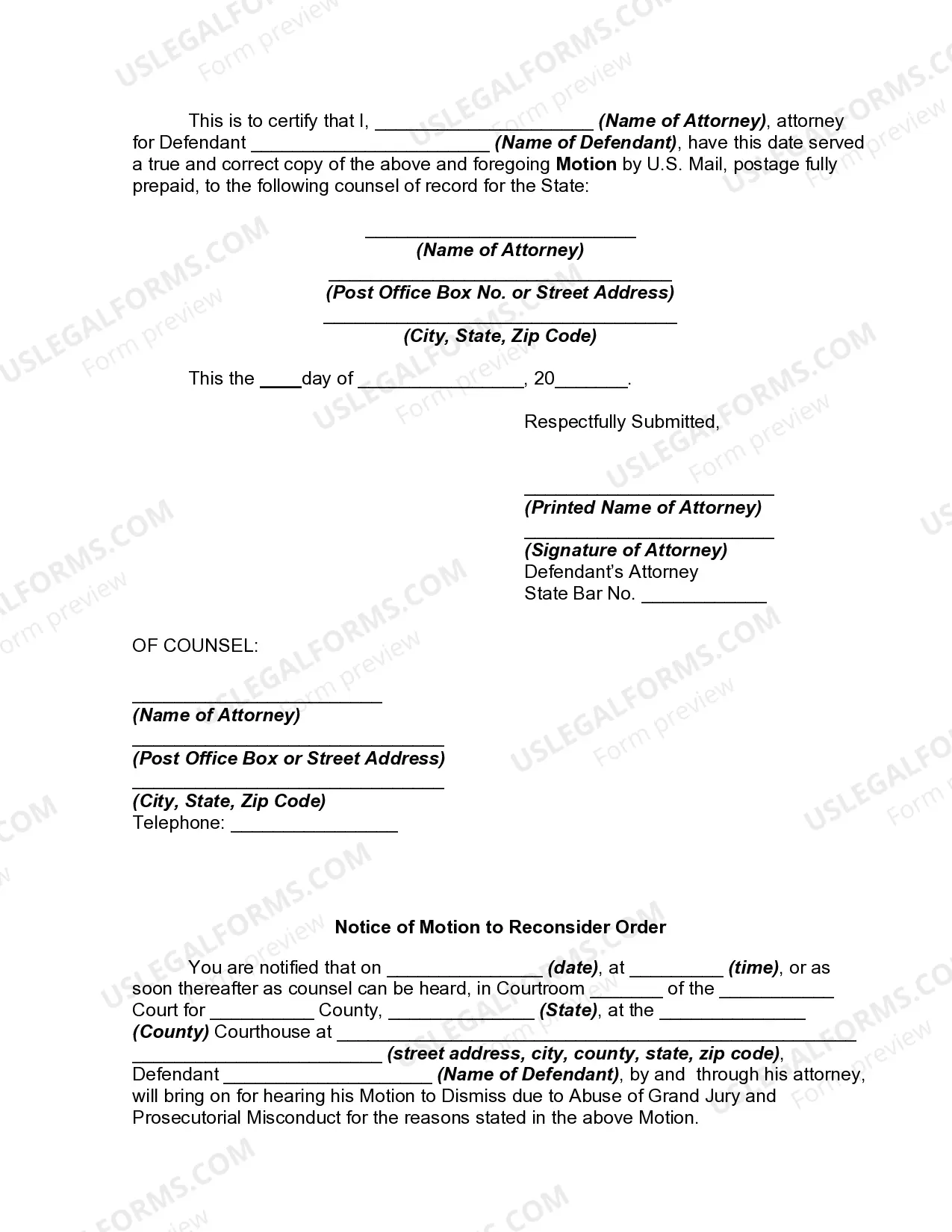
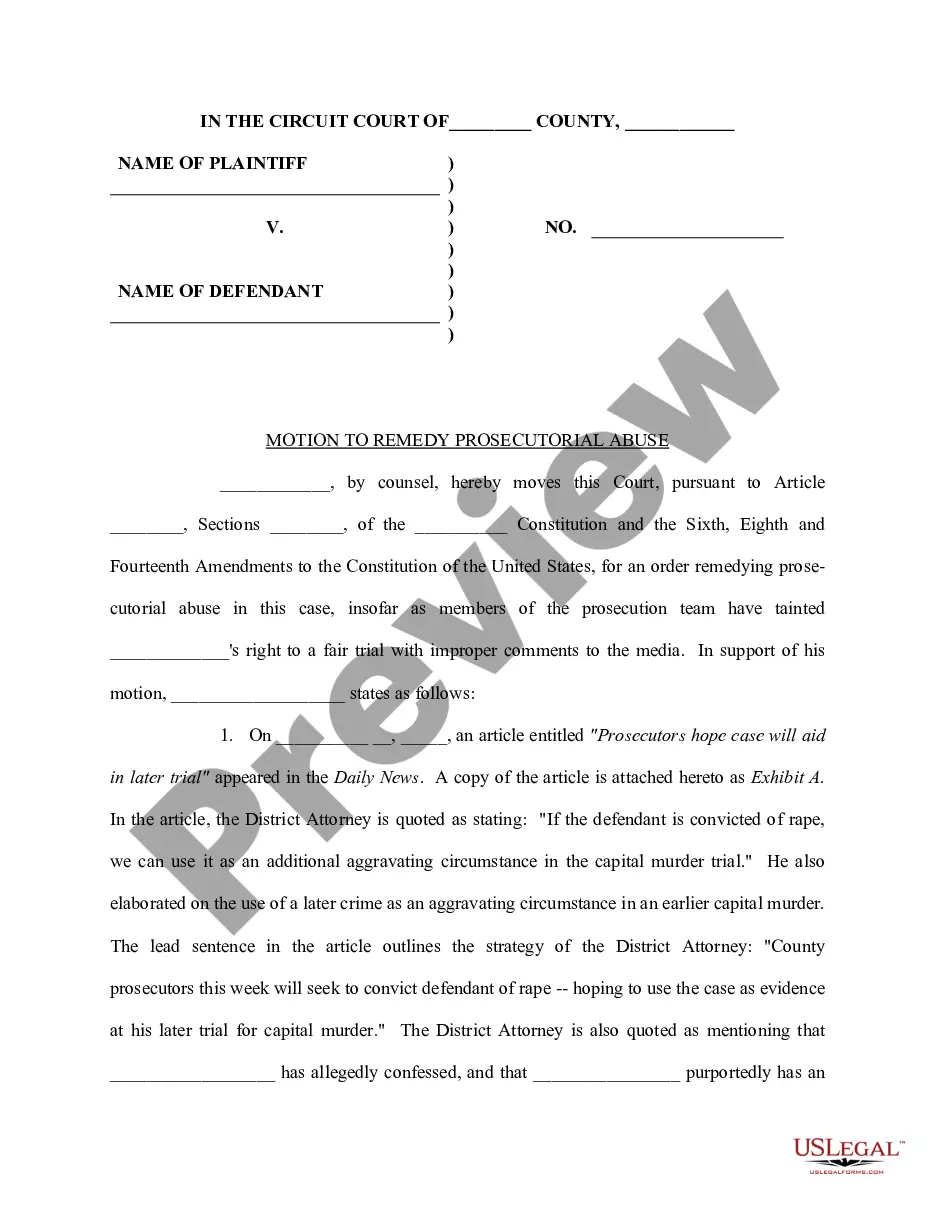
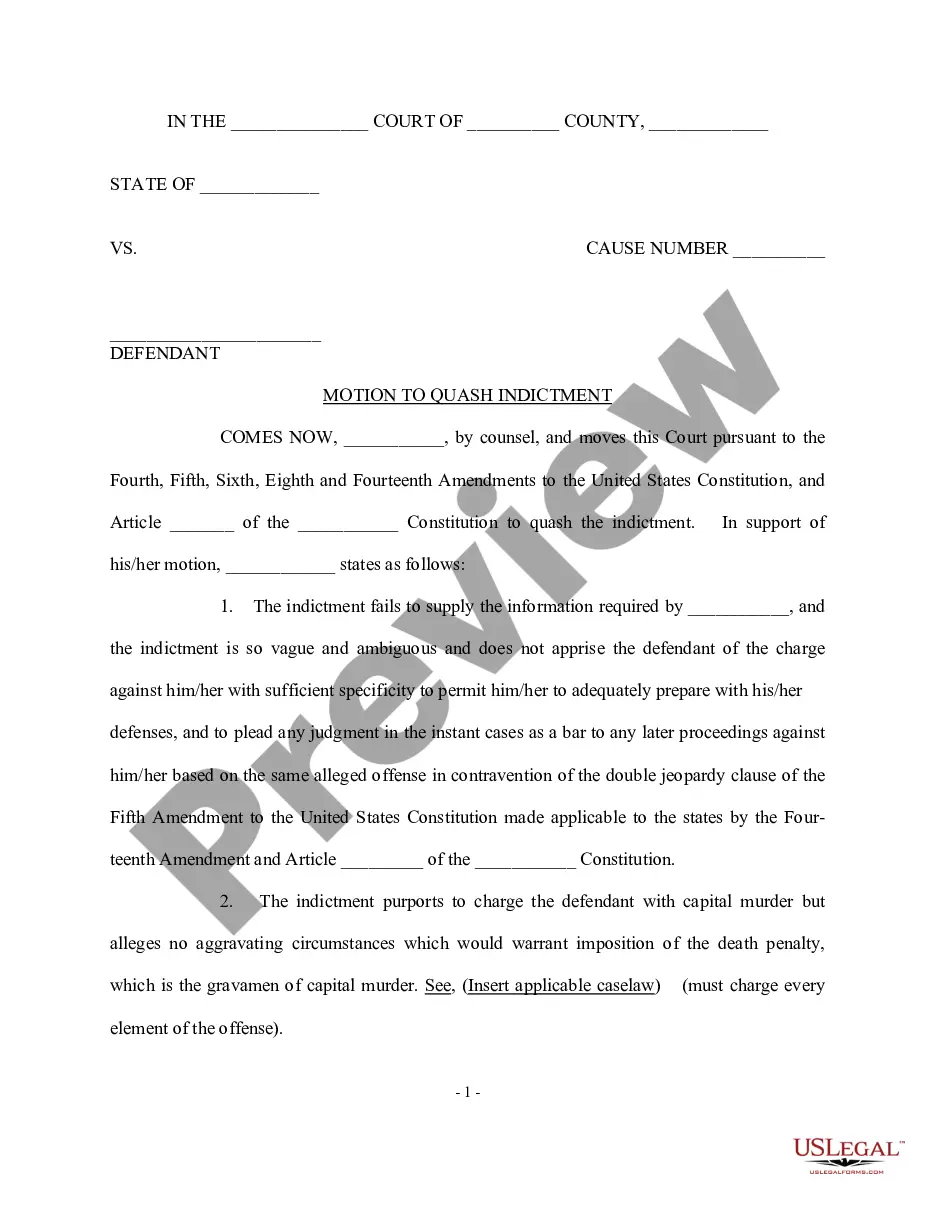
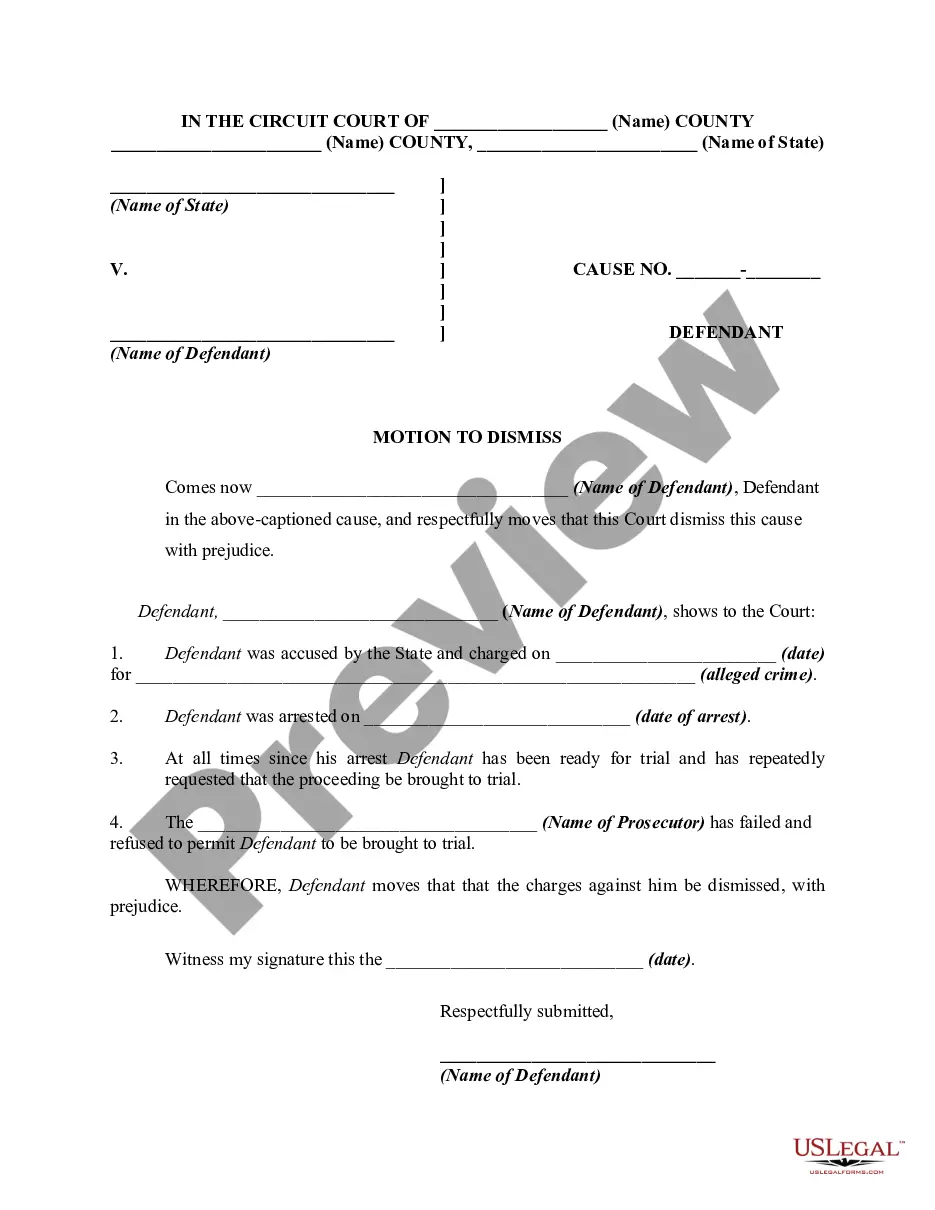
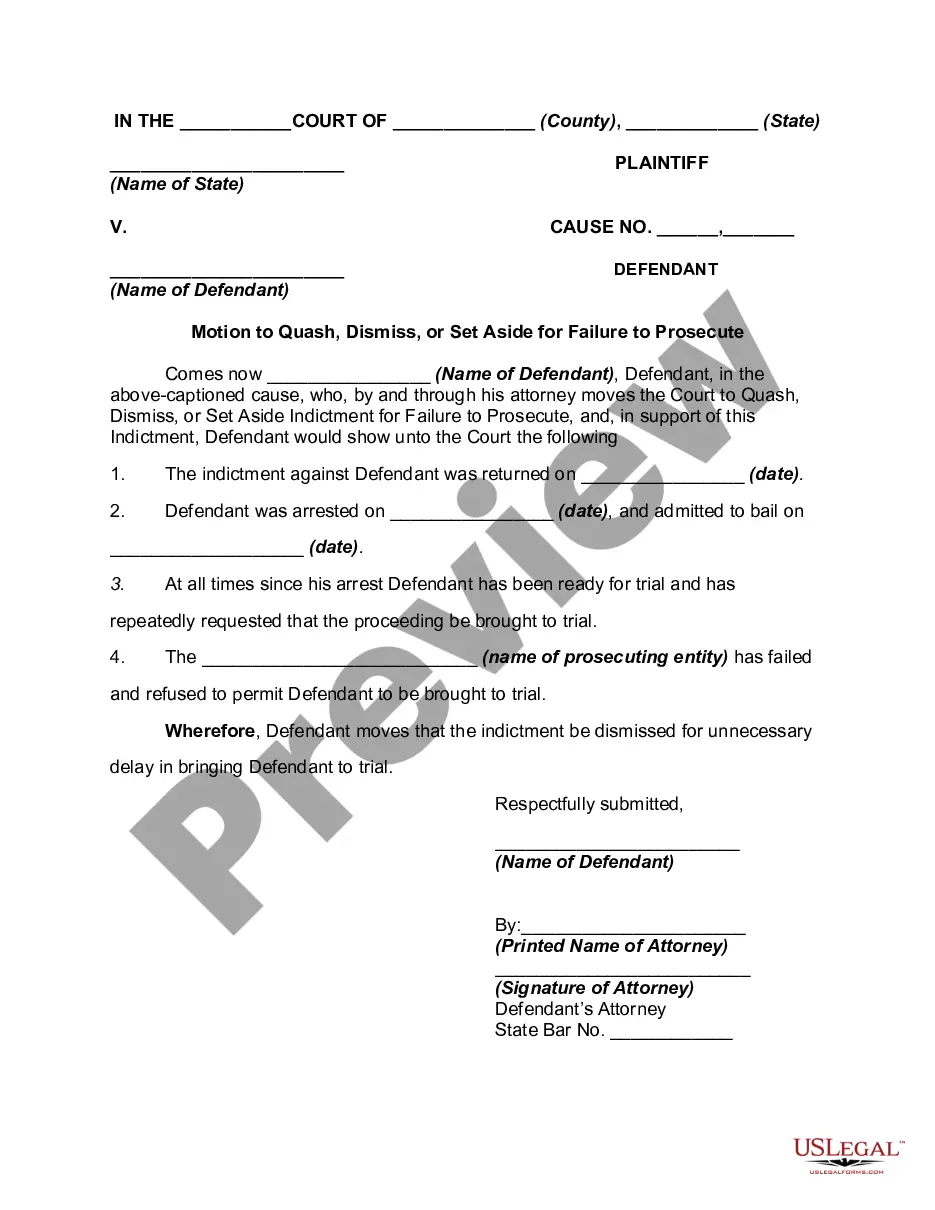
How to fill out Motion To Dismiss, Quash, Or Set Aside Due To Abuse Of Grand Jury And Prosecutorial Misconduct?
The Grand Jury For A Year displayed on this page is a reusable official template crafted by expert attorneys in accordance with federal and local laws.
For over 25 years, US Legal Forms has offered individuals, businesses, and legal experts more than 85,000 validated, state-specific documents for any commercial and personal circumstances. It’s the fastest, easiest, and most trustworthy method to acquire the documentation you require, as the service ensures bank-grade data protection and anti-malware safeguards.
Subscribe to US Legal Forms to have authorized legal templates for all of life's situations at your fingertips.
- Search for the document you require and examine it.
- Browse through the sample you searched for and preview it or review the form details to confirm it meets your needs. If it doesn’t, utilize the search feature to find the suitable one. Click Buy Now when you have found the document you need.
- Register and Log In.
- Select the pricing plan that fits you and create an account. Use PayPal or a credit card for a quick payment. If you already possess an account, Log In and verify your subscription to proceed.
- Obtain the editable template.
- Choose the format you prefer for your Grand Jury For A Year (PDF, Word, RTF) and download the document to your device.
- Complete and sign the documentation.
- Print the template to fill it out by hand. Alternatively, utilize an online multifunctional PDF editor to swiftly and accurately complete and sign your form with a valid signature.
- Download your documentation again.
- Re-use the same document whenever necessary. Access the My documents tab in your profile to re-download any previously obtained forms.
Form popularity
FAQ
Federal grand juries can sit for up to 18 months, but this duration may vary depending on various factors. In some cases, if additional evidence needs review or extensive investigations occur, this period might be extended. The grand jury’s goal is to ensure all relevant information is assessed thoroughly, which can lead to a year or longer of involvement. Utilizing resources like US Legal Forms can assist you in understanding these processes better.
A grand jury can indeed be extended if additional time is required to complete its investigations. Extensions might be granted due to complex cases or if new evidence emerges that needs to be examined thoroughly. The decision to extend a grand jury can lead to prolonged proceedings, sometimes lasting over a year. Therefore, the time frame can adapt to ensure justice is served.
Yes, it is possible for a case to be dismissed after a grand jury indictment. Once an indictment occurs, the prosecution may still find that evidence is insufficient or that legal issues exist that warrant dismissal. Additionally, defendants can challenge an indictment during pre-trial motions. Thus, even after a grand jury has acted for a year, the judicial process allows for potential dismissal.
Generally, a judge does not have the power to overrule a grand jury indictment. Once the grand jury has made its decision, it is typically upheld unless there is a legal issue with the process that brings the indictment into question. A judge may dismiss charges if they determine there isn't sufficient evidence, but this is rare. Therefore, the grand jury can hold significant power throughout the process.
The duration of a grand jury can extend over a year due to the complexity of cases and the volume of evidence that needs to be reviewed. Often, grand juries examine multiple cases, requiring time for deliberation and decision-making. Investigations can also lead to delays due to the need for additional witnesses or documents. Therefore, a grand jury can last for a year or even longer to ensure thoroughness.
The duration of jury deliberations can vary significantly from case to case, with some lasting just a few hours and others extending over several days or even weeks. Remarkably, there have been instances of juries taking months to reach a verdict, especially in complex trials. In rare cases, a grand jury for a year may be required to thoroughly examine evidence and render decisions. Utilizing the resources from USLegalForms can give you deeper insights into jury service and its timelines.
The odds of being selected for jury duty can vary widely depending on your location and the number of cases pending in your jurisdiction. Typically, your chance may be around 1 in 10 to 1 in 15. However, if you are summoned, it’s important to understand that service could potentially involve serving on a grand jury for a year. Engaging with a service like USLegalForms can help demystify this process and provide necessary resources.
The biggest disadvantage of juries is often their susceptibility to biases and emotions, which can lead to unfair verdicts. Jurors may be influenced by personal beliefs or media coverage, undermining the integrity of the trial process. When exploring jury systems, one must consider the balance between community representation and the potential for flawed decision-making.
Grand juries offer various advantages, such as the ability to review evidence before charges are filed. They can safeguard against wrongful accusations by ensuring that only credible cases proceed to trial. Serving on a grand jury for a year also allows individuals to engage directly with the legal system and contribute to community justice, enhancing civic involvement.
A notable disadvantage of having a grand jury is the potential for limited transparency. Grand jury proceedings typically occur behind closed doors, which may raise concerns about accountability. Additionally, the focus on preventing unfounded charges might lead to the dismissal of cases that deserve further examination. This aspect may impact the perception of justice in the legal system.