Skipping Descendant Trust With The Same Server
Description


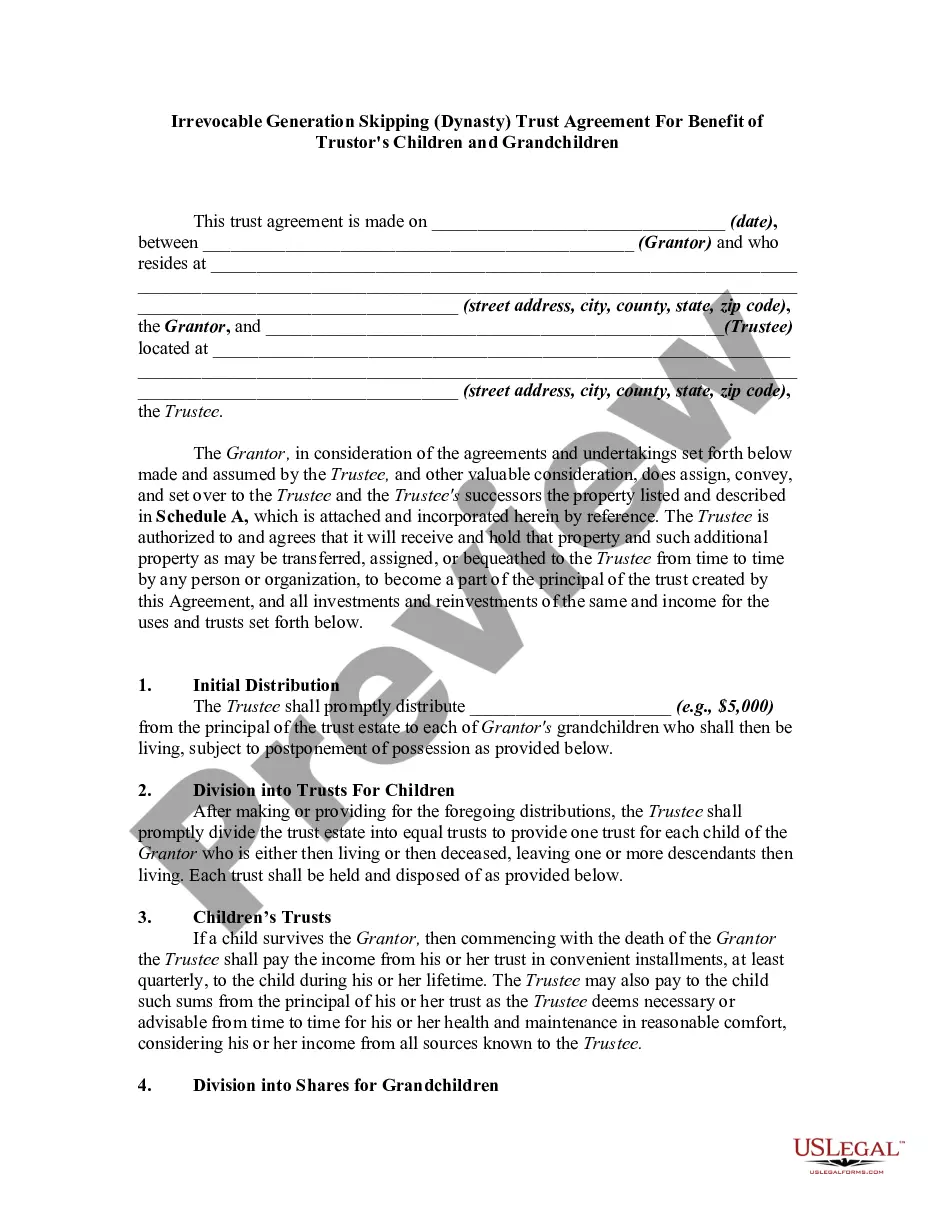


Get your form ready online
Our built-in tools help you complete, sign, share, and store your documents in one place.
Make edits, fill in missing information, and update formatting in US Legal Forms—just like you would in MS Word.
Download a copy, print it, send it by email, or mail it via USPS—whatever works best for your next step.
Sign and collect signatures with our SignNow integration. Send to multiple recipients, set reminders, and more. Go Premium to unlock E-Sign.
If this form requires notarization, complete it online through a secure video call—no need to meet a notary in person or wait for an appointment.
We protect your documents and personal data by following strict security and privacy standards.

Make edits, fill in missing information, and update formatting in US Legal Forms—just like you would in MS Word.

Download a copy, print it, send it by email, or mail it via USPS—whatever works best for your next step.

Sign and collect signatures with our SignNow integration. Send to multiple recipients, set reminders, and more. Go Premium to unlock E-Sign.

If this form requires notarization, complete it online through a secure video call—no need to meet a notary in person or wait for an appointment.

We protect your documents and personal data by following strict security and privacy standards.
Looking for another form?
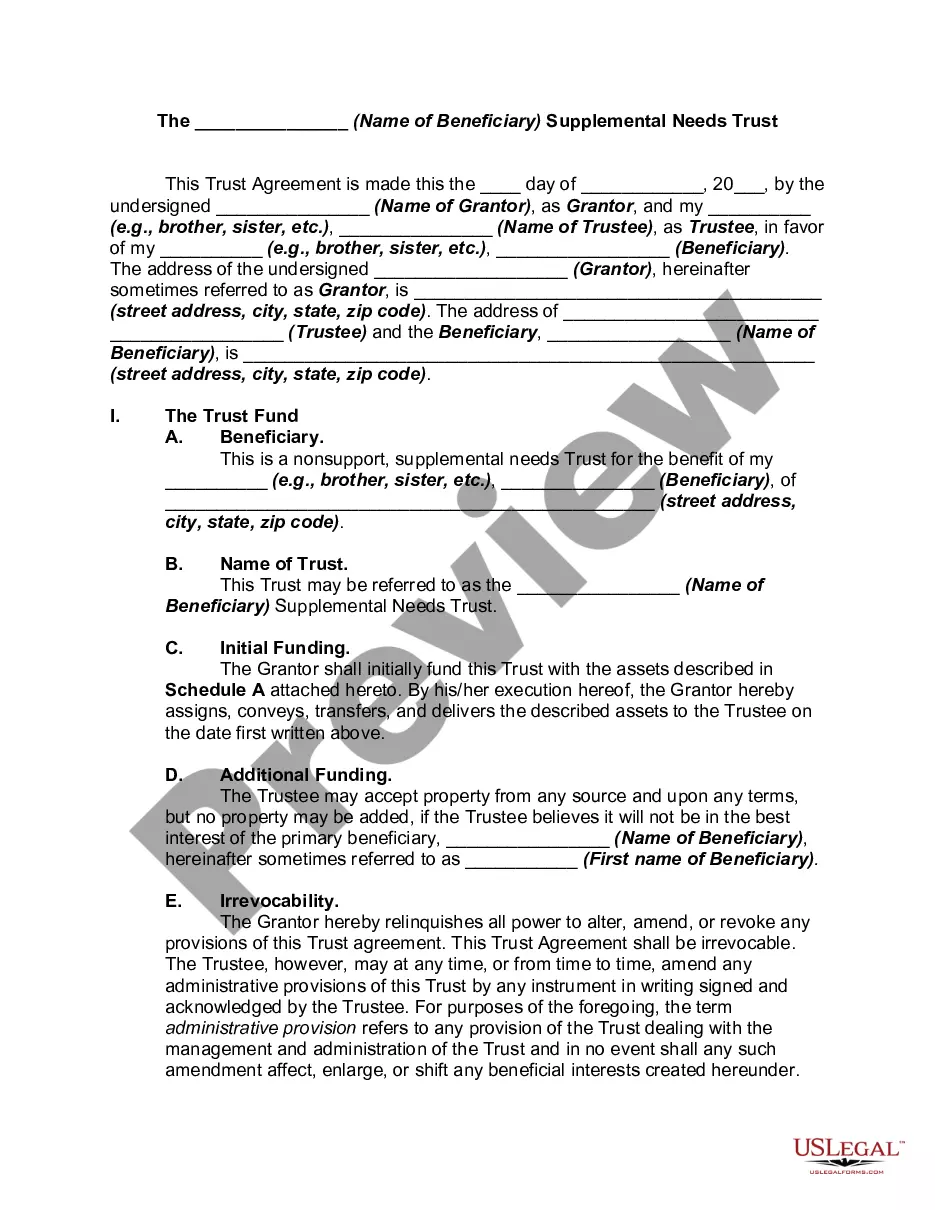
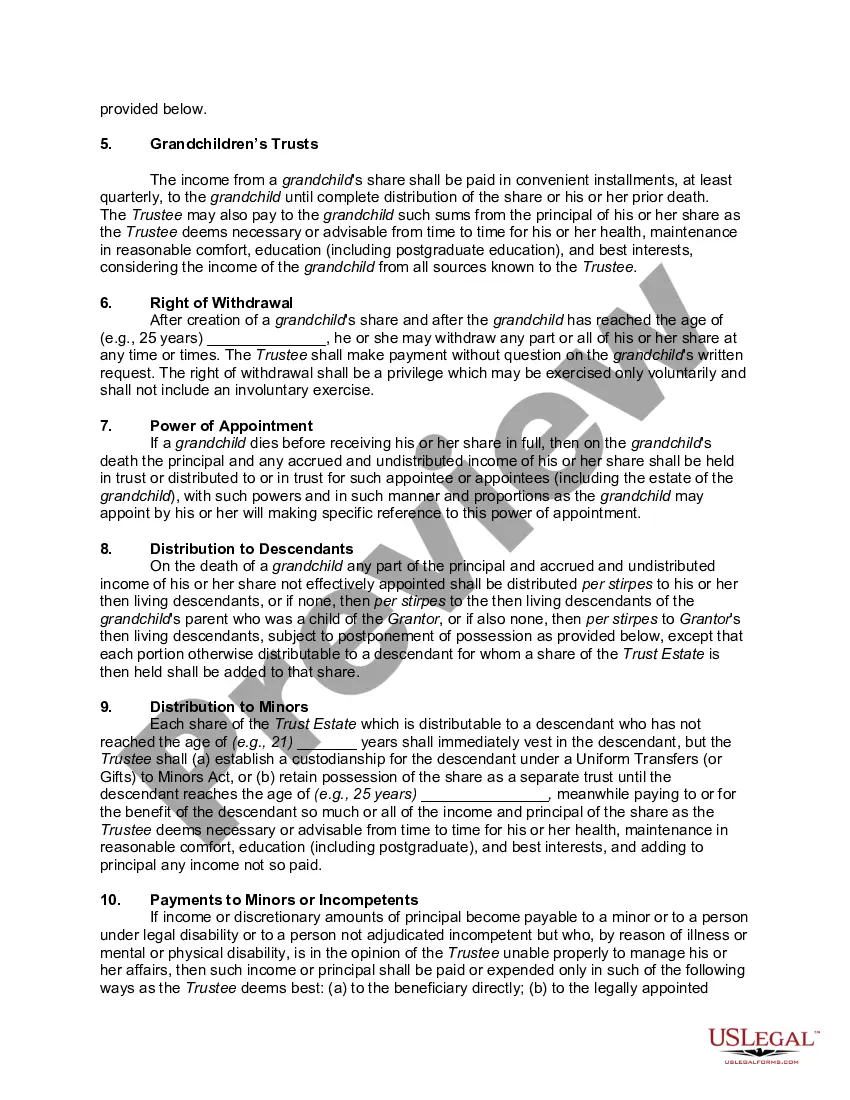
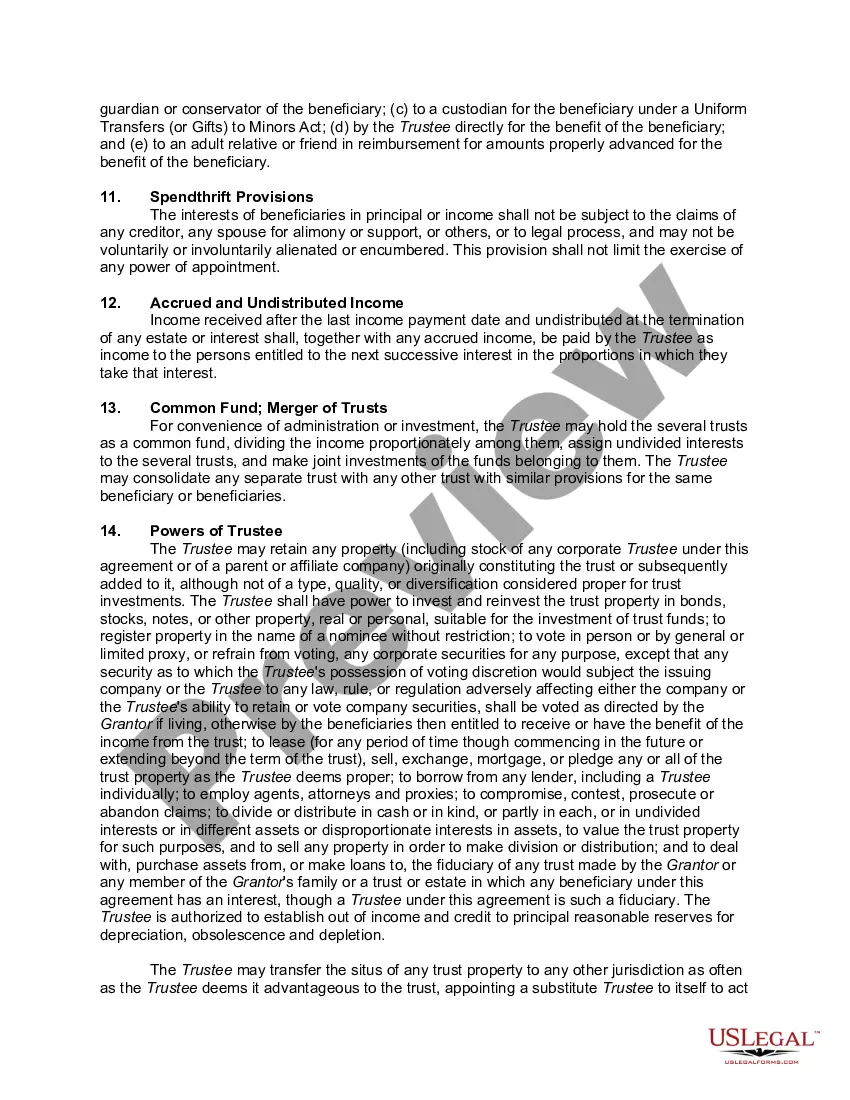
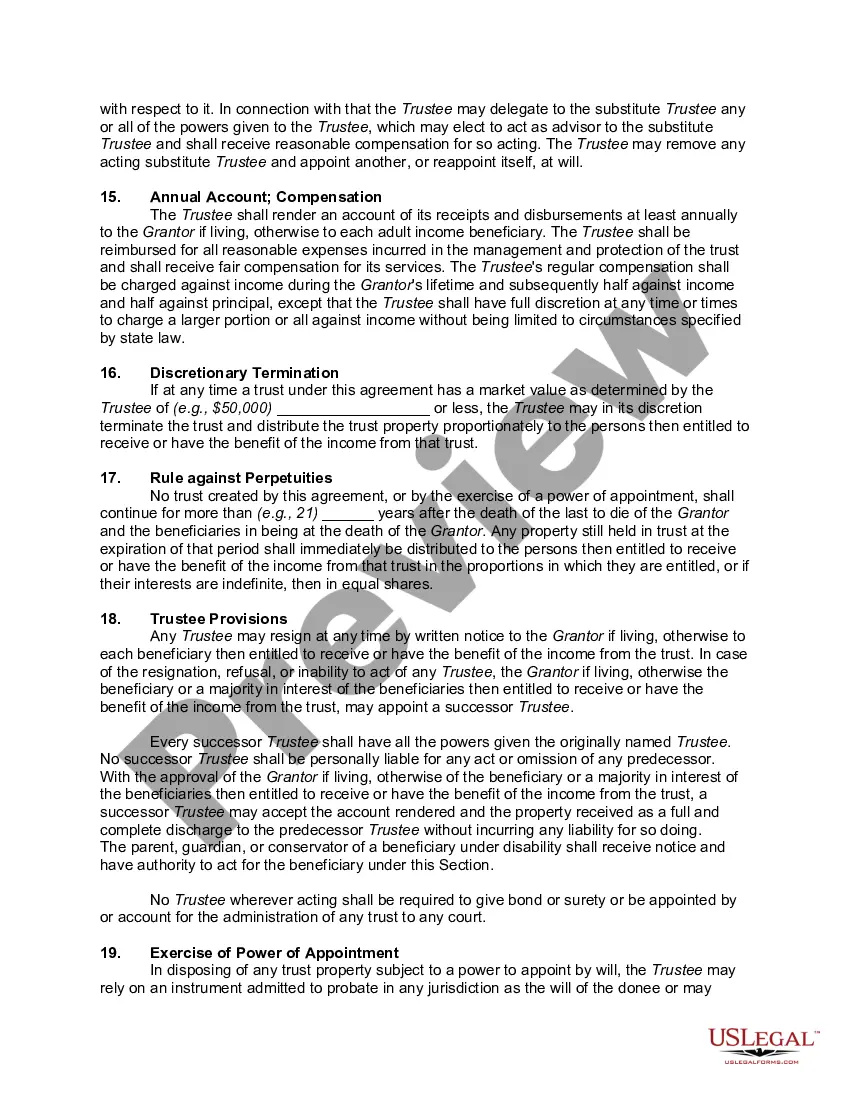
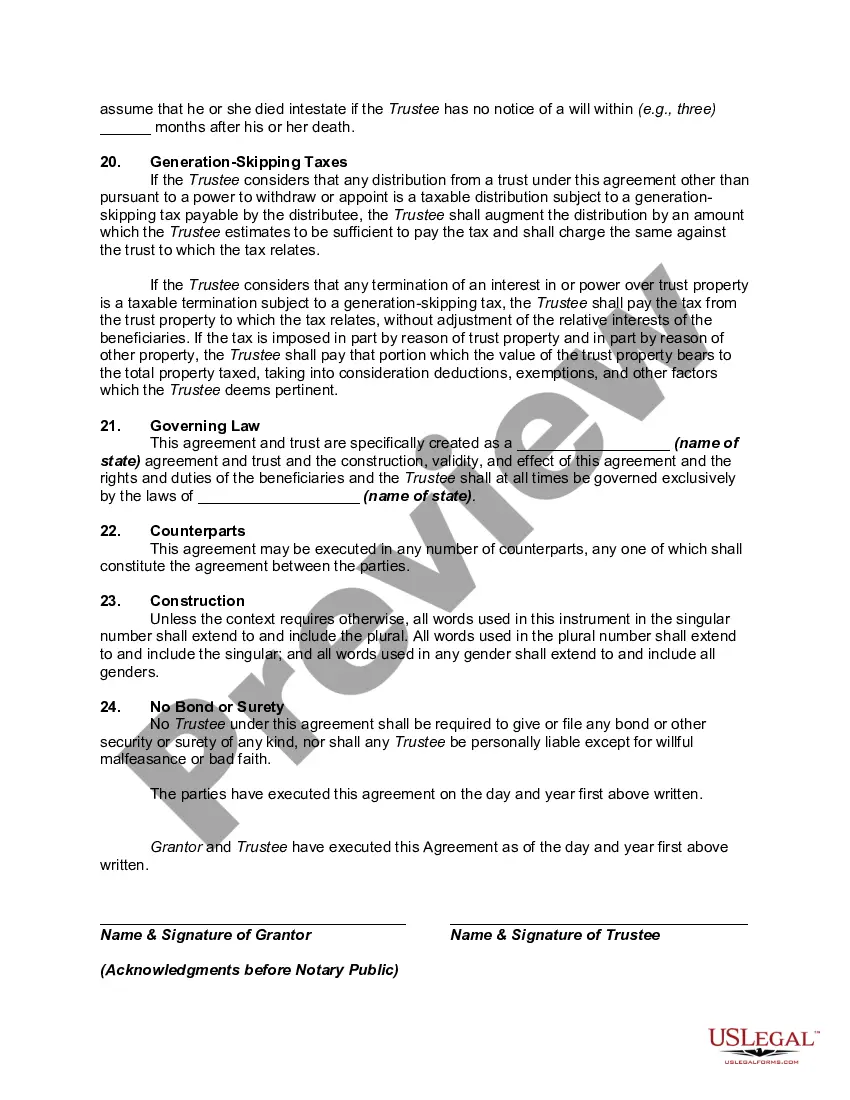
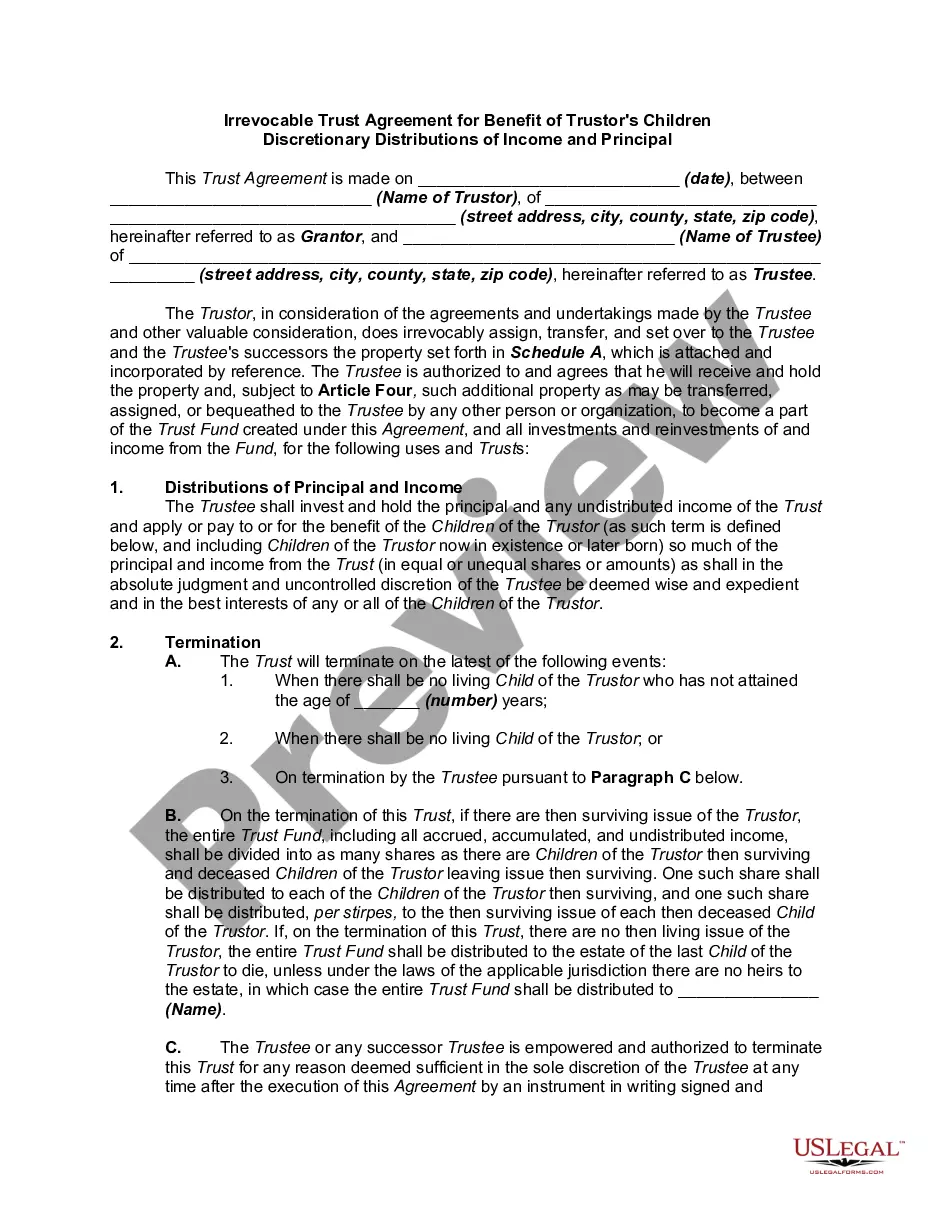
How to fill out Irrevocable Trust Agreement For Benefit Of Trustor's Children And Grandchildren?
- Log into your US Legal Forms account. Ensure your subscription is active; if it has lapsed, renew it per your payment plan.
- Preview the required form. Review the description to confirm it meets your local jurisdiction requirements. Look for any inconsistencies.
- Search for alternative forms as necessary. Use the search functionality to locate a suitable document if your initial choice isn't correct.
- Select the form. Once you've confirmed that it fits your needs, proceed to acquisition.
- Purchase the document. Click 'Buy Now' and choose your desired subscription plan. You'll need to register an account for complete access.
- Make the payment. Enter your credit card information or use PayPal to finalize the subscription purchase.
- Download your document. Save the form to your device for completion, and find it anytime in the 'My Forms' section of your profile.
With US Legal Forms, you benefit from a robust collection of over 85,000 forms, more than competitors at similar costs. The extensive library means you can find the exact legal forms you need quickly.
Don't miss the chance to work with premium experts for assistance in completing your forms, ensuring they are precise and legally compliant. Start simplifying your legal paperwork today!
Form popularity
FAQ
Generation skipping trusts often come with specific restrictions, such as limitations on distributions to certain beneficiaries. Additionally, these trusts must adhere to the generation skipping transfer tax rules, which can impose significant taxes if not properly structured. Being aware of these restrictions allows for better planning and can lead to more effective management of your skipping descendant trust with the same server.
One major disadvantage of putting your home in a trust is the potential loss of control over the property. Homeowners may also face difficulties in securing loans, as lenders often prefer properties outside of a trust. Additionally, transferring your home into a trust could trigger tax implications. To explore solutions for maintaining ownership while benefiting from a skipping descendant trust with the same server, use US Legal Forms.
A dynasty trust is designed to last for multiple generations, whereas a generation skipping trust specifically aims to transfer wealth across generations without being taxed at each level. While both trusts share goals of wealth preservation, the dynasty trust extends further, allowing for more extensive family benefit over time. Understanding these differences can help when setting up your skipping descendant trust with the same server.
One disadvantage of a bypass trust is that it can complicate the estate planning process. It may also lead to additional taxes, as the income generated within a bypass trust can be taxable at higher rates. Furthermore, maintaining such a trust can incur management fees. Consider strategies for skipping descendant trust with the same server to minimize complications.
Yes, a generation skipping trust can be broken under certain conditions. If all beneficiaries agree, they may alter or terminate the trust. Additionally, a court may allow it to be dissolved if it no longer serves its intended purpose. Utilize US Legal Forms to create a solid framework that protects your interests.
A 'skip' occurs when an asset or benefit is transferred to a beneficiary who is two or more generations younger than the person granting the asset. In estate planning, this can happen in skipping descendant trust with the same server, which aims to optimize the management and transfer of wealth. Identifying what constitutes a skip is essential for both tax implications and estate planning strategies.
Indeed, generation-skipping trust distributions may carry tax obligations. The income derived from the trust could be subject to taxation upon distribution to the beneficiaries. Utilizing platforms like US Legal Forms can help one stay informed about tax implications related to generation-skipping trusts.
A trust can be termed a skip person when it is specifically designed to benefit individuals at least two generations below the grantor. This often includes grandchildren or their descendants, effectively skipping the grantor's children. In the realm of skipping descendant trust with the same server, understanding these dynamics is crucial for effective estate management.
Yes, distributions from a generation-skipping trust can be taxable. Beneficiaries may face taxes on the income generated from the trust assets, particularly if the trust has earned income. To navigate the complexities of generation-skipping trust taxation, consider using tools like US Legal Forms, which provide essential resources for estate planning.
A skip person refers to an individual who is two or more generations below the grantor in a trust arrangement. In the context of skipping descendant trust with the same server, this means that assets are passed to grandchildren or great-grandchildren, bypassing the children. This setup can have significant implications for estate planning and tax strategies.