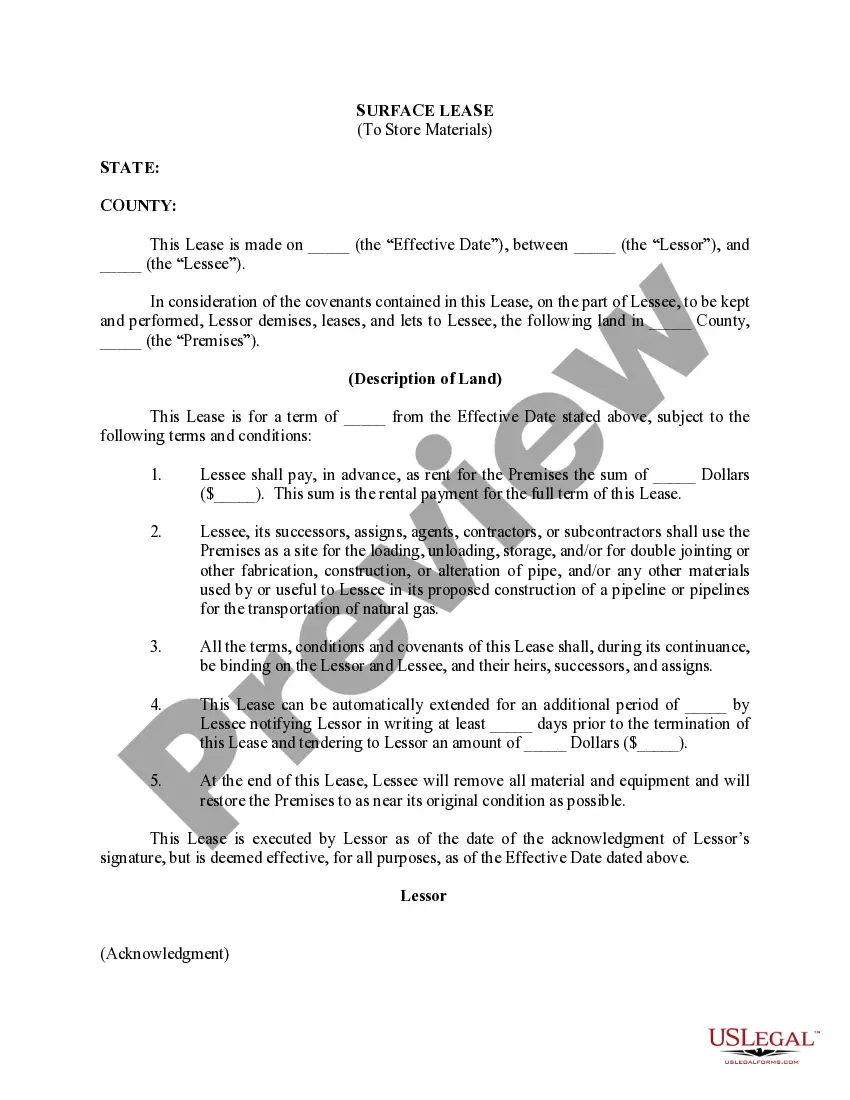
Surface Lease (to Store Materials)
Overview of this form
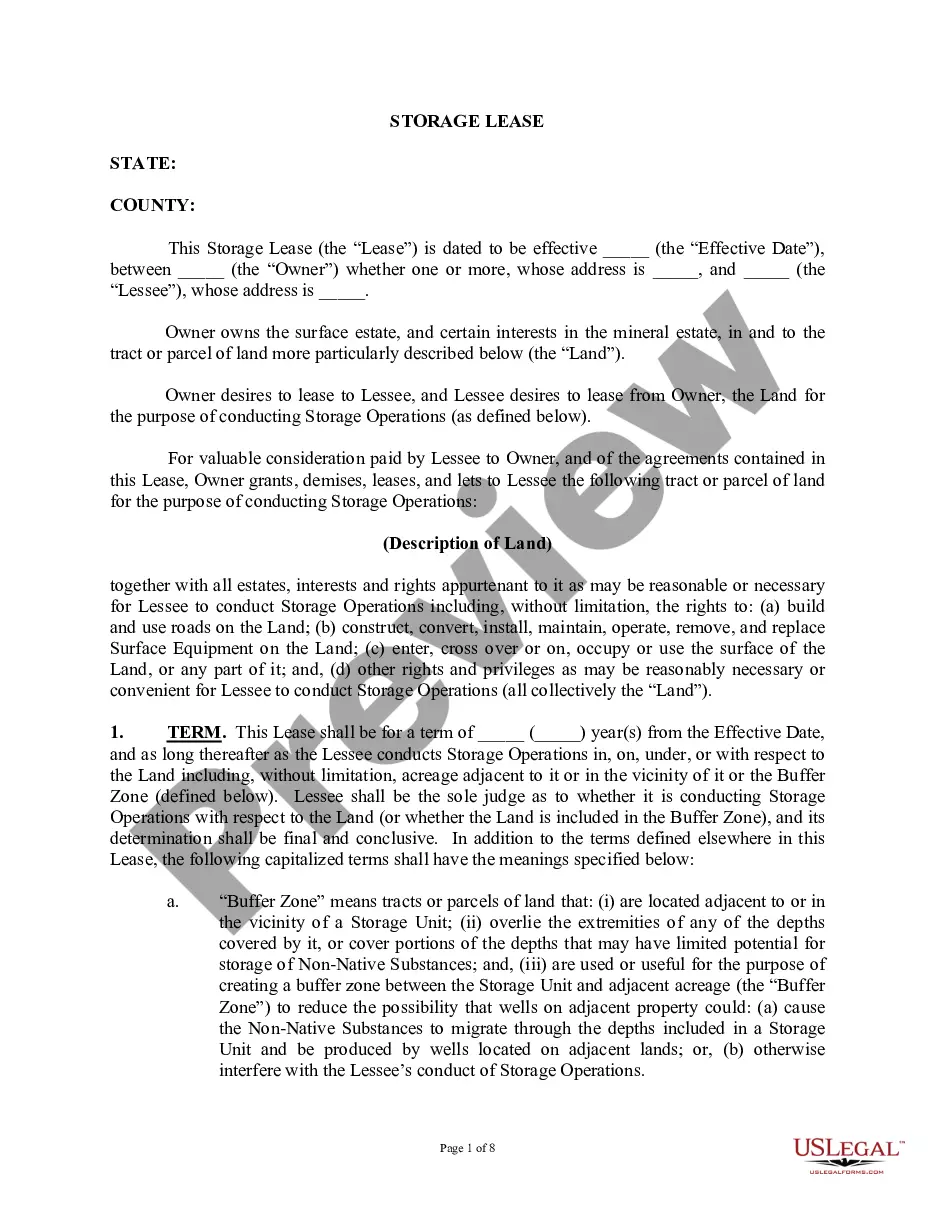
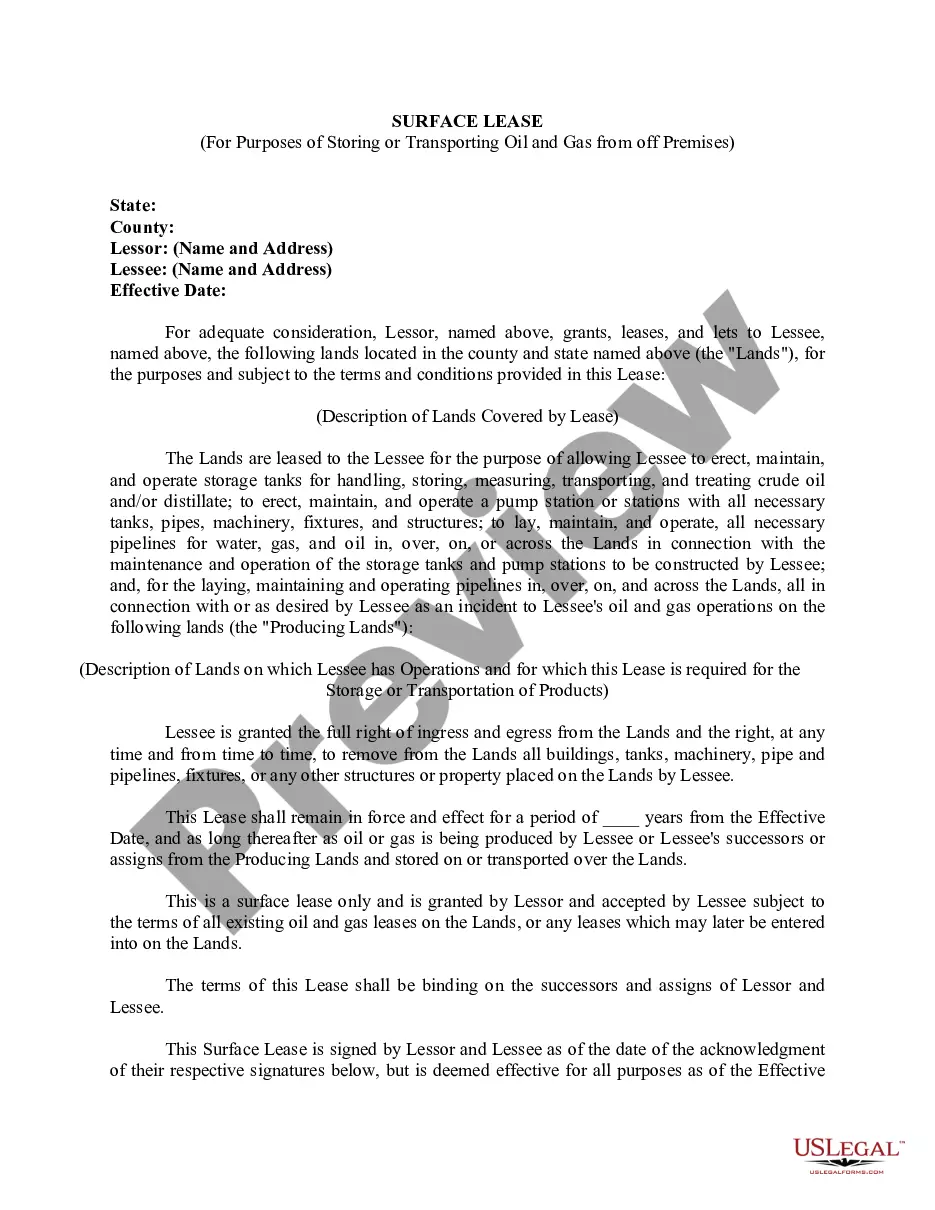
The Surface Lease (to Store Materials) is a legal document used to establish an agreement between a lessor (the property owner) and a lessee (the tenant) for the purpose of storing materials on a specified piece of land. This form is specifically tailored for scenarios where the lessee requires a site for activities related to construction projects, such as loading, unloading, and storage. It differs from standard rental leases by focusing on land use for construction-related activities rather than residential or commercial purposes.
Form components explained
- Effective Date: The date when the lease agreement becomes active.
- Lessor and Lessee: Identification of the property owner and the tenant.
- Description of Premises: Detailed information about the land to be leased.
- Term of Lease: Duration for which the lease is valid.
- Rent Payment: Amount and method of payment for the lease.
- Use of Premises: Specifies acceptable activities on the leased land.
- Extension Provisions: Conditions under which the lease can be extended.
- Restoration Obligations: Requirements for restoring the property after use.
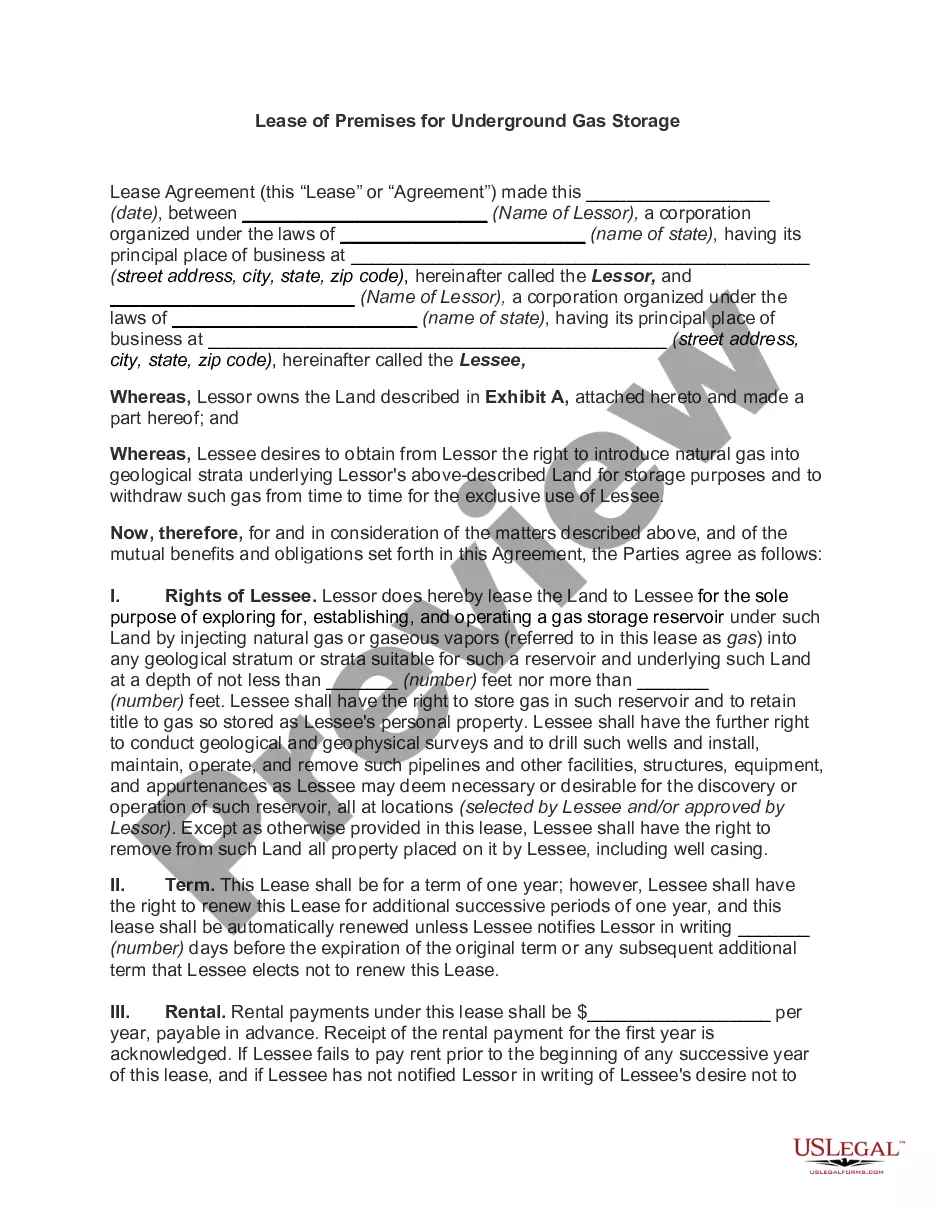
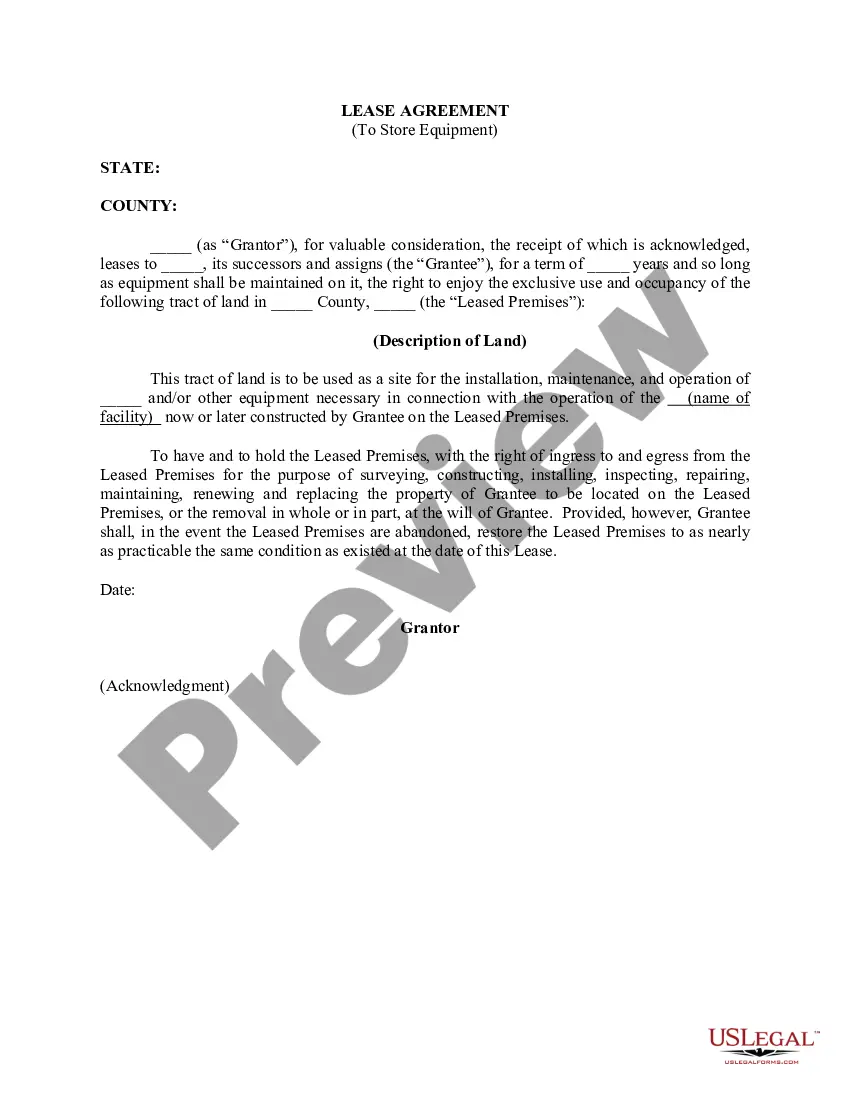
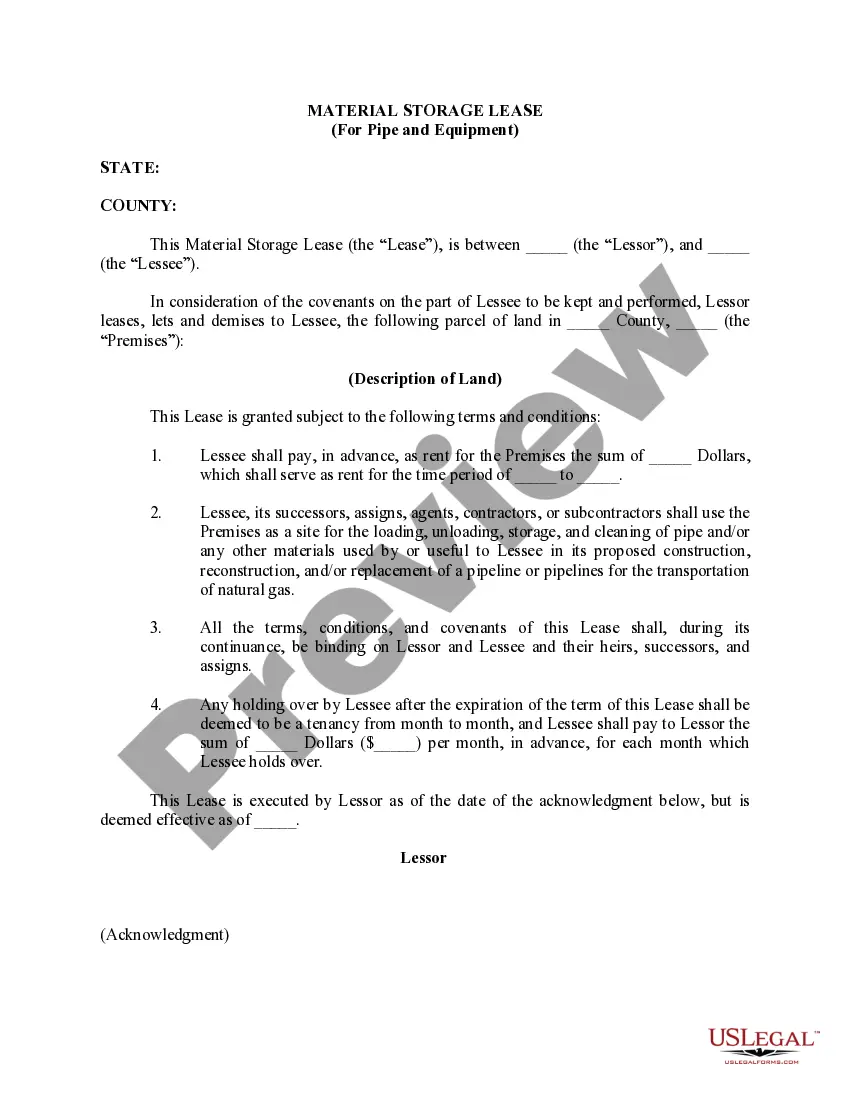
Situations where this form applies
This form is needed when a business or contractor requires a defined space to store materials or perform operations related to construction, particularly for pipeline projects. If your project involves the fabrication, storage, or alteration of materials on someone else's property, using a Surface Lease ensures legal protection and clear terms for both parties.
Intended users of this form
- Contractors who need to store materials for construction projects.
- Businesses involved in the transportation of natural gas or related activities.
- Property owners looking to lease their land for specific operational uses.
- Enterprises requiring a formal agreement to protect both parties' interests.
How to prepare this document
- Identify the parties: Fill in the names of the Lessor and the Lessee.
- Specify the property: Clearly describe the location and details of the premises to be leased.
- Enter the effective date: Fill in the date when the lease agreement takes effect.
- Outline the lease terms: Indicate the duration of the lease and rent amount.
- Detail usage terms: Specify how the lessee will use the premises as stated in the conditions.
- Sign and date: Have both parties sign the lease agreement, ensuring proper acknowledgment.
Notarization guidance
Notarization is required for this form to take effect. Our online notarization service, powered by Notarize, lets you verify and sign documents remotely through an encrypted video session, available 24/7.
Get your form ready online
Our built-in tools help you complete, sign, share, and store your documents in one place.
Make edits, fill in missing information, and update formatting in US Legal Forms—just like you would in MS Word.
Download a copy, print it, send it by email, or mail it via USPS—whatever works best for your next step.
Sign and collect signatures with our SignNow integration. Send to multiple recipients, set reminders, and more. Go Premium to unlock E-Sign.
If this form requires notarization, complete it online through a secure video call—no need to meet a notary in person or wait for an appointment.
We protect your documents and personal data by following strict security and privacy standards.

Make edits, fill in missing information, and update formatting in US Legal Forms—just like you would in MS Word.

Download a copy, print it, send it by email, or mail it via USPS—whatever works best for your next step.

Sign and collect signatures with our SignNow integration. Send to multiple recipients, set reminders, and more. Go Premium to unlock E-Sign.

If this form requires notarization, complete it online through a secure video call—no need to meet a notary in person or wait for an appointment.

We protect your documents and personal data by following strict security and privacy standards.
Typical mistakes to avoid
- Failing to accurately describe the premises, leading to misunderstandings.
- Not specifying the term of the lease, which can create complications.
- Forgetting to include the rent payment details, causing confusion later.
- Neglecting to sign the lease, which invalidates the agreement.
- Overlooking the restoration obligations, leading to disputes after lease termination.
Why complete this form online
- Convenience of downloading and completing the form at your own pace.
- Editability allows for customization to fit specific needs.
- Access to a professionally drafted document by licensed attorneys.
- Time-saving compared to creating a lease from scratch.
- Easy storage and retrieval of your legal documents.
Legal use & context
- This form provides a legal framework for using someone else's land for storage and construction activities.
- Once signed, the lease protects both the lessor's property rights and the lessee's use of the land.
- In the absence of this document, disputes regarding land use may arise.
Main things to remember
- A Surface Lease (to Store Materials) is essential for legal land use in construction projects.
- It's crucial to accurately fill out all areas of the lease to avoid future disputes.
- Always check state-specific requirements that may affect your lease.
- Maintain a signed copy for your records to ensure legal protection.
Looking for another form?

Form popularity
FAQ
On public land, a mineral surface lease is required granting approval to occupy the location and conduct mining activities. This is in addition to an Ammonite Shell Agreement.
The surface lease is the document used by the operator to legally secure its interest in the surface of the land for the purpose of extracting the oil or gas. A surface lease is required for any above surface structure which typically includes wells, access roads and other oil and gas facilities.
Surface rights are, as the name implies, the rights to the surface area of a piece of land. This includes any structures on the property, as well as the rights to farm the land or exploit aboveground resources such as trees, plants, or water according to local laws and ordinances.
When it comes to mineral rights, the standard admonition has long been consistent and emphatic: Avoid selling them. After all, simply owning mineral rights costs you nothing. There are no liability risks, and in most cases, taxes are assessed only on properties that are actively producing oil or gas.
Surface rights are subservient to mineral rights, which means the owner of a mineral servitude will be able to access and use the surface to extract the minerals from underneath.
In states with split ownership laws, land can be sold to only include surface rights. This means that if oil or gas is present under the soil, the landowner will have no legal rights to them.
Nationally, mineral rights owners can expect anywhere from $100 to $5,000 per acre for their mineral rights lease. The most valuable mineral rights leases are on producing parcels of land that are still expected to hold many more precious minerals.
The specific provisions of the laws vary from state to state, but drillers are generally allowed to extract minerals from a large area or "pool"--in most states a minimum of 640 acres--if leases have been negotiated for a certain percentage of that land. The company can then harvest gas from the entire area.
Texas courts have long held that the mineral estate is the dominant estate, and that the mineral owner, or the owner's lessee, has an implied easement to use the surface in a manner that is reasonably necessary to develop the minerals.