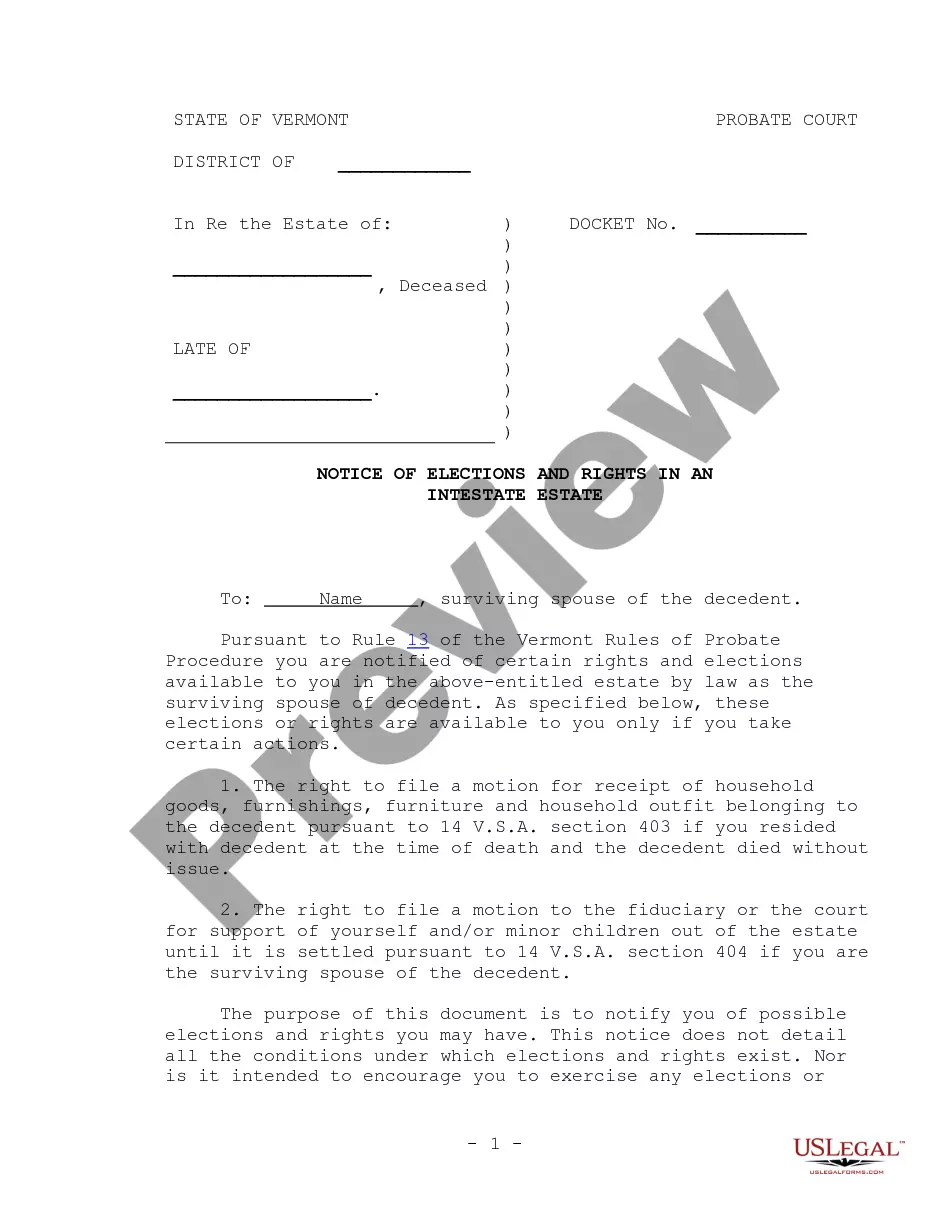
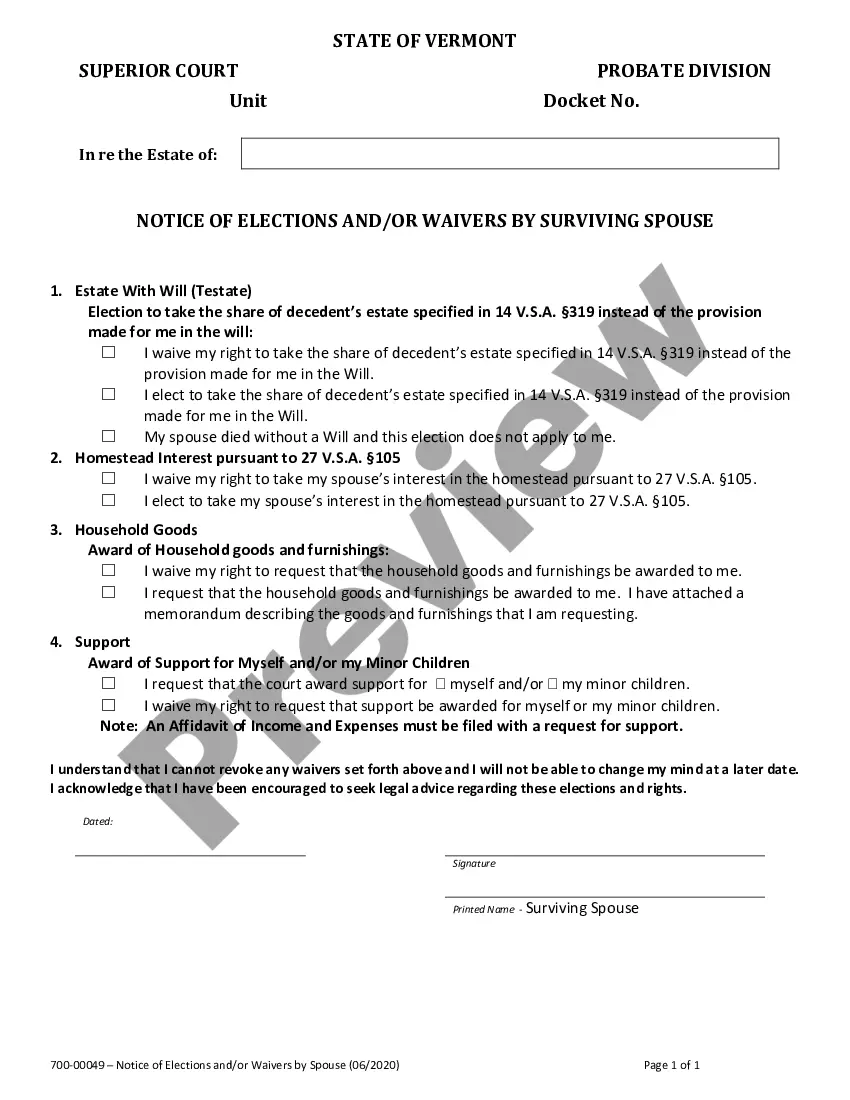
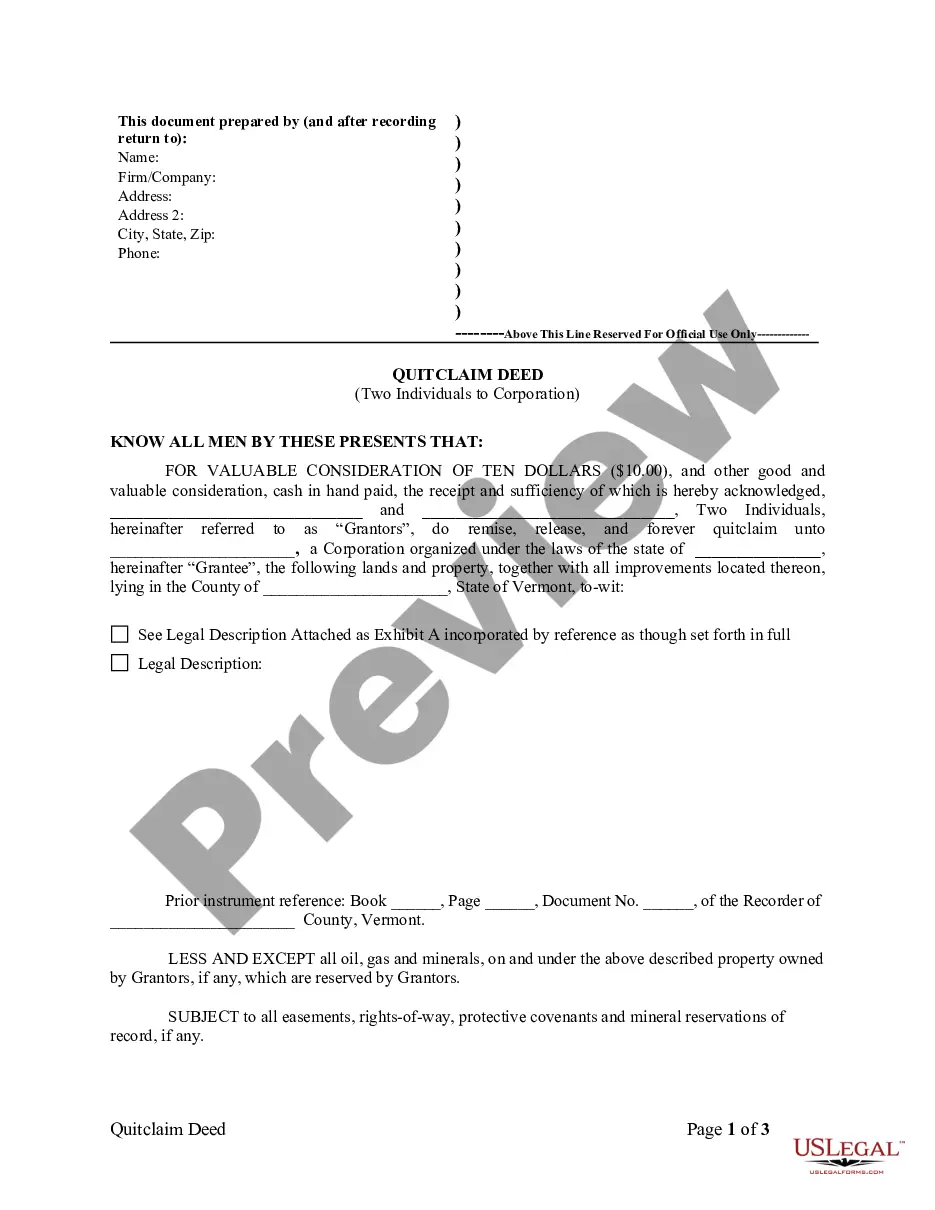
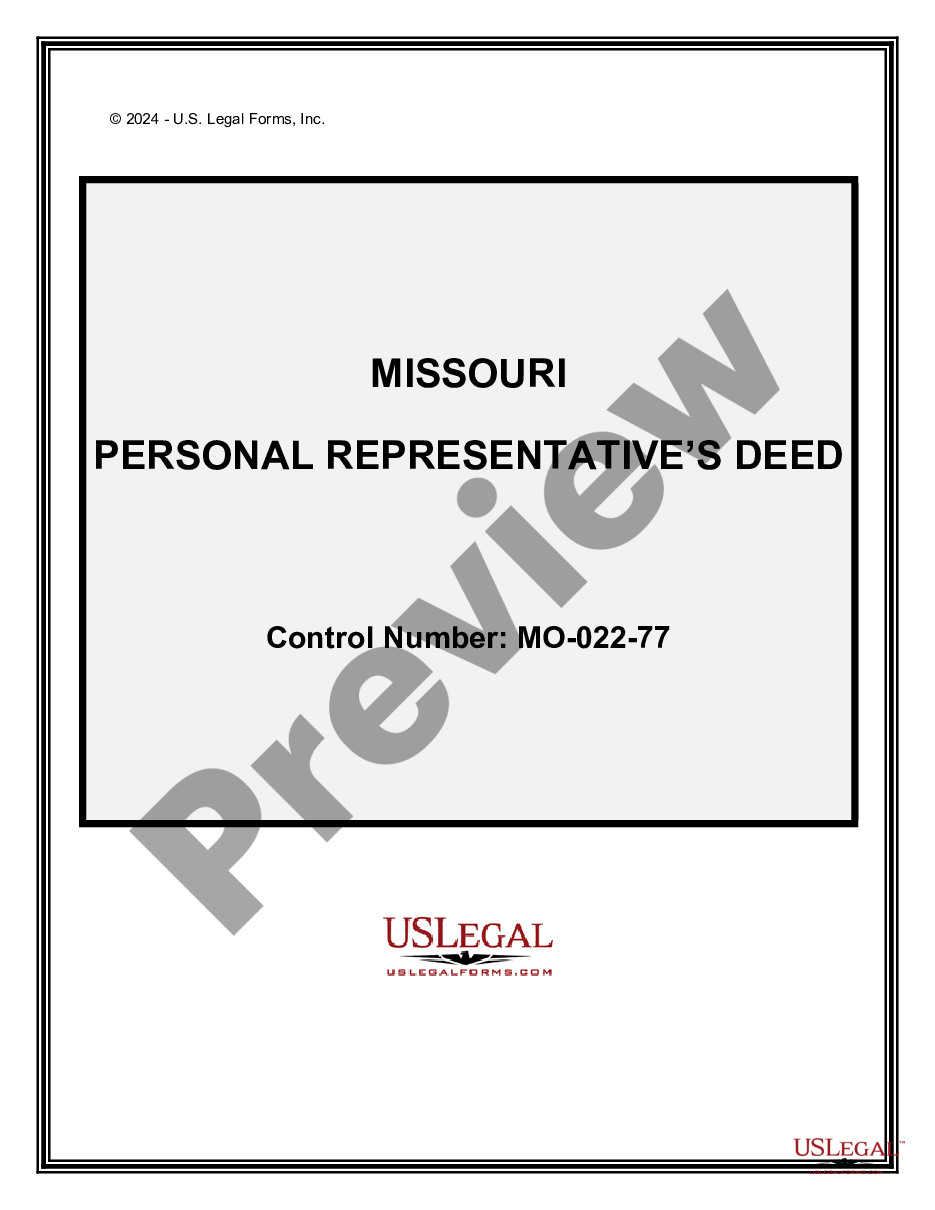
Missouri Personal Representative's Deed to Individual
What is this form?
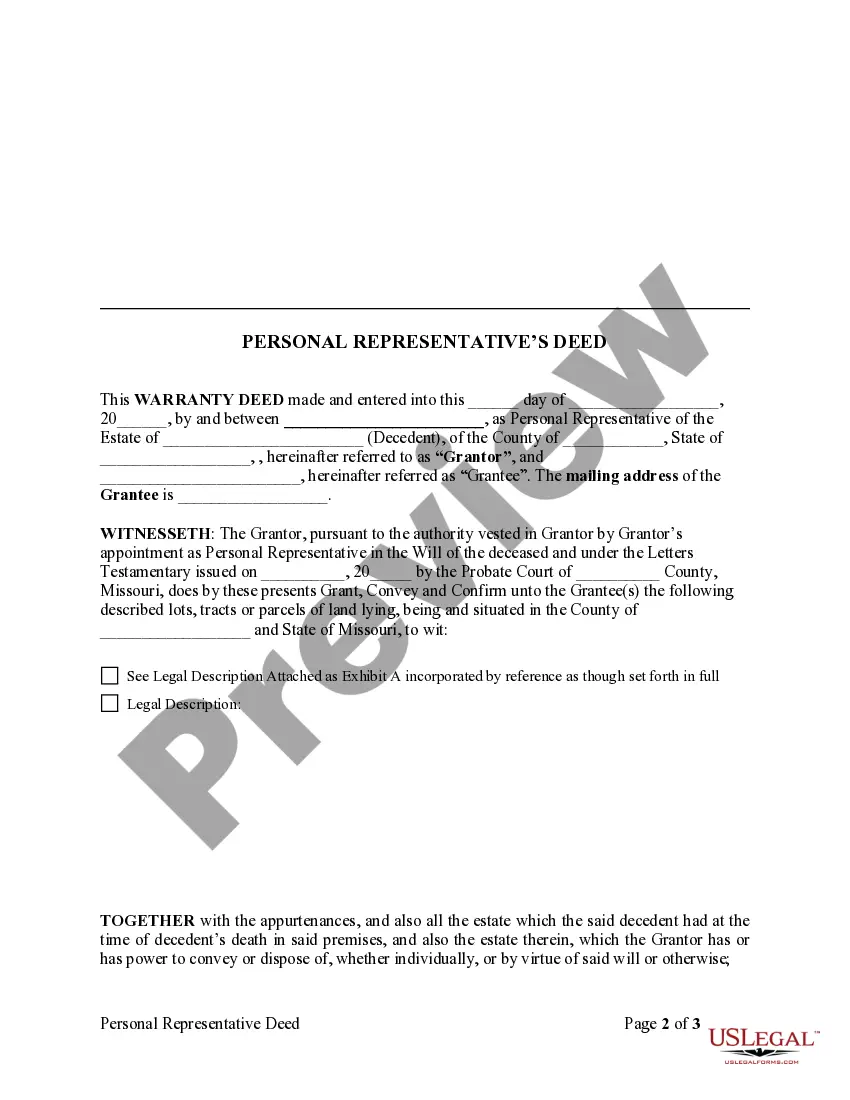
The Personal Representative's Deed to Individual is a legal document that allows the Personal Representative of a decedent's estate, either an executor or an administrator, to convey property ownership to an individual. This deed transfers any title that the Grantor, or the deceased, held in the specified property. Unlike other deeds, such as general warranty or quitclaim deeds, this document specifically originates from the authority given by the probate court following the death of an individual, ensuring that property distribution complies with legal regulations.
Form components explained
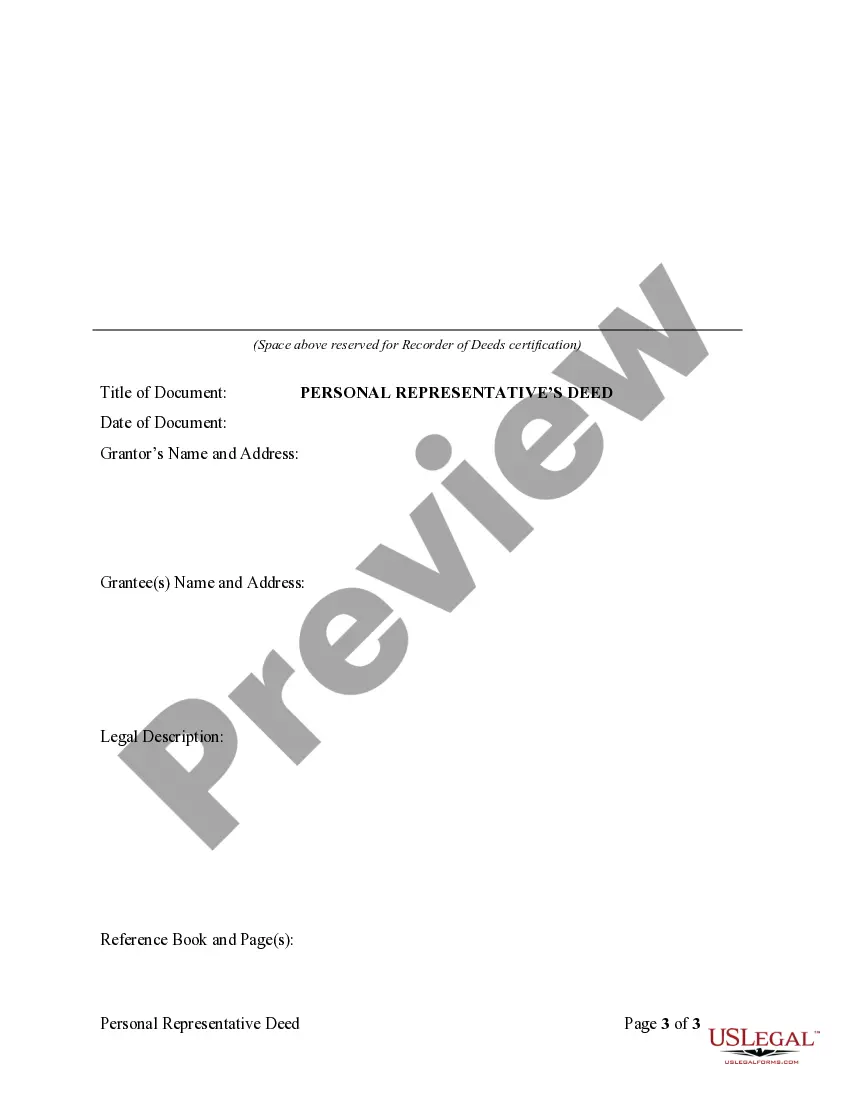
- Grantor and Grantee information: Names and addresses of the parties involved.
- Authority declaration: Acknowledgment of the Grantorâs appointment as Personal Representative, as evidenced by Letters Testamentary.
- Property description: Clear legal description of the property being transferred.
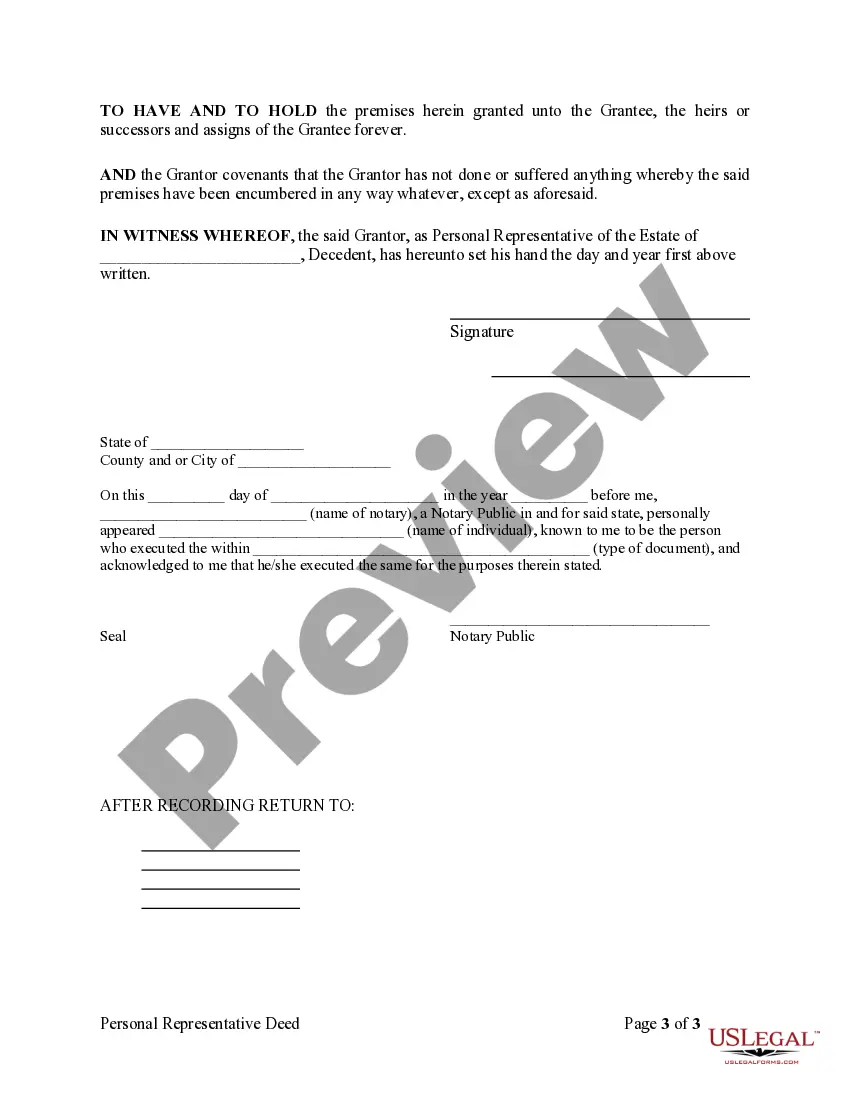
- Signature and date: Signatures of the Grantor and notary, along with the date of execution.




When to use this form
This form is typically used when a decedent's estate needs to formally transfer real estate to an individual. It is necessary when the estate is settled and the Personal Representative seeks to distribute property as outlined in the decedent's will or according to state probate laws.
Intended users of this form
- Executors or administrators of an estate handling the decedent's property.
- Individuals designated as recipients of property in a will or through probate proceedings.
- Legal representatives who need to finalize property transfers for their clients in estate matters.
How to complete this form
- Identify the Grantor: Fill in the name and information of the Personal Representative.
- Identify the Grantee: Enter the name and mailing address of the individual receiving the property.
- Provide the property description: Clearly state the legal description of the property being conveyed.
- Sign and date the deed: The Grantor must sign and date the document in the presence of a notary public.
- Notarize the deed: Ensure the document is notarized to validate the signature and execution.
Does this form need to be notarized?
Yes, this form must be notarized to be legally valid. The notarization process involves verifying the identity of the Grantor and confirming that they have willingly signed the document. This ensures authenticity and helps prevent fraud. US Legal Forms offers integrated online notarization services that are available 24/7, allowing you to complete this process securely from anywhere.
Get your form ready online
Our built-in tools help you complete, sign, share, and store your documents in one place.
Make edits, fill in missing information, and update formatting in US Legal Forms—just like you would in MS Word.
Download a copy, print it, send it by email, or mail it via USPS—whatever works best for your next step.
Sign and collect signatures with our SignNow integration. Send to multiple recipients, set reminders, and more. Go Premium to unlock E-Sign.
If this form requires notarization, complete it online through a secure video call—no need to meet a notary in person or wait for an appointment.
We protect your documents and personal data by following strict security and privacy standards.

Make edits, fill in missing information, and update formatting in US Legal Forms—just like you would in MS Word.

Download a copy, print it, send it by email, or mail it via USPS—whatever works best for your next step.

Sign and collect signatures with our SignNow integration. Send to multiple recipients, set reminders, and more. Go Premium to unlock E-Sign.

If this form requires notarization, complete it online through a secure video call—no need to meet a notary in person or wait for an appointment.

We protect your documents and personal data by following strict security and privacy standards.
Typical mistakes to avoid
- Failing to provide a complete legal description of the property.
- Not obtaining notarization, which could invalidate the deed.
- Leaving out the required signatures of the Grantor and notary.
- Incorrectly filling in the roles of Grantor and Grantee.
Why use this form online
- Convenience: Downloadable format allows for easy access from any device.
- Editability: Forms can be completed digitally, reducing errors in handwriting.
- Reliability: Forms are drafted by licensed attorneys, ensuring legal compliance.
Looking for another form?


Form popularity
FAQ
The Missouri Personal Representative's Deed to Individual is a real estate deed issued by the Personal Representative (the estate's executor or administrator) to transfer property to a named recipient. It conveys the title the decedent held, under probate court authority, after the estate is settled, and it is distinct from warranty or quitclaim deeds because it comes from probate rather than the grantor's own title.
To fill it out, enter Grantor and Grantee information (names and addresses), include an Authority declaration showing the Grantor's appointment as Personal Representative (evidenced by Letters Testamentary), provide a clear legal description of the property, and obtain signatures of the Grantor and a notary with the date of execution.
The owner prior to transfer is the decedent's estate, represented by the Personal Representative. The Grantor conveys the property's title to the named Grantee, so the Grantee becomes the new owner as the deed is recorded, based on the authority of the Letters Testamentary.
It means the transfer comes from the decedent's estate to a named individual under probate authority. The transfer is made by a Personal Representative whose authority is shown by Letters Testamentary, and the deed conveys the title the decedent held, rather than originating from the grantor’s own title like a warranty deed.
Executors or administrators of an estate handling the decedent's property, individuals named to receive property in a will or probate, and legal representatives who need to finalize estate real estate transfers use this form after probate to convey the decedent's real property to a named recipient, with the grantor's authority evidenced by Letters Testamentary.
This deed is issued under probate authority by a Personal Representative and conveys the estate’s title to a named recipient, rather than originating from the grantor’s own title. It is not a general warranty deed and reflects the decedent’s estate distribution approved by probate proceedings.